Mississippi Order of Garnishment by Indebted Garnishee
What this document covers
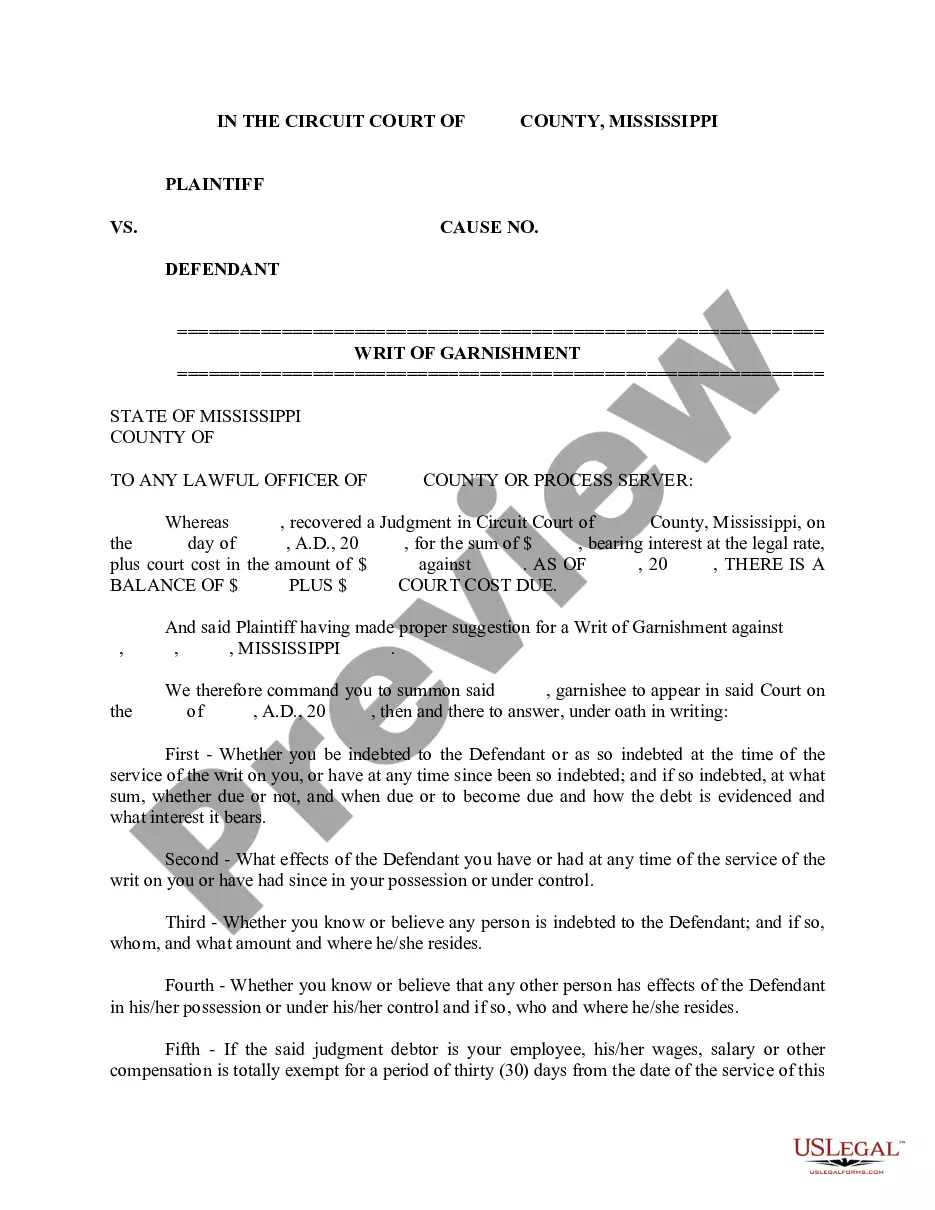
The Order of Garnishment by Indebted Garnishee is a legal document issued by a court that instructs a third party, known as a garnishee, to withhold money owed to a defendant to satisfy a judgment. This order is different from other forms of garnishment in that it specifically relates to debts acknowledged by the garnishee and is meant to facilitate the collection of a court-ordered sum. Understanding how to correctly draft and submit this order is essential for enforcing a creditor's rights following a court ruling.
What’s included in this form
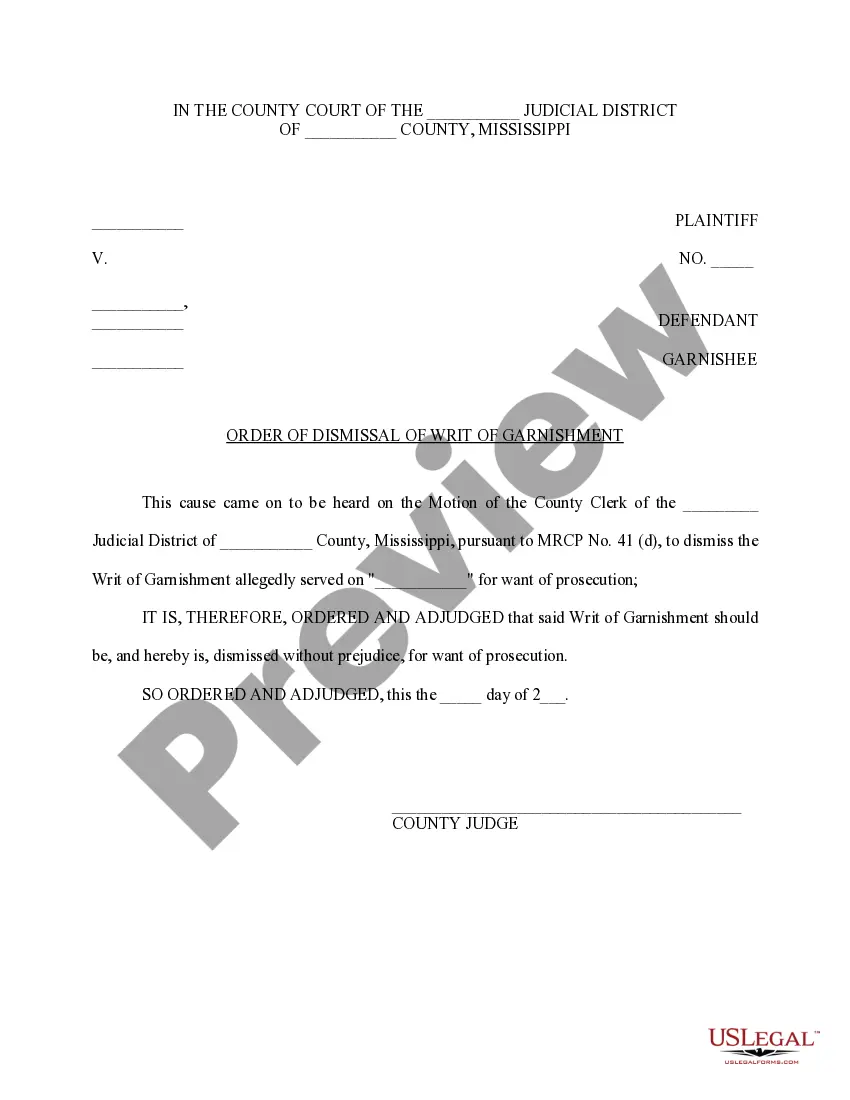
- Order header including the court's name and case number
- Findings of the court regarding the indebtedness of the garnishee
- Instructions for the garnishee to comply with the order
- Signature block for the presiding judge to validate the order
When this form is needed
This form is used when a creditor has obtained a judgment against a debtor and wishes to collect the amount owed by garnishing the debtor's wages or bank account held by the garnishee. This situation often arises when previous collection efforts have failed, and the creditor needs to enforce the judgment through legal means.
Who should use this form
- Creditors seeking to collect on a court judgment
- Attorneys representing creditors in garnishment proceedings
- Individuals who have received a court judgment and need to enforce it against a debtor
How to complete this form
- Fill in the court name and case number at the top of the order.
- Describe the indebtedness of the garnishee with specifics about the amount owed.
- Ensure the language aligns with the facts and circumstances surrounding the case.
- Have the presiding judge sign and date the order to make it official.
- Provide copies of the completed order to the garnishee and relevant parties involved.
Notarization requirements for this form
In most cases, this form does not require notarization. However, some jurisdictions or signing circumstances might. US Legal Forms offers online notarization powered by Notarize, accessible 24/7 for a quick, remote process.
Get your form ready online
Our built-in tools help you complete, sign, share, and store your documents in one place.
Make edits, fill in missing information, and update formatting in US Legal Forms—just like you would in MS Word.
Download a copy, print it, send it by email, or mail it via USPS—whatever works best for your next step.
Sign and collect signatures with our SignNow integration. Send to multiple recipients, set reminders, and more. Go Premium to unlock E-Sign.
If this form requires notarization, complete it online through a secure video call—no need to meet a notary in person or wait for an appointment.
We protect your documents and personal data by following strict security and privacy standards.

Make edits, fill in missing information, and update formatting in US Legal Forms—just like you would in MS Word.

Download a copy, print it, send it by email, or mail it via USPS—whatever works best for your next step.

Sign and collect signatures with our SignNow integration. Send to multiple recipients, set reminders, and more. Go Premium to unlock E-Sign.

If this form requires notarization, complete it online through a secure video call—no need to meet a notary in person or wait for an appointment.

We protect your documents and personal data by following strict security and privacy standards.
Typical mistakes to avoid
- Failing to include the correct case number or court name.
- Not clearly stating the amount owed by the garnishee.
- Leaving sections of the form blank or incomplete.
- Ignoring local court rules regarding garnishment procedures.
Why complete this form online
- Convenient access to legal forms from anywhere at any time.
- Editable templates that can be customized for specific cases.
- Reduced risk of errors with professionally drafted forms.
- Immediate download options to expedite filing processes.
Key takeaways
- The Order of Garnishment by Indebted Garnishee is important for enforcing debt collection.
- It should be completed accurately to avoid legal issues.
- The form can be customized for various jurisdictions, ensuring it meets local legal standards.
Looking for another form?

Form popularity
FAQ
Regular creditors cannot garnish your wages without first suing you in court and obtaining a money judgment. That means that if you owe money to a credit card company, doctor, dentist, furniture company, or the like, you don't have to worry about garnishment unless those creditors sue you in court.
By federal law, in most cases only one creditor can lay claim to your wages at a single time. In essence, whichever creditor files for an order first gets to garnish your paycheck.In that case, another creditor's order can be put into effect up to the amount allowed by law to be taken out of each of your paychecks.
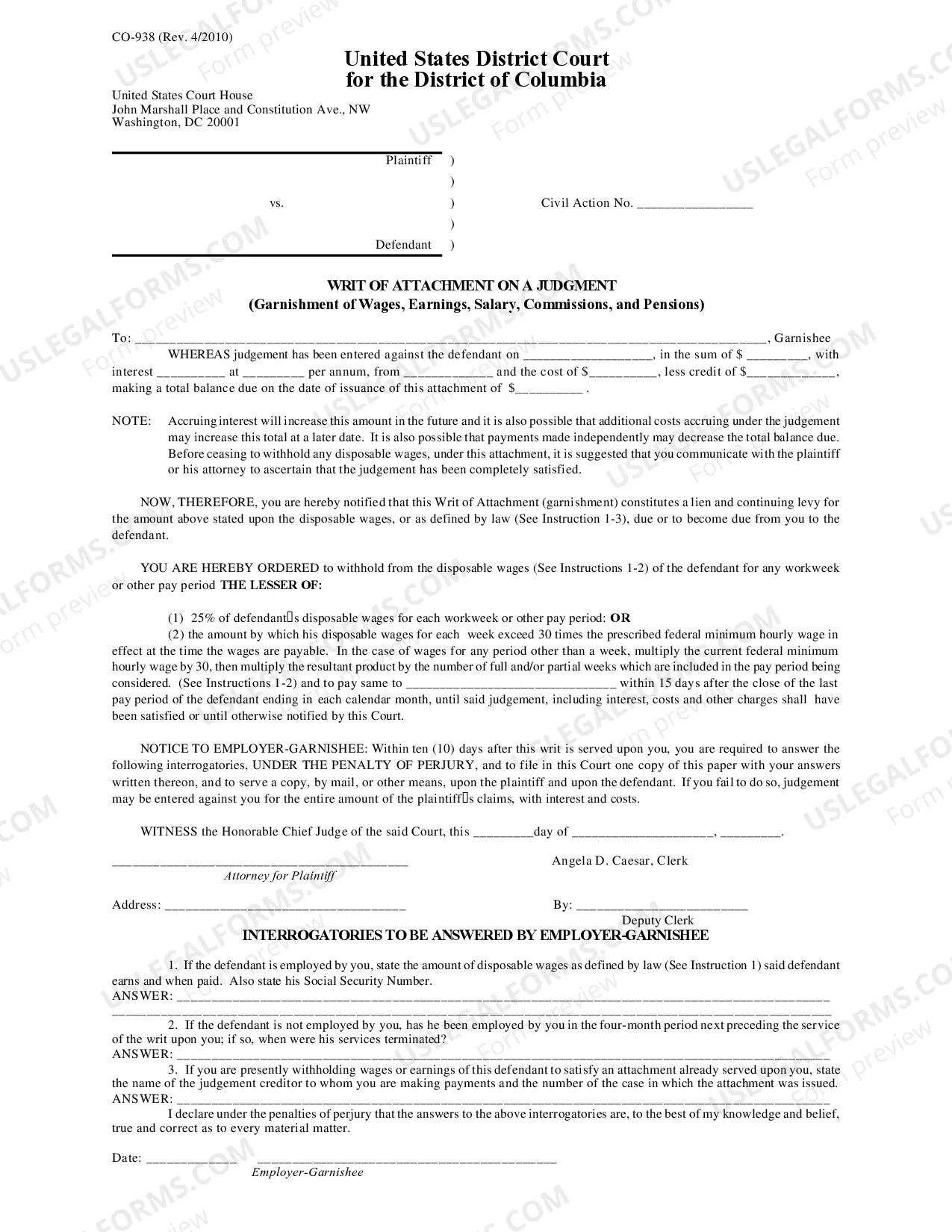
If you make $500 per week after all taxes and allowable deductions, 25% of your disposable earnings is $125 ($500 × . 25 = $125). The amount by which your disposable earnings exceed 30 times $7.25 is $282.50 ($500 2212 30 A $7.25 = $282.50).
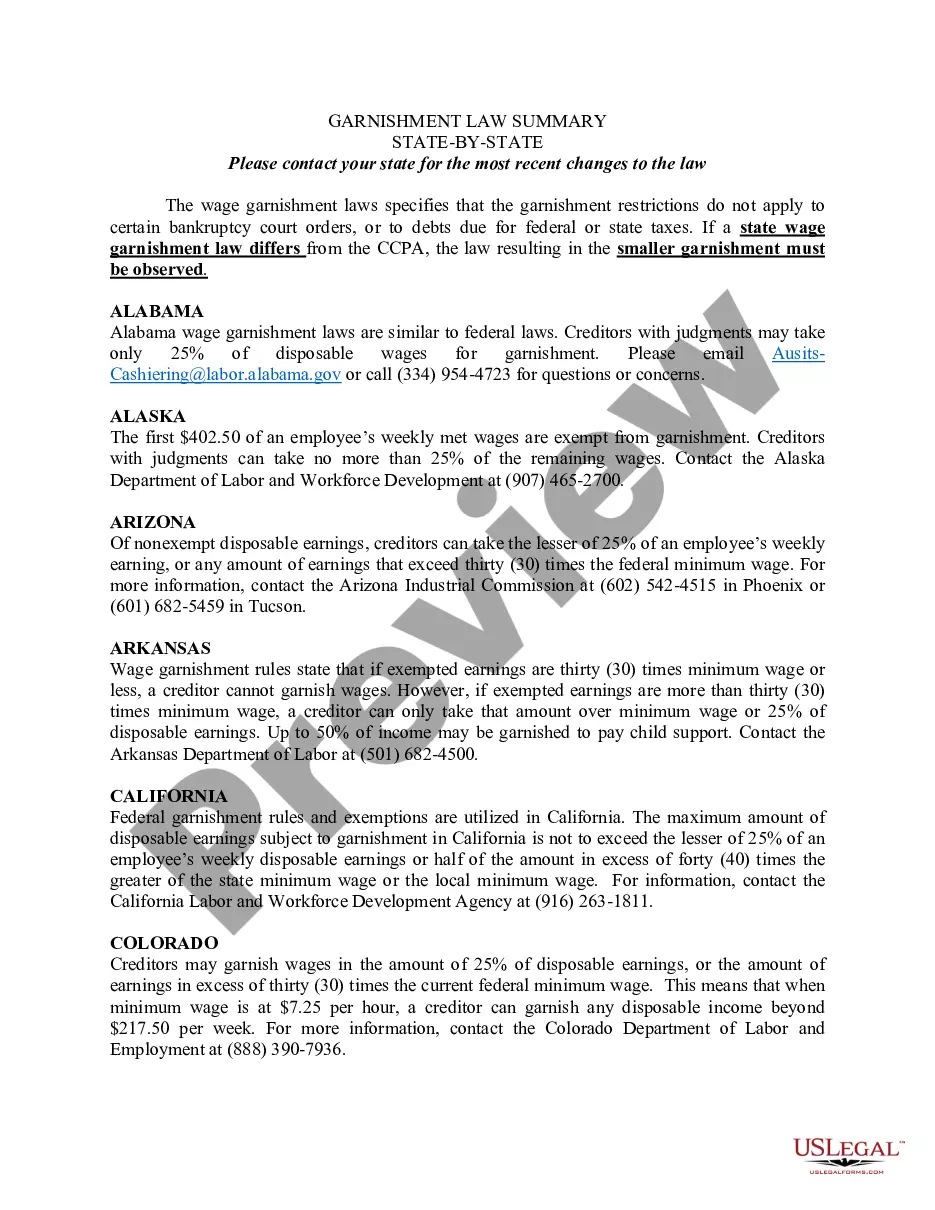
In order to ensure that you have sufficient wages for living expenses and necessities, Mississippi law limits the amount that may be garnished to the lesser of: 25 percent of your disposable earnings or 30 times the federal minimum wage.
Mississippi law limits the amount of money that your creditors can garnish (take) from your wages to repay your debts.Most creditors with judgments can take only 25% of your wages, but some types of creditors are permitted to take more. Read on to learn about wage garnishment law in Mississippi.
Even after a garnishment has started, you can still try and negotiate a resolution with the creditor, especially if your circumstances change.