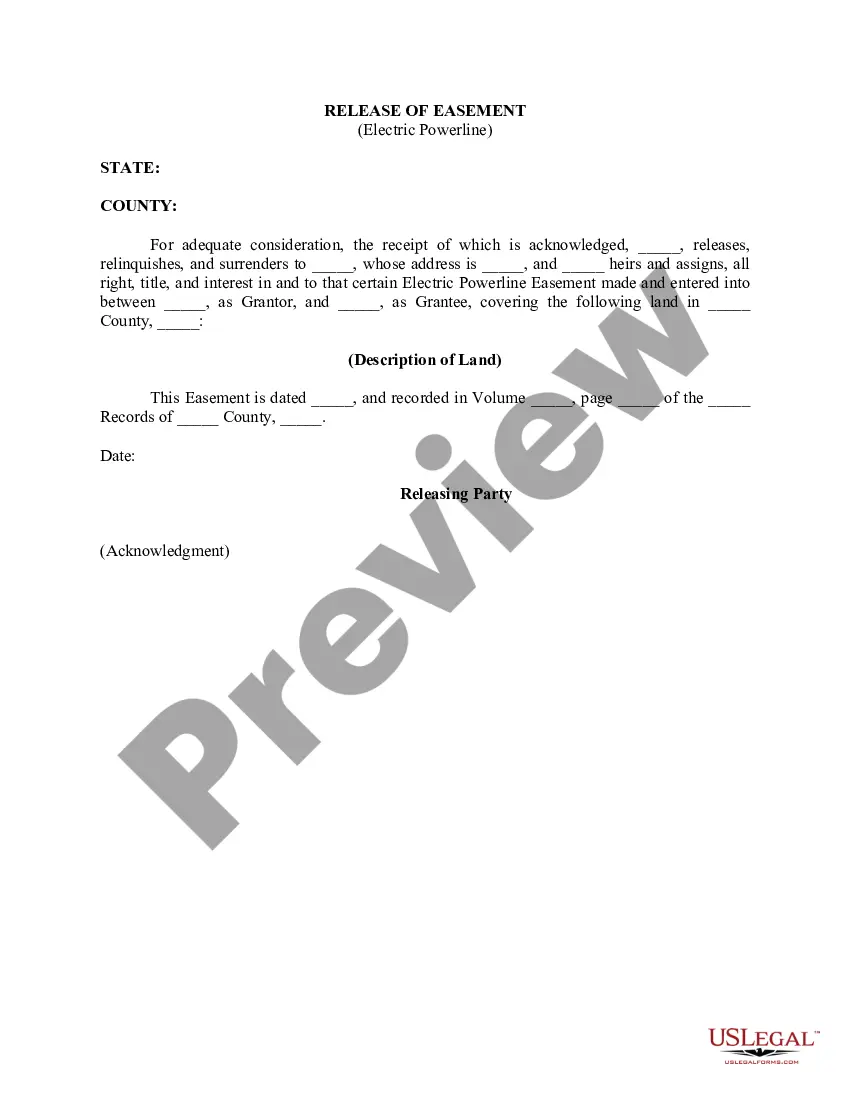
Release of Easement (Electric Powerline)
Understanding this form
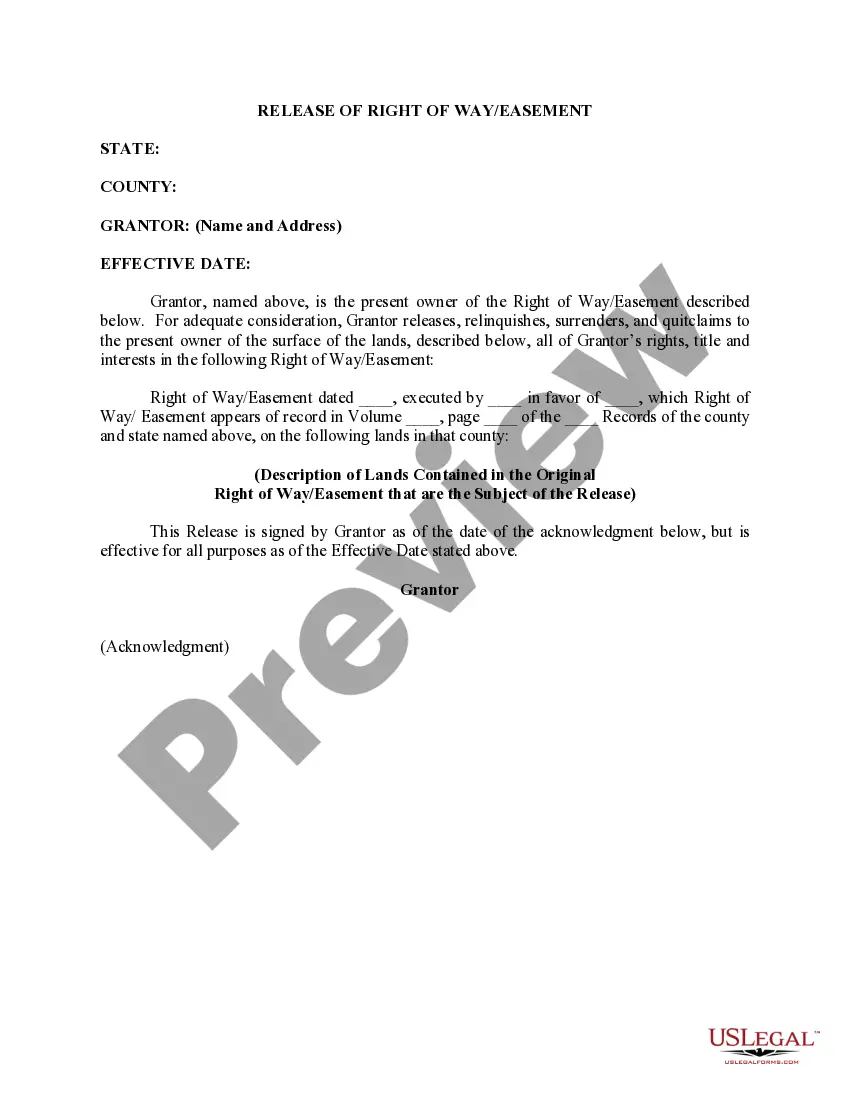
The Release of Easement for Electric Powerline is a legal document that allows a property owner to relinquish their rights to an easement associated with an electric powerline. This form is crucial in ensuring that once the easement is released, the property owner no longer has any obligations or rights regarding the easement, distinguishing it from other easement-related documents. It provides clear evidence of the release for all parties involved and contributes to the clarity of property rights.
Form components explained
- Names and contact information of the releasing party and the grantee.
- Legal description of the land affected by the easement.
- Date the original easement was recorded.
- Formal acknowledgment of the release by the releasing party.
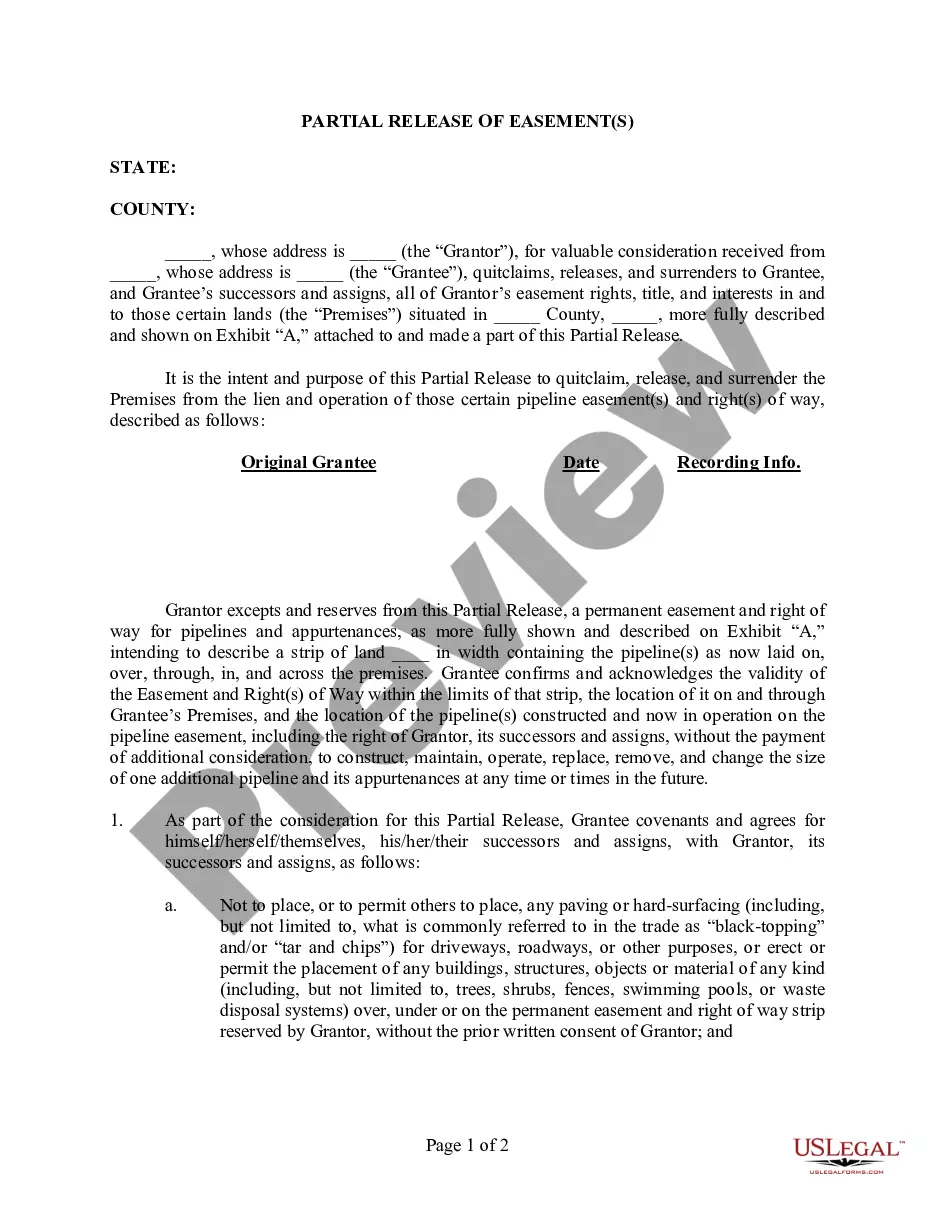
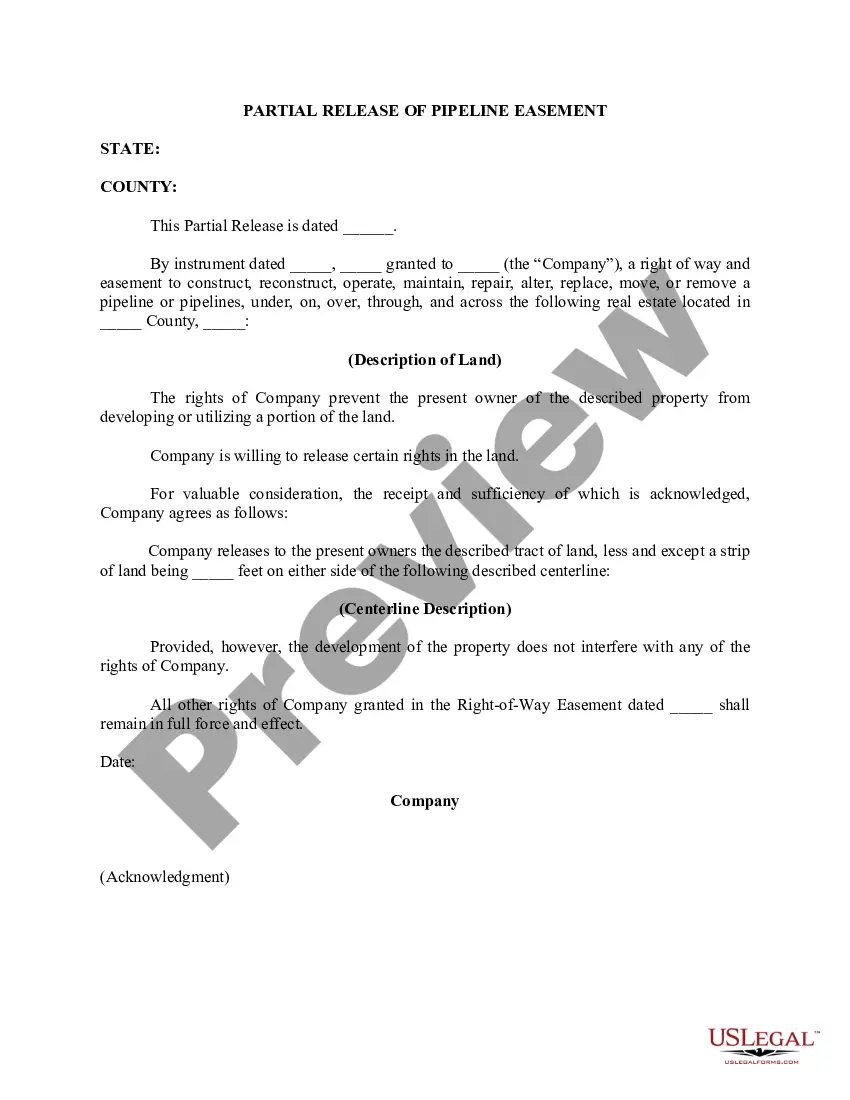
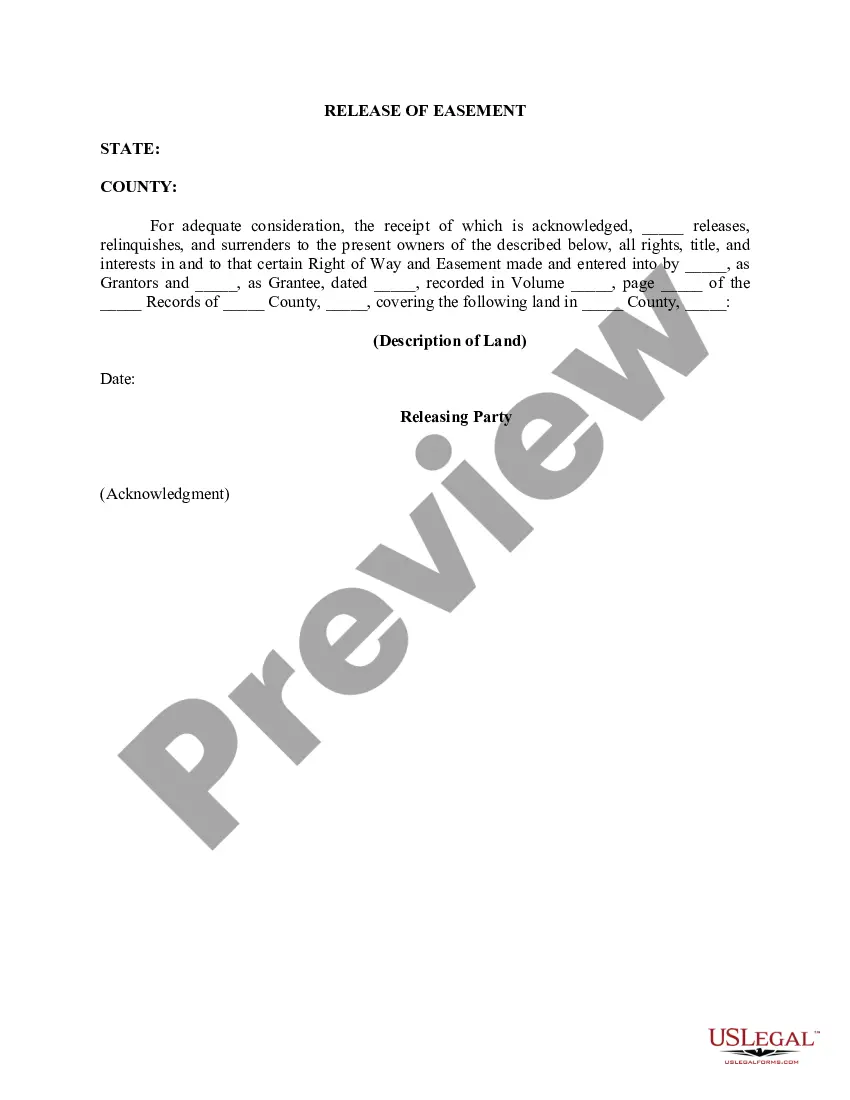
When to use this form
This form should be used when a property owner wishes to officially cancel an existing easement for an electric powerline on their property. Common scenarios include when the powerline is no longer in use, the property owner desires to regain full control over their land, or the utility company no longer requires access. Additionally, this form may be applicable when negotiating new terms with the utility company.
Who needs this form
- Property owners who have previously granted an easement for an electric powerline.
- Landowners seeking to reclaim property rights associated with an easement.
- Utility companies that have reached an agreement with a property owner to release the easement.
Steps to complete this form
- Identify all parties involved: the releasing party and the grantee.
- Provide a detailed legal description of the land that was subject to the easement.
- Include the date of the original easement and its recording details.
- Sign and date the document to finalize the release.
Does this document require notarization?
This form must be notarized to be legally valid. US Legal Forms provides secure online notarization powered by Notarize, allowing you to complete the process through a verified video call.
Get your form ready online
Our built-in tools help you complete, sign, share, and store your documents in one place.
Make edits, fill in missing information, and update formatting in US Legal Forms—just like you would in MS Word.
Download a copy, print it, send it by email, or mail it via USPS—whatever works best for your next step.
Sign and collect signatures with our SignNow integration. Send to multiple recipients, set reminders, and more. Go Premium to unlock E-Sign.
If this form requires notarization, complete it online through a secure video call—no need to meet a notary in person or wait for an appointment.
We protect your documents and personal data by following strict security and privacy standards.

Make edits, fill in missing information, and update formatting in US Legal Forms—just like you would in MS Word.

Download a copy, print it, send it by email, or mail it via USPS—whatever works best for your next step.

Sign and collect signatures with our SignNow integration. Send to multiple recipients, set reminders, and more. Go Premium to unlock E-Sign.

If this form requires notarization, complete it online through a secure video call—no need to meet a notary in person or wait for an appointment.

We protect your documents and personal data by following strict security and privacy standards.
Mistakes to watch out for
- Failing to include full legal names and contact information for all parties.
- Not providing a complete legal description of the property.
- Omitting the date of the original easement or its recording details.
- Not signing the document, which can invalidate the release.
Why use this form online
- Quick access to a professionally drafted legal document.
- Edit and personalize the form to meet your specific needs easily.
- Downloadable format ensures you can print and retain a copy for records.
Looking for another form?
Form popularity
FAQ
Utility easements are one of the most common types of easements for private property, which generally allow public utility companies access to the property for the purpose of installing, repairing and maintaining utility lines.
Merger. Prescription. Estoppel. Abandonment. Destruction of servient estate. Forfeiture. Release, and. Expiration.
BPA does not recommend that anyone attempt to calculate how close they can come to a power line. As a general precaution, when under a line, never put yourself or any object any higher than 14 feet above the ground. The National Electrical Safety Code specifies a minimum safe clearance for each operating volt- age.
The bottom line is that developers and builders who are presented with utility company easement forms should not just sign them, but think about the kinds of issues they can present. It is easier to negotiate these concessions up front before the lines go in, than to ask the utility company to amend its easement later.
An easement held by an electricity provider allows it to erect and maintain electric power equipment on your land. The easement gives the electric power company the right to use a property for this specific purpose only.
An easement held by an electricity provider allows it to erect and maintain electric power equipment on your land. The easement gives the electric power company the right to use a property for this specific purpose only.
There are eight ways to terminate an easement: abandonment, merger, end of necessity, demolition, recording act, condemnation, adverse possession, and release.
What is a right-of-way? It is a legal agreement that allows us access to the property directly beneath and to either side of an electric power line. Also called an easement, the right-of-way allows us to enter the property at any time, to perform maintenance or repairs to our equipment.
III. Vacating or Reopening a Public Way or Easement. Anytime after the municipality closes the public way or easement, a property owner may commence an action to either vacate (i.e., foreclose) the municipality's right to reopen the closed public way or easement or to have the closed public way or easement reopened.