FAQs for Joint Ownership of Property
Overview of this form
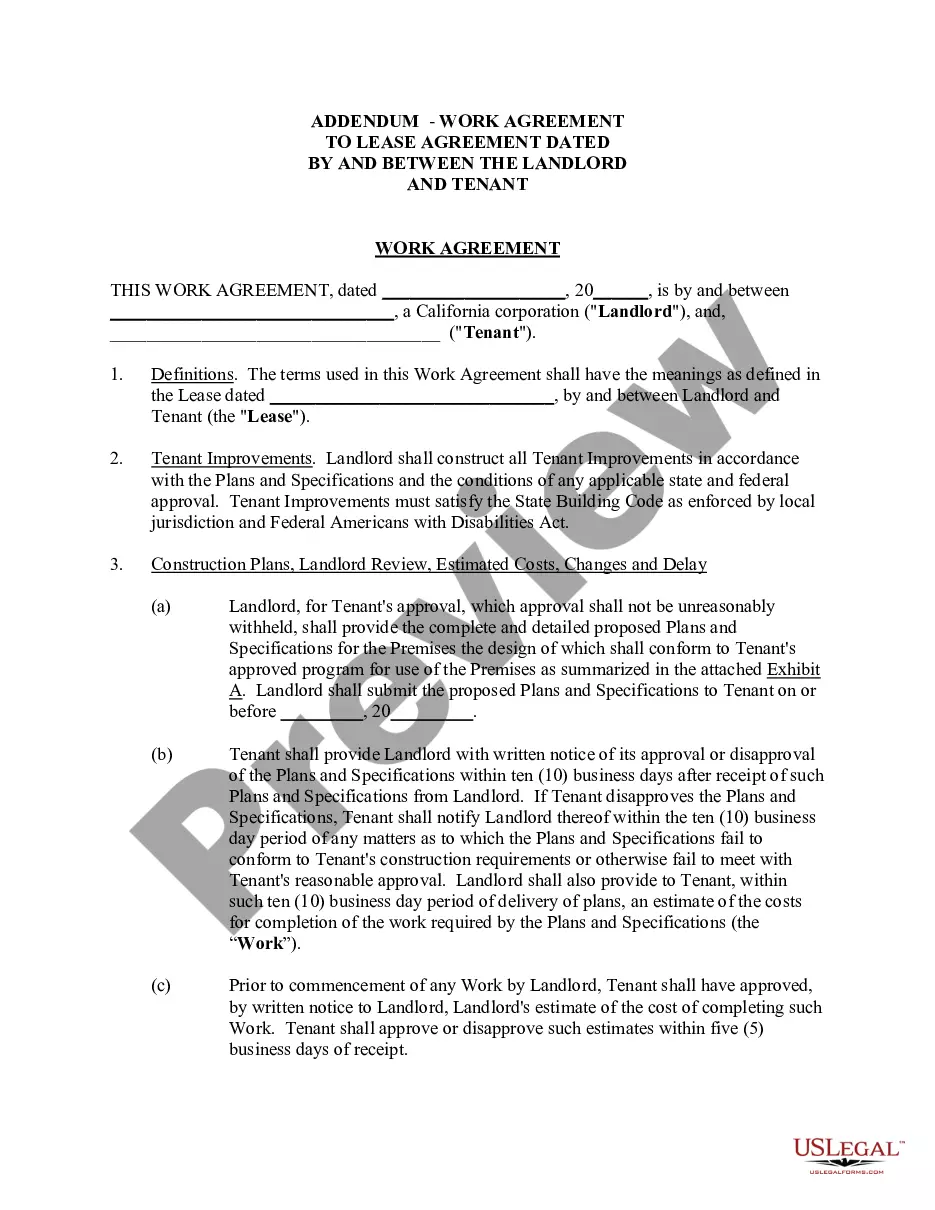
The FAQs for Joint Ownership of Property form provides crucial information for individuals considering owning property together, particularly in the realm of estate planning. This form clarifies common misconceptions about joint ownership, potential legal implications, and the importance of having clear documentation. Understanding these FAQs can be essential for making informed decisions about joint property ownership and ensuring the accuracy of legal ownership titles.
Key parts of this document
- Common myths versus realities about joint ownership.
- Detailed explanations regarding property deeds and rights of survivorship.
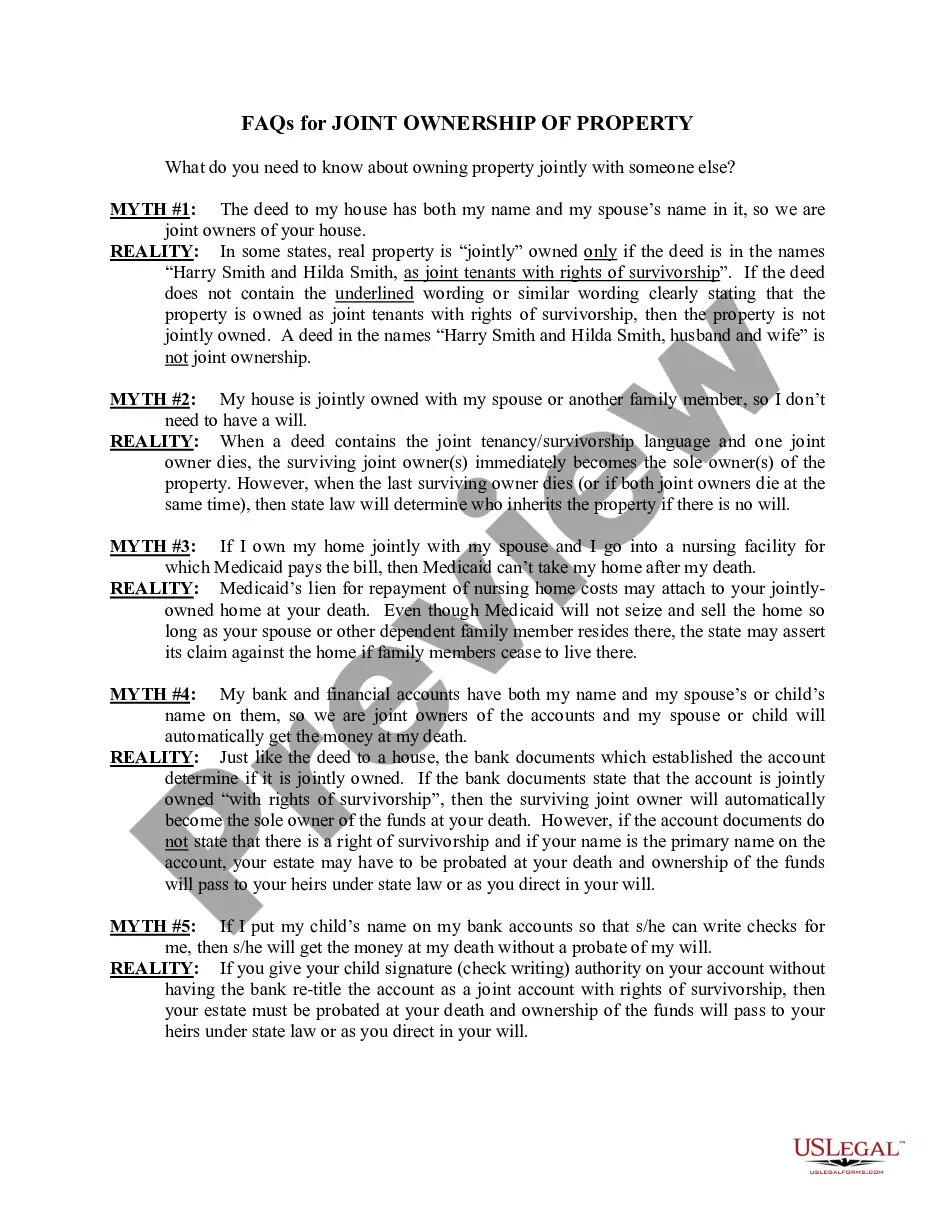
- Guidance on determining whether assets are jointly owned.
- Advantages and disadvantages of joint ownership with family members.
- Common questions and professional insights on estate planning and joint property ownership.
When to use this document
This form is useful when you are considering joint ownership of property, especially if you plan to share assets with a spouse or family member. It helps clarify important aspects of how joint ownership affects inheritance, estate planning, and financial responsibilities, as well as providing guidance specific to real property and financial accounts.
Who needs this form
- Homeowners planning to share property ownership with a spouse or family member.
- Individuals interested in understanding the implications of joint ownership for estate planning.
- Families contemplating shared financial accounts or property assets.
- Estate planners or advisors guiding clients through joint ownership laws and implications.
Instructions for completing this form
- Review your property deed to verify language regarding joint tenancy and rights of survivorship.
- Contact your bank to confirm if financial accounts are designated as joint accounts with rights of survivorship.
- Prepare a will to ensure your assets are distributed according to your wishes after the last joint owner passes away.
- Consider both the advantages and disadvantages of placing assets in joint ownership with family members.
- Consult with an attorney if you have questions about the implications of joint ownership in your specific situation.
Notarization requirements for this form
In most cases, this form does not require notarization. However, some jurisdictions or signing circumstances might. US Legal Forms offers online notarization powered by Notarize, accessible 24/7 for a quick, remote process.
Get your form ready online
Our built-in tools help you complete, sign, share, and store your documents in one place.
Make edits, fill in missing information, and update formatting in US Legal Forms—just like you would in MS Word.
Download a copy, print it, send it by email, or mail it via USPS—whatever works best for your next step.
Sign and collect signatures with our SignNow integration. Send to multiple recipients, set reminders, and more. Go Premium to unlock E-Sign.
If this form requires notarization, complete it online through a secure video call—no need to meet a notary in person or wait for an appointment.
We protect your documents and personal data by following strict security and privacy standards.

Make edits, fill in missing information, and update formatting in US Legal Forms—just like you would in MS Word.

Download a copy, print it, send it by email, or mail it via USPS—whatever works best for your next step.

Sign and collect signatures with our SignNow integration. Send to multiple recipients, set reminders, and more. Go Premium to unlock E-Sign.

If this form requires notarization, complete it online through a secure video call—no need to meet a notary in person or wait for an appointment.

We protect your documents and personal data by following strict security and privacy standards.
Common mistakes to avoid
- Assuming joint ownership exists without proper language in the deed or account documentation.
- Not having a will in place despite owning property jointly, which could lead to unintended inheritance outcomes.
- Failing to consider the implications of Medicaid on assets held in joint ownership.
- Believing that simply adding a child's name to a bank account grants them ownership without going through the proper channels.
Why use this form online
- Convenient access to essential information regarding joint ownership and estate planning.
- Editable format allows for customization based on individual needs and circumstances.
- Provides reliable and comprehensive guidance drafted by licensed attorneys.
Main things to remember
- Joint ownership has specific legal implications and requirements that must be clearly understood.
- Proper documentation and planning, including wills, are essential even with joint ownership.
- Clarifying property and account ownership with the appropriate language is key to avoiding legal issues.
- Consultation with legal experts can help navigate the complexities of joint ownership and estate planning.
Looking for another form?
Form popularity
FAQ
While joint tenancy can apply to personal property, bank and brokerage accounts and business ownership, it's most used for investments in real estate. When purchasing property, joint tenancy provides all parties with equal rights to and responsibilities for the real estate purchased.
Joint owned property is any property held in the name of two or more parties. These two parties could business partners or another combination of people who have a reason to own property together. The matrimonial status of joint ownership of assets is when the two parties are husband and wife.
They include: Control Issues. Since every owner has a co-equal share of the asset, any decision must be mutual.Creditor Issues. If a co-owner has outstanding debts, their creditors could seize an interest in your home or bank account. Relationship Issues.Substitute for Will Issues.Marriage Issues.
Each joint tenant owns an equal share. Only ownership of equal shares is possible under joint tenancy. If the joint tenants mutually agree to sell the property, they must equally divide the proceeds of the sale equally.
Unity of interest: The interest of each owner is equal. Unity of time: The interest of the owners is acquired at the same time. Unity of possession: The owners have the right of survivorship. Unity of title: The document must specify a joint tenancy vesting.
Cons. Only available to married couples: Friends and relatives can't own a home as tenants by entirety. It is for married couples or legal domestic partners only. That also means that tenancy by entirety ends if a couple gets divorced.
The customer's daughter added the customer's name to her property. The title shows the customer's daughter and the customer as joint owners. Since the customer was added to the property as an owner, 50% of the property value is a resource to the customer.
Key Takeaways. Some of the main benefits of joint tenancy include avoiding probate courts, sharing responsibility, and maintaining continuity. The primary pitfalls are the need for agreement, the potential for assets to be frozen, and loss of control over the distribution of assets after death.