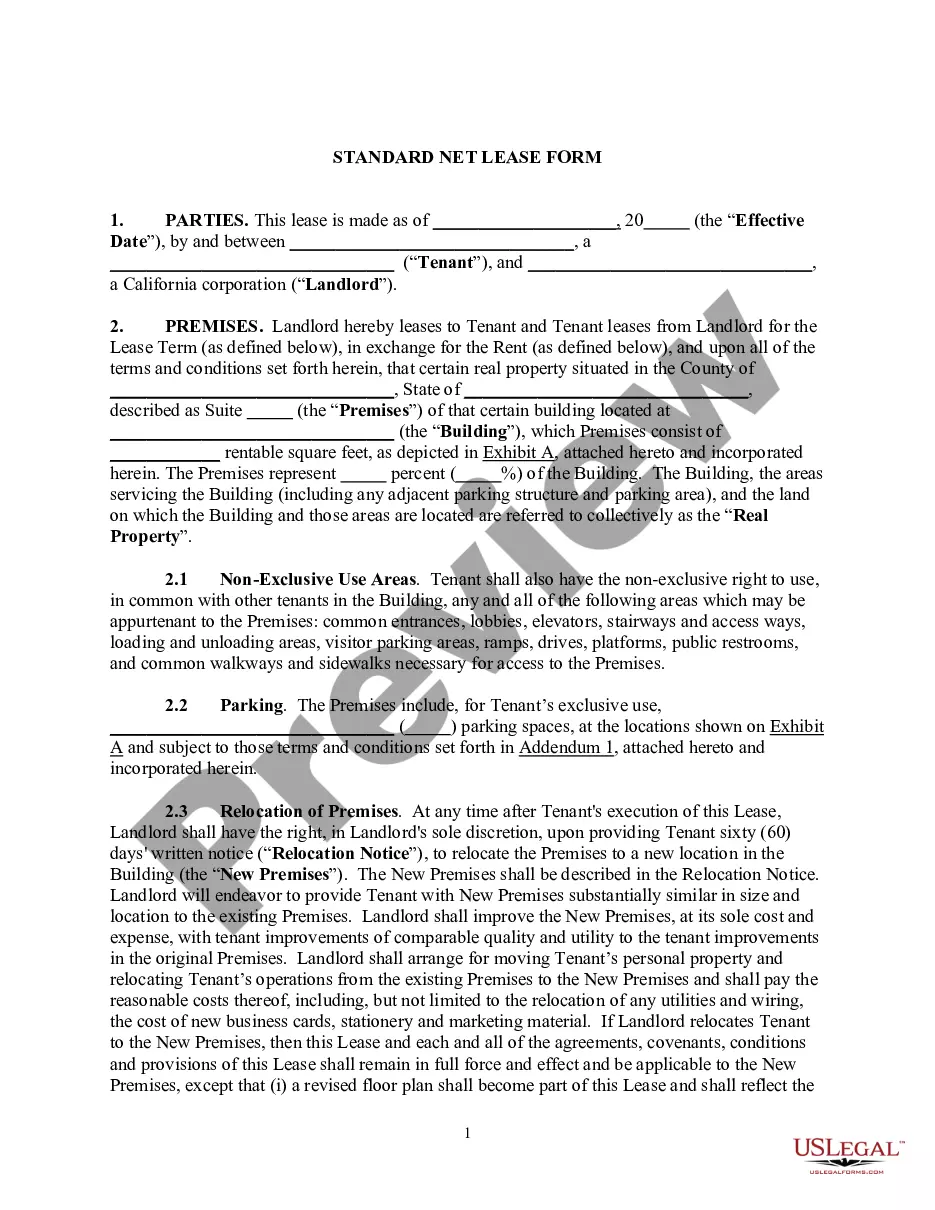
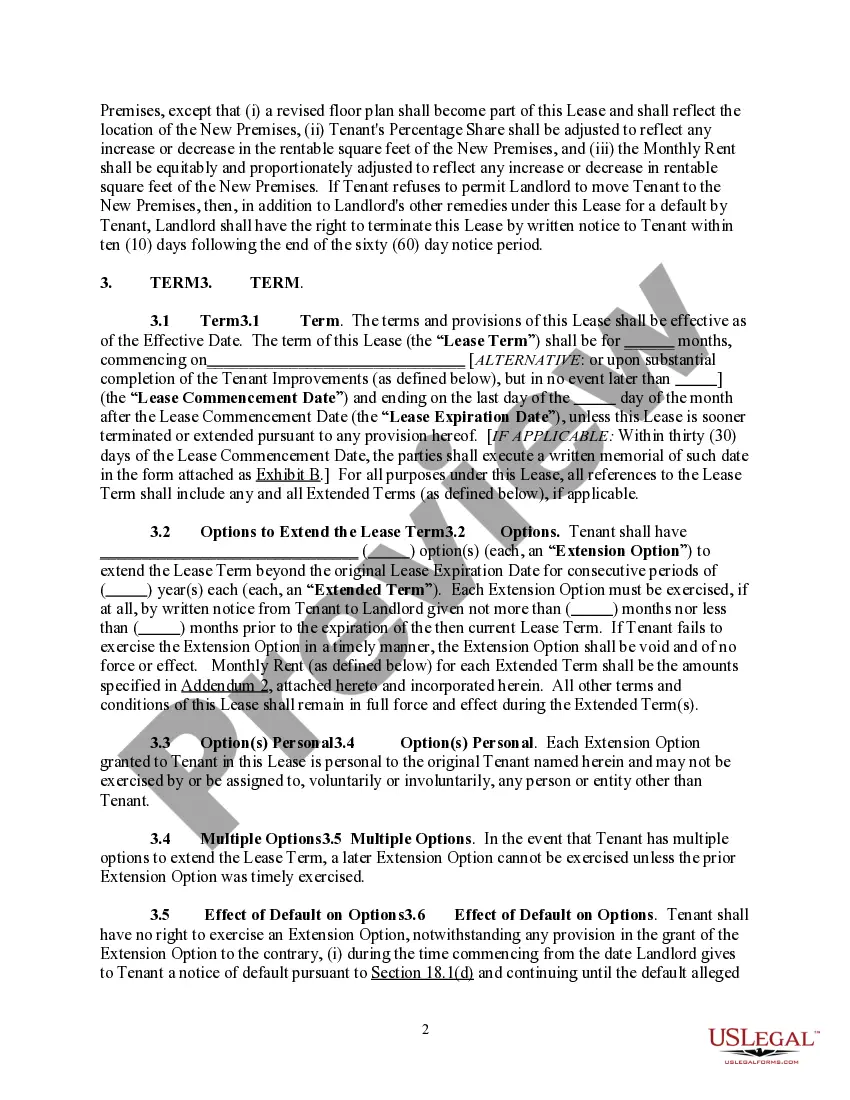
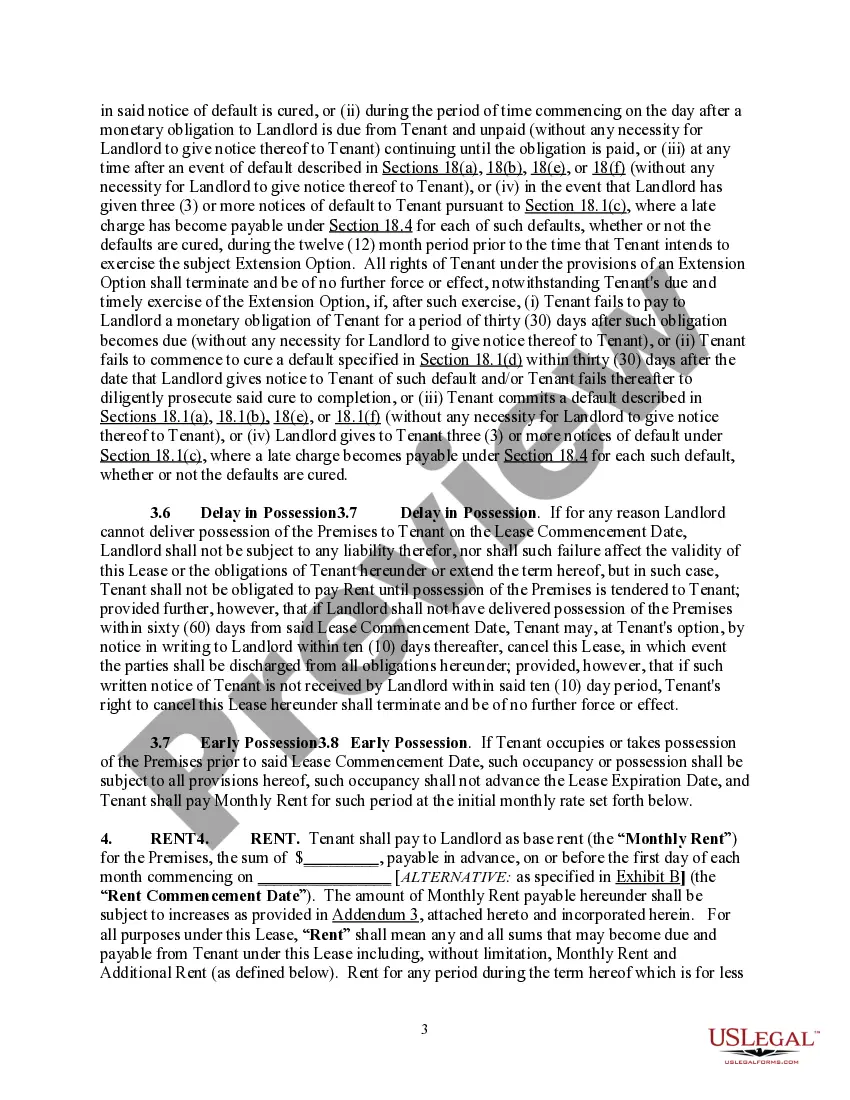
California Standard Net Lease
About this form
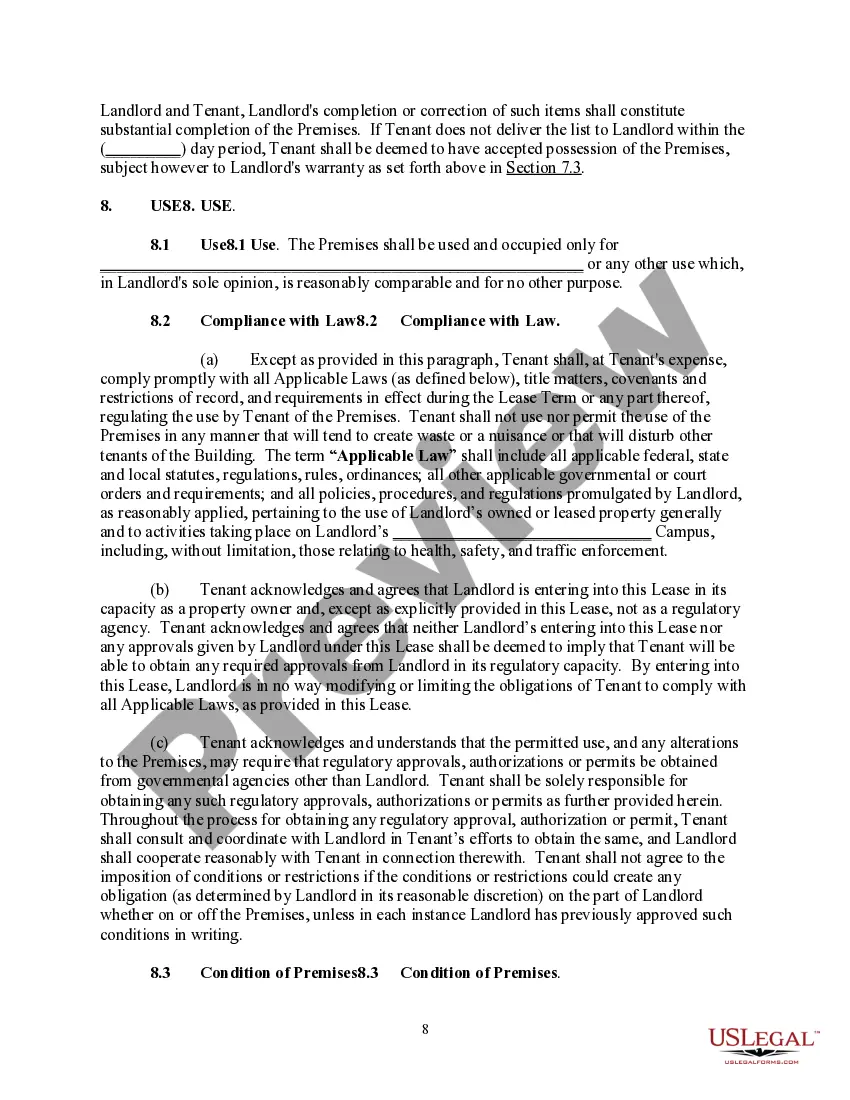
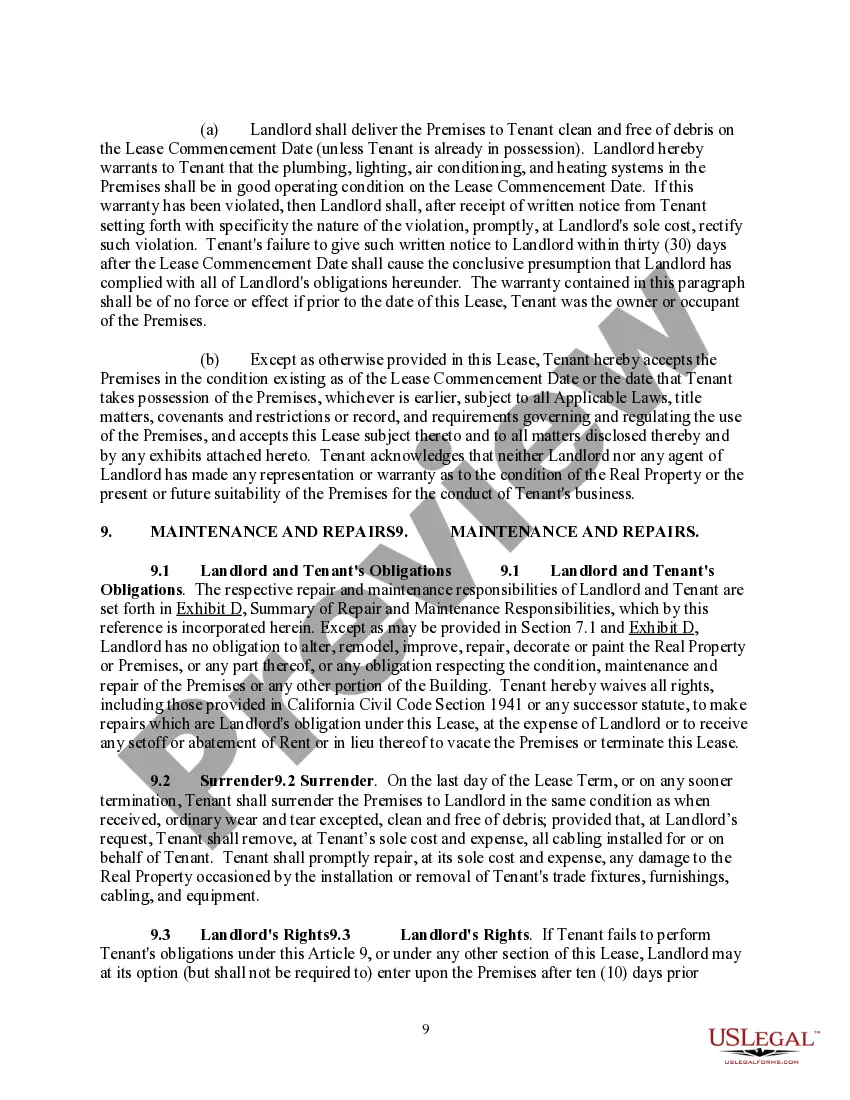
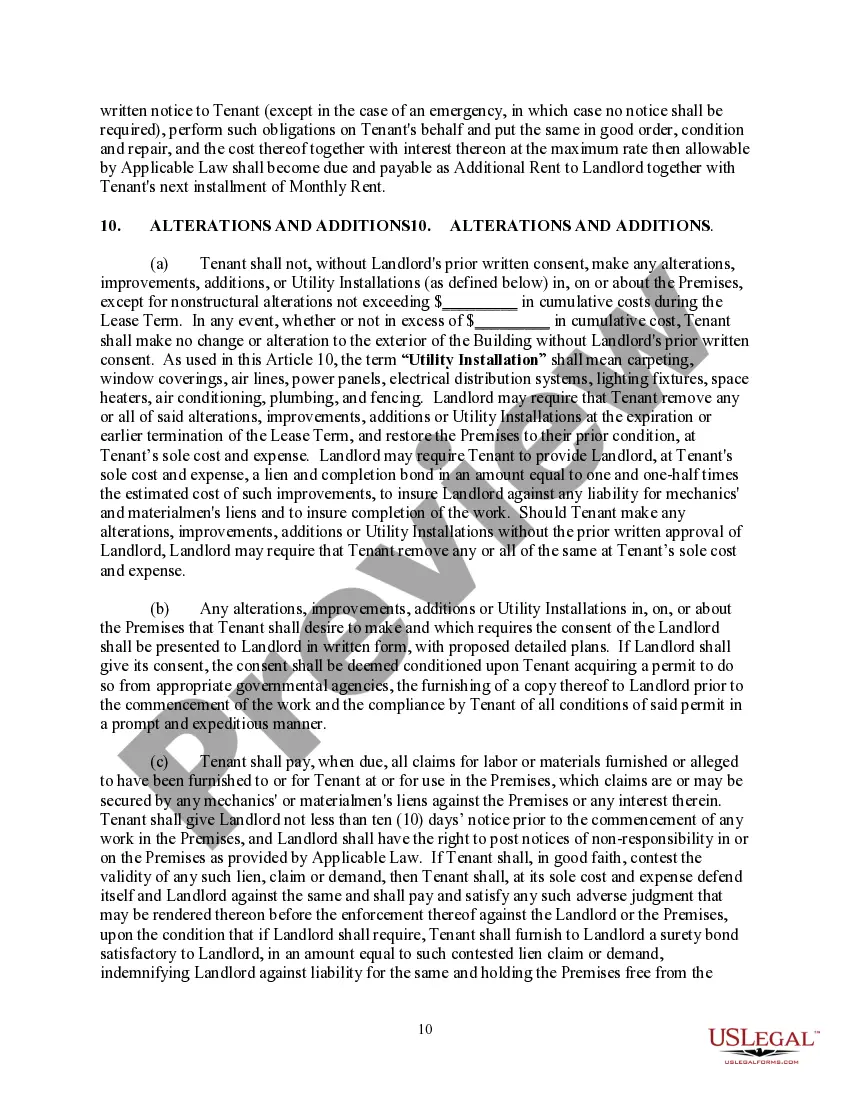
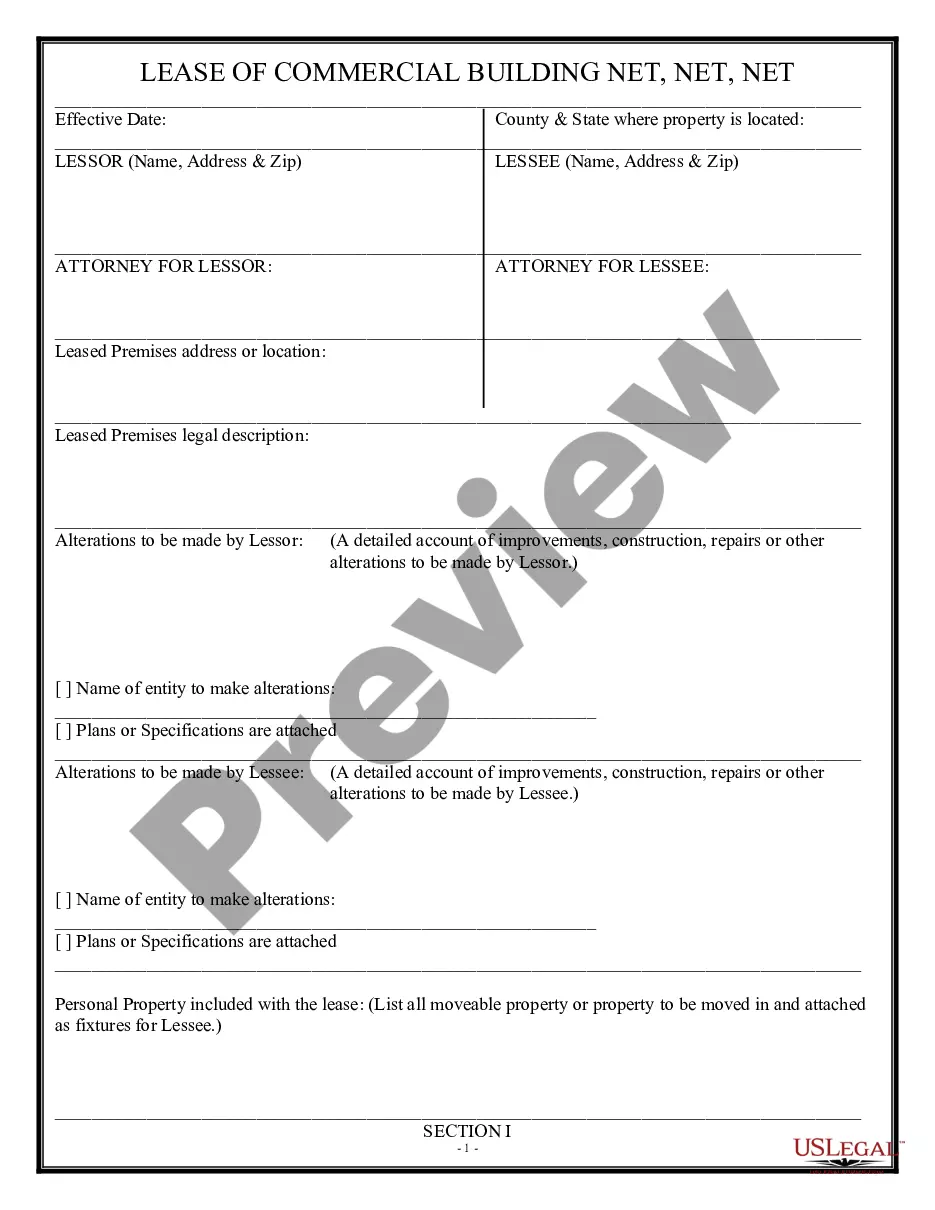
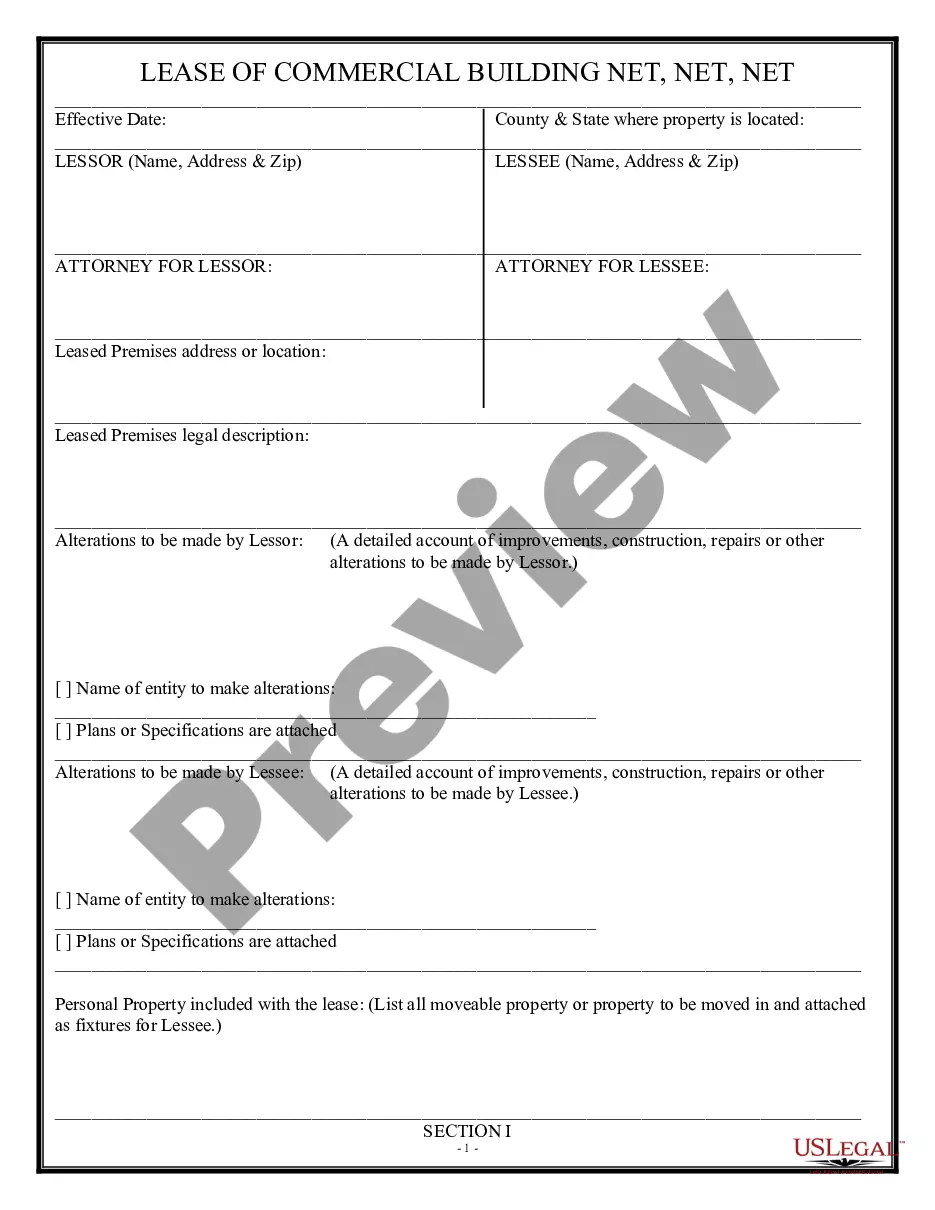
The Standard Net Lease is a legal document used in commercial real estate to establish a rental agreement between a landlord and a tenant. In a net lease, the tenant agrees to pay all or part of the property expenses (such as property taxes, insurance, and maintenance) in addition to the base rent. This type of lease differs from a gross lease, where the landlord is responsible for these costs, making the net lease more favorable for landlords.
Key components of this form
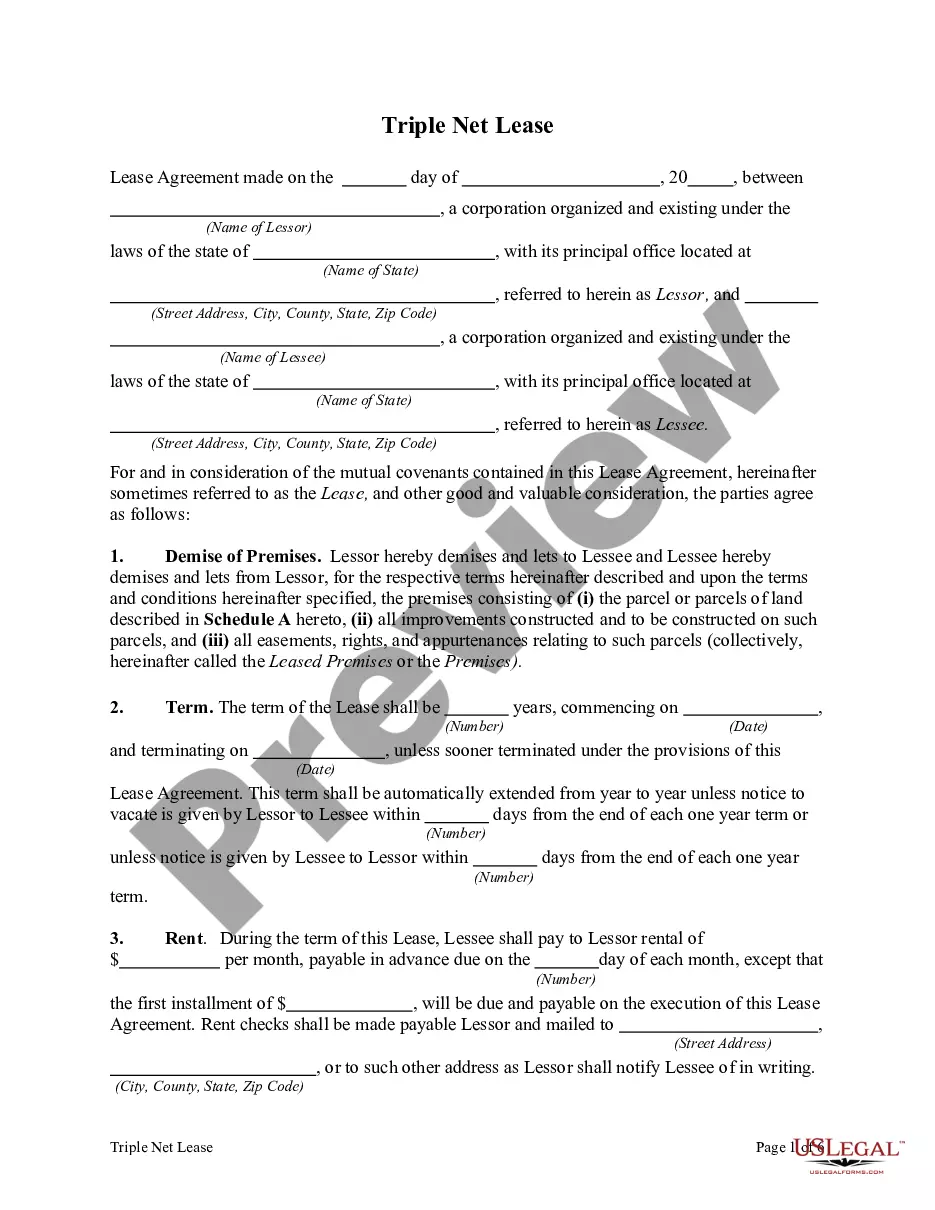
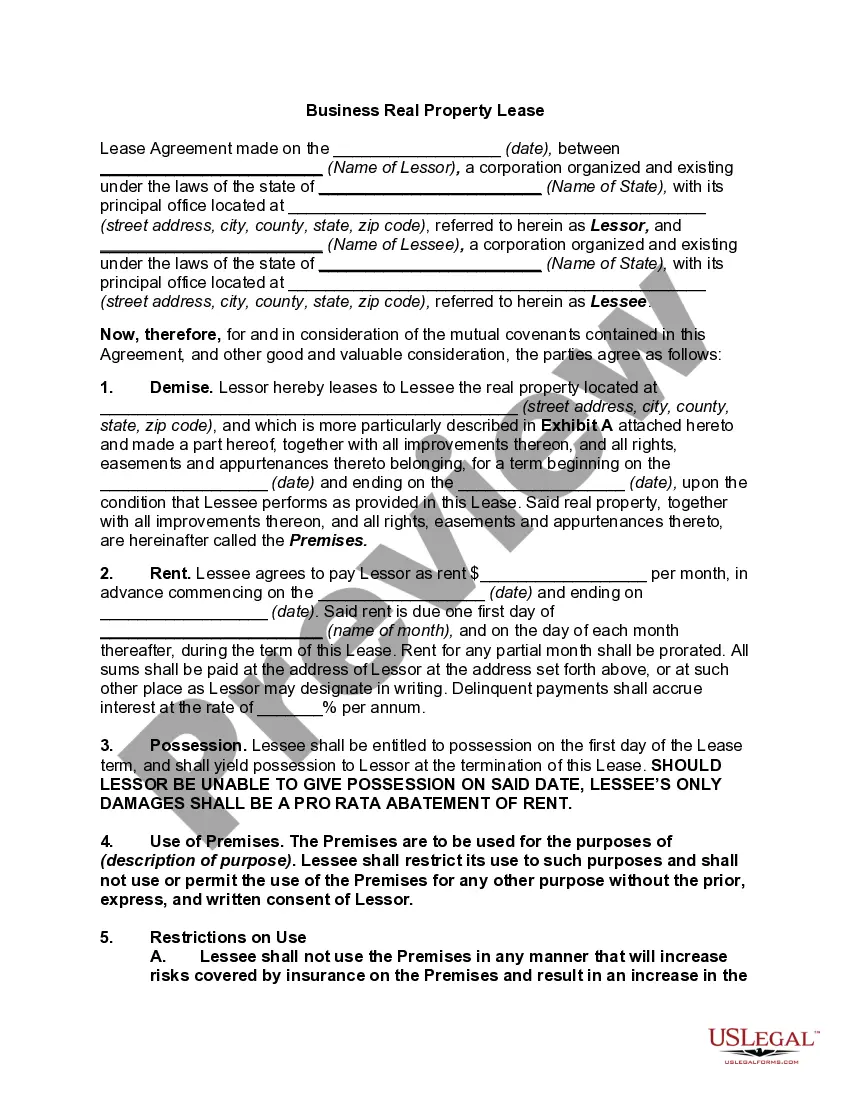
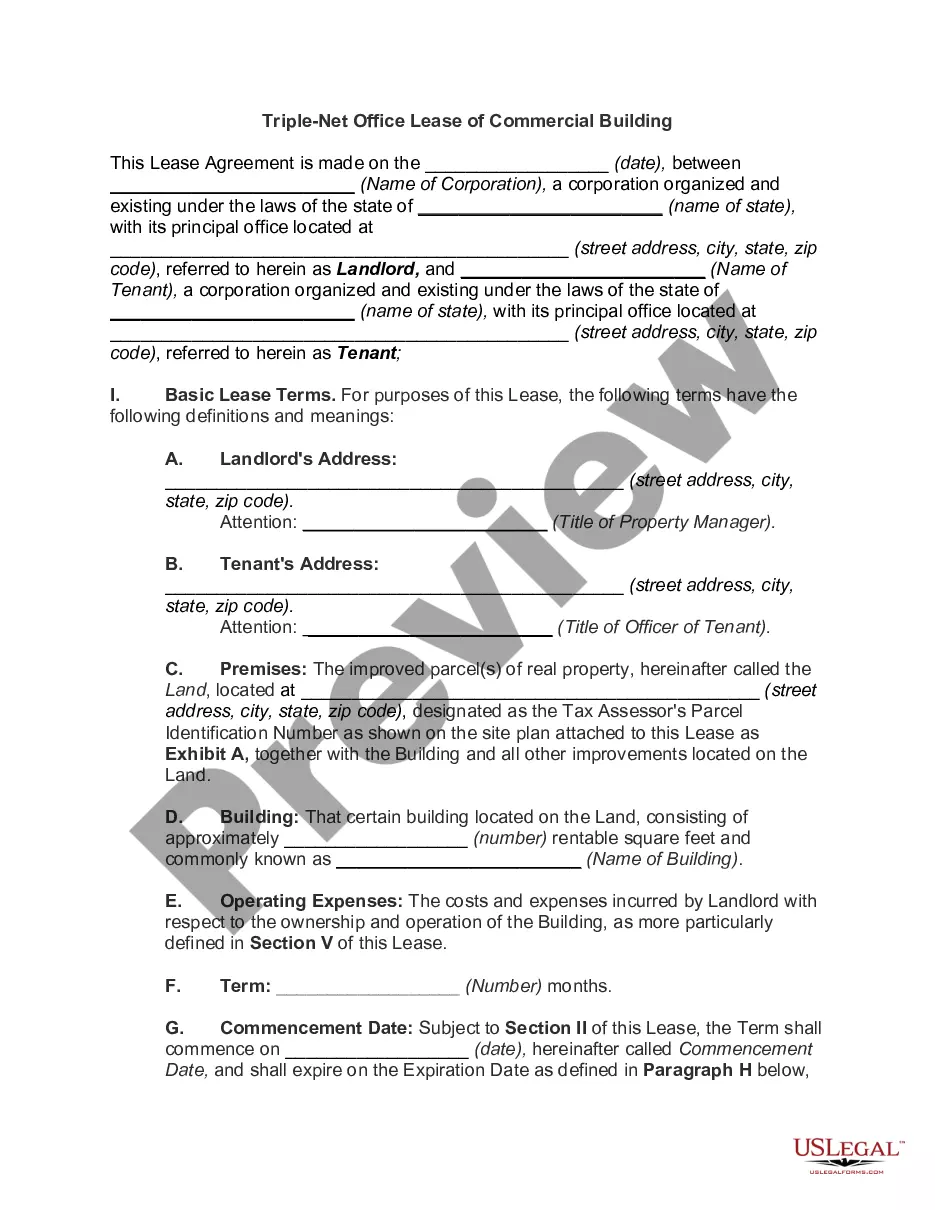
- Parties: Identifying information for the landlord and tenant.
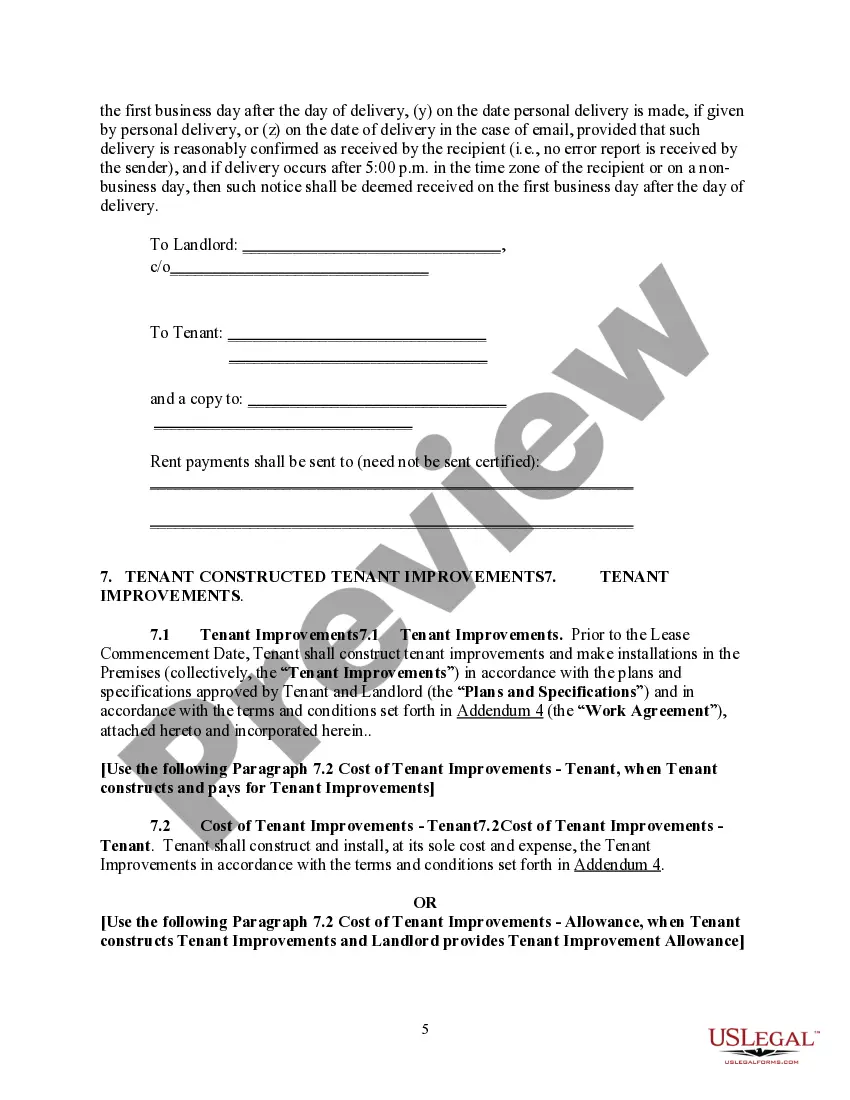
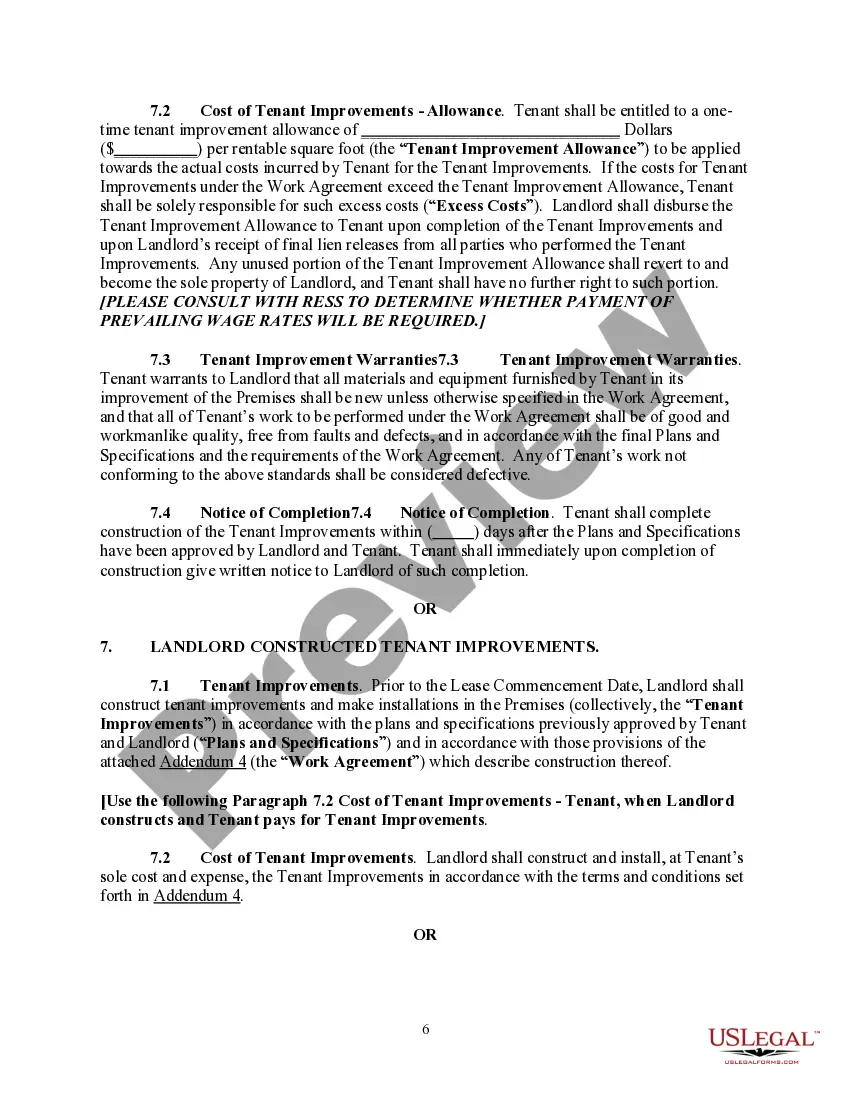
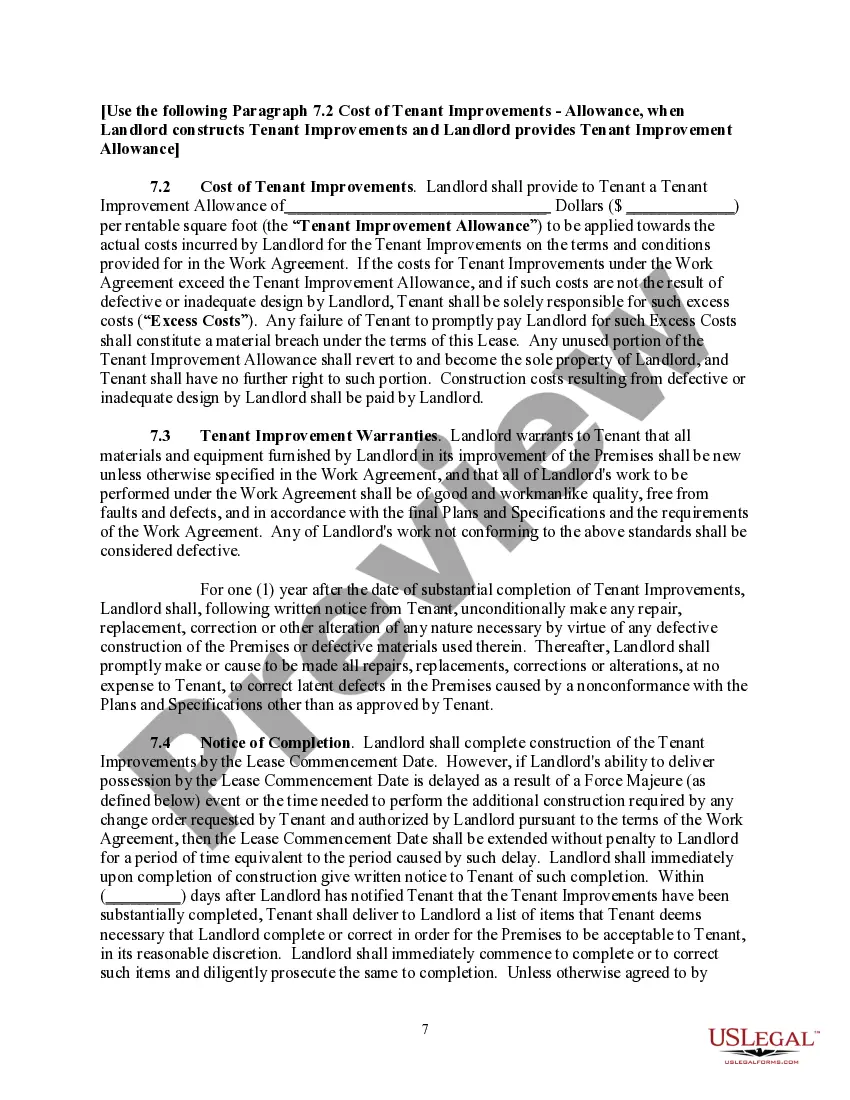
- Premises: Description of the leased property and its specifications.
- Term: Length of the lease agreement and options for extending it.
- Rent: Details on payment amounts, due dates, and adjustments.
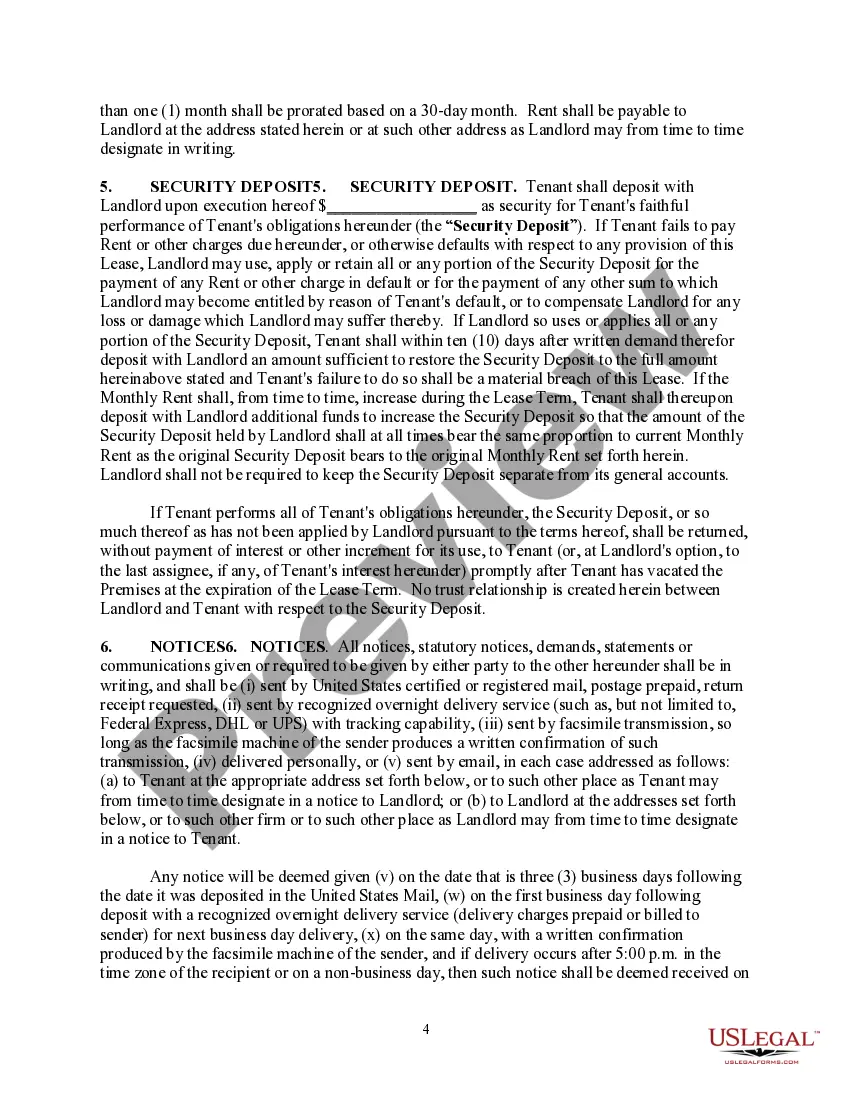
- Security Deposit: Terms regarding the deposit amount and usage.
- Notices: Guidelines for communication between parties.

When to use this form
This form is used when a landlord wants to lease commercial property and require the tenant to cover additional costs beyond the base rent. It is particularly suitable for business arrangements where the tenant benefits from controlling property-related expenses, thus allowing greater operational flexibility.
Who this form is for
- Landlords looking to lease commercial space.
- Business owners seeking a rental property where they can manage additional costs.
- Real estate agents facilitating lease agreements.
- Investors or companies wanting to clarify terms regarding property expenses.
Instructions for completing this form
- Identify the parties: Input the landlord's and tenant's full legal names and contact information.
- Specify the property: Clearly describe the location and details of the premises being leased.
- Enter the lease term: Define the duration of the lease and any renewal options.
- Detail rent and additional costs: Fill in rental amounts, payment schedule, and any included expenses.
- Complete security deposit terms: Indicate the amount of the security deposit and its conditions.
- Sign and date the document: Ensure both parties sign the lease agreement, dating it accurately.
Does this form need to be notarized?
This form does not typically require notarization unless specified by local law. It is recommended to review specific state requirements to ensure compliance.
Get your form ready online
Our built-in tools help you complete, sign, share, and store your documents in one place.
Make edits, fill in missing information, and update formatting in US Legal Forms—just like you would in MS Word.
Download a copy, print it, send it by email, or mail it via USPS—whatever works best for your next step.
Sign and collect signatures with our SignNow integration. Send to multiple recipients, set reminders, and more. Go Premium to unlock E-Sign.
If this form requires notarization, complete it online through a secure video call—no need to meet a notary in person or wait for an appointment.
We protect your documents and personal data by following strict security and privacy standards.

Make edits, fill in missing information, and update formatting in US Legal Forms—just like you would in MS Word.

Download a copy, print it, send it by email, or mail it via USPS—whatever works best for your next step.

Sign and collect signatures with our SignNow integration. Send to multiple recipients, set reminders, and more. Go Premium to unlock E-Sign.

If this form requires notarization, complete it online through a secure video call—no need to meet a notary in person or wait for an appointment.

We protect your documents and personal data by following strict security and privacy standards.
Common mistakes
- Failing to specify all additional costs the tenant is responsible for.
- Not detailing the property accurately, which can lead to disputes.
- Ignoring local laws which might affect lease terms.
- Not having both parties sign and date the document properly.
Why complete this form online
- Convenience of immediate access and completion from anywhere.
- Editability allows for customization based on specific needs.
- Reliability: Created by licensed attorneys ensuring legal soundness.
Looking for another form?
Form popularity
FAQ
The key difference lies in the expenses covered under each lease. A net lease generally means that the tenant is responsible for property taxes, while the landlord covers insurance and maintenance. Conversely, in a net-net lease, the tenant assumes both tax and insurance costs. Familiarizing yourself with these distinctions is crucial when drafting a California Standard Net Lease. By understanding these terms, you can make an informed decision that suits your financial situation.
A net lease requires the tenant to cover certain additional expenses, which can include property taxes, insurance, and maintenance fees. To create a legally binding agreement, ensure that both parties sign the lease and keep a copy for their records. Using a California Standard Net Lease can simplify this process and ensure all necessary terms are included. Moreover, it helps protect both tenant and landlord interests, fostering a clear agreement.
Another name for a net lease is a pass-through lease. This term describes how certain expenses are passed through to the tenant, unlike in gross leases where landlords cover these costs. The California Standard Net Lease is an example of this leasing structure, allowing both parties to clarify their financial responsibilities upfront. By using a well-defined lease agreement, you can avoid misunderstandings down the line.
To fill out a California residential lease agreement, start by entering the names of the landlord and tenant. Then, include the address of the rental property and the lease term. Don't forget to specify the rent amount, payment due dates, and any security deposit requirements. For further clarity, consider using the California Standard Net Lease template from uslegalforms, which can guide you through the necessary sections.
In California, rental agreements do not require notarization to be valid; however, signing in front of a notary can add an extra layer of authenticity and security. While notarization might not be necessary, having a well-drafted agreement, such as the California Standard Net Lease, ensures that both parties are protected and that their rights are clearly outlined. By understanding these nuances, you can establish a stronger rental relationship.
To calculate a net lease, first identify the base rent amount agreed upon in the lease, then add the estimated annual costs for property taxes, insurance, and maintenance. This approach allows both landlords and tenants to determine the total financial obligation accurately. Using the California Standard Net Lease as your reference can help you better understand all financial components involved, providing clarity and transparency in the arrangement.
Filling out the residential lease inventory and condition form involves documenting the property's current state before a tenant moves in. Start by forensically inspecting each room, noting any damages or existing wear on the form. Include detailed descriptions and photographs, if possible, to provide a clear record. Resources like those available on uslegalforms can guide you through this process, ensuring you capture all necessary details.
To create a legally binding lease agreement in California, it must include certain key elements such as the names of the landlord and tenant, property address, terms of the lease, and the specified rent amount. Additionally, both parties should sign the document for enforceability. Utilizing a template like the California Standard Net Lease can simplify this process, providing you with a comprehensive framework to ensure compliance with local laws.
A common example of a net lease is the California Standard Net Lease. In this arrangement, the tenant pays a base rent along with property expenses like maintenance, insurance, and property taxes. This structure benefits landlords by ensuring they receive a steady income while transferring some financial responsibilities to the tenant. Understanding this type of lease can help you make informed investment decisions in California's real estate market.
Yes, there is a standard lease agreement in California that landlords and tenants commonly use. This agreement provides essential guidelines for rental transactions, ensuring that both parties understand their respective roles. Using a California Standard Net Lease can help streamline the process, making it easier for landlords to communicate the costs the tenant must bear. Ultimately, having a well-structured lease promotes a smooth rental experience.