Louisiana Letter Advising of Representation of Client
Overview of this form
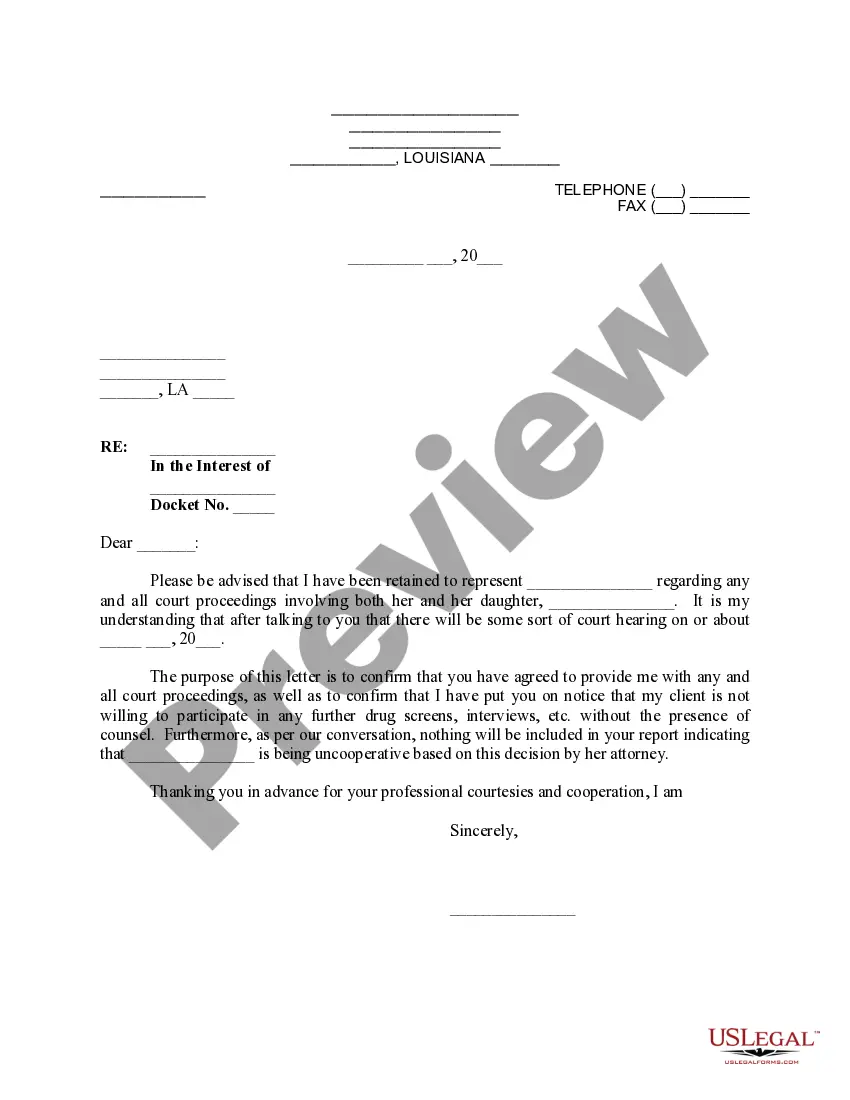
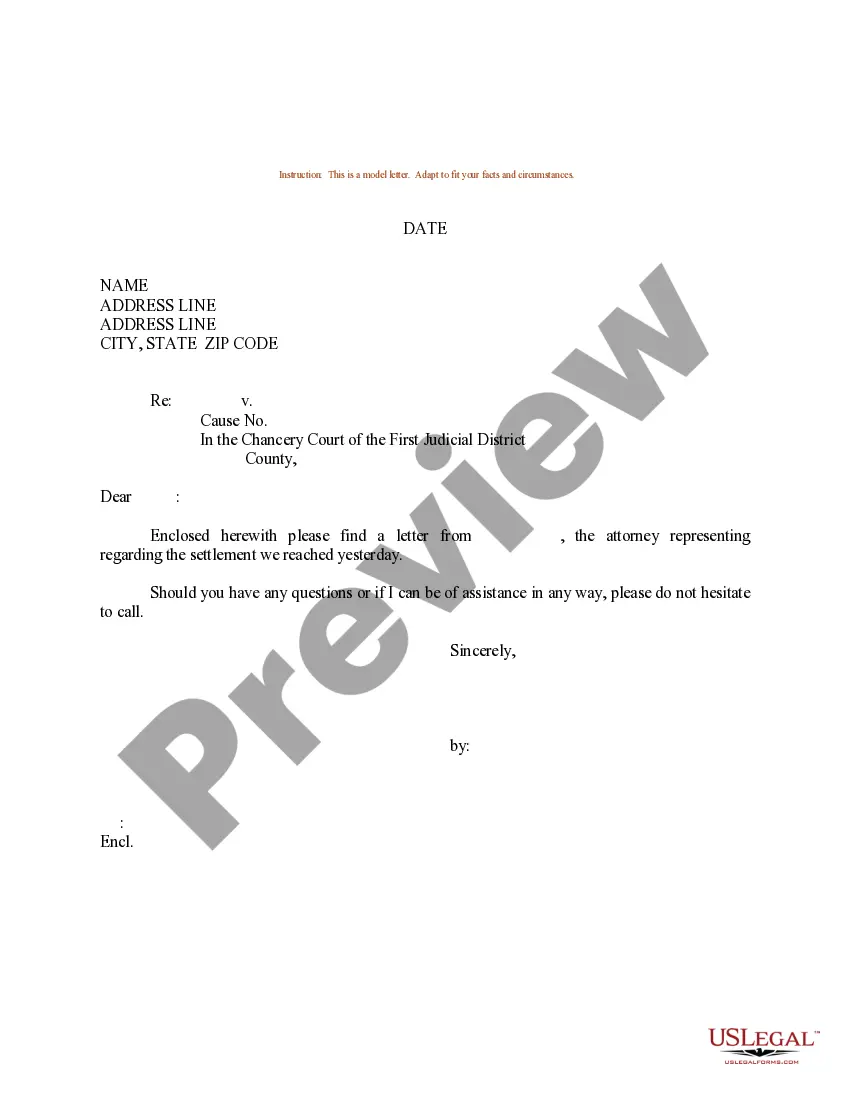
The Letter Advising of Representation of Client is a communication from an attorney to opposing counsel. Its primary purpose is to inform opposing counsel of the attorney's representation of a client and her daughter. This letter serves to confirm key discussions related to the case, ensuring that the attorney is included in all court proceedings and that the client will not participate in interviews or drug tests without legal representation present.
Key parts of this document
- Contact information of the attorney and client, including addresses and phone numbers.
- Confirmation of the attorney's representation of both the client and her daughter.
- Details regarding upcoming court proceedings and the attorney's request for copies of these proceedings.
- Notification that the client will not engage in interviews or drug tests without her lawyer present.
- A statement ensuring that the report from opposing counsel will not reflect unfavorably on the client for adhering to this decision.

When to use this form
This form is useful when an attorney is formally representing a client in legal matters involving family law or custody disputes. It is ideal for cases where communication with opposing counsel is necessary to clarify the client's rights and ensure legal representation during any hearings or evaluations.
Who needs this form
- Attorneys representing clients in family law cases.
- Clients involved in legal proceedings concerning child custody or related issues.
- Legal professionals looking to confirm communication regarding representation and client rights.
Steps to complete this form
- Fill in your contact information, including your name, address, phone number, and fax number.
- Enter the date of the letter and the opposing counsel's information.
- Clearly state the names of the clients you are representing.
- Include details about any upcoming court hearings or proceedings.
- Ensure to mention that you will require all court proceedings and confirm that your client will attend interviews or tests only with you present.
Notarization guidance
This form does not typically require notarization unless specified by local law. It is advisable to check with your attorney or local regulations to ensure compliance.
Get your form ready online
Our built-in tools help you complete, sign, share, and store your documents in one place.
Make edits, fill in missing information, and update formatting in US Legal Forms—just like you would in MS Word.
Download a copy, print it, send it by email, or mail it via USPS—whatever works best for your next step.
Sign and collect signatures with our SignNow integration. Send to multiple recipients, set reminders, and more. Go Premium to unlock E-Sign.
If this form requires notarization, complete it online through a secure video call—no need to meet a notary in person or wait for an appointment.
We protect your documents and personal data by following strict security and privacy standards.

Make edits, fill in missing information, and update formatting in US Legal Forms—just like you would in MS Word.

Download a copy, print it, send it by email, or mail it via USPS—whatever works best for your next step.

Sign and collect signatures with our SignNow integration. Send to multiple recipients, set reminders, and more. Go Premium to unlock E-Sign.

If this form requires notarization, complete it online through a secure video call—no need to meet a notary in person or wait for an appointment.

We protect your documents and personal data by following strict security and privacy standards.
Mistakes to watch out for
- Neglecting to include accurate contact information.
- Omitting key details about court proceedings or dates.
- Failing to specify the conditions under which the client will participate in interviews or tests.
- Not keeping a copy of the letter for your records.
Benefits of using this form online
- Conveniently download and edit the form to suit your specific needs.
- Access professionally drafted templates created by licensed attorneys.
- Save time by completing and storing your legal documents digitally.
Key takeaways
- The Letter Advising of Representation of Client is crucial for maintaining clear communication between attorneys and opposing counsel.
- This form helps protect the clientâs rights by ensuring legal representation during proceedings.
- Appropriate completion of the form is essential in avoiding misunderstandings with opposing counsel.
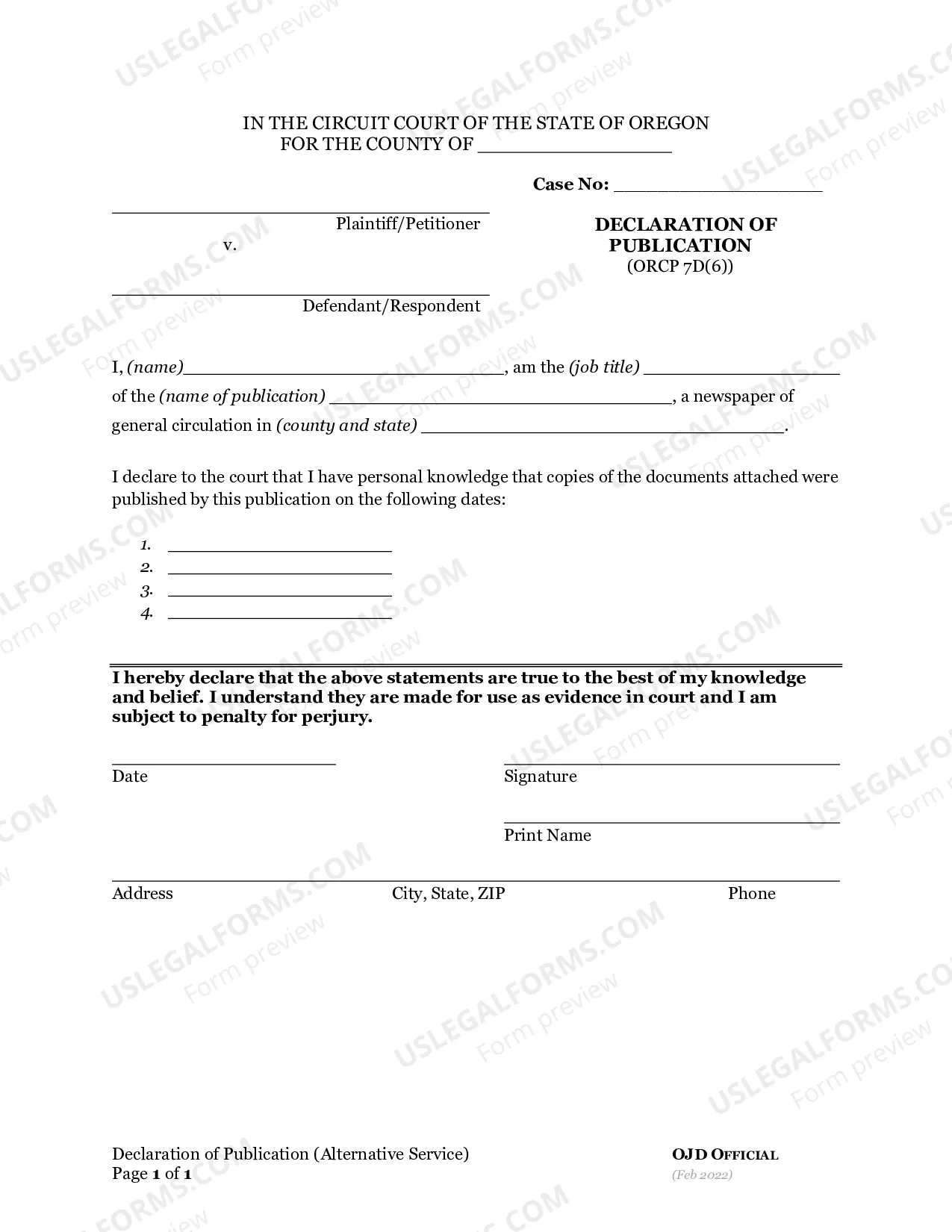
Looking for another form?


Form popularity
FAQ
There is no absolute right to legal representation in Australia, which means that for a long list of reasons, unless you can afford a lawyer you're on your own.Without means testing, Legal Aid do provide legal advice and duty lawyers in some courts, but not in all courtrooms and certainly not for all types of matters.
Unlike the USA, there is no right to free legal representation in Australia. We must either pay a lawyer to represent us, qualify for assistance such as Legal Aid or remain unrepresented. In fact, court cases have confirmed that people charged with criminal offences are not entitled to state-funded represented.
The right to counsel refers to the right of a criminal defendant to have a lawyer assist in his defense, even if he cannot afford to pay for an attorney. The Sixth Amendment gives defendants the right to counsel in federal prosecutions.
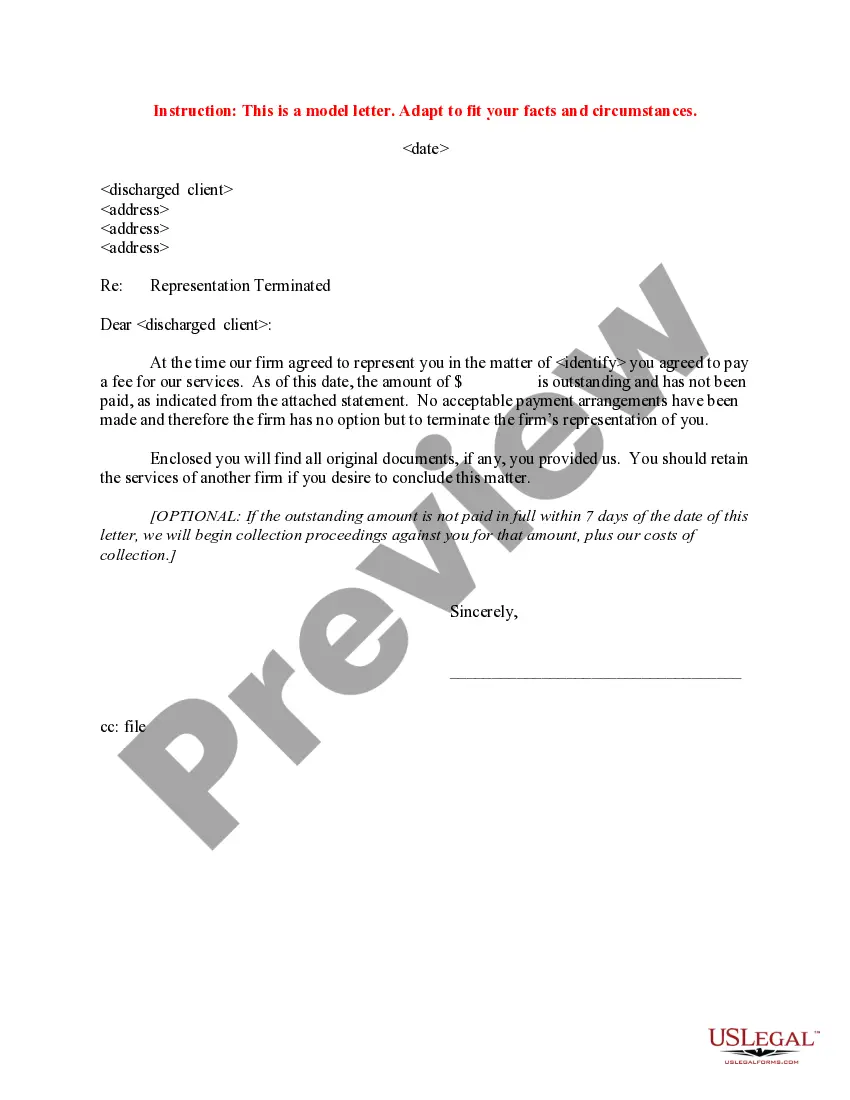
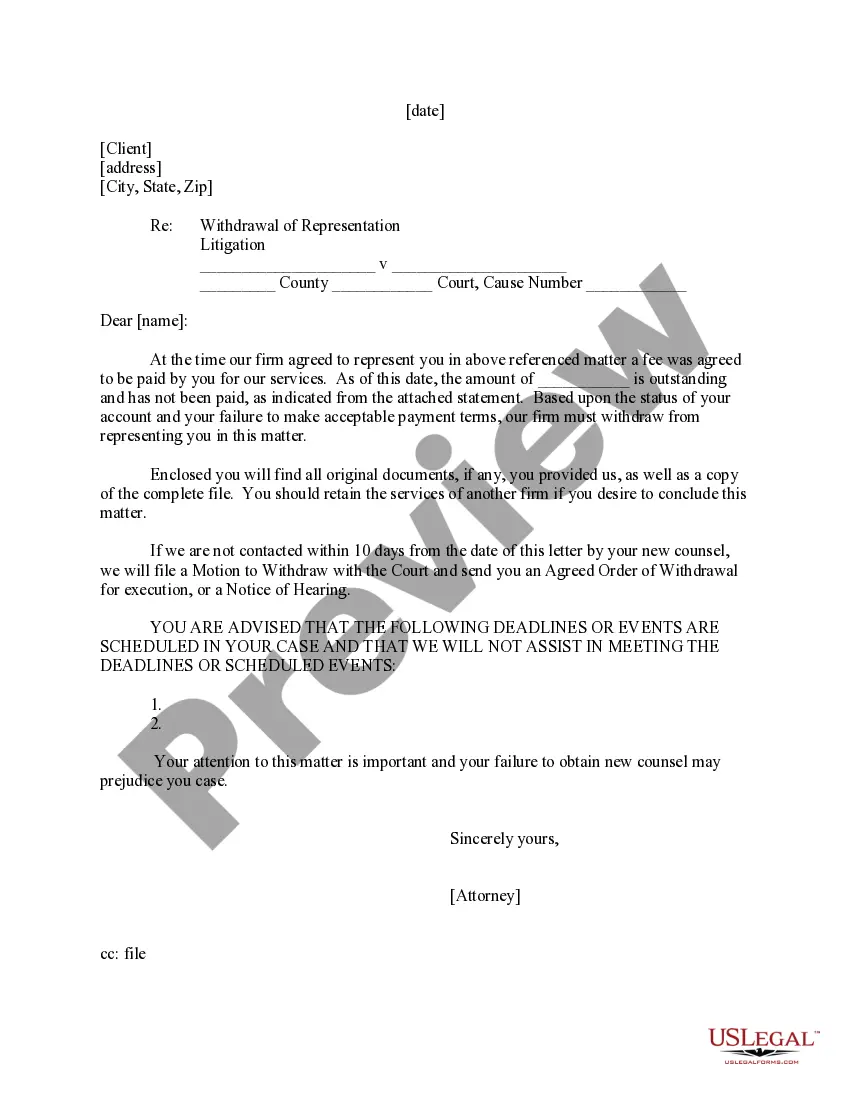
Mandatory Withdrawal. 2 A lawyer ordinarily must decline or withdraw from representation if the client demands that the lawyer engage in conduct that is illegal or violates the Rules of Professional Conduct or other law.
Right to self-represent Common law provides that everyone has the right to represent themselves in court in both civil and criminal matters unless they have been ruled as vexatious.
The U.S. Supreme Court has gradually recognized a defendant's right to counsel of his or her own choosing. A court may deny a defendant's choice of attorney in certain situations, however, such as if the court concludes that the attorney has a significant conflict of interest.
Ask your local Citizens Advice. Get help with a consumer problem. Find a law centre. Contact LawWorks. Get help from Advocate. Exceptional case funding. Getting advice for free or a fixed fee.
Legal representation is the process of lawyers representing their clients in court and the work that the lawyers do during the proceedings.
Figure 3.7 Legal Aid NSW provides legal assistance and representation to people who are socially and economically disadvantaged.