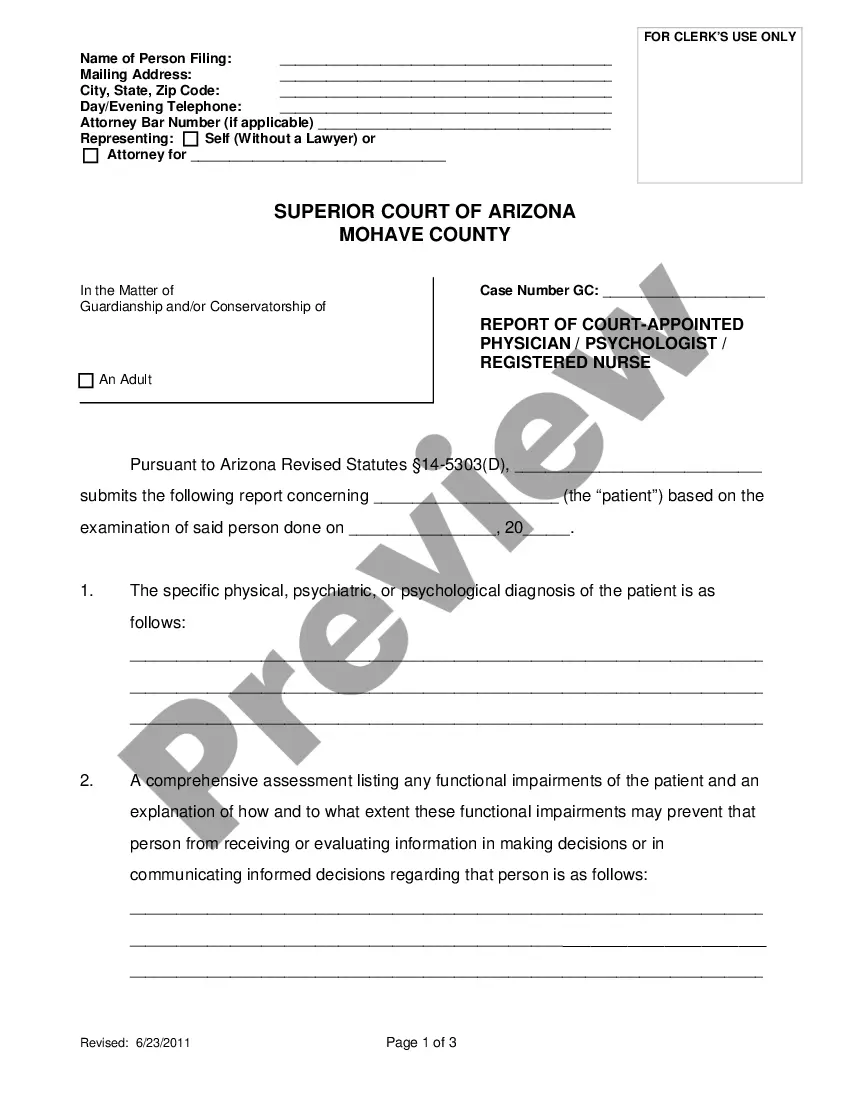
Mississippi Plaintiff's Request for Production of Documents - Short
About this form
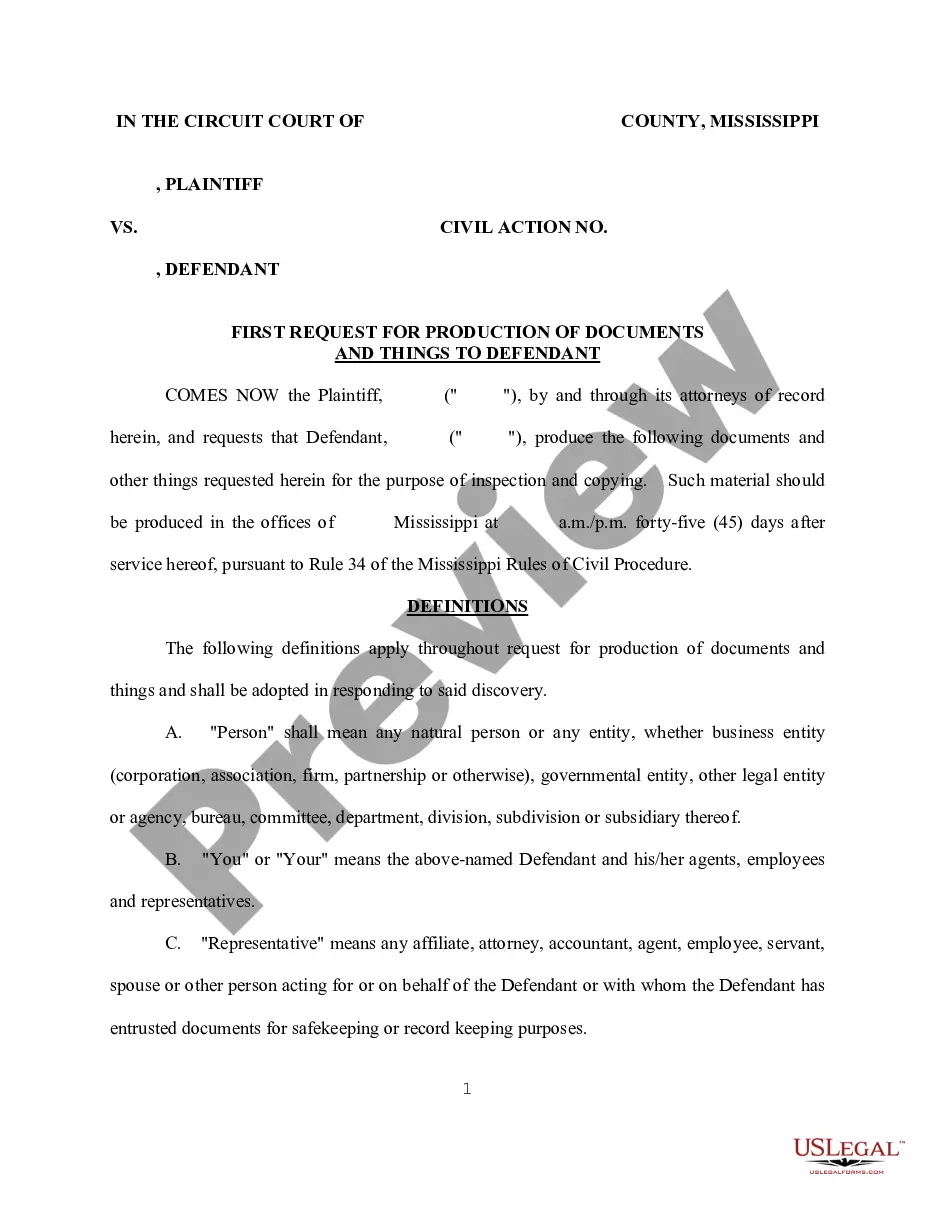
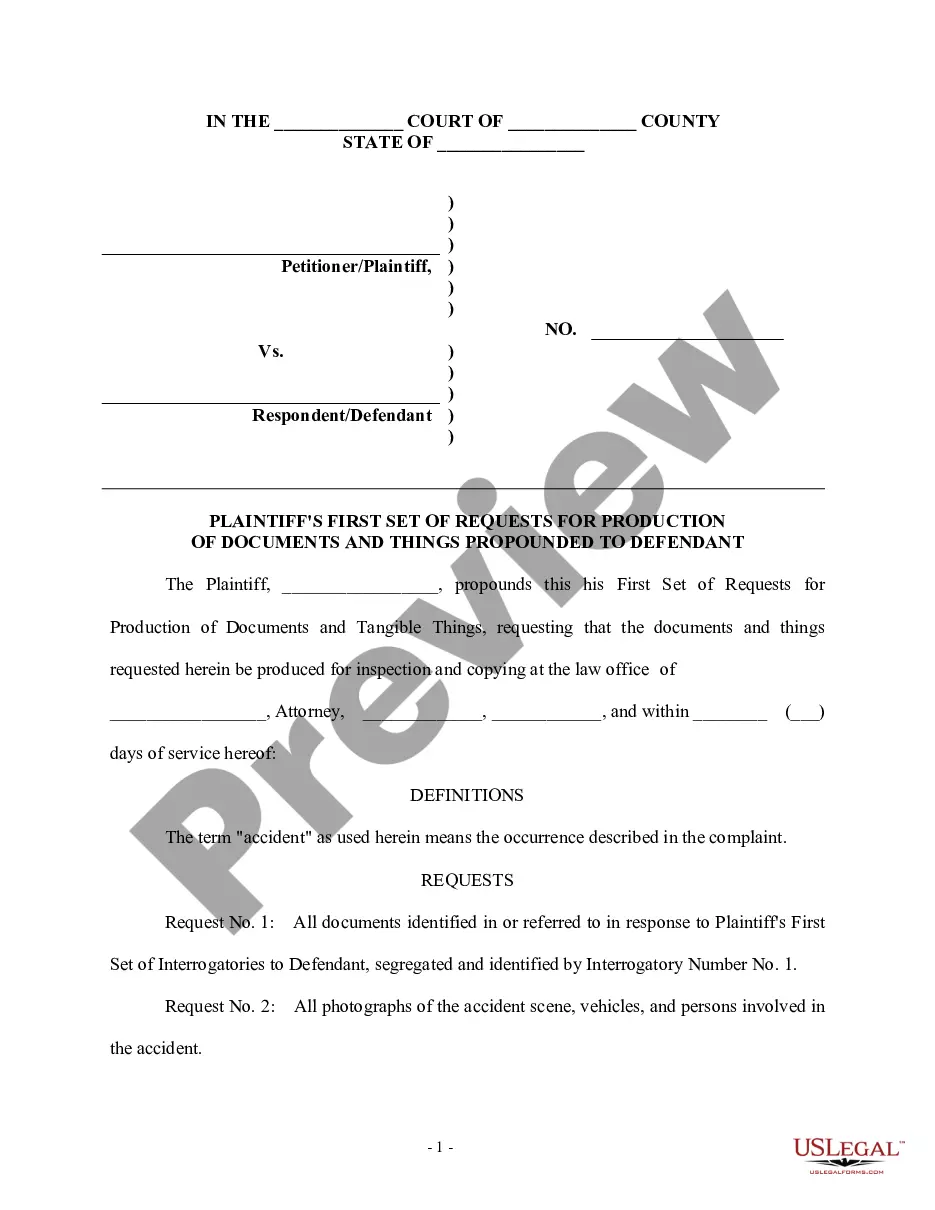
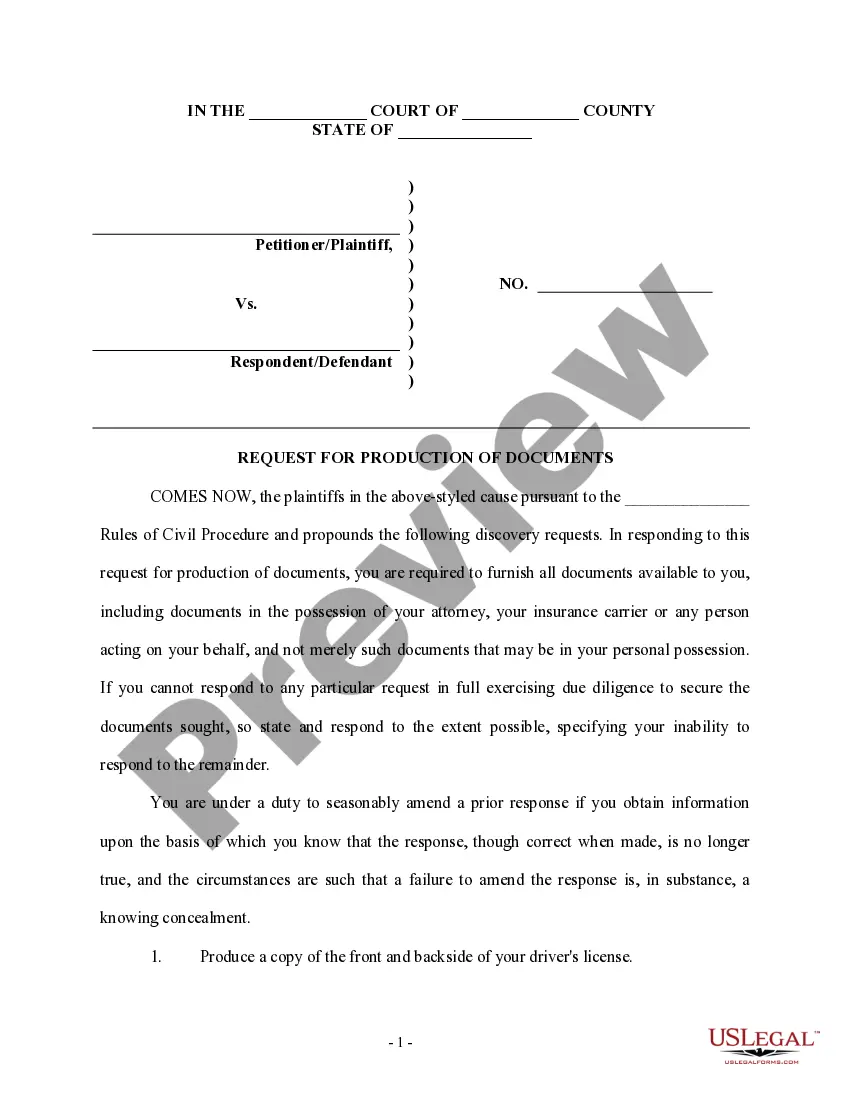
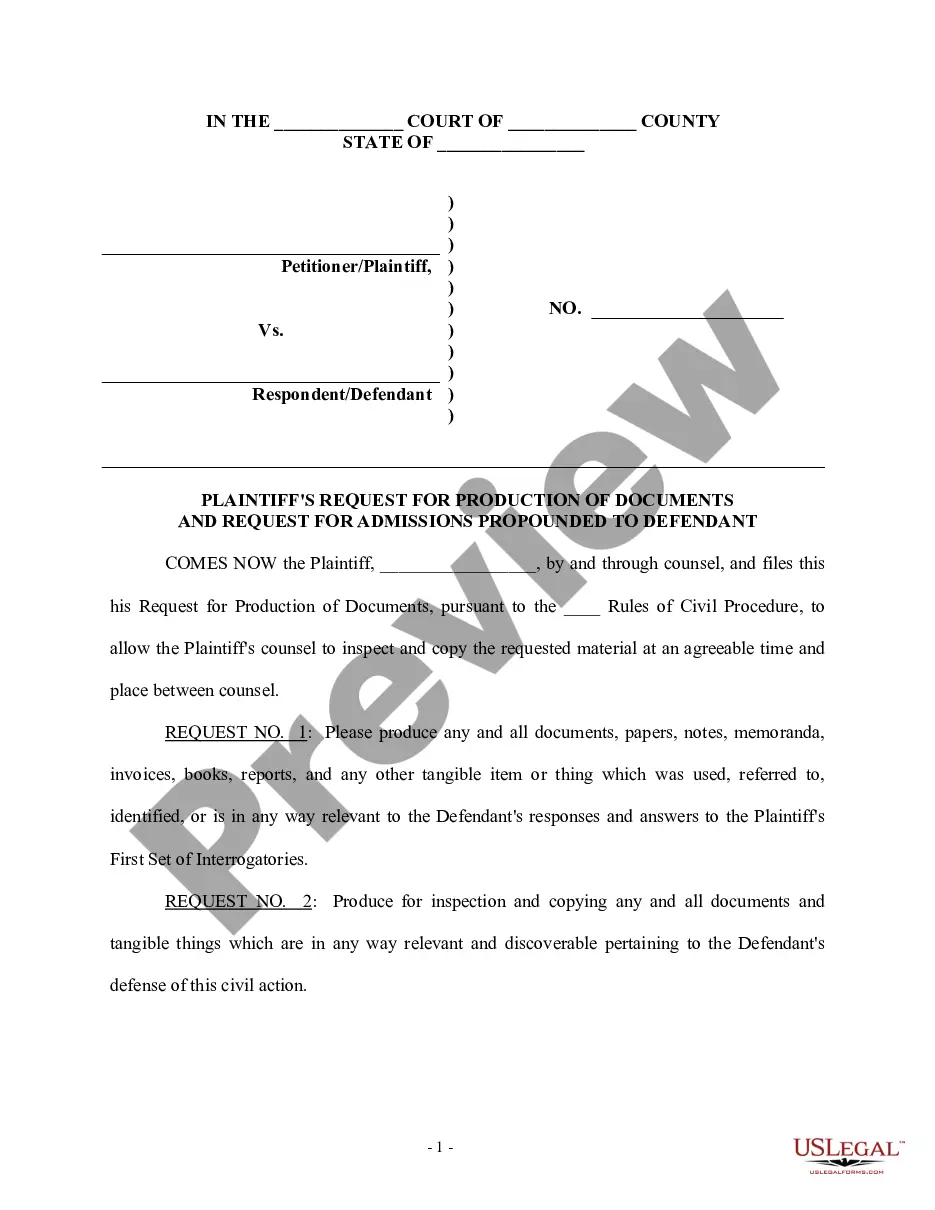
The Plaintiff's Request for Production of Documents is a legal document used in civil litigation. It allows the plaintiff to formally request relevant documents from the opposing party to build their case. This form differs from other discovery requests by focusing specifically on documents, unlike interrogatories or admissions. It is crucial for gathering evidence and obtaining information necessary for trial preparation.
Key parts of this document
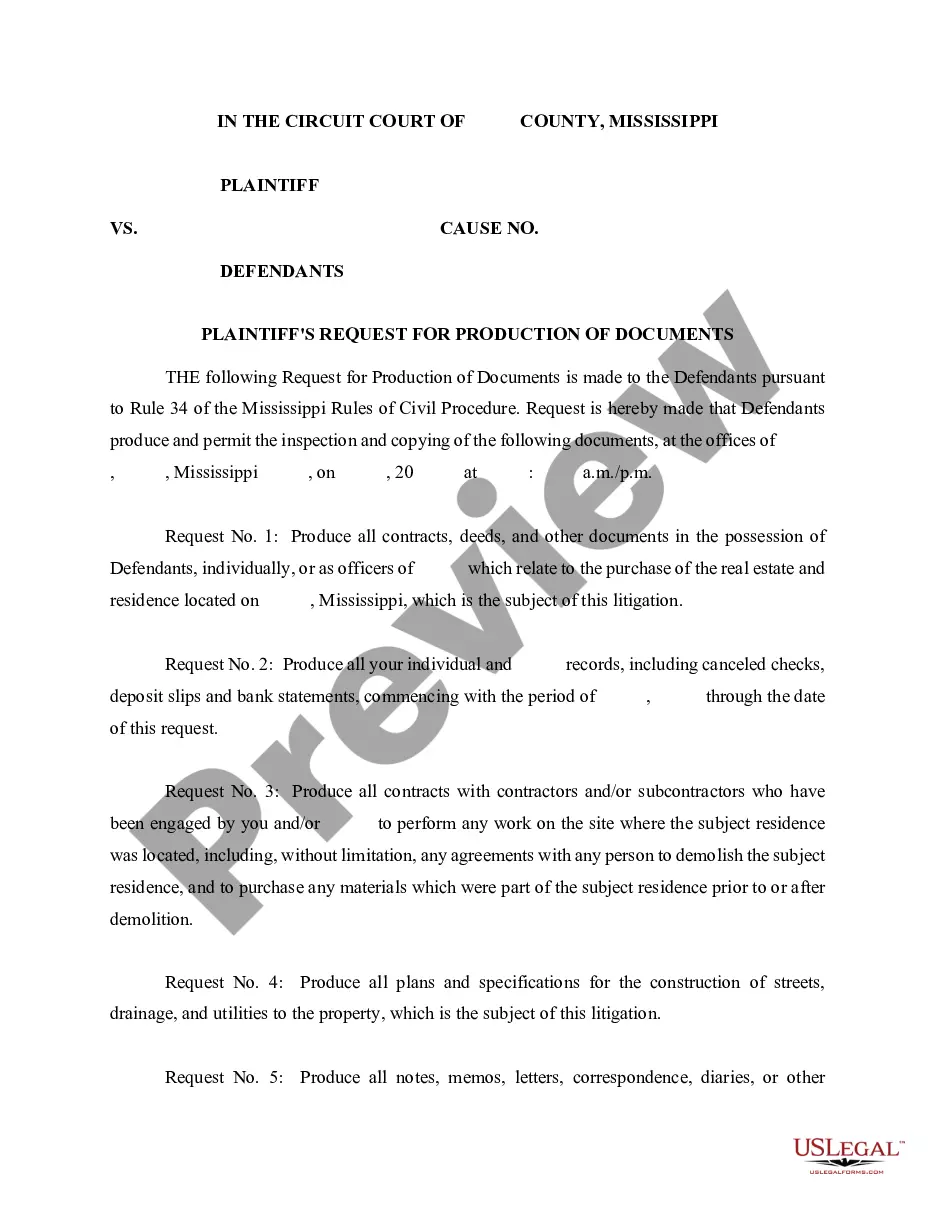
- Request No. 4: Specifies the request for all plans and specifications related to the construction of the property in question.
- Request No. 5: Requests correspondence and documentation that shows the progress of work on the project being litigated.
- Signature fields: Spaces for the attorney and the plaintiff to sign and date the document.
- Instructions for the opposing party: Information on how to respond to the requests outlined in this form.

Common use cases
This form is used when a plaintiff needs to obtain specific documents from the defendant as part of the discovery phase in a civil lawsuit. It is valuable when there is a need to gather evidence that supports the plaintiff's claims or counters the defendant's defenses. For example, if the lawsuit pertains to a construction defect, the plaintiff might request plans and correspondence to understand project compliance and timelines.
Who this form is for
This form is intended for:
- Individuals or businesses acting as plaintiffs in a civil legal case.
- Attorneys representing plaintiffs seeking evidence from the defendant.
- Parties involved in litigation who require documentation to support their claims.
How to complete this form
- Identify the parties involved: Include the names and addresses of the plaintiff and defendant.
- Specify the documents requested: Clearly outline each document request with sufficient detail.
- Include instructions for compliance: Provide a description of how the opposing party should respond to the requests.
- Enter dates: Include relevant dates for document submission deadlines.
- Sign and date the form: Ensure that both the attorney and the plaintiff have signed the document before filing.
Does this document require notarization?
This form does not typically require notarization unless specified by local law. It is advisable to check with legal counsel to confirm any notarization requirements specific to your jurisdiction.
Get your form ready online
Our built-in tools help you complete, sign, share, and store your documents in one place.
Make edits, fill in missing information, and update formatting in US Legal Forms—just like you would in MS Word.
Download a copy, print it, send it by email, or mail it via USPS—whatever works best for your next step.
Sign and collect signatures with our SignNow integration. Send to multiple recipients, set reminders, and more. Go Premium to unlock E-Sign.
If this form requires notarization, complete it online through a secure video call—no need to meet a notary in person or wait for an appointment.
We protect your documents and personal data by following strict security and privacy standards.

Make edits, fill in missing information, and update formatting in US Legal Forms—just like you would in MS Word.

Download a copy, print it, send it by email, or mail it via USPS—whatever works best for your next step.

Sign and collect signatures with our SignNow integration. Send to multiple recipients, set reminders, and more. Go Premium to unlock E-Sign.

If this form requires notarization, complete it online through a secure video call—no need to meet a notary in person or wait for an appointment.

We protect your documents and personal data by following strict security and privacy standards.
Avoid these common issues
- Failing to be specific in document requests, which can lead to incomplete responses.
- Not including appropriate deadlines for compliance.
- Neglecting to sign the document, which can invalidate the request.
Why use this form online
- Convenient access: Downloadable in Word or Rich Text formats for easy editing.
- Time-saving: Quickly customizable to fit the specifics of your case.
- Prepared by legal professionals: Forms are drafted by licensed attorneys, ensuring legal accuracy.
Legal use & context
- This request is a recognized part of the discovery process in litigation.
- Properly executed, it enhances the plaintiffâs ability to obtain relevant documents crucial for their case.
- Failure to comply with discovery requests can lead to court penalties or adverse rulings.
Summary of main points
- The Plaintiff's Request for Production of Documents is essential for gathering evidence in litigation.
- Customization of the form is crucial to align with the specifics of your case.
- Understand local rules concerning document requests to ensure effective use.
Definitions you should know
- Discovery: The pre-trial process where parties exchange information and evidence.
- Plaintiff: The person or entity that brings a lawsuit to court.
- Production of documents: A formal request to obtain documents relevant to the case.
Looking for another form?
Form popularity
FAQ
A request for admission cannot contain subparts, or a compound, conjunctive, or disjunctive request.
Each request must be numbered consecutively. The first paragraph immediately shall state he identity of the party requesting the admissions, the set number, and the identity of the responding party. Each request shall be separately set forth and identified by letter or number. C.C.P.
If a request asks for a document, make a copy of the document; in your response, describe the document and say that a copy is attached; and attach a copy of the document to the responses you send back to the other side.
A request for production is a legal request for documents, electronically stored information, or other tangible items made in the course of litigation.The responding party is required to furnish copies of any documents that are responsive to the request, except for those that are legally privileged.
Your name and address. The Court's name. The title of the case. Case number. Fill your name in as the Requesting Party. On the following pages, choose which questions you wish to ask by checking boxes next to the questions you wish to ask.
Requests for the Production of Documents are a discovery device used by a party to enable the individual to learn the facts that are the basis for, or support, a pleading with which he or she has been served by the opposing party.These documents might also be evidence in a hearing or a trial.
It means there is more than one question to the question. For instance, "Do you own a blue or black car?" is compound because it asks both whether you own a blue car or whether you own a black car.
What Is a Request for Production of Documents? A request for production is a discovery device used to gain access to documents, electronic data, and physical items held by an opposing party in a legal matter. The aim is to gain insight into any relevant evidence that the opposing party holds.
The process of delivering, or making available for review, documents in response to a request for documents, such as a request for production and a subpoena. A request for documents may call for the production of paper (hard copy) documents and electronically stored information (ESI).