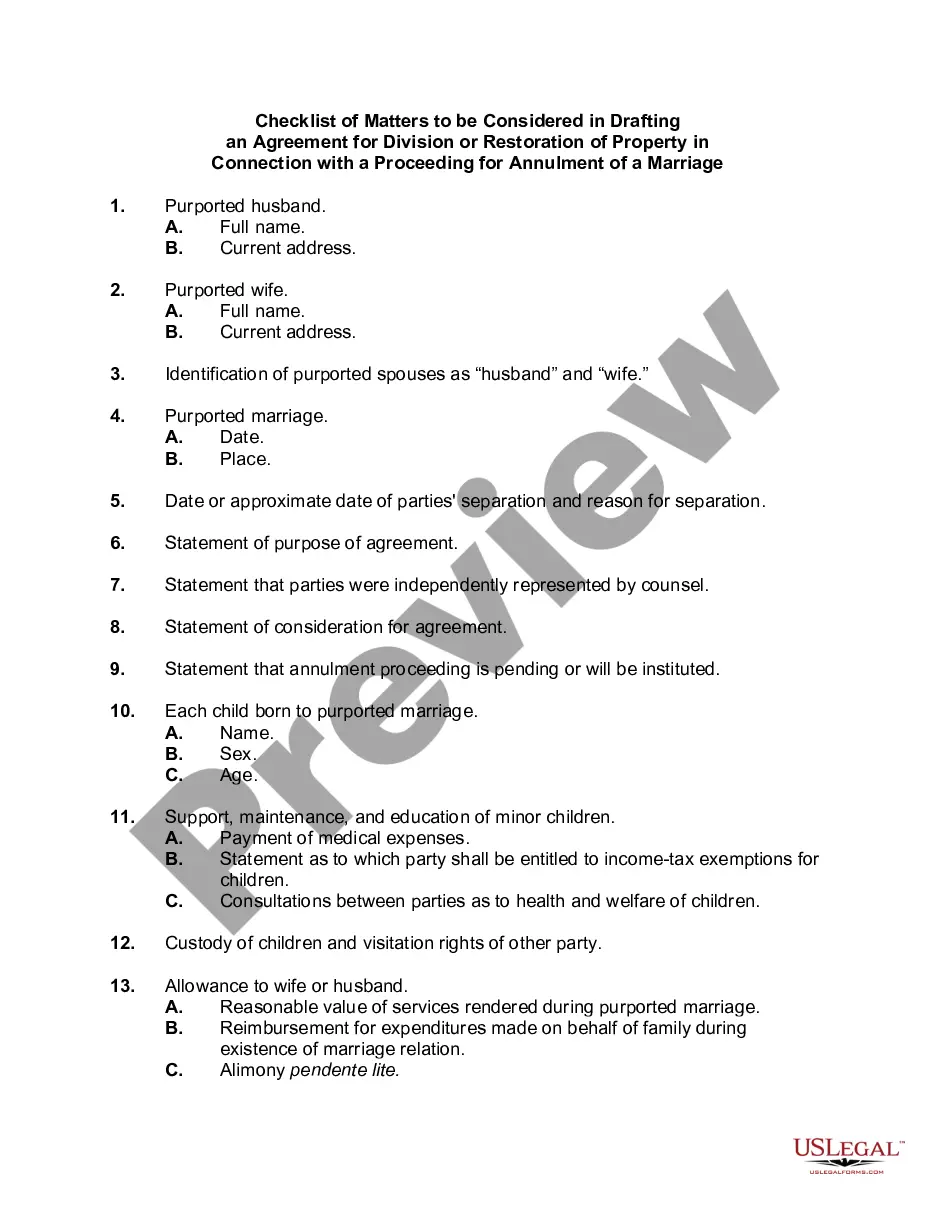
Checklist of Matters to be Considered in Drafting an Agreement for Division or Restoration of Property in Connection with a Proceeding for Annulment of a Marriage
About this form
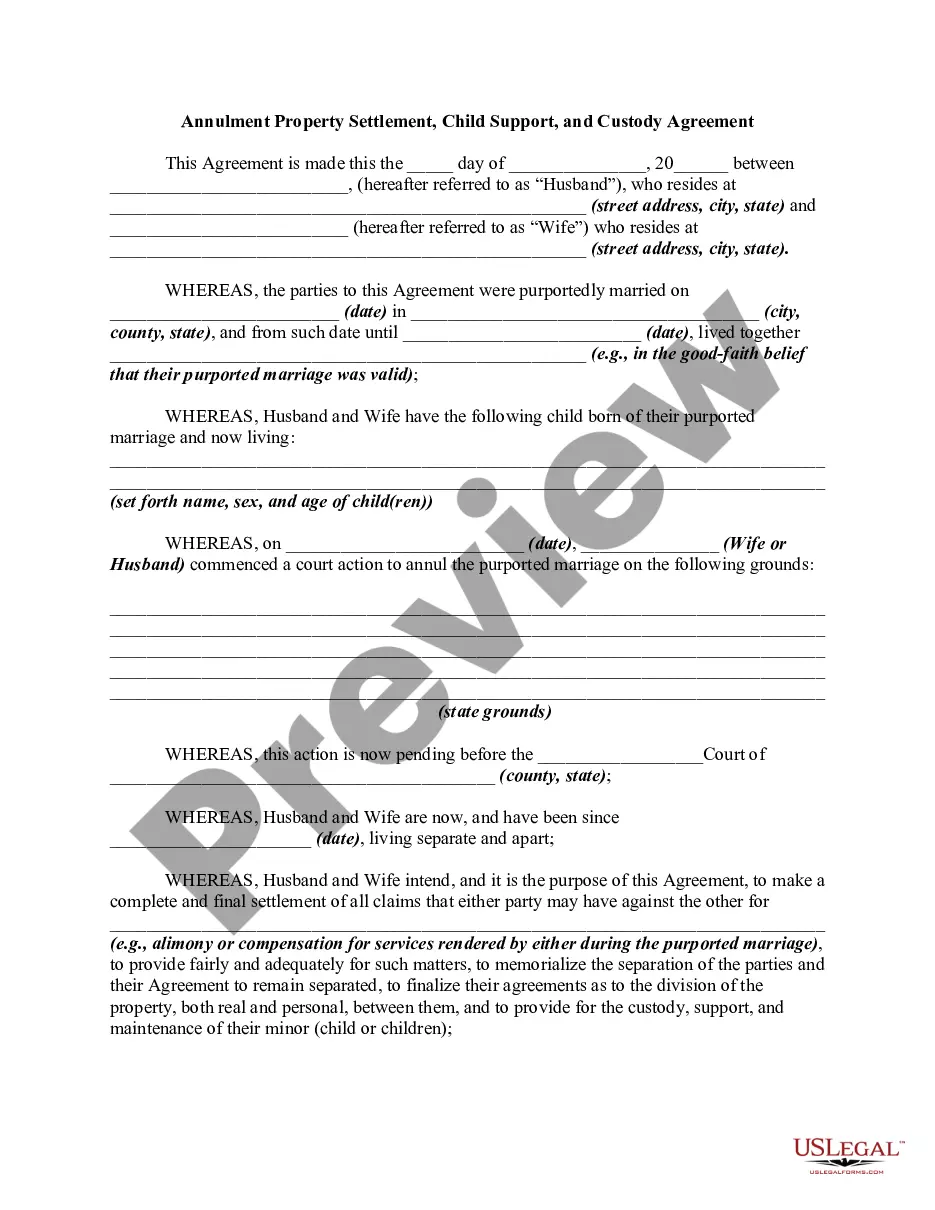
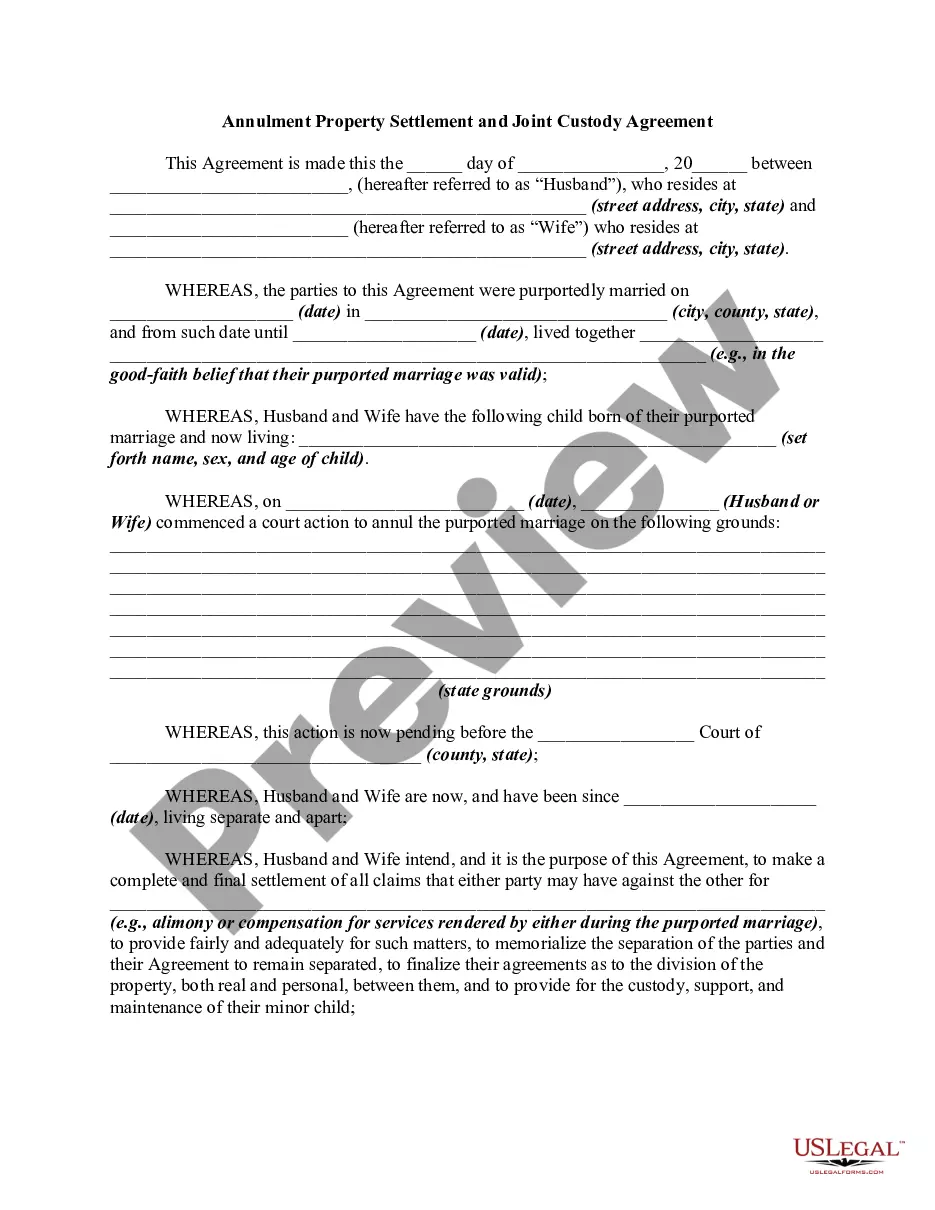
This form is a checklist for drafting an agreement for division or restoration of property in connection with a proceeding for annulment of a marriage. It ensures that all pertinent matters are considered and documented, aiding in a smoother annulment process. This checklist differs from other legal agreements by focusing specifically on property division and restoration issues resulting from an annulment, rather than divorce or other marital dissolution contexts.
Key parts of this document
- Identification of the purported husband and wife, including current addresses.
- Details about the purported marriage, such as date and place.
- Statement of purpose and agreement's consideration.
- Information regarding children born during the purported marriage, including custody and support arrangements.
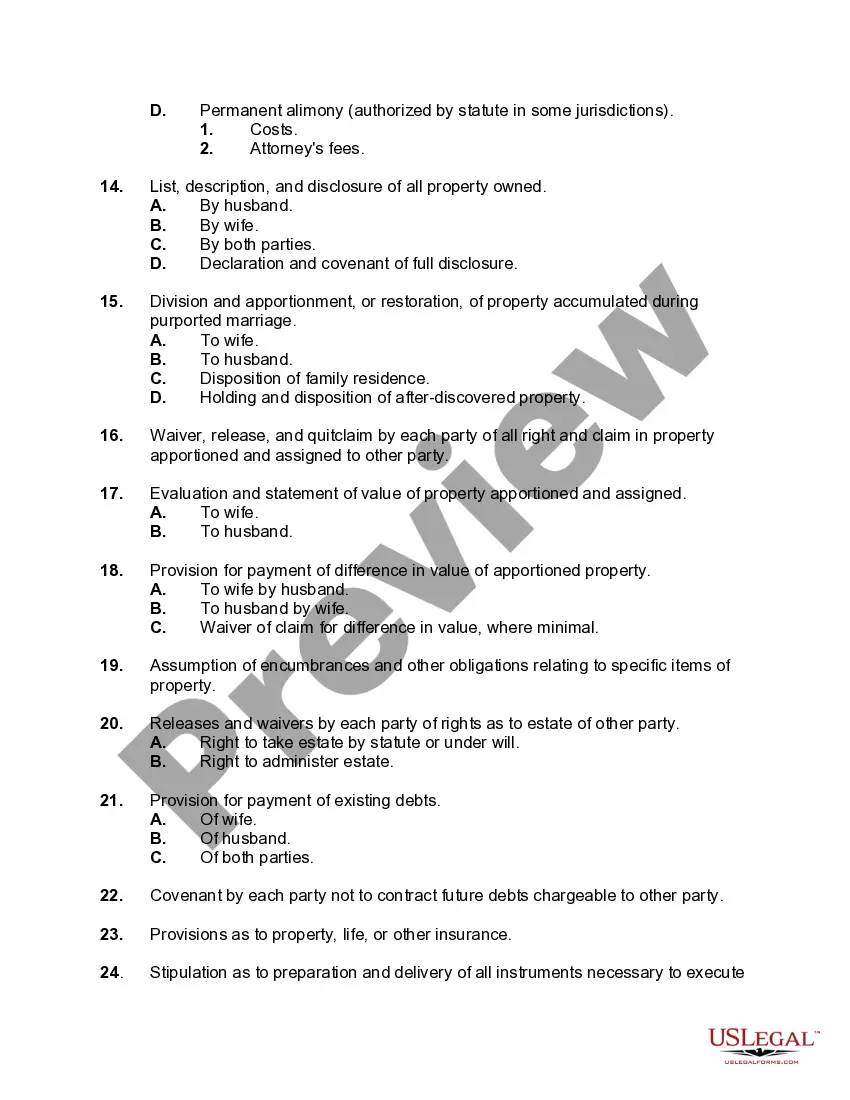
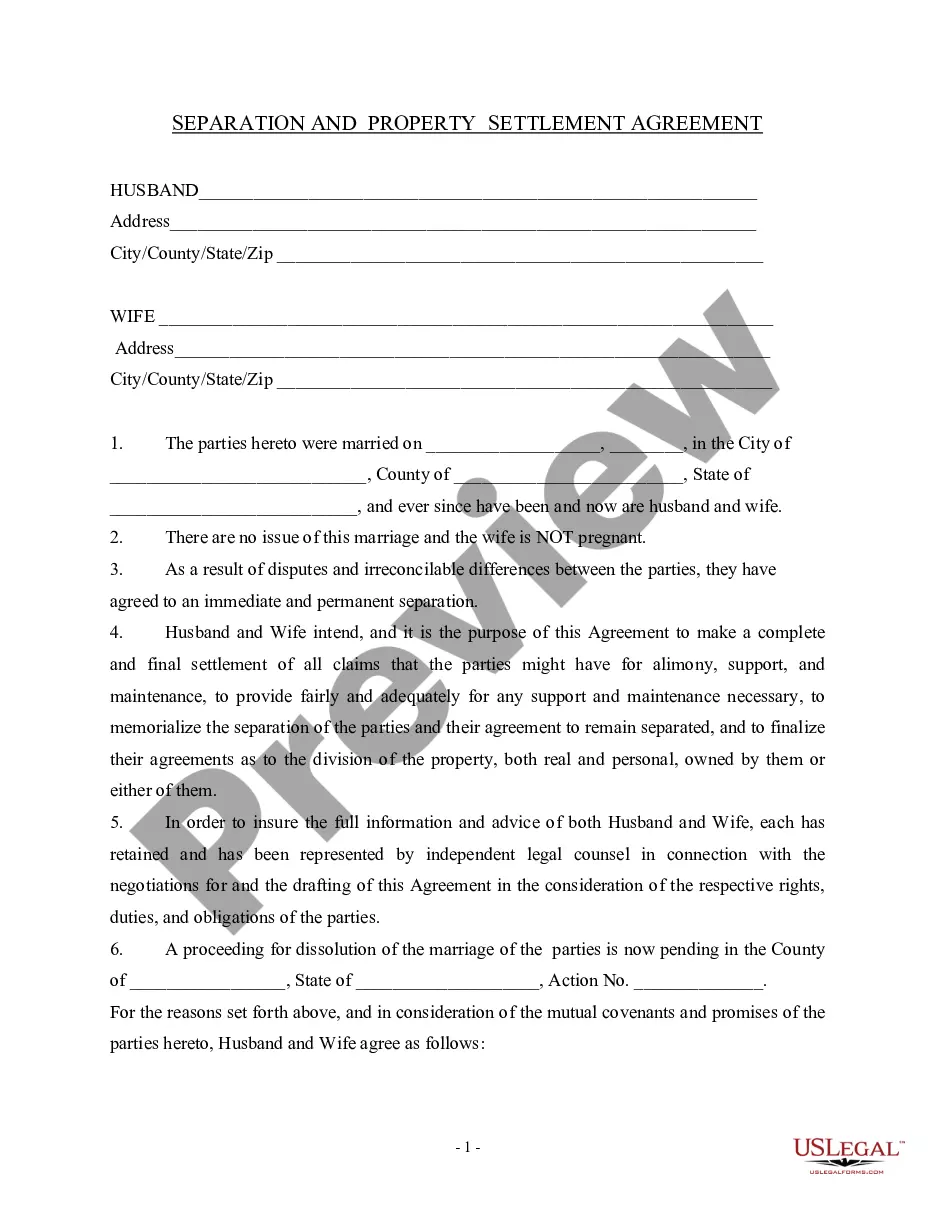
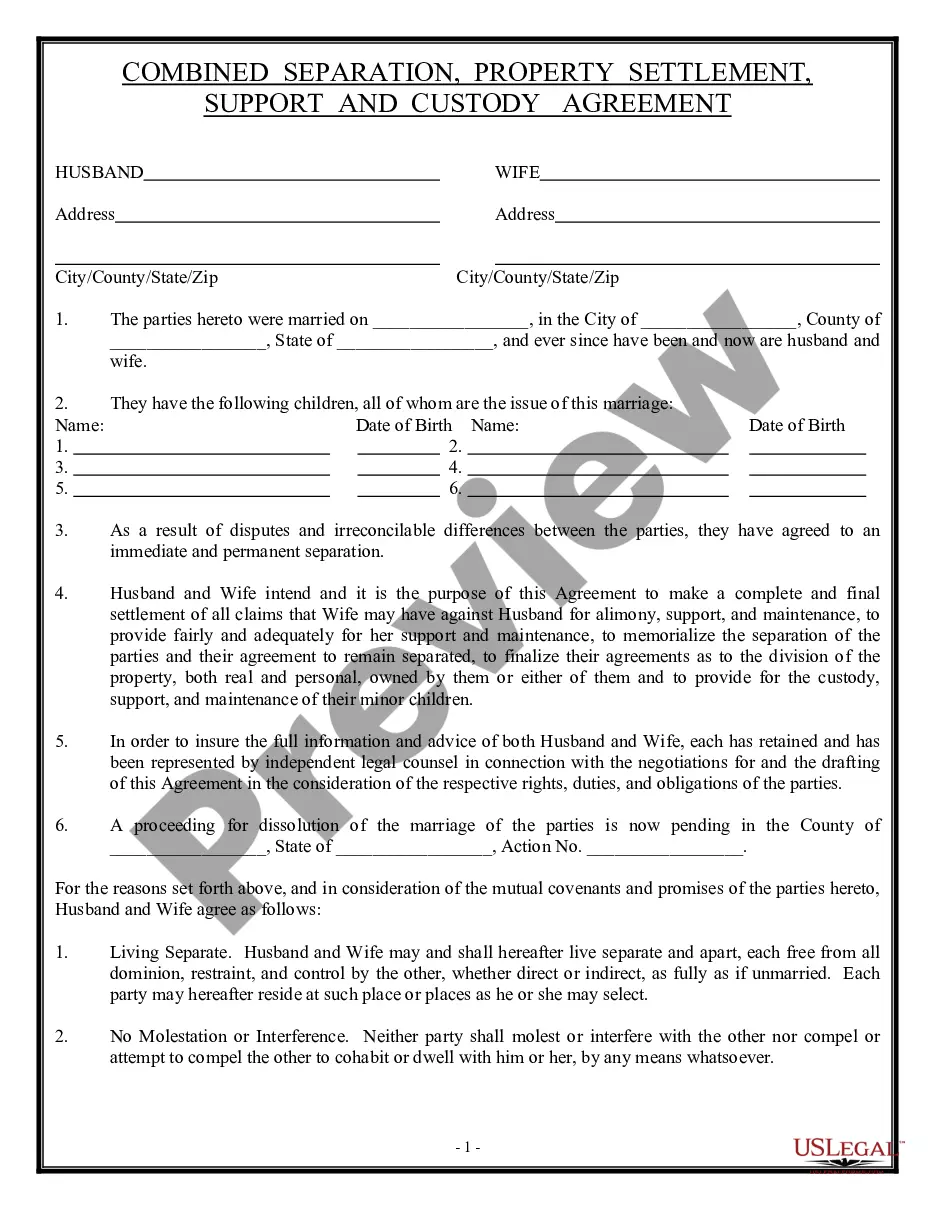
- List and description of all property owned by the parties, including agreements for division.
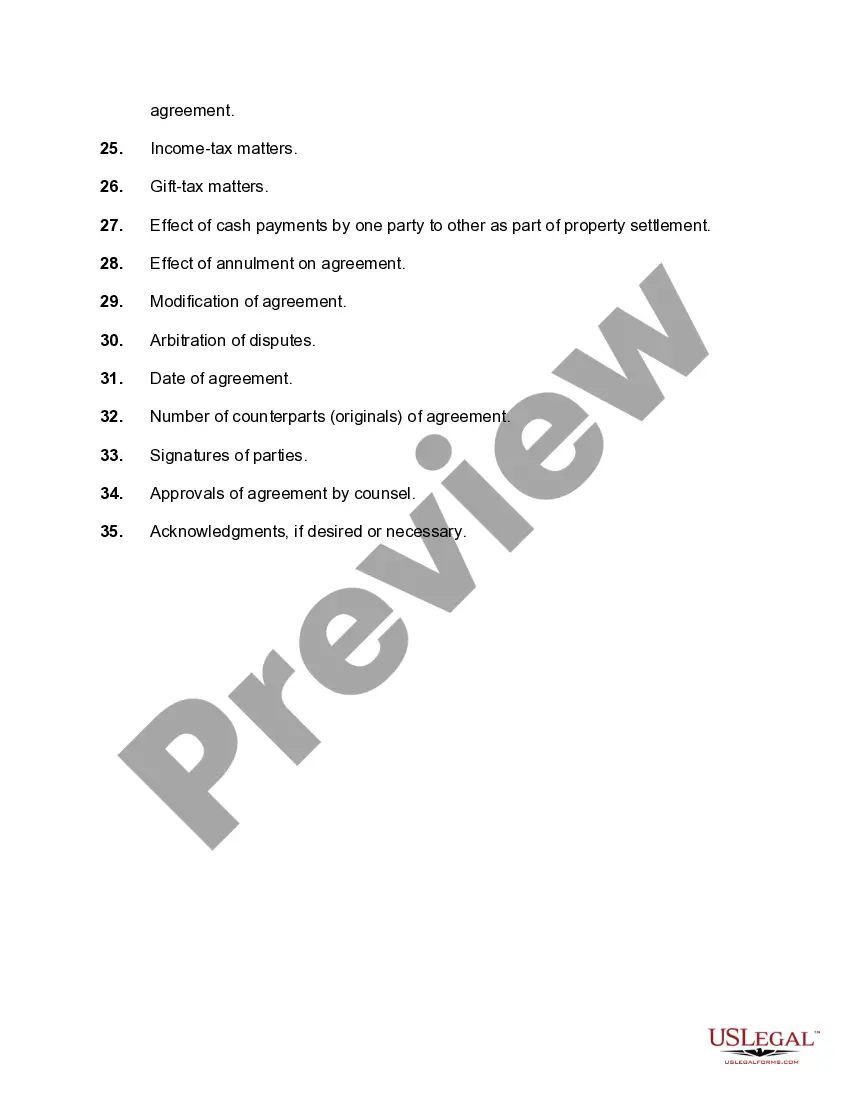
- Clauses regarding liabilities, debts, and provisions for modifications or arbitration of disputes.
Common use cases
This checklist should be used when a couple is seeking to annul their marriage and needs to outline how to divide or restore their property. It is particularly useful in ensuring both parties address critical elements such as asset division, child custody, and financial responsibilities. Using this checklist can help streamline negotiations and clarify expectations between the parties.
Who this form is for
This form is intended for individuals involved in annulment proceedings, specifically:
- Individuals considering or undergoing a marriage annulment.
- Attorneys representing clients in annulment cases.
- Couples wishing to equitably divide property and establish agreements related to children.
Steps to complete this form
- Identify and provide the full names and current addresses of both parties.
- Record details about the purported marriage, including dates and location.
- Outline the purpose of the agreement and confirm independent legal representation.
- Compile information on any children, including their names, ages, and custody arrangements.
- List all property owned by the parties and clarify division plans.
Does this form need to be notarized?
This form does not typically require notarization unless specified by local law. However, having a notary public witness the signatures may enhance the document's credibility and enforceability in legal proceedings.
Get your form ready online
Our built-in tools help you complete, sign, share, and store your documents in one place.
Make edits, fill in missing information, and update formatting in US Legal Forms—just like you would in MS Word.
Download a copy, print it, send it by email, or mail it via USPS—whatever works best for your next step.
Sign and collect signatures with our SignNow integration. Send to multiple recipients, set reminders, and more. Go Premium to unlock E-Sign.
If this form requires notarization, complete it online through a secure video call—no need to meet a notary in person or wait for an appointment.
We protect your documents and personal data by following strict security and privacy standards.

Make edits, fill in missing information, and update formatting in US Legal Forms—just like you would in MS Word.

Download a copy, print it, send it by email, or mail it via USPS—whatever works best for your next step.

Sign and collect signatures with our SignNow integration. Send to multiple recipients, set reminders, and more. Go Premium to unlock E-Sign.

If this form requires notarization, complete it online through a secure video call—no need to meet a notary in person or wait for an appointment.

We protect your documents and personal data by following strict security and privacy standards.
Common mistakes
- Failing to include all assets and liabilities in the property list.
- Not specifying custody arrangements for children, potentially leading to future disputes.
- Neglecting to confirm independent legal representation, which is crucial for enforceability.
Why use this form online
- Convenience: Download and complete the form at your own pace from anywhere.
- Editability: Easily modify the checklist to suit your specific situation.
- Reliability: The forms are created by licensed attorneys to ensure legal compliance and accuracy.
Legal use & context
- This checklist supports the proper documentation of property division in annulment cases, making agreements clearer and more enforceable.
- It helps ensure that both parties are aware of their rights and obligations, reducing the risk of legal disputes.
Looking for another form?
Form popularity
FAQ
A fair settlement should include ample parenting time for each parent. An equitable visitation agreement may not give parents equal custodial time, but it should provide for frequent and continuing contact with each parent.
#1. Start with the Basics. #2. Include the Details. #3. Confirm Your Agreement. #4. Identify and Divide Assets and Debts. #5. Create a Parenting Plan for Custody and Visitation. #6. Agree on Child Support and Spousal Support (Alimony) #7. Polishing Your Agreement. Conclusion.
It was not consummated - you have not had sexual intercourse with the person you married since the wedding (does not apply for same sex couples) you did not properly consent to the marriage - for example you were forced into it.
To get an annulment, you'll have to prove your marriage is "voidable," meaning it was valid, but should be nullified (voided or canceled) based on one of the following grounds: unsound mind--one spouse lacked the ability to give consent due to a mental impairment or the influence of drugs or alcohol.
Marital Settlement Agreements, reached between the parties in writing and signed by the parties, become legally binding when approved by the court at the time of the final court hearing.Once approved by the court, such post judgment stipulations do become legally binding and enforceable between the parties.
Your divorce settlement agreement should cover everything that is important to you, including custody of your children, child support payments, alimony, and the separation of your property, such as your family home, vehicles, and other assets.
There are many factors to consider, including assets, incomes, living expenses, inflation, alimony, child support, taxes, retirement plans, investments, medical expenses and health insurance costs, and child-related expenses such as education.
As part of the divorce judgment, the court will divide the couple's debts and assets. The court will indicate which party is responsible for paying which bills while dividing property and money. Generally, the court tries to divide assets and debts equally; however, they can also be used to balance one another.