Arizona Data Sheet
What this document covers
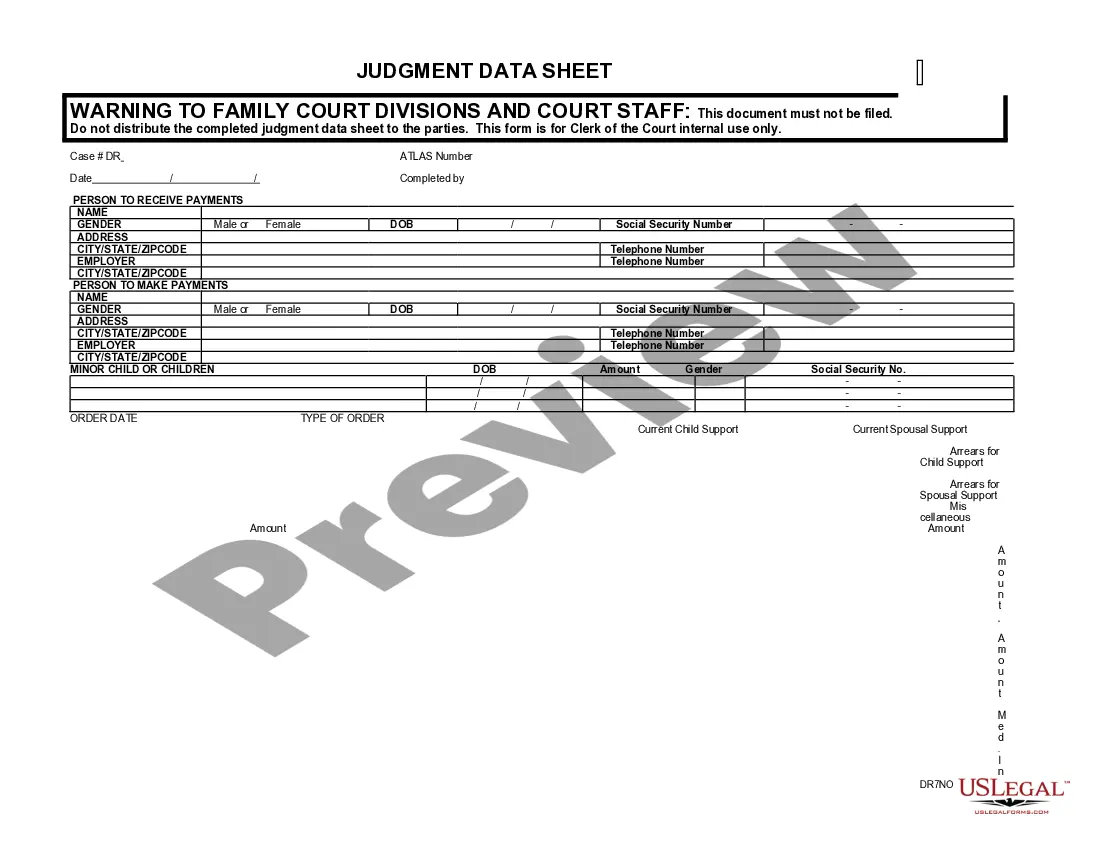
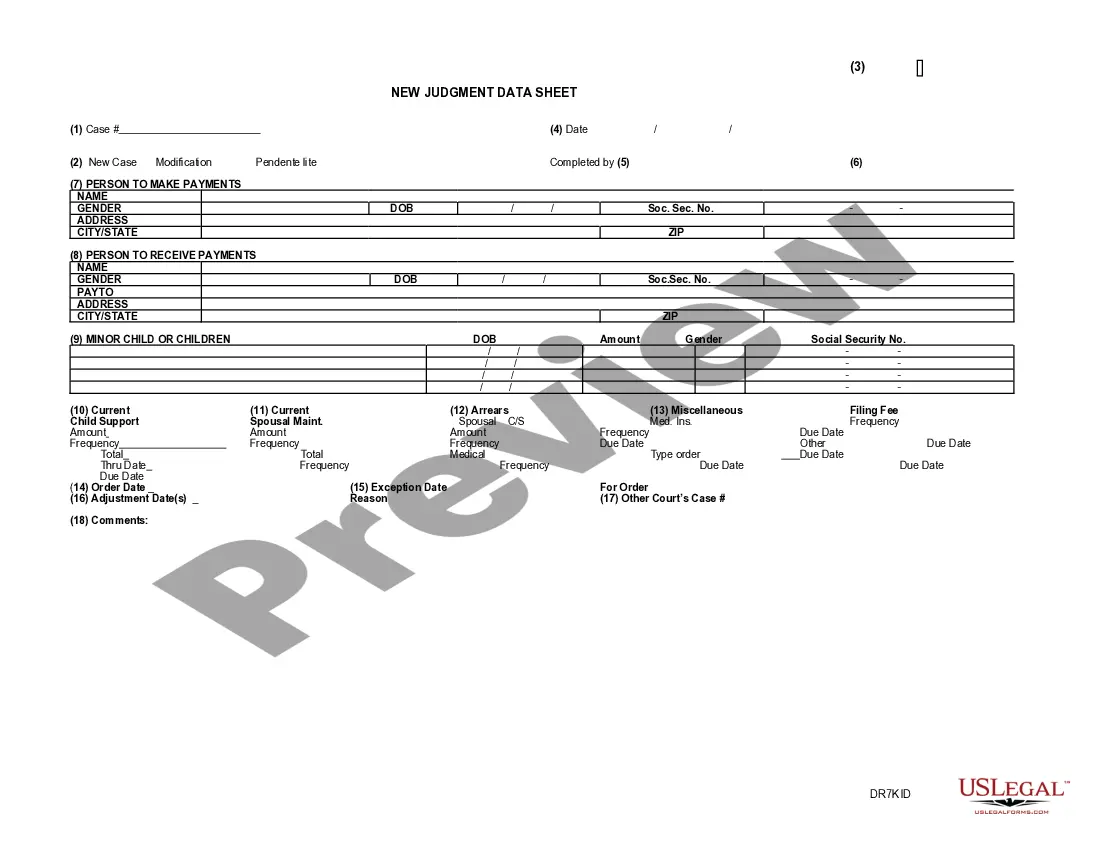
The Data Sheet is a legal document prepared following a new judgment in family court. This form provides essential information regarding the parties involved, the outcomes of the lawsuit, and contains other significant details. Unlike other forms, the Data Sheet is strictly for internal use by the Clerk of the Court and must not be filed or distributed among the parties involved in the case.
Form components explained
- Case details including the DR number and ATLAS number
- Information about the person receiving payments, including name, gender, date of birth, and Social Security number
- Details about the person making payments, similar to the recipient's details
- Information regarding minor children involved in the case with their dates of birth and Social Security numbers
- Order details including types of support and payment amounts
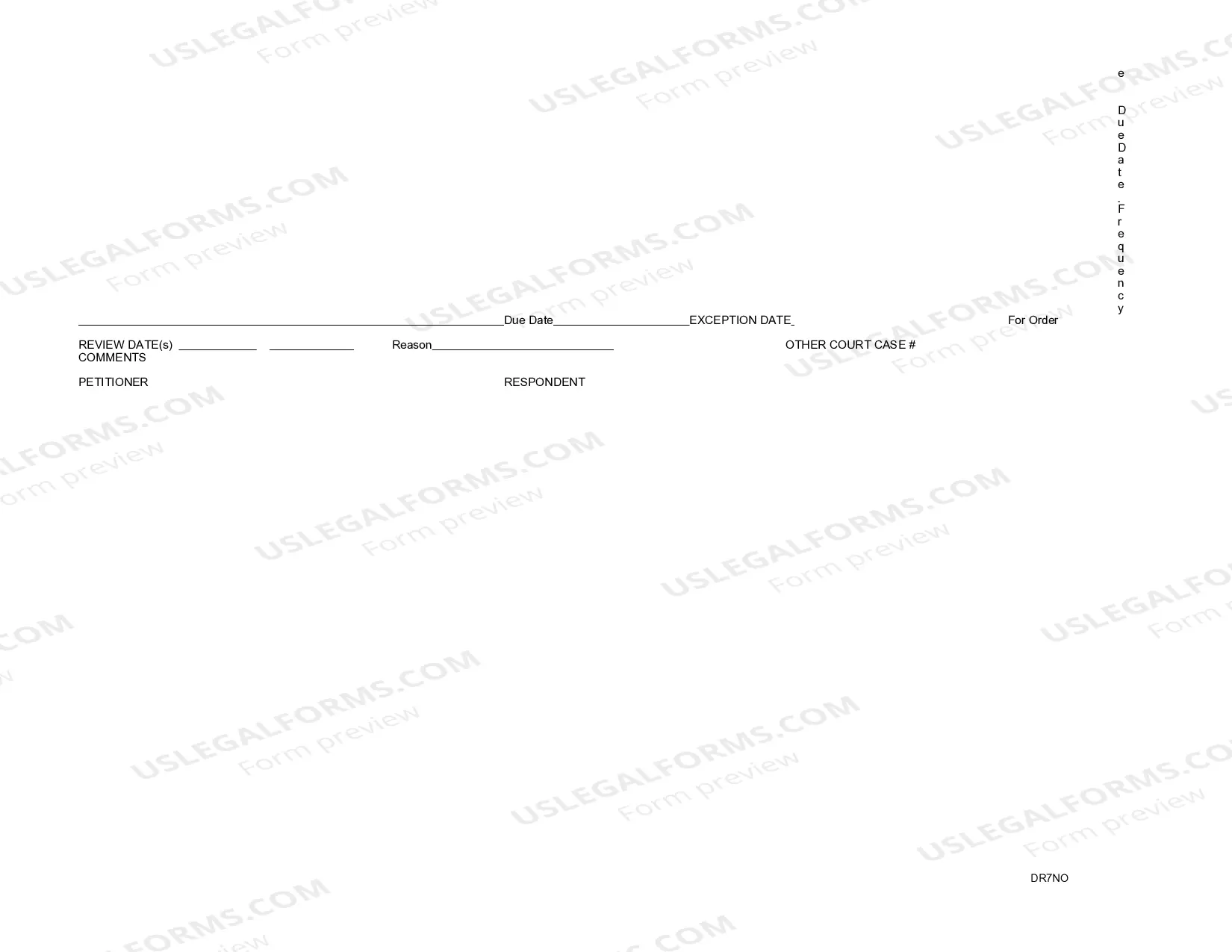
- Exception and review dates, along with pertinent comments related to the case


When this form is needed
This Data Sheet should be prepared immediately after a new judgment is entered in family court. It is crucial for documenting payment responsibilities and any orders related to child support or spousal support. If modifications or new judgments are issued, an updated Data Sheet will also be required.
Who needs this form
- Clerks of the Court for internal administrative purposes
- Family law attorneys managing cases with child or spousal support orders
- Individuals involved in proceedings that result in a judgment of support
Completing this form step by step
- Enter the case number and ATLAS number at the top of the form.
- Complete the sections for both the person receiving payments and the person making payments with their relevant details.
- List any minor children involved, including their birth dates and Social Security numbers.
- Document the order details, specifying types and amounts for child support, spousal support, and any miscellaneous amounts.
- Fill in the exception and review dates as necessary, and add any comments for clarity.
Notarization guidance
This form does not typically require notarization to be legally valid. However, some jurisdictions or document types may still require it. US Legal Forms provides secure online notarization powered by Notarize, available 24/7 for added convenience.
Get your form ready online
Our built-in tools help you complete, sign, share, and store your documents in one place.
Make edits, fill in missing information, and update formatting in US Legal Forms—just like you would in MS Word.
Download a copy, print it, send it by email, or mail it via USPS—whatever works best for your next step.
Sign and collect signatures with our SignNow integration. Send to multiple recipients, set reminders, and more. Go Premium to unlock E-Sign.
If this form requires notarization, complete it online through a secure video call—no need to meet a notary in person or wait for an appointment.
We protect your documents and personal data by following strict security and privacy standards.

Make edits, fill in missing information, and update formatting in US Legal Forms—just like you would in MS Word.

Download a copy, print it, send it by email, or mail it via USPS—whatever works best for your next step.

Sign and collect signatures with our SignNow integration. Send to multiple recipients, set reminders, and more. Go Premium to unlock E-Sign.

If this form requires notarization, complete it online through a secure video call—no need to meet a notary in person or wait for an appointment.

We protect your documents and personal data by following strict security and privacy standards.
Avoid these common issues
- Filing the Data Sheet instead of keeping it for internal use
- Missing important information such as Social Security numbers
- Incorrectly completing the recipient and payer sections
- Failing to document minor children accurately
Benefits of completing this form online
- Easy access to downloadable templates prepared by licensed attorneys
- Editability allows for quick updates based on changing circumstances
- Convenience of filling out the form from any location, at any time
- Reliable format ensures compliance with legal standards
Looking for another form?
Form popularity
FAQ
Individuals who earn income in Arizona or meet certain filing thresholds must file an Arizona tax return. This includes both residents and non-residents with Arizona-source income. For a detailed breakdown of requirements, consulting the Arizona Data Sheet is highly recommended.
You should file Arizona Form 140 with the Arizona Department of Revenue. It's important to use the correct address to ensure your form is processed smoothly. For more information on filing locations and procedures, you can refer to the Arizona Data Sheet.
Anyone with taxable income in Arizona, including residents and certain non-residents, must file an AZ tax return. This includes individuals who meet the income thresholds set by the state. For a complete understanding, you can check the Arizona Data Sheet for further details.
Individuals required to file an Arizona tax return include residents with taxable income and non-residents earning income from Arizona sources. Additionally, certain corporations also need to submit returns. For a comprehensive overview of filing requirements, refer to the Arizona Data Sheet.
Yes, non-residents need to file an Arizona tax return if they receive income from Arizona sources. The filing requirements can be specific, so having detailed information is essential. The Arizona Data Sheet provides valuable insights on what constitutes Arizona source income.
As a non-resident, you are required to file an Arizona tax return only if you earn income from Arizona sources. This includes wages, rental income, or business income. To ensure compliance, you can consult the Arizona Data Sheet, which offers clear guidelines.
Arizona's Corporate return must be filed by corporations doing business in the state or earning income from Arizona sources. This includes both domestic and foreign corporations. If you are unsure about your filing requirements, you can find detailed explanations in the Arizona Data Sheet.
The 183 day rule in Arizona determines the residency status for tax purposes. If you spend 183 days or more in Arizona during the tax year, you may be considered a resident. This rule is crucial for understanding your tax obligations. For more insights, refer to the Arizona Data Sheet.