Performance Problem Analysis Guide
Overview of this form
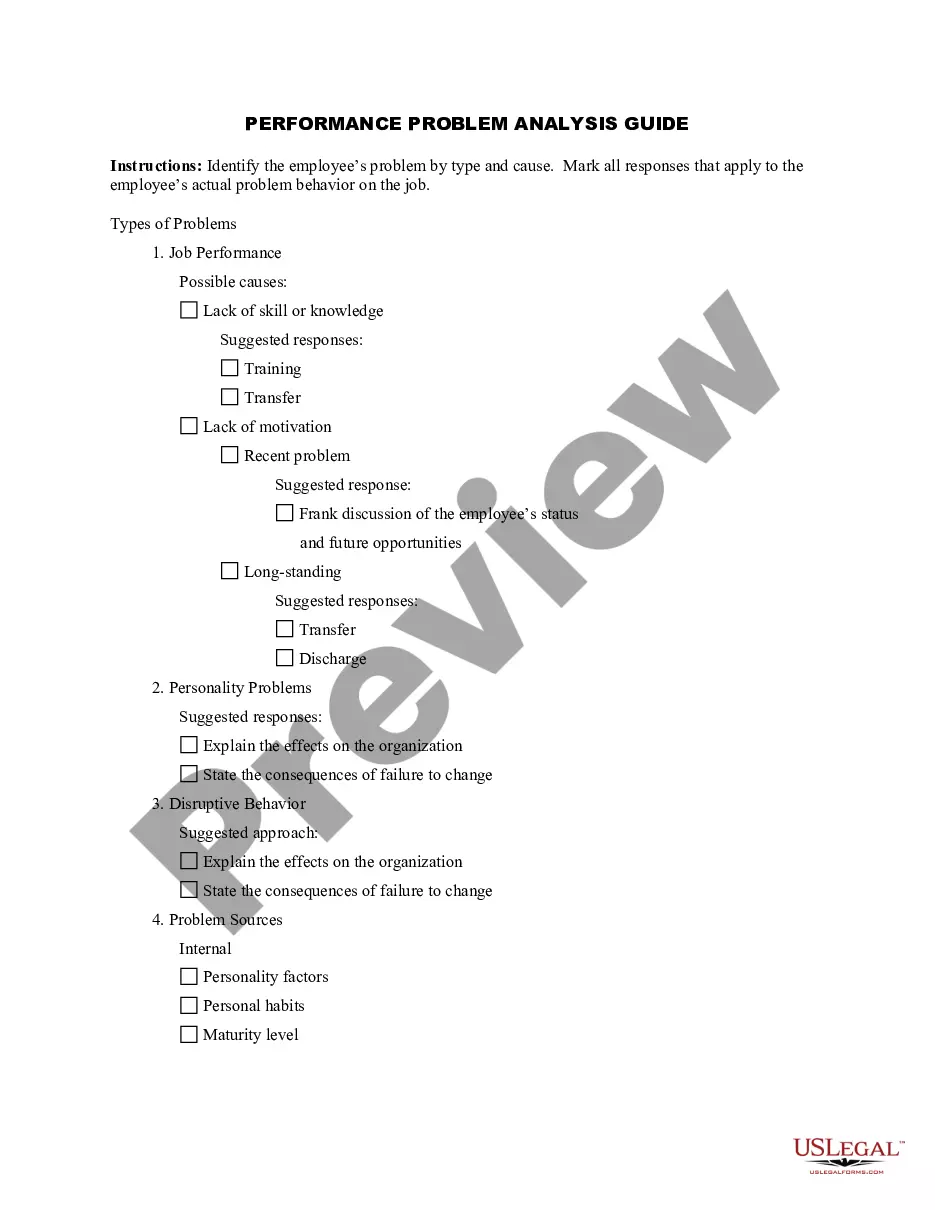
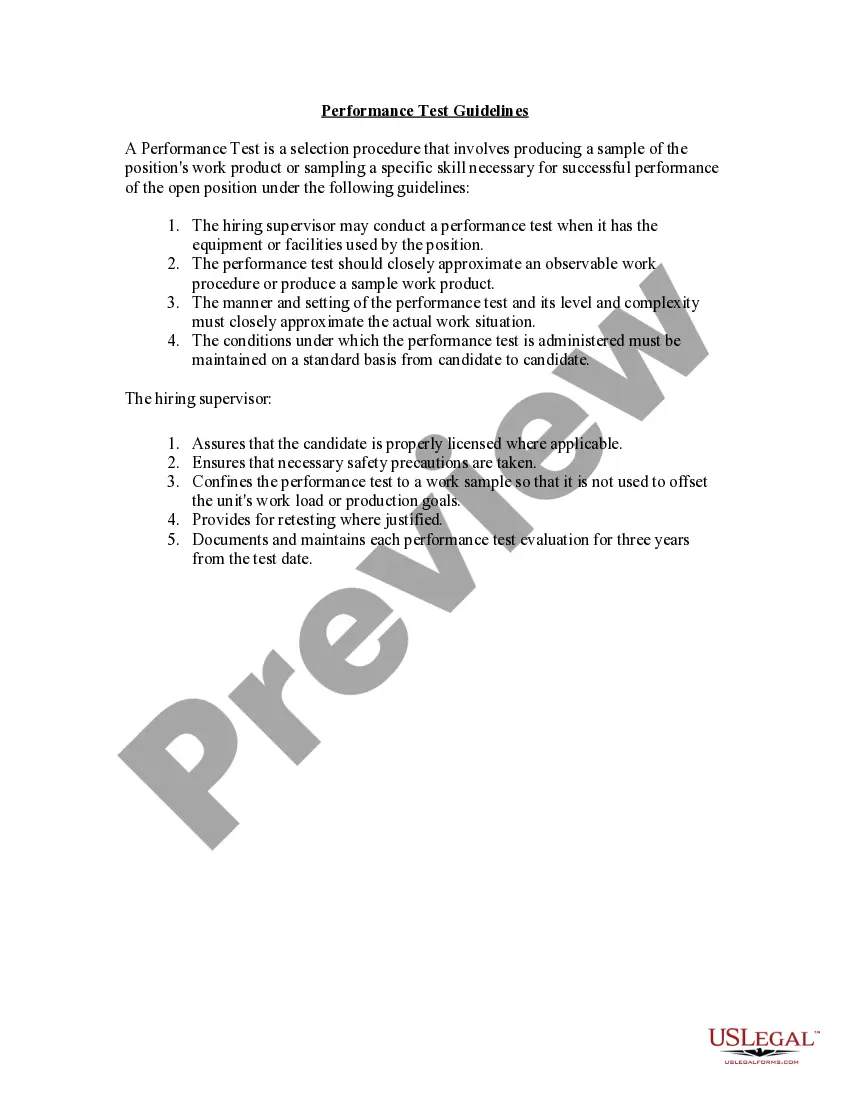
The Performance Problem Analysis Guide is a professional tool designed to help employers identify and address performance issues within their workforce. This form enables employers to analyze the specific problems an employee may be facing and the potential causes behind those issues. Unlike other performance evaluation forms, this guide incorporates detailed sections for categorizing various types of problems and their underlying causes, promoting a structured approach to performance management.
Key parts of this document
- Identification of problem types such as job performance, personality issues, and disruptive behavior.
- Possible causes for identified problems, including lack of skill, motivation, or external factors.
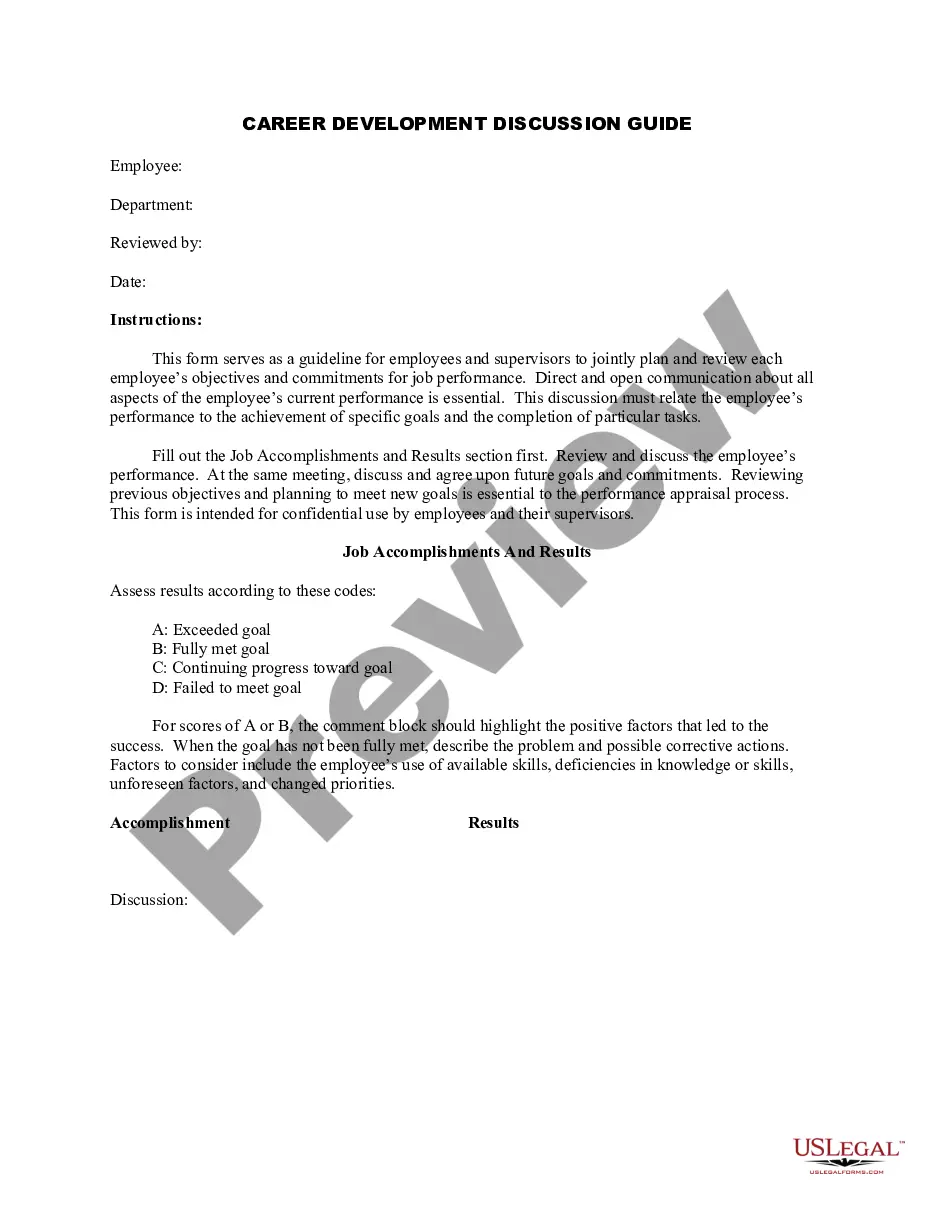
- Suggested responses and actions to take for each identified issue.
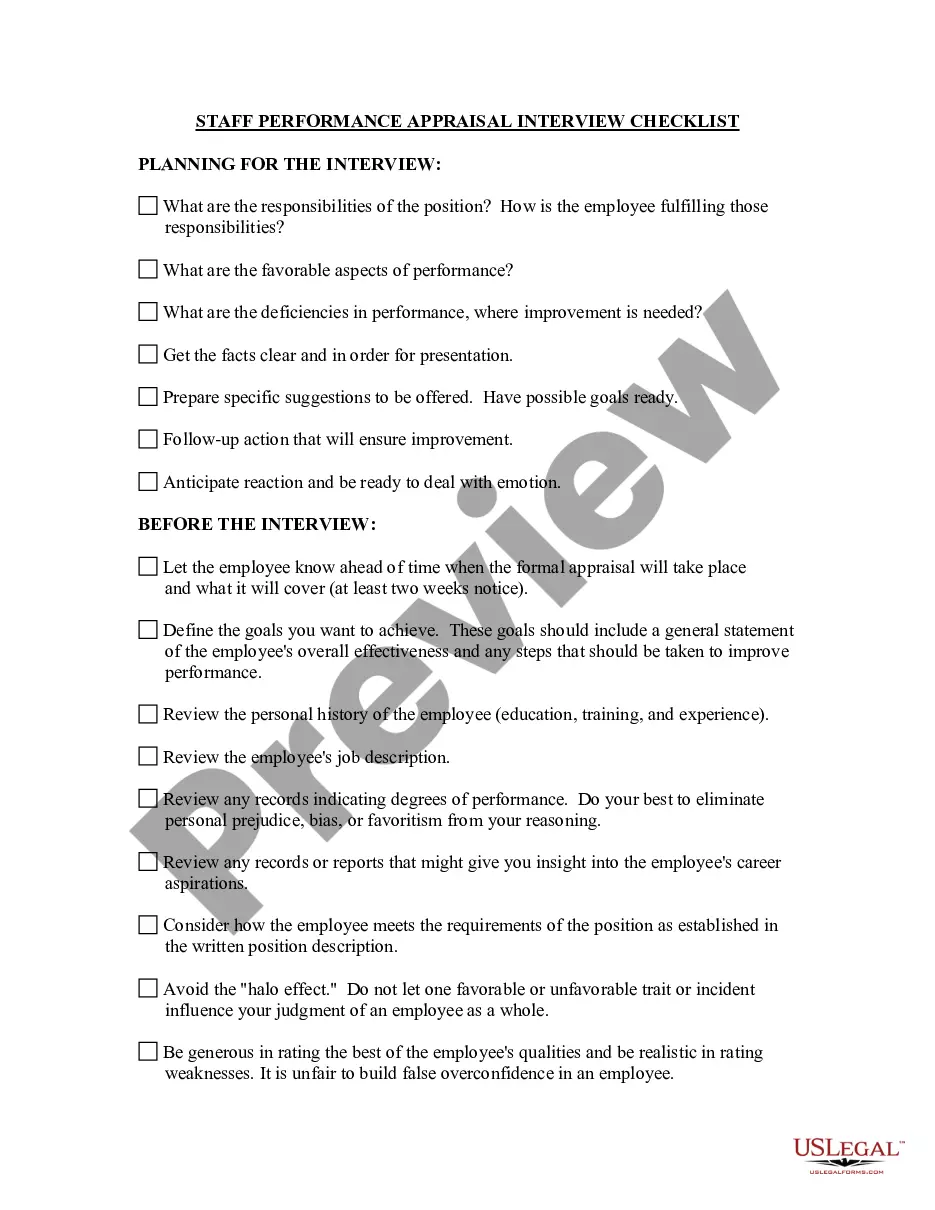
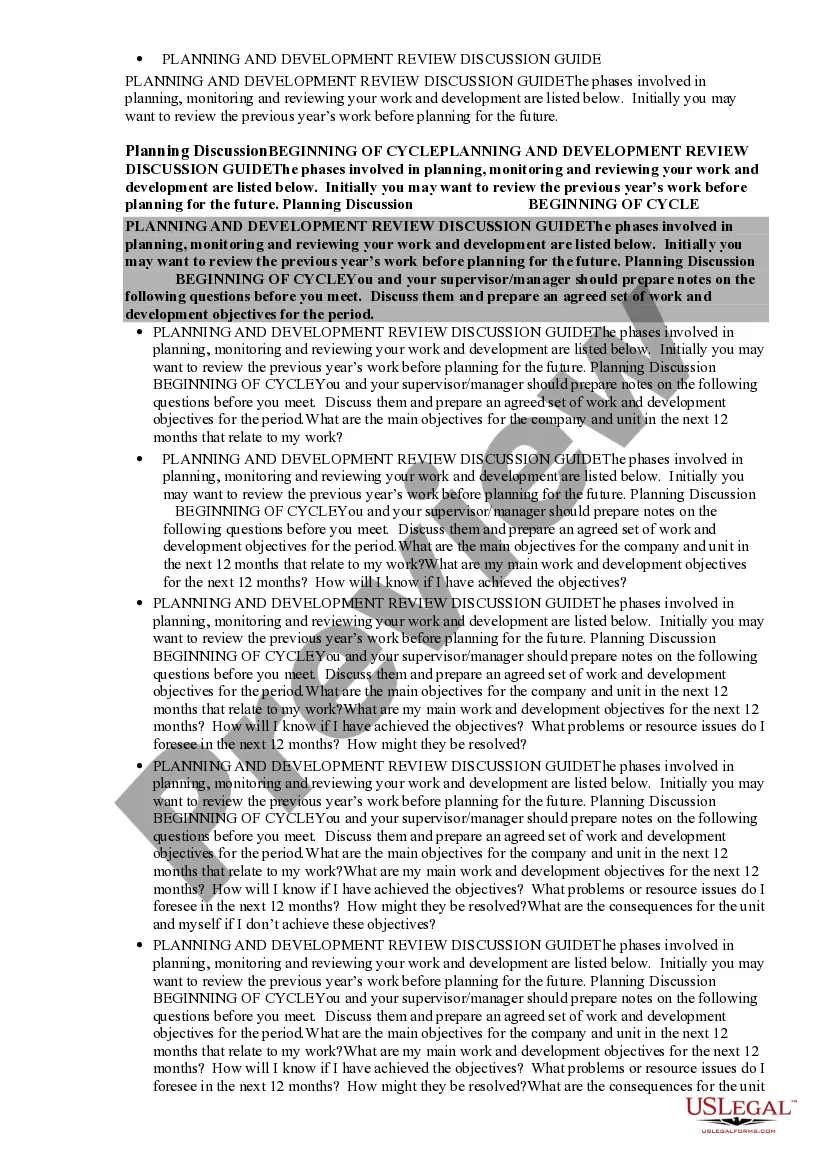
- Space for documenting the interview process and outcomes related to the employee's issues.
- Guidance to distinguish between real problems and mere excuses.
Common use cases
This form should be utilized when an employer notices consistent performance issues with an employee. Scenarios may include repeated failure to meet job expectations, behavioral disruptions in the workplace, or situations where specific training needs are identified. Using this guide can help ensure a thorough, constructive approach to resolving performance problems.
Who this form is for
- Managers looking to improve team performance.
- HR professionals involved in employee management and development.
- Employers in need of a structured process to address employee performance challenges.
Instructions for completing this form
To complete the Performance Problem Analysis Guide, follow these steps:
- Identify the employee experiencing performance issues.
- Document specific behaviors that indicate performance problems.
- Evaluate the potential causes and select applicable options from the guide.
- Consult with the employee to discuss the identified issues and recommended responses.
- Record any agreed-upon actions and follow-up measures.
Notarization requirements for this form
This form does not typically require notarization unless specified by local law. It is designed to serve as a supportive document for internal use in identifying and addressing performance challenges within an organization.
Get your form ready online
Our built-in tools help you complete, sign, share, and store your documents in one place.
Make edits, fill in missing information, and update formatting in US Legal Forms—just like you would in MS Word.
Download a copy, print it, send it by email, or mail it via USPS—whatever works best for your next step.
Sign and collect signatures with our SignNow integration. Send to multiple recipients, set reminders, and more. Go Premium to unlock E-Sign.
If this form requires notarization, complete it online through a secure video call—no need to meet a notary in person or wait for an appointment.
We protect your documents and personal data by following strict security and privacy standards.

Make edits, fill in missing information, and update formatting in US Legal Forms—just like you would in MS Word.

Download a copy, print it, send it by email, or mail it via USPS—whatever works best for your next step.

Sign and collect signatures with our SignNow integration. Send to multiple recipients, set reminders, and more. Go Premium to unlock E-Sign.

If this form requires notarization, complete it online through a secure video call—no need to meet a notary in person or wait for an appointment.

We protect your documents and personal data by following strict security and privacy standards.
Typical mistakes to avoid
- Failing to involve the employee in the discussion about their performance issues.
- Overlooking the documentation of all relevant behaviors and causes.
- Not providing clear, actionable feedback to the employee.
- Assuming that all problems stem from personal issues without considering external factors.
Benefits of using this form online
- Provides a comprehensive framework for assessing employee performance issues.
- Facilitates constructive communication between managers and employees.
- Enhances clarity and accountability in the performance evaluation process.
- Encourages strategic planning for resolving performance problems.
- It is a useful tool for documenting performance issues and the steps taken to address them.
- Completing the form may help protect the organization legally by demonstrating due diligence in managing employee performance.
Main things to remember
- Utilizing the Performance Problem Analysis Guide helps systematically address employee performance issues.
- Understanding causes and providing appropriate responses can significantly enhance employee productivity.
- This form is applicable across multiple jurisdictions with general applications in performance management.
Looking for another form?
Form popularity
FAQ
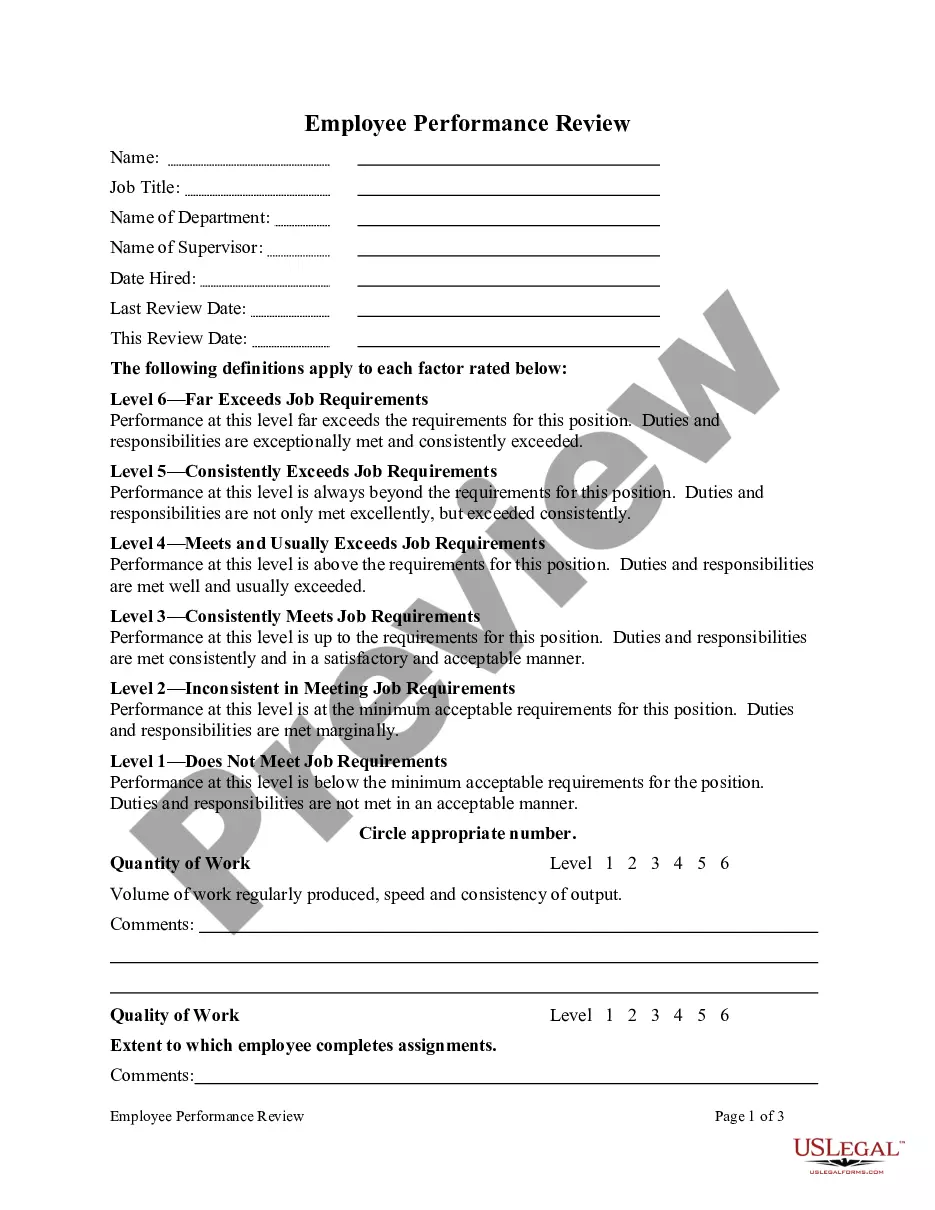
1) Attendance. Punctuality is one of the strongest virtues an employee can possess. 2) Innovation and Creativity. 3) Leadership. 4) Communication Skills. 5) Collaboration and Teamwork. 6) Time Management. 7) Customer Experience. 8) Problem Solving.
1 Know how the self-evaluation is going to be used. 2 Write out a list of your accomplishments. 3 Gather analytics if you can. 4 Write out a list of your struggles. 5 Narrow your accomplishments list down. 6 Don't forget to align your review with your manager's or team's goals.
Keep the Audience in Mind. Stay Relevant. Keep Track of All Achievements. Use Specific, Measurable, Confident Language. Document Goals.
Outline the direction the process will take. Identify the important activity and measure it. Establish company's performance goals, objectives or standards. Establish ways in which to measure performance. Name the key department managers involved. Collect relevant information. Examine and report performance.
Focus on the job, not the person. Be specific. Consider questions over statements. With positives, stick to process. Connect personally where you can. Get serious but don't get mean.
Be proud. One major goal of the self-evaluation is to highlight your accomplishments and recollect milestones in your professional development. Be honest and critical. Continuously strive for growth. Track your accomplishments. Be professional.
Reflect on feedback. Make a list of your top accomplishments and identify areas for improvements. Gather analytics to show impact. Make a commitment to improve. Set a SMART goal for yourself. Create a plan of action. Communication. Job Performance.
Communication. Collaboration and teamwork. Problem-solving. Quality and accuracy of work. Attendance, punctuality and reliability. The ability to accomplish goals and meet deadlines.