Arizona Application, Affidavit, and Entry of Default
Overview of this form
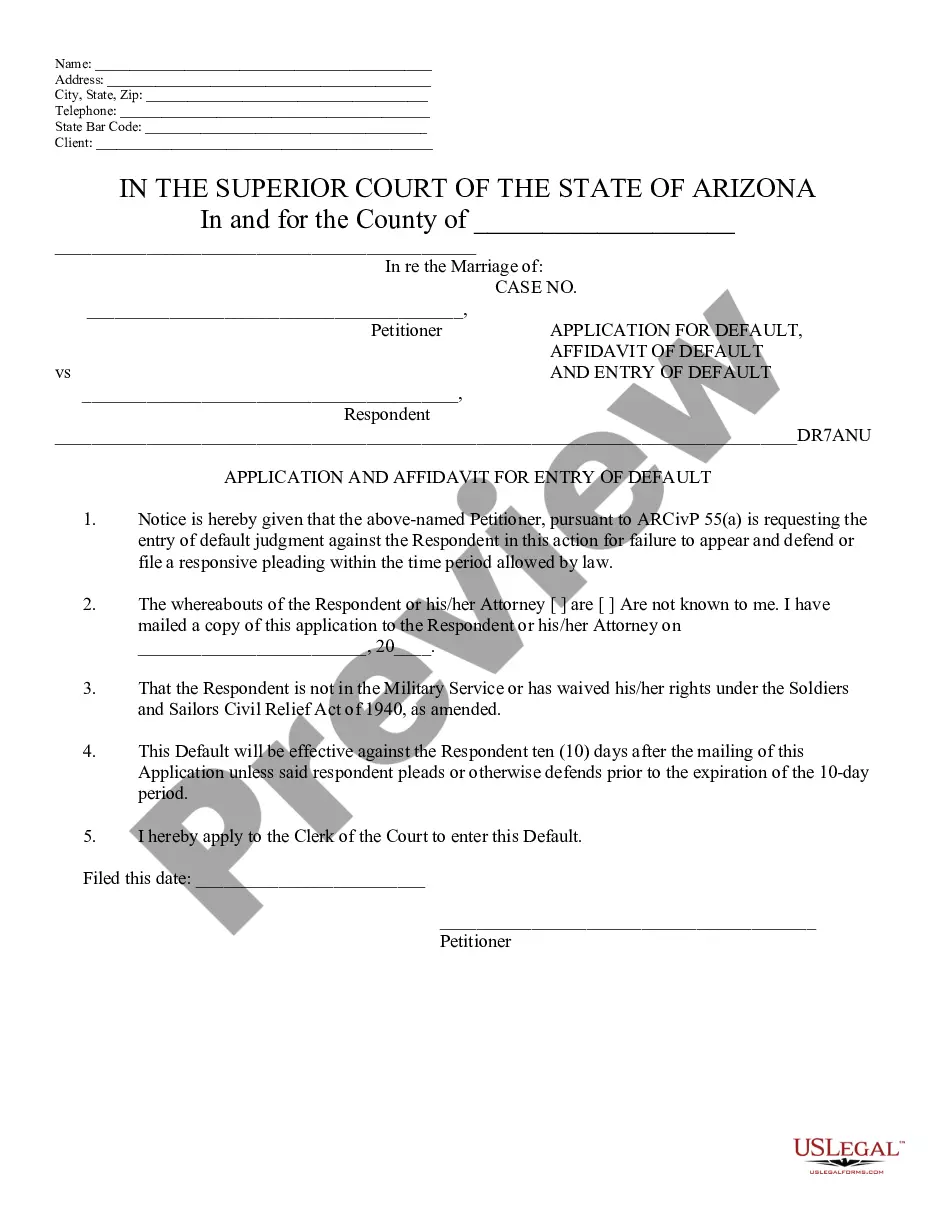
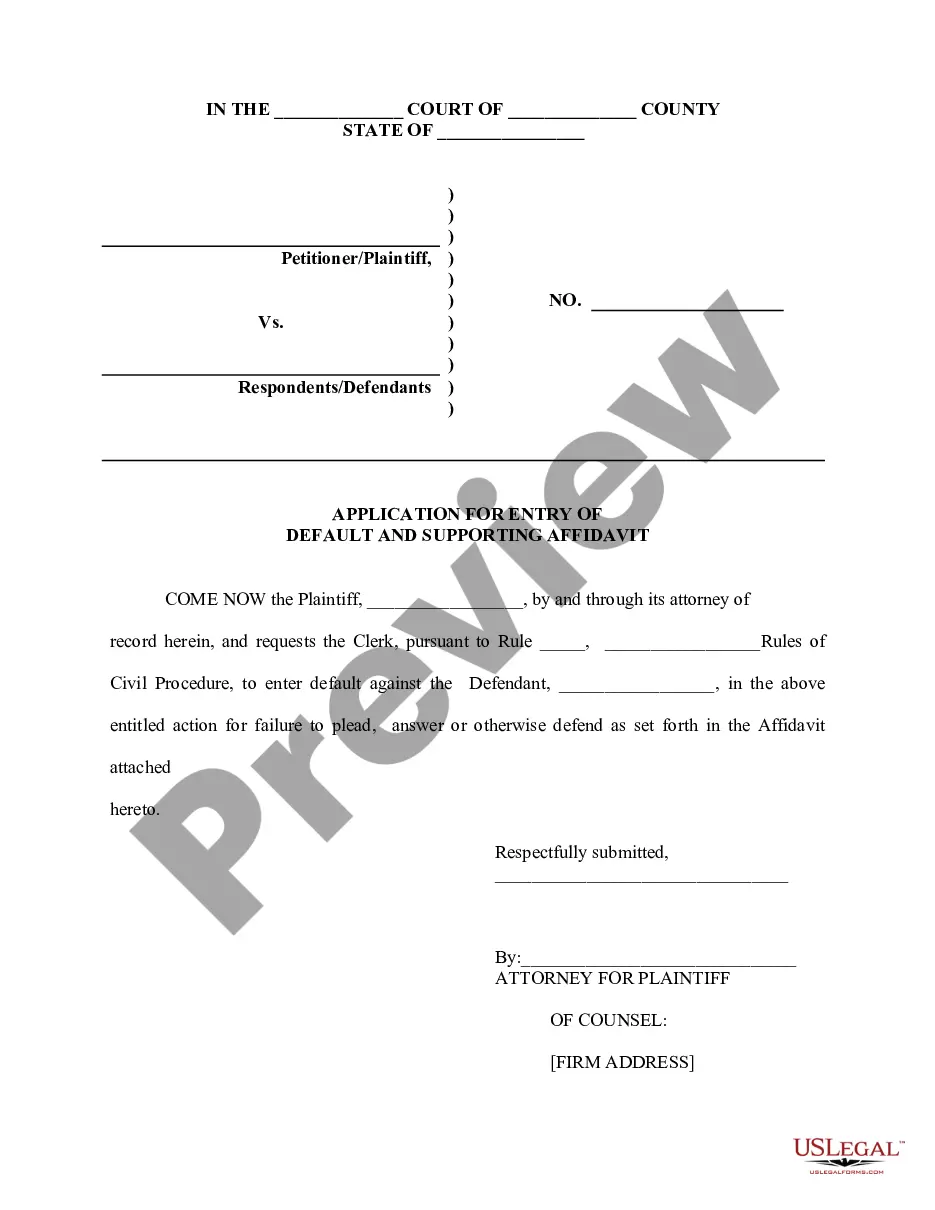
The Application, Affidavit, and Entry of Default is a legal document that allows a petitioner to request a court to enter a default judgment against a respondent who has failed to appear or respond to a legal petition. This form serves to provide a sworn statement regarding the respondent's lack of participation in the case, which may expedite the legal process for the petitioner. It differs from other legal forms by focusing specifically on cases where the respondent is absent and unresponsive, ensuring that the petitioner can seek relief without unnecessary delays.
Form components explained
- Petitioner and Respondent information, including names and addresses.
- Case number and court details for identification.
- Statement of the respondent's failure to appear or respond.
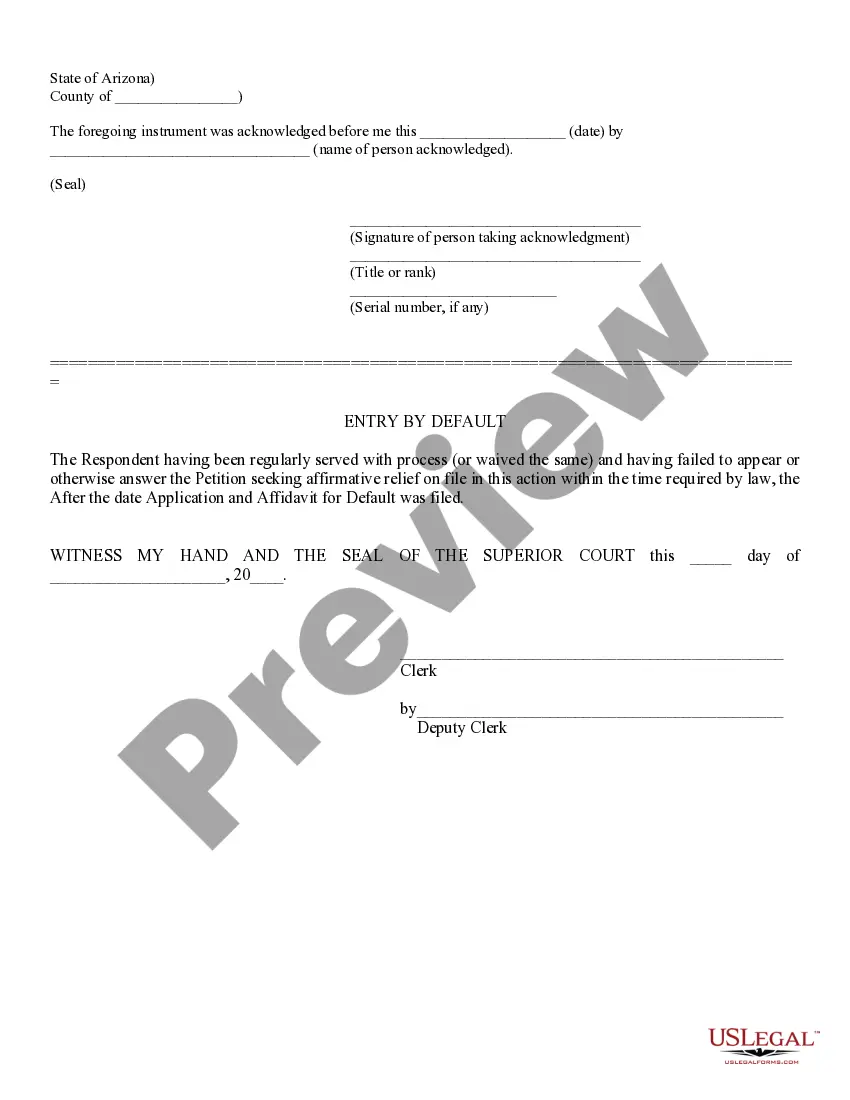
- Affidavit section to be sworn before a Notary Public.
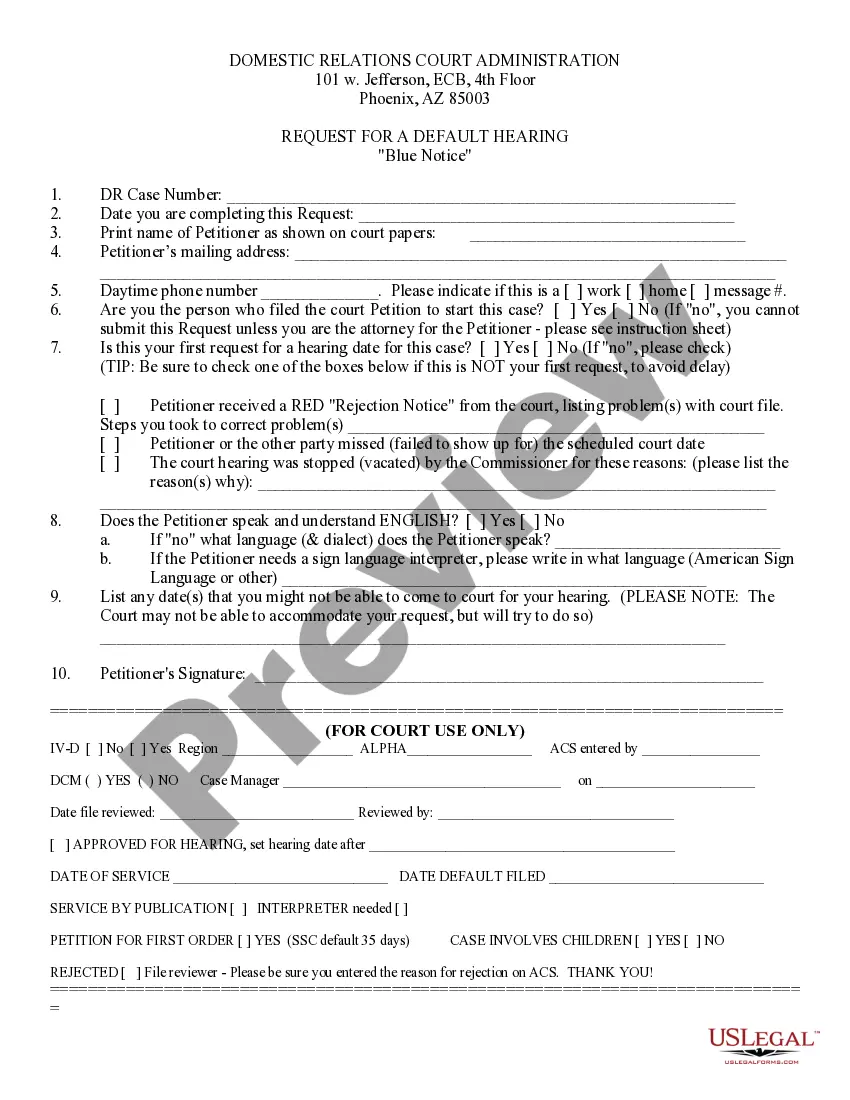
- Request for a default hearing date if applicable.
- Signature lines for the petitioner and the notary public.
Common use cases
This form is used in situations where a petitioner has filed a case, typically related to marriage or domestic relations, and the respondent has not responded within the legally allowed timeframe. It is essential in cases where the petitioner seeks to move forward with the proceedings despite the absence of the respondent, allowing the court to issue a default judgment in favor of the petitioner.
Who needs this form
- Individuals who have filed a divorce or legal separation case in which the other party has not responded.
- Petitioners seeking a quicker resolution due to the respondent's non-appearance in legal proceedings.
- Anyone who needs to provide proof of the respondent's status for court purposes.
Steps to complete this form
- Begin by filling in the names and addresses for both the petitioner and the respondent.
- Input the case number and specify the court in which the case is filed.
- Detail the date when the application was mailed to the respondent or their attorney.
- Complete the affidavit section in the presence of a Notary Public.
- Sign and date the form, ensuring all required fields are filled accurately.
Notarization guidance
This form needs to be notarized to ensure legal validity. US Legal Forms provides secure online notarization powered by Notarize, allowing you to complete the process through a verified video call, available anytime.
Get your form ready online
Our built-in tools help you complete, sign, share, and store your documents in one place.
Make edits, fill in missing information, and update formatting in US Legal Forms—just like you would in MS Word.
Download a copy, print it, send it by email, or mail it via USPS—whatever works best for your next step.
Sign and collect signatures with our SignNow integration. Send to multiple recipients, set reminders, and more. Go Premium to unlock E-Sign.
If this form requires notarization, complete it online through a secure video call—no need to meet a notary in person or wait for an appointment.
We protect your documents and personal data by following strict security and privacy standards.

Make edits, fill in missing information, and update formatting in US Legal Forms—just like you would in MS Word.

Download a copy, print it, send it by email, or mail it via USPS—whatever works best for your next step.

Sign and collect signatures with our SignNow integration. Send to multiple recipients, set reminders, and more. Go Premium to unlock E-Sign.

If this form requires notarization, complete it online through a secure video call—no need to meet a notary in person or wait for an appointment.

We protect your documents and personal data by following strict security and privacy standards.
Common mistakes
- Failing to provide complete information for both the petitioner and the respondent.
- Not having the affidavit notarized, which is crucial for its validity.
- Missing the mailing date or failing to serve the respondent appropriately.
- Neglecting to check the compliance with local court rules before submission.
Why use this form online
- Convenience of downloading and completing the form at your own pace.
- Editability allows you to customize the form to your specific case needs.
- Access to reliable and accurate templates drafted by licensed attorneys.
Looking for another form?



Form popularity
FAQ
To remove a default judgement in Arizona, you generally need to file an Arizona Application, Affidavit, and Entry of Default in the court that issued the judgement. In your application, you must explain why the judgement was entered against you without your knowledge or participation. Additionally, provide any documentation that supports your case. For a smoother experience, consider utilizing resources from uslegalforms, which can provide you with the correct forms and detailed instructions for this process.
Getting a set aside in Arizona requires you to file an Arizona Application, Affidavit, and Entry of Default in the appropriate court. This process involves detailing the reasons for your request and demonstrating that you have fulfilled all court requirements. Additionally, you may need to include evidence or affidavits to support your claim. Using uslegalforms can simplify this process, offering you guidance and necessary forms tailored for Arizona's legal requirements.
To vacate a judgement in Arizona, you must file an Arizona Application, Affidavit, and Entry of Default. Begin by collecting supporting documents that show why the judgement should be vacated. Next, submit your application to the court along with the necessary fees. It's important to present a strong case, so consider seeking legal advice or assistance from platforms like uslegalforms, which provide resources and templates for your application.
In Arizona, judgments do not have a permanent shelf life; they expire after a set period, typically five years, if not renewed. This expiration can impact your financial obligations or rights in legal matters. To navigate this, utilize the Arizona Application, Affidavit, and Entry of Default effectively to keep track of your judgments and ensure compliance. Understanding the timeline of judgments in Arizona is vital to managing your legal responsibilities.
An affidavit of succession to real property in Arizona allows heirs to transfer ownership of property without going through probate. This document simplifies the process, making it easier for heirs to claim what they rightfully inherit. When dealing with real estate matters, the Arizona Application, Affidavit, and Entry of Default can also be pertinent, especially when ensuring all legal aspects are properly addressed. Consider using platforms like uslegalforms to create accurate affidavits seamlessly.
A Rule 11 motion in Arizona is a legal request asking the court to impose penalties for a party's misconduct, such as filing frivolous claims or failing to adhere to procedural rules. Understanding this motion is crucial, especially when preparing documents like the Arizona Application, Affidavit, and Entry of Default, which require accuracy and good faith. Filing a Rule 11 motion can help maintain the integrity of the judicial process and deter dishonest practices. As you navigate through legal proceedings, keep in mind the importance of ethical conduct.
In Arizona, a default judgment occurs when a party fails to respond to a lawsuit within the required timeframe. This rule allows the plaintiff to request a judgment without the defendant's input. The Arizona Application, Affidavit, and Entry of Default play a significant role in this process, as they help streamline the necessary legal paperwork. It is essential to understand this rule to protect your rights and ensure you follow proper legal procedures.
After a default judgment is issued in Arizona, the winning party can enforce the judgment to obtain what they are owed. The court typically provides instructions on how to proceed, which may involve the use of collection methods. Understanding the implications of the Arizona Application, Affidavit, and Entry of Default is essential for both sides, as it affects how the judgment is enforced and any further legal actions that may be necessary.
A proof of service affidavit in Arizona serves as evidence that legal documents were properly delivered to the involved parties. This affidavit includes details about the delivery, such as the date, time, and method used. It plays a crucial role in ensuring that your Arizona Application, Affidavit, and Entry of Default are upheld, as it confirms all parties received necessary notifications for legal proceedings.
To set aside a default judgment in Arizona, you need to file a motion with the court that issued the judgment. This motion must include a valid reason for the default and any supporting evidence. In your motion, reference the Arizona Application, Affidavit, and Entry of Default to demonstrate compliance with the necessary processes. Seeking legal advice can enhance your chances of successfully setting aside the judgment.