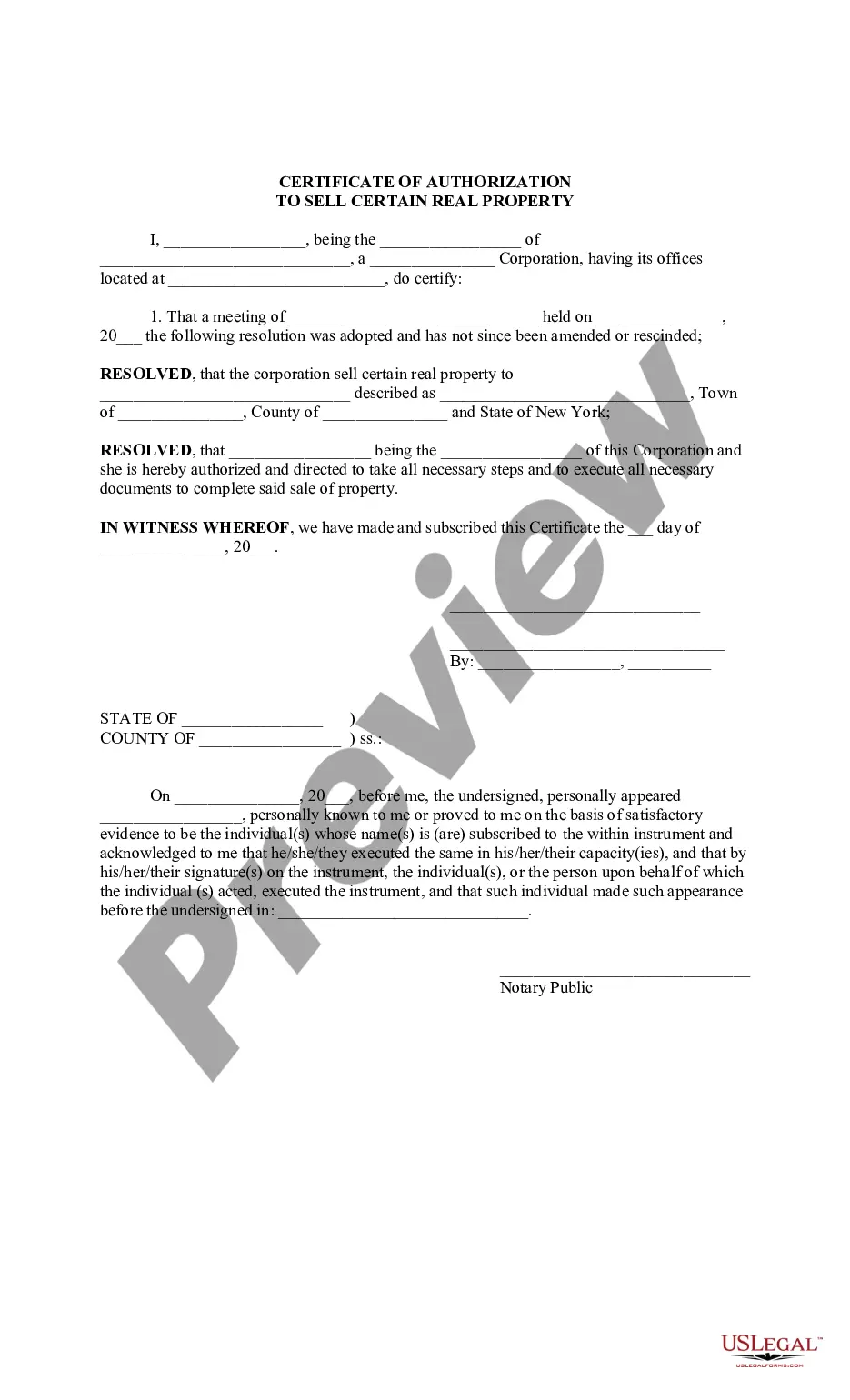
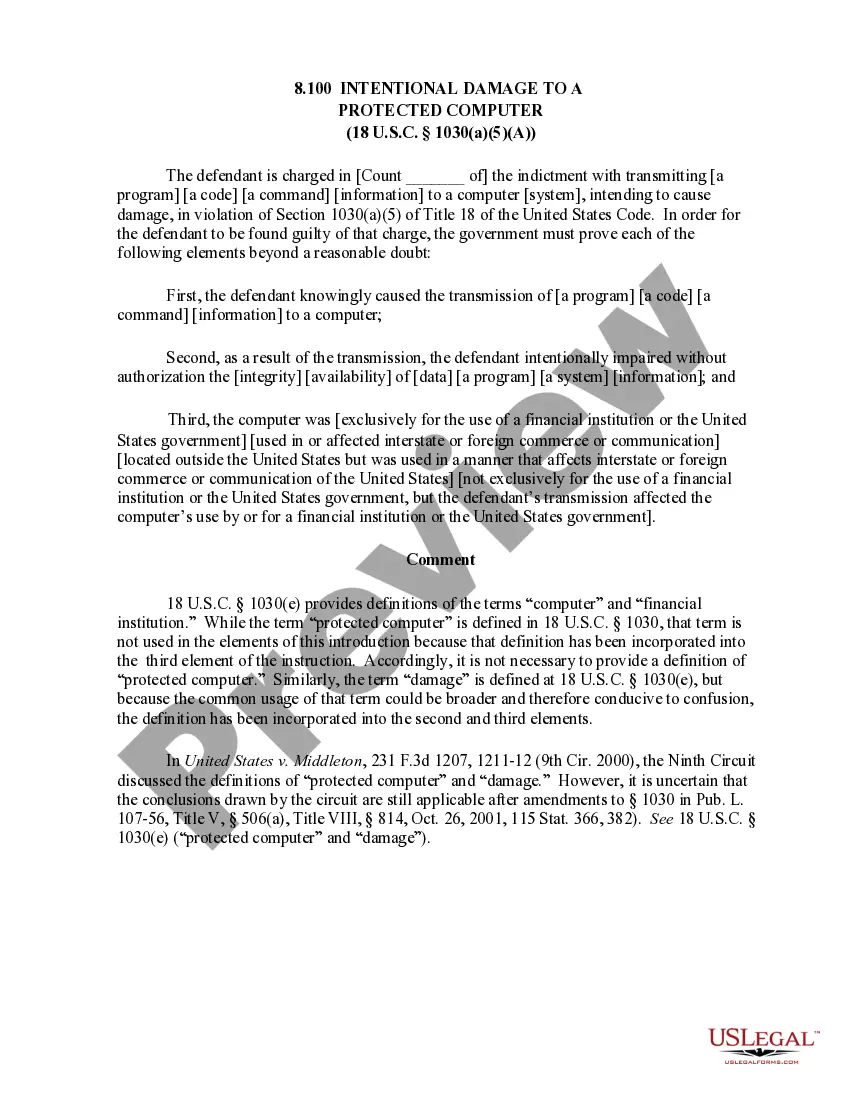
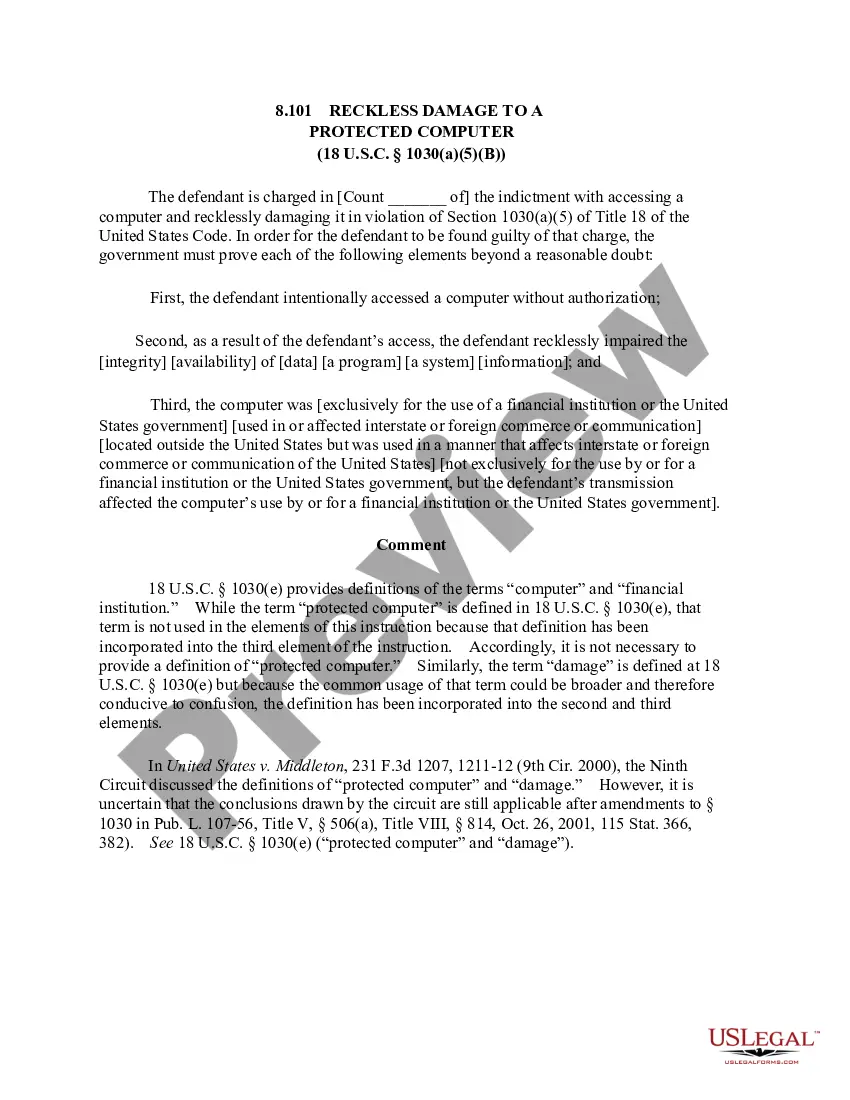
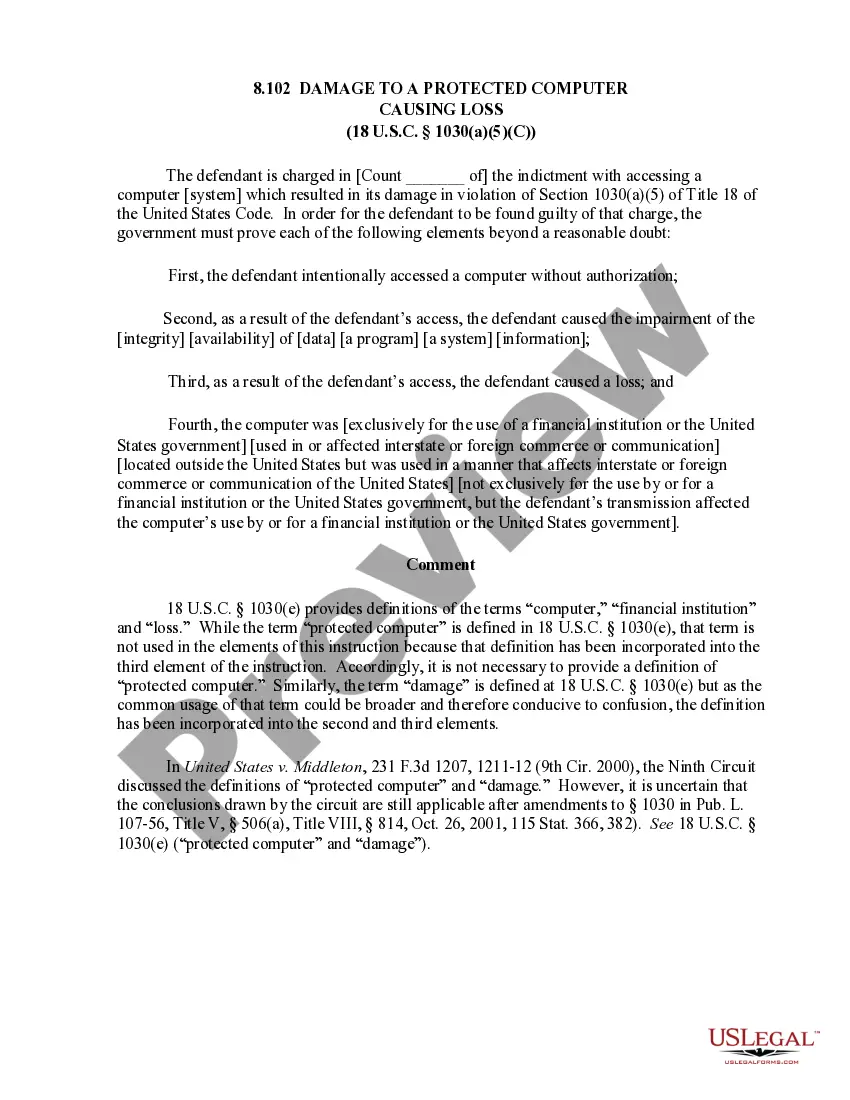
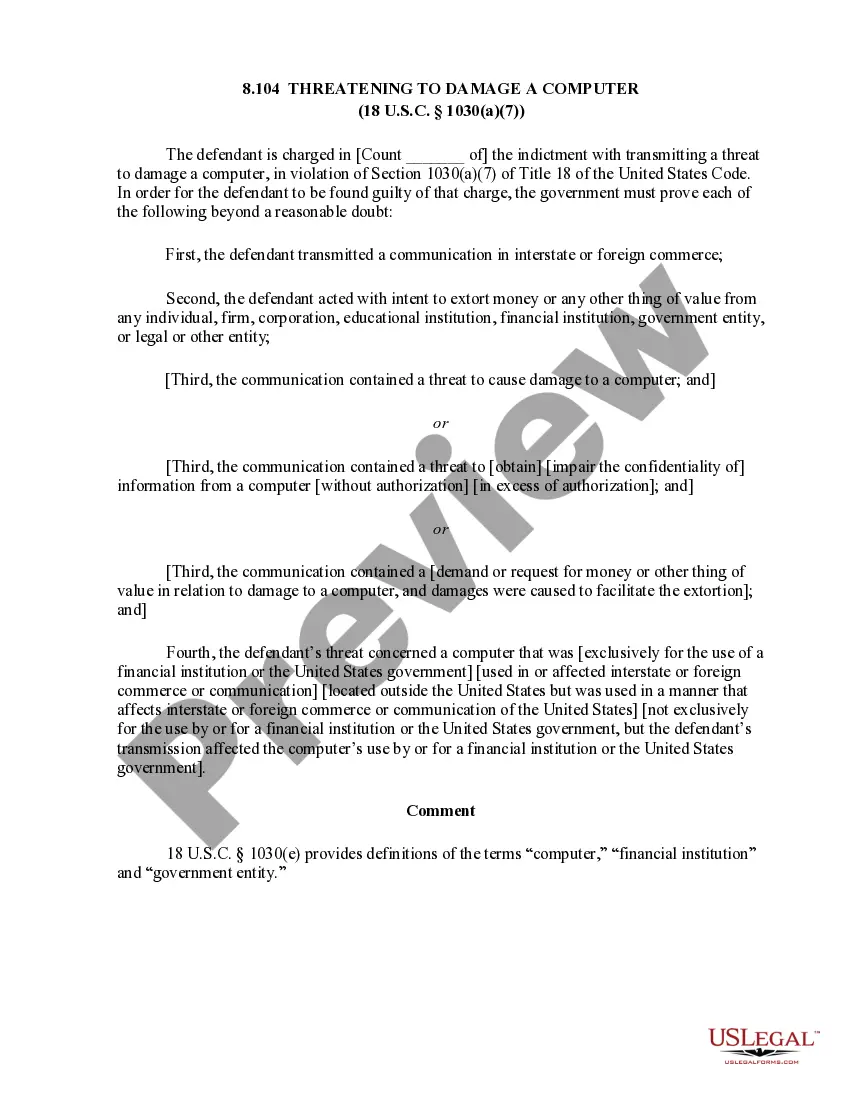
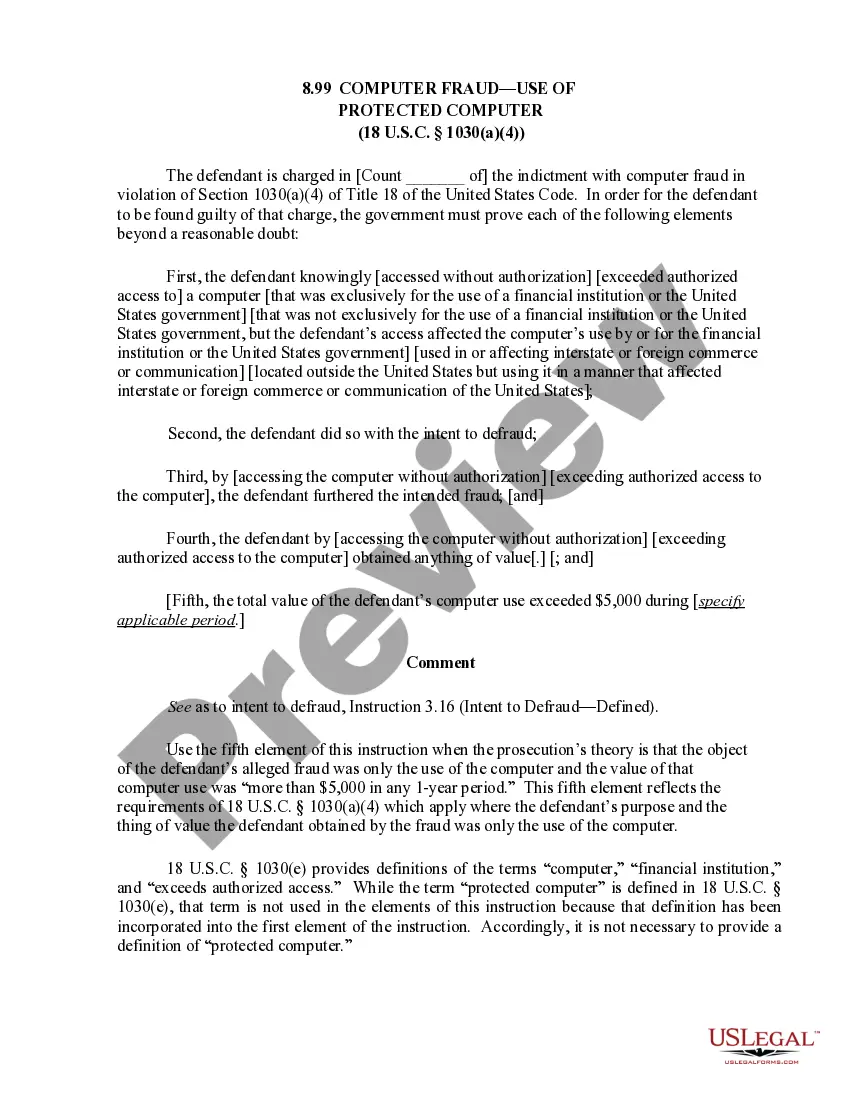
8.100 Intentional Damage to a Protected Computer (18 U.S.C. Sec. 1030(a)(5)(A))

Notarization requirements for this form
This form usually doesn’t need to be notarized. However, local laws or specific transactions may require it. Our online notarization service, powered by Notarize, lets you complete it remotely through a secure video session, available 24/7.
Get your form ready online
Our built-in tools help you complete, sign, share, and store your documents in one place.
Make edits, fill in missing information, and update formatting in US Legal Forms—just like you would in MS Word.
Download a copy, print it, send it by email, or mail it via USPS—whatever works best for your next step.
Sign and collect signatures with our SignNow integration. Send to multiple recipients, set reminders, and more. Go Premium to unlock E-Sign.
If this form requires notarization, complete it online through a secure video call—no need to meet a notary in person or wait for an appointment.
We protect your documents and personal data by following strict security and privacy standards.

Make edits, fill in missing information, and update formatting in US Legal Forms—just like you would in MS Word.

Download a copy, print it, send it by email, or mail it via USPS—whatever works best for your next step.

Sign and collect signatures with our SignNow integration. Send to multiple recipients, set reminders, and more. Go Premium to unlock E-Sign.

If this form requires notarization, complete it online through a secure video call—no need to meet a notary in person or wait for an appointment.

We protect your documents and personal data by following strict security and privacy standards.
Looking for another form?

Form popularity
FAQ
The Computer Fraud and Abuse Act (18 U.S.C. § 1030) (CFAA) imposes criminal and civil liability for unauthorized access or damage to a protected computer. The law reaches every computer connected to the internet and non-networked computers used by the US government or financial institutions.
Unauthorized computer access, popularly referred to as hacking, describes a criminal action whereby someone uses a computer to knowingly gain access to data in a system without permission to access that data. Hacking is illegal under both California and federal law, and can result in heavy penalties.
In addition to imposing criminal penalties, the CFAA provides a private, civil cause of action for persons or entities harmed by a perpetrator's unauthorized access.
The CFAA prohibits intentionally accessing a computer without authorization or in excess of authorization, but fails to define what ?without authorization? means. With harsh penalty schemes and malleable provisions, it has become a tool ripe for abuse and use against nearly every aspect of computer activity.
1030, outlaws conduct that victimizes computer systems. It is a cyber security law. It protects federal computers, bank computers, and computers connected to the Internet. It shields them from trespassing, threats, damage, espionage, and from being corruptly used as instruments of fraud.
§1030. Fraud and related activity in connection with computers. (C) intentionally accesses a protected computer without authorization, and as a result of such conduct, causes damage and loss.
Federal law provides that first time offenders caught violating the CFAA may be punished with criminal fines of up to $5,000 per crime, imprisonment from 1 to 10 years, or a combination of both.