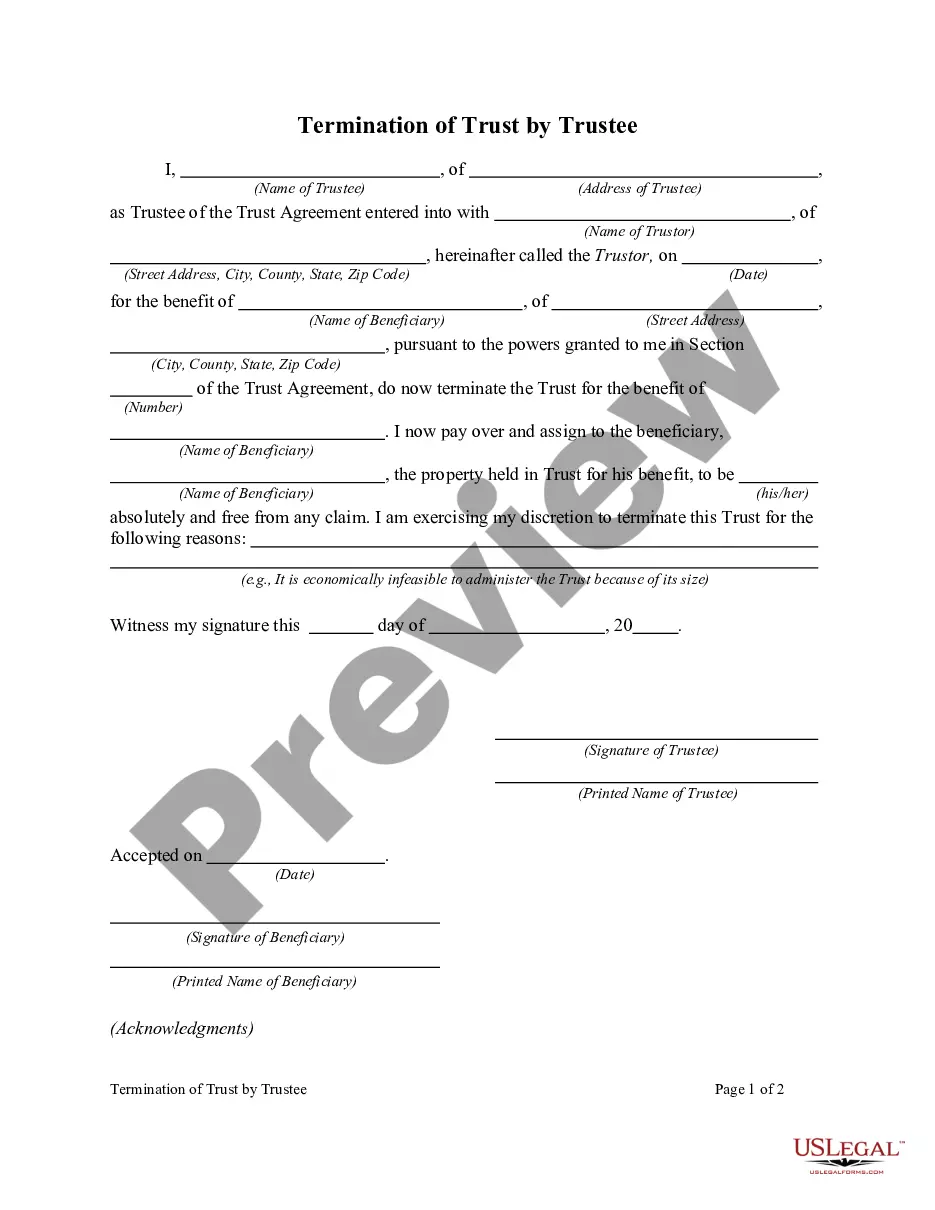
Termination of Trust by Trustee
Overview of this form
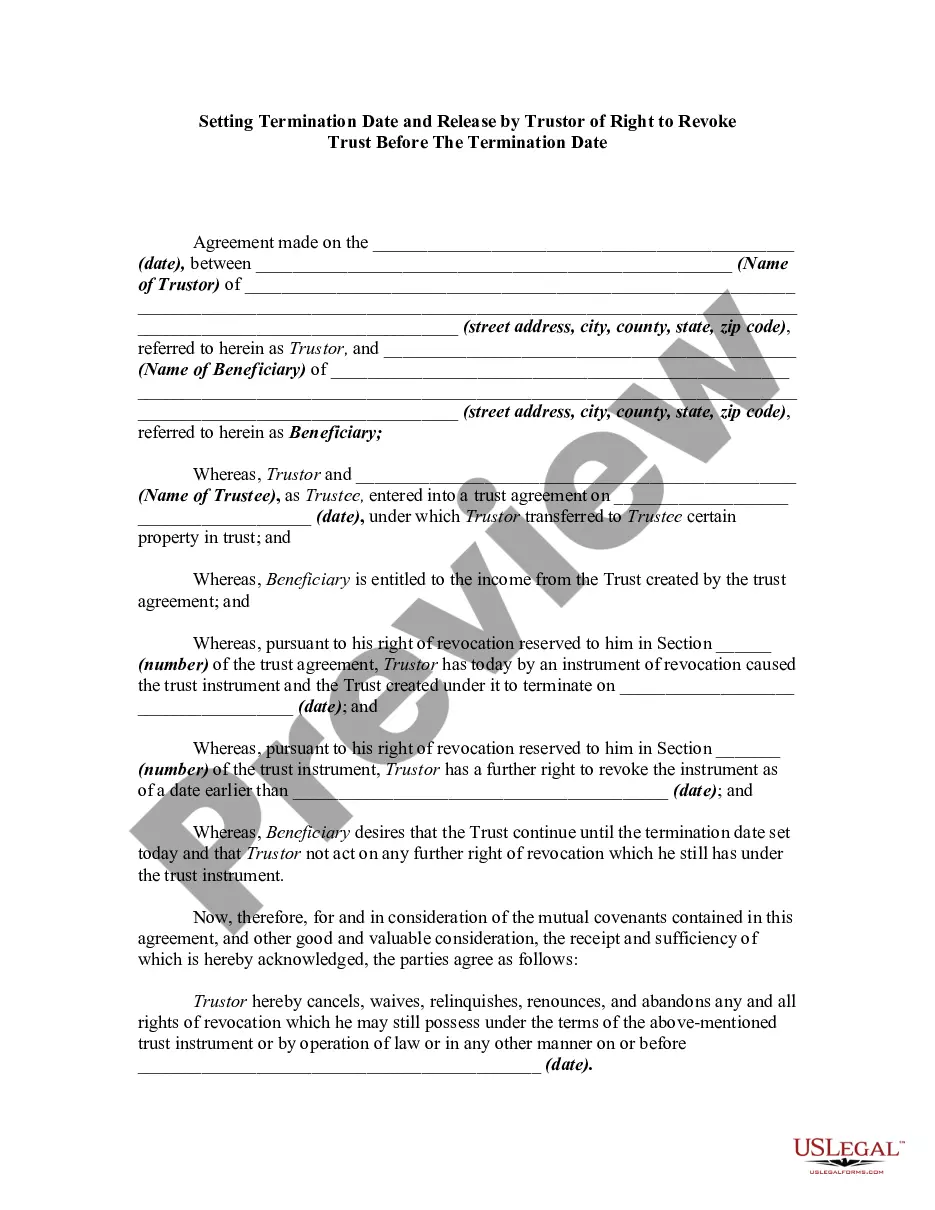
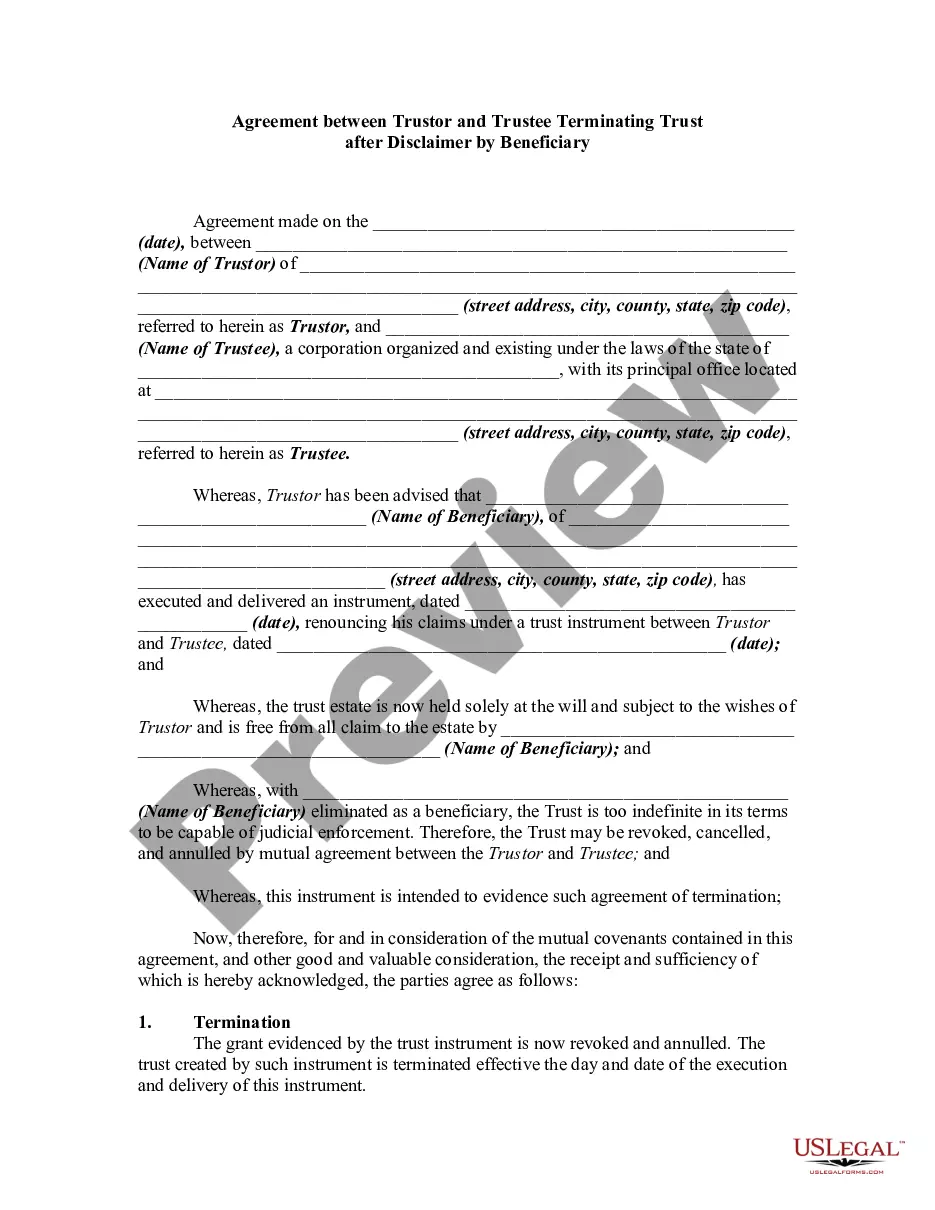
The Termination of Trust by Trustee form is a legal document used when a trustee decides to formally terminate a trust. This form outlines the trustee's intention to dissolve the trust and distribute its assets according to the terms outlined in the trust agreement. Unlike similar forms that may simply modify or amend a trust, this specific form focuses entirely on closing a trust, ensuring that all legal and administrative steps are clearly documented and executed.
Key components of this form
- Identification of the trustee and the trust being terminated.
- Reason for the termination of the trust.
- Details regarding the distribution of trust assets.
- Signatures of the trustee, indicating consent and acknowledgment.
- Date of termination.


When to use this form
This form is needed when a trustee determines that it is necessary to dissolve a trust. Common scenarios include the trust having fulfilled its purpose, changes in the financial circumstances of the beneficiaries, or the trust owner wishing to reallocate assets differently. If you find yourself in any of these situations, using this form helps ensure legal compliance while properly documenting the termination process.
Who should use this form
- Trustees who need to terminate a trust they are managing.
- Beneficiaries of a trust, when they require formal closure of a trust.
- Attorneys advising clients on the dissolution of trusts.
Steps to complete this form
- Identify and enter the names and addresses of the trustee and the trust being terminated.
- Clearly state the reason for the trust's termination.
- Specify how the assets of the trust will be distributed among the beneficiaries.
- Have the trustee sign and date the form to confirm their intent and authority.
- Ensure that copies are distributed to all relevant parties, including beneficiaries.
Does this form need to be notarized?
This form usually doesn’t need to be notarized. However, local laws or specific transactions may require it. Our online notarization service, powered by Notarize, lets you complete it remotely through a secure video session, available 24/7.
Get your form ready online
Our built-in tools help you complete, sign, share, and store your documents in one place.
Make edits, fill in missing information, and update formatting in US Legal Forms—just like you would in MS Word.
Download a copy, print it, send it by email, or mail it via USPS—whatever works best for your next step.
Sign and collect signatures with our SignNow integration. Send to multiple recipients, set reminders, and more. Go Premium to unlock E-Sign.
If this form requires notarization, complete it online through a secure video call—no need to meet a notary in person or wait for an appointment.
We protect your documents and personal data by following strict security and privacy standards.

Make edits, fill in missing information, and update formatting in US Legal Forms—just like you would in MS Word.

Download a copy, print it, send it by email, or mail it via USPS—whatever works best for your next step.

Sign and collect signatures with our SignNow integration. Send to multiple recipients, set reminders, and more. Go Premium to unlock E-Sign.

If this form requires notarization, complete it online through a secure video call—no need to meet a notary in person or wait for an appointment.

We protect your documents and personal data by following strict security and privacy standards.
Typical mistakes to avoid
- Failing to include all required signatures, especially from the trustee.
- Not specifying how the assets will be distributed upon termination.
- Ignoring state-specific laws that may affect the termination process.
Benefits of completing this form online
- Convenient access to legal forms tailored by licensed attorneys.
- Ability to download and complete the form at your own pace.
- Assurance of using a reliable document that complies with legal standards.
Key takeaways
- The Termination of Trust by Trustee form is essential for legally ending a trust.
- Ensure all required information and signatures are included to avoid disputes.
- Consult local laws for any specific requirements related to trust termination.
Looking for another form?

Form popularity
FAQ
Obtain a Trustee Resignation Form from your attorney or the Court and complete and sign it in the presence of a notary public. 4. Make copies of your resignation. Give a copy to the new Trustee, mail a copy to all the trust beneficiaries and keep one in your personal file.
The first step in dissolving a revocable trust is to remove all the assets that have been transferred into it. The second step is to fill out a formal revocation form, stating the grantor's desire to dissolve the trust.
Termination of a trust is like dissolution of a business organization.Usually, this means paying any outstanding trust obligations, liquidating assets, filing final income tax returns, preparing a final accounting for the benefit of the beneficiaries, and distributing trust assets to the appropriate beneficiaries.
Irrevocable trusts can remain up and running indefinitely after the trustmaker dies, but most revocable trusts disperse their assets and close up shop. This can take as long as 18 months or so if real estate or other assets must be sold, but it can go on much longer.
In some states, your trustee must submit a formal accounting of the trust's operation to all beneficiaries.Trustees can sometimes waive this requirement if all beneficiaries agree in writing. In either case, after the report is made, the trust's assets can be distributed and the trust can be dissolved.
A trust can be dissolved by entirely distributing the trust property and winding up the trust. This can occur on the trust's vesting date.The trust deed will set out the process to dissolve a trust in this manner. The trust deed will detail how to distribute assets and the entitlements of the beneficiaries.
Whether your trust closes immediately after your death or lives on for a while to serve your intentions, it must eventually close. This typically involves payment of any outstanding debts or taxes before the trustee distributes the trust's assets and income to your named beneficiaries.
The procedure for settling a trust after death entails: Step 1: Get death certificate copies. Step 2: Inventory the assets in the estate. Step 3: Work with a trust attorney to understand the grantor's distribution wishes, timelines, and fiduciary responsibilities. Step 4: Asset appraisal. Step 5: Pay taxes.
Accordingly, there is no provision under the various Public Trusts Acts to legally terminate or dissolve a valid public charitable trust. However, the assets and liabilities of the trust can be transferred to another charitable trust having similar objects thereby the former trust can be dissolved.