Setting Termination Date and Release by Trustor of Right to Revoke Trust Before The Termination Date
About this form
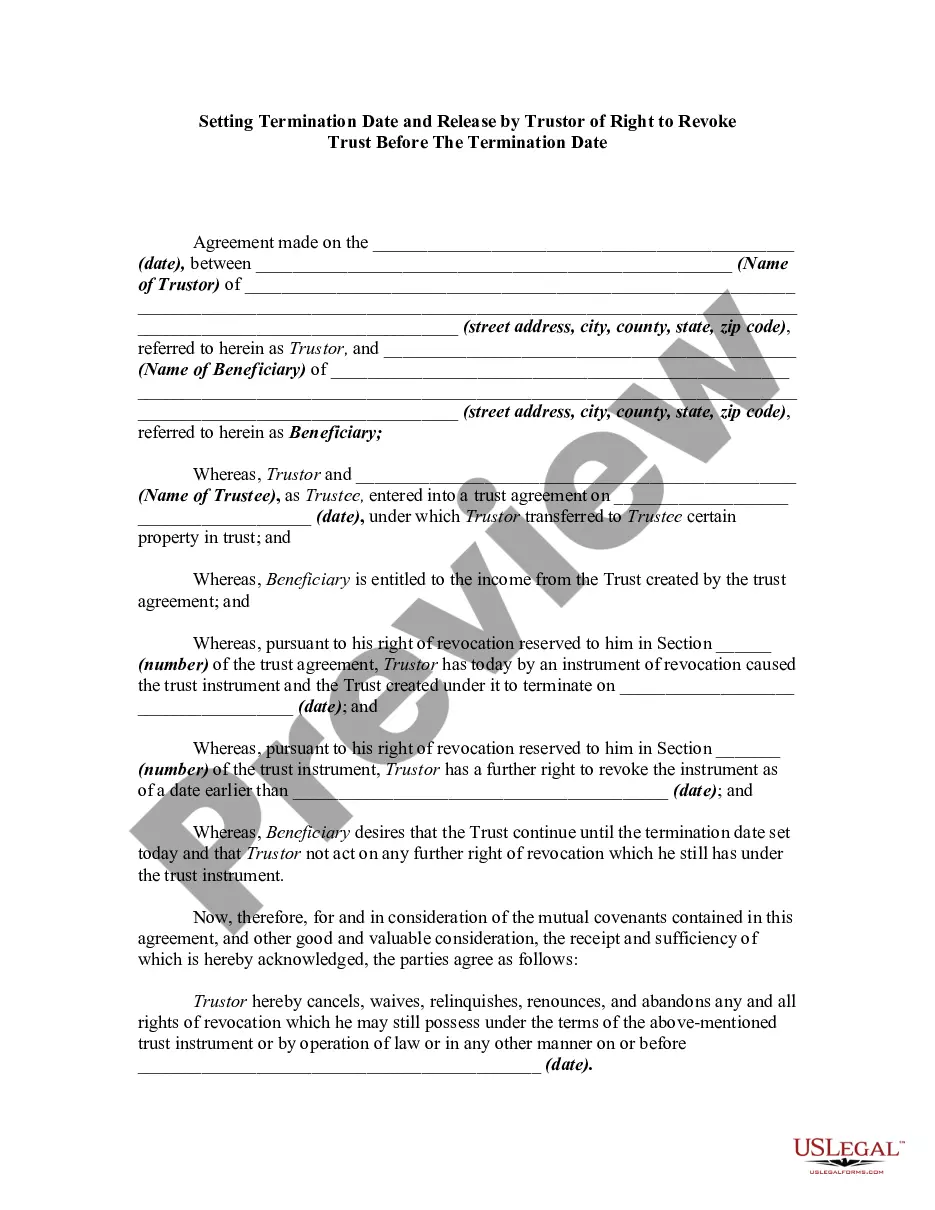
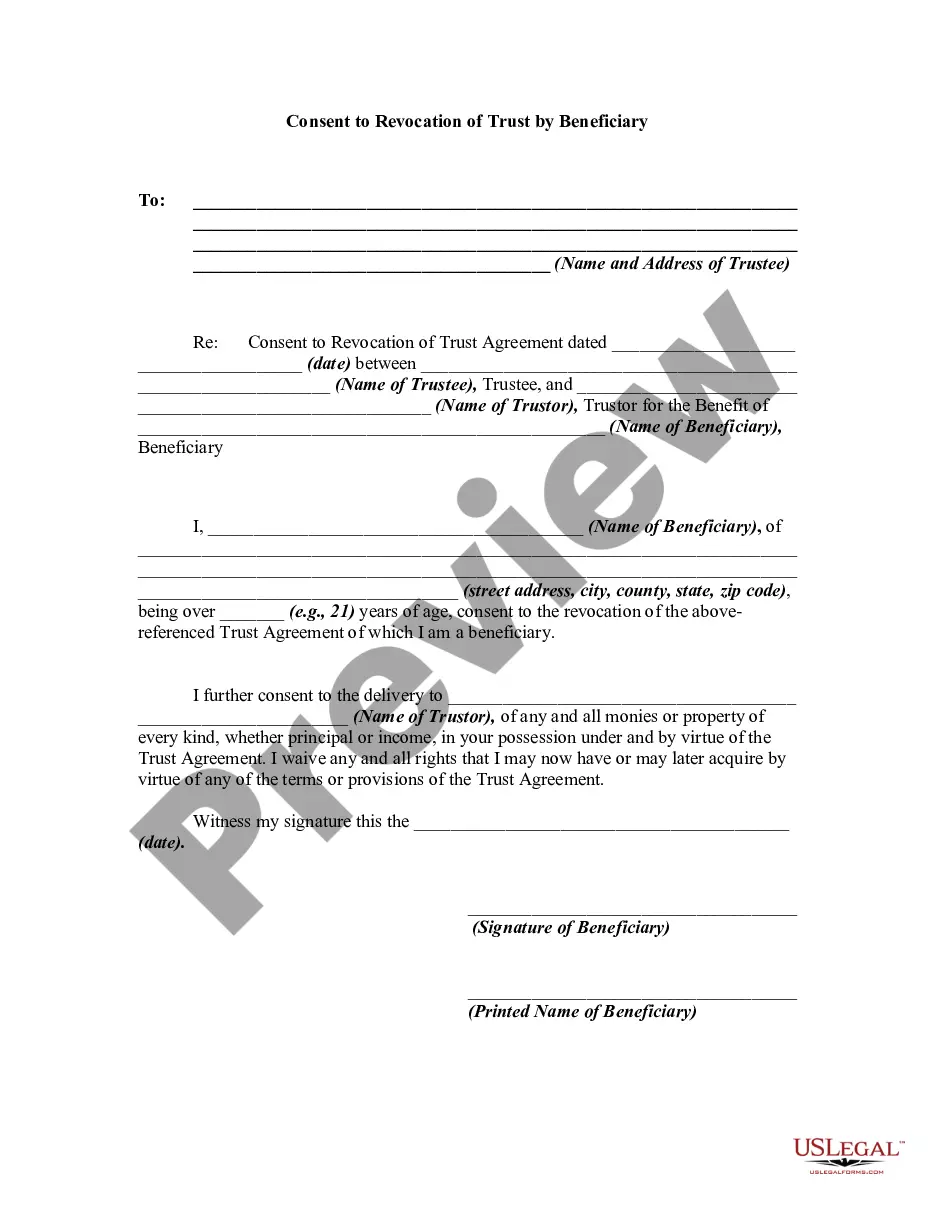
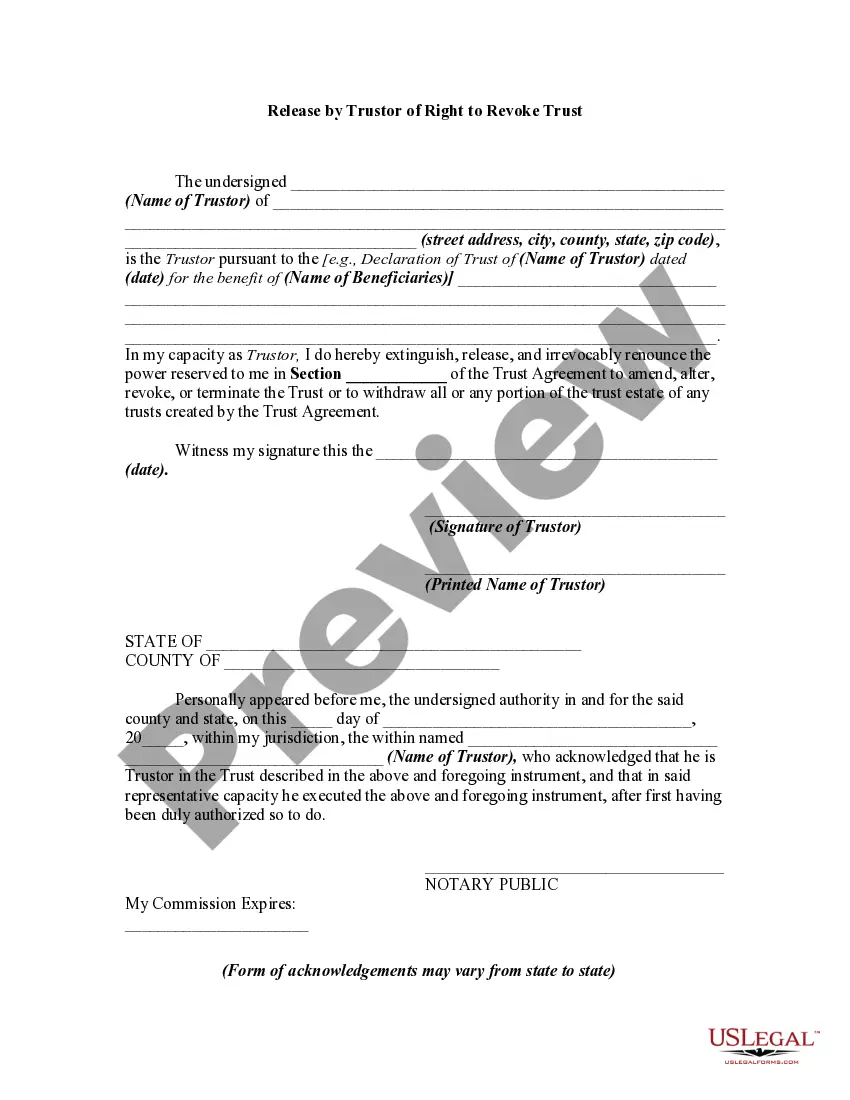
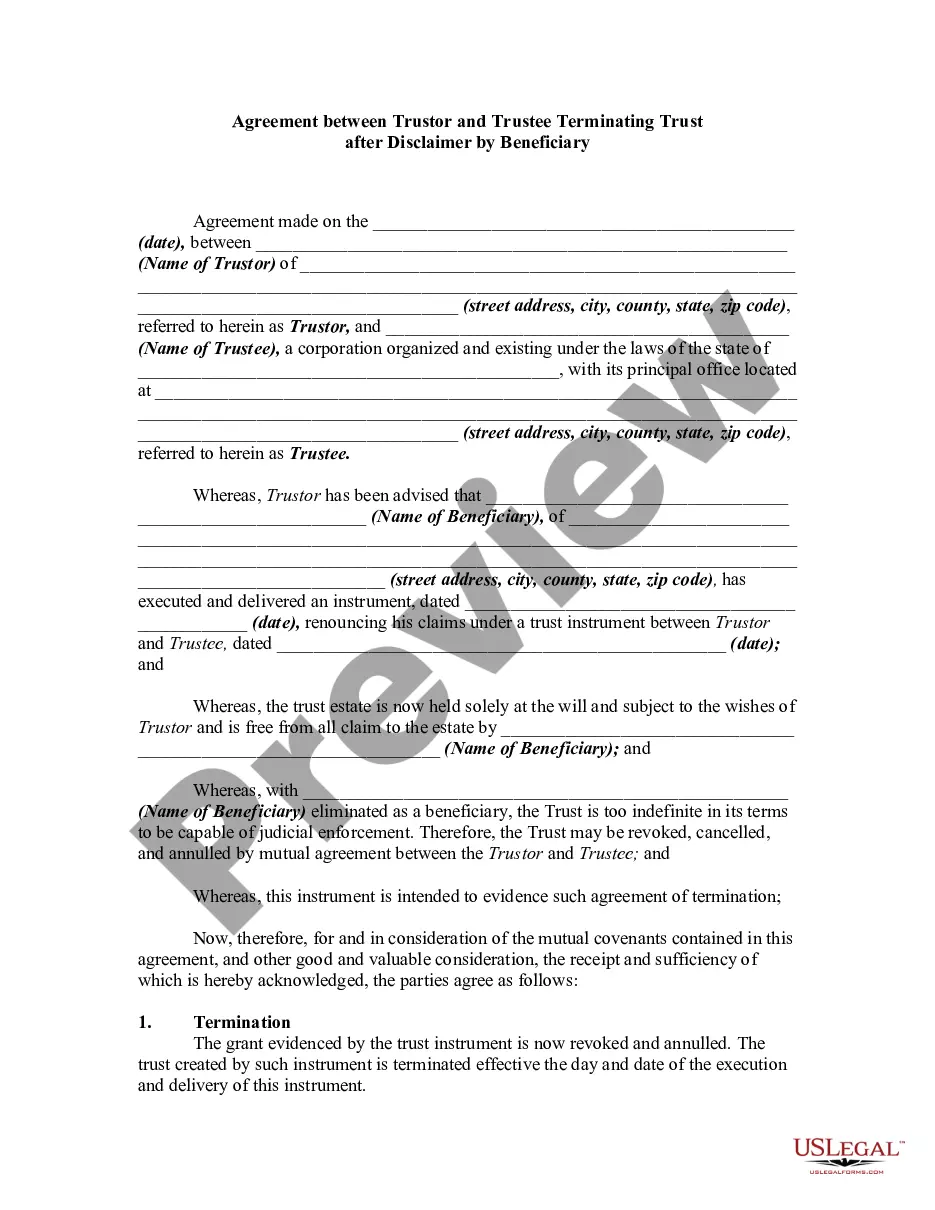
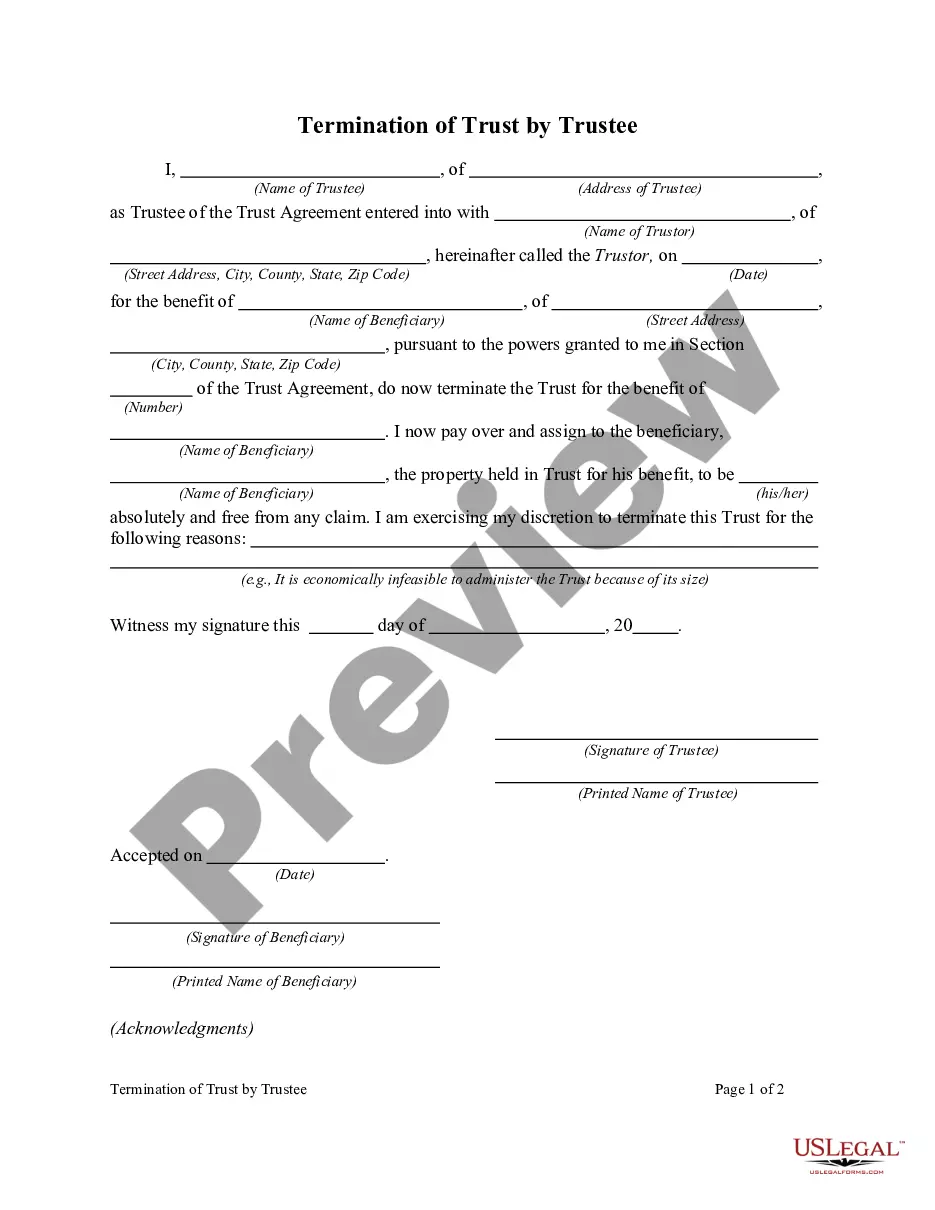
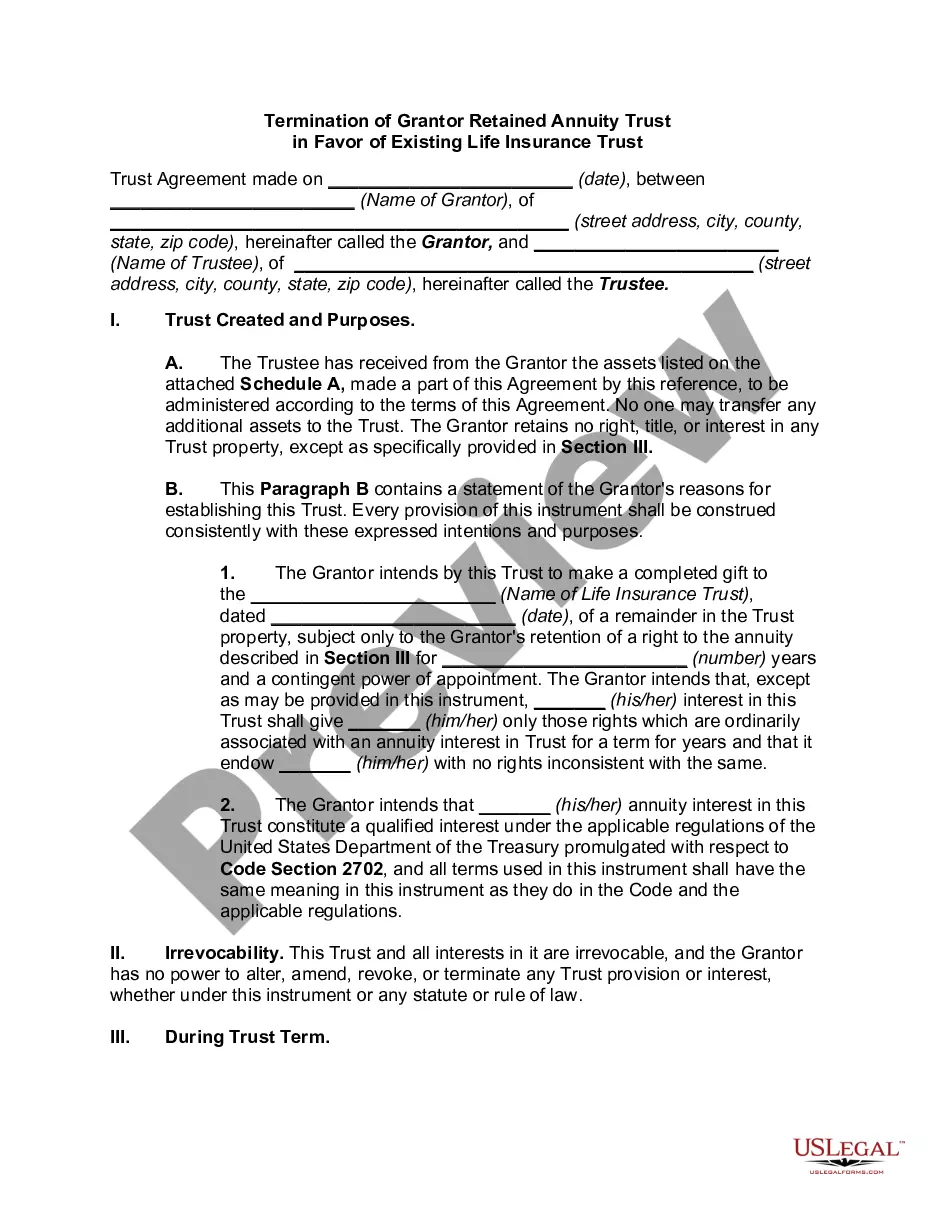
This form, titled Setting Termination Date and Release by Trustor of Right to Revoke Trust Before the Termination Date, allows a trustor to designate a specific future date for terminating a trust. It details the trustor's decision to waive any rights to terminate the trust prior to this designated date, ensuring the trust remains intact until that time. This form is crucial for clarity in trust agreements and maintains the trustor's intentions while providing assurances to the beneficiary, distinguishing it from other trust-related forms.
What’s included in this form
- Date of the agreement, indicating the effective date of the trust termination.
- Name and addresses of the Trustor and Beneficiary.
- Details of the original trust agreement, including the name of the Trustee and the date established.
- Specific termination date set by the Trustor.
- Statement where the Trustor waives their right to revoke the trust before the set termination date.
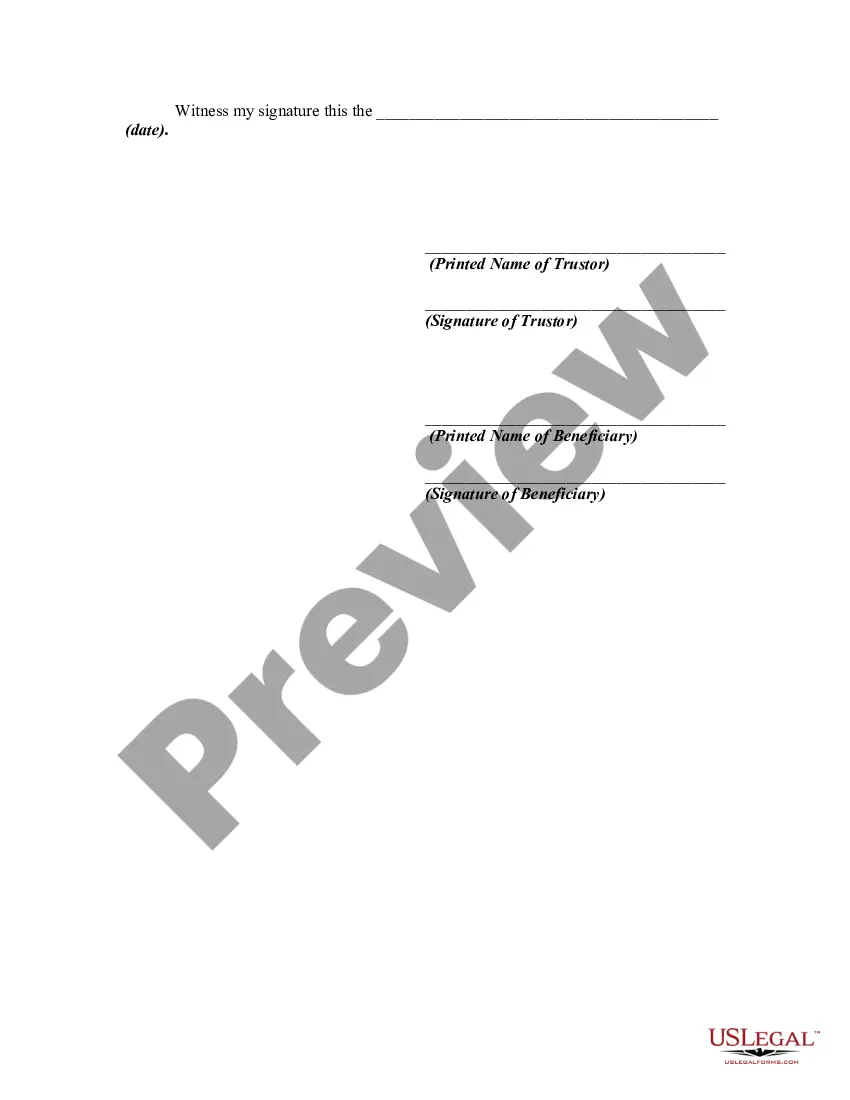
- Signature and printed names of both the Trustor and Beneficiary.
When this form is needed
This form should be used when a trustor wishes to formally establish a termination date for a trust while relinquishing the right to terminate it earlier. It's particularly useful in scenarios where a trustor and a beneficiary have an agreed-upon plan for the distribution of trust assets but want to ensure the trust remains operational until the designated termination date.
Intended users of this form
This form is intended for:
- Trustors (the individuals who create the trust) looking to formalize their decision regarding trust termination.
- Beneficiaries of the trust concerned about the timing and terms of the trust's termination.
- Trustees tasked with managing the trust assets until the termination date.
How to prepare this document
To complete this form, follow these steps:
- Identify the date on which the agreement is made.
- Fill in the names and addresses of the Trustor and Beneficiary accurately.
- Include the date of the original trust agreement and the name of the Trustee.
- Specify the future termination date for the trust.
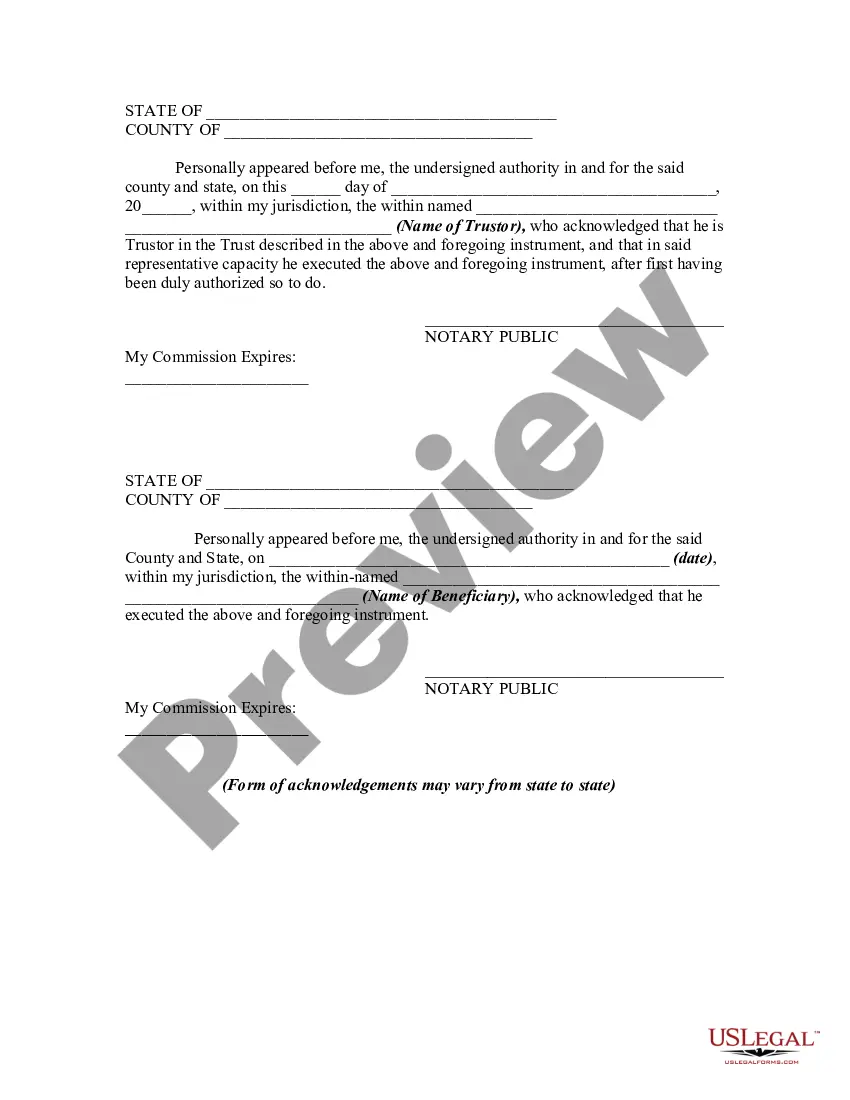
- Sign and date the agreement in the presence of a notary public.
Notarization guidance
Yes, this form must be notarized to be legally valid. This ensures that the identities of the parties involved are verified, and the execution of the document is properly recorded. US Legal Forms provides integrated online notarization options, allowing you to complete the process via a secure video call anytime, ensuring convenience and compliance without travel.
Get your form ready online
Our built-in tools help you complete, sign, share, and store your documents in one place.
Make edits, fill in missing information, and update formatting in US Legal Forms—just like you would in MS Word.
Download a copy, print it, send it by email, or mail it via USPS—whatever works best for your next step.
Sign and collect signatures with our SignNow integration. Send to multiple recipients, set reminders, and more. Go Premium to unlock E-Sign.
If this form requires notarization, complete it online through a secure video call—no need to meet a notary in person or wait for an appointment.
We protect your documents and personal data by following strict security and privacy standards.

Make edits, fill in missing information, and update formatting in US Legal Forms—just like you would in MS Word.

Download a copy, print it, send it by email, or mail it via USPS—whatever works best for your next step.

Sign and collect signatures with our SignNow integration. Send to multiple recipients, set reminders, and more. Go Premium to unlock E-Sign.

If this form requires notarization, complete it online through a secure video call—no need to meet a notary in person or wait for an appointment.

We protect your documents and personal data by following strict security and privacy standards.
Common mistakes
- Failing to accurately fill in the dates, which can lead to confusion about the terms.
- Not obtaining the required signatures from both the Trustor and Beneficiary.
- Neglecting to have the document notarized if required by local laws.
Why complete this form online
- Convenience of completing legal forms from home without the need to consult a lawyer directly.
- Editable formats allowing customization based on specific needs.
- Access to forms drafted by attorneys, ensuring compliance with legal standards.
What to keep in mind
- This form allows trustors to set a future date for trust termination while waiving earlier revocation rights.
- Proper completion and notarization are essential for the form's legality.
- Adherence to state-specific laws is crucial for enforceability.
Looking for another form?
Form popularity
FAQ
In some states, your trustee must submit a formal accounting of the trust's operation to all beneficiaries.Trustees can sometimes waive this requirement if all beneficiaries agree in writing. In either case, after the report is made, the trust's assets can be distributed and the trust can be dissolved.
This can take as long as 18 months or so if real estate or other assets must be sold, but it can go on much longer. How long it takes to settle a revocable living trust can depend on numerous factors.
Termination of a trust is like dissolution of a business organization.Usually, this means paying any outstanding trust obligations, liquidating assets, filing final income tax returns, preparing a final accounting for the benefit of the beneficiaries, and distributing trust assets to the appropriate beneficiaries.
You must actually transfer or place property in the trust. That means the trust, with you as trustee, owns the property in it.You can also take property out of the trust if your needs change or if you want to give it to your beneficiary.
If you want to revoke your trust, you must formally take all of the trust assets out of the living trust and transfer title back to you. Basically, you must reverse the process you followed when you transferred ownership of the property to yourself as trustee.
If you want to revoke your trust, you must formally take all of the trust assets out of the living trust and transfer title back to you. Basically, you must reverse the process you followed when you transferred ownership of the property to yourself as trustee.
In order for a trust to end, all debts must be paid and all trust property must be distributed. After the trustee has completed all actions required to administer a trust and there are no remaining assets in the trust except sufficient funds to pay any final expenses, the trustee may close the trust.
The trust may be revoked if it was obtained by undue influence or any fraudulent activity. If the execution of the trust is under a fundamental mistake or misapprehension as to its effect8. The author of the trust may also revoke illusory trusts9.
Upon the death of the settlor (or within a reasonable time after death) a standard liquidating trust may terminate. Upon a designated age or date. Upon a specific date or the beneficiary turning a specific age, the provisions of a trust may call for complete distribution and termination of the trust.