Minnesota Order Assigning Case for Family Law Mediation
What is this form?
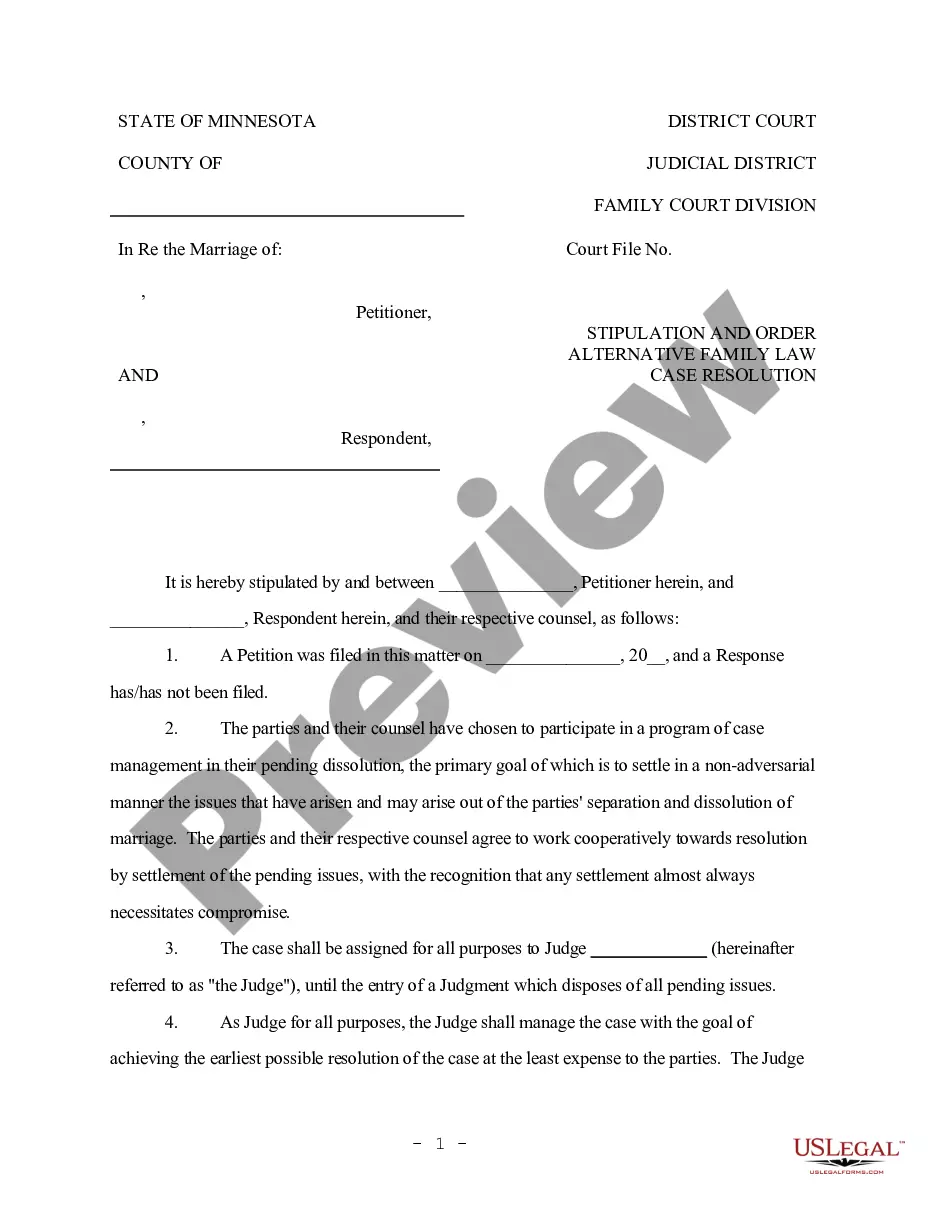
The Order Assigning Case for Family Law Mediation is a legal document that facilitates a structured approach to resolving disputes in family law, particularly during a dissolution of marriage. This form encourages parties to engage in cooperative discussions, aiming for amicable settlements without extensive courtroom proceedings. Unlike more adversarial forms, this mediation order emphasizes collaboration and compromise between the involved parties and their attorneys.
Key components of this form
- Parties involved: Identification of the petitioner and respondent, including their attorneys.
- Case details: Date of petition filing and whether a response has been filed.
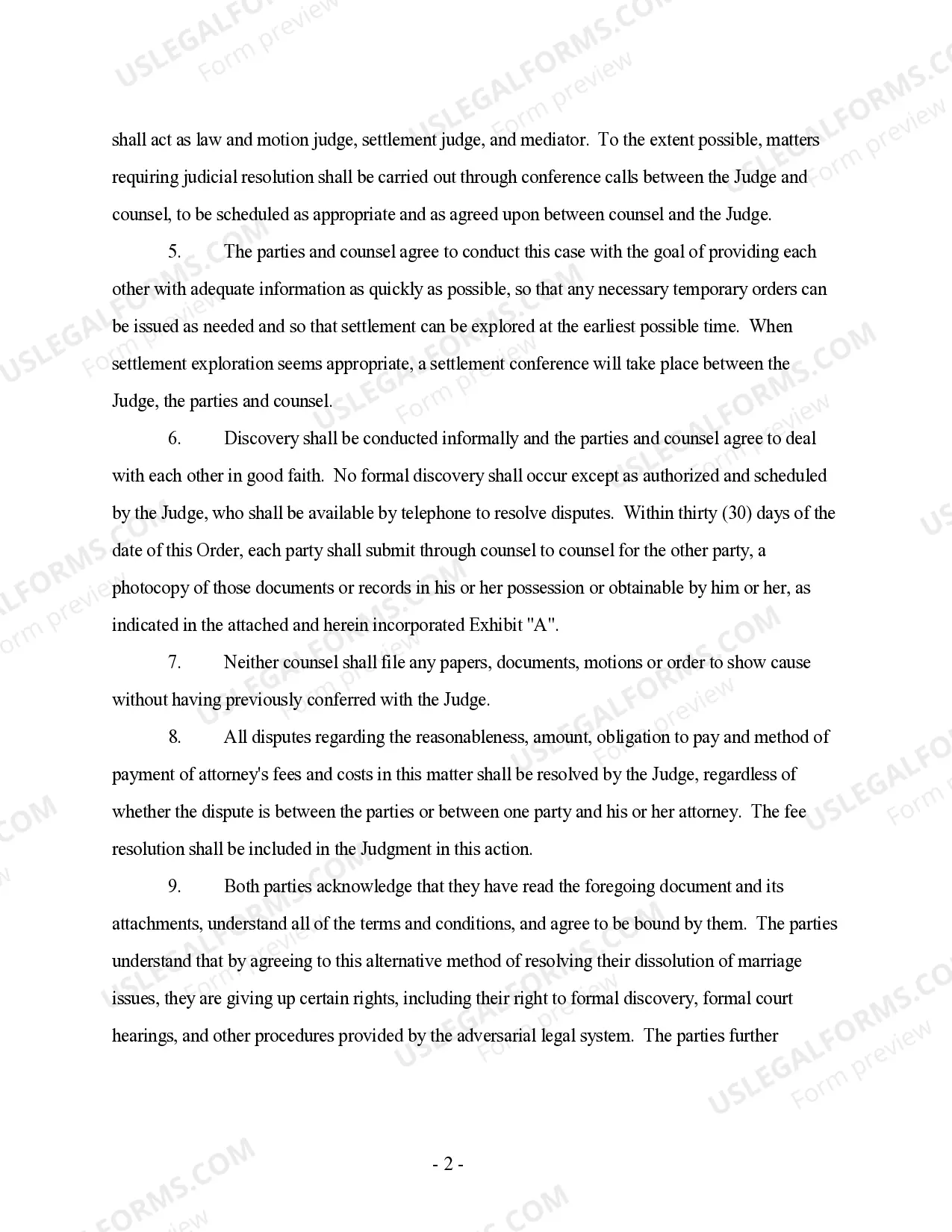
- Mediation process: Outline of the mediation approach and the role of the assigned judge.
- Discovery guidelines: Agreement on informal discovery and sharing of information.
- Fee dispute resolution: Specification of how attorney fees and disputes will be handled.
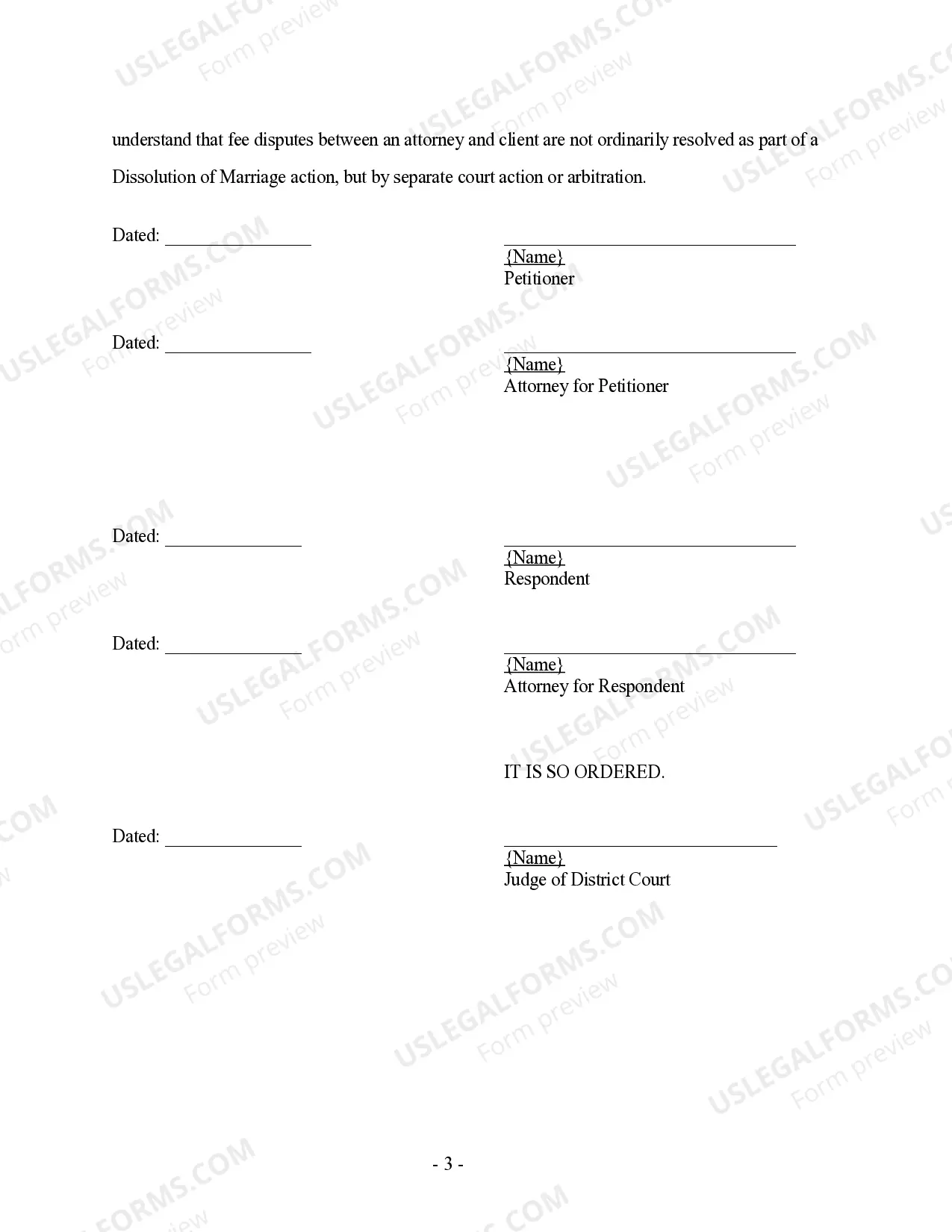
- Acknowledgment of terms: Confirmation that both parties understand and agree to the terms of the mediation process.
When to use this document
This form should be used when both parties involved in a dissolution of marriage agree to pursue mediation as a method to resolve their disputes. It is particularly useful if the parties wish to avoid the time and expense of traditional court proceedings and aim to settle issues such as asset division, child custody, and support payments in an amicable manner.
Who this form is for
This form is designed for:
- Couples undergoing dissolution of marriage who are open to mediation.
- Attorneys representing clients in family law cases.
- Parties looking to create a structured environment for resolving disputes amicably.
How to prepare this document
- Identify the names of the petitioner and respondent, and their respective attorneys.
- Fill in the date the petition was filed and whether a response has been made.
- Specify the judge assigned to the case and their role in mediation.
- Ensure both parties sign the document, acknowledging their understanding of the terms.
- Submit copies of relevant documents or records as specified in the attached exhibit.
Notarization requirements for this form
This form usually doesn’t need to be notarized. However, local laws or specific transactions may require it. Our online notarization service, powered by Notarize, lets you complete it remotely through a secure video session, available 24/7.
Get your form ready online
Our built-in tools help you complete, sign, share, and store your documents in one place.
Make edits, fill in missing information, and update formatting in US Legal Forms—just like you would in MS Word.
Download a copy, print it, send it by email, or mail it via USPS—whatever works best for your next step.
Sign and collect signatures with our SignNow integration. Send to multiple recipients, set reminders, and more. Go Premium to unlock E-Sign.
If this form requires notarization, complete it online through a secure video call—no need to meet a notary in person or wait for an appointment.
We protect your documents and personal data by following strict security and privacy standards.

Make edits, fill in missing information, and update formatting in US Legal Forms—just like you would in MS Word.

Download a copy, print it, send it by email, or mail it via USPS—whatever works best for your next step.

Sign and collect signatures with our SignNow integration. Send to multiple recipients, set reminders, and more. Go Premium to unlock E-Sign.

If this form requires notarization, complete it online through a secure video call—no need to meet a notary in person or wait for an appointment.

We protect your documents and personal data by following strict security and privacy standards.
Common mistakes to avoid
- Failing to properly identify all parties involved.
- Not signing the document by both parties and their attorneys.
- Neglecting to attach necessary documents as required.
- Overlooking state-specific procedural requirements.
Benefits of using this form online
- Convenience of downloading the form anytime, from any location.
- Easily editable content to suit specific case needs.
- Access to professionally drafted templates ensuring legal compliance.
- Time-saving, as you can complete the form at your own pace.
Legal use & context
- This form serves as an agreement to resolve family law issues in a less formal setting.
- Utilizing mediation can often help reduce court costs and emotional strains associated with divorce litigation.
- Parties must understand that by using this form, they waive certain rights typically granted by formal legal processes.
Quick recap
- The Order Assigning Case for Family Law Mediation facilitates a non-adversarial approach to resolving disputes.
- Proper completion requires all relevant parties to agree and sign the document.
- This form can help minimize the emotional and financial burden of divorce proceedings.
Looking for another form?

Form popularity
FAQ
Writing a good mediation statement involves clarity and conciseness. Begin by outlining the key points you wish to address regarding your Minnesota Order Assigning Case for Family Law Mediation. Use straightforward language and avoid unnecessary jargon to ensure your message is easily understood. A well-structured statement can guide the mediation process, highlighting your objectives and paving the way for effective discussion.
During mediation, it's crucial to avoid inflammatory or accusatory language. Statements that blame or criticize can escalate tensions and hinder progress in your Minnesota Order Assigning Case for Family Law Mediation. Instead, focus on expressing your feelings and needs calmly. Listening actively and maintaining a respectful tone can create a more productive environment for everyone involved.
Filling out mediation forms is a straightforward process, but it requires attention to detail. First, gather all necessary information related to your Minnesota Order Assigning Case for Family Law Mediation. Ensure that you complete each section accurately and thoroughly, as incomplete forms can delay the mediation process. If you need assistance, uslegalforms offers resources and templates that simplify this task.
The 4 C's of mediation are communication, cooperation, creativity, and compromise. Understanding these principles can significantly enhance your experience during a Minnesota Order Assigning Case for Family Law Mediation. Effective communication ensures that all parties express their needs clearly. Cooperation fosters a collaborative environment, while creativity opens the door to innovative solutions, and compromise helps reach a mutually beneficial agreement.
To begin the family mediation process, you will first need to obtain a Minnesota Order Assigning Case for Family Law Mediation. This document is essential as it formally initiates the mediation process and outlines the issues to be addressed. After securing this order, you can select a qualified mediator who specializes in family law. The mediator will facilitate discussions between you and the other party, guiding you toward a mutually agreeable resolution.
During child custody mediation, it is essential to avoid negative statements about the other parent, any threats, or ultimatums. Focus on your child's best interests and communicate respectfully, as this fosters a more productive environment. A Minnesota Order Assigning Case for Family Law Mediation supports you in navigating these discussions effectively, and utilizing resources like USLegalForms can provide you with valuable tools to prepare for your mediation sessions.
Mediators do not have the authority to decide the case or issue orders. Instead, their role is to facilitate discussions between the parties, helping them reach a mutually agreeable solution. Through a Minnesota Order Assigning Case for Family Law Mediation, you will engage in conversations with a mediator who guides you, but ultimately, any decisions made are up to you and the other party.
Rule 114 of the Minnesota Rules of Practice outlines the Alternative Dispute Resolution (ADR) process, particularly for family law cases. It encourages mediation as a means to resolve disputes before proceeding to trial, promoting a collaborative approach. When you receive a Minnesota Order Assigning Case for Family Law Mediation, it signifies that the court recommends mediation as a preferred method to settle your family law issues amicably.