Georgia Trust Agreement
About this form
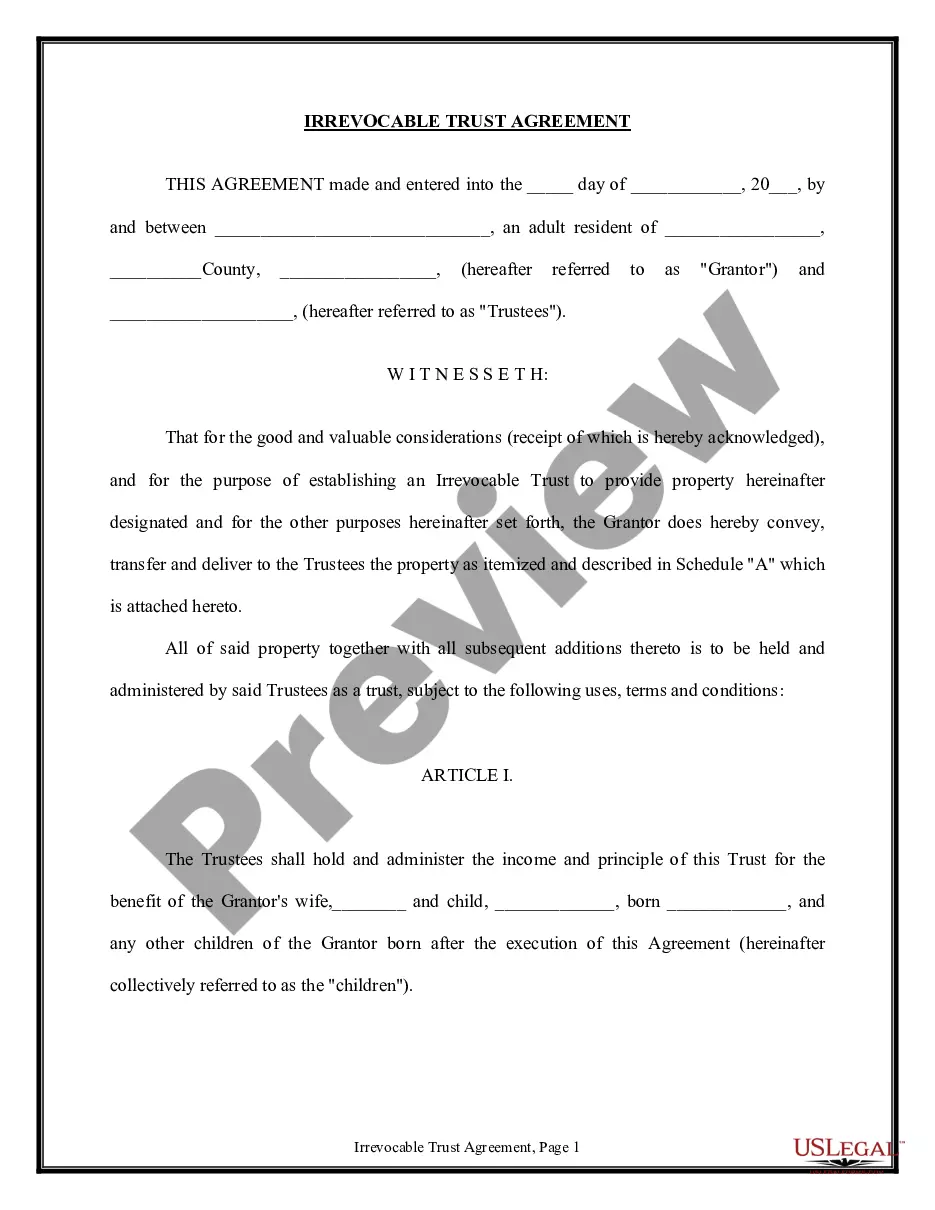
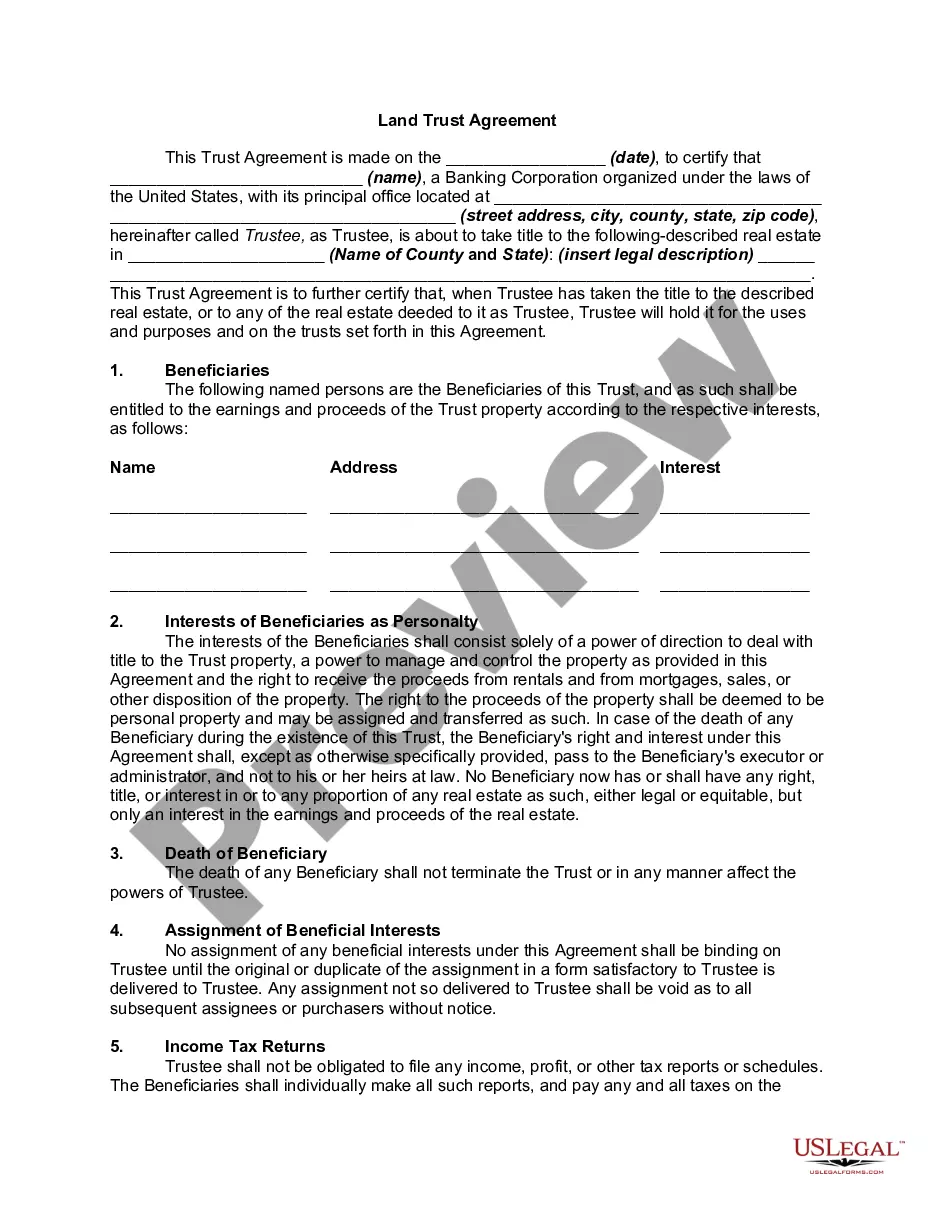
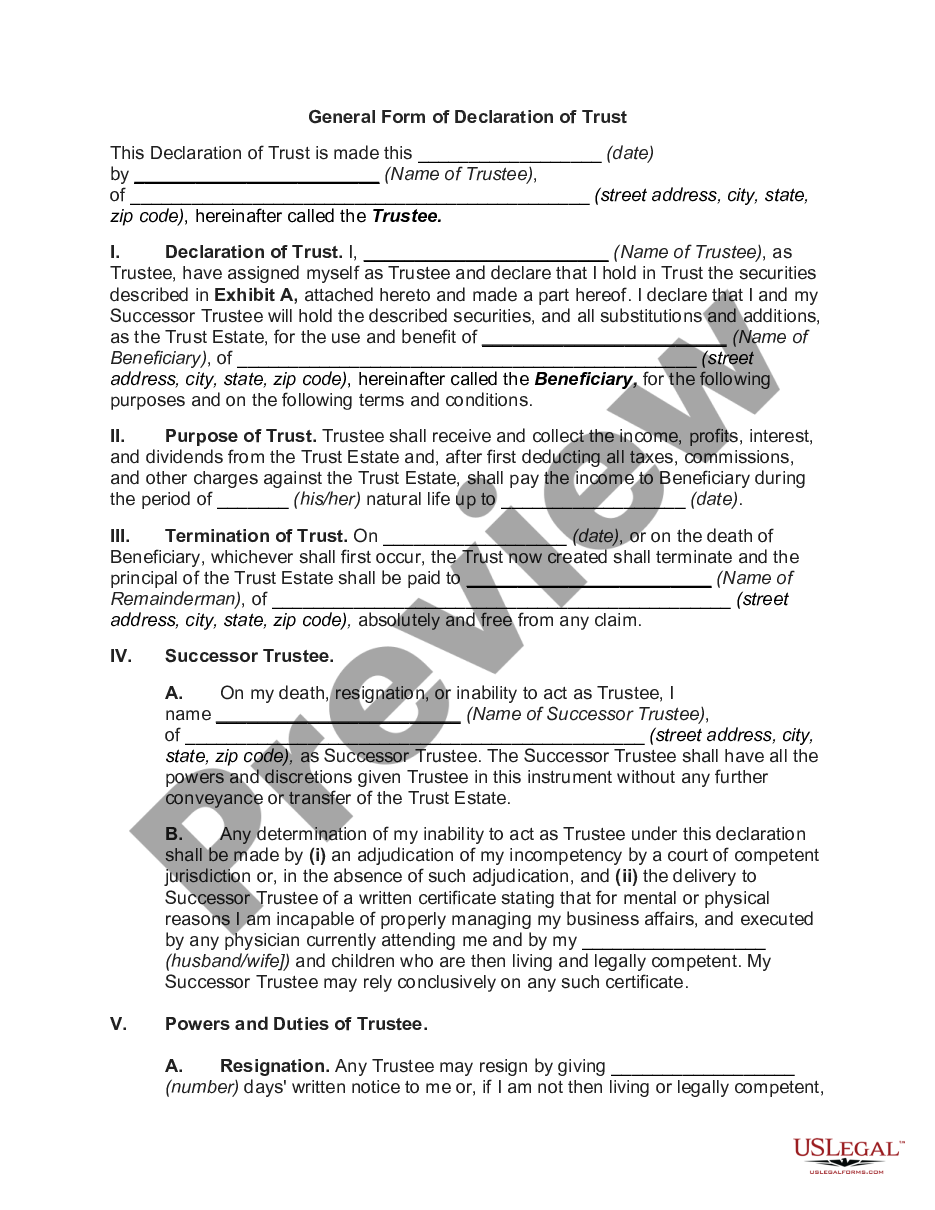
A Trust Agreement is a legal document that allows one person to transfer their assets to another person, known as the Trustee. This agreement enables the Trustee to manage various asset types, including money, securities, real estate, and intellectual property, on behalf of the beneficiary. A Trust Agreement differs from other legal forms, such as wills, as it provides for ongoing management and distribution of assets during the Trust's term, rather than solely designating asset distribution at death.
Key components of this form
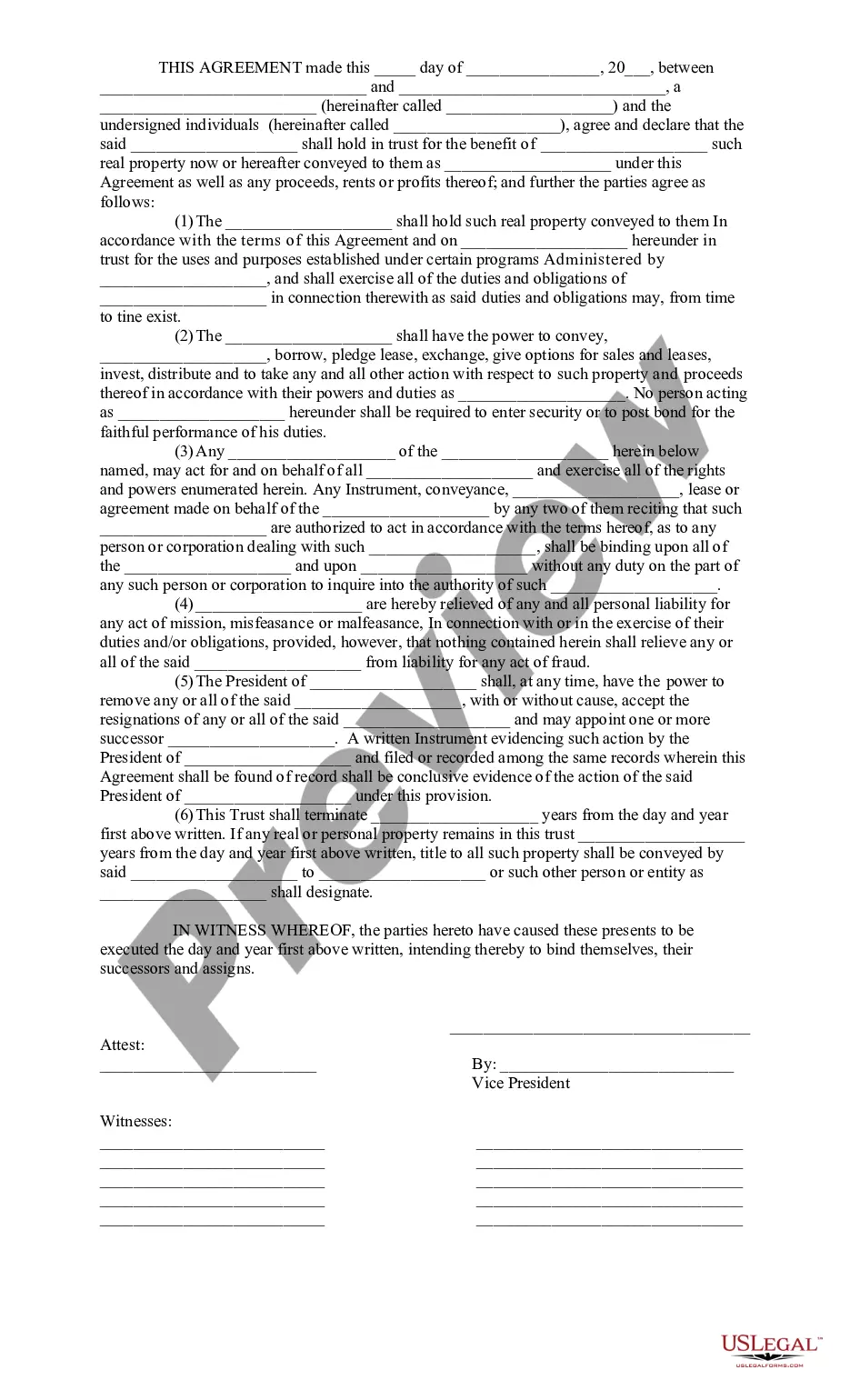
- Identification of the parties involved: Set forth the Trustee and the beneficiary.
- Defined property: Specify the real and personal property being placed in trust.
- Trustee powers: Outline the powers granted to the Trustee, such as managing, selling, or borrowing against the assets.
- Liability clause: Include provisions about the Trustee's liability, protecting them from personal liability in most actions.
- Termination clause: State when the Trust will end and what will happen to any remaining assets.
When to use this document
This Trust Agreement is useful in various scenarios, such as when individuals want to ensure that their assets are managed and distributed according to specific instructions during their lifetime or after their death. It is often used by families to manage shared property, by individuals wanting to avoid probate, or by those who wish to provide for beneficiaries with specific terms.
Who should use this form
- Individuals wanting to establish a Trust for asset management.
- Parents wishing to set aside resources for their children or dependents.
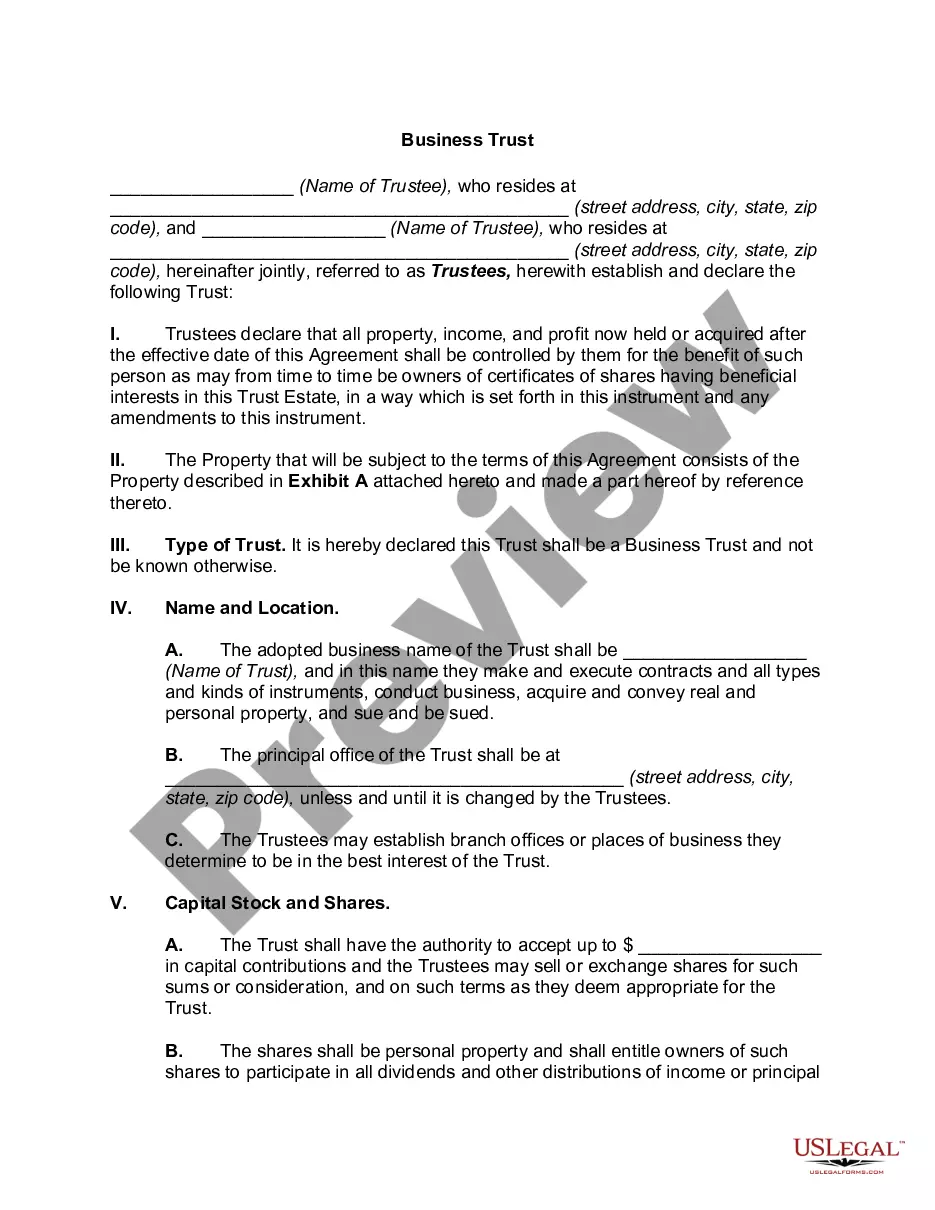
- Business owners needing a Trust to hold business interests.
- Anyone concerned with estate planning and asset protection.
Completing this form step by step
- Identify the parties: Fill in the names of the Trustee and the beneficiary.
- Specify the property: Clearly detail all assets being placed into the Trust.
- Outline the powers: Indicate what powers the Trustee will have concerning the assets.
- Enter the termination date: State when the Trust will end or conditions for termination.
- Sign and notarize: Ensure all parties sign the agreement and have it notarized if required.
Is notarization required?
Yes, this form must be notarized to be legally valid. Notarization helps verify the identities of the parties involved and ensures the Trust Agreement is executed properly. US Legal Forms offers integrated online notarization services, allowing users to complete the process securely via a video call, at their convenience.
Get your form ready online
Our built-in tools help you complete, sign, share, and store your documents in one place.
Make edits, fill in missing information, and update formatting in US Legal Forms—just like you would in MS Word.
Download a copy, print it, send it by email, or mail it via USPS—whatever works best for your next step.
Sign and collect signatures with our SignNow integration. Send to multiple recipients, set reminders, and more. Go Premium to unlock E-Sign.
If this form requires notarization, complete it online through a secure video call—no need to meet a notary in person or wait for an appointment.
We protect your documents and personal data by following strict security and privacy standards.

Make edits, fill in missing information, and update formatting in US Legal Forms—just like you would in MS Word.

Download a copy, print it, send it by email, or mail it via USPS—whatever works best for your next step.

Sign and collect signatures with our SignNow integration. Send to multiple recipients, set reminders, and more. Go Premium to unlock E-Sign.

If this form requires notarization, complete it online through a secure video call—no need to meet a notary in person or wait for an appointment.

We protect your documents and personal data by following strict security and privacy standards.
Mistakes to watch out for
- Failing to specify all assets intended for the Trust.
- Not clearly defining the Trustee's powers and responsibilities.
- Leaving out necessary signatures or failing to notarize the document where required.
- Not updating the Trust Agreement when circumstances change.
Why use this form online
- Convenience of downloading the form at any time.
- Editability allows for easy customization to fit specific needs.
- Access to templates drafted by licensed attorneys for reliability.
Looking for another form?

Form popularity
FAQ
To set up a trust without a lawyer, start by researching the necessary laws governing trusts in Georgia. You may use kits or templates available from sites like US Legal Forms to create your Georgia Trust Agreement. Be sure to understand the roles of trustees and beneficiaries, as these are vital for the trust's success. With careful planning and the right resources, you can establish a trust that meets your needs.
You can write your own trust in Georgia, but it is crucial to ensure that it meets all legal requirements. A well-structured Georgia Trust Agreement must clearly outline the terms and the beneficiaries involved. Consider using templates from US Legal Forms to help guide you in drafting a legally sound document. This approach can protect your interests and clarify your intentions.
Yes, it is possible to set up a trust without an attorney in Georgia. However, navigating the intricacies of creating a valid Georgia Trust Agreement can be challenging without legal expertise. You need to understand the requirements and ensure compliance with state laws. Utilizing resources like US Legal Forms can help simplify the process and provide the necessary templates.
One major mistake parents often make when establishing a trust fund is not clearly defining their intentions for the Georgia Trust Agreement. Parents should specify how the funds should be used and for whom. Failing to communicate these details can lead to confusion and conflicts among heirs. A well-drafted Georgia Trust Agreement can minimize risks and ensure that your wishes are honored.
A common example of a trust clause in a Georgia Trust Agreement is the distribution clause, which specifies how and when assets will be distributed to the beneficiaries. This clause can contain conditions that must be met or timelines for distribution. By clearly outlining these terms, you can ensure that your wishes are honored after your passing. Using uslegalforms can help you draft a comprehensive and compliant trust agreement that includes essential clauses.
While a Georgia Trust Agreement can provide many benefits, there are also some drawbacks to consider. Trusts can involve higher initial costs for setup and maintenance compared to a will. Additionally, if not properly funded, a trust may not function as intended. It's important to weigh these factors against the advantages and consult a legal expert to make the best decision for your situation.
Writing a trust agreement involves several key steps to ensure it meets your needs. Start by defining the purpose of the trust and identifying the grantor, trustee, and beneficiaries. Next, outline the terms of the Georgia Trust Agreement, including how the assets will be managed and distributed. You can also use platforms like uslegalforms to access templates and resources to help guide you through creating your trust.
In Georgia, notarization is not strictly required for a trust agreement to be valid. However, having it notarized can provide additional legal protection and simplify the process of proving its authenticity. A Georgia Trust Agreement that includes notarization may also be beneficial when dealing with financial institutions or other entities. It is always wise to consult an attorney to ensure your trust document meets all necessary legal requirements.
The preparation of a trust agreement is typically handled by an estate planning lawyer. They will draft the Georgia Trust Agreement to ensure it adheres to the legal framework in Georgia. By doing so, they guarantee that your wishes regarding asset distribution are accurately documented. Engaging a seasoned lawyer can simplify this complex process.
A trust agreement is usually created by a qualified attorney who specializes in estate planning. They hold the knowledge necessary to draft a Georgia Trust Agreement that meets legal requirements. Beyond just drafting, they also help clarify your goals and tailor the agreement accordingly. This professional guidance is essential for establishing a secure trust.