Georgia Limited Warranty Deed
What this document covers
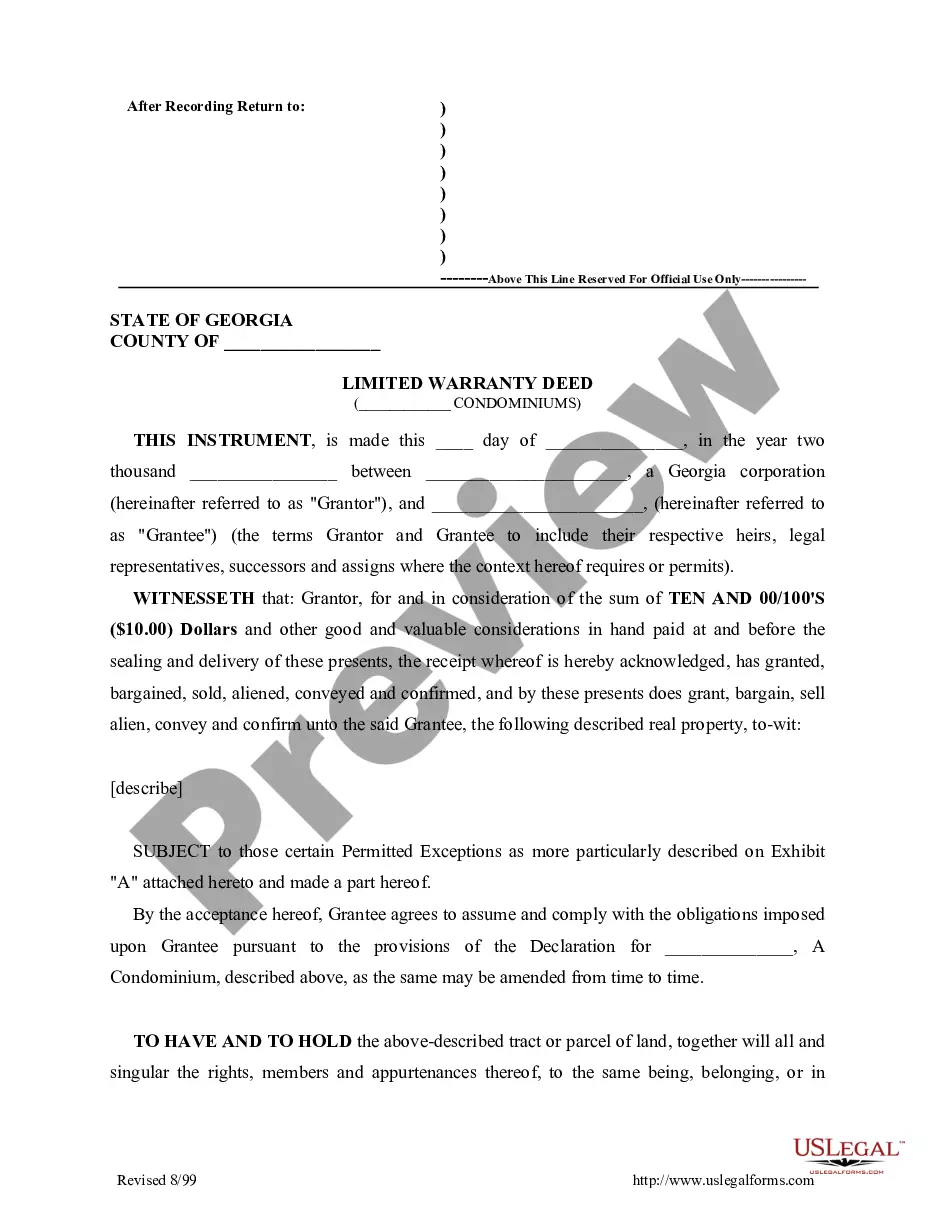
A Limited Warranty Deed is a legal document used in property transfers that provides a limited guarantee on the title being conveyed. Unlike a general warranty deed, which offers full protection against any title issues, a limited warranty deed only assures that the grantor has not caused any issues with the title during their ownership. This form is suitable for real estate transactions, especially in condominium sales, where clear title transfer is essential.
Form components explained
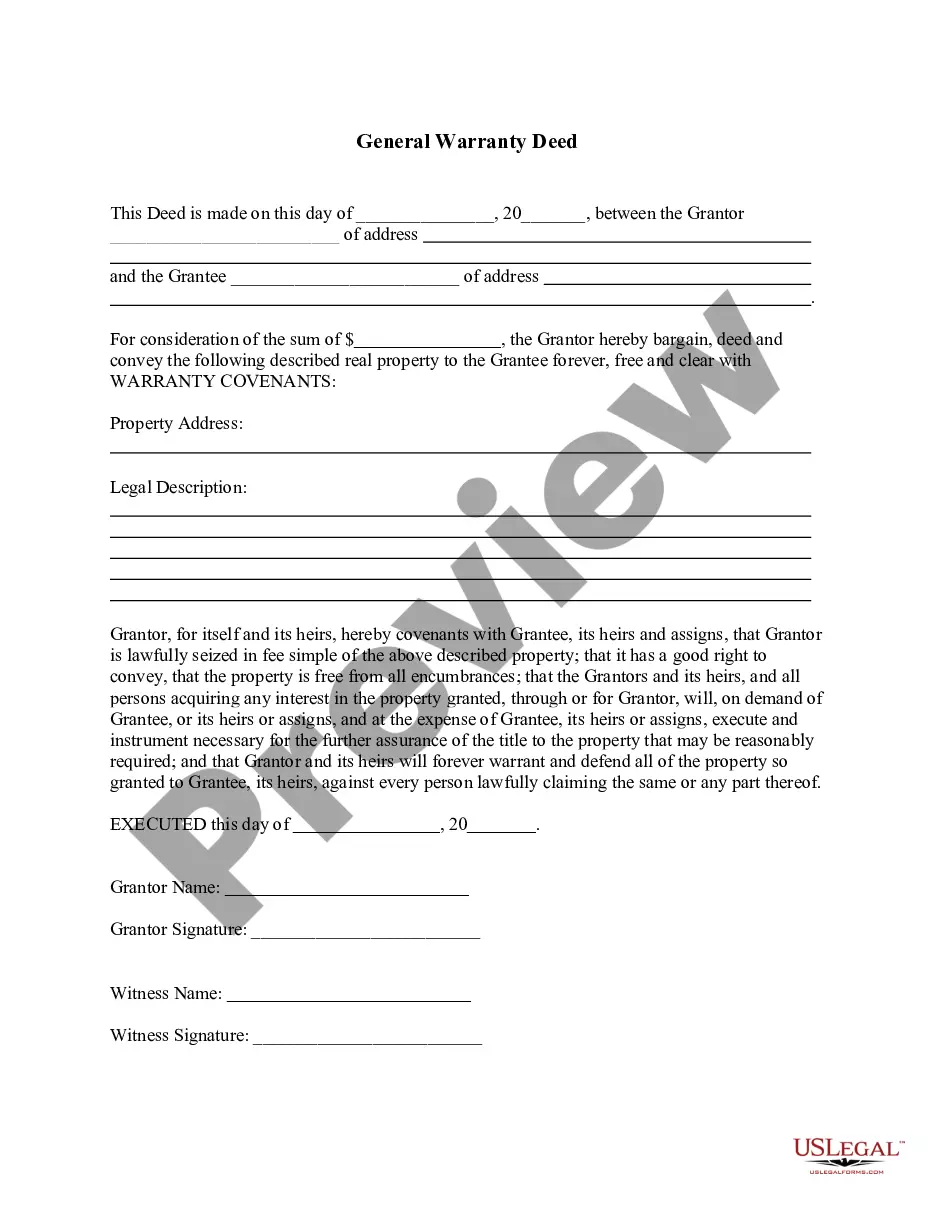
- The identities of the Grantor (seller) and Grantee (buyer)
- Property description, including any permitted exceptions
- Consideration amount, indicating the payment for the property
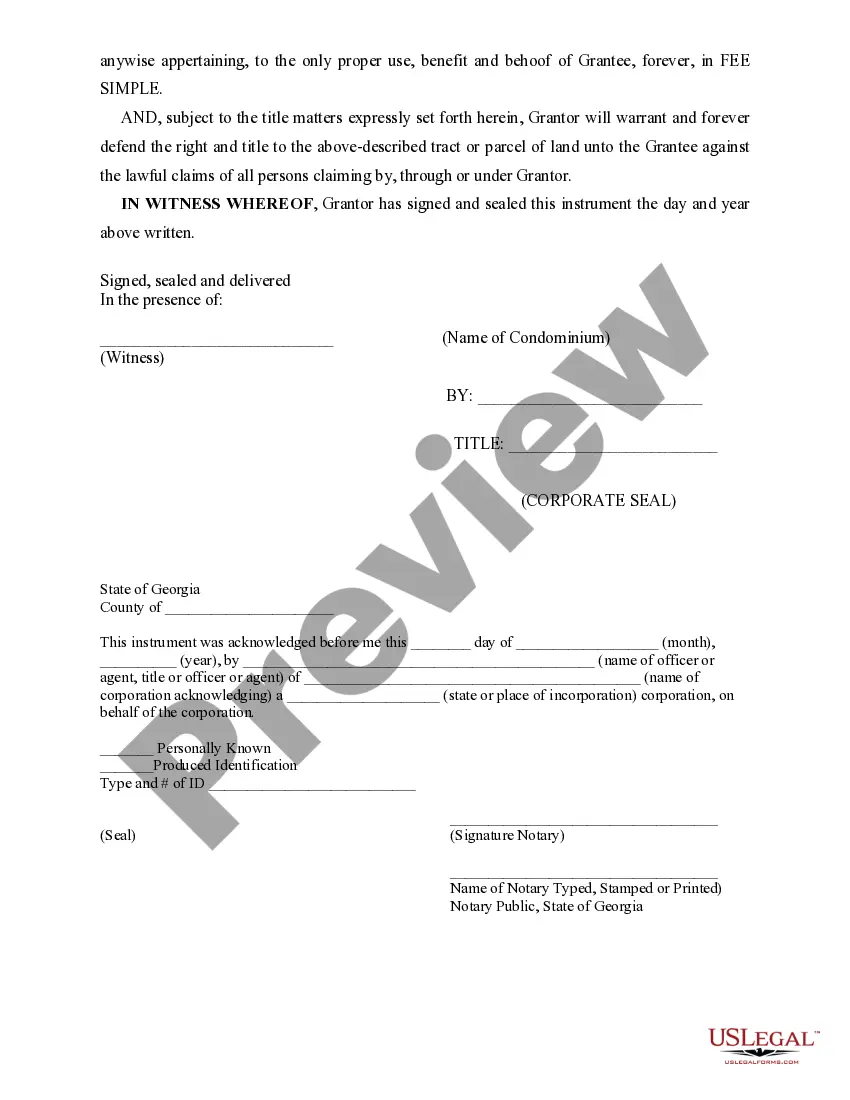
- Date of execution and acknowledgment section for notarization
- Signature lines for both the Grantor and witnesses


When to use this form
This form is utilized when transferring property ownership, particularly when the seller wishes to limit their responsibility for title issues. It is commonly used in real estate transactions involving condominiums or other properties where limited warranties are appropriate. You may need this form when selling property and you are not able or willing to guarantee the title beyond your ownership period.
Who this form is for
- Property sellers looking to transfer ownership of real estate
- Buyers who are comfortable accepting limited warranties on the property title
- Real estate agents and attorneys involved in property transactions
- Individuals engaging in condominium sales, specifically in Georgia
Steps to complete this form
- Identify the parties involved by filling in the names of the Grantor and Grantee.
- Provide a detailed description of the property being sold, including any specific identifiers.
- Enter the date of the transfer and the amount of consideration being paid.
- Ensure signatures are provided from the Grantor, witnesses, and a notary public.
- Attach any required exhibits that specify further details about permitted exceptions.
Is notarization required?
Yes, this form must be notarized to be legally valid. Notarization ensures that the identities of the parties are verified and that the signing process is witnessed. US Legal Forms offers an easy online notarization service available 24/7 through secure video calls, making it convenient to have your document notarized without travel.
Get your form ready online
Our built-in tools help you complete, sign, share, and store your documents in one place.
Make edits, fill in missing information, and update formatting in US Legal Forms—just like you would in MS Word.
Download a copy, print it, send it by email, or mail it via USPS—whatever works best for your next step.
Sign and collect signatures with our SignNow integration. Send to multiple recipients, set reminders, and more. Go Premium to unlock E-Sign.
If this form requires notarization, complete it online through a secure video call—no need to meet a notary in person or wait for an appointment.
We protect your documents and personal data by following strict security and privacy standards.

Make edits, fill in missing information, and update formatting in US Legal Forms—just like you would in MS Word.

Download a copy, print it, send it by email, or mail it via USPS—whatever works best for your next step.

Sign and collect signatures with our SignNow integration. Send to multiple recipients, set reminders, and more. Go Premium to unlock E-Sign.

If this form requires notarization, complete it online through a secure video call—no need to meet a notary in person or wait for an appointment.

We protect your documents and personal data by following strict security and privacy standards.
Avoid these common issues
- Failing to accurately describe the property, which can cause disputes later.
- Not obtaining the necessary signatures from witnesses and a notary.
- Leaving out the date of the transfer, which is crucial for legal documentation.
- Overlooking local regulations or additional requirements specific to the transaction.
Benefits of using this form online
- Instant access to download and complete the form at your convenience.
- Ability to easily edit the document to fit your specific transaction needs.
- Secure and reliable forms created by licensed attorneys.
Legal use & context
- The Limited Warranty Deed provides a limited guarantee of title, protecting the Grantee only against claims that arose during the Grantor's ownership.
- This deed is commonly used in residential and commercial property transactions, particularly when sellers want to limit potential liabilities.
- Users should ensure compliance with local laws and potentially seek legal advice to understand the risks involved.
Key takeaways
- A Limited Warranty Deed offers a partial warranty on the property title.
- It is ideal for situations where the Grantor wants to minimize liability for past title issues.
- Completing the form accurately is critical for ensuring its legal validity.
- Notarization is essential for this form to achieve proper legal status.
Looking for another form?
Form popularity
FAQ
Using a Georgia Limited Warranty Deed offers clear benefits in real estate transactions. It strikes a balance between protecting the buyer’s interests and allowing sellers to limit their liability for past ownership issues. This deed is ideal for situations where sellers may not have comprehensive knowledge of the property’s history. Additionally, platforms like US Legal Forms simplify the process of preparing and filing the necessary documents.
One of the disadvantages of a Georgia Limited Warranty Deed is its limited scope of protection. While it covers claims during the seller's ownership, it does not protect the buyer from issues that existed prior to that period. This limitation may leave the buyer vulnerable to unforeseen challenges. Understanding this aspect is crucial when deciding which deed best suits your needs.
The distinction between a Georgia Limited Warranty Deed and a quit claim deed lies in the level of protection offered. A quit claim deed transfers ownership without offering any guarantees about the property title’s quality. In contrast, a limited warranty deed provides some assurance against claims arising during the seller's ownership, thus offering more protection to the buyer. This makes a limited warranty deed a more secure option for real estate transactions.
To acquire your home’s Georgia Limited Warranty Deed, start by checking your local county clerk's office. You can also use online platforms like US Legal Forms, which offer easy access to legal documents. By navigating their platform, you can find the necessary forms and guidelines to secure your home warranty deed effortlessly.
Finding your Georgia Limited Warranty Deed online is often straightforward. Simply go to your county's property records website, input your details, and search. Many counties provide searchable databases where you can locate and view your warranty deed conveniently.
If you lose your Georgia Limited Warranty Deed, don’t worry; you can obtain a replacement. Start by contacting the county clerk's office where the deed was initially filed. They can assist you in retrieving a new copy, ensuring that you maintain proper documentation for your property.
Yes, many counties in Georgia offer online access to property records, including your Georgia Limited Warranty Deed. You can visit your county's website and look for the property records section. By entering details such as your name or property address, you can easily find and download your warranty deed.
In Georgia, the difference between a warranty deed and a limited warranty deed centers on the extent of seller liability. A warranty deed provides comprehensive protection for the buyer, guaranteeing freedom from past claims. Conversely, a limited warranty deed limits seller liability to issues arising during their ownership only. Understanding these differences is important for both buyers and sellers when navigating real estate transactions.
To execute a warranty deed in Georgia, you need to start by obtaining the correct form and gathering the necessary information about the property and parties involved. Complete the warranty deed form with these details, ensuring everything is accurate and clear. Once filled out, have the document signed by both parties in the presence of a notary public. Finally, file the deed with the county clerk's office to record the transfer of ownership officially.
The primary difference lies in the level of protection offered. A warranty deed provides full protection, assuring the buyer against all past and future claims on the property. In contrast, a Georgia Limited Warranty Deed only covers issues that arose during the seller's ownership. This means that sellers have less liability, while buyers assume more risk regarding the property's title.