Georgia Administrator's Deed
Understanding this form
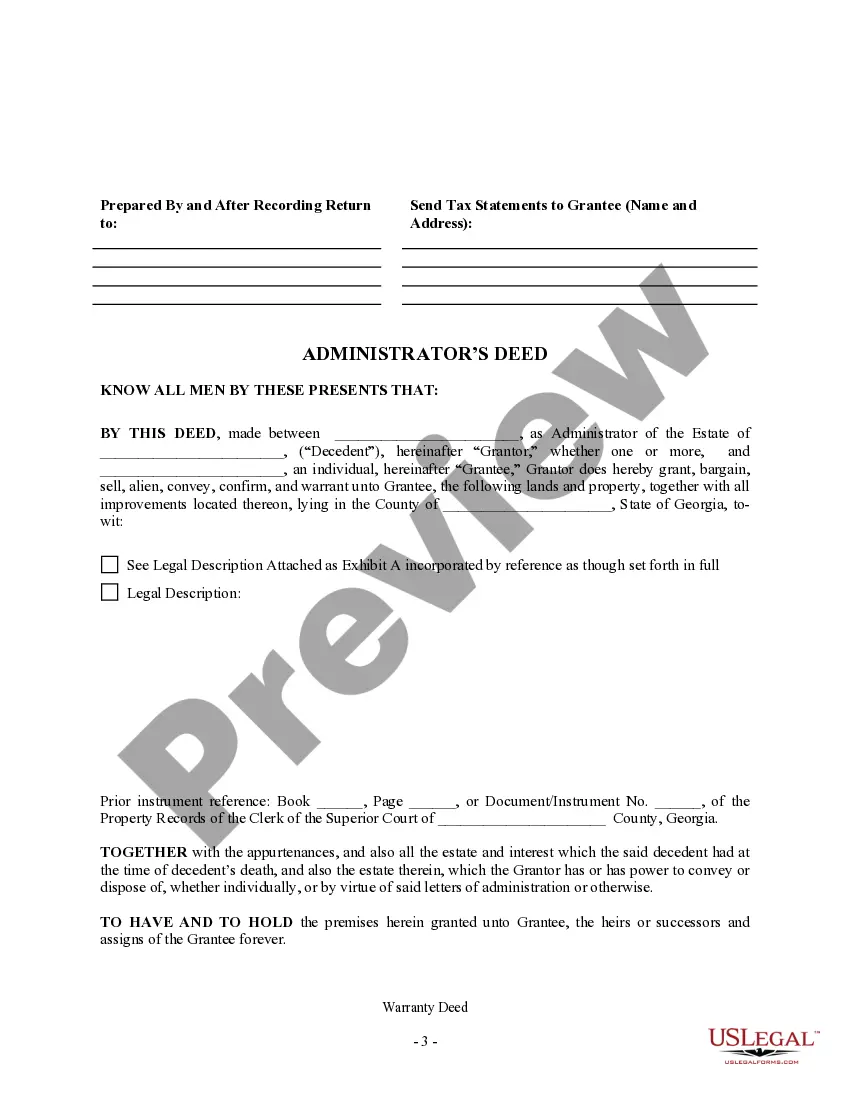
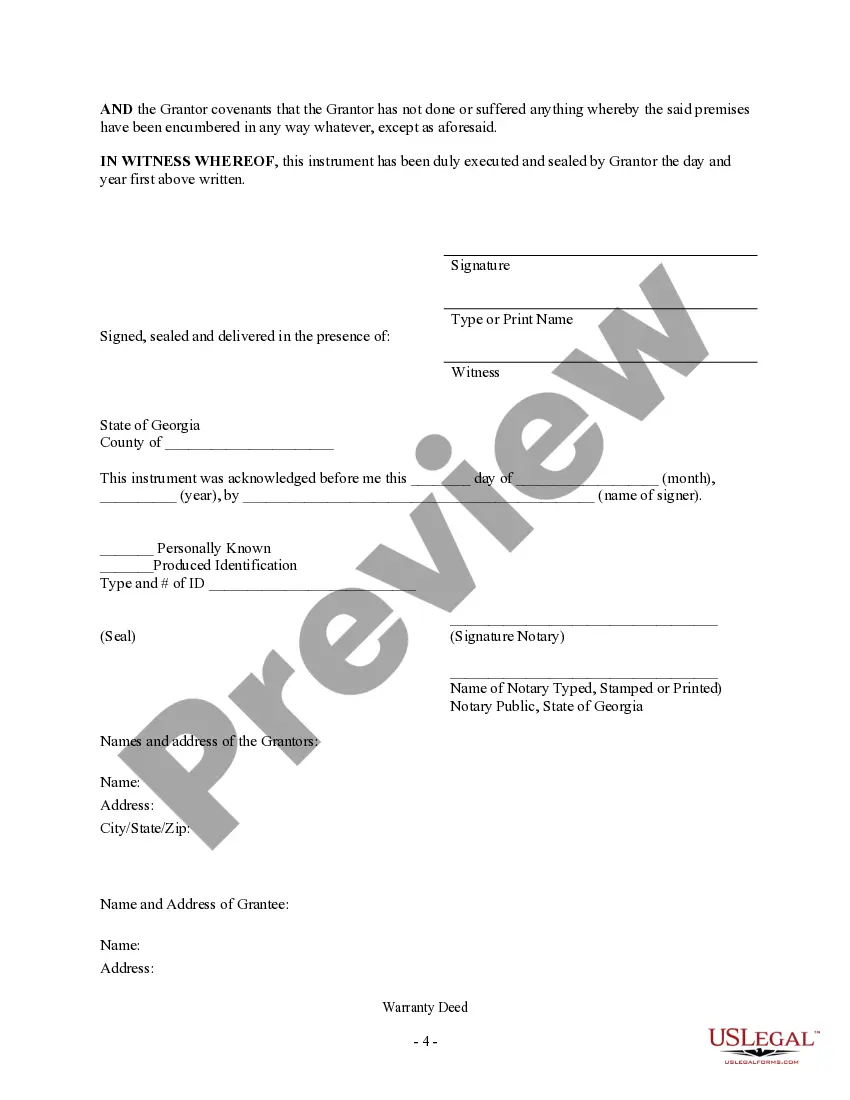
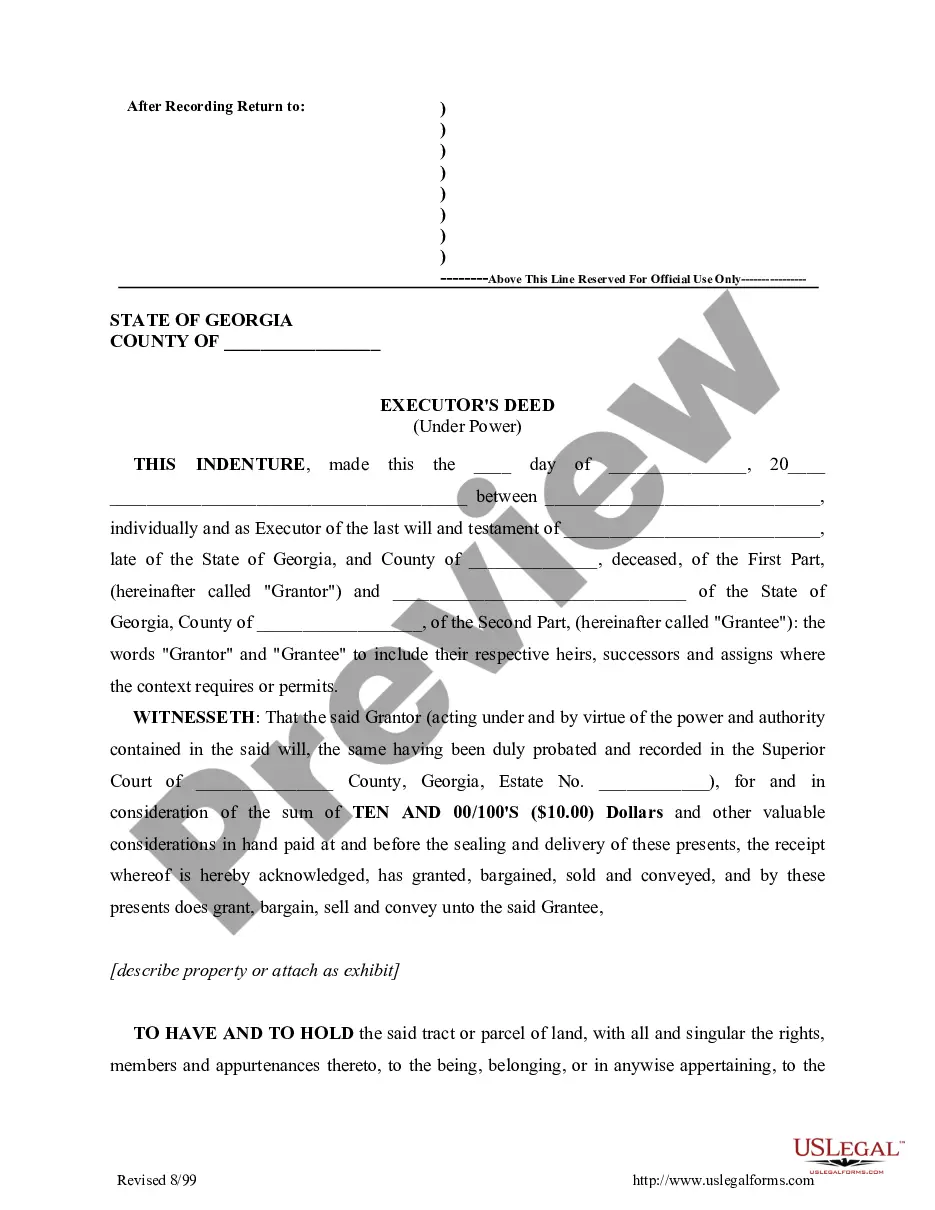
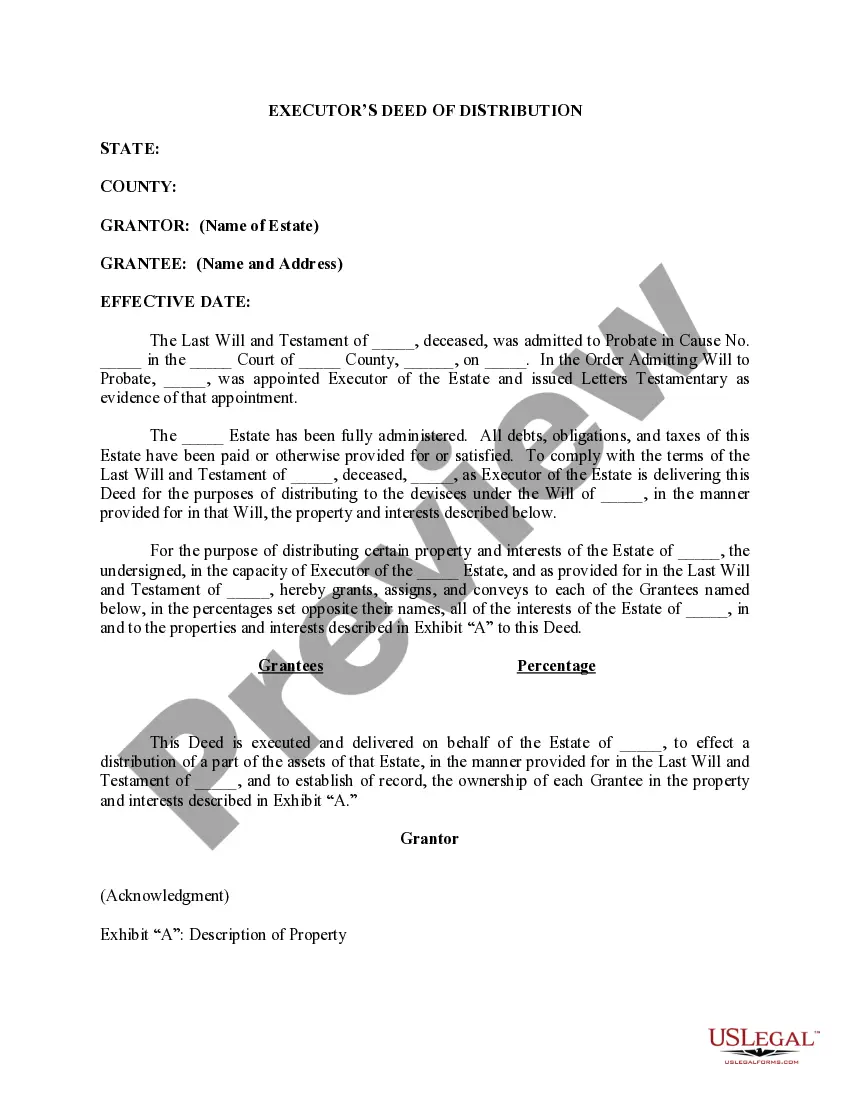
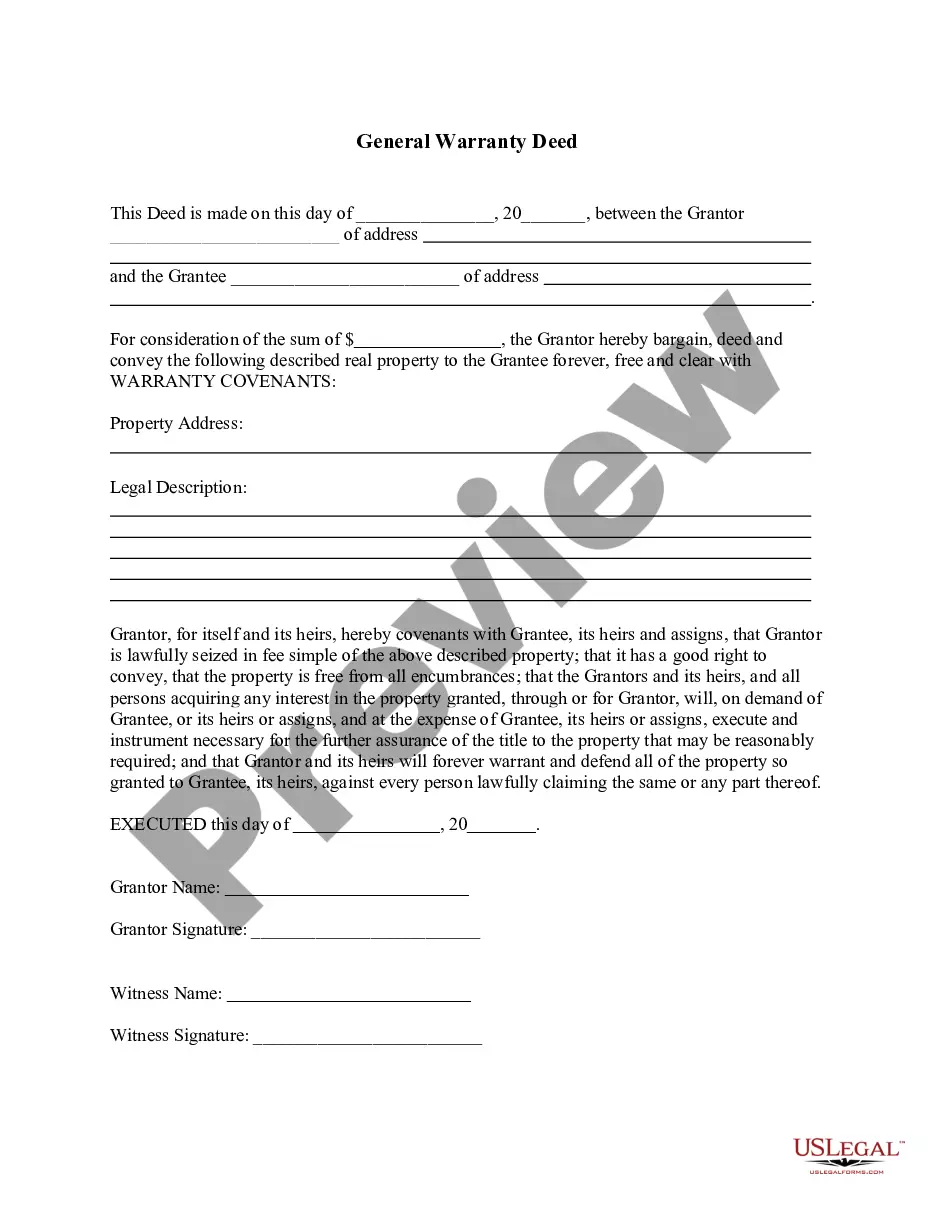
An Administrator's Deed is a legal document used to transfer real estate ownership from a deceased person (the decedent) to their heirs or beneficiaries. This deed is executed by the administrator of the estate, who is appointed by the court, and serves to convey the decedent's interests in the property. Unlike traditional deeds, which may be executed by individuals, the Administrator's Deed is specifically designed for managing estates following a person's death.
Key components of this form
- Identification of the Grantor (Administrator) and Grantee (Beneficiary).
- Description of the property being transferred.
- Statement of the deceased's interest in the property at the time of death.
- Legal language confirming that the property is free from encumbrances.
- Execution section where the Grantor signs and dates the deed.



Common use cases
The Administrator's Deed should be used when an estate has been settled and the administrator is ready to distribute real property to heirs or beneficiaries. This is typically necessary when the decedent owned real estate upon their passing, and the property needs to be legally transferred to the heirs. For example, this form is required when an administrator wishes to transfer a family home to the decedent's children after completing probate proceedings.
Who needs this form
- Administrators or executors of an estate who have been appointed by the court.
- Heirs or beneficiaries who are receiving property as part of an estate settlement.
- Individuals involved in the probate process where property transfer is necessary.
How to complete this form
- Identify the parties involved: the administrator (Grantor) and the beneficiary (Grantee).
- Specify the property being transferred, including its legal description.
- Enter the details of the decedent, confirming their ownership at the time of death.
- Include any necessary statements regarding encumbrances on the property.
- Sign and date the deed in front of a witness if required, and prepare for filing.
Notarization requirements for this form
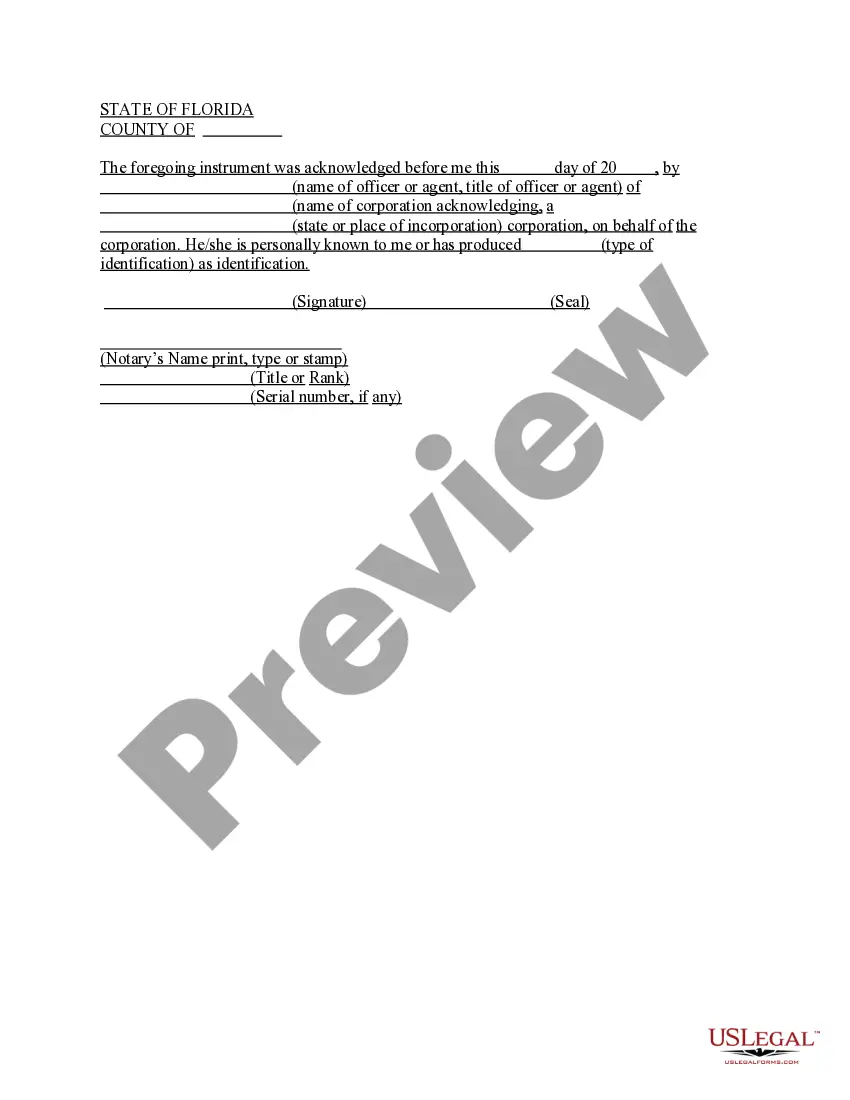
This form needs to be notarized to ensure legal validity. US Legal Forms provides secure online notarization powered by Notarize, allowing you to complete the process through a verified video call, available anytime.
Get your form ready online
Our built-in tools help you complete, sign, share, and store your documents in one place.
Make edits, fill in missing information, and update formatting in US Legal Forms—just like you would in MS Word.
Download a copy, print it, send it by email, or mail it via USPS—whatever works best for your next step.
Sign and collect signatures with our SignNow integration. Send to multiple recipients, set reminders, and more. Go Premium to unlock E-Sign.
If this form requires notarization, complete it online through a secure video call—no need to meet a notary in person or wait for an appointment.
We protect your documents and personal data by following strict security and privacy standards.

Make edits, fill in missing information, and update formatting in US Legal Forms—just like you would in MS Word.

Download a copy, print it, send it by email, or mail it via USPS—whatever works best for your next step.

Sign and collect signatures with our SignNow integration. Send to multiple recipients, set reminders, and more. Go Premium to unlock E-Sign.

If this form requires notarization, complete it online through a secure video call—no need to meet a notary in person or wait for an appointment.

We protect your documents and personal data by following strict security and privacy standards.
Mistakes to watch out for
- Not correctly identifying all parties involved in the transaction.
- Failing to provide a complete and accurate property description.
- Omitting signatures or signatures not being witnessed when required.
- Ignoring the need for compliance with local recording laws.
Why use this form online
- Convenience of accessing and completing the form from anywhere.
- Ability to edit and customize the document as needed.
- Reliable templates drafted by licensed attorneys ensuring legal compliance.
- Immediate availability of forms for urgent situations.
Quick recap
- The Administrator's Deed is crucial for legally transferring property from an estate.
- Clear description and identification of parties are essential for the legality of the document.
- Understanding state-specific requirements is critical to avoid legal issues.
- Using the form online offers benefits in convenience and legal accuracy.
Looking for another form?

Form popularity
FAQ
An administrator's deed is a legal document that transfers the property of an intestate individual, who is a person who passes away without a will. In such cases, the property is transferred to descendents or next-of-kin with the use of an administrator's deed since the deceased individual did not have a will.
Step 1: Download the GA quitclaim deed form. Step 2: Fill out the form. Step 3: Write the delivery address. Step 4: Write the preparer's contact information. Step 5: Get the necessary signatures. Step 6: Pay the deed transfer tax.
California mainly uses two types of deeds: the grant deed and the quitclaim deed. Most other deeds you will see, such as the common interspousal transfer deed, are versions of grant or quitclaim deeds customized for specific circumstances.
When you own a home, you own both the deed and title for that property. In real estate, title means you have ownership and a right to use the property.The deed is the physical legal document that transfers ownership. It shows who you bought your house from, and when you sell it, it shows who you sold it to.
Three basic types of deeds commonly used are the grant deed, the quitclaim deed, and the warranty deed. A sample grant deed. the property he or she is transferring is implied from such language.
The Quit Claim Deed form uses the terms of Grantor (Seller or Owner of said property) and Grantee (Buyer of said property) for the two parties involved. First, the parties must fill in the date. Then, write in the name of the county and state in which the property is located.
The simplest way to add a spouse to a deed is through a quitclaim deed. This type of deed transfers whatever ownership rights you have so that you and your spouse now become joint owners. No title search or complex transaction is necessary. The deed will list you as the grantor and you and your spouse as grantees.
The named personal representative uses an executor's deed to transfer real property from a testate estate. The executor's deed contains all the information required for a standard conveyance, such as a quitclaim or warranty deed, but also includes relevant details about the decedent and the probate case.
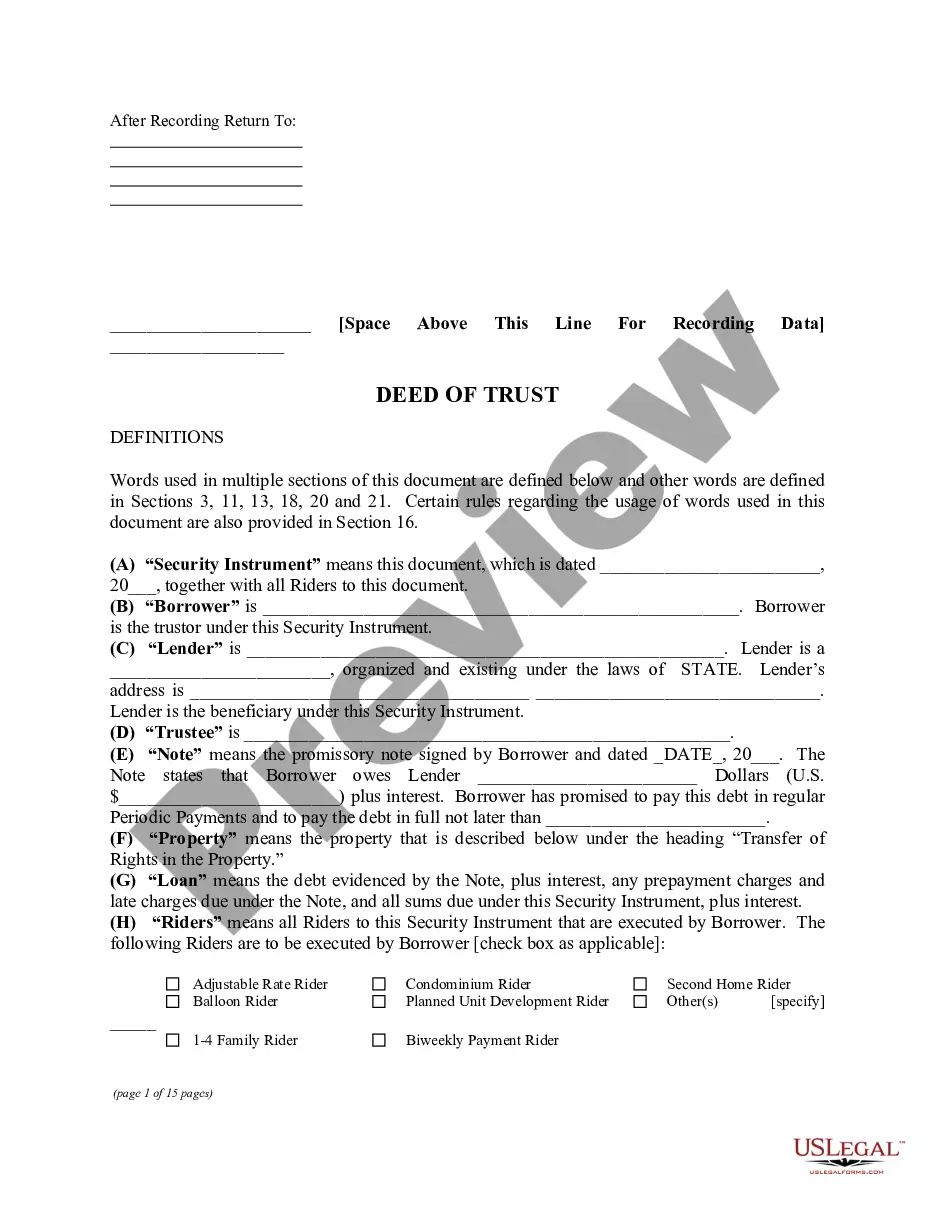
Quitclaim Deed. Deed of Trust. Warranty Deed. Grant Deed. Bargain and Sale Deed. Mortgage Deed.