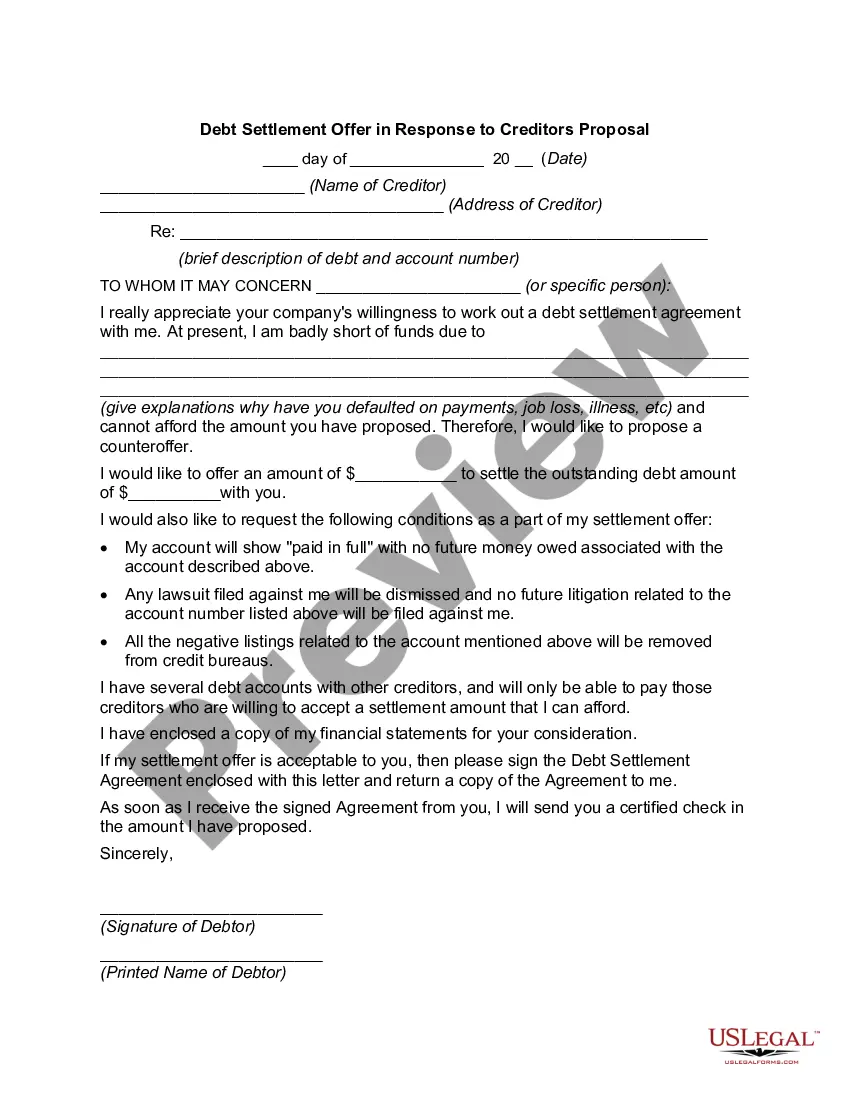
Debt Settlement Offer in Response to Creditor's Proposal
What is this form?
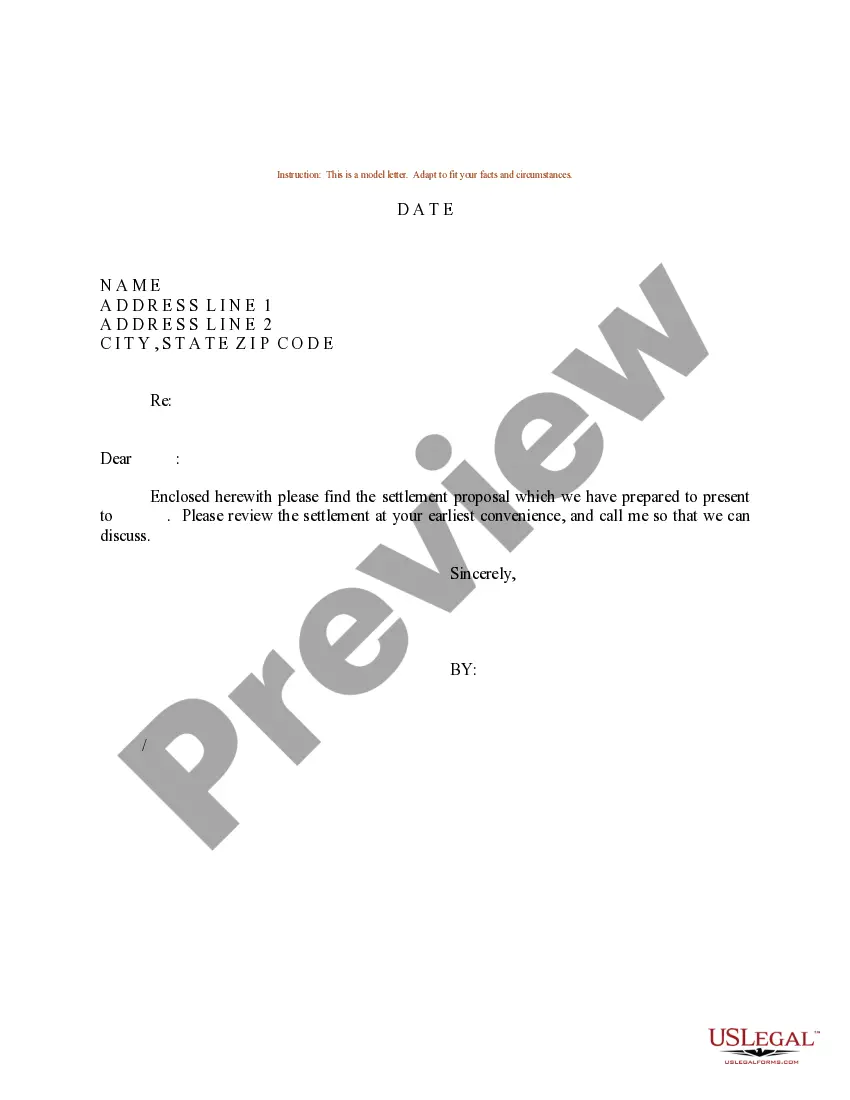
The Debt Settlement Offer in Response to Creditor's Proposal is a legal document used by debtors to propose a settlement for their outstanding debts. This form allows individuals to formally counter a creditor's proposal when they are unable to meet the initial terms due to financial hardships. Unlike standard payment agreements, this form emphasizes negotiation, outlining a specific offer for a reduced payment that may settle the debt entirely, along with requests for favorable terms regarding account status and credit reporting.
Form components explained
- Date: The date when the offer is made.
- Creditor's Information: Name and address of the creditor to whom the offer is sent.
- Debt Description: A brief description of the debt, including the account number.
- Personal Explanation: Details explaining the debtorâs financial situation and inability to meet the original proposal.
- Settlement Offer: The specific amount offered to settle the debt.
- Conditions of Settlement: Requests regarding the account status, dismissal of lawsuits, and removal of negative credit listings.
- Signature: The debtor's signature and printed name, confirming the offer.
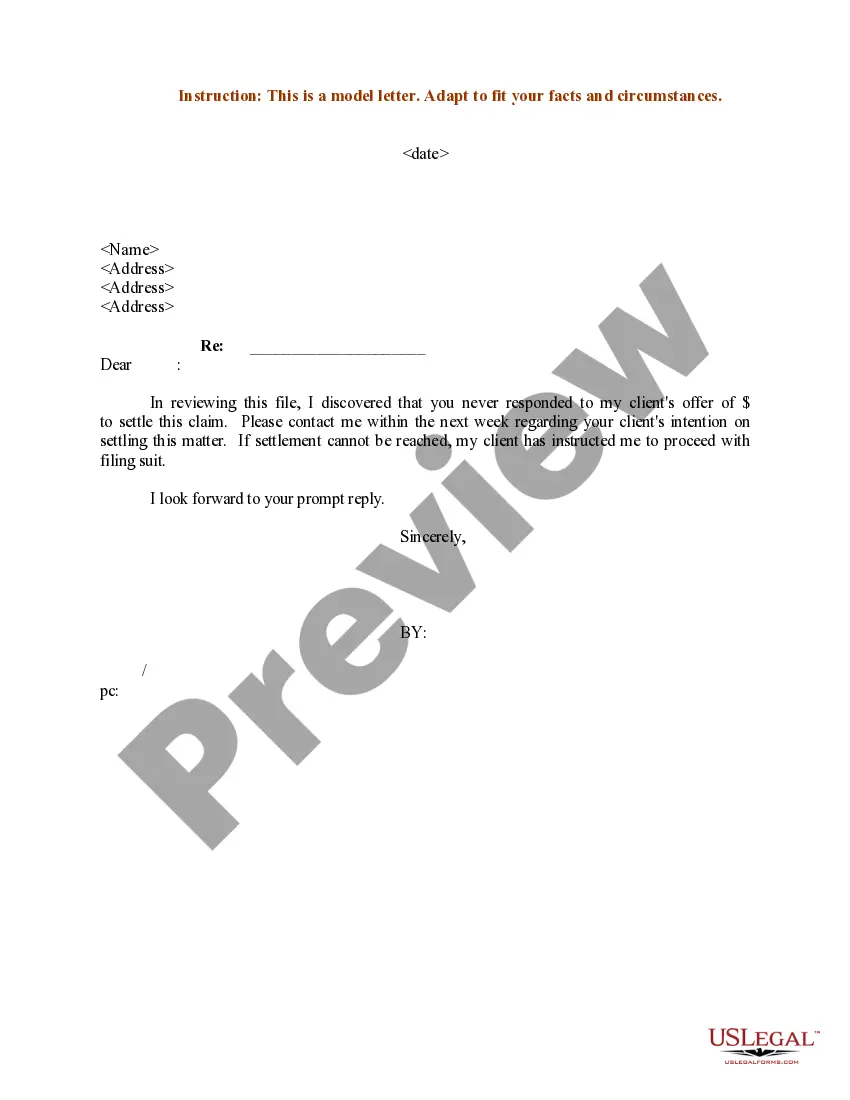
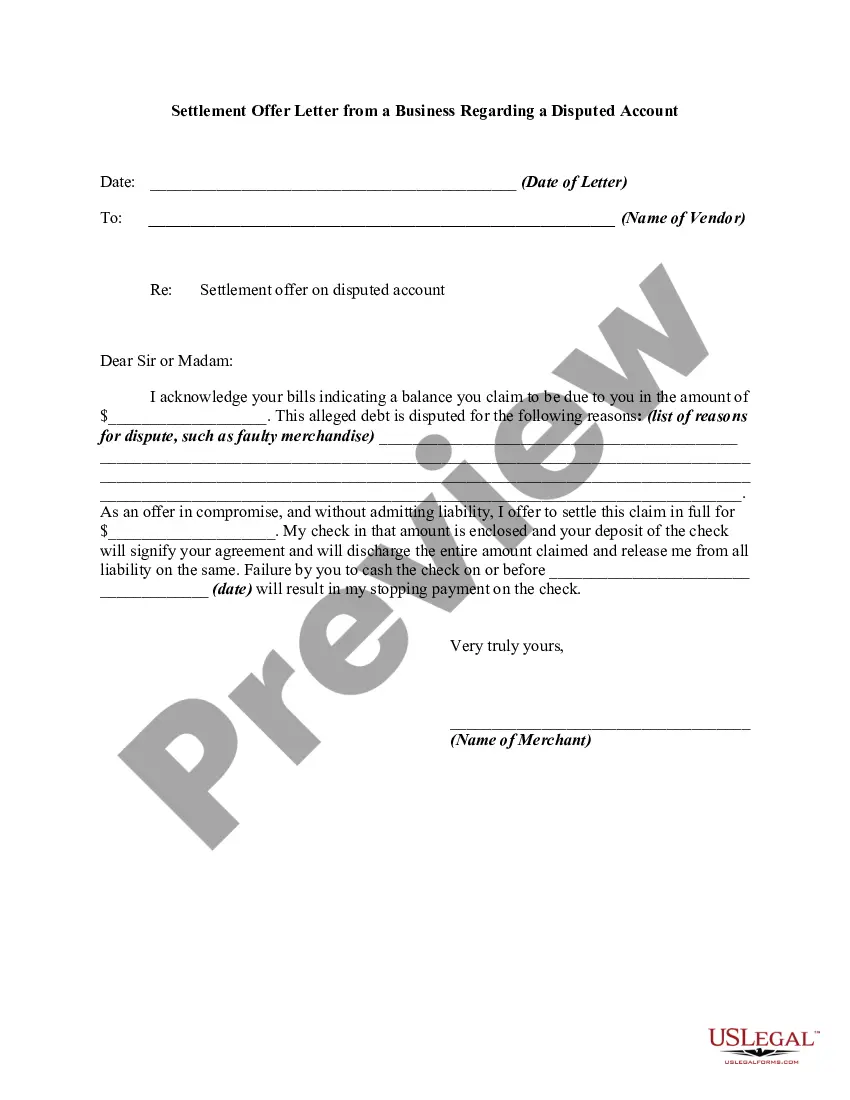
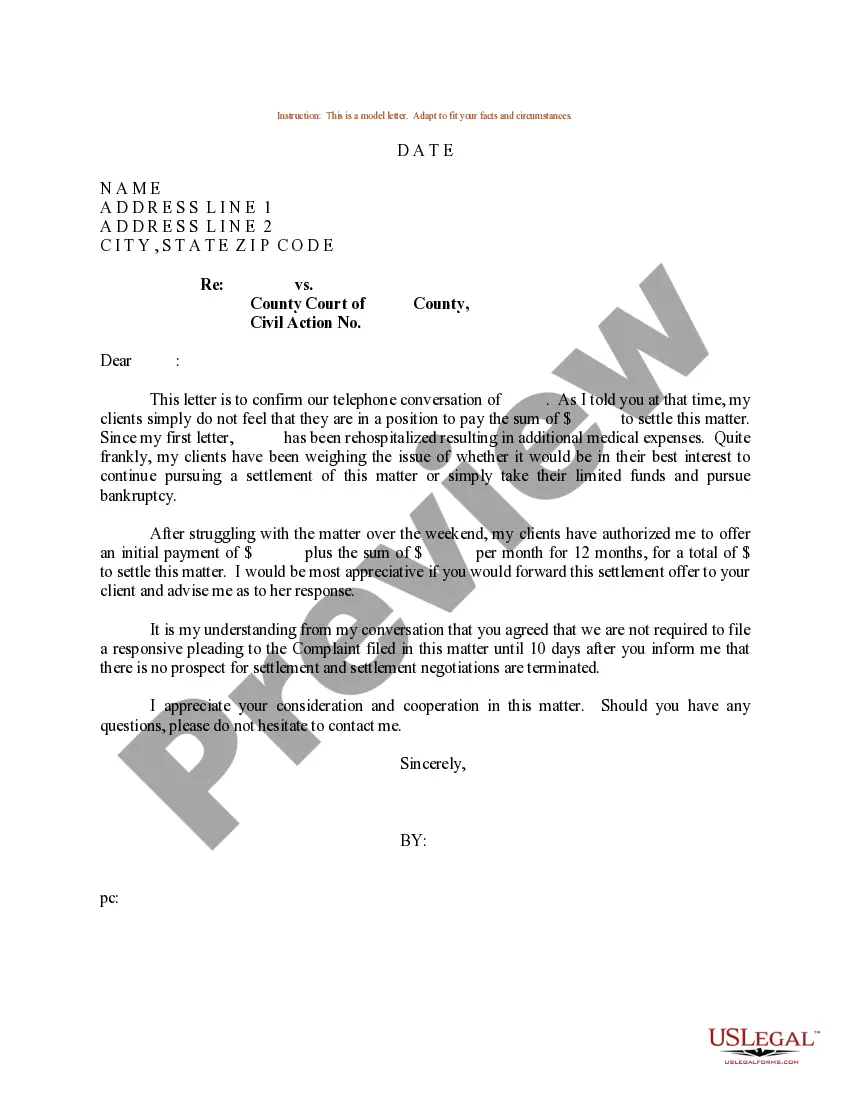
When this form is needed
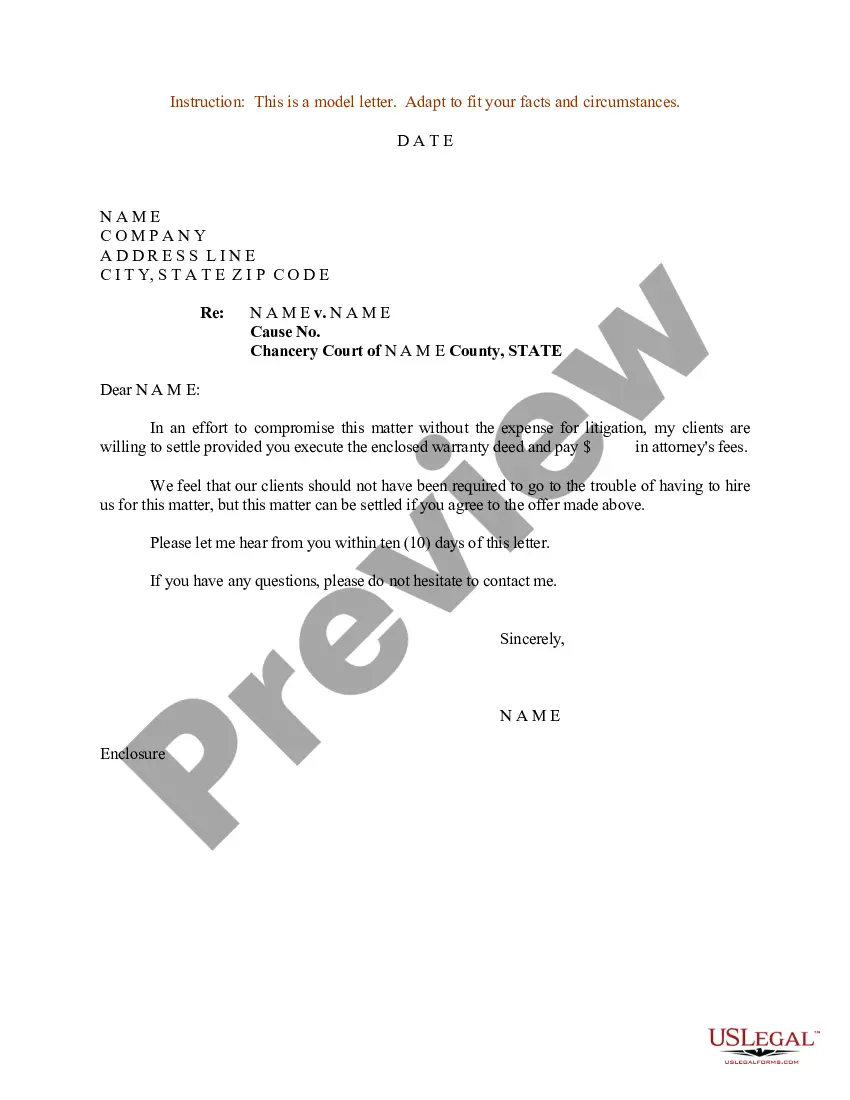
This form is commonly used when a debtor receives a proposal from a creditor for repaying a debt, but finds it difficult to meet the proposed terms due to financial struggles such as unemployment, illness, or other hardships. It provides an opportunity for negotiation and can be crucial if the debtor wishes to reach a more manageable settlement.
Who should use this form
- Individuals facing financial difficulties who have debt accounts with creditors.
- Debtors who have received a settlement proposal from a creditor.
- Those who want to formally negotiate a lower debt settlement amount.
- People looking to resolve outstanding debts while minimizing impact on their credit score.
How to complete this form
- Enter the date at the top of the document.
- Fill in the creditor's name and address accurately.
- Describe the debt clearly, including the account number.
- Provide a detailed explanation of your financial situation and reasons for defaulting on payments.
- Specify the settlement amount you are offering and the terms you request.
- Sign the document and print your name at the end.
Notarization guidance
This form does not typically require notarization unless specified by local law. Make sure to check your stateâs specific requirements to ensure compliance.
Get your form ready online
Our built-in tools help you complete, sign, share, and store your documents in one place.
Make edits, fill in missing information, and update formatting in US Legal Forms—just like you would in MS Word.
Download a copy, print it, send it by email, or mail it via USPS—whatever works best for your next step.
Sign and collect signatures with our SignNow integration. Send to multiple recipients, set reminders, and more. Go Premium to unlock E-Sign.
If this form requires notarization, complete it online through a secure video call—no need to meet a notary in person or wait for an appointment.
We protect your documents and personal data by following strict security and privacy standards.

Make edits, fill in missing information, and update formatting in US Legal Forms—just like you would in MS Word.

Download a copy, print it, send it by email, or mail it via USPS—whatever works best for your next step.

Sign and collect signatures with our SignNow integration. Send to multiple recipients, set reminders, and more. Go Premium to unlock E-Sign.

If this form requires notarization, complete it online through a secure video call—no need to meet a notary in person or wait for an appointment.

We protect your documents and personal data by following strict security and privacy standards.
Common mistakes to avoid
- Failing to provide sufficient detail about financial circumstances.
- Not clearly stating the proposed settlement amount.
- Forgetting to sign the document.
- Neglecting to keep a copy of the agreement for your records.
- Not addressing the letter to a specific individual or department.
Why use this form online
- Immediate access to professionally drafted legal language.
- Editable format allows you to customize your offer easily.
- Time-saving as it can be downloaded and completed quickly.
- Peace of mind knowing the document is compliant with basic legal standards.
Looking for another form?

Form popularity
FAQ
"If you're happy with their offer, and you should be because it's less than what you actually owe them, then you should at least consider it," he says. The alternative, according to Ulzheimer, is the creditor either outsourcing the debt to a collector or even suing you.
Aim to Pay 50% or Less of Your Unsecured Debt If you decide to try to settle your unsecured debts, aim to pay 50% or less. It might take some time to get to this point, but most unsecured creditors will agree to take around 30% to 50% of the debt. So, start with a lower offerabout 15%and negotiate from there.
"If you're happy with their offer, and you should be because it's less than what you actually owe them, then you should at least consider it," he says. The alternative, according to Ulzheimer, is the creditor either outsourcing the debt to a collector or even suing you.
Assess your situation. Research your creditors. Start a settlement fund. Make the creditor an offer. Review a written settlement agreement. Pay the agreed-upon settlement amount.
Debt settlement is a practice that allows you to pay a lump sum that's typically less than the amount you owe to resolve, or settle, your debt. It's a service that's typically offered by third-party companies that claim to reduce your debt by negotiating a settlement with your creditor.
Treat the letter as a contract between you and your creditor. Include your personal information and account number for easy identification. You'll need to outline the amount you can pay and what you expect in return. If you want to propose a good settlement offer, consider offering around 30 percent of what you owe.
A study by the Center for Responsible Lending showed that on average debts are settled at 48% of the outstanding balance. But that balance increases 20 percent due to late fees and other charges the creditor might impose during negotiation.
What percentage should I offer a full and final settlement? It depends on what you can afford, but you should offer equal amounts to each creditor as a full and final settlement. For example, if the lump sum you have is 75% of your total debt, you should offer each creditor 75% of the amount you owe them.
Offer a specific dollar amount that is roughly 30% of your outstanding account balance. The lender will probably counter with a higher percentage or dollar amount. If anything above 50% is suggested, consider trying to settle with a different creditor or simply put the money in savings to help pay future monthly bills.