Virginia Complaint for Divorce
About this form
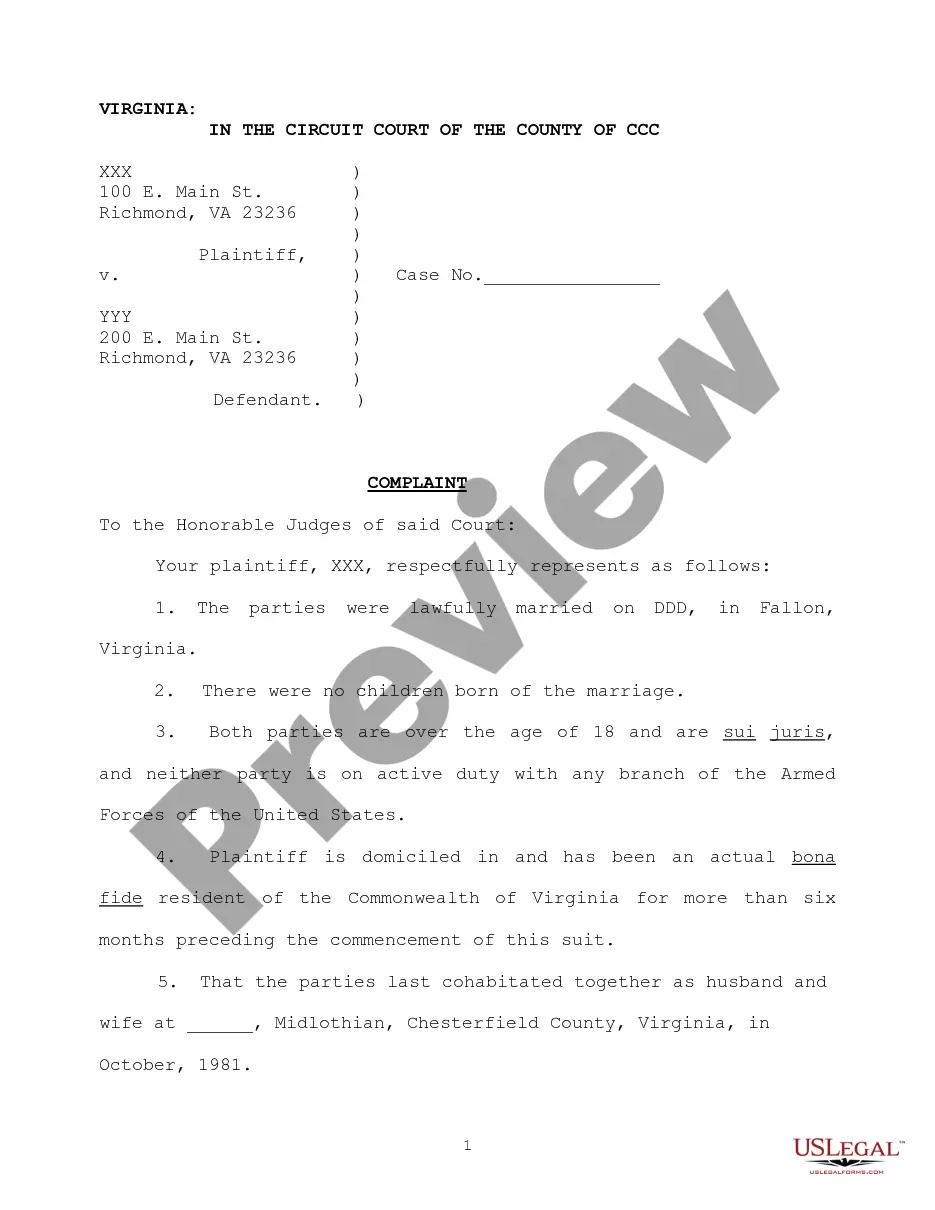
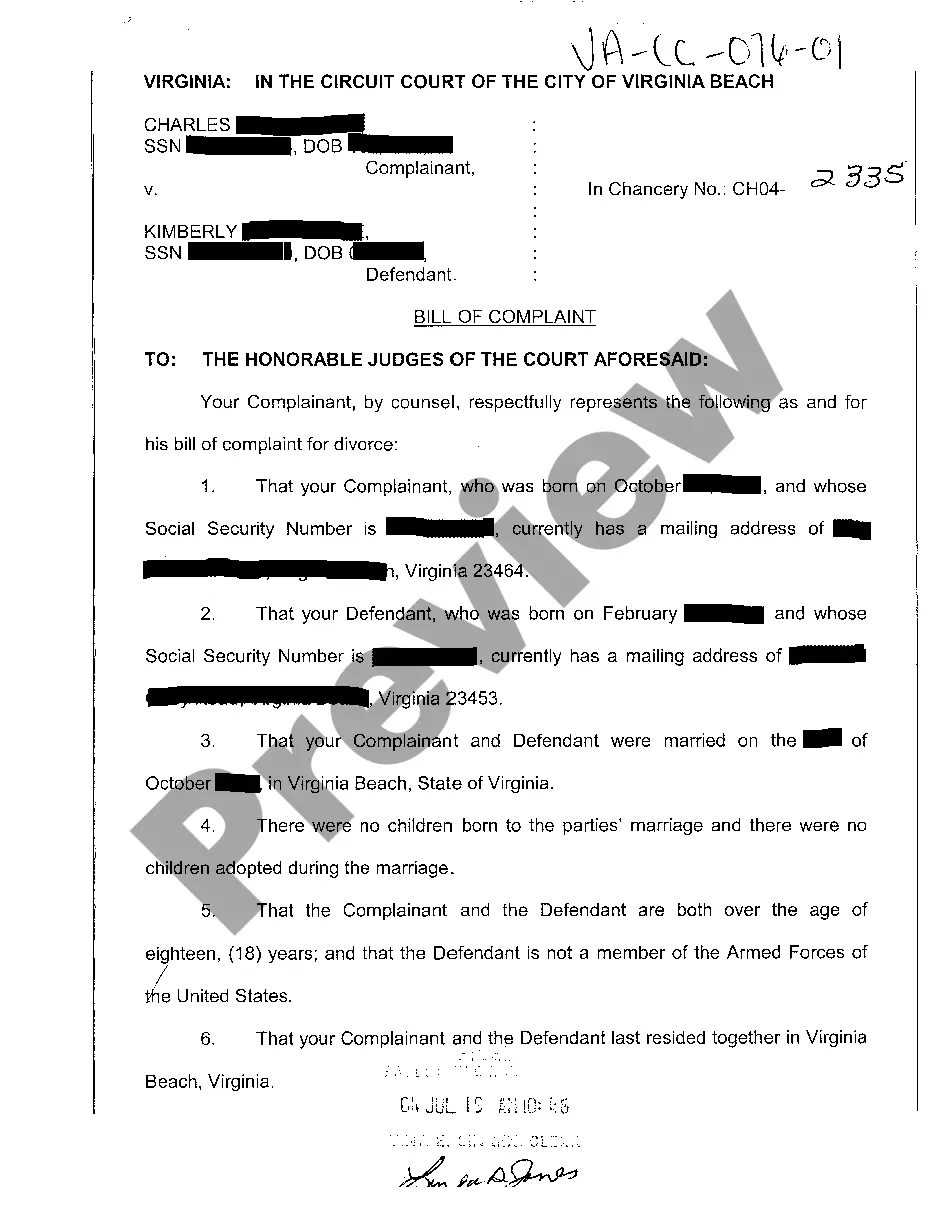
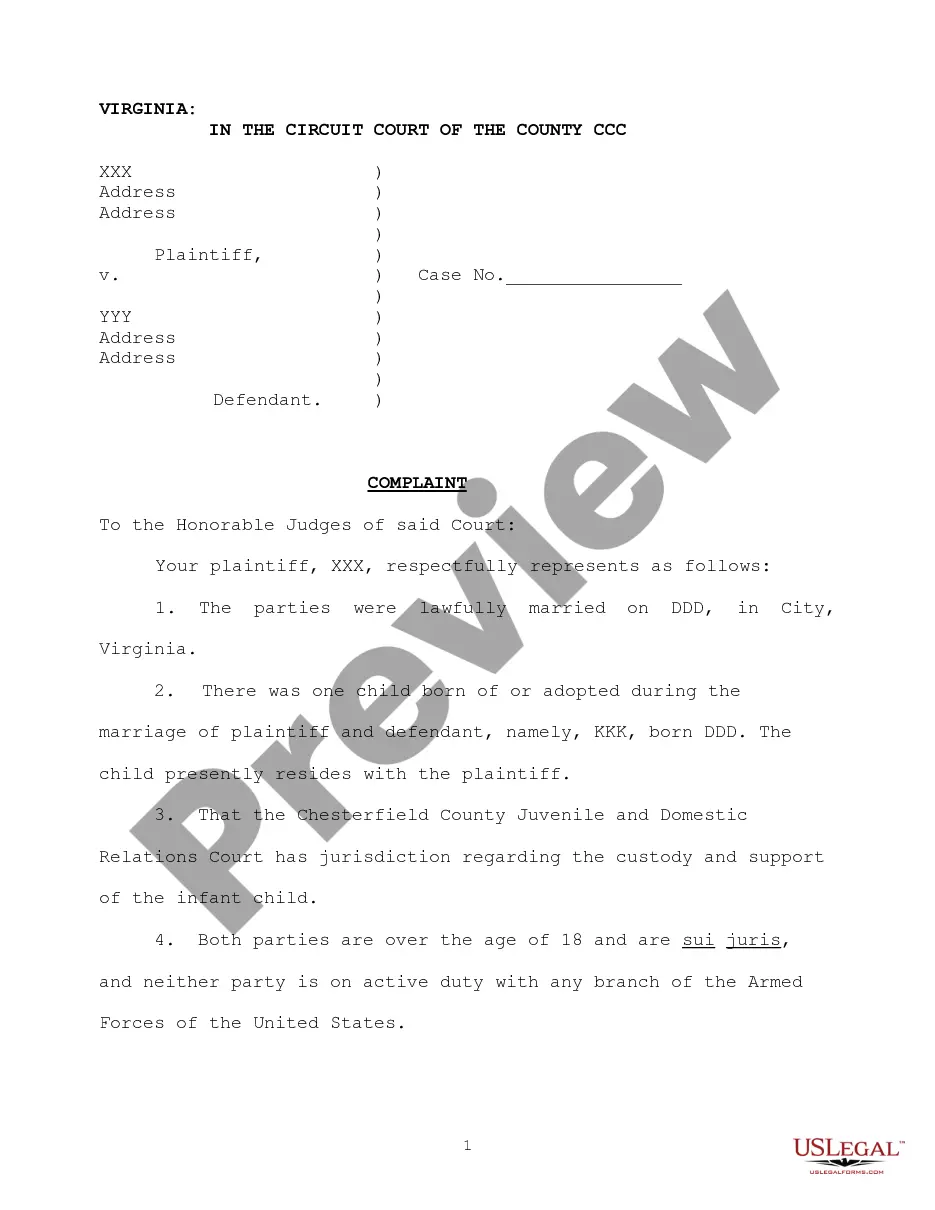
The Complaint for Divorce is a legal document that initiates divorce proceedings between two parties who have no children. This form is specifically designed for couples who have lived separately without cohabitation for over one year and wish to formalize their divorce. Unlike other divorce forms that may involve custody or property disputes, this straightforward complaint lays out the request for a divorce based solely on the long-term separation of the parties.
What’s included in this form
- Identification of the plaintiff and defendant, including addresses.
- Details of the marriage, including date and location of marriage.
- Statement confirming no children were born from the marriage.
- Confirmation that both parties are at least 18 years old and of sound mind.
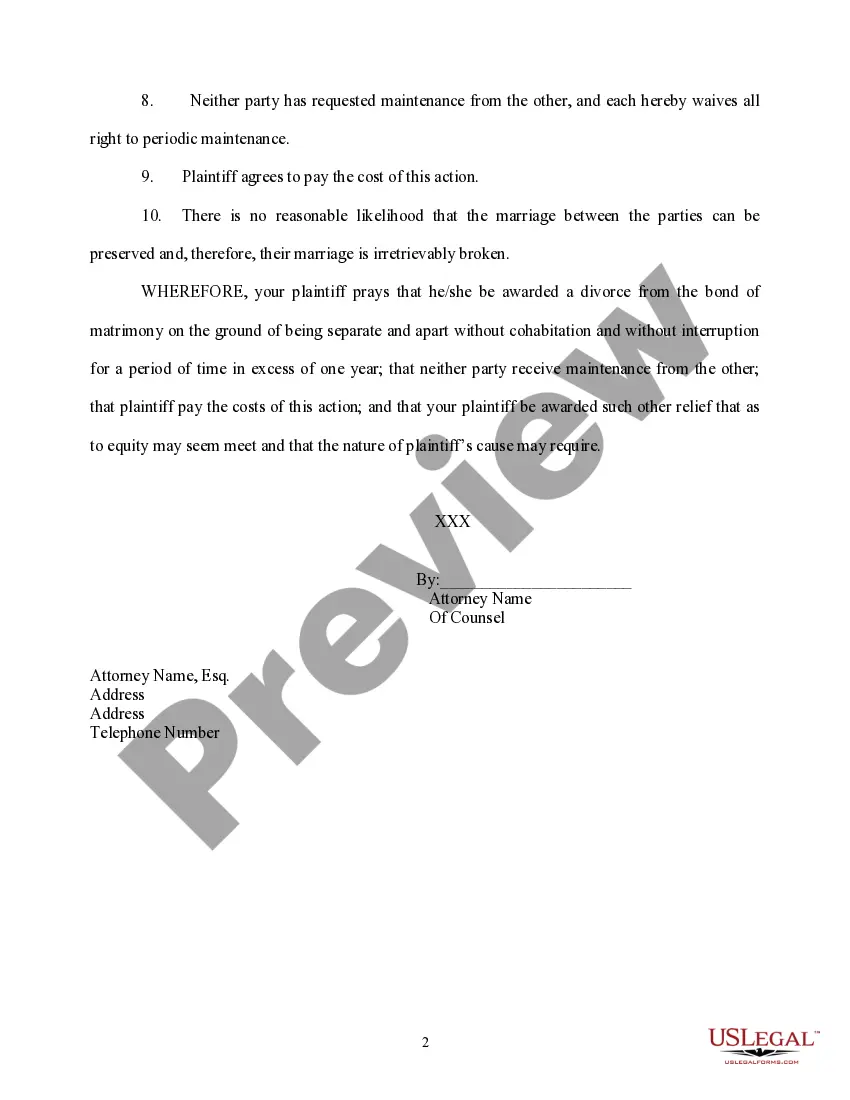
- Indication of the separation date and duration of living apart.
- Declaration of no marital property or debts and waivers of maintenance.
- Request for a judgment of divorce based on irretrievable breakdown of marriage.
When to use this document
This form is suitable for individuals seeking a divorce when they have been living separately for over one year and do not have any children or marital property. It is appropriate for those who want to proceed with the divorce without the complexities that come with custody arrangements or property division. Use this form when both parties agree to waive maintenance and have achieved an amicable separation.
Who this form is for
- Individuals seeking a divorce in Virginia where no children were born of the marriage.
- Couples who have been separated for more than one year.
- Parties who agree on waiving maintenance and do not have marital property or debts.
- Those who meet the age and residency requirements as specified in the form.
Completing this form step by step
- Identify the parties involved, including full names and addresses.
- Enter the date and location of the marriage.
- Fill in the date of separation and confirm the duration of living apart.
- State that no children were born of the marriage and that there is no marital property or debts.
- Sign the document and have it completed by an attorney if necessary.
Is notarization required?
Notarization is not commonly needed for this form. However, certain documents or local rules may make it necessary. Our notarization service, powered by Notarize, allows you to finalize it securely online anytime, day or night.
Get your form ready online
Our built-in tools help you complete, sign, share, and store your documents in one place.
Make edits, fill in missing information, and update formatting in US Legal Forms—just like you would in MS Word.
Download a copy, print it, send it by email, or mail it via USPS—whatever works best for your next step.
Sign and collect signatures with our SignNow integration. Send to multiple recipients, set reminders, and more. Go Premium to unlock E-Sign.
If this form requires notarization, complete it online through a secure video call—no need to meet a notary in person or wait for an appointment.
We protect your documents and personal data by following strict security and privacy standards.

Make edits, fill in missing information, and update formatting in US Legal Forms—just like you would in MS Word.

Download a copy, print it, send it by email, or mail it via USPS—whatever works best for your next step.

Sign and collect signatures with our SignNow integration. Send to multiple recipients, set reminders, and more. Go Premium to unlock E-Sign.

If this form requires notarization, complete it online through a secure video call—no need to meet a notary in person or wait for an appointment.

We protect your documents and personal data by following strict security and privacy standards.
Common mistakes to avoid
- Failing to provide accurate addresses for both parties.
- Not confirming the required duration of separation prior to submission.
- Leaving out signatures or dates, which may invalidate the form.
- Assuming maintenance agreements without clarifying waivers within the form.
- Not following local court rules for filing or submitting the complaint.
Why use this form online
- Convenience of downloading and filling out the form at your own pace.
- Editability allows for easy completion according to personal circumstances.
- Access to professionally drafted documents ensures legal reliability.
- Immediate availability helps expedite the divorce process.
Legal use & context
- This form is specifically structured to comply with Virginia's divorce laws.
- It may only be used in jurisdictions that recognize similar grounds for divorce.
- Consulting with a legal professional is recommended to understand the implications of filing.
Looking for another form?
Form popularity
FAQ
Don't Let Emotions Lead Your Financial Decisions. Everything Is Divisible and Fair Game. Make Big Purchase Before Filing for Divorce. Keep Track of Your Spouse's Money. Gather Key Evidence Before Filing for a Divorce. Get Property Valued Before You Part Ways. Don't Hide Assets. A Former Spouse Can Be a Great Tax Shield.
The divorce laws in Virginia provide for married couples to divorce in as a little as 2 weeks if all requirements are met. Our firm provides a 2 week uncontested divorce for $695 plus the court fees of $86. We also offer an uncontested divorce in Virginia which takes 5 weeks and costs just $495 plus $86 court fees.
After a divorce becomes final -- whether through settlement agreement or after a court decision -- either spouse may still have an opportunity to challenge certain decisions made by the court. One or both spouses can seek to appeal or modify their divorce decree.
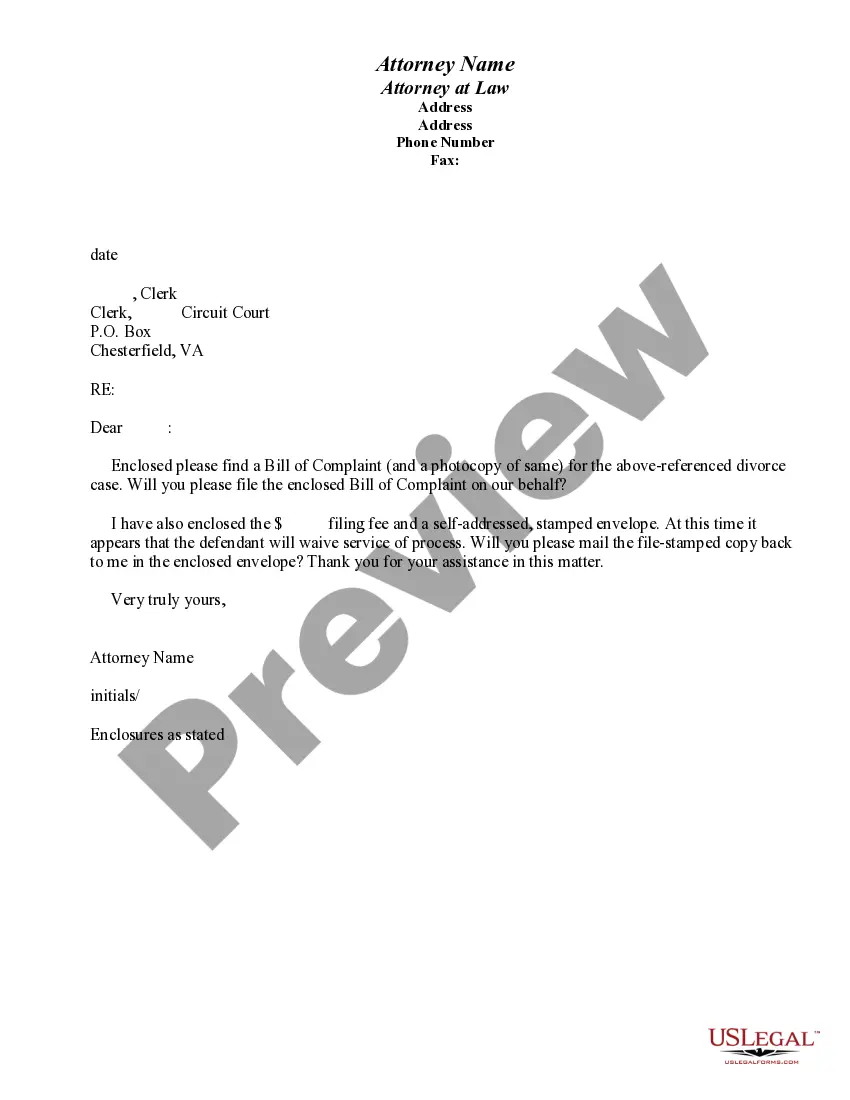
You will file your divorce papers with the Circuit Court by going to the clerk of court's office in the county or city where you and your spouse last lived together or where your spouse still lives. You may use Virginia's Circuit Court Civil Filing Fee Calculator to determine your exact filing fees.
Ensure that you physically separate from your significant other. Determine where you are going to file. File the forms and serve the other party. Request and attend a hearing or alternatively file an affidavit. Obtain a final order from the judge.
According to them, Virginia is the 8th most expensive state to divorce in, with an average cost of $14,500.
Your Answer must respond to each numbered paragraph by either admitting the information in the paragraph, or denying the information in the paragraph. Your Answer also can be followed by a Cross-Bill, which is your petition to the court for a divorce for the reasons set forth in your Cross-Bill.
If your spouse refuses to sign the divorce papers, you can file for a contested divorce.If your spouse doesn't respond or show up in court, the court can grant a default divorce, meaning that by default, you are given the divorce you want and the terms you asked for in your filing.
If you were not the spouse that filed for divorce, you generally cannot stop the process unless you convince the filing spouse to order a retraction. The only right you have once your spouse has filed the paperwork is to contest its terms.