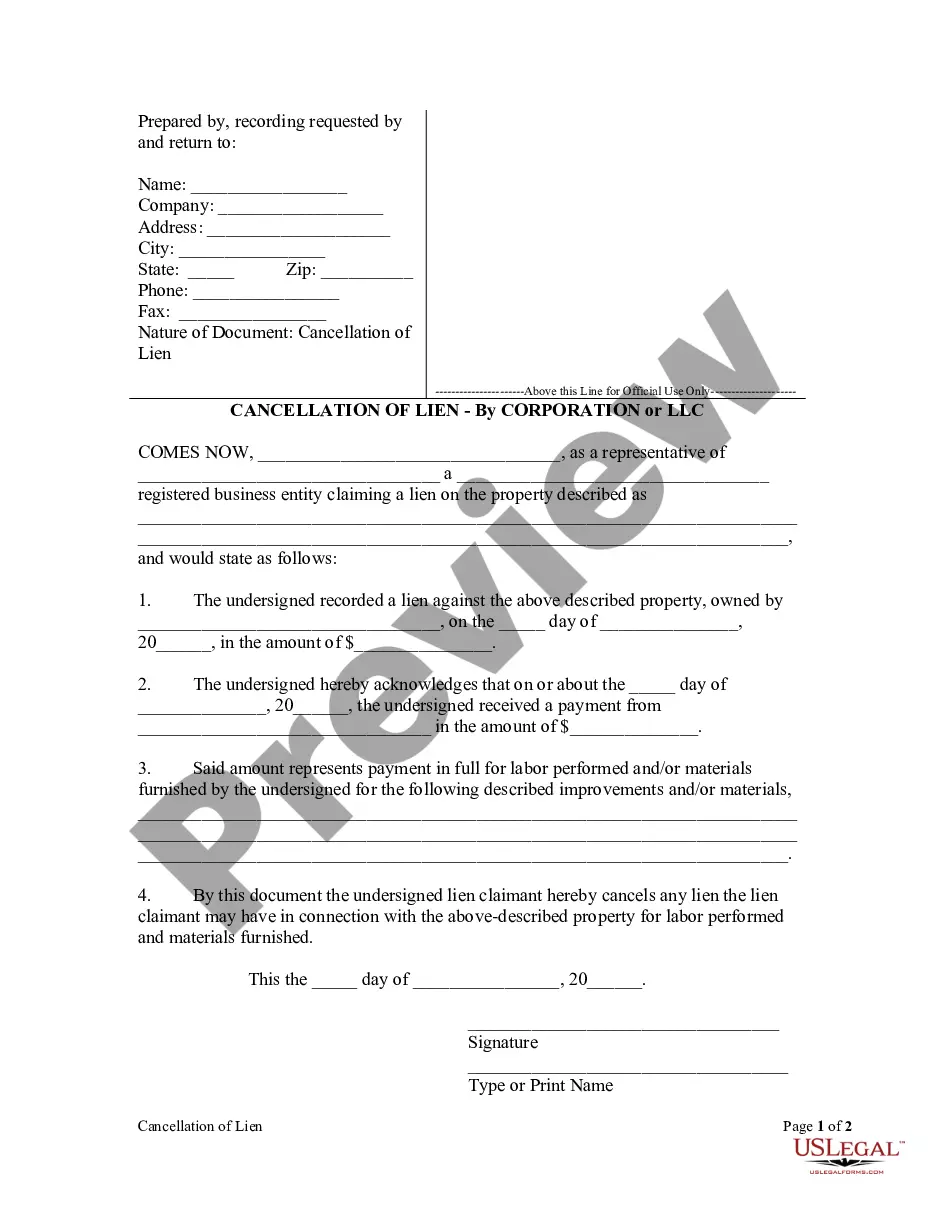
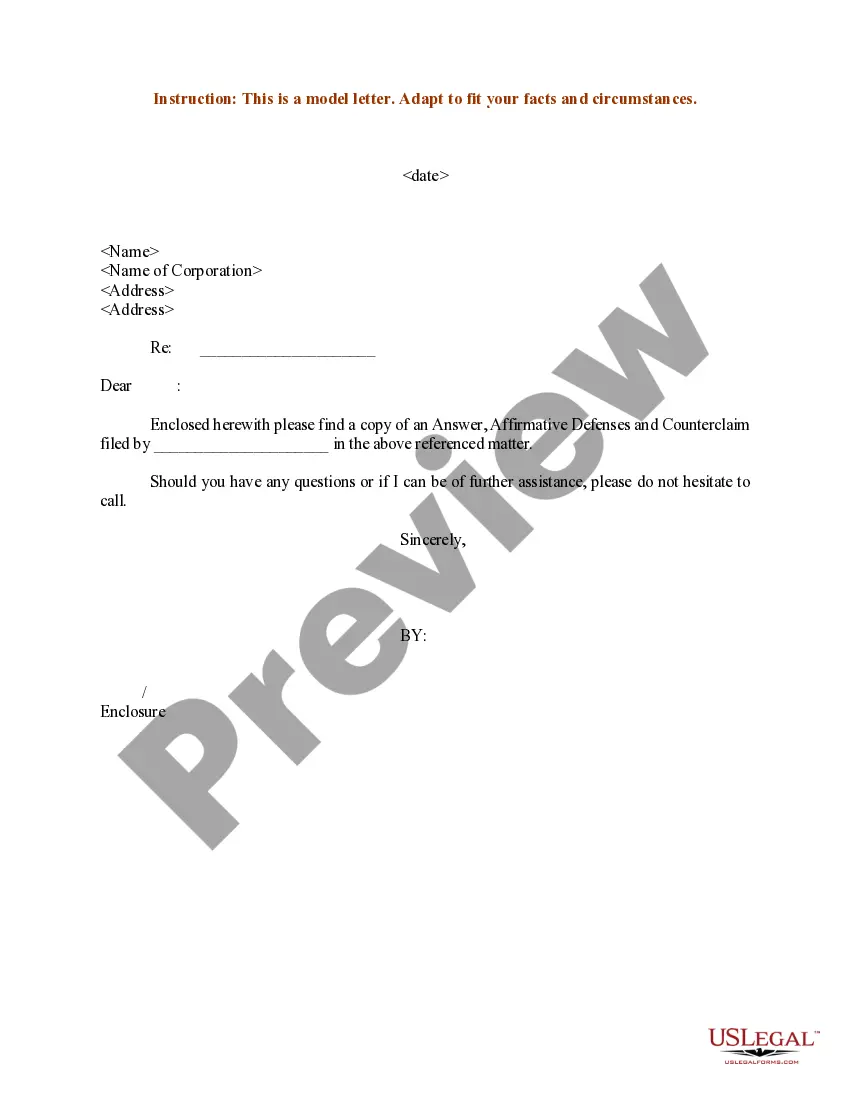
Sample Letter regarding Answer, Affirmative Defenses, and Counterclaim
What this document covers
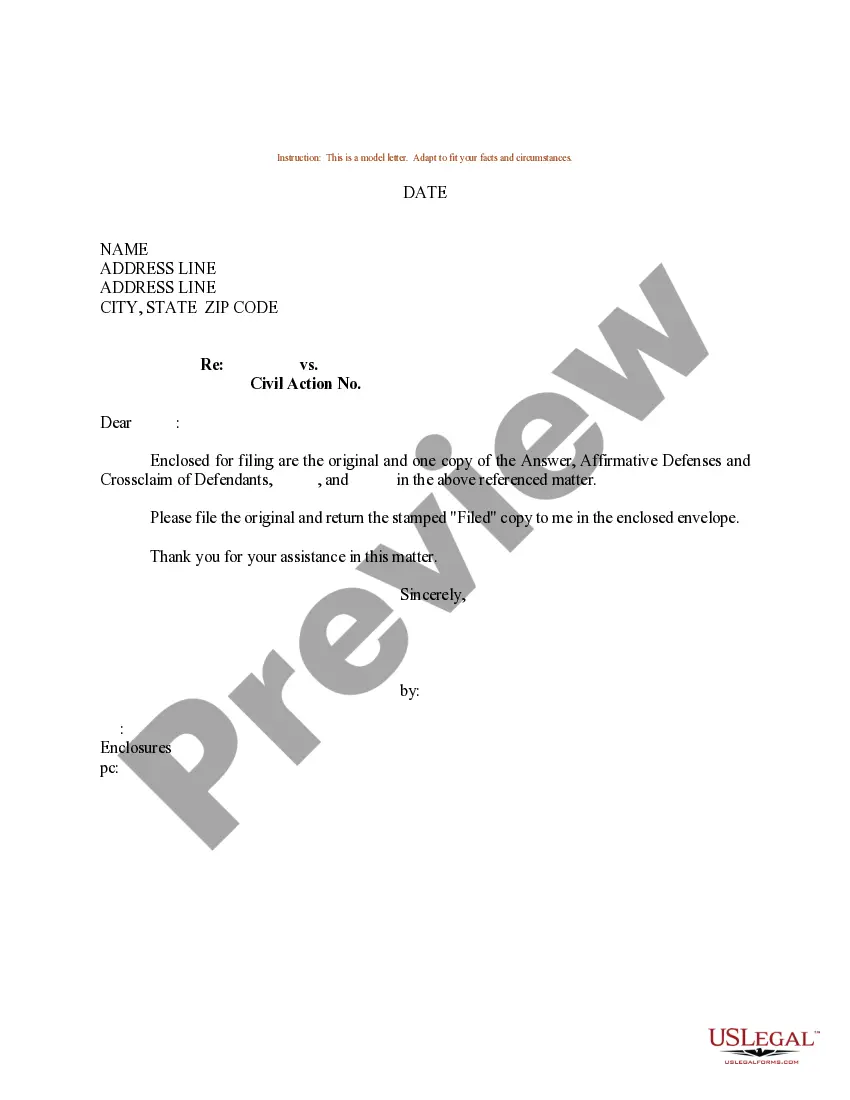
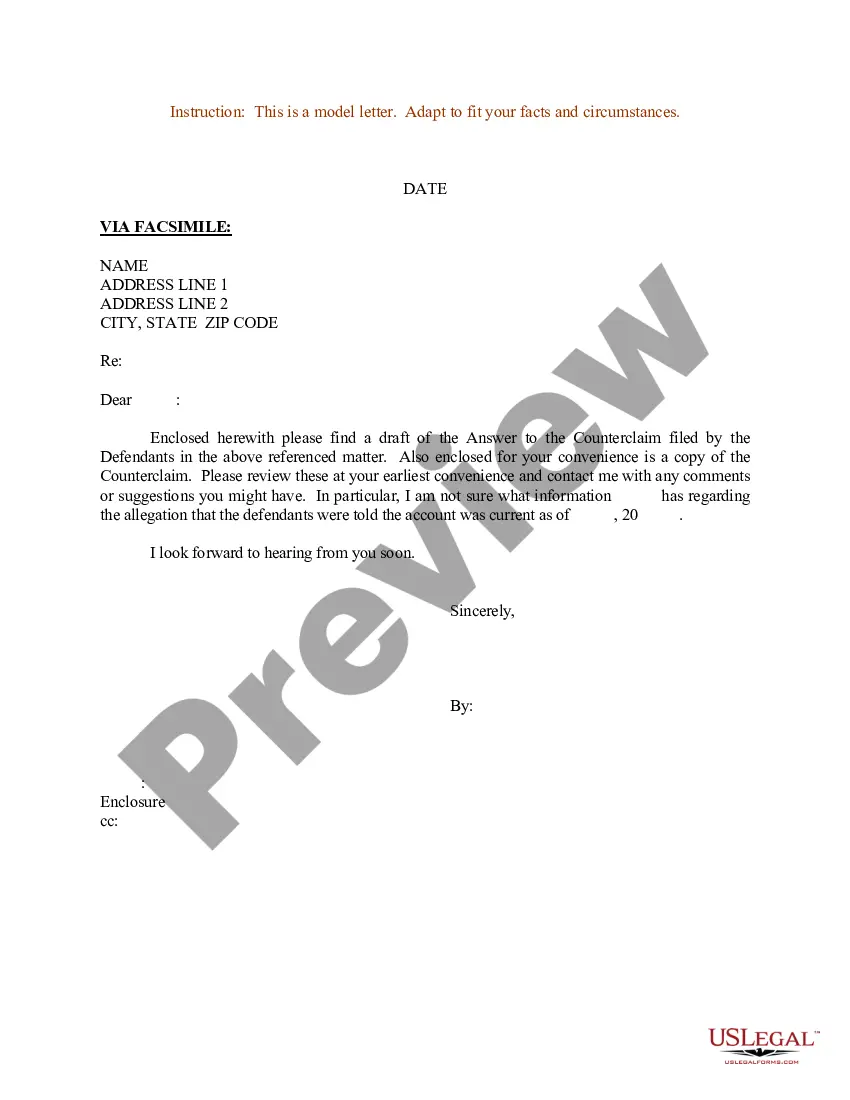
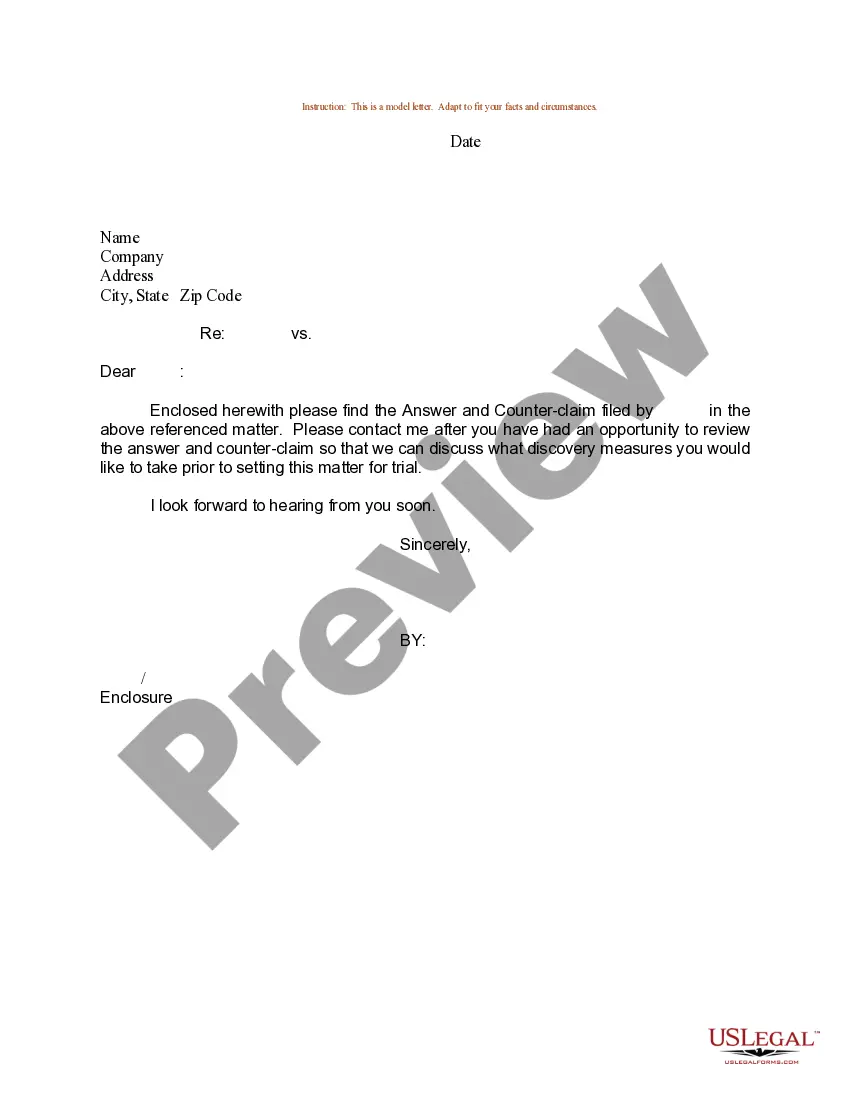
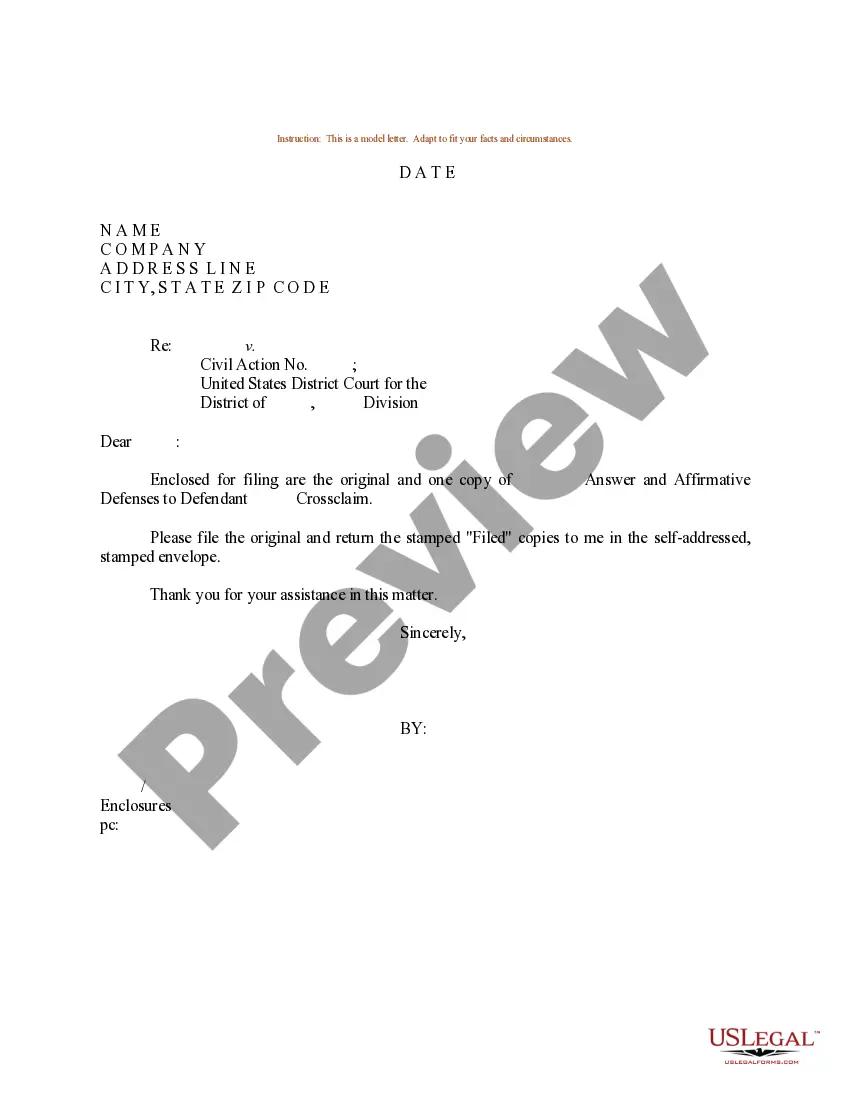
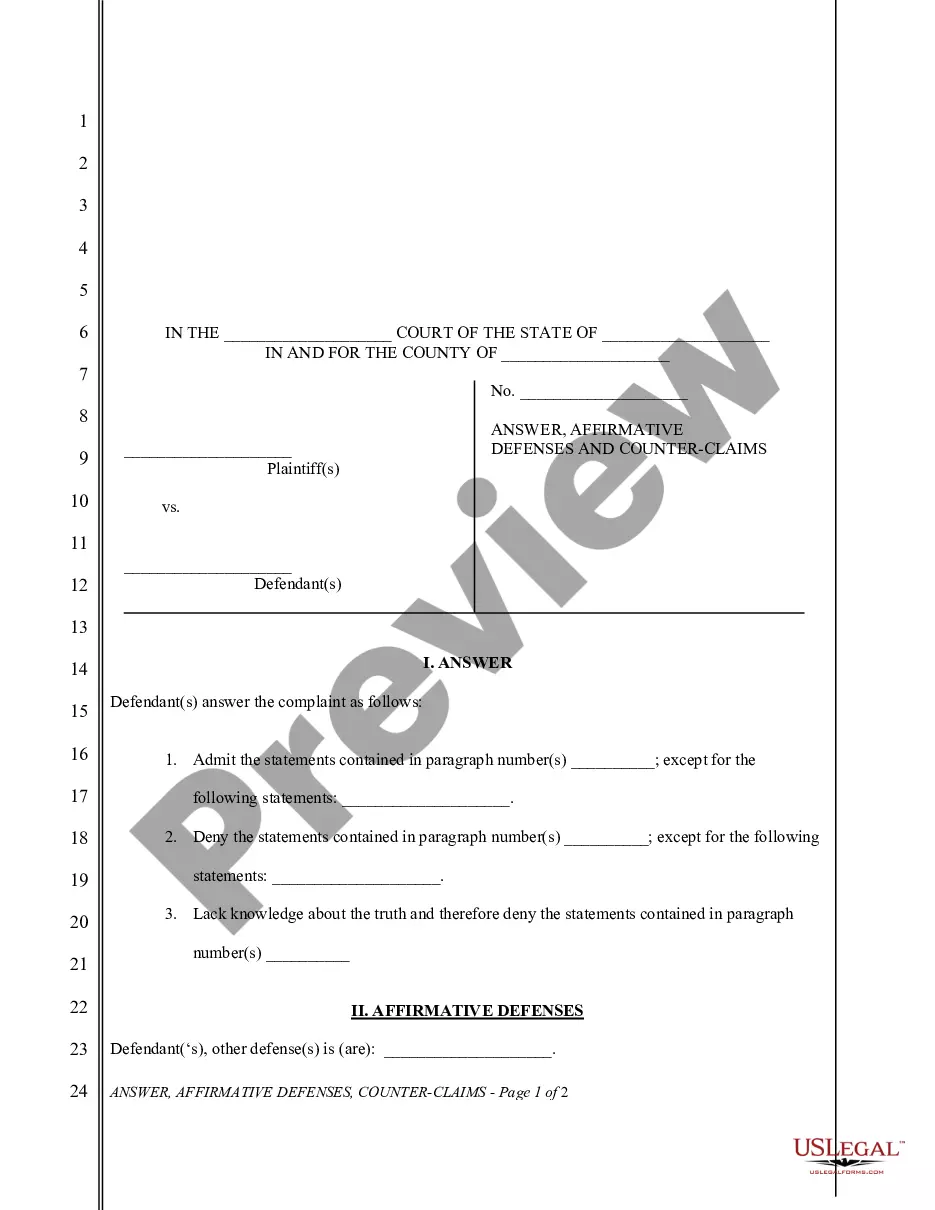
The Sample Letter regarding Answer, Affirmative Defenses, and Counterclaim is a template letter designed to help individuals respond formally to legal claims. This form serves as a guideline to outline defenses and any counterclaims the recipient may assert in response to a lawsuit. It differs from other legal correspondence in its specific focus on counterclaims and affirmative defenses, making it a valuable tool for anyone involved in litigation.
Key components of this form
- Date: The date the letter is generated.
- Recipient's Name: The name of the opposing party or corporation involved in the legal matter.
- Address: The recipient's complete address.
- Subject Line: A clear indication of the letter's purpose regarding the legal response.
- Content Body: Sections to articulate the answer, affirmative defenses, and any counterclaims.
When this form is needed
This sample letter should be used when you need to formally respond to a lawsuit with an answer that includes affirmative defenses and counterclaims. It is particularly useful in civil litigation, where the recipient wants to assert their own claims against the plaintiff in the same matter, ensuring all pertinent defenses and claims are addressed in a structured manner.
Who can use this document
This form is intended for:
- Defendants in civil lawsuits looking to formally respond to claims made against them.
- Individuals or businesses who need to assert counterclaims or affirmative defenses in their responses.
- Legal representatives seeking a structured template to communicate their client's position in litigation.
How to prepare this document
- Identify the parties: Fill in the names of the sender and the recipient clearly.
- Enter the date: Include the date on which the letter is being sent.
- Provide the address: Ensure that the complete address of the recipient is entered accurately.
- Draft the content: Customize the body of the letter to include your answer, affirmative defenses, and counterclaims.
- Review for accuracy: Check that all information is correct and all legal grounds are adequately addressed before sending.
Is notarization required?
Notarization is not commonly needed for this form. However, certain documents or local rules may make it necessary. Our notarization service, powered by Notarize, allows you to finalize it securely online anytime, day or night.
Get your form ready online
Our built-in tools help you complete, sign, share, and store your documents in one place.
Make edits, fill in missing information, and update formatting in US Legal Forms—just like you would in MS Word.
Download a copy, print it, send it by email, or mail it via USPS—whatever works best for your next step.
Sign and collect signatures with our SignNow integration. Send to multiple recipients, set reminders, and more. Go Premium to unlock E-Sign.
If this form requires notarization, complete it online through a secure video call—no need to meet a notary in person or wait for an appointment.
We protect your documents and personal data by following strict security and privacy standards.

Make edits, fill in missing information, and update formatting in US Legal Forms—just like you would in MS Word.

Download a copy, print it, send it by email, or mail it via USPS—whatever works best for your next step.

Sign and collect signatures with our SignNow integration. Send to multiple recipients, set reminders, and more. Go Premium to unlock E-Sign.

If this form requires notarization, complete it online through a secure video call—no need to meet a notary in person or wait for an appointment.

We protect your documents and personal data by following strict security and privacy standards.
Mistakes to watch out for
- Failing to customize the template to reflect specific facts and circumstances.
- Omitting critical affirmative defenses or counterclaims that could strengthen the response.
- Neglecting to review the letter for clarity and completeness before submission.
- Using outdated legal terms or formats not compliant with current jurisdictional requirements.
Why use this form online
- Convenience of downloading and editing the template anytime and anywhere.
- Instant access to a professionally drafted letter format, ensuring your response is legally sound.
- Ability to tailor content according to your specific legal situation quickly.
- Accessible support and guidance throughout the completion process.
Legal use & context
- This letter is a legal document intended to communicate formal responses in legal matters.
- It must be completed accurately to maintain the integrity of your defense.
- Using this letter improperly could affect your standing in the case.
Looking for another form?
Form popularity
FAQ
File your counterclaim. Give the clerk of courts a copy of your complaint at the same location where the plaintiff filed the original complaint. You may file the counterclaim at the same time you file your answer. Make sure that you keep a copy of the counterclaim for you records.
In order to make a counterclaim, you first draft your response to the lawsuit. Then you need to describe the factual circumstances surrounding your claim and make a demand for compensation or other relief. Be sure you do not confuse counterclaims with cross-complaints.
Examples of counterclaims include:After a bank has sued a customer for an unpaid debt, the customer counterclaims (sues back) against the bank for fraud in procuring the debt. The court will sort out the different claims in one lawsuit (unless the claims are severed).
Write a sentence that contradicts the claim. For example, if your thesis says, Everyone should eat chocolate ice cream, then your counterclaim might be, Some people are allergic to chocolate.
Critics argue that. while it might be true that... still all in all... others may say that... but I argue that... A common argument against this position is... but.... It may be true... It's easy to think... but when you look at the facts... While some researchers say... It is often thought...
The defendant may also raise counterclaims or affirmative defenses. If a defendant does raise counterclaims in her answer, the plaintiff must respond to those counterclaims with a pleading called an "answer to a counterclaim." The form and content of an "answer to a counterclaim" is similar to that of an answer.
You have to answer the counterclaims. They have the same effect as your lawsuit. It is not wise to proceed with litigation without an attorney.
The answer to counterclaim must also state defenses to each of the Defendant's counterclaims in short, plain statements. Complete the top of the Answer to Counterclaim exactly as it appears in your, the Plaintiff's, complaint.
In order to make a counterclaim, you first draft your response to the lawsuit. Then you need to describe the factual circumstances surrounding your claim and make a demand for compensation or other relief. Be sure you do not confuse counterclaims with cross-complaints.