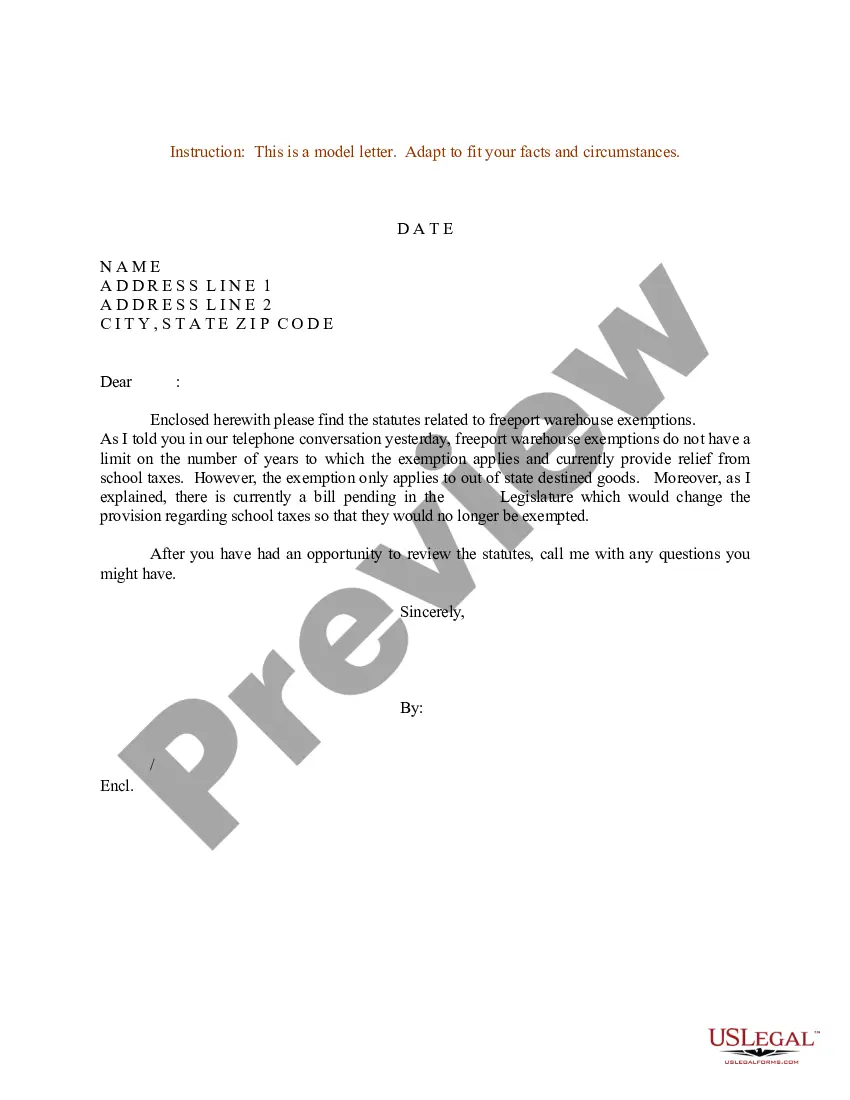
Sample Letter for Copy of Answer, Affirmative Defenses, and Crossclaim
What is this form?
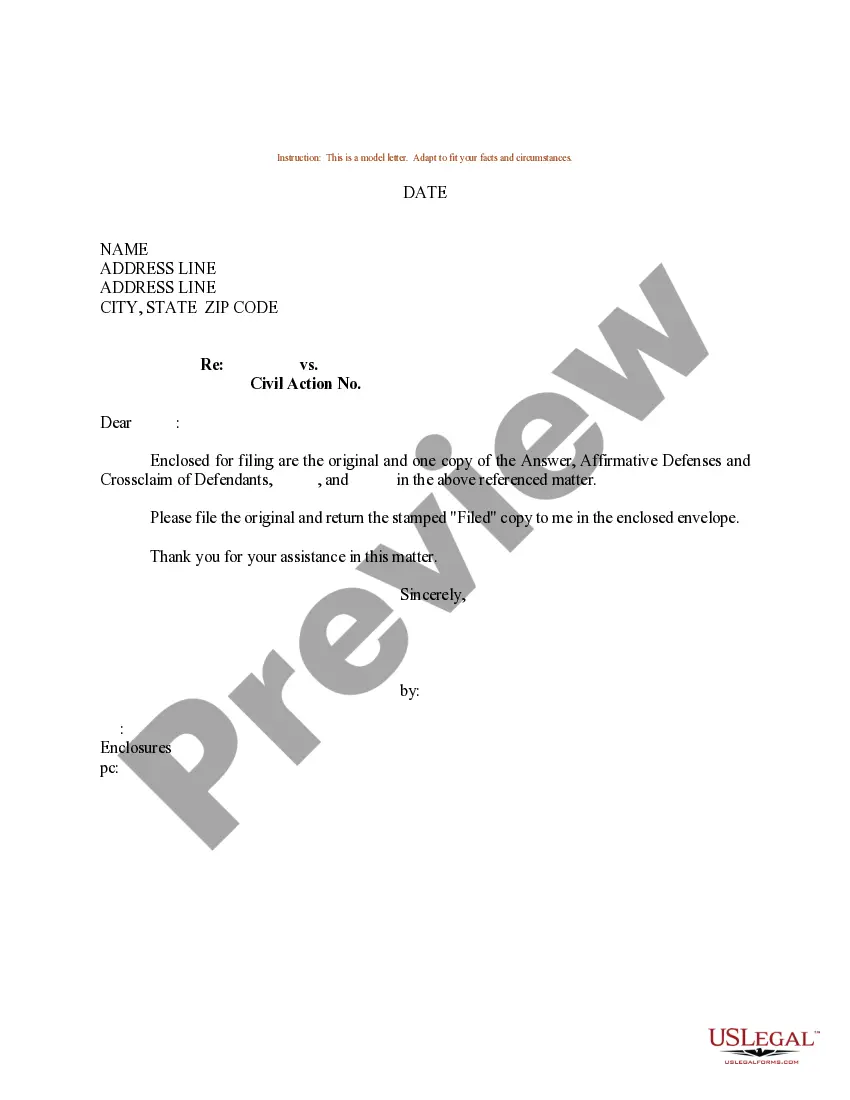
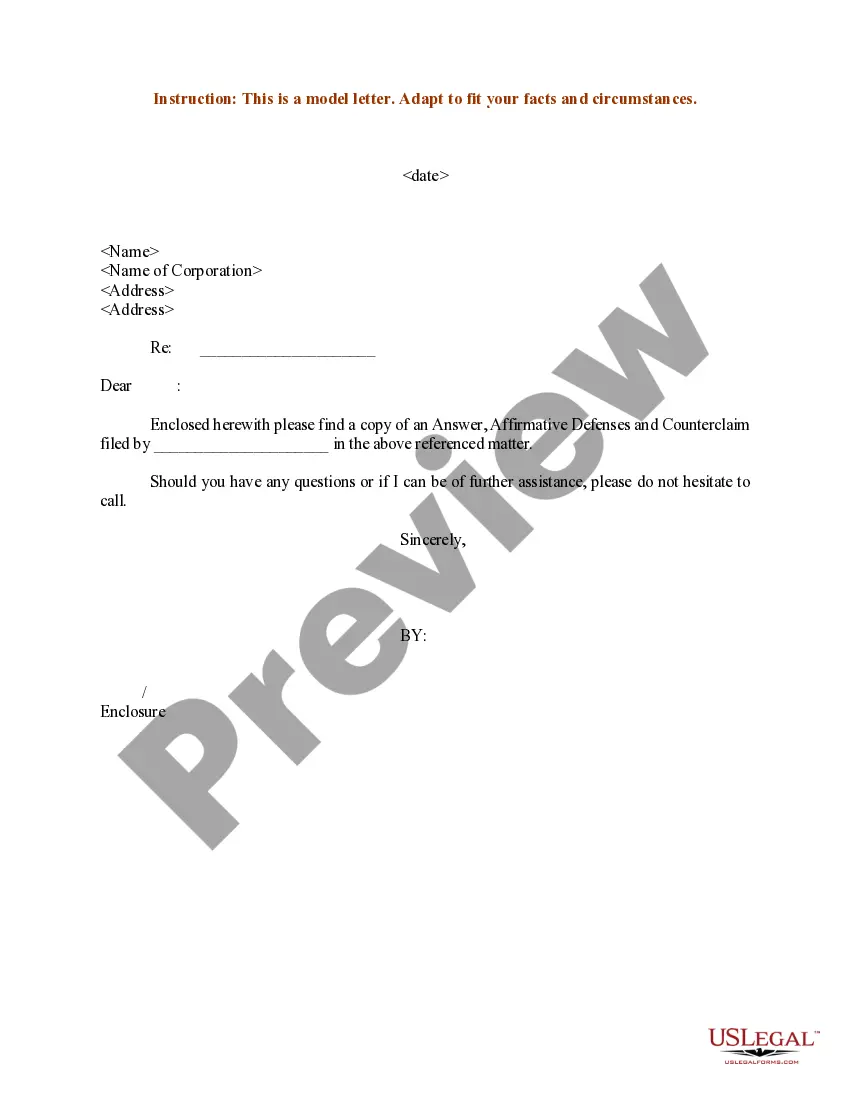
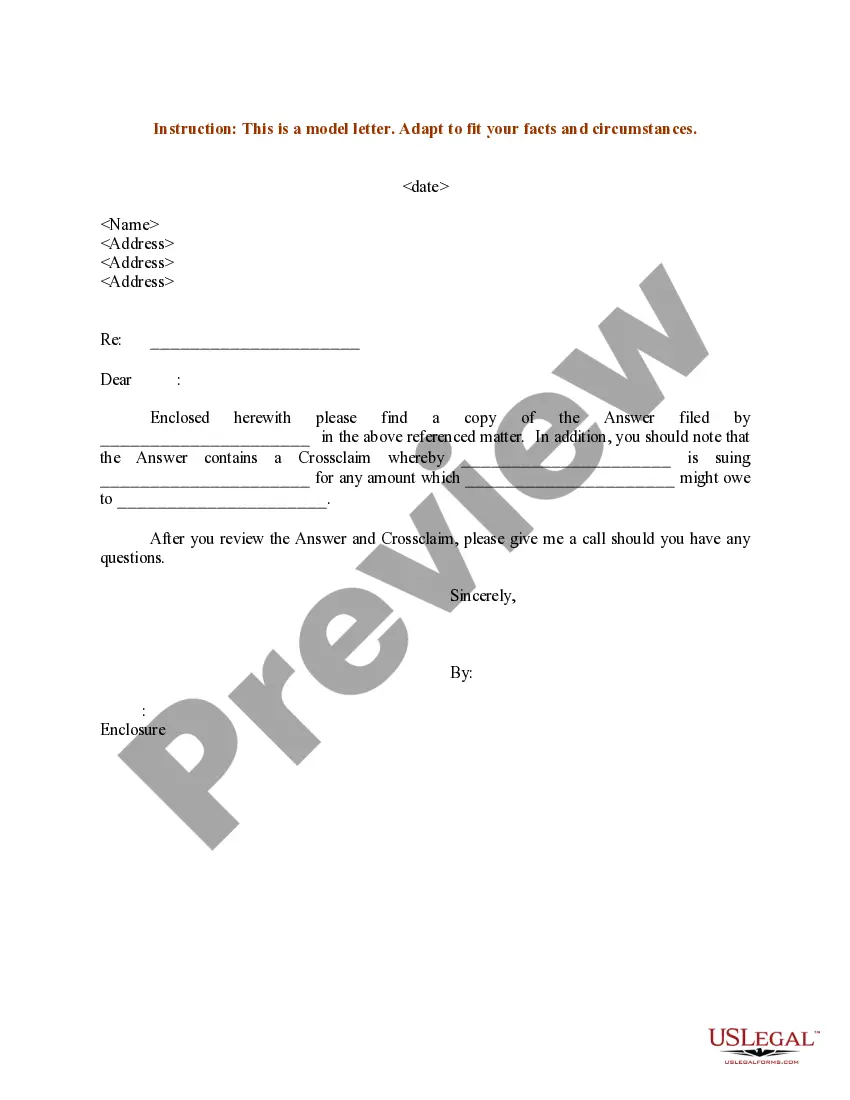
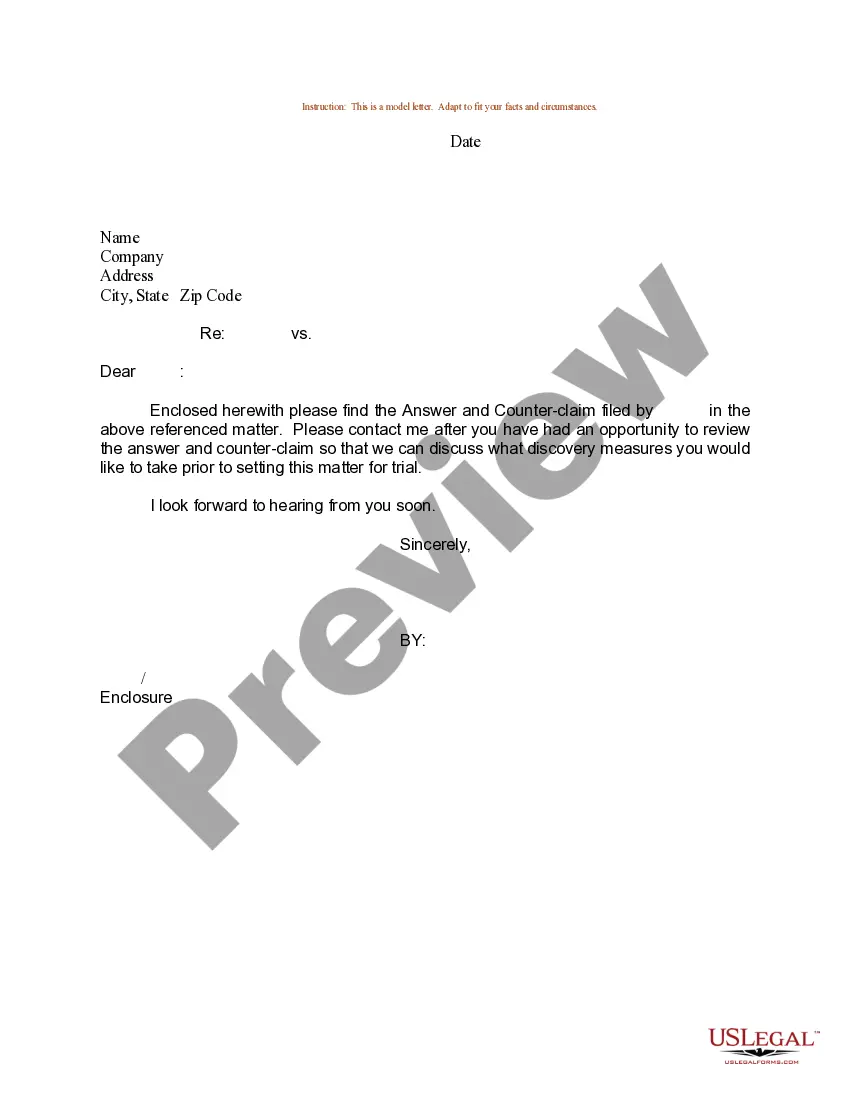
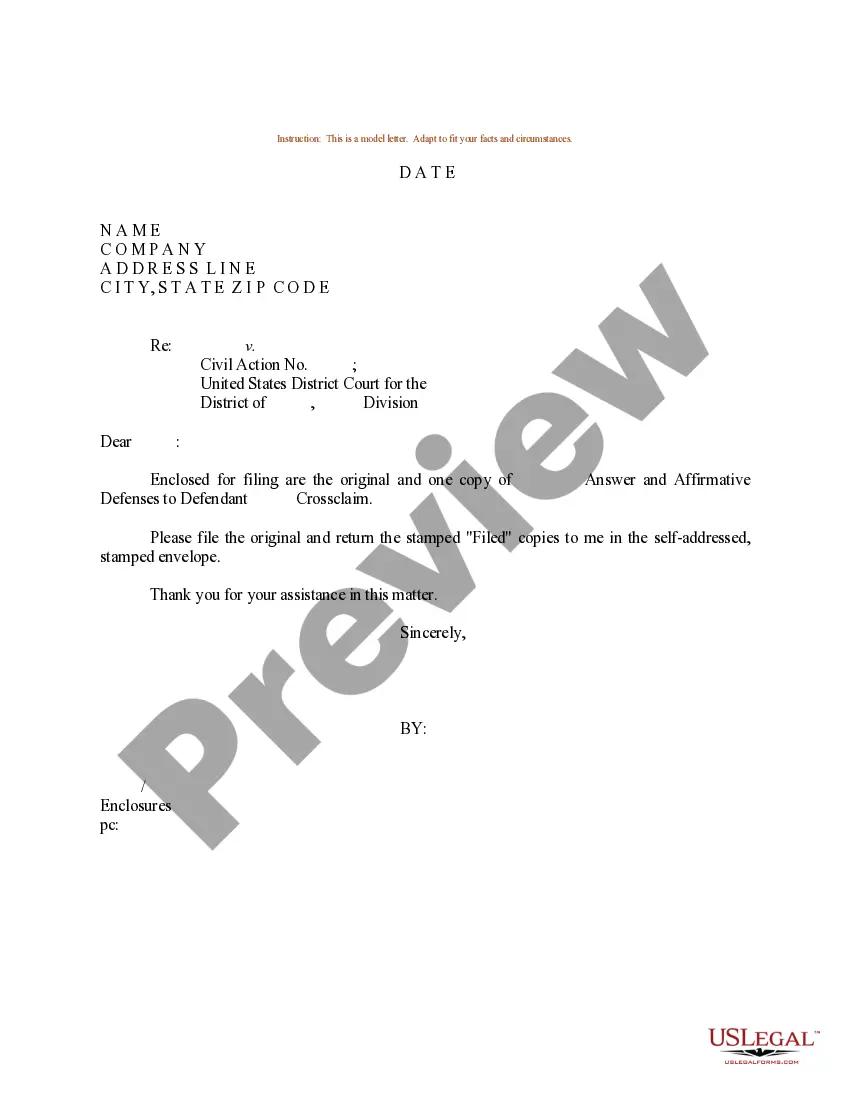
The Sample Letter for Copy of Answer, Affirmative Defenses, and Crossclaim is a template used to formally request copies of certain legal documents from a party involved in litigation. This letter serves as a communication tool to ensure all parties have access to necessary legal filings, promoting transparency in the legal process. Unlike other forms, this is specifically a letter format designed for correspondence rather than a legal filing itself.
Key parts of this document
- Date of the request
- Sender's name and address
- Recipient's name and address
- Purpose of the letter
- Details of the documents being requested
- A section for any additional notes or instructions
When to use this form
This form is commonly used when a party in a lawsuit needs to obtain copies of the opposing party's answers, affirmative defenses, or crossclaims, especially if these documents are not readily available. It is an essential component of legal preparation, ensuring that all parties are aware of the claims and defenses being presented in the case.
Who this form is for
This form is intended for:
- Individuals involved in a legal dispute as parties to the case
- Legal representatives seeking to gather information for their clients
- Anyone required to clarify or confirm the scope of legal defenses and claims in litigation
Completing this form step by step
- Enter the current date at the top of the letter.
- Fill in your name and address in the designated fields.
- Provide the name and address of the recipient.
- Clearly state the purpose of the letter and specify the documents being requested.
- Add any relevant notes or instructions, if necessary.
- Sign and date the letter before sending it to the recipient.
Is notarization required?
This form does not typically require notarization to be legally valid. However, some jurisdictions or document types may still require it. US Legal Forms provides secure online notarization powered by Notarize, available 24/7 for added convenience.
Get your form ready online
Our built-in tools help you complete, sign, share, and store your documents in one place.
Make edits, fill in missing information, and update formatting in US Legal Forms—just like you would in MS Word.
Download a copy, print it, send it by email, or mail it via USPS—whatever works best for your next step.
Sign and collect signatures with our SignNow integration. Send to multiple recipients, set reminders, and more. Go Premium to unlock E-Sign.
If this form requires notarization, complete it online through a secure video call—no need to meet a notary in person or wait for an appointment.
We protect your documents and personal data by following strict security and privacy standards.

Make edits, fill in missing information, and update formatting in US Legal Forms—just like you would in MS Word.

Download a copy, print it, send it by email, or mail it via USPS—whatever works best for your next step.

Sign and collect signatures with our SignNow integration. Send to multiple recipients, set reminders, and more. Go Premium to unlock E-Sign.

If this form requires notarization, complete it online through a secure video call—no need to meet a notary in person or wait for an appointment.

We protect your documents and personal data by following strict security and privacy standards.
Mistakes to watch out for
- Forgetting to include the date of the letter.
- Providing incorrect recipient information.
- Not clearly stating the documents being requested.
- Neglecting to sign the letter.
- Failing to follow up if no response is received within a reasonable time frame.
Advantages of online completion
- Conveniently editable format allowing for customization to specific legal needs.
- Downloadable for easy storage and future reference.
- Prevent errors with a professionally drafted template that reflects legal standards.
- Accessible anytime, providing flexibility to manage legal tasks at your own pace.
Legal use & context
- This form helps establish a formal request for necessary legal documents during litigation.
- Using this letter can reinforce compliance with legal procedures and enhance accountability.
- It is advisable to keep a copy of the letter for your records as part of effective case management.
Looking for another form?
Form popularity
FAQ
13 (When pleadings deemed denied and put in issue). Under the codes the pleadings are generally limited. A reply is sometimes required to an affirmative defense in the answer.In other jurisdictions no reply is necessary to an affirmative defense in the answer, but a reply may be ordered by the court.
When drafting an answer, one must: (1) follow the local, state, and federal court rules; (2) research the legal claims in the adversary's complaint; (3) respond to the adversary's factual allegations; and (4) assert affirmative defenses, counterclaims, cross-claims, or third-party claims, if applicable.
The defendant may also raise counterclaims or affirmative defenses. If a defendant does raise counterclaims in her answer, the plaintiff must respond to those counterclaims with a pleading called an "answer to a counterclaim." The form and content of an "answer to a counterclaim" is similar to that of an answer.
An affirmative defense operates to prevent conviction even when the prosecutor has proof beyond a reasonable doubt as to every element of the crime. Some jurisdictions place the burden on the defendant to prove the defense, while others require that the prosecution disprove the defense beyond a reasonable doubt.
Be brief. Answer the allegations in the complaint with one or two sentences. Again remember that the statements you make in your answer can be used as admissions against you. Your response to the allegations in the complaint may admit part of the statement in the specific paragraph and deny part.
(1) Unless a different time is prescribed in a statute of Florida, a defendant shall serve an answer within 20 days after service of original process and the initial pleading on the defendant, or not later than the date fixed in a notice by publication.
Read the summons and make sure you know the date you must answer by. Read the complaint carefully. Write your answer. Sign and date the answer. Make copies for the plaintiff and yourself. Mail a copy to the plaintiff. File your answer with the court by the date on the summons.
Courts have developed a three part test in examining the affirmative defenses subject to a motion to strike: (1) the matter must be properly pleaded as an affirmative defense; (2) the matter must be adequately pleaded under the requirements of Federal Rules of Civil Procedure 8 and 9; and (3) the matter must withstand
Provide the name of the court at the top of the Answer. You can find the information on the summons. List the name of the plaintiff on the left side. Write the case number on the right side of the Answer. Address the Judge and discuss your side of the case. Ask the judge to dismiss the case.