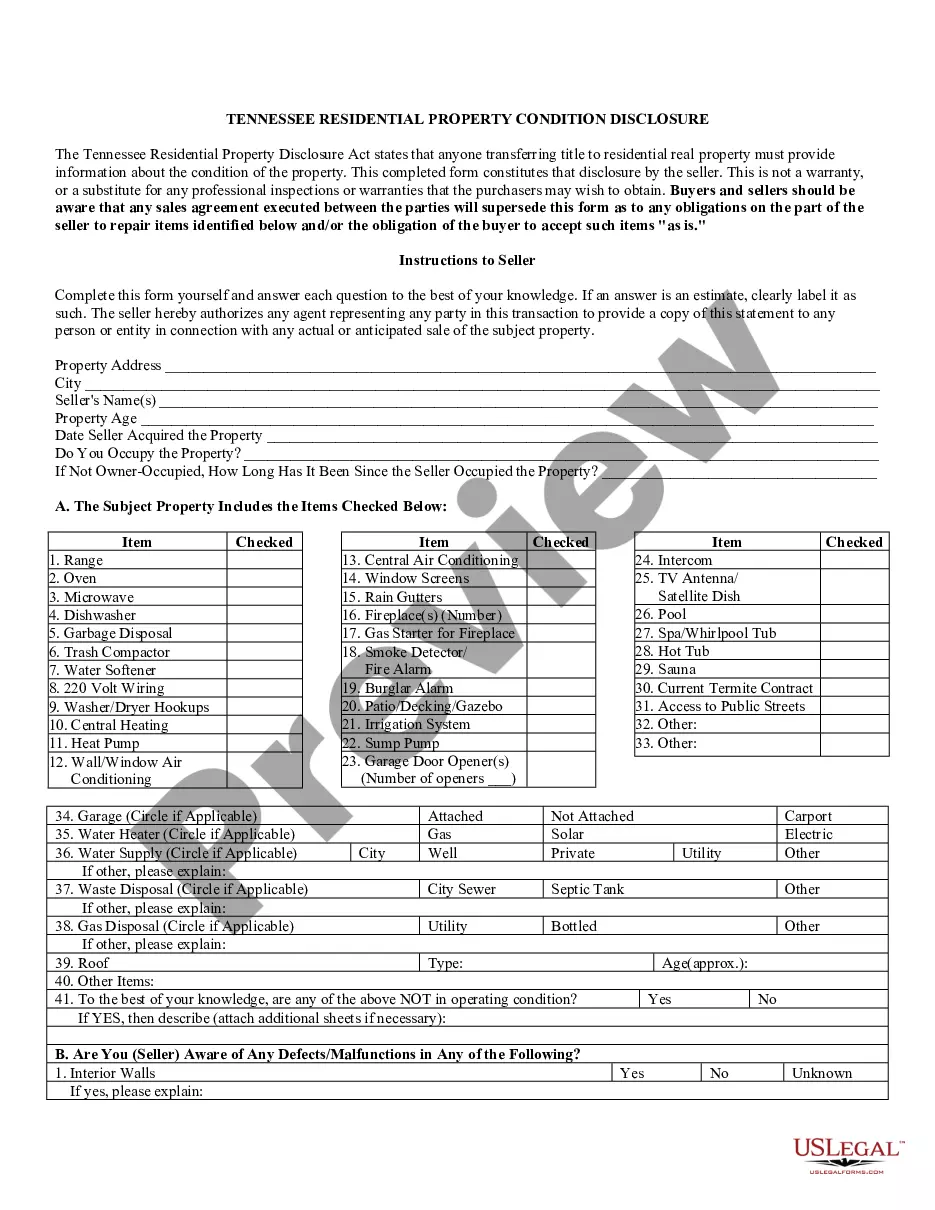
Michigan Assignment of Lien - Corporation
What this document covers
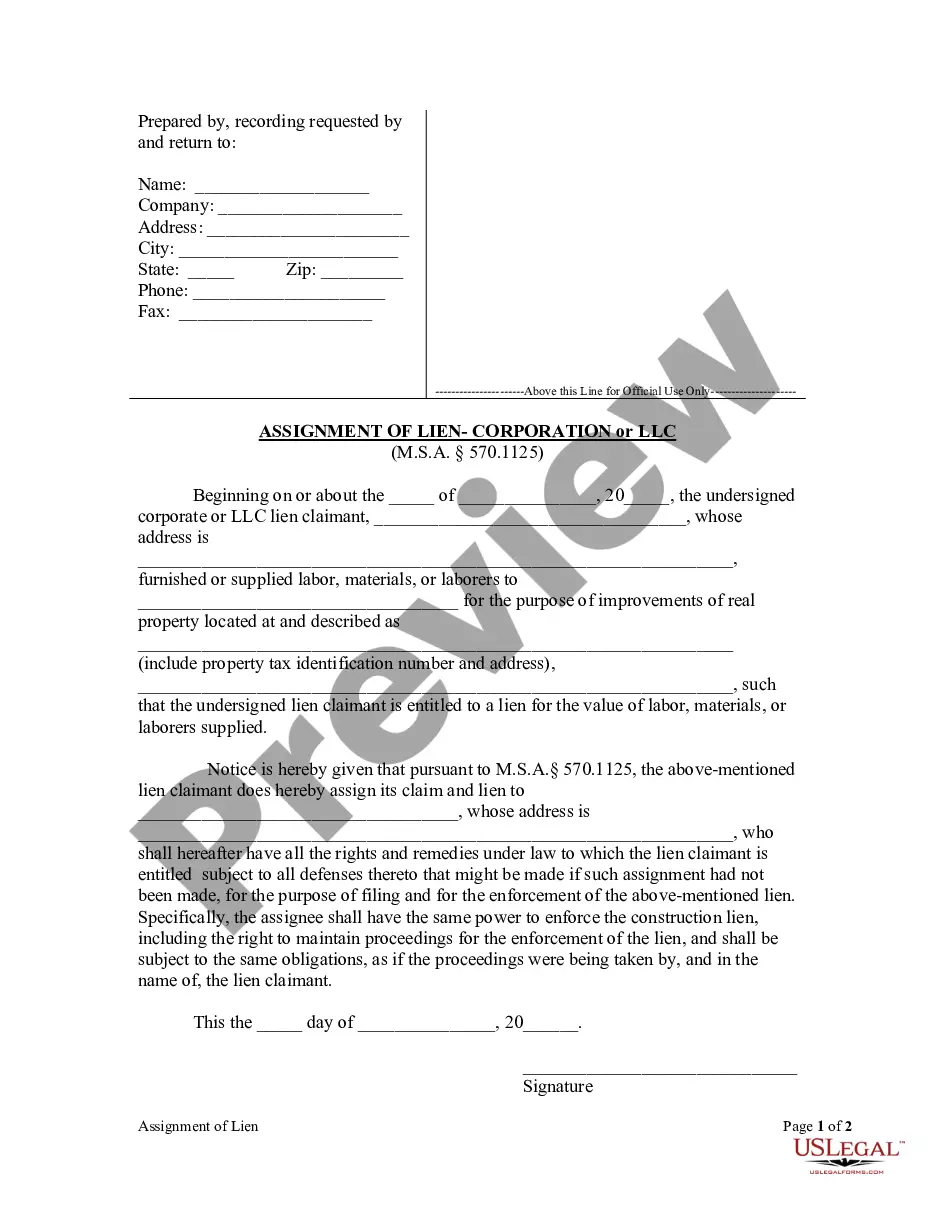
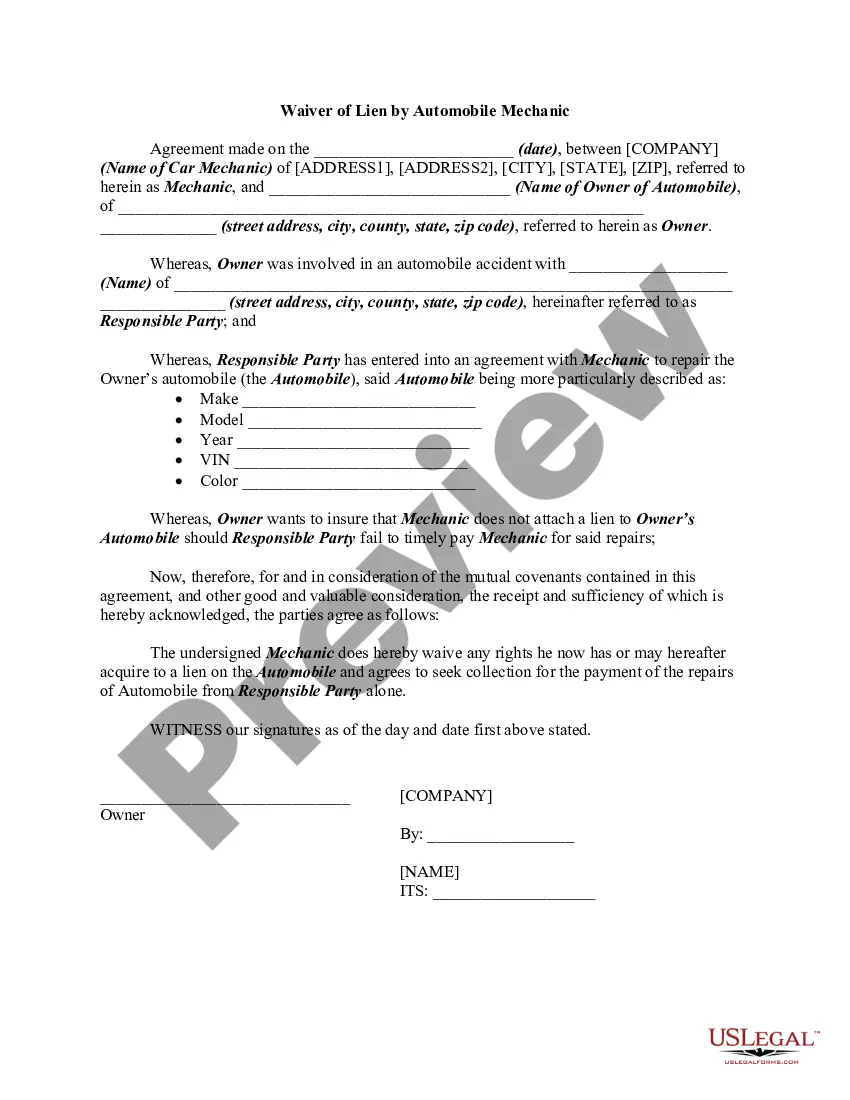
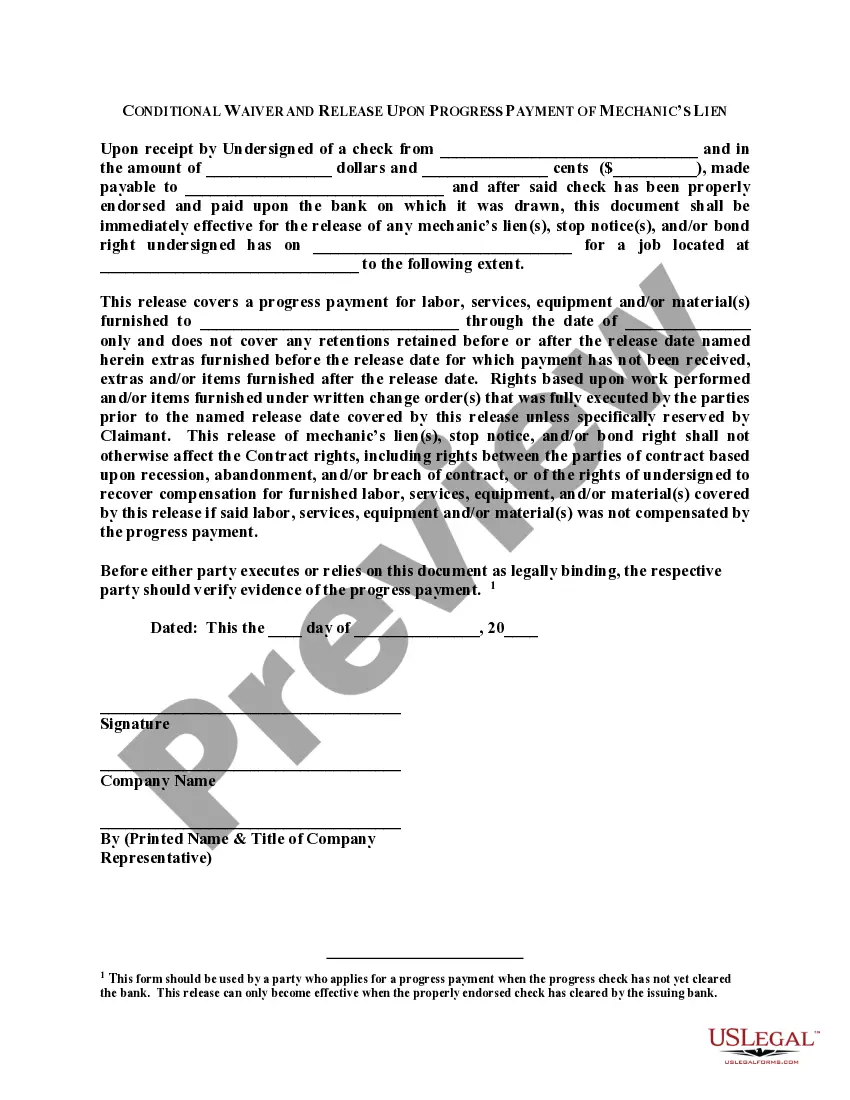
The Assignment of Lien - Corporation form enables corporate lien claimants to formally assign their right to a construction lien. It is specifically designed for businesses that have provided labor or materials for the improvement of real property and wish to transfer their claim to another party. This process helps in managing liens effectively and clarifies the rights of the assignee to enforce the lien under applicable laws.
Key components of this form
- Identification of the corporate lien claimant and the assignee.
- Description of the property related to the lien, including the property tax identification number.
- Details of the labor or materials provided to substantiate the lien claim.
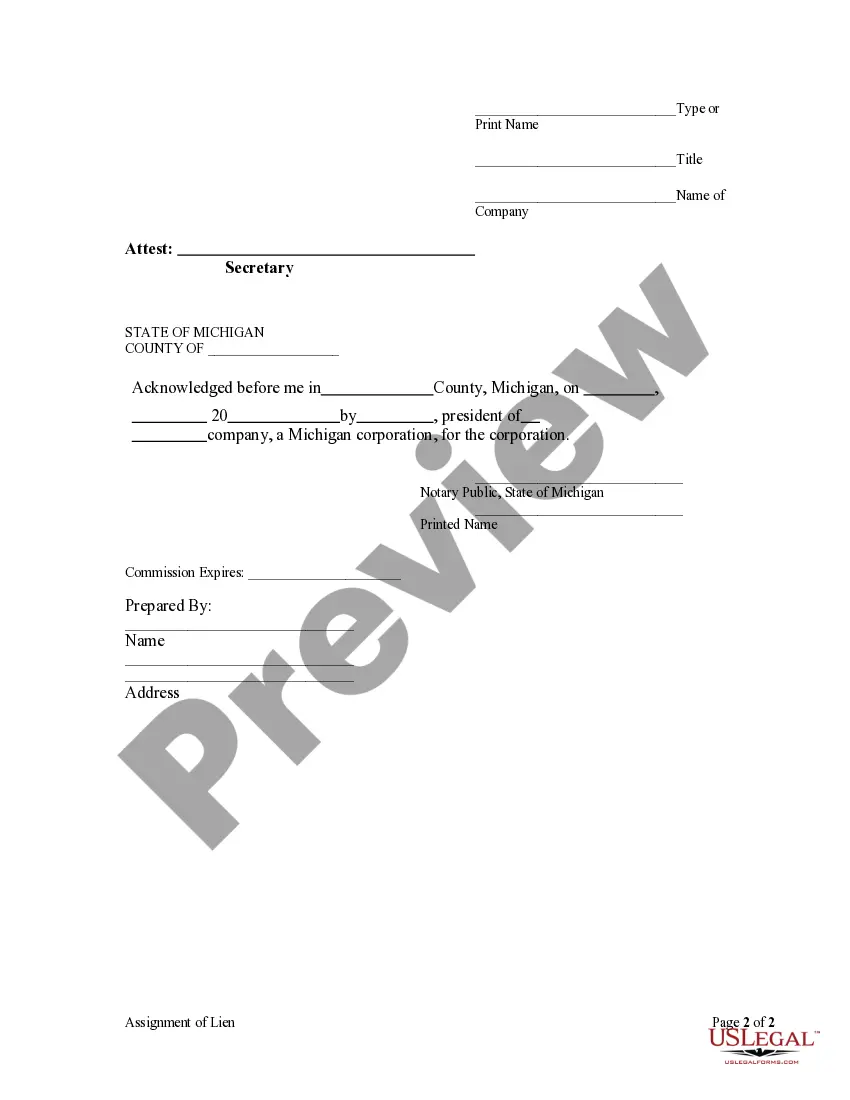
- Signatures of the lien claimant and a notary public for legal validation.
- Date of the assignment to ensure proper record-keeping.
Common use cases
This form should be used when a corporation that has previously filed a lien wishes to transfer that lien to another party. Common scenarios include when a contractor wants to assign their lien to a vendor or when financial responsibilities are transferred among parties involved in a construction project. It ensures that the rights associated with the lien are legally passed along to the new claimant.
Who can use this document
- Corporate entities that have supplied labor or materials for real property improvements.
- Contractors looking to assign their lien rights to another party.
- Individuals or organizations acting on behalf of a corporation in managing construction liens.
Instructions for completing this form
- Identify the parties involved: enter the name and address of the corporate lien claimant and the assignee.
- Specify the property: provide the detailed address and property tax identification number for the property associated with the lien.
- Document the labor or materials provided: note the services or materials supplied to substantiate your claim.
- Fill in the date of the assignment: ensure the date is current to avoid issues with record-keeping.
- Obtain signatures: ensure all required parties sign the form and have it notarized where necessary.
Is notarization required?
This document requires notarization to meet legal standards. US Legal Forms provides secure online notarization powered by Notarize, allowing you to complete the process through a verified video call, available 24/7.
Get your form ready online
Our built-in tools help you complete, sign, share, and store your documents in one place.
Make edits, fill in missing information, and update formatting in US Legal Forms—just like you would in MS Word.
Download a copy, print it, send it by email, or mail it via USPS—whatever works best for your next step.
Sign and collect signatures with our SignNow integration. Send to multiple recipients, set reminders, and more. Go Premium to unlock E-Sign.
If this form requires notarization, complete it online through a secure video call—no need to meet a notary in person or wait for an appointment.
We protect your documents and personal data by following strict security and privacy standards.

Make edits, fill in missing information, and update formatting in US Legal Forms—just like you would in MS Word.

Download a copy, print it, send it by email, or mail it via USPS—whatever works best for your next step.

Sign and collect signatures with our SignNow integration. Send to multiple recipients, set reminders, and more. Go Premium to unlock E-Sign.

If this form requires notarization, complete it online through a secure video call—no need to meet a notary in person or wait for an appointment.

We protect your documents and personal data by following strict security and privacy standards.
Common mistakes
- Failing to accurately describe the property, which can lead to enforcement issues.
- Not obtaining proper signatures or notarization, making the assignment invalid.
- Leaving out crucial details about the labor or materials provided, which could undermine the claim.
Why use this form online
- Convenience of downloading and completing the form at your own pace.
- Editability allows for easy modifications without needing to start from scratch.
- Access to professionally drafted templates that ensure legal compliance.
Looking for another form?

Form popularity
FAQ
A UCC lien in Michigan is a legal claim against personal property to secure a debt or obligation. This type of lien is governed by the Uniform Commercial Code and is often used by lenders to protect their interests in loans. The Michigan Assignment of Lien - Corporation helps ensure that creditors have a legal basis to reclaim debts if necessary, providing clarity in financial transactions.
You cannot file a lien, you cannot enforce a lien you have filed if you are an unlicensed contractor, Courtade, the attorney, said.It is illegal for anyone to work as a contractor in Michigan without a license.
In Michigan, a mechanics lien, called a Claim of Lien, must be filed with the Register of Deeds within 90 days after the lien claimant last furnished labor or materials to the project.
In every state, a judgment lien can be attached to the debtor's real estate -- meaning a house, condo, land, or similar kind of property interest. And some states also allow judgment liens on the debtor's personal property -- things like jewelry, art, antiques, and other valuables.
With the judgment in hand, a judgment creditor can place a judgment lien on your real estate and occasionally on personal property depending on the state in which you live.
Judgment liens last for five years. But, a creditor can renew the lien until your judgment expires. Most judgments in Michigan expire after 10 years.
In Michigan, a mechanics lien, called a Claim of Lien, must be filed with the Register of Deeds within 90 days after the lien claimant last furnished labor or materials to the project.
Michigan HOA Lien LawsMichigan doesn't have comprehensive statutory scheme that regulates HOAs.
A judgment lien in Michigan will remain attached to the debtor's property (even if the property changes hands) for five years.
A mortgage creates a lien on your property that gives the lender the right to foreclose and sell the home to satisfy the debt. A deed of trust (sometimes called a trust deed) is also a document that gives the lender the right to sell the property to satisfy the debt should you fail to pay back the loan.