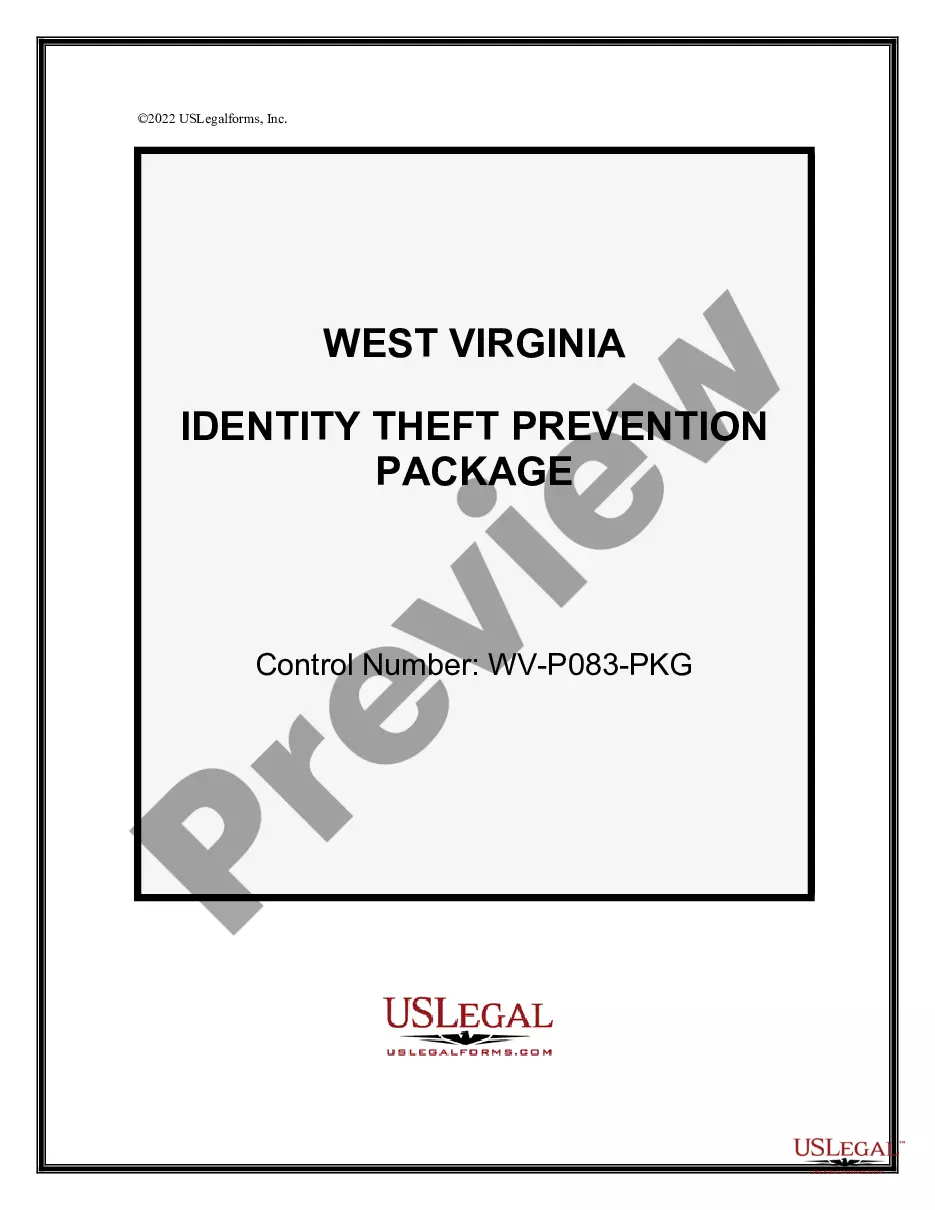
West Virginia Identity Theft Prevention Package
Overview of this form package
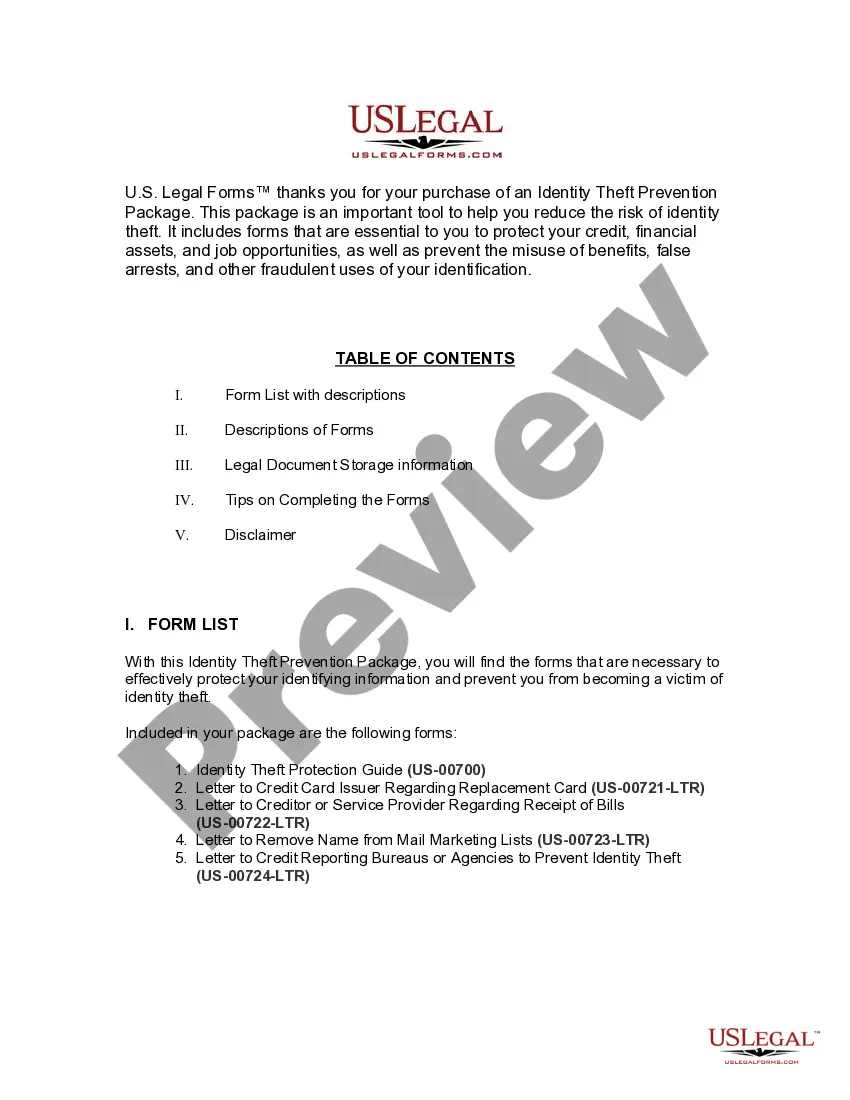
The West Virginia Identity Theft Prevention Package is designed to help individuals protect their identifying information and reduce the risk of identity theft. This package includes essential documents that help manage credit, safeguard financial assets, and prevent misuse of personal information. Unlike general identity protection tools, this package focuses specifically on legal forms drafted by licensed attorneys tailored to the needs of West Virginia residents.
What’s included in this form package
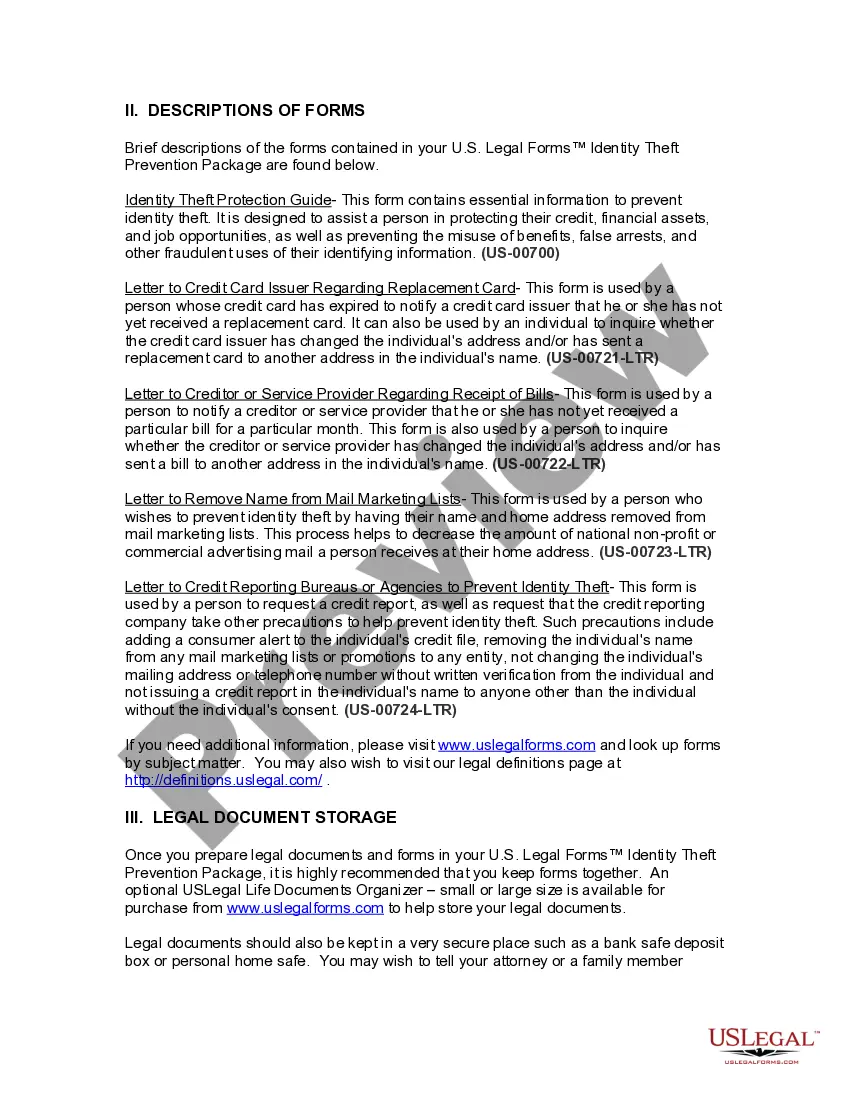
- Identity Theft Protection Guide
- Sample Letter to Credit Card Issuer Regarding Replacement Card
- Sample Letter to Creditor or Service Provider Regarding Receipt of Bills
- Sample Letter to Remove Name from Mail Marketing Lists
- Sample Letter to Credit Reporting Bureau or Agency to Help Prevent Identity Theft
Situations where these forms applies
This form package is beneficial in several scenarios, such as:
- If you suspect your personal information has been compromised.
- If you need to notify creditors or service providers about a lack of received bills or statements.
- If you want to reduce unwanted marketing solicitations that could expose your personal data.
- If you wish to alert credit reporting agencies to protect against identity theft.
Who needs this form package
- West Virginia residents concerned about identity theft.
- Individuals who have experienced or fear unauthorized use of their personal information.
- Consumers who wish to take proactive measures to protect their credit and financial well-being.
- Anyone interested in minimizing the risk of fraud associated with their identity.
How to complete these forms
- Review the included Identity Theft Protection Guide for important information.
- Fill out the Letter to Credit Card Issuer to report any issues with your credit card.
- Complete the Letter to Creditor or Service Provider if you have not received expected bills.
- Use the Letter to Remove Name from Mail Marketing Lists to reduce junk mail.
- Send the Letter to Credit Reporting Bureaus or Agencies to request credit protection measures.
Notarization requirements for forms in this package
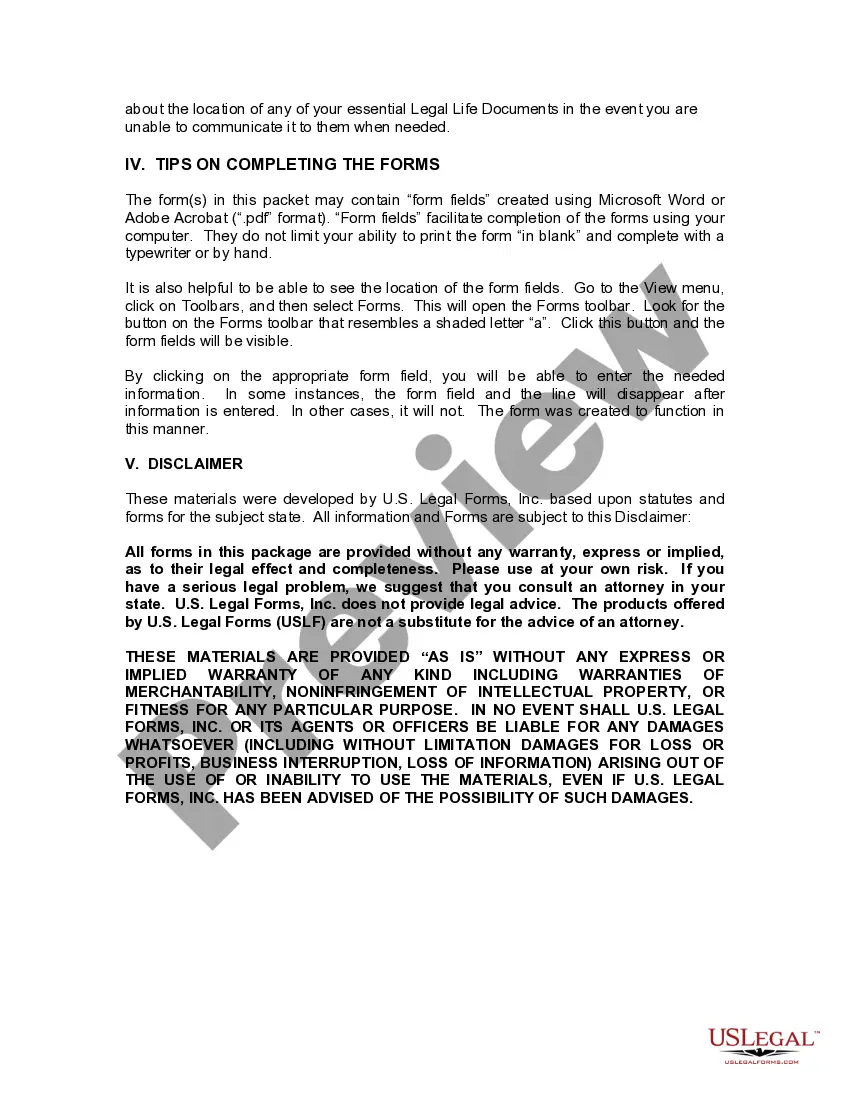
Forms in this package typically do not require notarization. However, certain states or document types may still need it. US Legal Forms provides online notarization powered by Notarize, available 24/7 for your convenience.
Get your form ready online
Our built-in tools help you complete, sign, share, and store your documents in one place.
Make edits, fill in missing information, and update formatting in US Legal Forms—just like you would in MS Word.
Download a copy, print it, send it by email, or mail it via USPS—whatever works best for your next step.
Sign and collect signatures with our SignNow integration. Send to multiple recipients, set reminders, and more. Go Premium to unlock E-Sign.
If this form requires notarization, complete it online through a secure video call—no need to meet a notary in person or wait for an appointment.
We protect your documents and personal data by following strict security and privacy standards.

Make edits, fill in missing information, and update formatting in US Legal Forms—just like you would in MS Word.

Download a copy, print it, send it by email, or mail it via USPS—whatever works best for your next step.

Sign and collect signatures with our SignNow integration. Send to multiple recipients, set reminders, and more. Go Premium to unlock E-Sign.

If this form requires notarization, complete it online through a secure video call—no need to meet a notary in person or wait for an appointment.

We protect your documents and personal data by following strict security and privacy standards.
Avoid these common issues
- Failing to customize letters with accurate personal details.
- Not sending the letters via certified mail for proof of delivery.
- Overlooking the importance of updating contact information with creditors.
- Not following up with credit reporting agencies after sending requests.
Benefits of using this package online
- Convenience of immediate access to essential legal documents from home.
- Editability allows for easy personal customization of each form.
- Reliable forms drafted by licensed attorneys, ensuring legal compliance.
Looking for another form?
Form popularity
FAQ
Password-Protect Your Devices. Use a Password Manager. Watch Out for Phishing Attempts. Never Give Out Personal Information Over the Phone. Regularly Check Your Credit Reports. Protect Your Personal Documents. Limit Your Exposure.
Aggravated identity theft is punishable by a mandatory minimum sentence of imprisonment for two years or by imprisonment for five years if it relates to a terrorism offense. At least thus far, the government has rarely prosecuted the five-year terrorism form of the offense.
Consider paying for an identity theft protection service only if: You're already the victim of identity theft or at high risk of it. You are unwilling to freeze your credit reports.You have checked and don't have adequate identity theft monitoring available for free as a benefit or as a result of a data breach.
Check all your financial accounts for errors or suspicious activity. Enroll in a credit monitoring service. Place a fraud alert on your credit reports. Consider freezing your credit. Alert the authorities. Always use strong passwords and be aware of information you give out. Bottom line.
You'll be asked to provide personal information, such as name, address, Social Security number and birth date. You'll typically be asked a few questions to verify your identity and then be prompted to create a PIN, which should be kept in a secure location.
Place a Fraud Alert on Your Credit Report. Freeze Your Credit Report. Order Your Free Credit Reports. Buy Your Credit Reports. Monitor Your Accounts Online. Enroll in Credit Monitoring. Keep Your Social Security Number Safe. Pick Up Your Check Order.
Federal identity theft charges usually carry a maximum sentence of 15 years in federal prison, but ID theft cases often include additional charges that can add to prison time.
You may be able to have your identity theft charges dropped if: You didn't obtain use a person's information unlawfully If you did not obtain or use someone else's personal information unlawfully, you are not guilty of identity theft.
Password-Protect Your Devices. Use a Password Manager. Watch Out for Phishing Attempts. Never Give Out Personal Information Over the Phone. Regularly Check Your Credit Reports. Protect Your Personal Documents. Limit Your Exposure.