Washington Order On Motion Dismissal
About this form
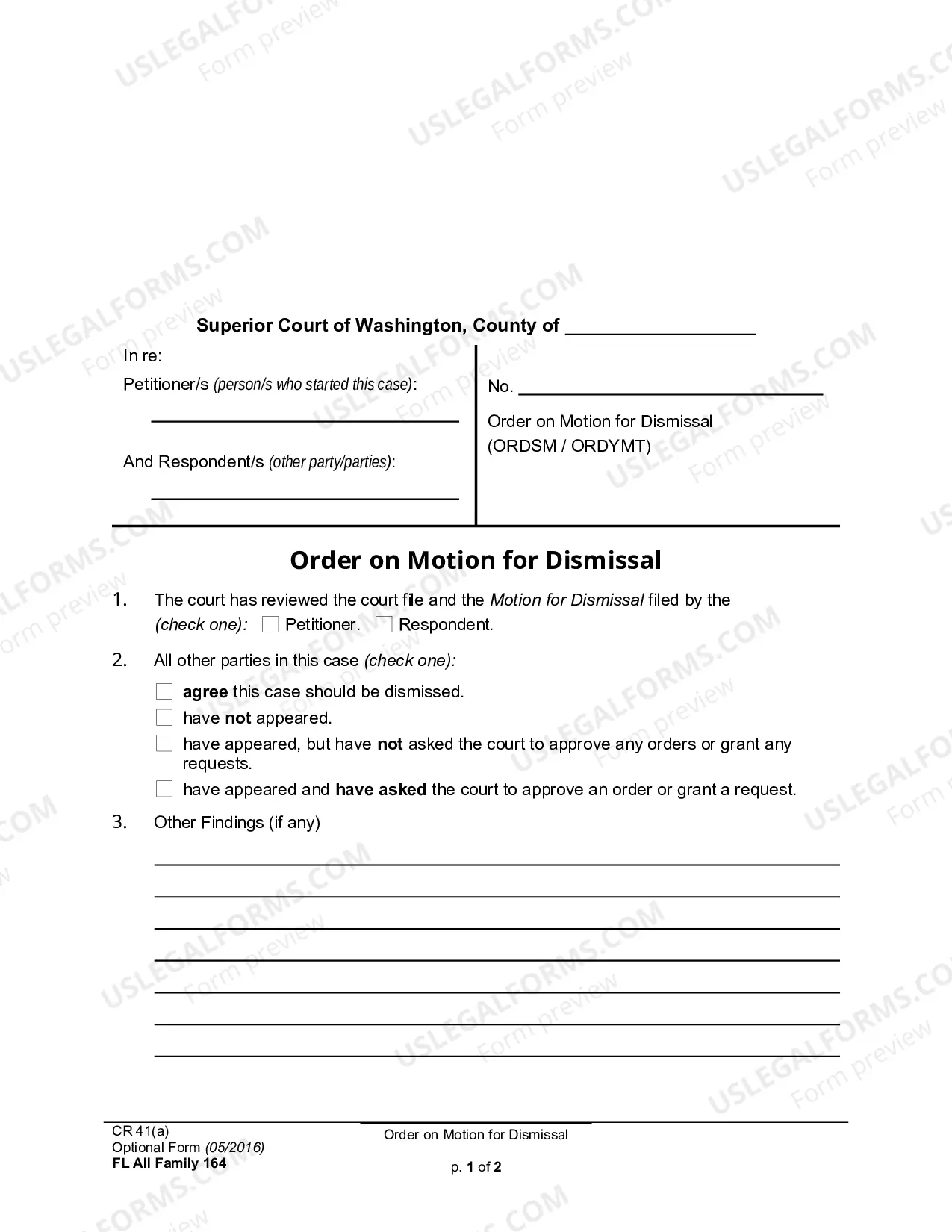
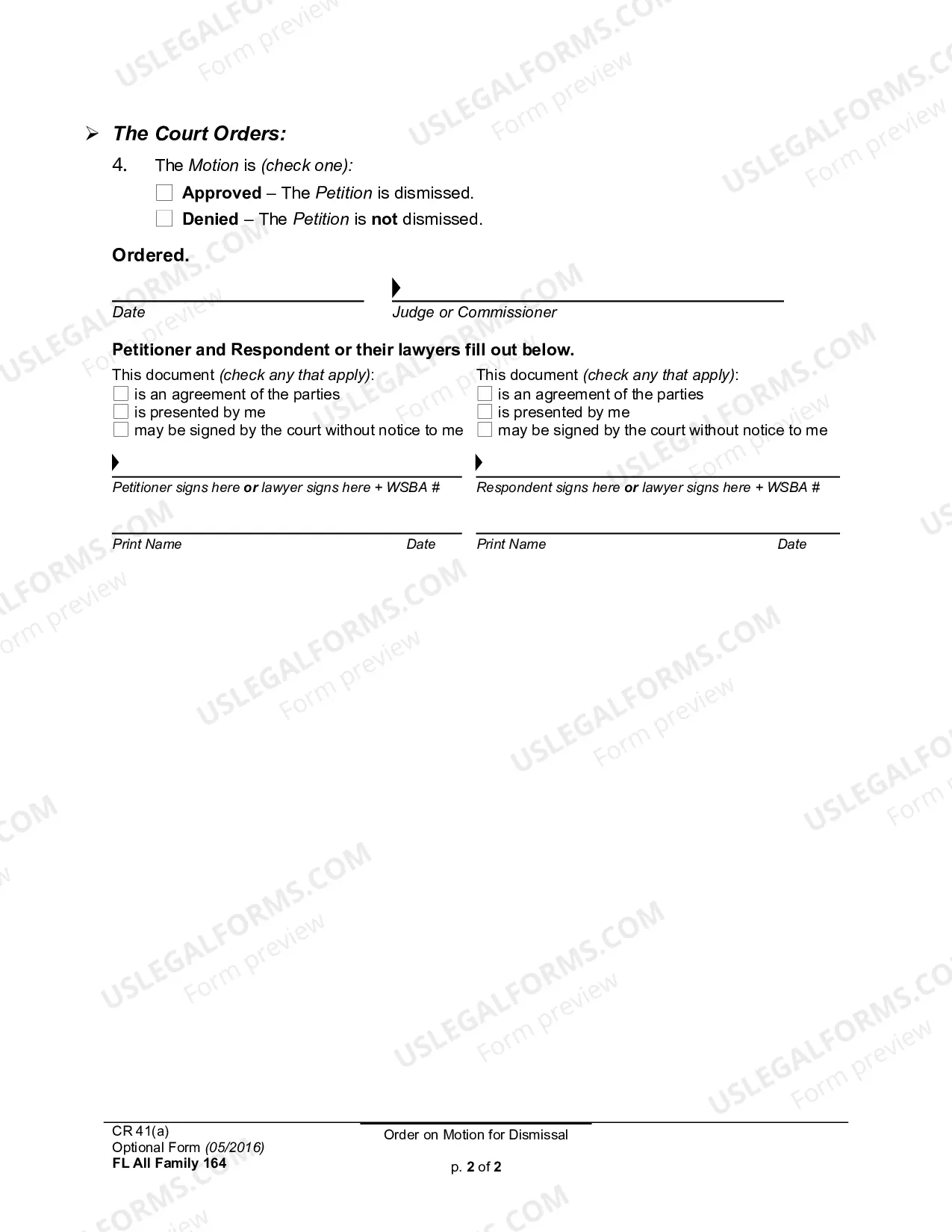
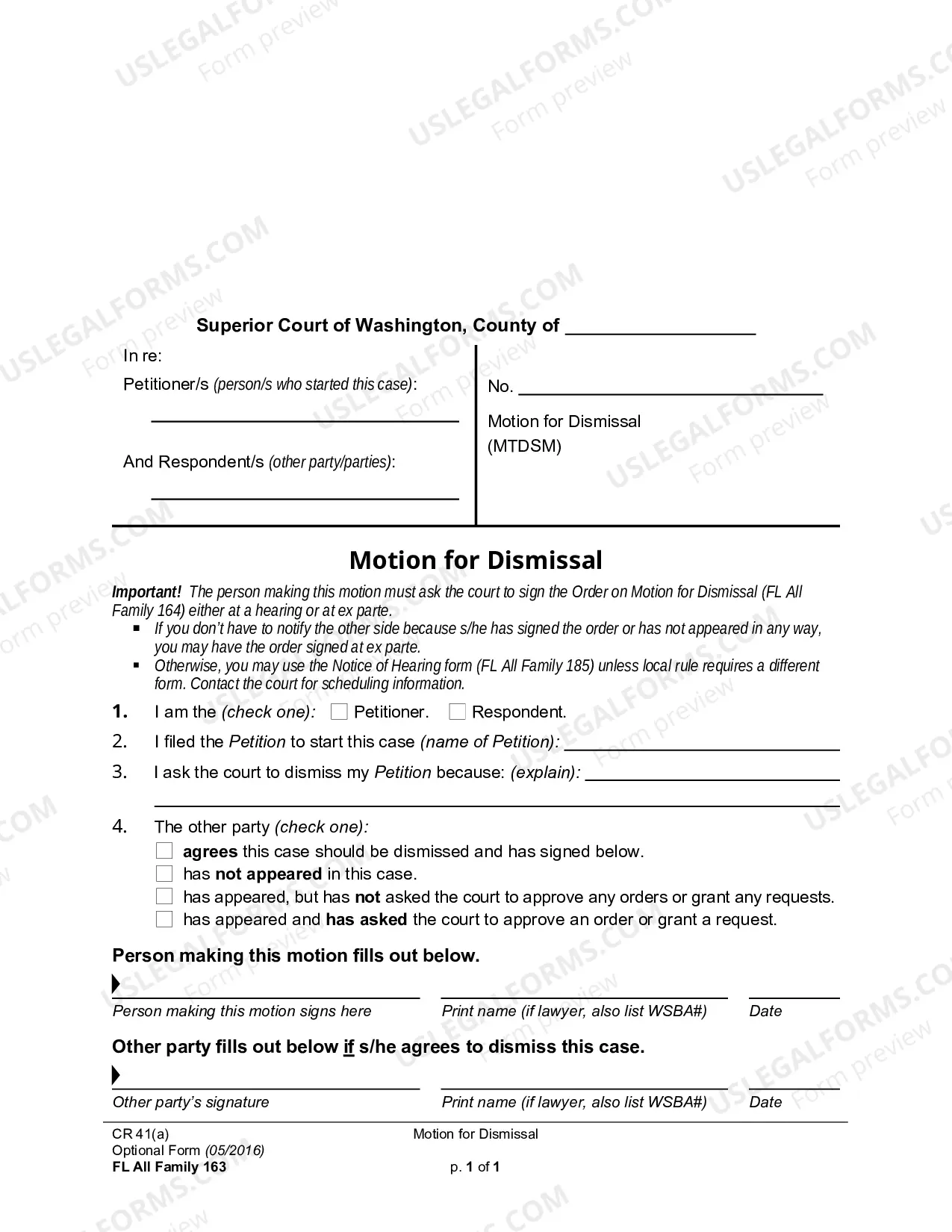
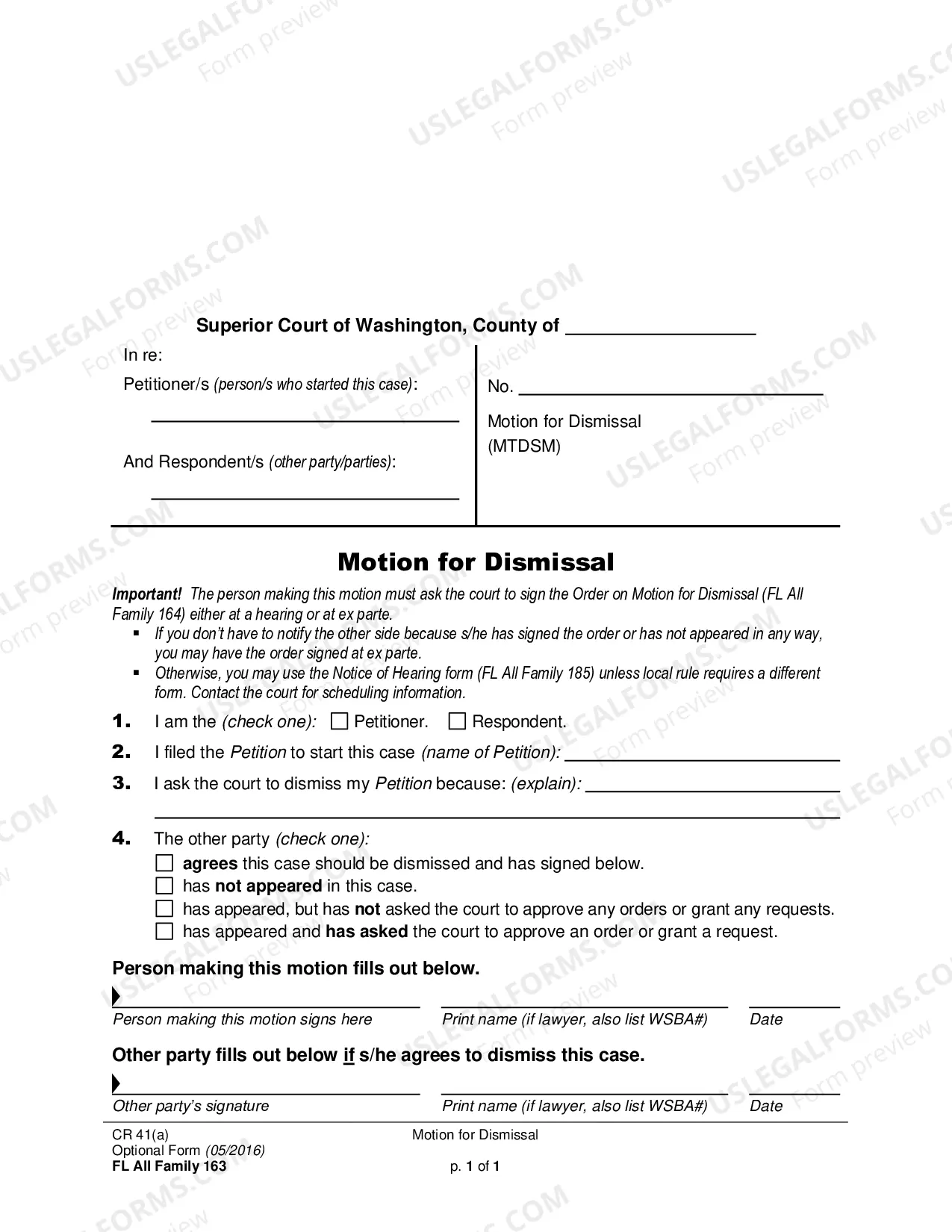
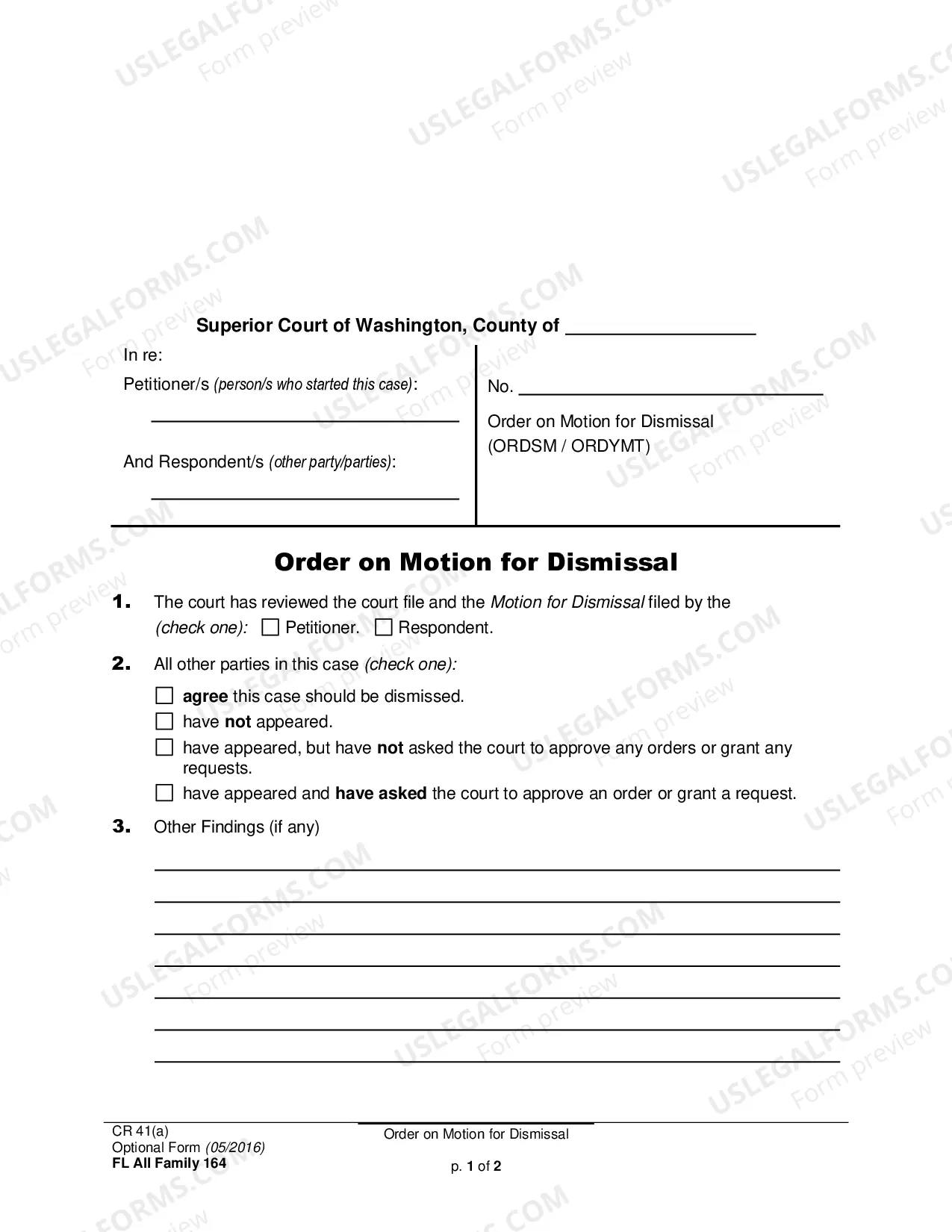
The Order on Motion Dismissal is a legal document used by courts to grant a party's request to dismiss a case. This form is crucial as it formalizes the court's decision to terminate proceedings without further action, distinguishing it from other dismissal types that may require additional steps or conditions. It serves to clearly communicate the conclusion of a case, protecting the rights of the involved parties.
Main sections of this form
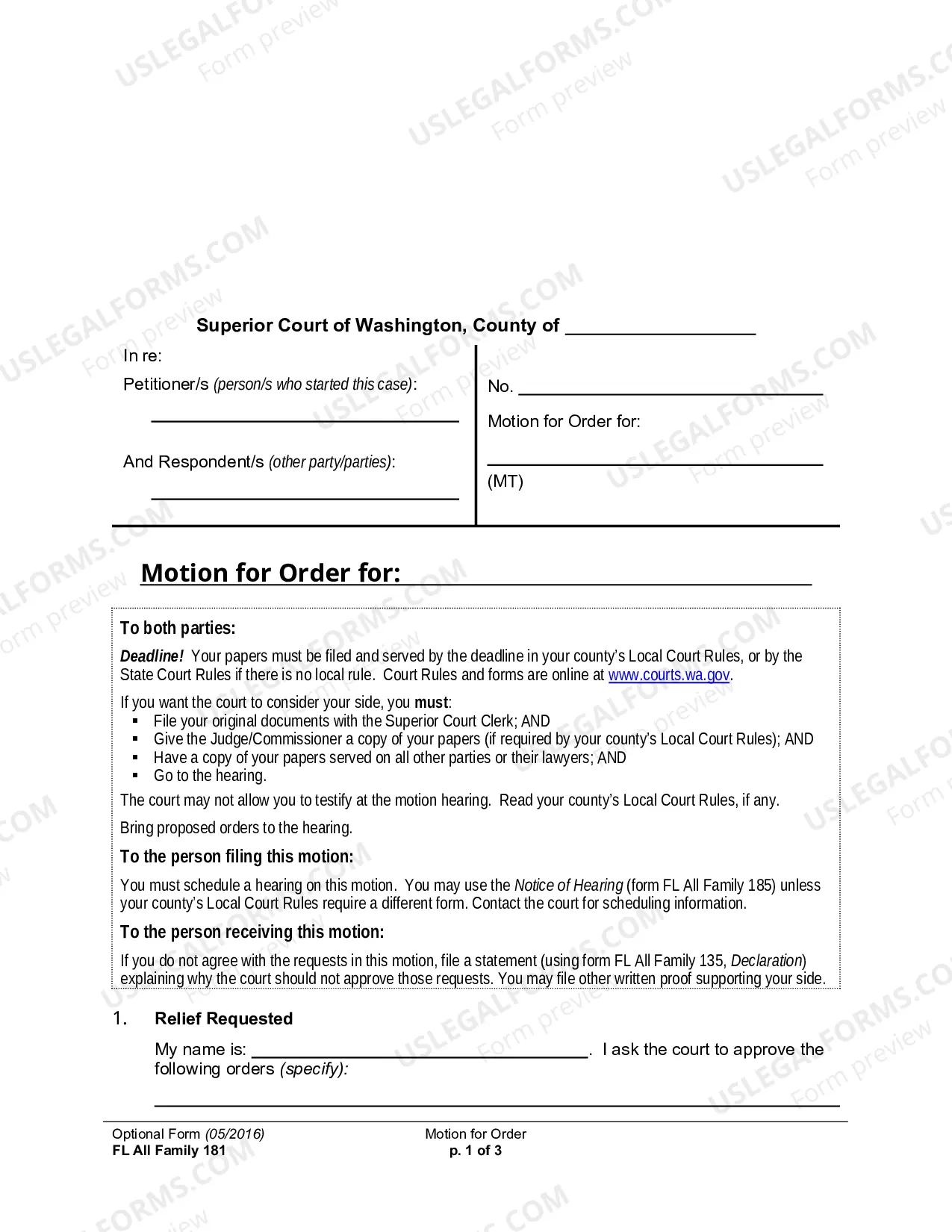
- Case caption including court name and case number
- Names of the parties involved in the motion
- A statement outlining the reasons for the motion to dismiss
- Signature lines for the judge or presiding officer
- Date of the order
When to use this document
This form should be used when a party believes that a case should be dismissed for reasons such as lack of jurisdiction, failure to state a claim upon which relief can be granted, or if the parties have reached a settlement. It provides a formal mechanism to stop proceedings in a court case, preventing unnecessary legal expenses and further court involvement.
Who needs this form
- Litigants seeking to have their case dismissed
- Attorneys representing clients in civil or criminal litigation
- Individuals involved in lawsuits who wish to terminate proceedings
How to prepare this document
- Identify the case and include the caption with all relevant details.
- Fill in the names of all parties involved in the action.
- Clearly state the reasons for the dismissal in the designated section.
- Sign and date the form in the appropriate areas.
- Submit the completed form to the court or appropriate filing office.
Does this document require notarization?
This form usually doesn’t need to be notarized. However, local laws or specific transactions may require it. Our online notarization service, powered by Notarize, lets you complete it remotely through a secure video session, available 24/7.
Get your form ready online
Our built-in tools help you complete, sign, share, and store your documents in one place.
Make edits, fill in missing information, and update formatting in US Legal Forms—just like you would in MS Word.
Download a copy, print it, send it by email, or mail it via USPS—whatever works best for your next step.
Sign and collect signatures with our SignNow integration. Send to multiple recipients, set reminders, and more. Go Premium to unlock E-Sign.
If this form requires notarization, complete it online through a secure video call—no need to meet a notary in person or wait for an appointment.
We protect your documents and personal data by following strict security and privacy standards.

Make edits, fill in missing information, and update formatting in US Legal Forms—just like you would in MS Word.

Download a copy, print it, send it by email, or mail it via USPS—whatever works best for your next step.

Sign and collect signatures with our SignNow integration. Send to multiple recipients, set reminders, and more. Go Premium to unlock E-Sign.

If this form requires notarization, complete it online through a secure video call—no need to meet a notary in person or wait for an appointment.

We protect your documents and personal data by following strict security and privacy standards.
Avoid these common issues
- Failing to provide adequate reasons for the dismissal.
- Not including all parties' names in the case caption.
- Omitting signatures from required individuals, including the judge.
Advantages of online completion
- Convenient access to legal forms from anywhere at any time.
- Editable templates that allow you to customize the form to your situation.
- Instant downloads, ensuring you have the form ready when needed.
Quick recap
- The Order on Motion Dismissal is essential for formally ending a legal case.
- Ensure all required information and signatures are included for validity.
- Local court rules may dictate specific requirements for this form.
Looking for another form?


Form popularity
FAQ
?With prejudice? means that you cannot re-file your case ever. ?Without prejudice? means that you can re-file your case at a later date (as long as you are still within the statute of limitations).
?With prejudice? means that you cannot re-file your case ever. ?Without prejudice? means that you can re-file your case at a later date (as long as you are still within the statute of limitations).
Whereas a case that is dismissed ?with prejudice? is dismissed permanently, a case that is dismissed ?without prejudice? is only dismissed temporarily. This temporary dismissal means that the plaintiff is allowed to re-file charges, alter the claim, or bring the case to another court.
A dismissal with prejudice is much more desirable for the defendant than dismissal without prejudice. When a criminal case is dismissed with prejudice, the prosecutor cannot file new charges or reopen the case. The dismissal permanently ends the case in the defendant's favor.
You typically need to respond in writing a week before the hearing. The exact timeframe varies depending the kind of motion and the county's local rules.
Any civil action shall be dismissed, without prejudice, for want of prosecution whenever the plaintiff, counterclaimant, cross claimant, or third party plaintiff neglects to note the action for trial or hearing within 1 year after any issue of law or fact has been joined, unless the failure to bring the same on for
After any settlement that fully resolves all claims against all parties, the parties shall, within five days or before the next scheduled court hearing, whichever is sooner, file and serve a written notice of settlement.
A Dismissal Order ends the case. Upon dismissal the ?automatic stay? ends and creditors may start to collect debts unless a discharge is entered before the dismissal and the discharge is not revoked by the court. An Order of Dismissal does not free the debtor from any debt.