Wisconsin Document Locator and Personal Information Package including burial information form
What this document covers
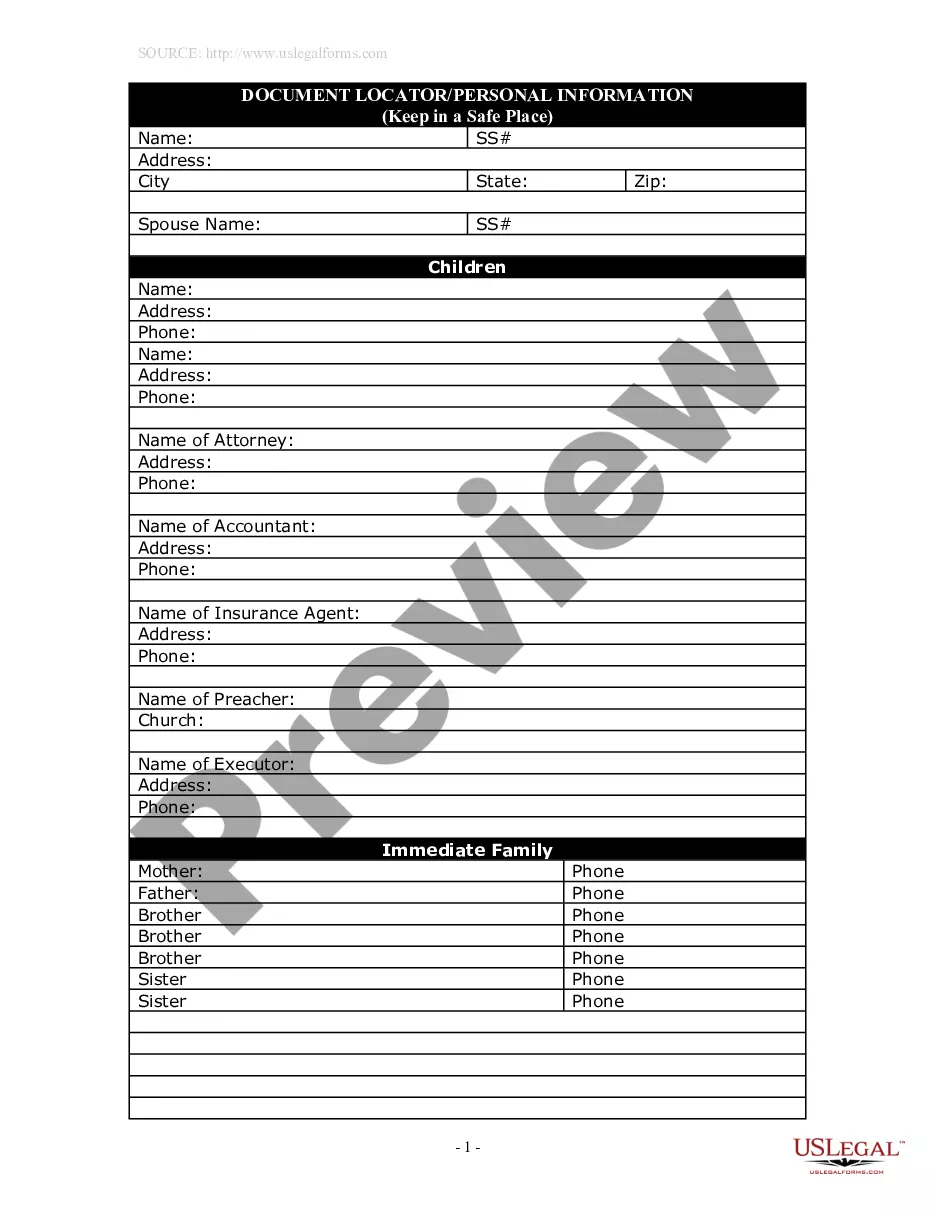
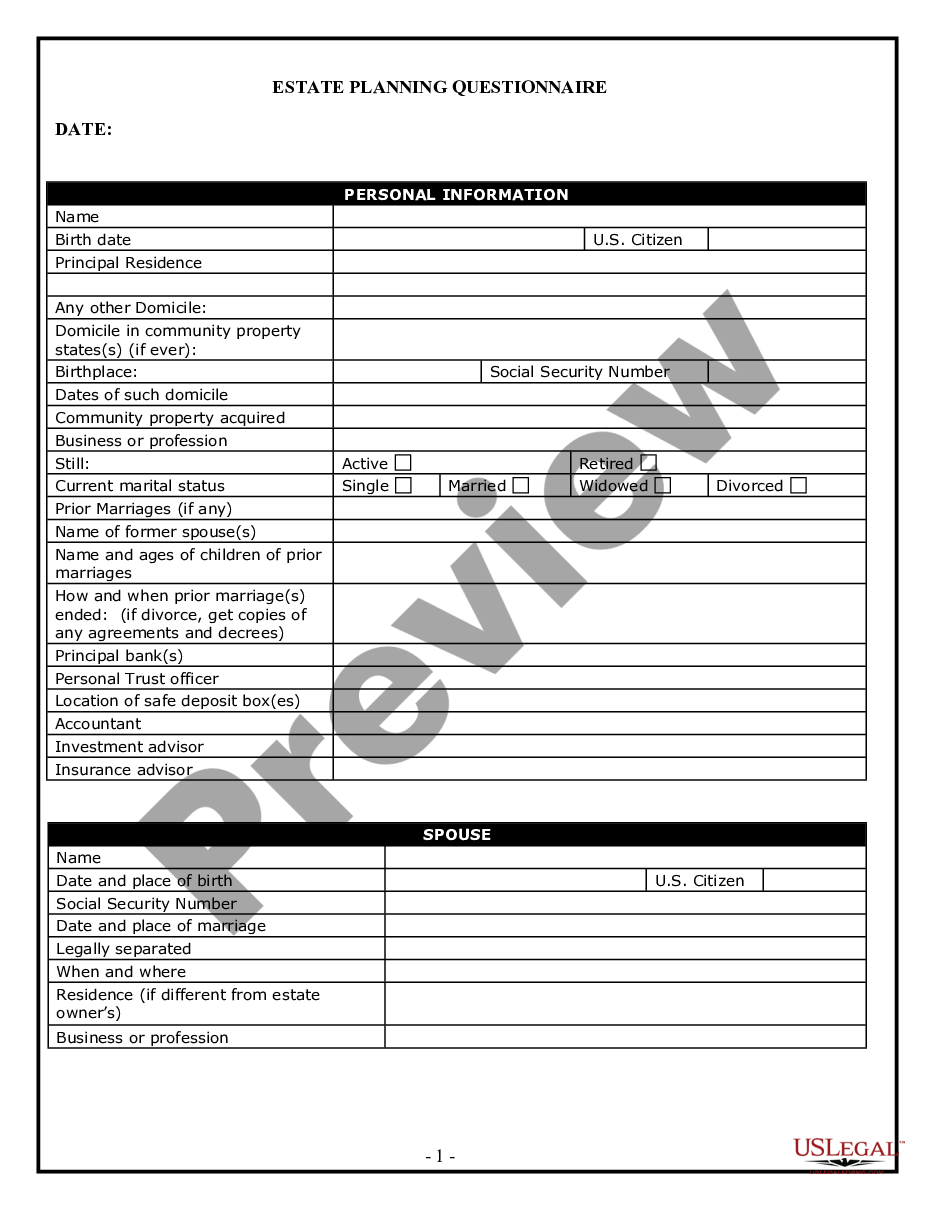
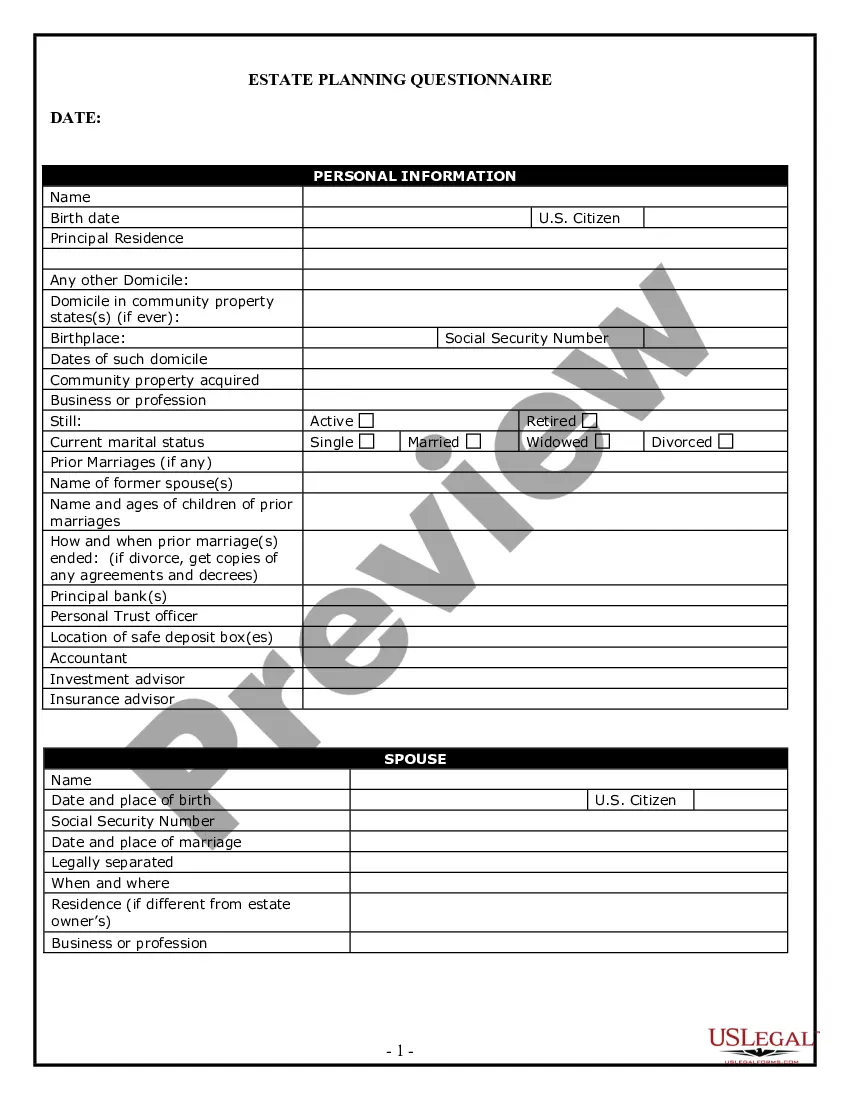
The Document Locator and Personal Information Package, including burial information form, is designed to help individuals organize and communicate important personal information and last wishes. This comprehensive package ensures your family knows where to find critical documents and understands your desires for burial and funeral arrangements, which can alleviate confusion during difficult times. Unlike other forms, this package focuses on compiling personal information and documentation into one accessible location.
Main sections of this form
- Personal information section, including details about family members and trusted contacts.
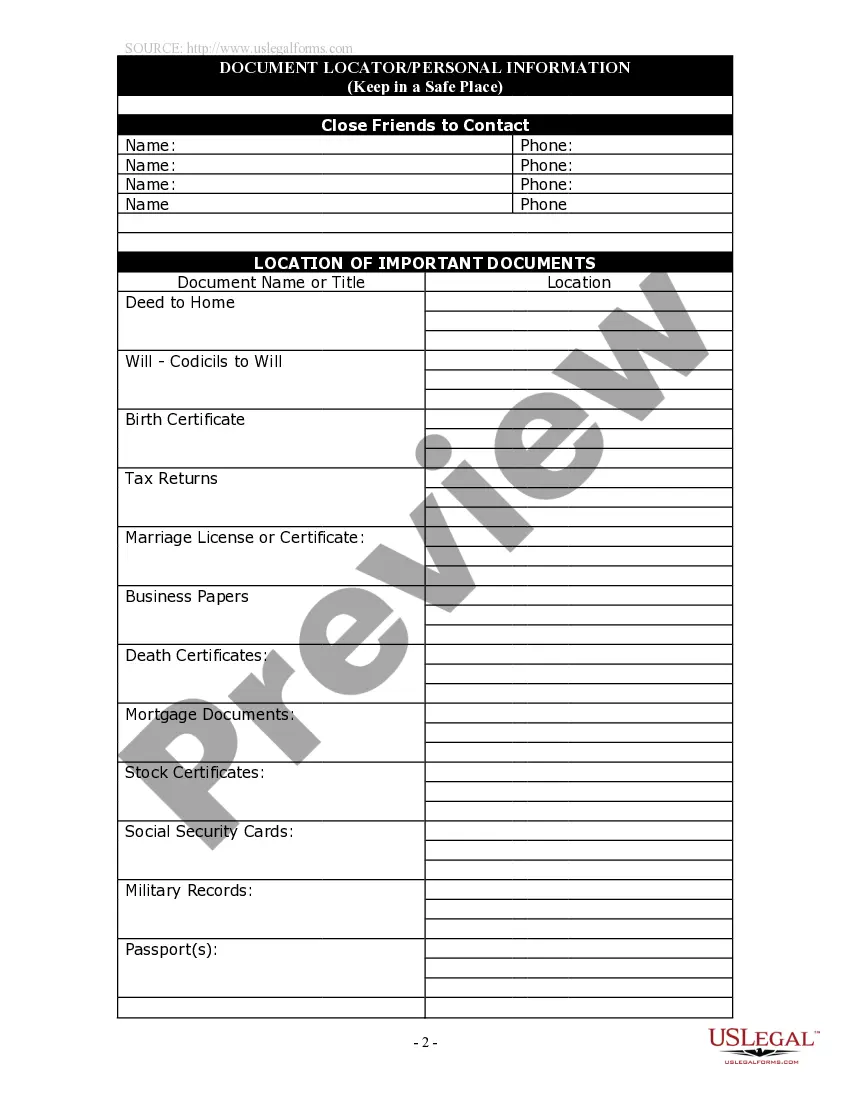
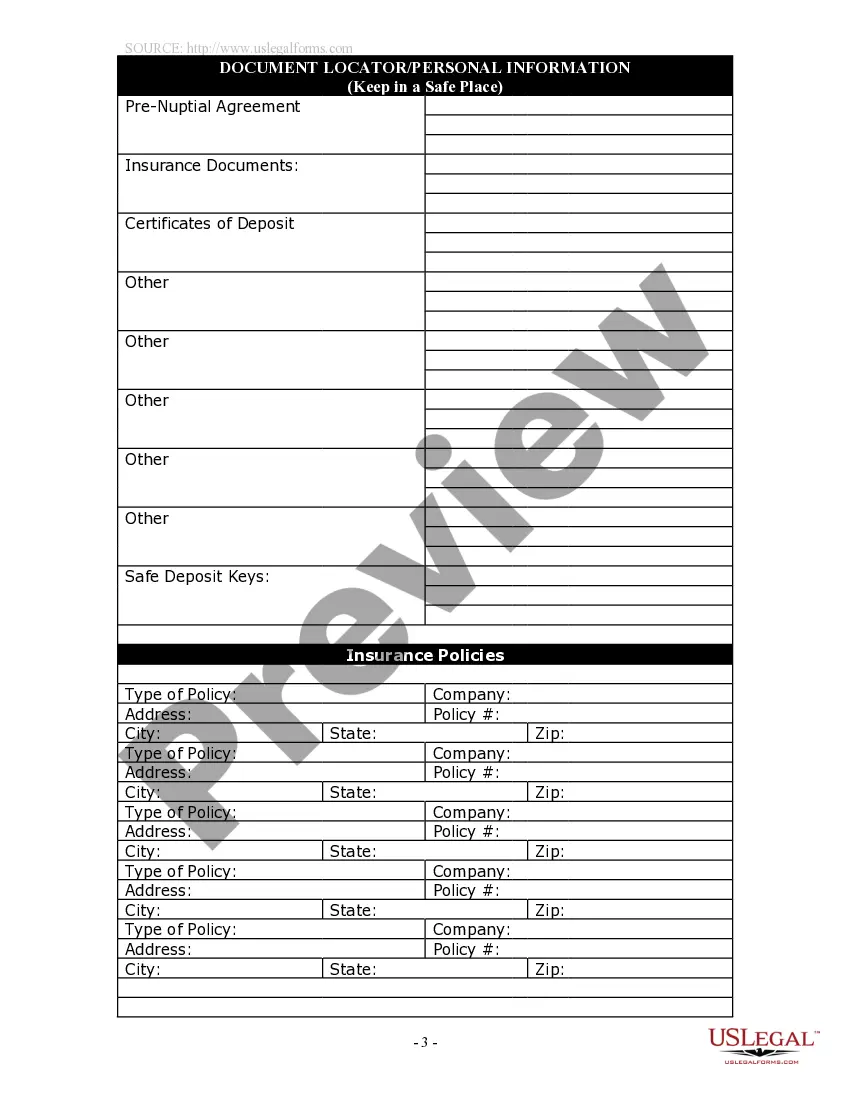
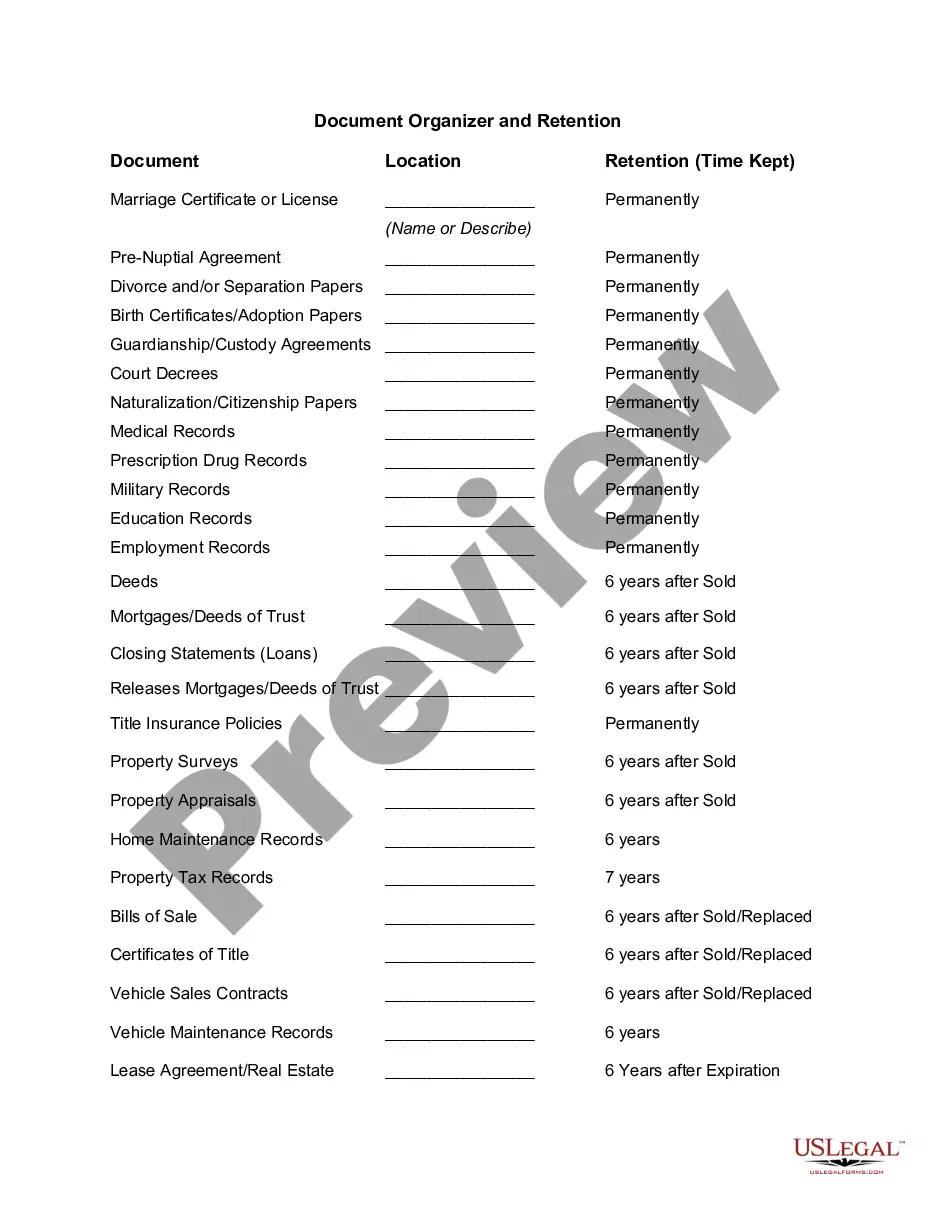
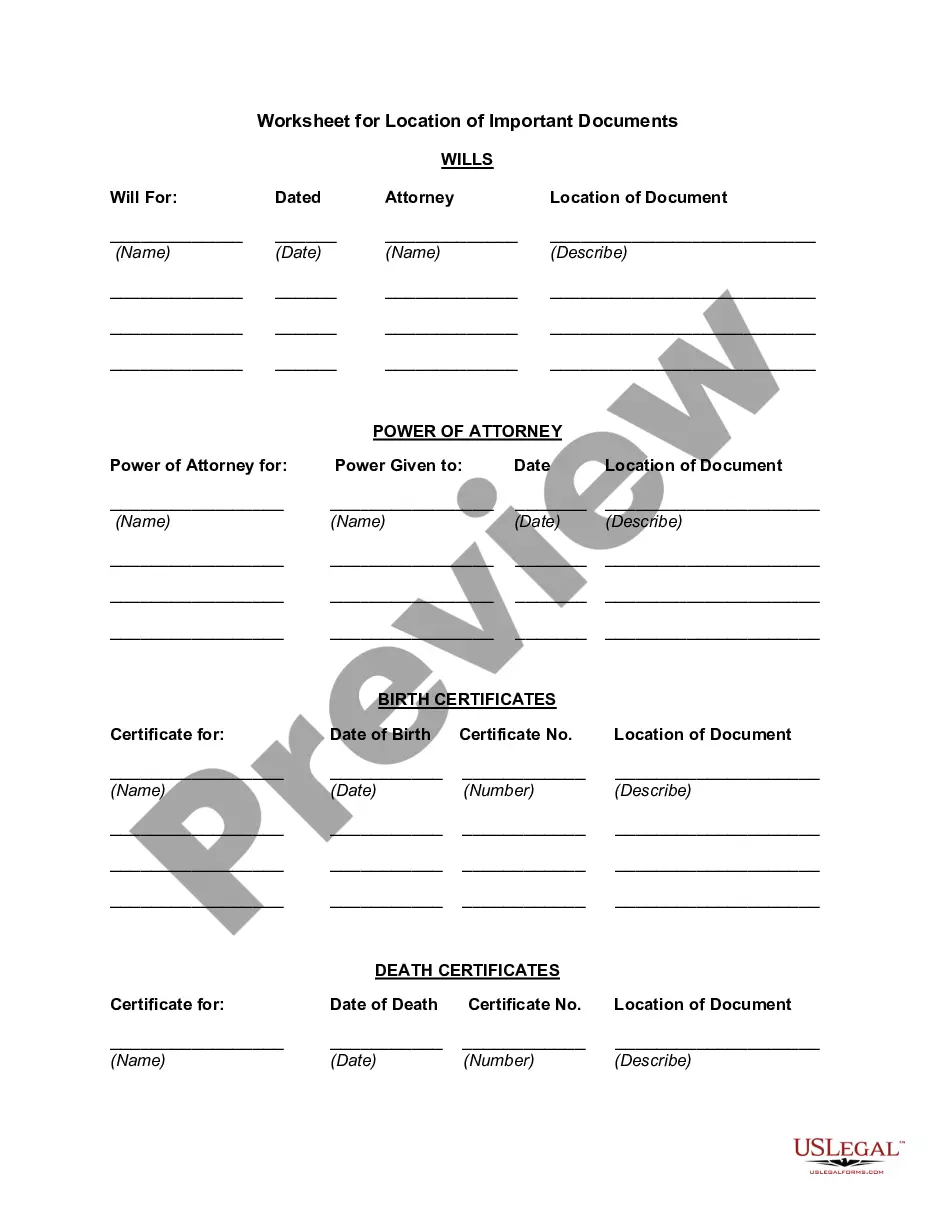
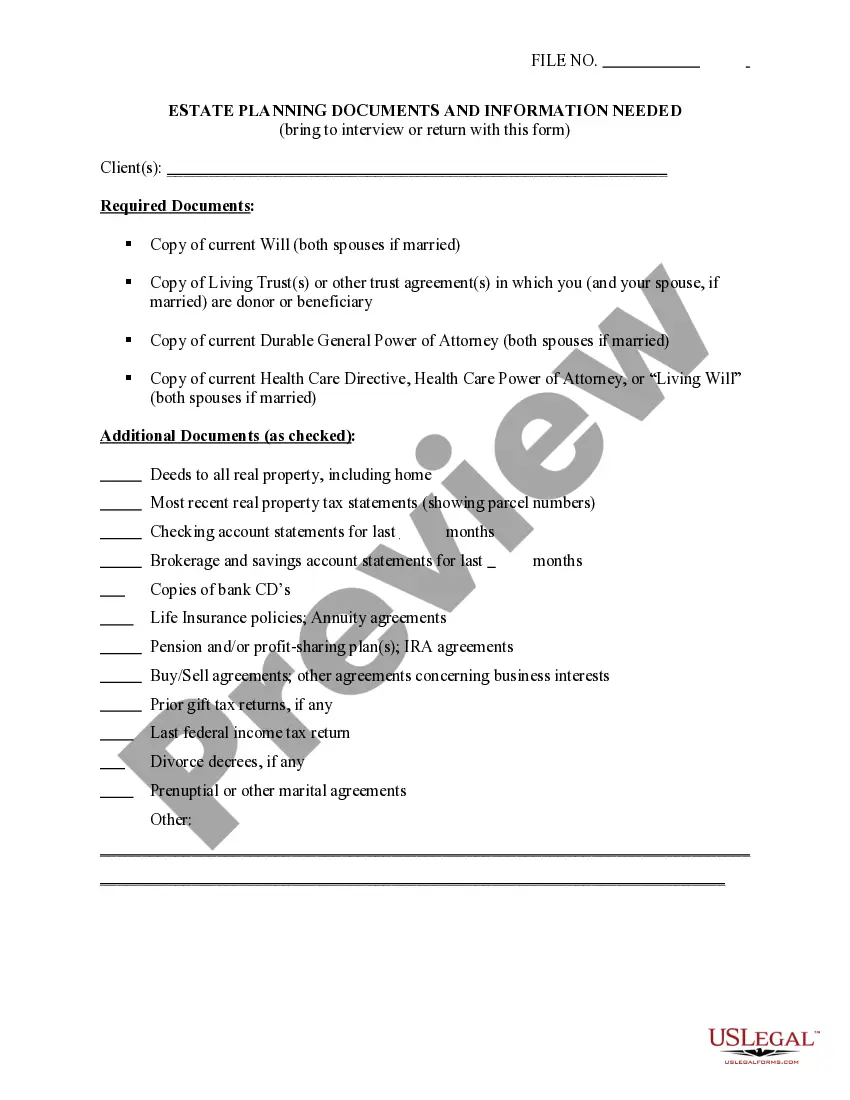
- A dedicated area for listing the location of essential documents such as wills, birth certificates, and financial records.
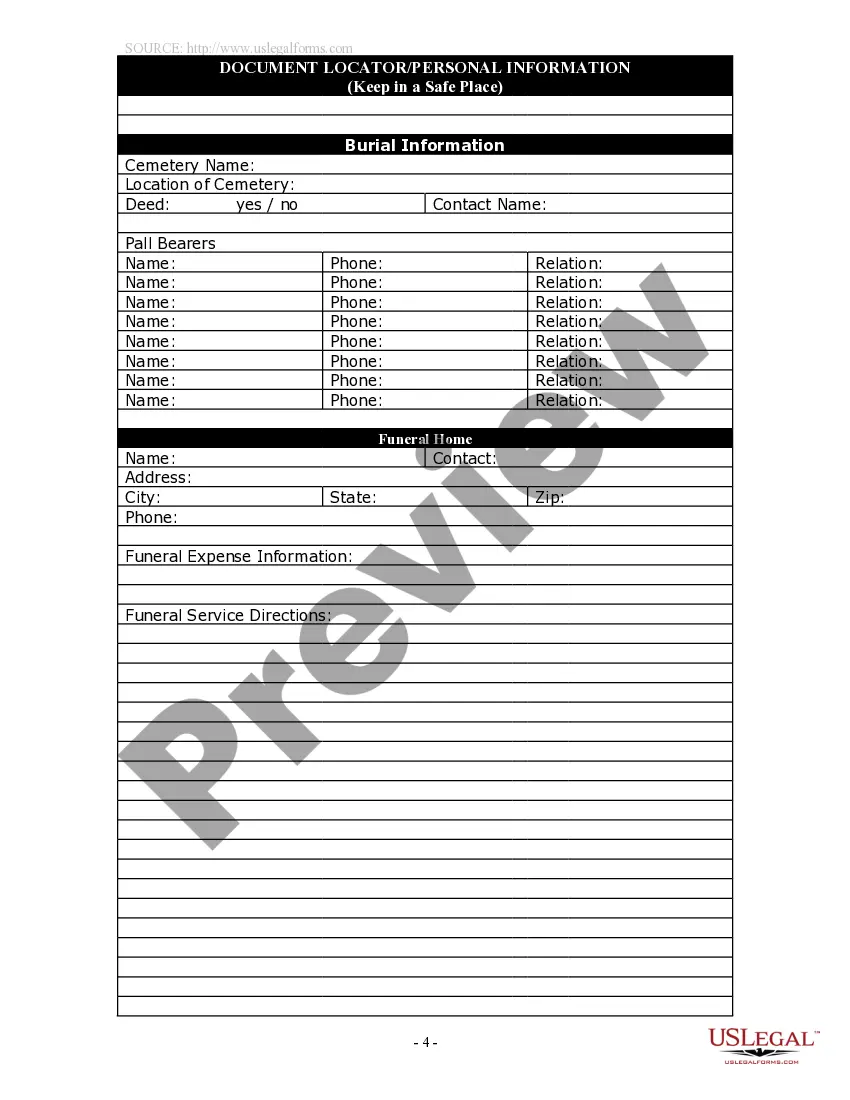
- Burial information, allowing you to specify cemetery details and preferences.
- Funeral expense information and directions for service and asset distribution.
- A message section for communicating last wishes to loved ones.


When to use this form
This form should be used when you want to ensure that your family has access to important personal information after your passing. It is essential in situations such as estate planning, preparing for health crises, or simply wanting to clarify your last wishes regarding burial and funeral services. Completing this form can provide peace of mind that your preferences are documented and communicated to your loved ones.
Who can use this document
- Individuals who wish to document their last wishes and personal information.
- Parents or guardians who want to ensure their children's needs are known.
- Anyone preparing for future health issues or end-of-life planning.
- Individuals responsible for estate planning and organizing personal affairs.
How to prepare this document
- Begin by entering your personal details, including your name and contact information.
- List your spouse, children, and any important contacts along with their addresses and phone numbers.
- Document the location of essential documents such as your will, birth certificate, and insurance policies.
- Fill out the burial information section with cemetery details and contact names for funeral arrangements.
- Provide any additional notes or messages you wish to communicate to your loved ones.
Notarization requirements for this form
Notarization is not commonly needed for this form. However, certain documents or local rules may make it necessary. Our notarization service, powered by Notarize, allows you to finalize it securely online anytime, day or night.
Get your form ready online
Our built-in tools help you complete, sign, share, and store your documents in one place.
Make edits, fill in missing information, and update formatting in US Legal Forms—just like you would in MS Word.
Download a copy, print it, send it by email, or mail it via USPS—whatever works best for your next step.
Sign and collect signatures with our SignNow integration. Send to multiple recipients, set reminders, and more. Go Premium to unlock E-Sign.
If this form requires notarization, complete it online through a secure video call—no need to meet a notary in person or wait for an appointment.
We protect your documents and personal data by following strict security and privacy standards.
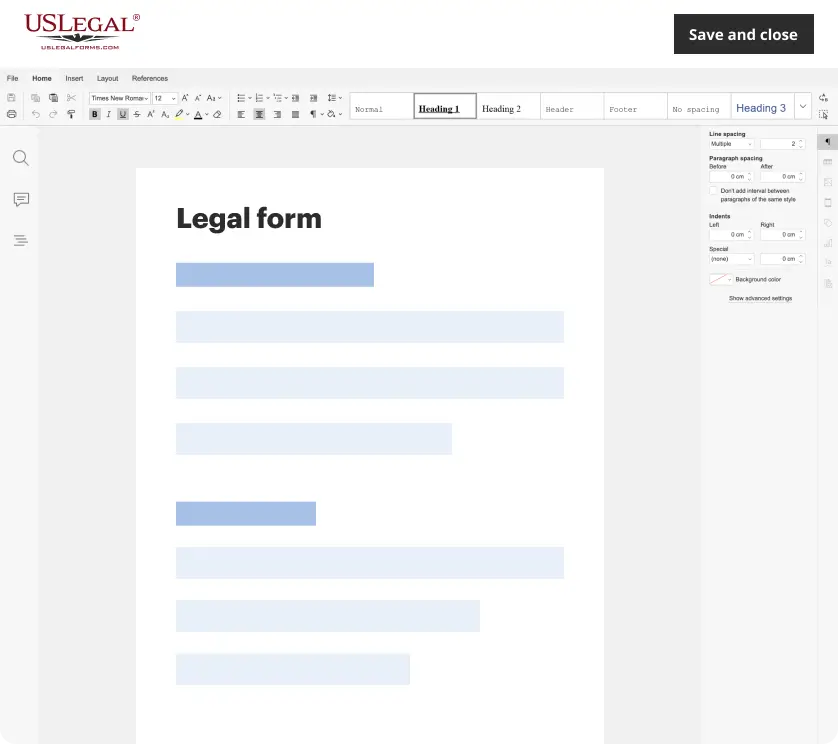
Make edits, fill in missing information, and update formatting in US Legal Forms—just like you would in MS Word.
Download a copy, print it, send it by email, or mail it via USPS—whatever works best for your next step.
Sign and collect signatures with our SignNow integration. Send to multiple recipients, set reminders, and more. Go Premium to unlock E-Sign.
If this form requires notarization, complete it online through a secure video call—no need to meet a notary in person or wait for an appointment.
We protect your documents and personal data by following strict security and privacy standards.
Avoid these common issues
- Neglecting to update personal information regularly, especially after significant life changes.
- Failing to inform family members where the form is stored.
- Leaving out critical details, such as specific burial wishes or naming a legal representative.
Benefits of completing this form online
- Convenient access allows immediate downloading and completion at your own pace.
- Editable templates enable personalization to fit your specific needs.
- Reliable resources drafted by licensed attorneys ensure legal precision and relevance.
Quick recap
- Use this form to organize vital personal information and last wishes.
- Ensure your family knows where to find important documents.
- Keep the information current, reviewing it regularly.
Looking for another form?
Form popularity
FAQ
The primary difference between a will and a living trust is that assets placed in your living trust avoid probate at your death. Neither the will nor the living trust document, in and of itself, reduces estate taxes though both can be drafted to do 3 this.
Probate matters in Wisconsin are handled at the local circuit court level. If there is a will, it must be filed with the court, even if probate isn't needed to distribute the decedent's property.
Create the initial document. Start by titling the document Last Will and Testament" and including your full legal name and address. Designate an executor. Appoint a guardian. Name the beneficiaries. Designate the assets. Ask witnesses to sign your will. Store your will in a safe place.
Make your will self-proving means the court will accept it without further verification from the witnesses who signed it. A notarized affidavit proving who you are and all parties knew they were signing makes your last will and testament self-proving. This can speed up the probate process significantly.
Drafting the will yourself is less costly and may put you out about $150 or less. Depending on your situation, expect to pay anywhere between $300 and $1,000 to hire a lawyer for your will. While do-it-yourself will kits may save you time and money, writing your will with a lawyer ensures it will be error-free.
Age: The testator must be at least 18 years old. Capacity: The testator must be of sound mind. Signature: The will must be signed by the testator or by someone else in the testator's name in his conscious presence, by his direction.
Probate matters in Wisconsin are handled at the local circuit court level. If there is a will, it must be filed with the court, even if probate isn't needed to distribute the decedent's property.
No. You can make your own will in Wisconsin, using Nolo's do-it-yourself will software or online will programs. However, you may want to consult a lawyer in some situations. For example, if you think that your will might be contested or if you want to disinherit your spouse, you should talk with an attorney.
Nationwide, the average cost for an attorney or firm to create a will is $940 to $1,500 for an individual person. You can typically add on a second nearly identical will for a spouse. Most firms will reduce their price to a few hundred dollars for this.