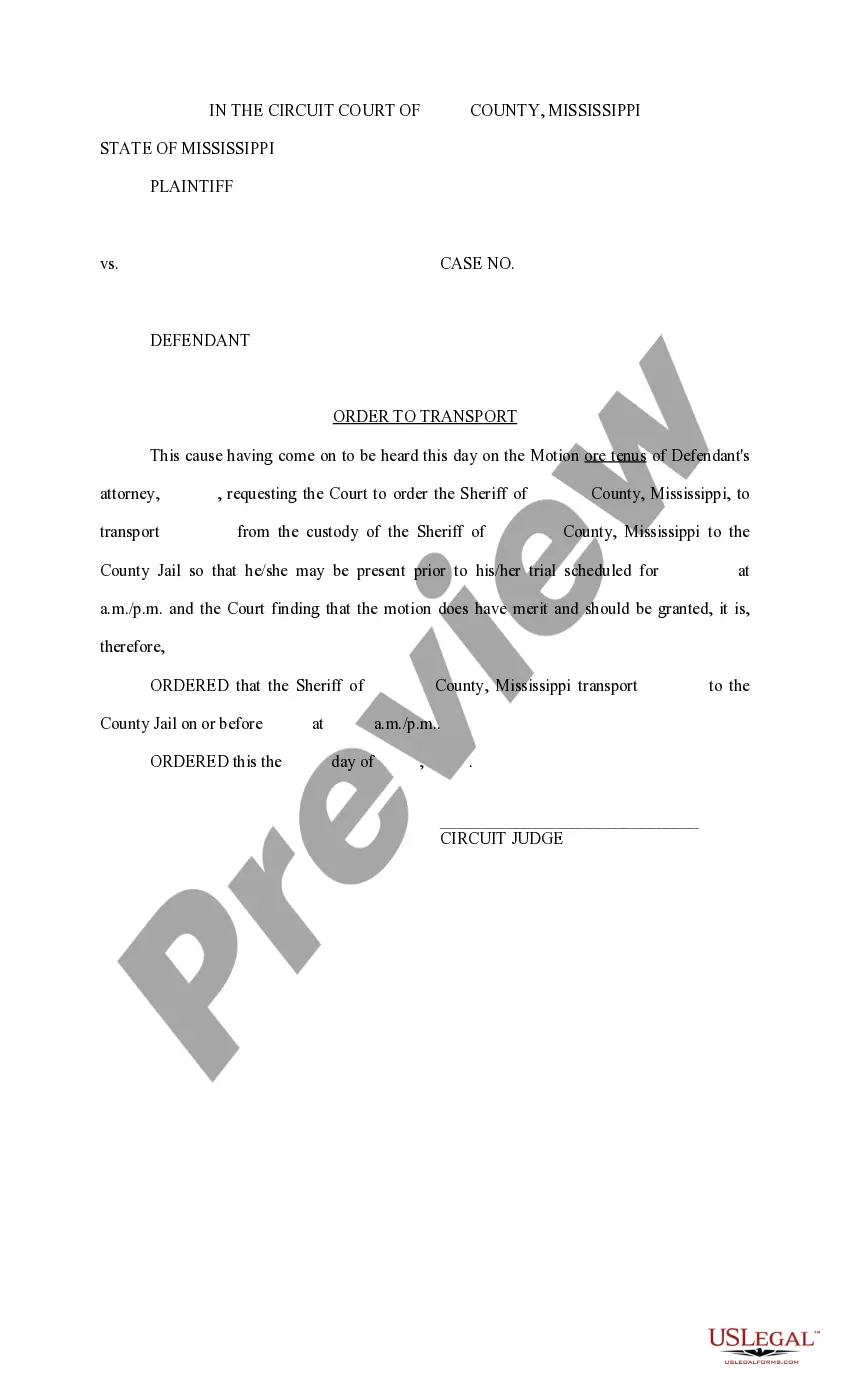
Pennsylvania Document Locator and Personal Information Package including burial information form
What this document covers
The Document Locator and Personal Information Package, including the burial information form, is a comprehensive tool designed to help individuals organize their essential personal documents and end-of-life wishes. This package is unique because it not only tracks important document locations but also outlines personal desires, including burial preferences. Unlike other legal forms, this package focuses on preparing loved ones for the future by clearly communicating your wishes and the location of critical documents.
Form components explained
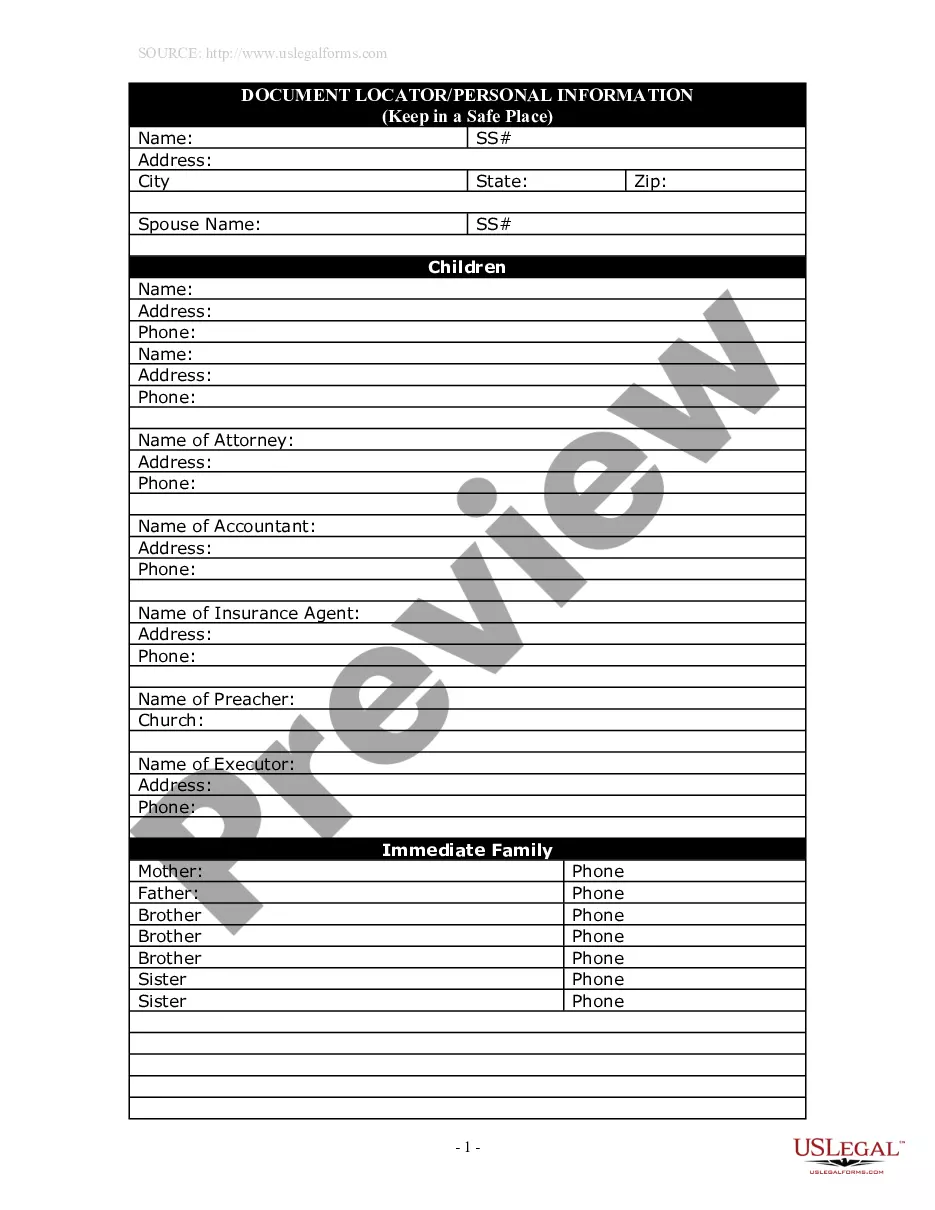
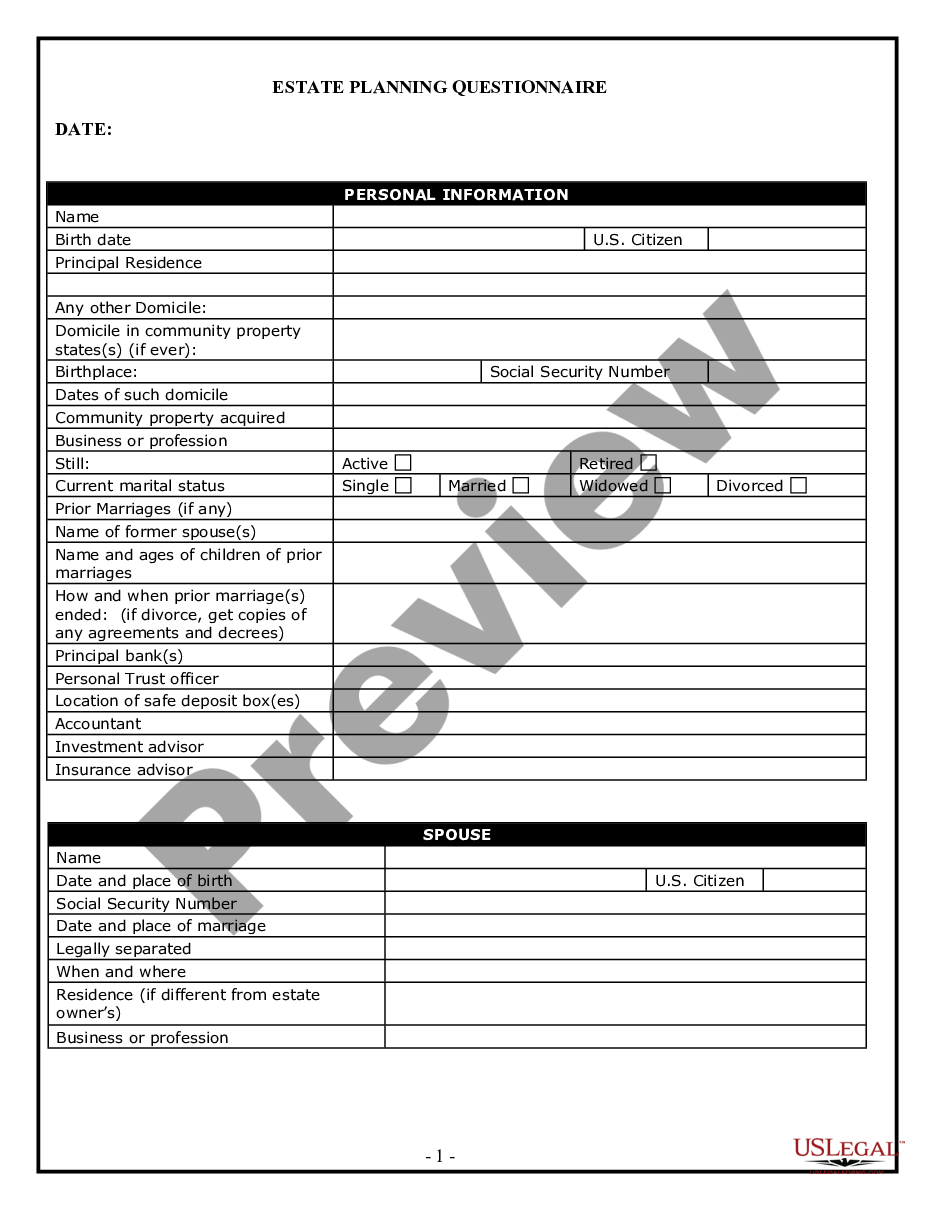
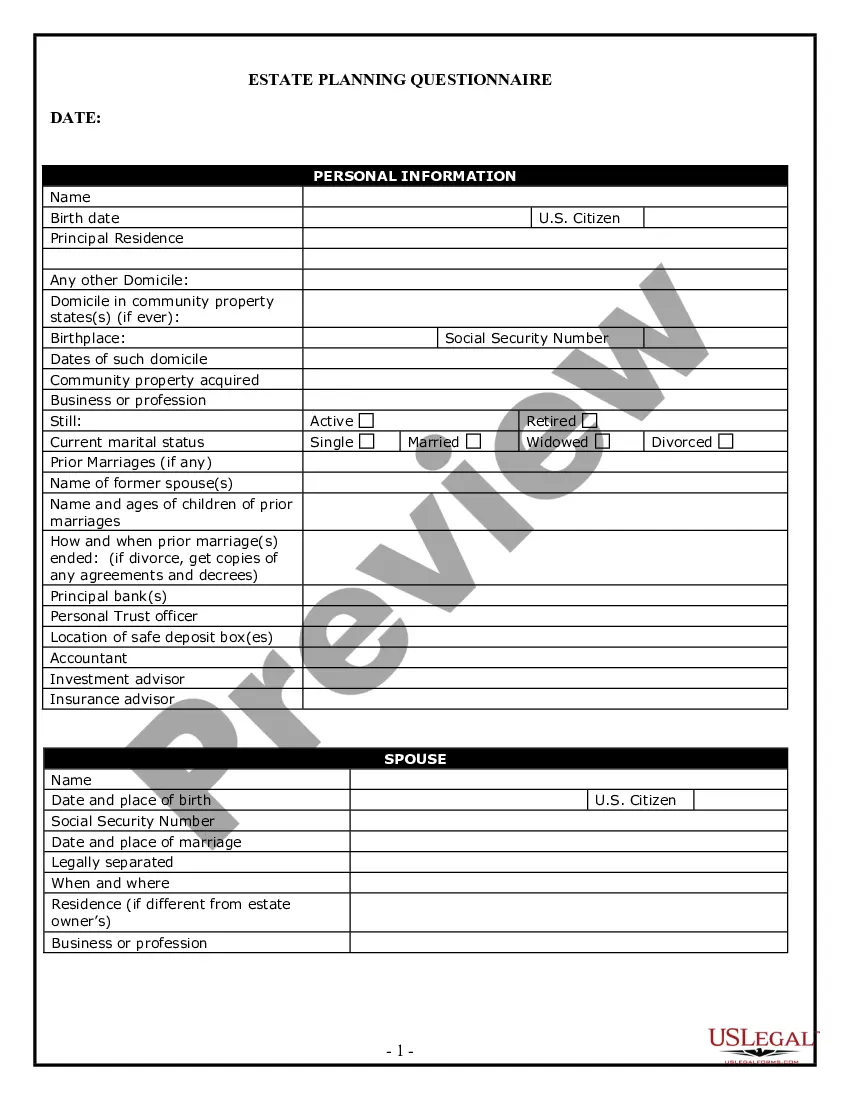
- Personal Information: You provide details about yourself, your immediate family, and significant contacts.
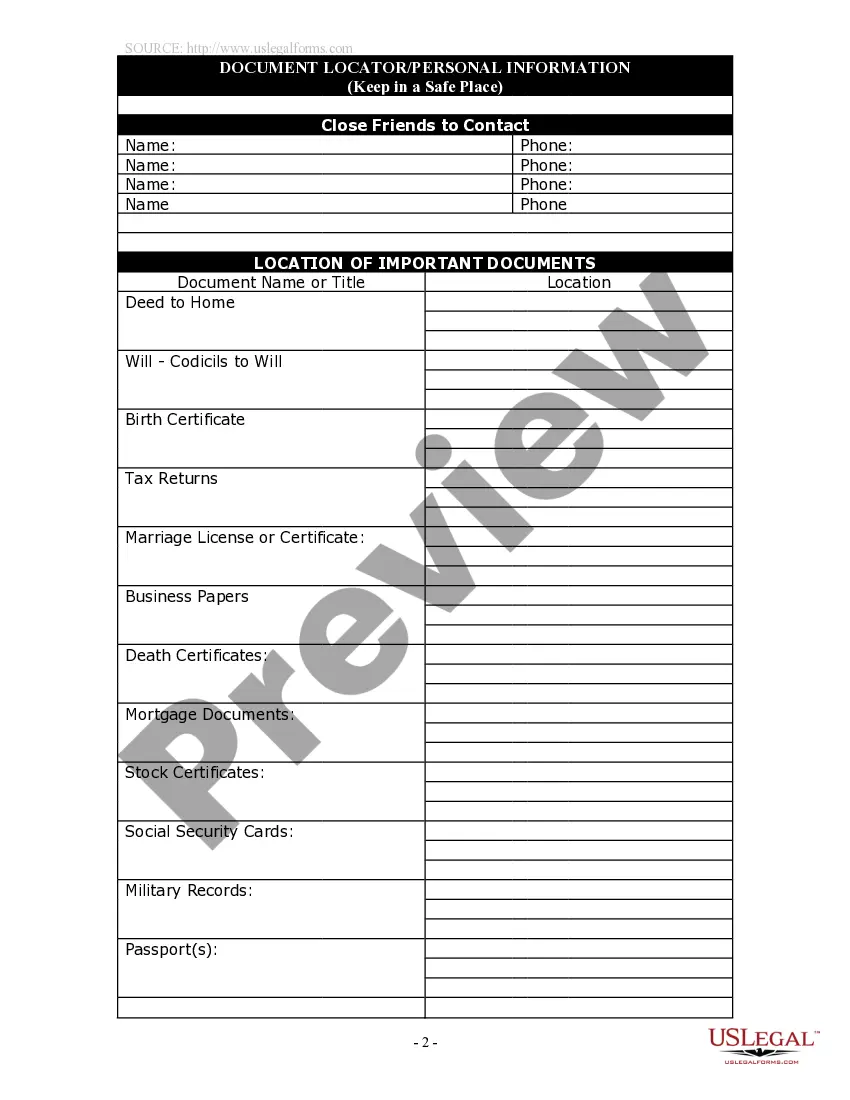
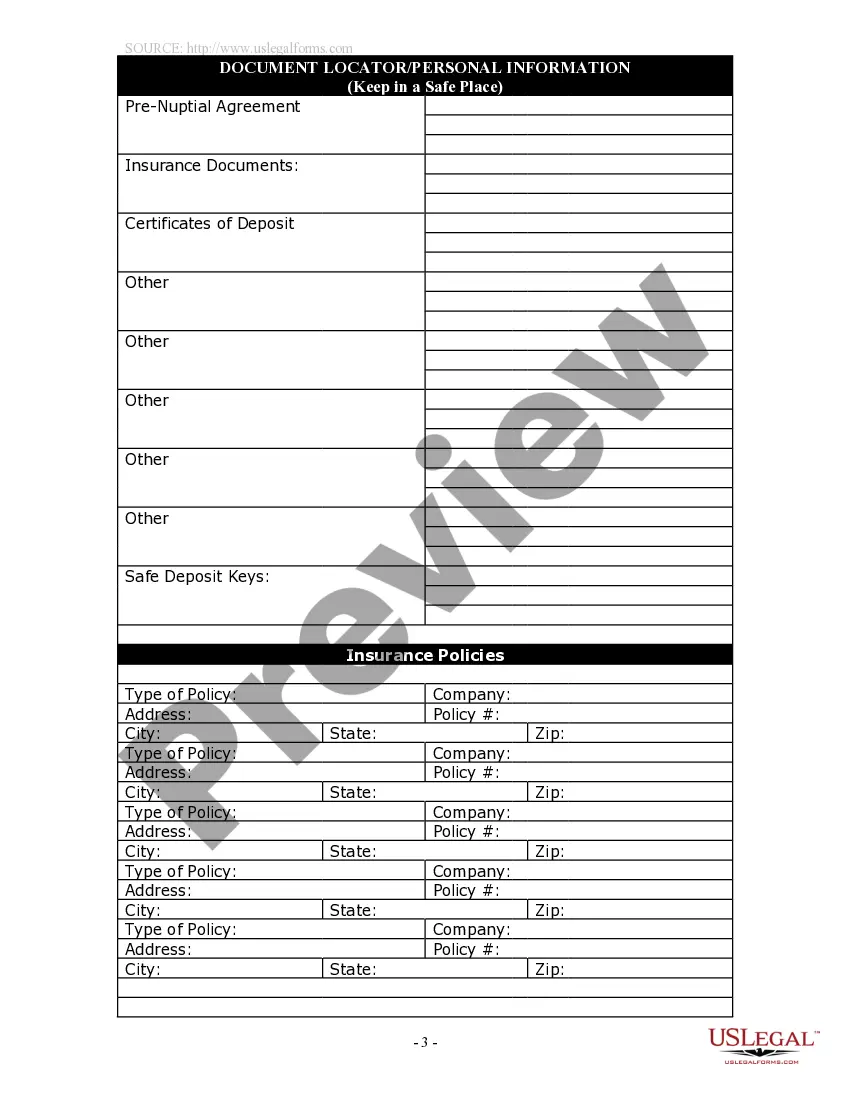
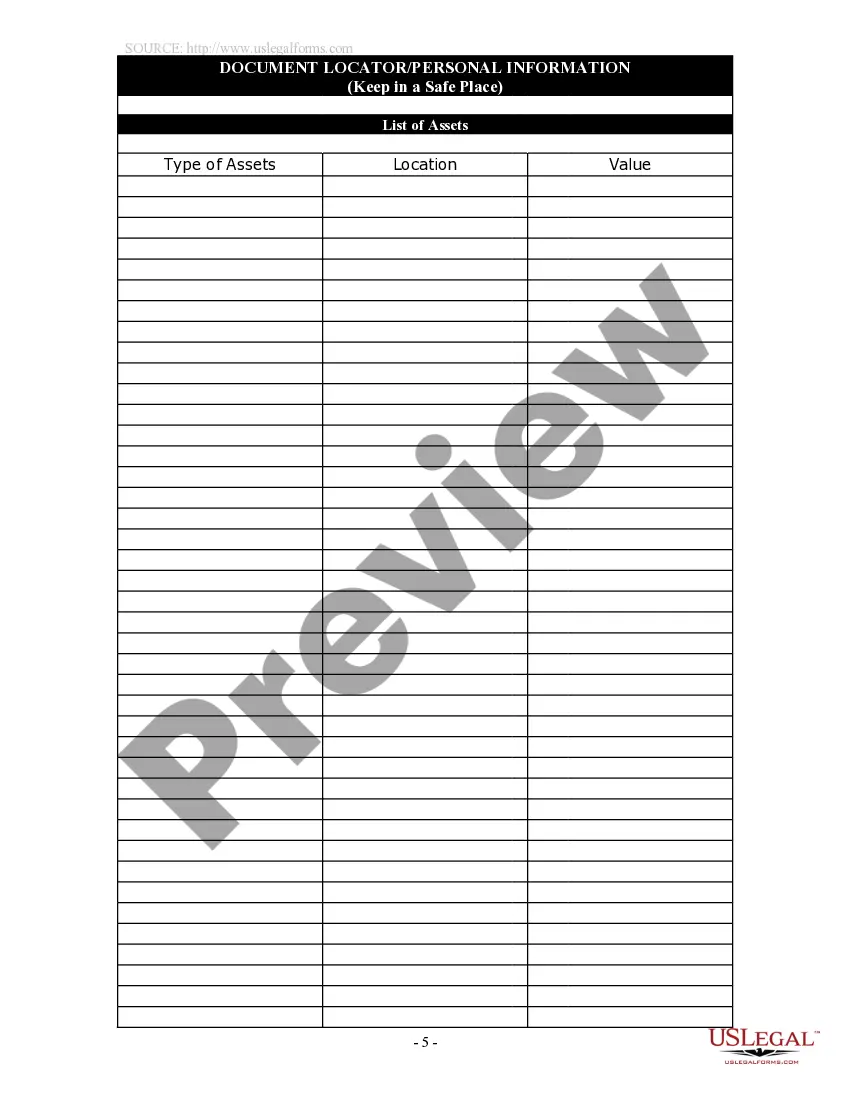
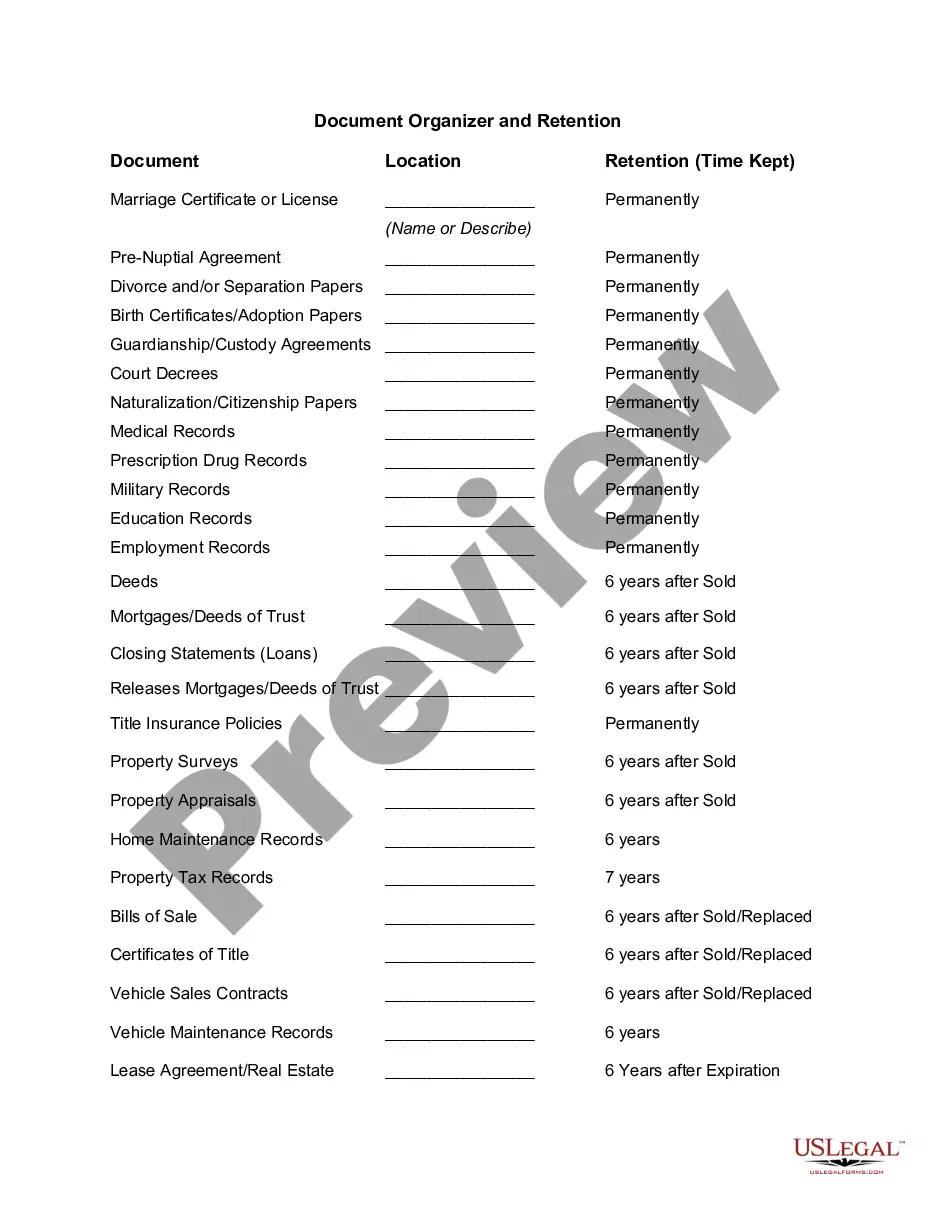
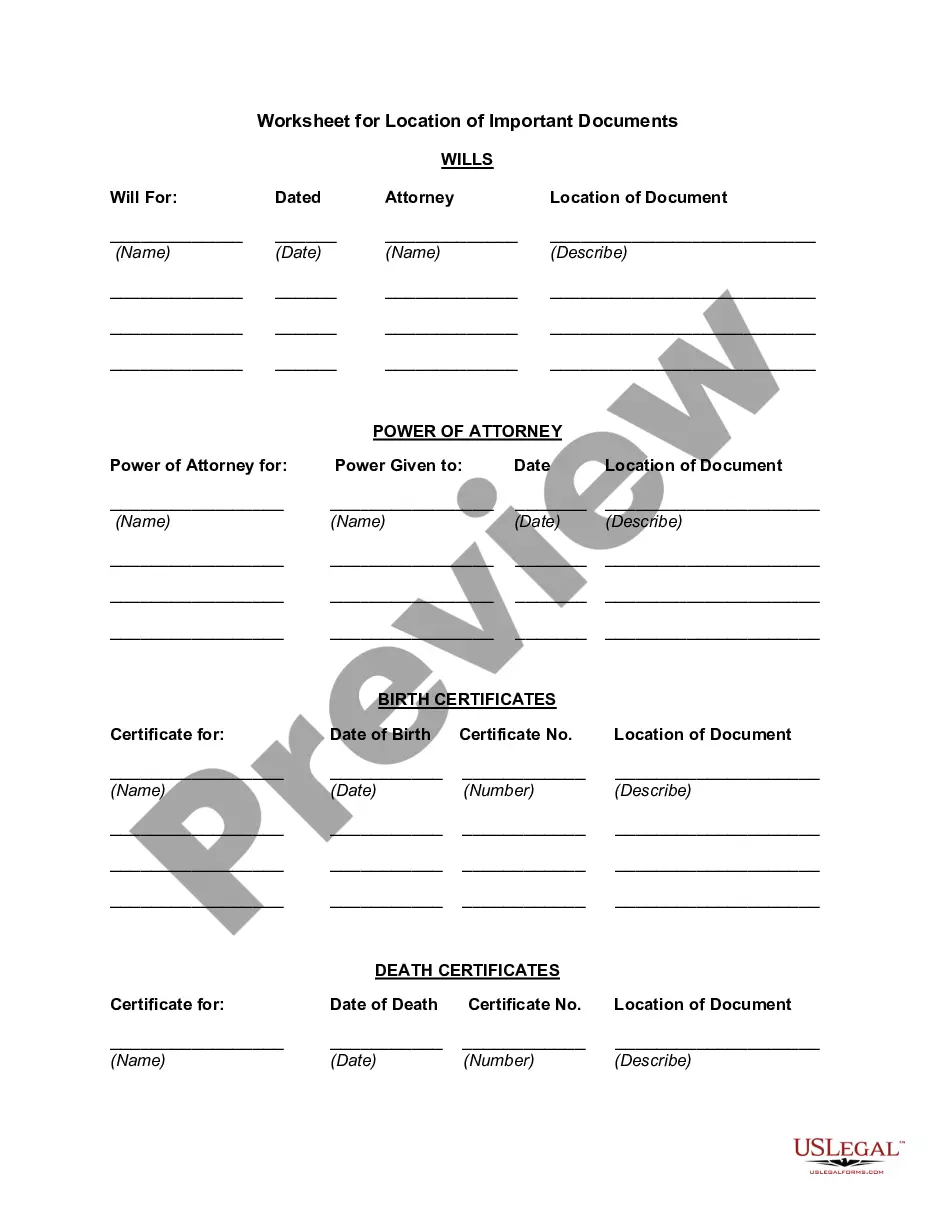
- Document Locator: A section to list the names and locations of important documents, such as your will, birth certificate, and insurance policies.
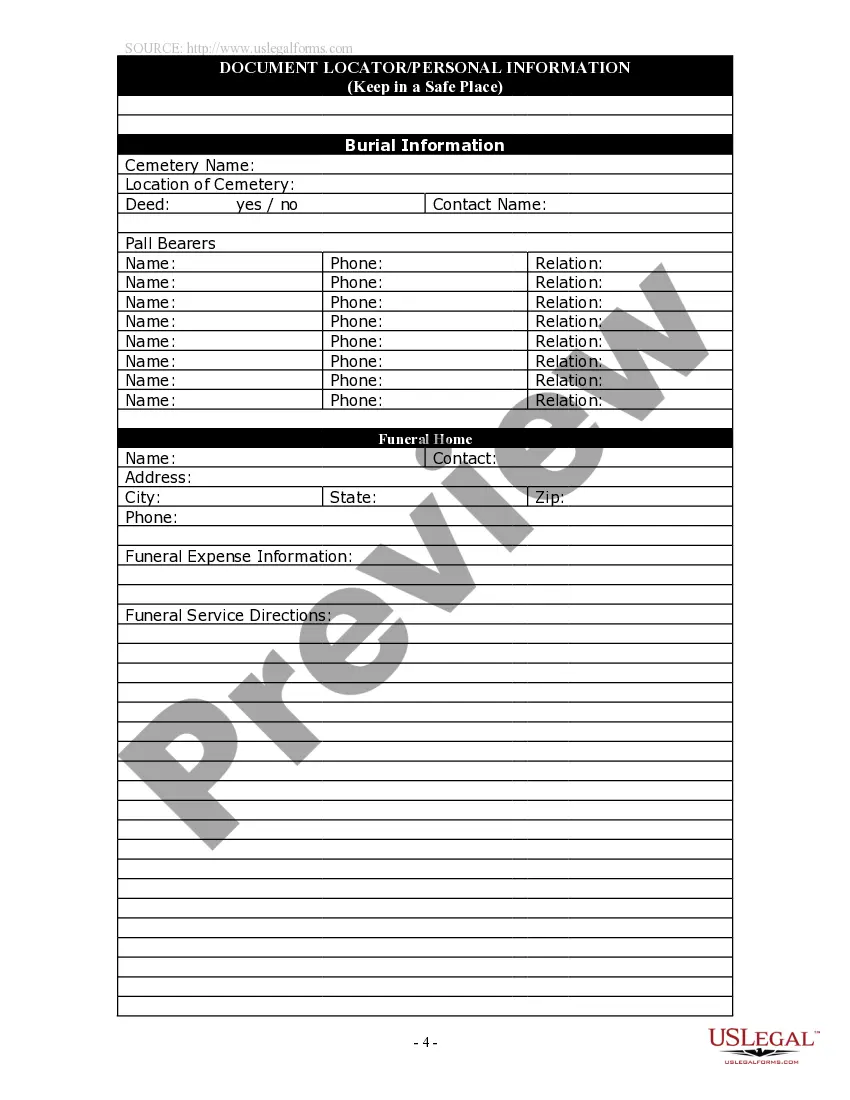
- Burial Information: Input regarding your burial wishes, including cemetery details and pallbearer names.
- Funeral Home Information: Details about the funeral home and expenses associated with your funeral services.
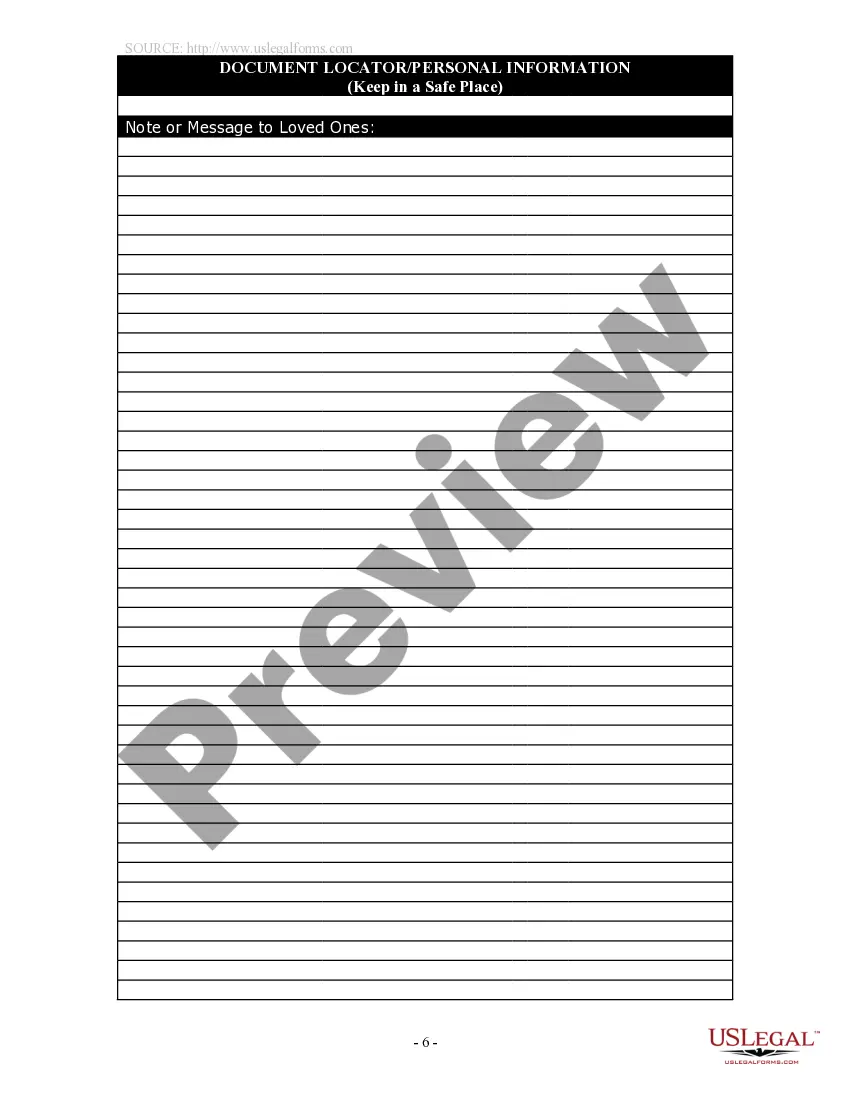
- A message section for final thoughts to your loved ones, allowing you to express your feelings and wishes.
When this form is needed
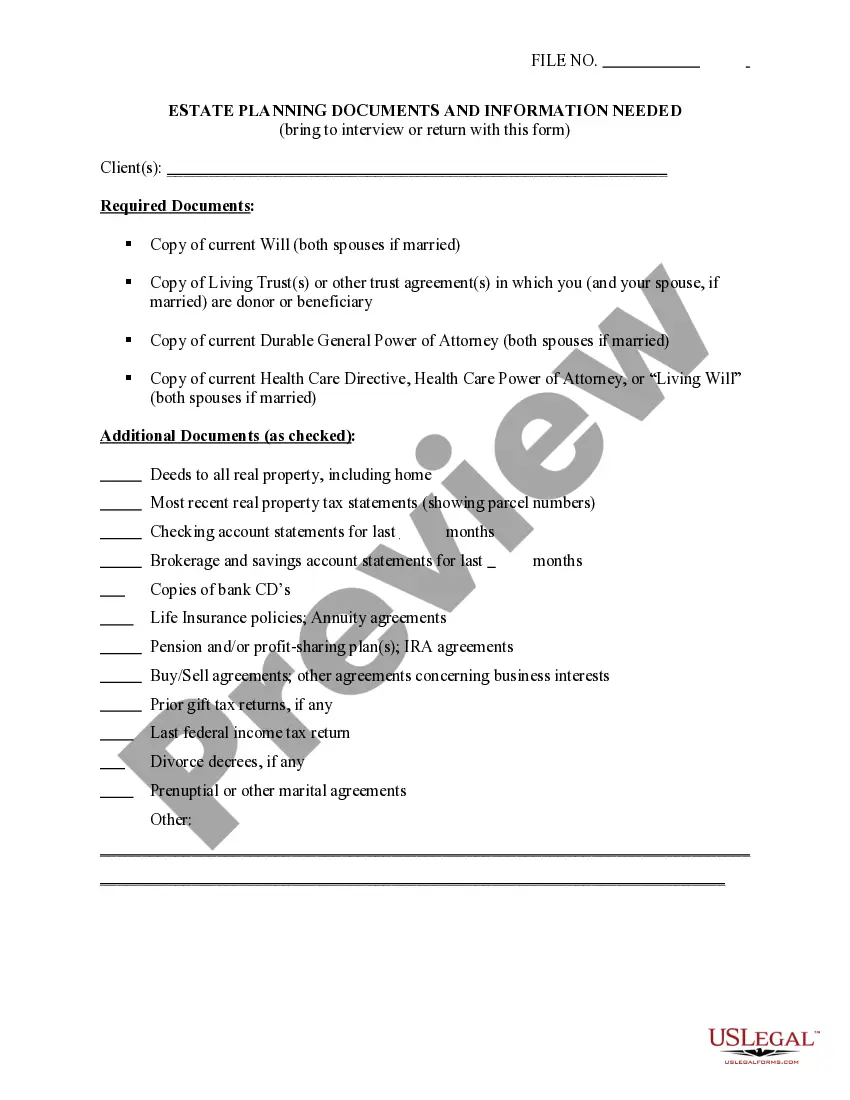
This form is useful when you want to ensure that your family knows your final wishes and where to find important documents after your passing. It is especially relevant during major life changes, such as marriage, divorce, or after having children. Additionally, this package can be used for estate planning to help prevent confusion and stress for your relatives during a difficult time.
Who can use this document
- Individuals looking to organize their personal records and end-of-life preferences.
- Parents who wish to document their children's information and guardianship plans.
- Couples planning for the future and wanting to ensure all records are accessible.
- Anyone interested in clear communication of their wishes related to burial and the management of their estate.
Instructions for completing this form
- Begin by filling in your personal information, including name, address, and spouse's details.
- List the names and contact details of your immediate family and important personal contacts, such as your attorney and accountant.
- Document the location of essential documents, specifying where to find your will, birth certificate, and other critical records.
- Provide burial information, including cemetery preferences and pallbearer contact details.
- Complete any additional thoughts or messages for your loved ones as needed.
Is notarization required?
Notarization is generally not required for this form. However, certain states or situations might demand it. You can complete notarization online through US Legal Forms, powered by Notarize, using a verified video call available anytime.
Get your form ready online
Our built-in tools help you complete, sign, share, and store your documents in one place.
Make edits, fill in missing information, and update formatting in US Legal Forms—just like you would in MS Word.
Download a copy, print it, send it by email, or mail it via USPS—whatever works best for your next step.
Sign and collect signatures with our SignNow integration. Send to multiple recipients, set reminders, and more. Go Premium to unlock E-Sign.
If this form requires notarization, complete it online through a secure video call—no need to meet a notary in person or wait for an appointment.
We protect your documents and personal data by following strict security and privacy standards.

Make edits, fill in missing information, and update formatting in US Legal Forms—just like you would in MS Word.

Download a copy, print it, send it by email, or mail it via USPS—whatever works best for your next step.

Sign and collect signatures with our SignNow integration. Send to multiple recipients, set reminders, and more. Go Premium to unlock E-Sign.

If this form requires notarization, complete it online through a secure video call—no need to meet a notary in person or wait for an appointment.

We protect your documents and personal data by following strict security and privacy standards.
Avoid these common issues
- Failing to update the document locator with new information after life changes.
- Not including all essential documents or details, leading to confusion for loved ones.
- Overlooking the importance of specifying burial wishes or funeral preferences.
- Neglecting to inform family members where the document locator is stored.
Benefits of completing this form online
- Immediate access to a professionally drafted document tailored for personal organization.
- Easy to download, print, and store securely for your records.
- Editable fields allow for quick updates as your personal situation changes.
- Convenient format ensures that you can fill it out at your own pace.
Legal use & context
- This form provides an organized method of documenting personal and burial information.
- While it aids in communication with family, it does not replace legal documents like a will.
- Ensure that all entries are clear to avoid potential misunderstandings.
Key takeaways
- The Document Locator and Personal Information Package is essential for organizing life and death planning information.
- It helps ease the burden on family members by providing clear instructions and document locations.
- Updating the form regularly is crucial to ensure all information remains relevant.
Looking for another form?
Form popularity
FAQ
How long does probate in Pennsylvania take? In Pennsylvania, most probates can be done in 9 to 18 months.
In Pennsylvania, you can make a living trust to avoid probate for virtually any asset you ownreal estate, bank accounts, vehicles, and so on. You need to create a trust document (it's similar to a will), naming someone to take over as trustee after your death (called a successor trustee).
But for estates in Pennsylvania that exceed the small estate's threshold, and for which there is either no Will, or a Will (but not a Living Trust), probate will be required before an estate can be tranferred to the decedent's heirs or beneficiaries.
Although there is no set time, these matters usually take about a year or two if the assets and debts present no particular problems.
There is a five percent discount on the amount of inheritance tax to be paid to the state if an estimated payment is made within three months. By nine months after the death, both inheritance and federal estate taxes are due, and bills are paid, and the assets are either divided or liquidated.
Pennsylvania has a simplified probate process for small estates.You can use the simplified small estate process in Pennsylvania if property (not counting real estate, certain vehicles, certain payments the family is entitled to, and funeral costs) is worth $50,000 or less.
Fortunately, not all property needs to go through this legal process before it passes to your heirs.The quick rule of thumb is probate is not required when the estate is small, or the property is designed to pass outside of probate. It doesn't matter if you leave a will.
Pennsylvania law allows estates worth less than $50,000.00 to seek direct Orphans' Court approval of the proposed distribution of the estate.
The Probate Process in Pennsylvania Inheritance Laws Essentially any estate worth more than $50,000, not including real property like land or a home and other final expenses, must go through the probate court process under Pennsylvania inheritance laws.