Oregon New Resident Guide
Overview of this form
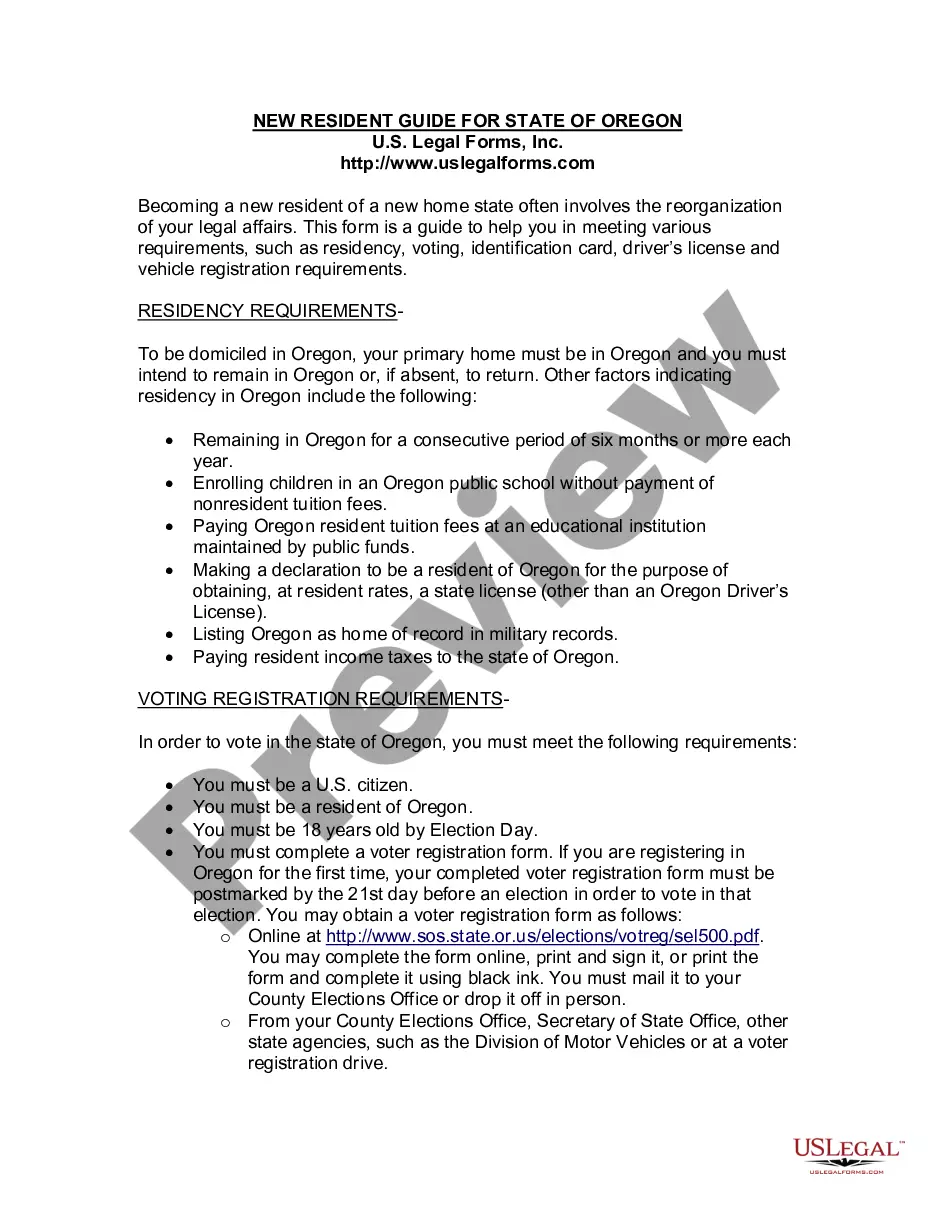
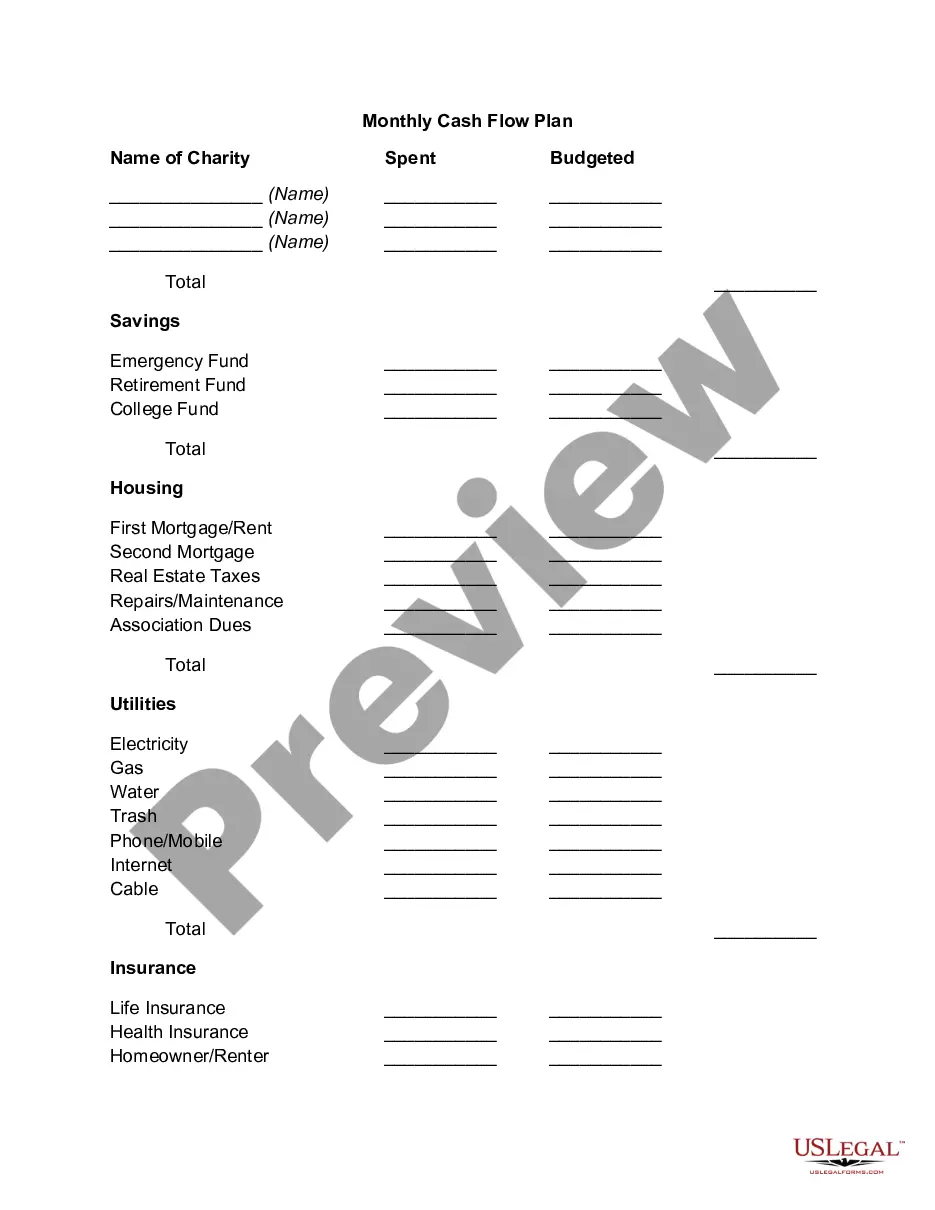
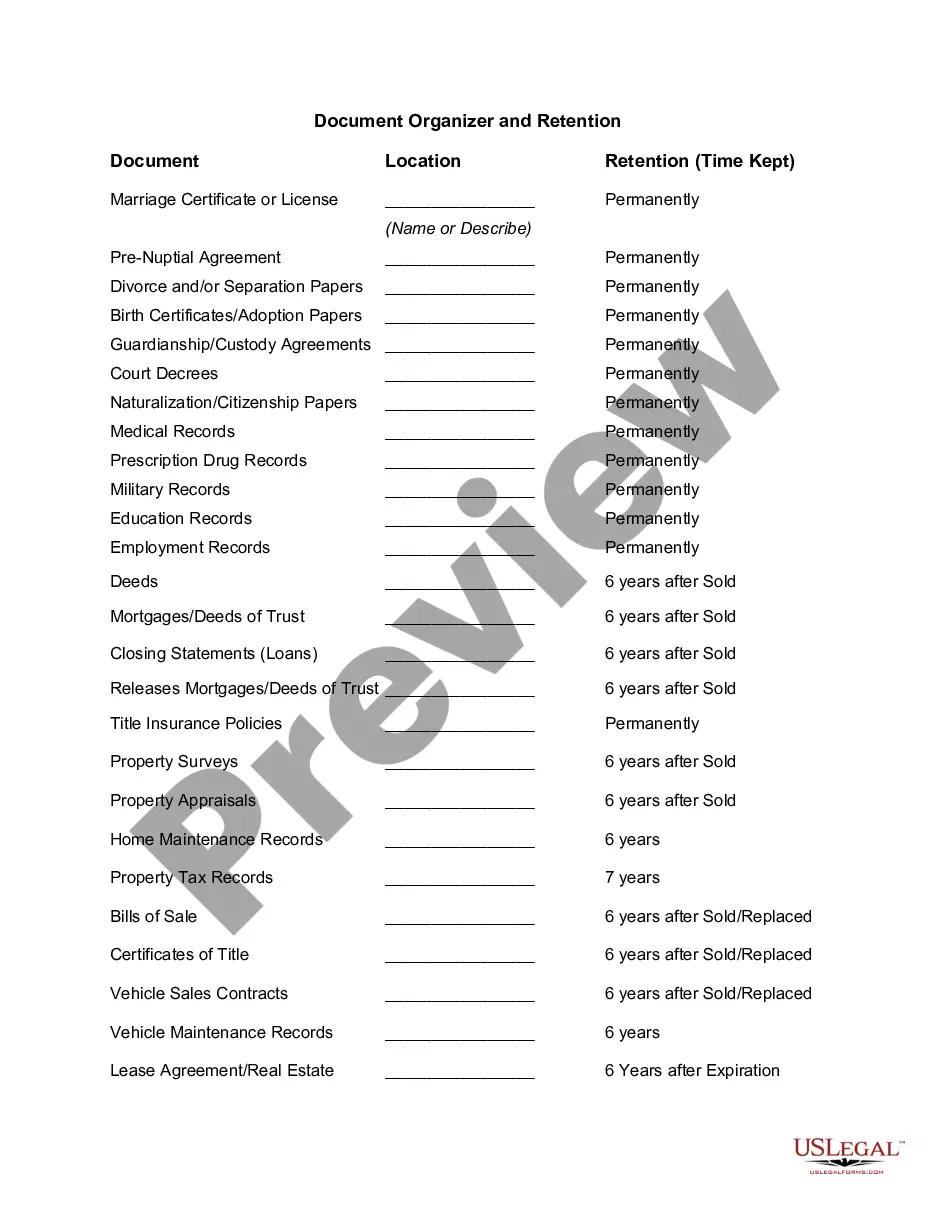
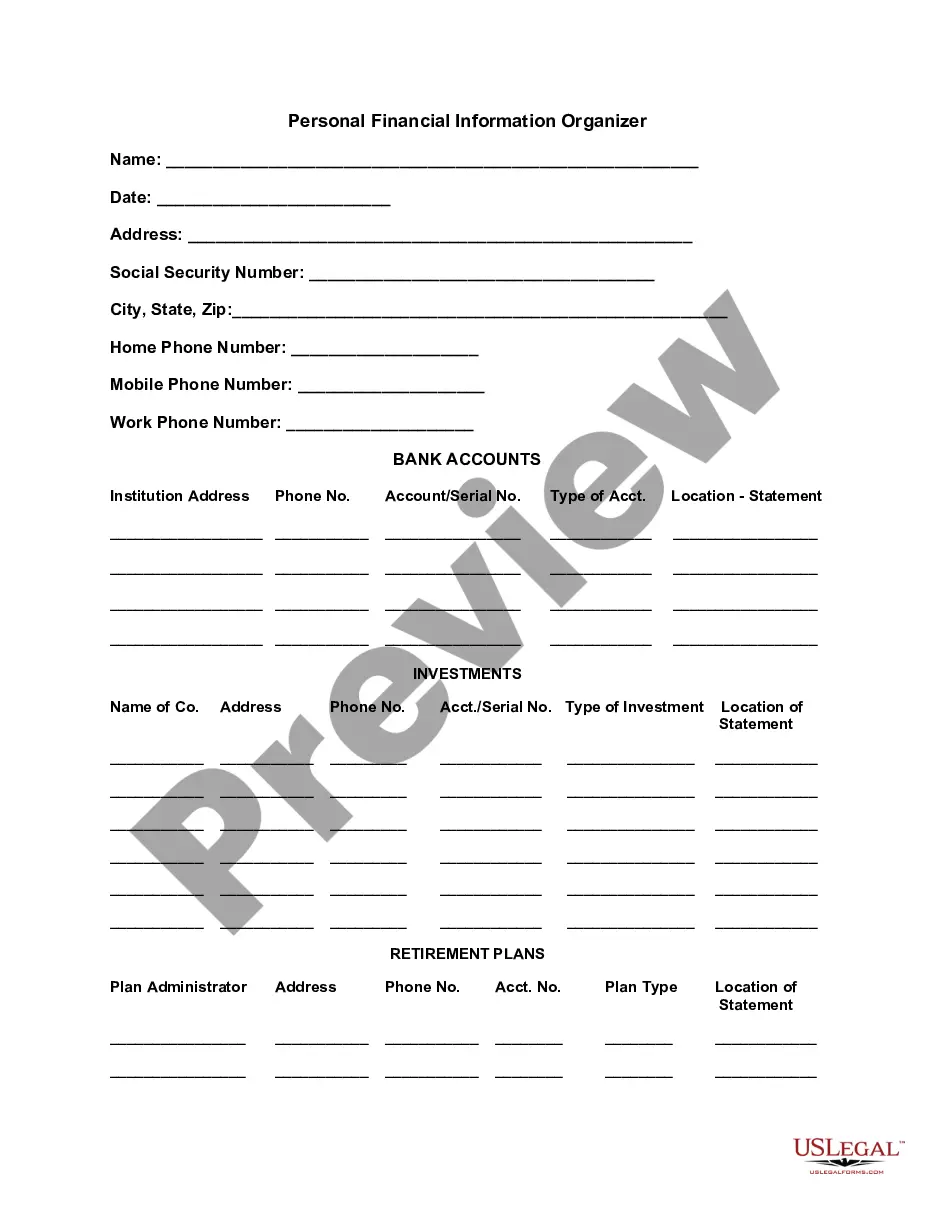
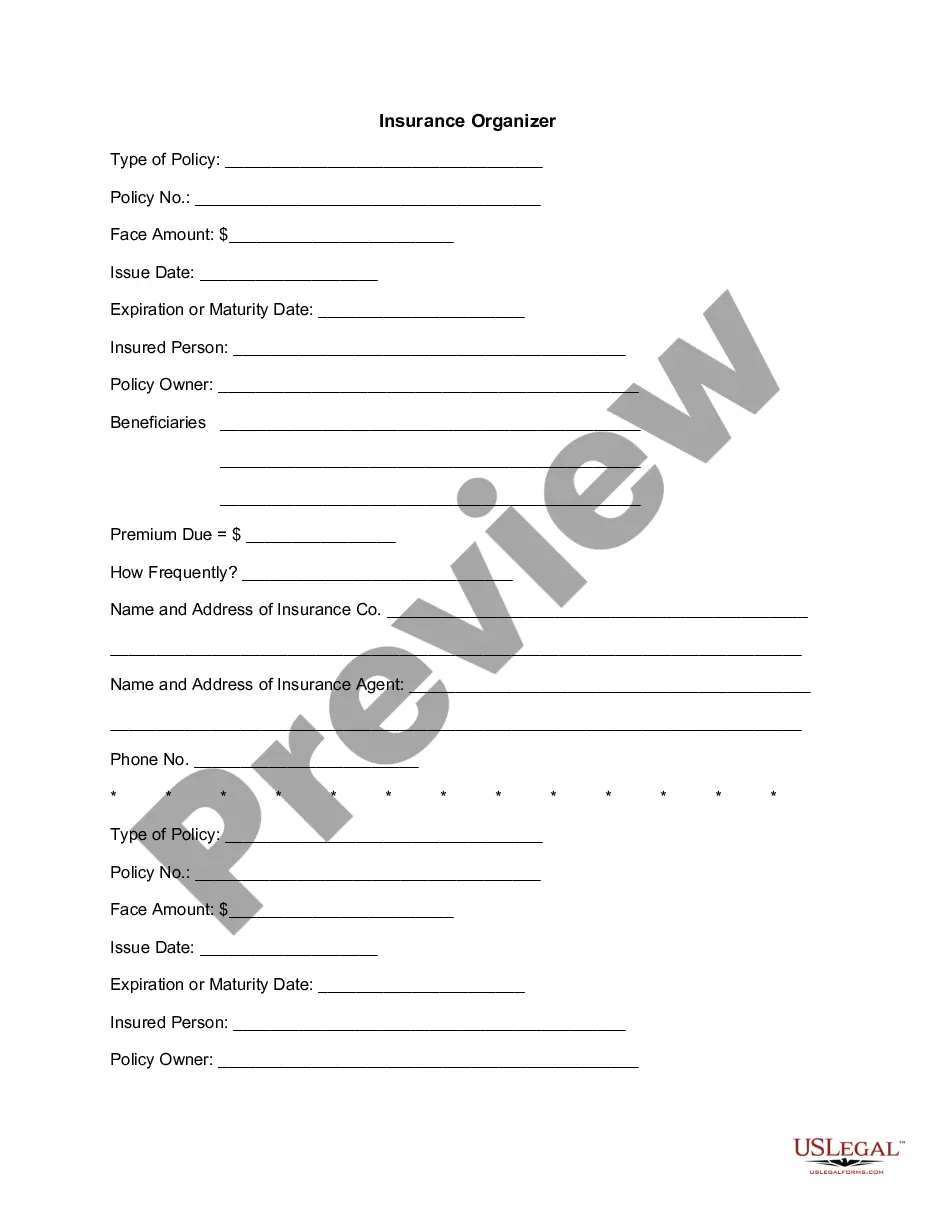
The New Resident Guide is an essential informational resource for individuals who have recently moved to a new state. This form outlines residency requirements, voter registration, identification card, driver's license, and vehicle registration guidelines specific to your new state. Unlike other forms that may address these topics separately, this comprehensive guide consolidates all necessary information to help you transition smoothly into your new living situation.
Key parts of this document
- Residency requirements: Details on establishing residency in the new state.
- Voting registration requirements: Information on how to register to vote and the necessary forms.
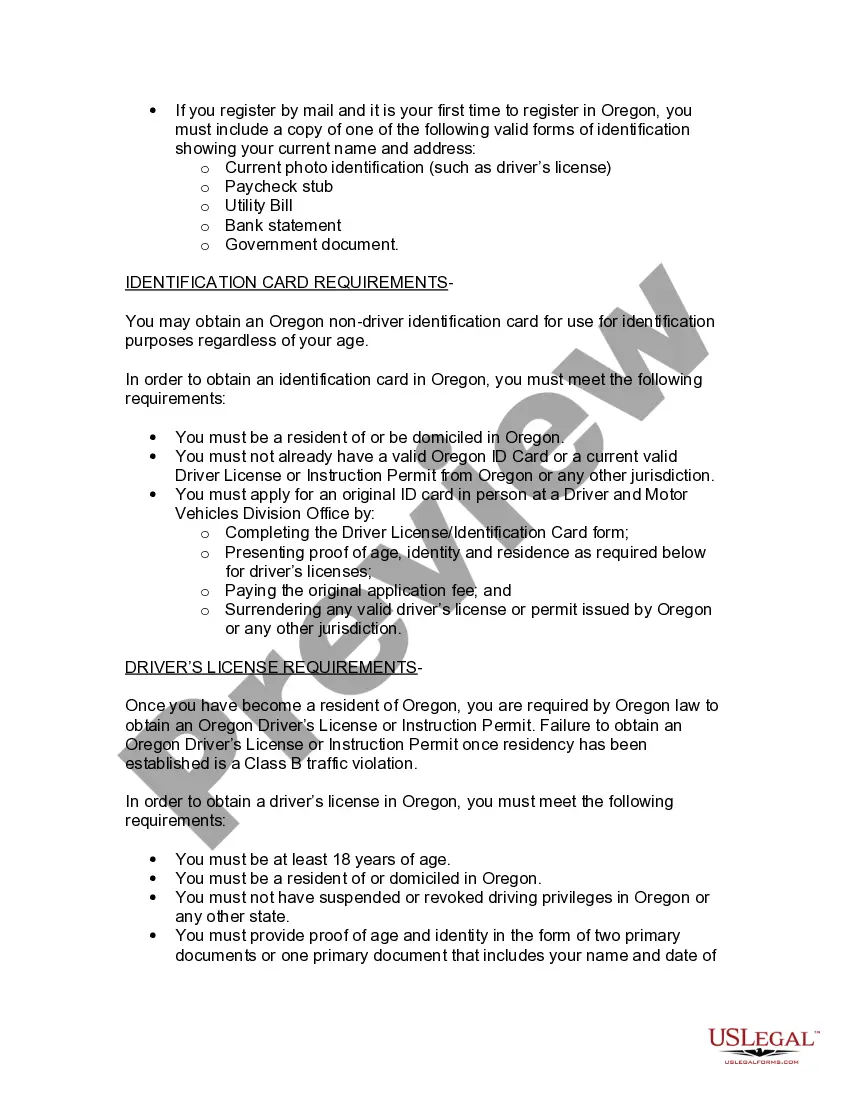
- Identification card requirements: Steps to obtain a state-issued ID if you do not have a driver's license.
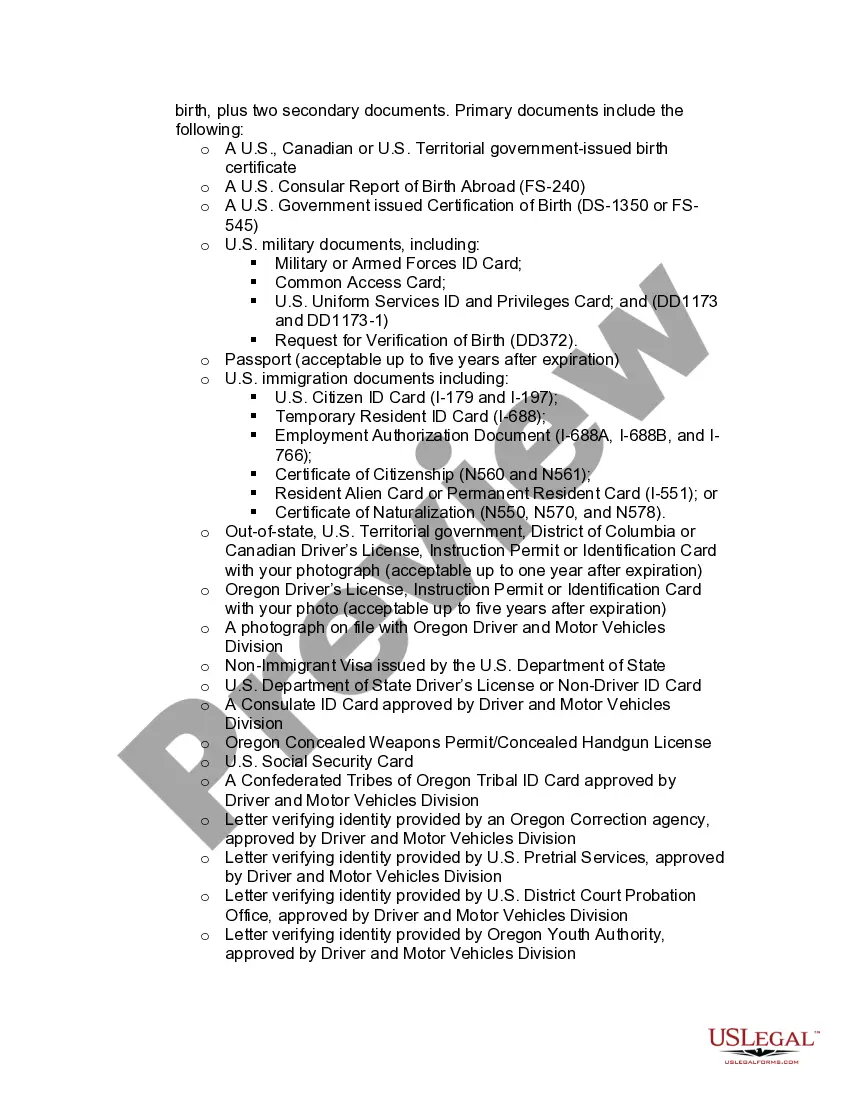
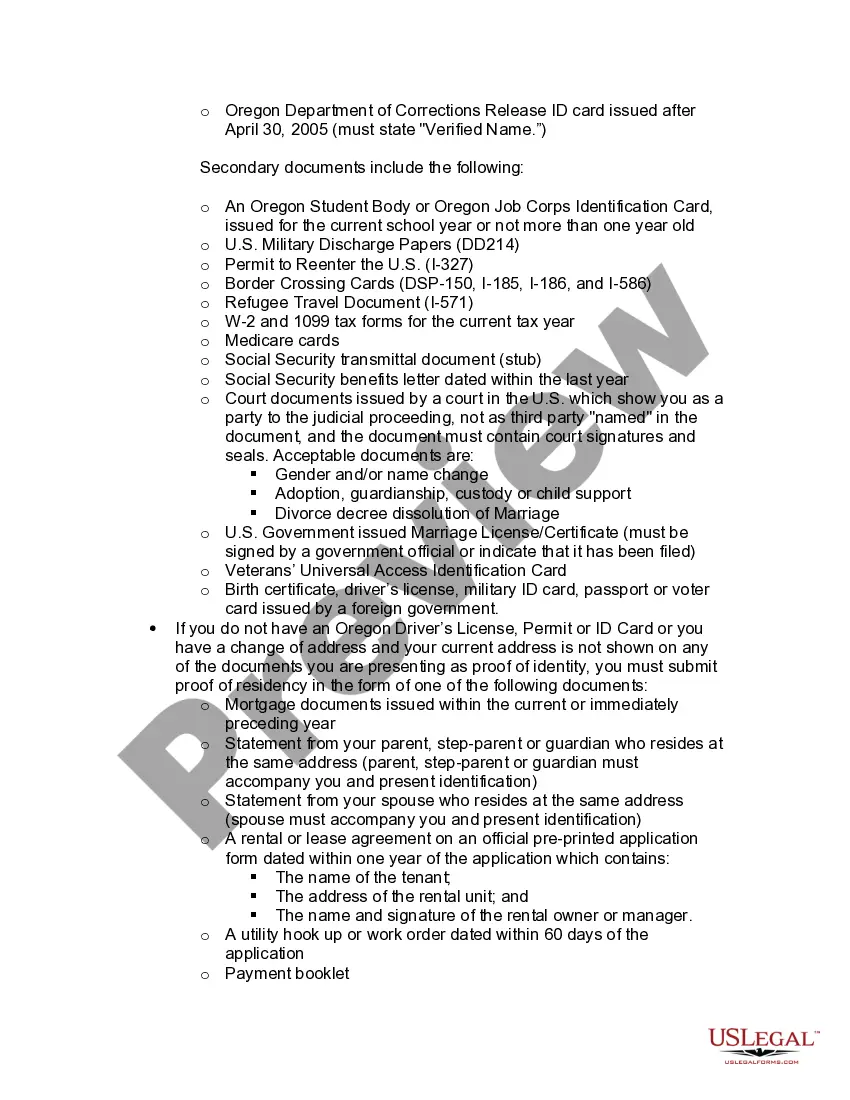
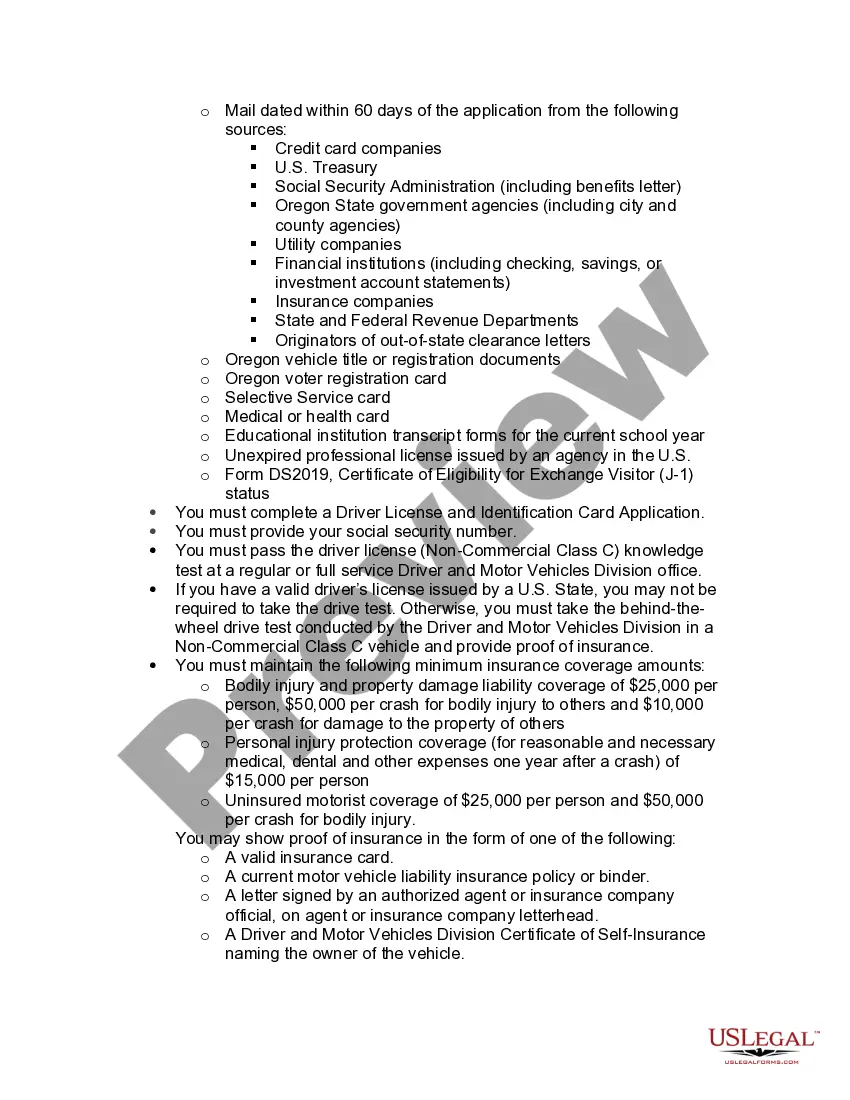
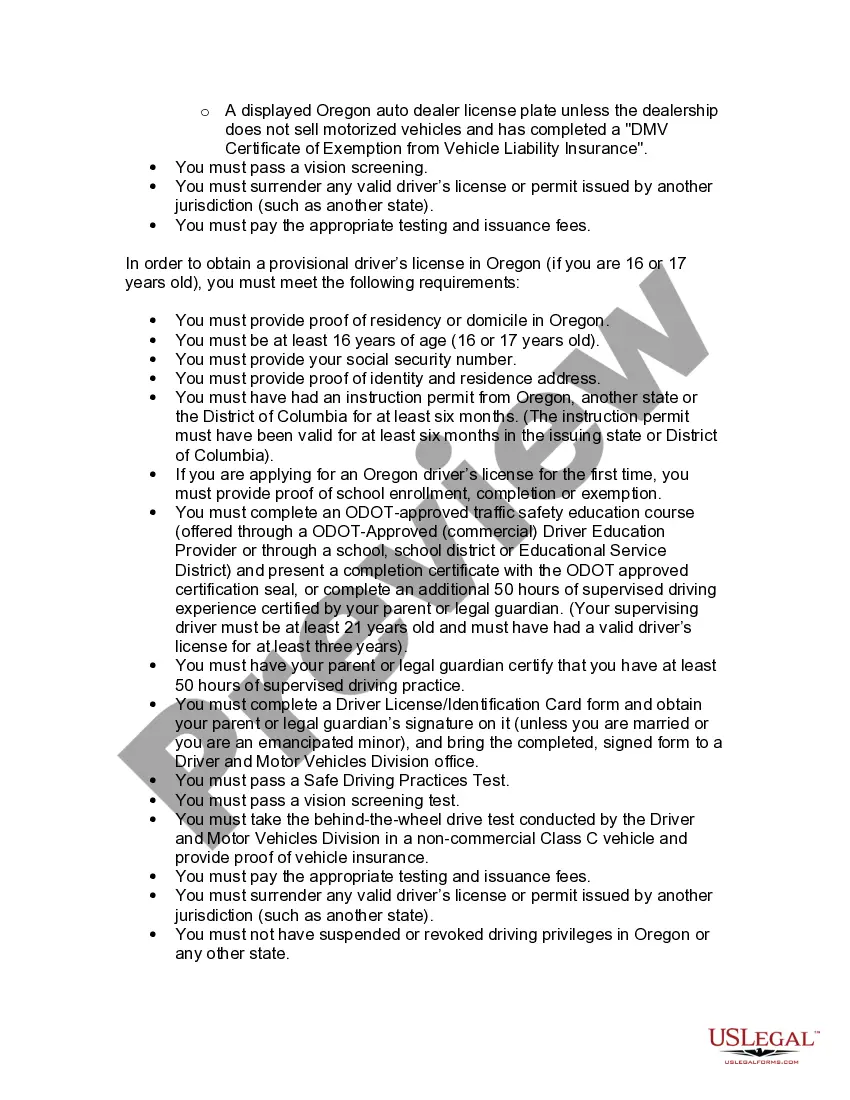
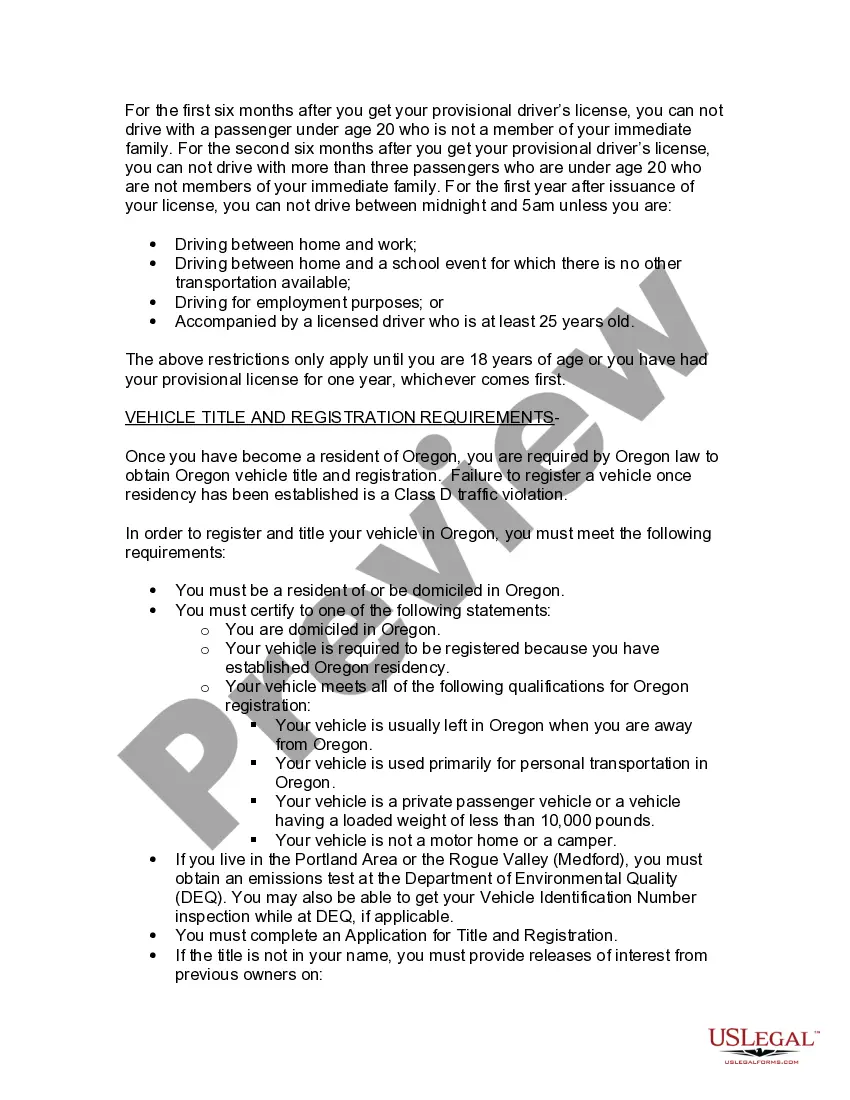
- Driver's license requirements: Instructions for applying for a driver's license in the new state.
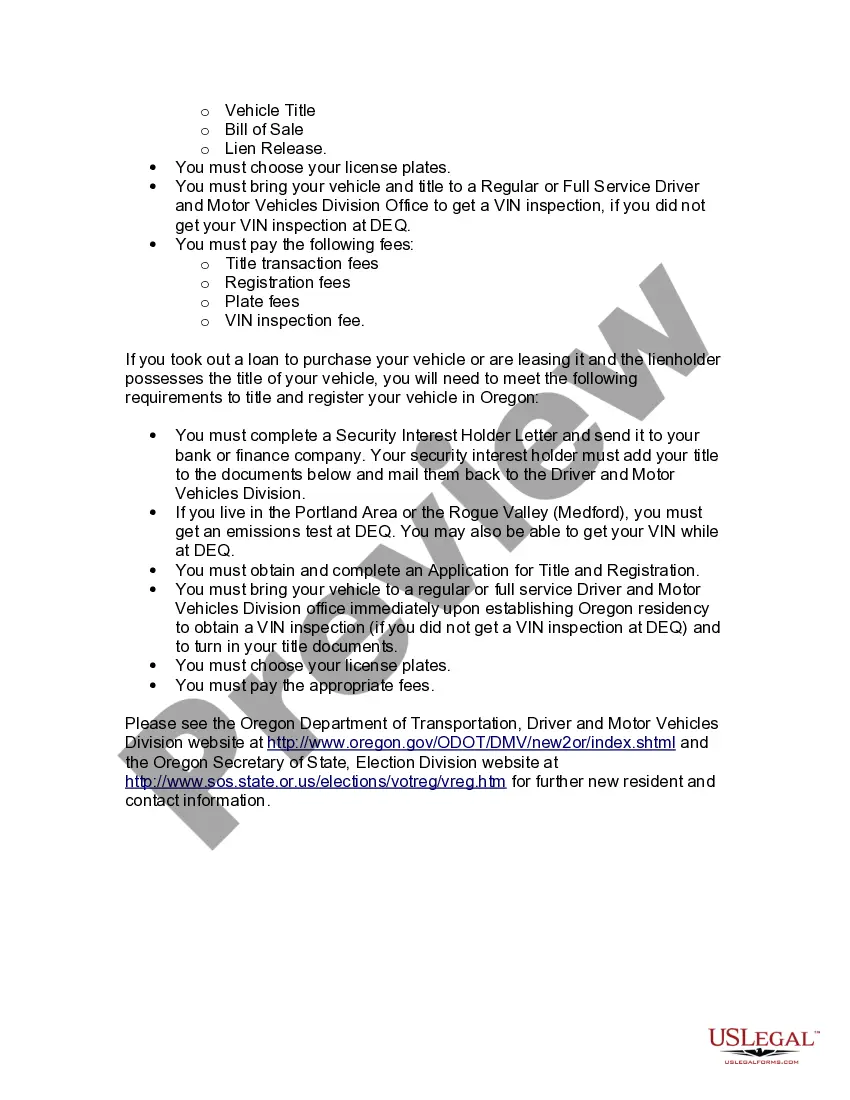
- Vehicle title and registration requirements: Guidelines for registering your vehicle and obtaining title in your new jurisdiction.



When to use this document
This form is useful when you have recently relocated to a new state and need to understand and fulfill your legal responsibilities as a new resident. It is particularly valuable for first-time residents who are navigating state-specific requirements for residency, voting, and vehicle registration for the first time.
Who should use this form
- New residents moving to a different state.
- Individuals seeking to establish their residency legally.
- Those requiring guidance on how to vote in their new state's elections.
- New vehicle owners who need to register their cars and obtain title documentation.
Steps to complete this form
- Review the residency requirements specific to your new state.
- Complete the voter registration form if you plan to vote.
- Gather the necessary documents for obtaining an identification card or driver's license.
- Fill out the application for vehicle title and registration as required.
- Submit all forms and documentation to the appropriate state agencies.
Is notarization required?
This form usually doesn’t need to be notarized. However, local laws or specific transactions may require it. Our online notarization service, powered by Notarize, lets you complete it remotely through a secure video session, available 24/7.
Get your form ready online
Our built-in tools help you complete, sign, share, and store your documents in one place.
Make edits, fill in missing information, and update formatting in US Legal Forms—just like you would in MS Word.
Download a copy, print it, send it by email, or mail it via USPS—whatever works best for your next step.
Sign and collect signatures with our SignNow integration. Send to multiple recipients, set reminders, and more. Go Premium to unlock E-Sign.
If this form requires notarization, complete it online through a secure video call—no need to meet a notary in person or wait for an appointment.
We protect your documents and personal data by following strict security and privacy standards.

Make edits, fill in missing information, and update formatting in US Legal Forms—just like you would in MS Word.

Download a copy, print it, send it by email, or mail it via USPS—whatever works best for your next step.

Sign and collect signatures with our SignNow integration. Send to multiple recipients, set reminders, and more. Go Premium to unlock E-Sign.

If this form requires notarization, complete it online through a secure video call—no need to meet a notary in person or wait for an appointment.

We protect your documents and personal data by following strict security and privacy standards.
Common mistakes
- Not providing the correct documentation when registering to vote.
- Missing deadlines for voter registration.
- Failing to establish residency properly, which can lead to complications in obtaining a driver's license.
- Not applying for vehicle registration within the required time frame.
Benefits of using this form online
- Convenience of accessing vital information anytime.
- Easy navigation through state-specific requirements.
- Ability to download and print the guide at your convenience.
- Up-to-date information ensuring compliance with current laws.
Legal use & context
The New Resident Guide serves as a fundamental starting point for understanding the legal processes involved in establishing residency and meeting other state-specific requirements. It is essential for new residents to comply with these guidelines to avoid legal complications and ensure a smooth transition to their new home.
Key takeaways
- The New Resident Guide is essential for understanding your responsibilities as a new resident.
- Clear navigation of residency, voting, and vehicle registration requirements will ensure compliance.
- Stay organized by gathering all necessary documents before applying for licenses and registrations.
Looking for another form?
Form popularity
FAQ
A property tax record, utility bills, rent receipts, a lease or rental agreement or other document that shows you reside in Oregon; Enrollment records or other documentation that you are attending an educational institution maintained by public funds and pay resident tuition fees; Motel, hotel, campground or
Generally, you need to establish a physical presence in the state, an intent to stay there and financial independence. Then you need to prove those things to your college or university. Physical presence: Most states require you to live in the state for at least a full year before establishing residency.
To qualify as an Oregon resident (for tuition purposes), one must live in Oregon for 12 consecutive months while taking eight credits or fewer per term while demonstrating that they are in the state for a primary purpose other than education (such as working, volunteering, or other purposes).
Study the Oregon Driver Manual. Fill out the application for Driving Privileges or ID card with parent's signature. Take it to a local DMV office. Submit all the requirements needed. Surrender your out-of-state license.
Voter registration. Vehicle registration. State where you have your driver's license. Location of your bank. Location of your legal and medical professionals. Location of any business that you own and operate. Contact periods with a state. Location of your property.
Generally you are considered a resident if your domicile is that state, or (if your domicile is another state) you maintained a permanent place of abode in that state and spent more than 184 days there during the year. Most state tax authorities have a page explaining what exactly constitutes a resident in their state.
To qualify as an Oregon resident (for tuition purposes), one must live in Oregon for 12 consecutive months while taking eight credits or fewer per term while demonstrating that they are in the state for a primary purpose other than education (such as working, volunteering, or other purposes).
I've Got a Valid Out-of-State License Welcome to Oregon! To convert your out-of-state driver license, you will have to visit a DMV office in person, bring documentation, and pass a vision and knowledge test. You can download it here. Visit a DMV office of your choice.
Application for Driving Privileges or ID Card (Form 735-173). Proof of your legal name. Proof of your U.S. legal presence. Your Social Security Number. Proof of Oregon address. Payment for the required fees. Your out of state license.