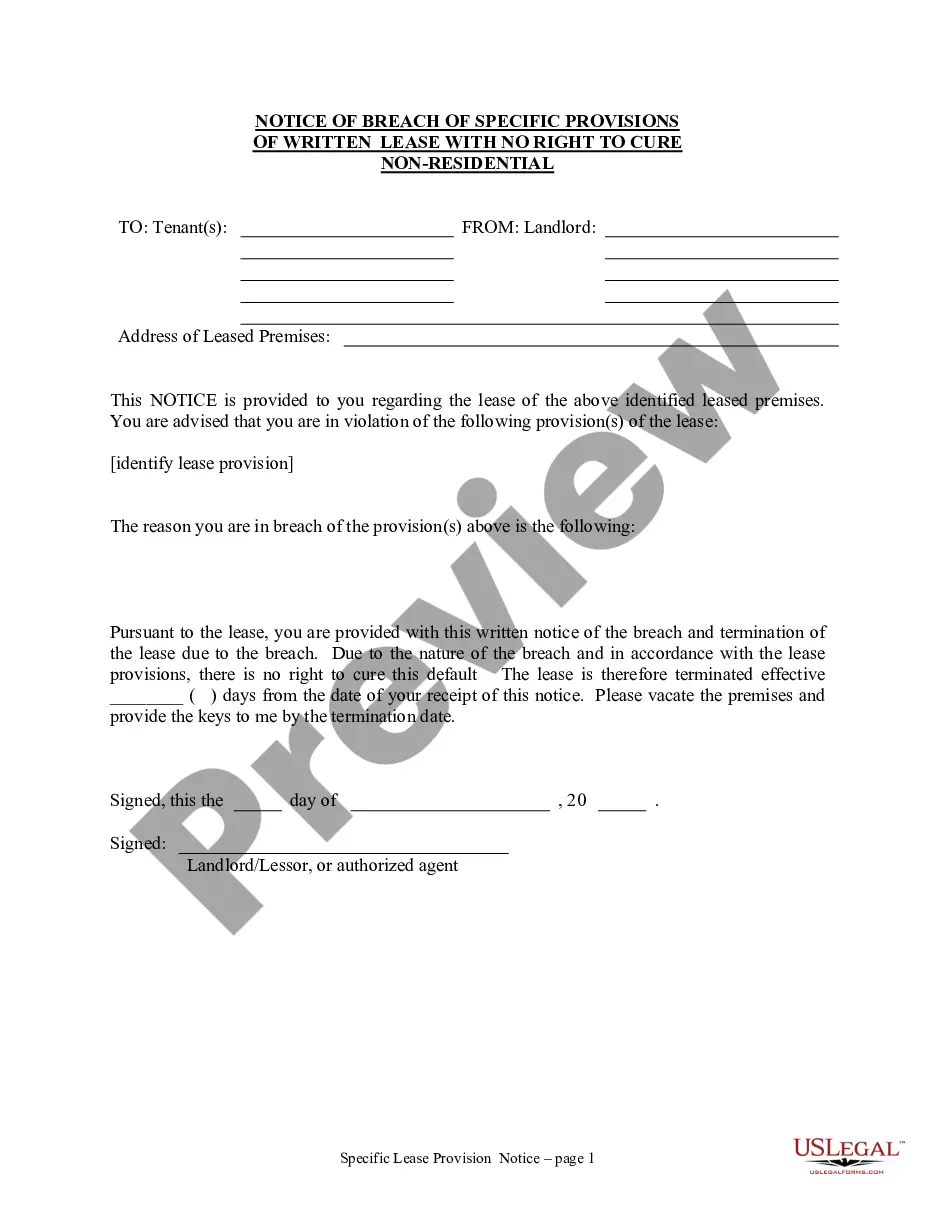
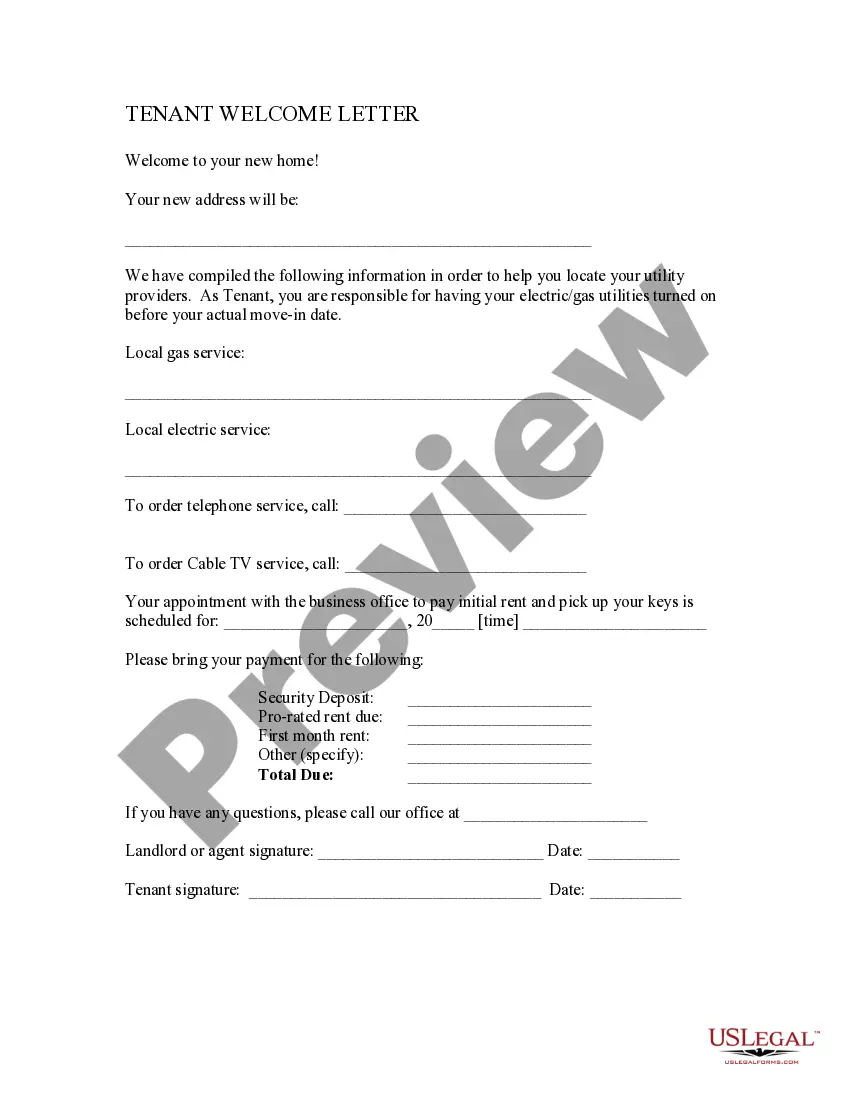
Oregon Tenant Welcome Letter
What this document covers
The Tenant Welcome Letter is a crucial document for landlords to provide new tenants. This form serves as a detailed introduction to the tenancy, compiling essential information such as contact details for utilities and reminders relevant to the lease agreement. Unlike other tenant documents, this letter specifically focuses on welcoming tenants and assisting them with their move-in experience.
Key parts of this document
- Payment details for the security deposit.
- Instructions for the pro-rated rent due.
- Information on the first month's rent amount.
- Field for additional charges or fees.
- Total amount due upon move-in.
Situations where this form applies
This Tenant Welcome Letter should be used when welcoming a new tenant into a rental property. It is typically presented at lease signing or prior to the tenant's move-in date. The form ensures the tenant has all necessary information regarding financial obligations and utility connections, which can help facilitate a smooth transition into their new home.
Intended users of this form
This form is intended for:
- Landlords and property managers who are commencing new tenancy agreements.
- Individuals renting out residential properties, whether as part of a management company or as private landlords.
- Real estate professionals assisting landlords in tenant management.
How to complete this form
- Gather the tenant's personal details and address information.
- Fill in the total amount due, including the security deposit, pro-rated rent, and first month's rent.
- Indicate any additional charges that may apply.
- Provide contact information for utility services relevant to the tenant.
- Review the completed letter for accuracy before presenting it to the tenant.
Is notarization required?
This form does not typically require notarization unless specified by local law. However, confirming with local regulations is advisable to ensure compliance.
Get your form ready online
Our built-in tools help you complete, sign, share, and store your documents in one place.
Make edits, fill in missing information, and update formatting in US Legal Forms—just like you would in MS Word.
Download a copy, print it, send it by email, or mail it via USPS—whatever works best for your next step.
Sign and collect signatures with our SignNow integration. Send to multiple recipients, set reminders, and more. Go Premium to unlock E-Sign.
If this form requires notarization, complete it online through a secure video call—no need to meet a notary in person or wait for an appointment.
We protect your documents and personal data by following strict security and privacy standards.

Make edits, fill in missing information, and update formatting in US Legal Forms—just like you would in MS Word.

Download a copy, print it, send it by email, or mail it via USPS—whatever works best for your next step.

Sign and collect signatures with our SignNow integration. Send to multiple recipients, set reminders, and more. Go Premium to unlock E-Sign.

If this form requires notarization, complete it online through a secure video call—no need to meet a notary in person or wait for an appointment.

We protect your documents and personal data by following strict security and privacy standards.
Common mistakes to avoid
- Forgetting to specify all payment amounts clearly.
- Neglecting to update contact information for utilities or other services.
- Omitting important reminders related to the lease agreement.
- Failing to provide a total due that accurately reflects all listed charges.
Benefits of using this form online
- Convenient access from any device at any time.
- Easy to fill out and customize according to specific tenant and property needs.
- Quick download options ensure timely delivery to new tenants.
- Reliability with templates drafted by licensed attorneys.
Summary of main points
- The Tenant Welcome Letter provides crucial information for new tenants.
- It includes payment details and utility contacts to facilitate a smooth transition.
- This form is essential for landlords and property managers to formally welcome tenants.
- Stay compliant with state-specific regulations when using this form.
Looking for another form?
Form popularity
FAQ
Your contact information. Time and date of the rental walkthrough. Time and location for key collection. Instructions on setting up utilities.
Begin the letter with the date on which you mail or deliver the letter in person. Include your name, address and phone number, followed by the tenant's name and address. You can also insert a subject line that summarizes the reason for the letter to vacate. Start with a salutation, followed by your tenant's name.
To show landlords that you care about the same things they care about, find ways to show them that you can truly afford the rent, that you can take care of their place and keep it in good shape, and that you aren't the kind of person to cause problems with other tenants or neighbours.
A tenant welcome letter provides an informal way for a landlord to say hello or a more formal way to provide helpful information. The document can refer to a list of apartment rules and regulations and include a checklist of the unit's move-in condition.
Congratulations! You've found new tenants and you're ready to welcome them to your property. Up until now, you've put in a lot of work: you've listed your property, screened tenants, signed a lease, and now you're ready to help your tenants settle in.
Clean the Unit and Repair Damage. Provide Information About Utilities. Assemble a Welcome Package. Help With Logistics During the Move. A Warm Welcome for Your Tenant.
A welcome letter is a document provided by you to new employees. Welcome letters introduce key team members and provide basic information to the new employee to prepare them for their first day on the job.
Create a Rental ResumA©. Treat this like you would a job search. Pull your own credit report. Obtain and include full letters of reference. Provide copies of commonly requested further information. Look sharp. Be five minutes early. Find common ground. Know your needs and wants ahead of time.
Introduce yourself. Collect tenant contact information. Tell them how and to whom to pay their monthly rent. Share your contact information. Tell them how to submit maintenance requests.