Mississippi Training Contract - Horse Equine Forms
Understanding this form
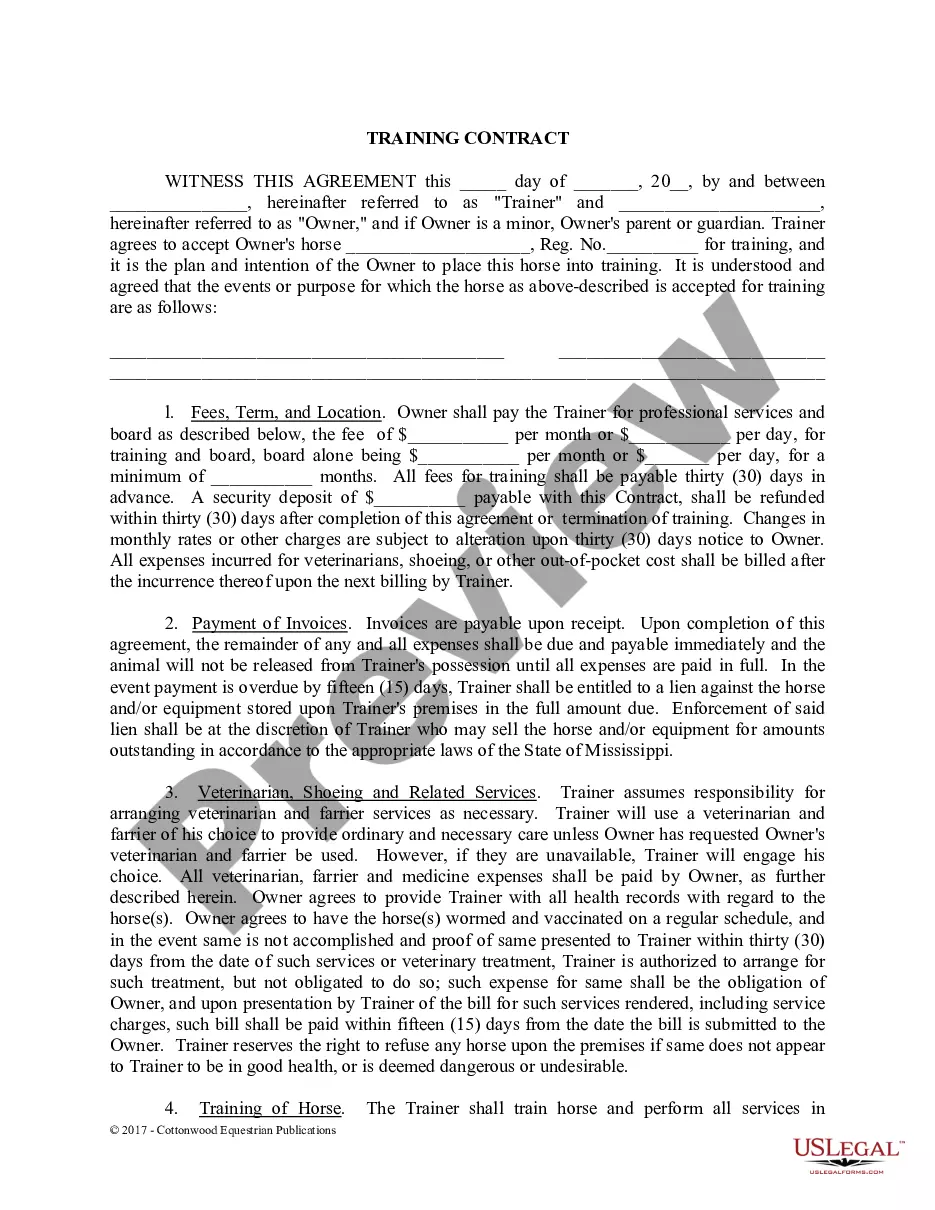
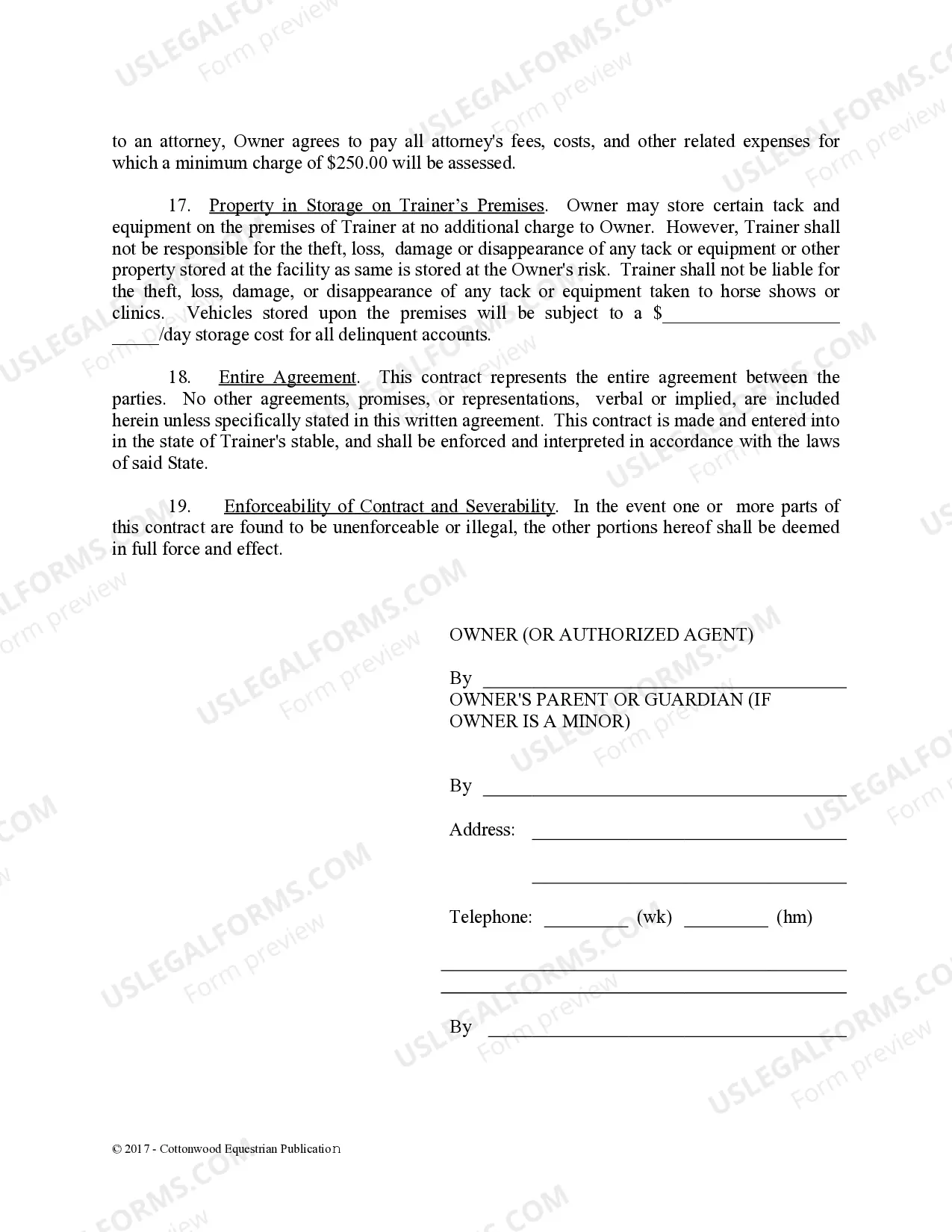
The Training Contract for Horse Equine is a formal agreement between a horse owner and a trainer. This contract clearly outlines the responsibilities and rights of both parties regarding the training and care of the horse. It differs from similar agreements by detailing specifics such as fees, veterinary care, and liability terms, ensuring both the trainer and owner are protected in various scenarios related to the horse's training and well-being.
Form components explained
- Identification of the trainer and owner, including responsibilities for training and care.
- Payment terms, including monthly fees, deposits, and payment schedules.
- Details on veterinary and farrier services, including who is responsible for costs.
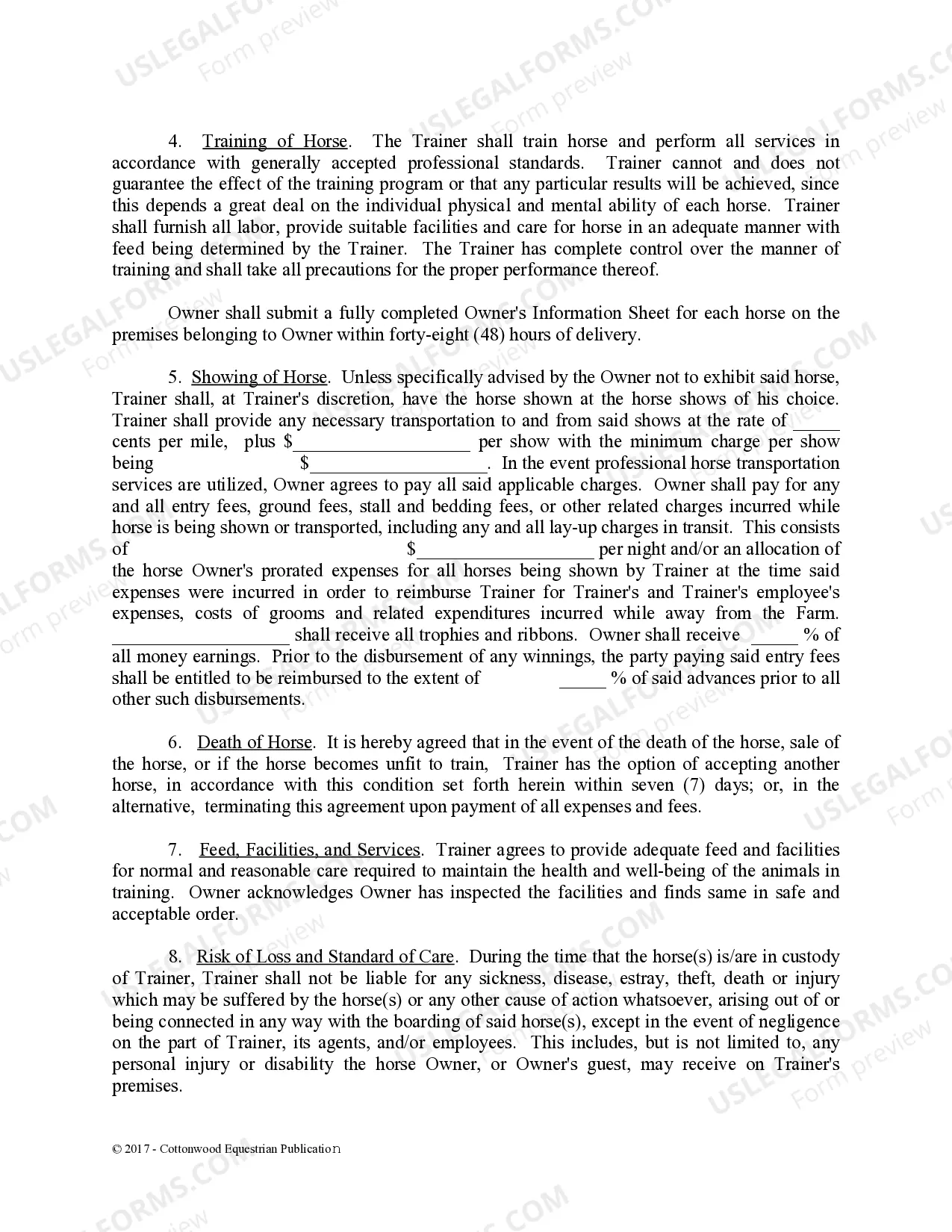
- Provisions for the training process and showing of the horse.
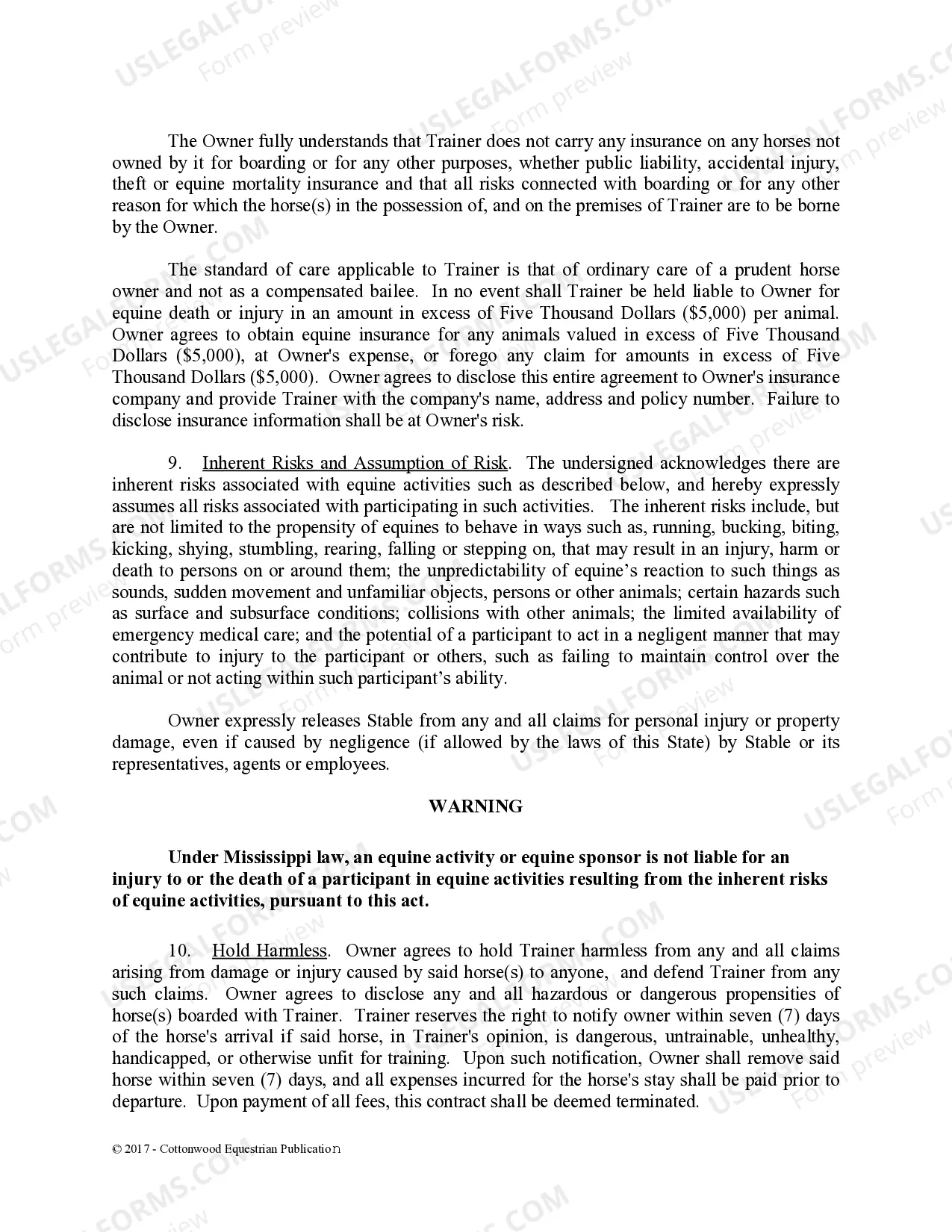
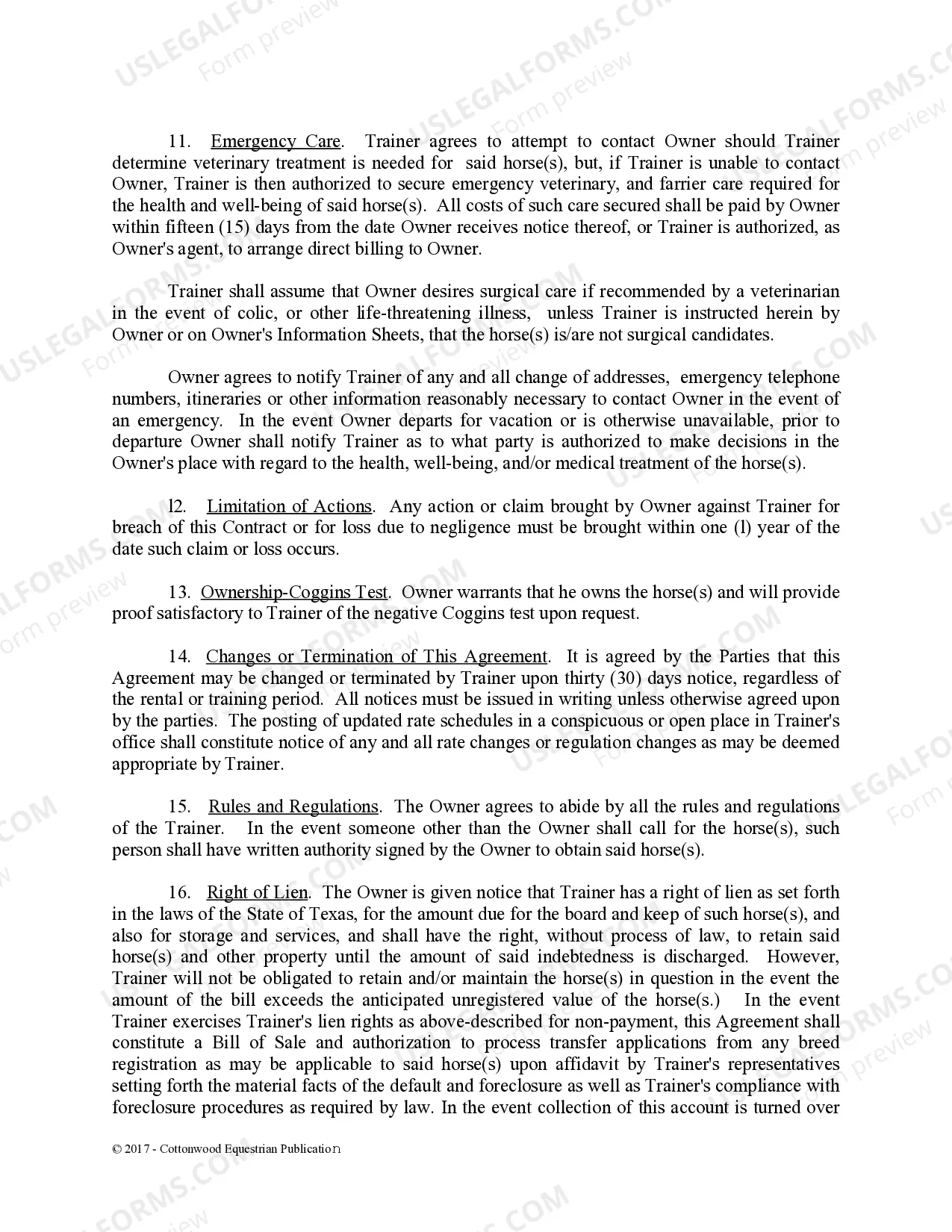
- Liability clauses that protect the trainer from certain risks.
- Terms regarding termination of the contract and handling of disputes.

When this form is needed
This form is essential when a horse owner wishes to hire a trainer for professional horse training services. It is particularly relevant in scenarios where the horse will be boarded, shown at competitions, or requires specialized care. Owners should use this contract to ensure that both their interests and those of the trainer are defined and legally enforceable.
Who this form is for
- Horse owners seeking professional training services for their horses.
- Trainers looking to establish clear terms and conditions with horse owners.
- Parents or guardians of minor owners who need to contract for their child's horse training.
How to complete this form
- Identify the trainer and owner's names and their roles in the agreement.
- Clearly describe the horse being trained, including its registration number.
- Specify the training fees, payment schedule, and any required deposits.
- Detail the responsibilities for veterinary care and any other services needed.
- Include any terms regarding the training process, showing events, and liability coverage.
Notarization guidance
Notarization is not commonly needed for this form. However, certain documents or local rules may make it necessary. Our notarization service, powered by Notarize, allows you to finalize it securely online anytime, day or night.
Get your form ready online
Our built-in tools help you complete, sign, share, and store your documents in one place.
Make edits, fill in missing information, and update formatting in US Legal Forms—just like you would in MS Word.
Download a copy, print it, send it by email, or mail it via USPS—whatever works best for your next step.
Sign and collect signatures with our SignNow integration. Send to multiple recipients, set reminders, and more. Go Premium to unlock E-Sign.
If this form requires notarization, complete it online through a secure video call—no need to meet a notary in person or wait for an appointment.
We protect your documents and personal data by following strict security and privacy standards.

Make edits, fill in missing information, and update formatting in US Legal Forms—just like you would in MS Word.

Download a copy, print it, send it by email, or mail it via USPS—whatever works best for your next step.

Sign and collect signatures with our SignNow integration. Send to multiple recipients, set reminders, and more. Go Premium to unlock E-Sign.

If this form requires notarization, complete it online through a secure video call—no need to meet a notary in person or wait for an appointment.

We protect your documents and personal data by following strict security and privacy standards.
Common mistakes to avoid
- Failing to specify the training duration or payment method.
- Not providing accurate health records for the horse.
- Overlooking terms regarding the trainer's liability and risks involved.
Why use this form online
- Convenience of downloading and customizing the form from home.
- Access to expertly drafted content that ensures legal compliance.
- Ability to easily make edits and reuse the form as needed.
Legal use & context
- This agreement serves as a binding contract between the trainer and the owner.
- It outlines expectations, duties, and liabilities, which can protect both parties in case of disputes.
- Proper completion and retention of this contract can prevent misunderstandings and legal issues in the future.
Key takeaways
- The Training Contract clarifies the obligations of trainers and owners.
- Ensuring all terms are clear can mitigate disputes and liability issues.
- This form is specifically tailored for use in Mississippi, reflecting state laws.
Looking for another form?

Form popularity
FAQ
Vincent O'Brien. Formerly a very successful jumps trainer, O'Brien decided to focus solely on the flat in 1957 and his impact on flat racing was immeasurable thereafter. Aidan O'Brien. Mark Johnston. Andre Fabre. Todd Pletcher. Willie Mullins. Martin Pipe. Paul Nicholls.
Premiums for General Liability starting as low at $725.00 per year with no charge for certificates of insurance. Most policies include Care, Custody and Control at no charge with higher limits available. Worldwide coverage. Liability Limits starting from $250,000 to $2,000,000 available.
Horse trainers earn an average hourly wage of $11.49. Salaries typically start from $9.37 per hour and go up to $20.43 per hour.
Just like schools and colleges, horse training fees vary greatly. The prices often vary from at least $200 every month, to more than a few thousand dollars a month. Some have also decided to send their horse to a private trainer, only to end up with a horse that has not been trained well at all, or even worse.
On average, lessons (an instruction session when you are present and riding the horse) and training (a session between the trainer and the horse) cost between $30 and $100 per half hour.
Craig Cameron: He comes from a background of ranch riding. Buck Brannaman: He is famous for his idea of helping horses with people problems. Chris Cox: Cox has a progressive video series. Ray Hunt: Possibly one of the very first well recognized natural horsemanship trainers, Hunt gave clinics around the United States.
Dale Baird holds the record for the most national titles with fifteen. Second is Hirsch Jacobs who won more races during a year than any other American trainer on eleven occasions. Tied for third all-time are Jack Van Berg and Steve Asmussen with nine.
A horse trainer usually has a need for more than one equine liability coverage, such as General Liability GL, Care, Custody & Control Liability, and Equine Professional Liability. Bodily Injury and Property Damage to others is insured under General Liability, and is perhaps the most important coverage to have.
Cost for Breaking a Horse A riding lesson costs from $30 to $100 for half an hour. If you are near your trainer, you can come over and ride the horse. If your trainer is far, you have to send your horse off. In this case, you have to pay the board, feed, and pasture cost for the training.