Arizona Correction Deed - Correcting Name(s) of Party(ies)
Overview of this form
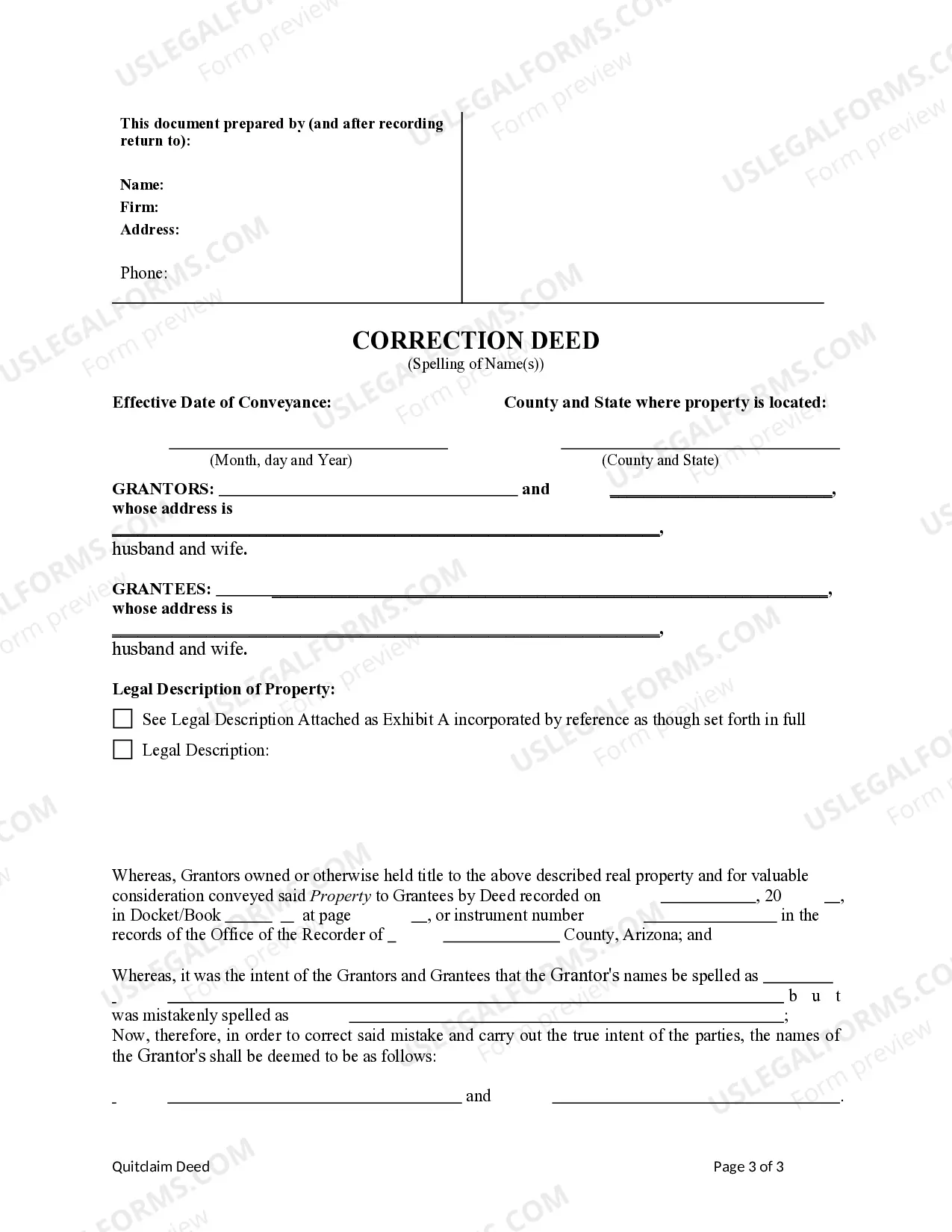
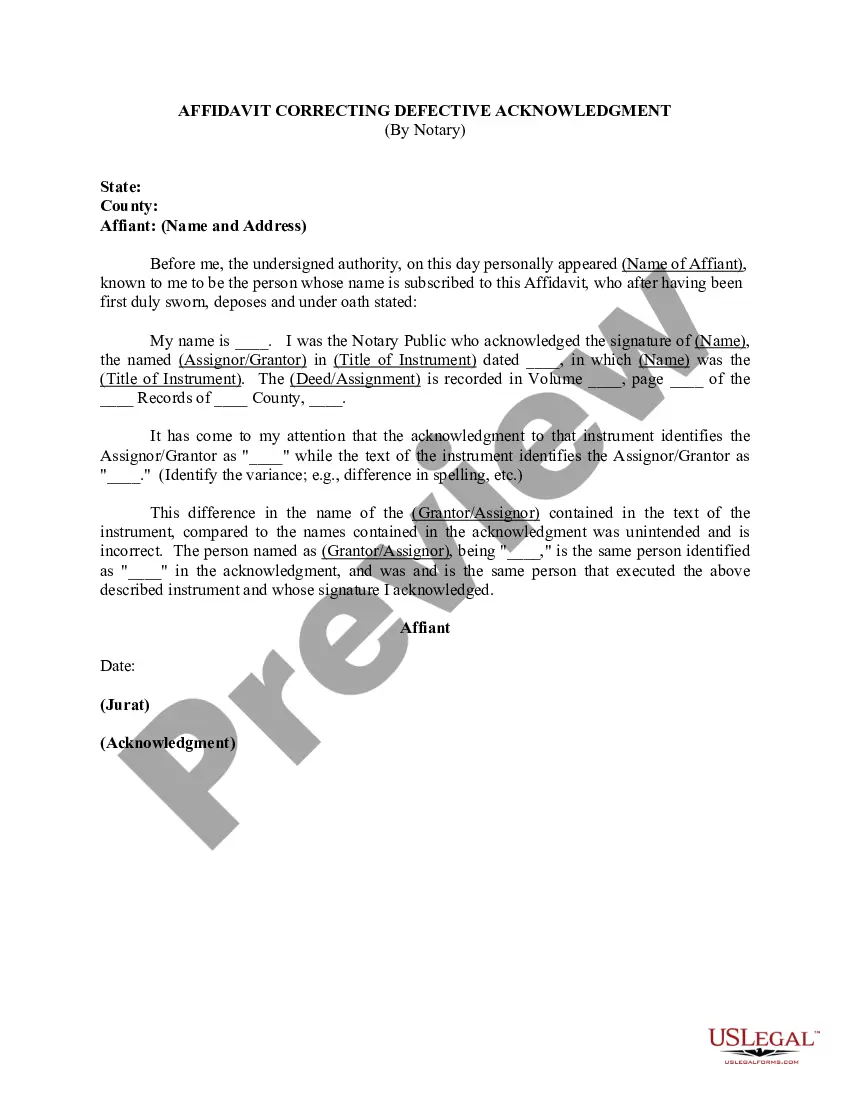
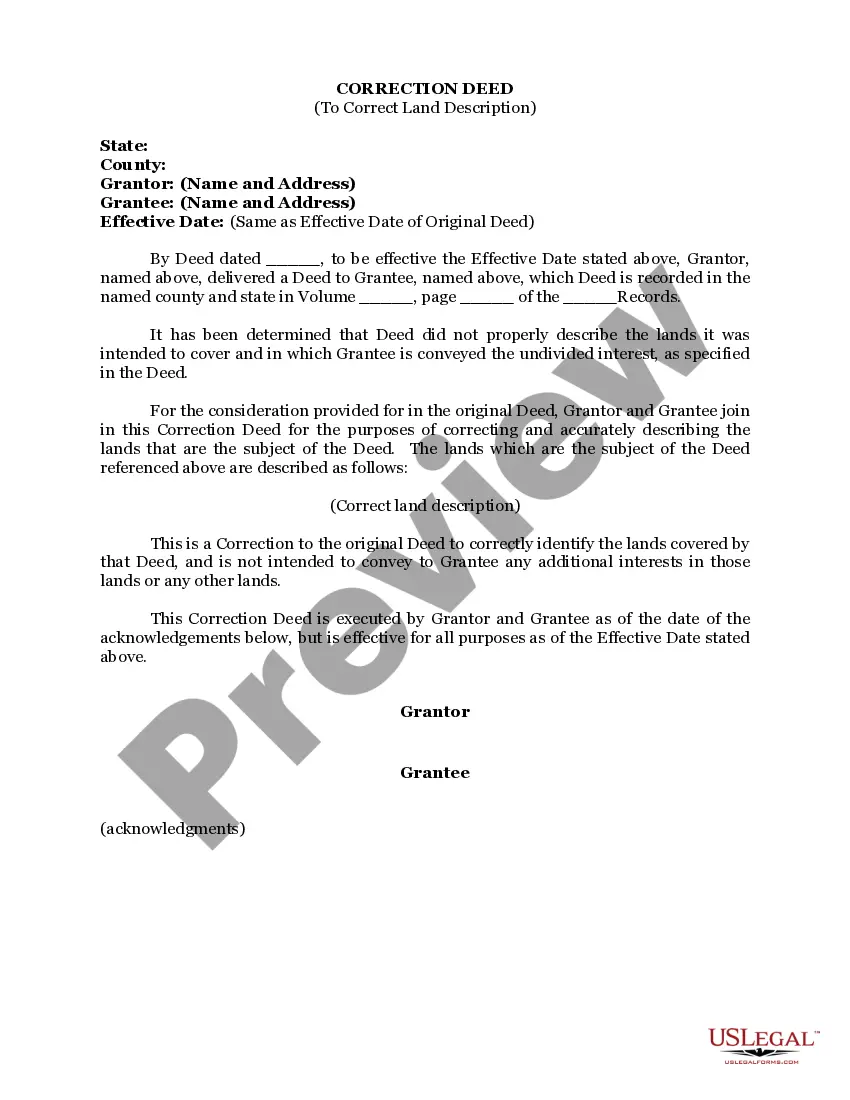
The Arizona Correction Deed is a legal document used to correct any errors in the names of the parties involved in an original property deed. This form is crucial for ensuring that the deed accurately reflects the identities of all parties, differentiating it from standard deeds that may not address such corrections.
Main sections of this form
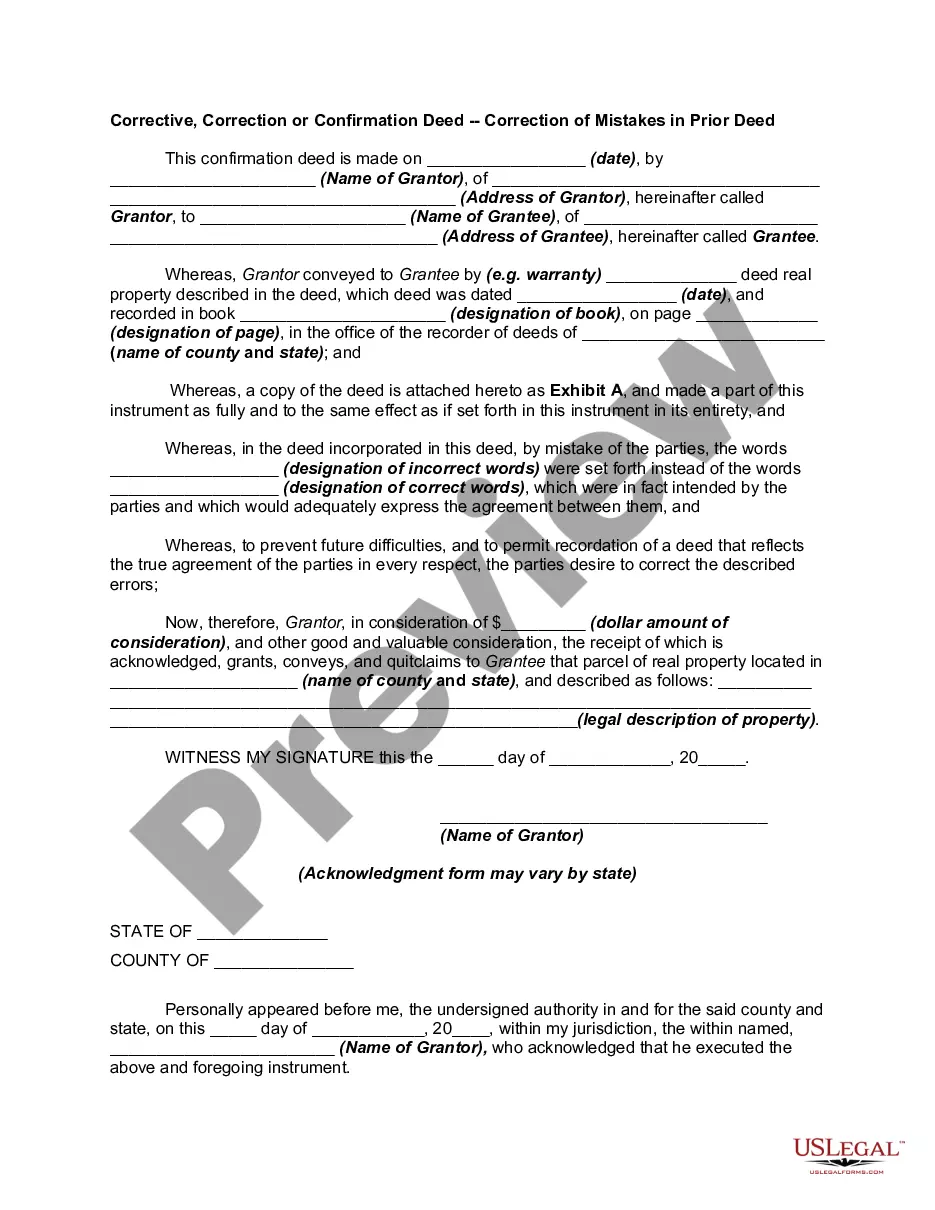
- Identification of the parties whose names are being corrected.
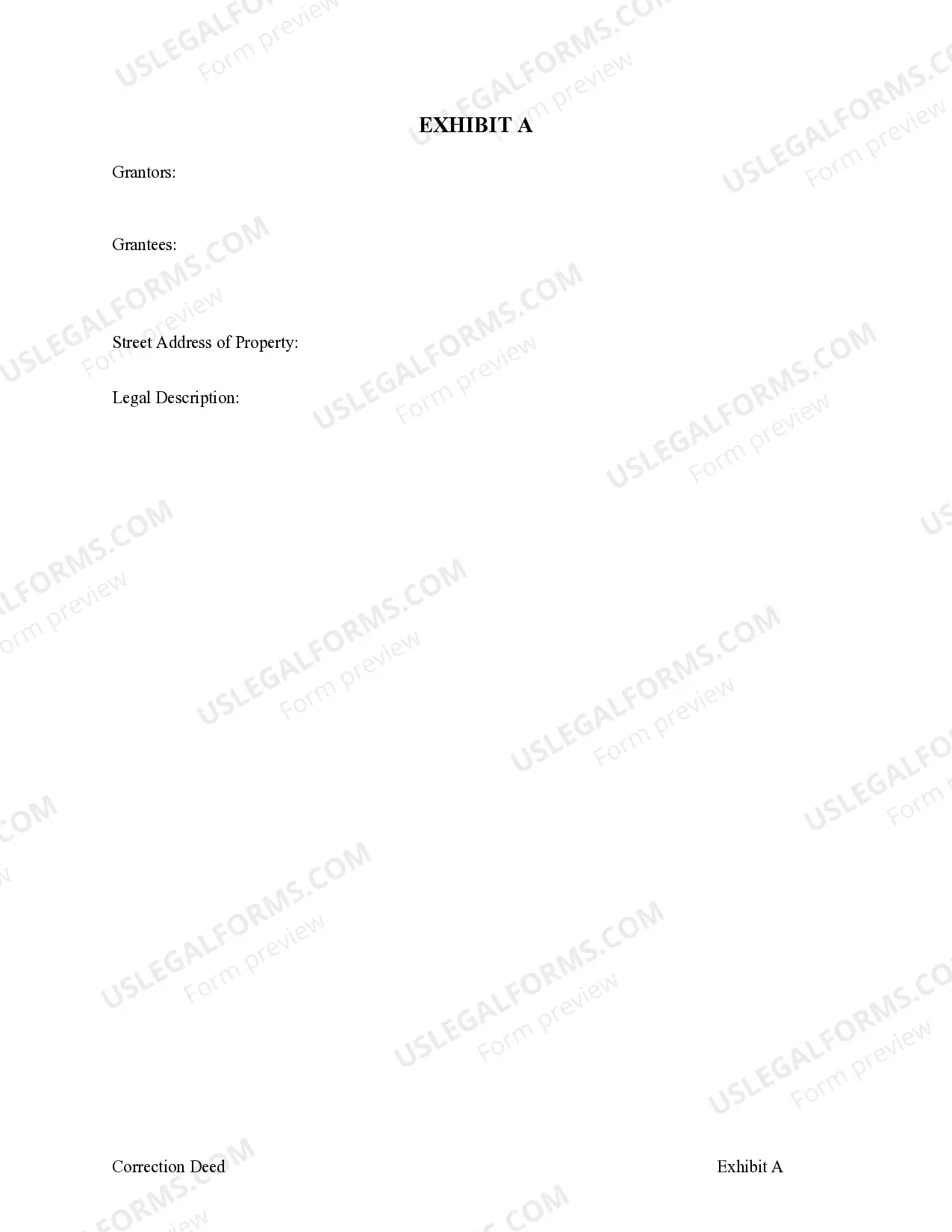
- Details of the original deed, including the date and any identifying numbers.
- Clear statement indicating the correction of names as specified.
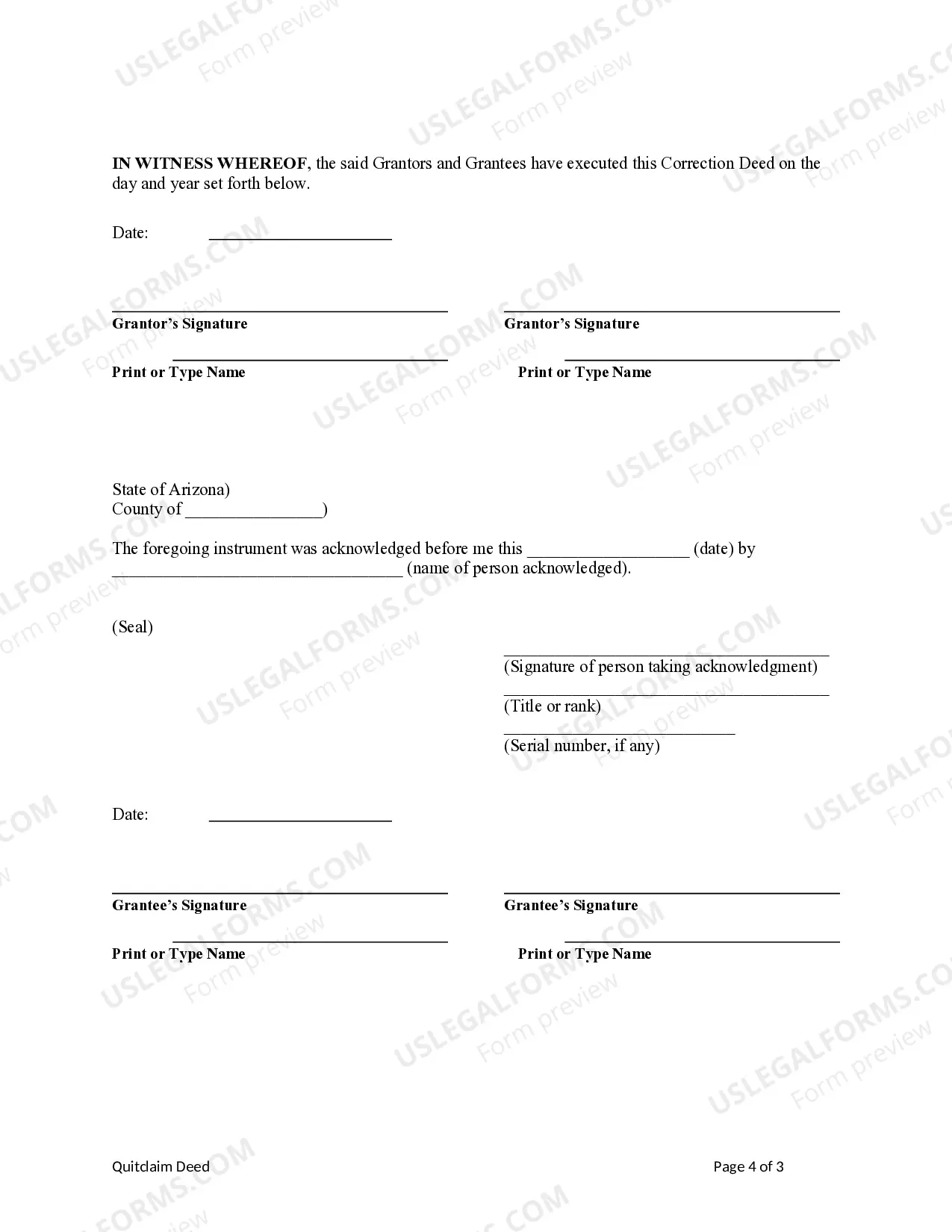
- Signature lines for all parties involved to validate the corrections.
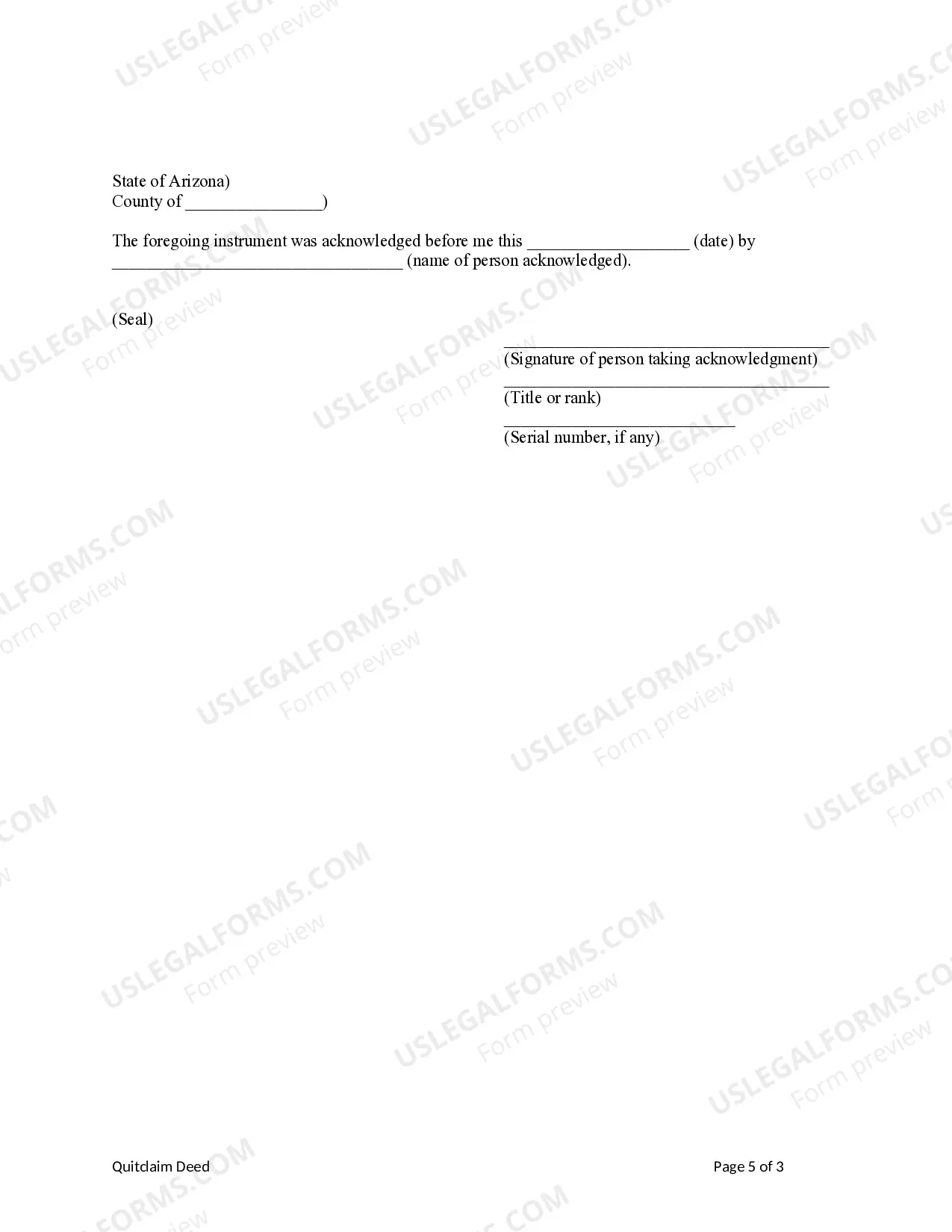
- Notary acknowledgment section for validating the signing of the document.

When to use this form
This form should be used in situations where the names of one or more parties are misspelled or incorrectly stated in the original property deed. Common scenarios include real estate transactions, inheritance situations, or any case where a name change has occurred, and the prior deed needs to be updated for legal accuracy.
Who needs this form
- Property owners who need to correct their names on a deed.
- Heirs or beneficiaries correcting the names due to inheritance issues.
- Real estate professionals managing deeds for clients.
- Individuals involved in property-related legal disputes requiring accurate documentation.
How to complete this form
- Identify all parties involved in the original deed and provide their correct names.
- Enter the details of the original deed, including its date and recording number.
- Clearly state the corrections needed for each name listed.
- Ensure all parties sign the correction deed to acknowledge their agreement.
- Have the completed deed notarized to establish its legal validity.
Notarization guidance
Yes, this form must be notarized to be legally valid. This step is crucial to ensure that the modifications are recognized by the state. US Legal Forms offers integrated online notarization services, allowing you to complete this process securely via video call, without needing to travel.
Get your form ready online
Our built-in tools help you complete, sign, share, and store your documents in one place.
Make edits, fill in missing information, and update formatting in US Legal Forms—just like you would in MS Word.
Download a copy, print it, send it by email, or mail it via USPS—whatever works best for your next step.
Sign and collect signatures with our SignNow integration. Send to multiple recipients, set reminders, and more. Go Premium to unlock E-Sign.
If this form requires notarization, complete it online through a secure video call—no need to meet a notary in person or wait for an appointment.
We protect your documents and personal data by following strict security and privacy standards.

Make edits, fill in missing information, and update formatting in US Legal Forms—just like you would in MS Word.

Download a copy, print it, send it by email, or mail it via USPS—whatever works best for your next step.

Sign and collect signatures with our SignNow integration. Send to multiple recipients, set reminders, and more. Go Premium to unlock E-Sign.

If this form requires notarization, complete it online through a secure video call—no need to meet a notary in person or wait for an appointment.

We protect your documents and personal data by following strict security and privacy standards.
Typical mistakes to avoid
- Failing to include all parties' correct names, leading to incomplete corrections.
- Neglecting to notarize the document, which is required for legal recognition.
- Using the wrong original deed date or details, which can invalidate the correction.
- Leaving blank fields in the form, which can cause delays in processing.
Why use this form online
- Convenient digital access allows for immediate downloading and completion.
- Editability ensures that users can easily make necessary changes before finalizing the document.
- Access to attorney-drafted content guarantees compliance with legal standards.
- Quick turnaround time without the need for in-person consultations or trips to legal offices.
Legal use & context
- The correction deed serves to rectify the public record and ensure the accuracy of property ownership documentation.
- Failure to correct name errors can create complications in future property transactions or legal proceedings.
- This document must align with Arizonaâs statutes to be enforceable and valid.
Main things to remember
- The Arizona Correction Deed is essential for correcting spelling errors in property deeds.
- Both parties must sign the form to validate the correction process.
- Ensure all details are accurate to avoid future complications in property dealings.
Looking for another form?

Form popularity
FAQ
Any party listed on the deed can initiate a change in their name through an Arizona Correction Deed - Correcting Name(s) of Party(ies). Additionally, if a name change occurs due to marriage or divorce, proper documentation must be provided to document the change. This ensures all records align with the legal name used in transactions. US Legal Forms can assist you in preparing the proper documentation for such changes.
To remove someone from your deed in Arizona, you will typically need to file an Arizona Correction Deed - Correcting Name(s) of Party(ies). This procedure requires obtaining their consent and properly executing the document to reflect the change. You should ensure all legal requirements are met to secure the property rights of all parties involved. Consider using US Legal Forms for straightforward templates and guidance.
The customary method for correcting an error in a deed involves filing an Arizona Correction Deed - Correcting Name(s) of Party(ies), which effectively amends any mistakes. Generally, this document is executed by the parties involved and must be notarized. It is important to ensure that the correction is clearly stated to prevent any confusion in the future. Consulting templates from US Legal Forms can simplify this process.
Yes, you can transfer a deed without an attorney in Arizona. However, it is essential to understand the legal requirements involved, especially when it comes to using an Arizona Correction Deed - Correcting Name(s) of Party(ies). Performing the transfer correctly safeguards your interests and avoids potential issues down the line. You can also use resources like US Legal Forms to guide you through the process.
To change the name on your deed in Arizona, you'll need to complete an Arizona Correction Deed - Correcting Name(s) of Party(ies). This form will facilitate the update and rectify any inaccuracies. Ensure all parties involved consent to the change, as their signatures are required. Once completed, file the deed with your local county recorder's office to update the public records accurately.
Transferring property title between family members is best accomplished using a quitclaim deed or a warranty deed. A quitclaim deed is often preferred for its simplicity and speed. However, if you're seeking to provide guarantees, a warranty deed may be more suitable. Understanding the differences is crucial, and utilizing platforms like uslegalforms can provide you with necessary forms and guidance.
The best way to transfer property within a family is through a deed, commonly a quitclaim deed. This method allows for a simple transfer of ownership without extensive legal procedures. Additionally, clear communication with family members is important to avoid any misunderstandings. Using resources like uslegalforms can streamline the process and ensure compliance with Arizona regulations.
The Arizona Correction Deed - Correcting Name(s) of Party(ies) is the document used to fix errors in the title history. This form is essential for correcting inaccuracies in names or property descriptions. When you're addressing issues in the title history, always consult with a legal expert or use a reliable platform like uslegalforms for guidance. Completing this deed ensures clarity in property ownership.
Transferring property to a family member in Arizona typically involves drafting a deed, such as a warranty deed or a quitclaim deed. Choose the type that best meets your needs considering factors like warranty and guarantees. Once the deed is prepared, you must submit it to the local county recorder's office. It is crucial to fulfill these steps to ensure proper legal documentation.
To correct a deed in Arizona, you may need to file an Arizona Correction Deed - Correcting Name(s) of Party(ies). This form specifically addresses errors in names or descriptions on the original deed. Ensure that all parties involved agree to the correction and sign the new deed. This approach helps maintain accurate property records.