Arizona Correction Deed - Correcting Legal Description
What is this form?
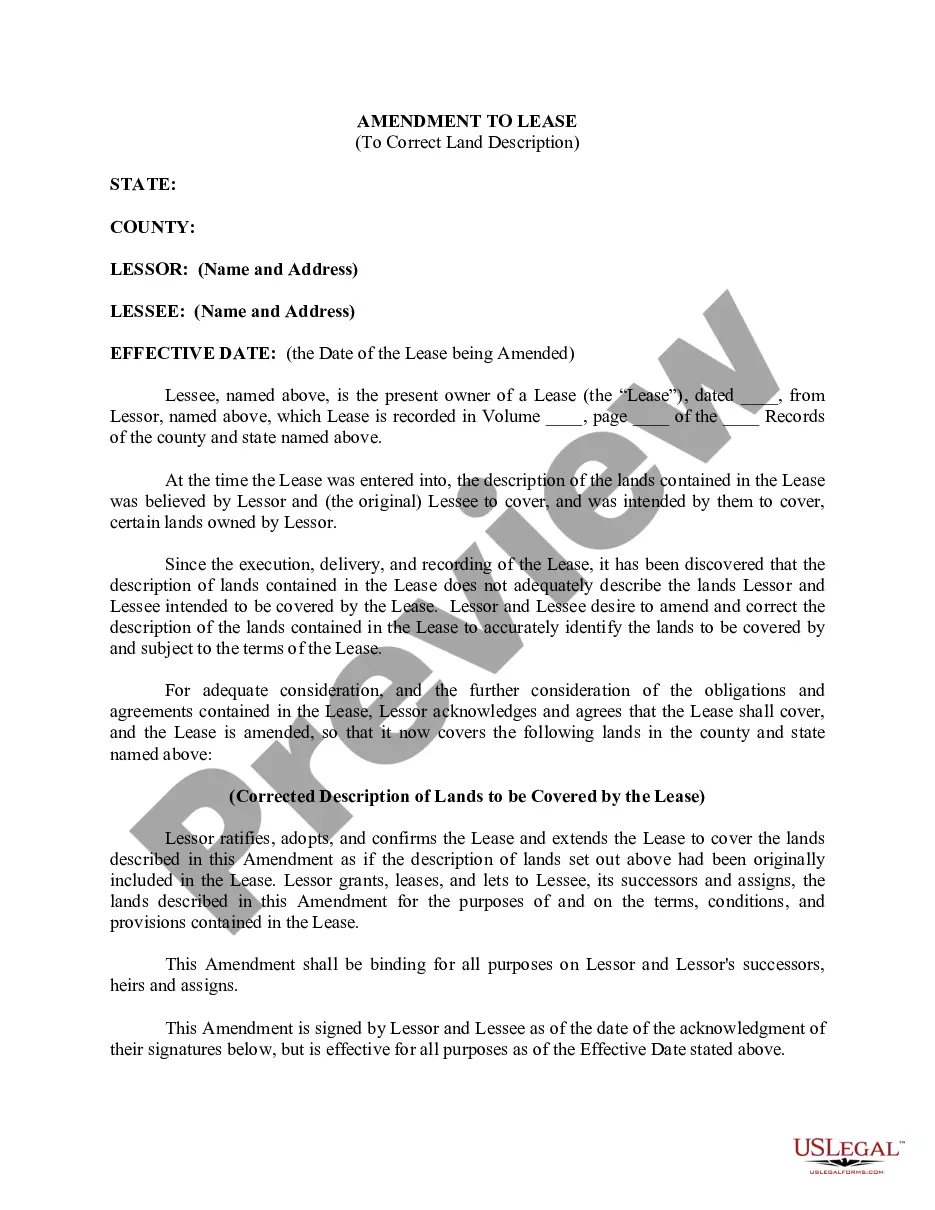
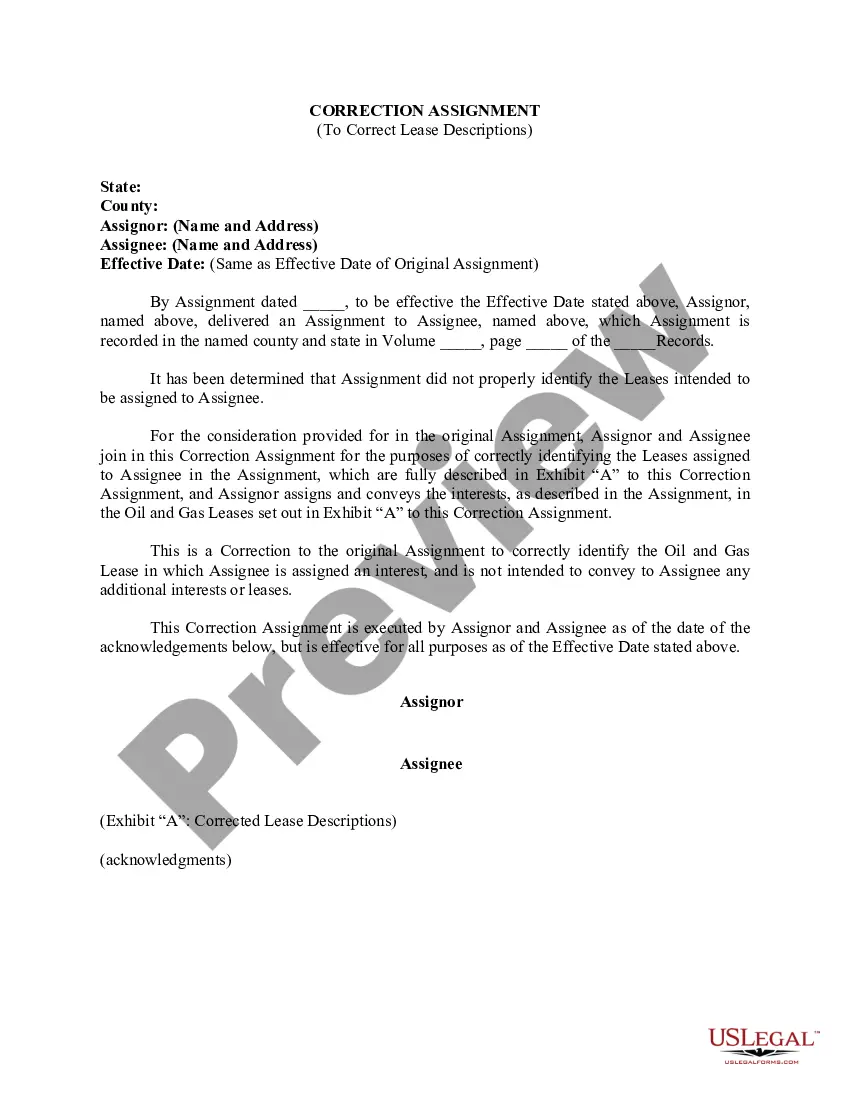
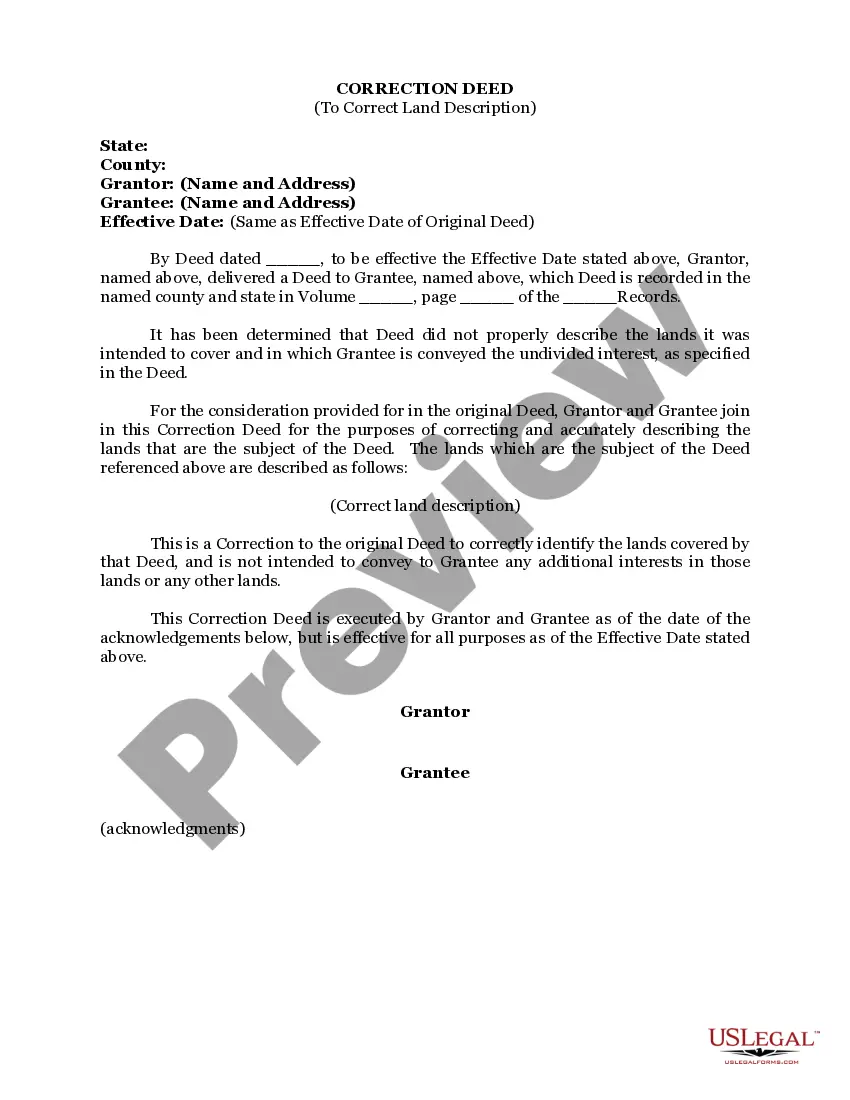
The Arizona Correction Deed - Correcting Legal Description is a legal document used to amend the property description in an existing deed. This form is essential for ensuring that all legal documents related to property ownership accurately reflect the correct details, preventing any potential disputes or confusion regarding the property boundaries and characteristics. Unlike a standard deed, this correction deed specifically addresses errors in the legal description, making it a vital tool for property owners and real estate professionals in Arizona.
Form components explained
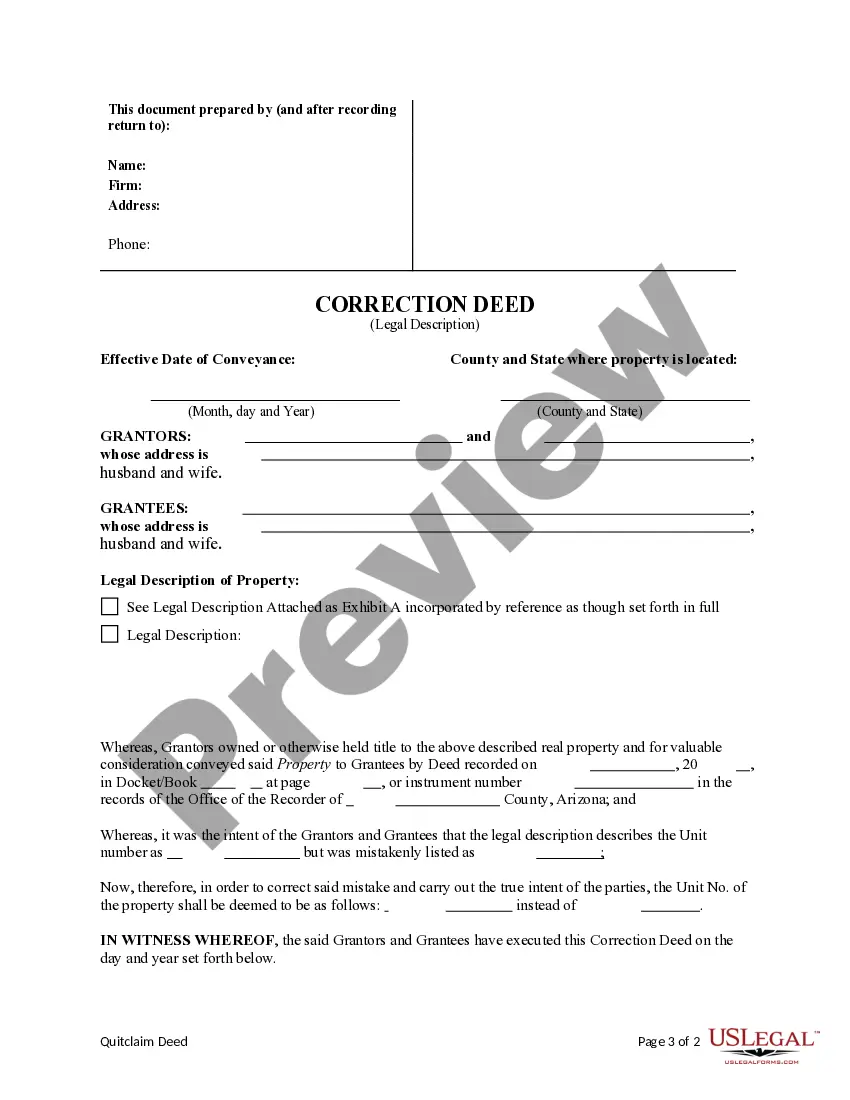
- Identifying information for the parties involved in the correction
- Original deed reference details for context
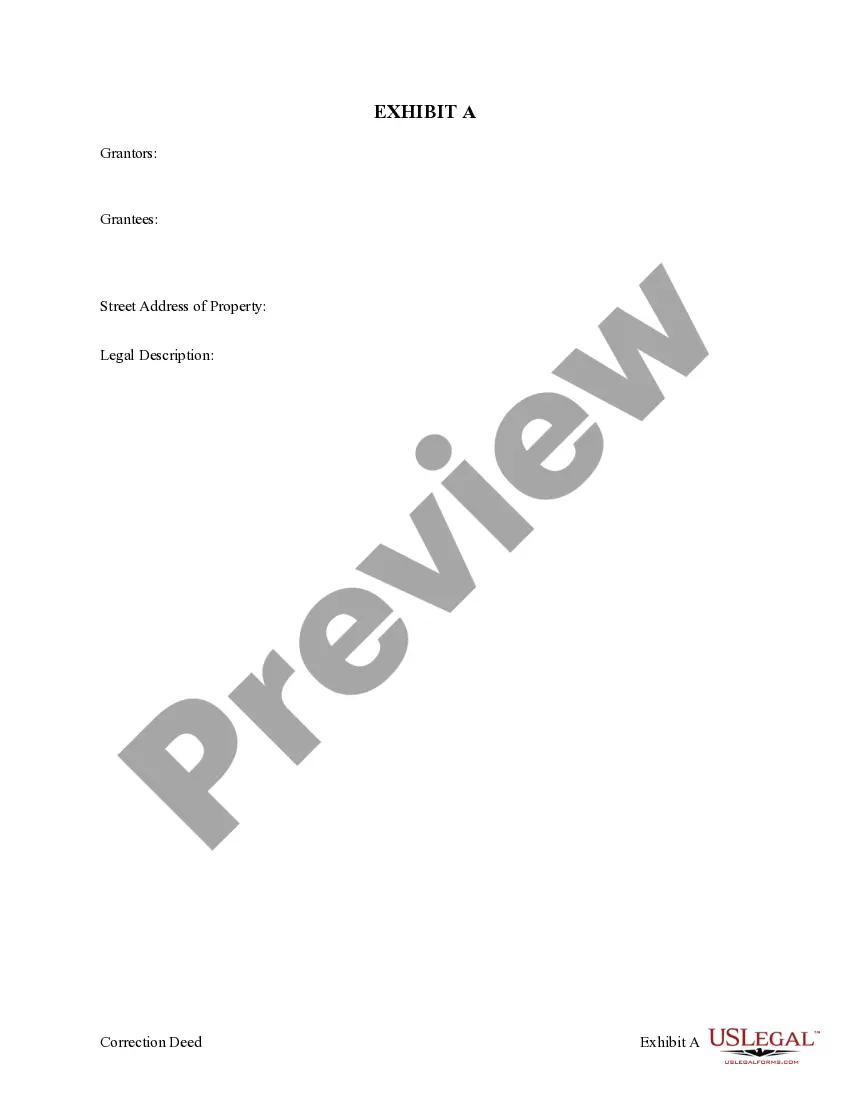
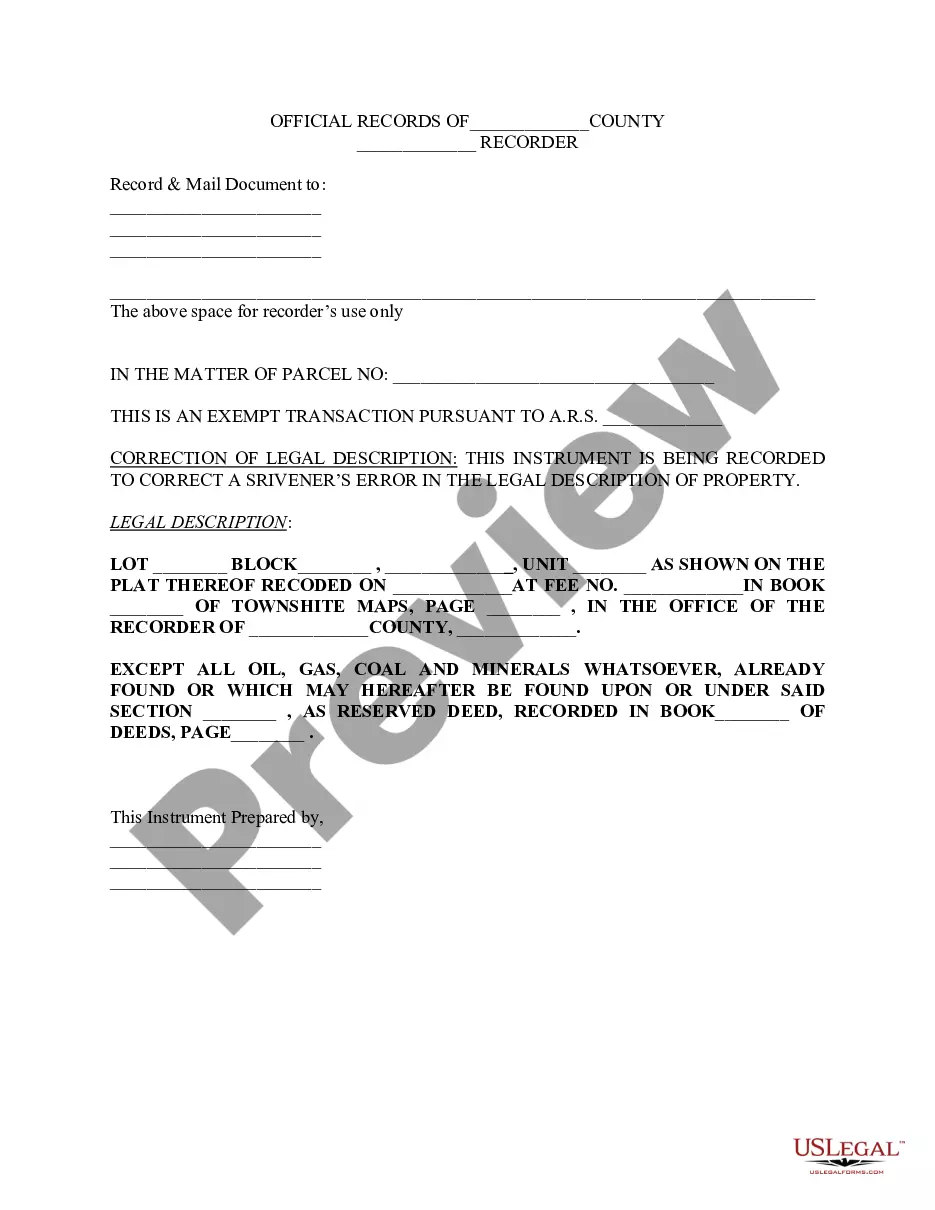
- Corrected legal description of the property
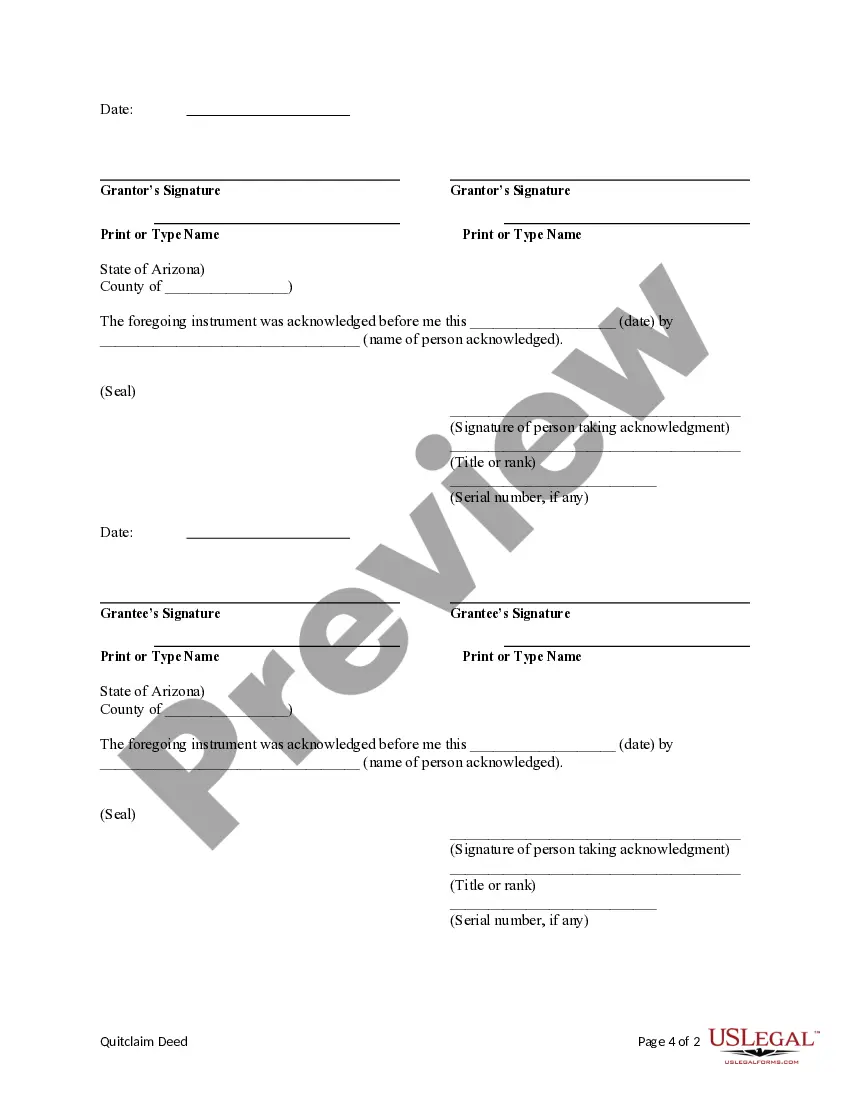
- Signatures of parties involved, confirming agreement to the correction
- Date of correction enactment for records
When this form is needed
This form is required when there is an error in the legal description of a property in the original deed that needs correction. Situations may include discrepancies in property boundaries due to typographical errors, changes in property lines, or updates after a survey. Using this form can prevent legal issues in the future related to ownership claims or property disputes.
Who needs this form
This form is suitable for:
- Property owners who discover inaccuracies in their property's legal description
- Real estate agents or brokers representing clients in property transactions
- Attorneys involved in real estate matters or property management
- Anyone responsible for maintaining accurate property records
Completing this form step by step
- Step 1: Identify the parties involved in the original deed, including current owners.
- Step 2: Reference the original deed by including its recording information.
- Step 3: Clearly describe the corrections to the legal description of the property.
- Step 4: Obtain the signatures of all parties agreeing to the correction.
- Step 5: Indicate the date the correction is enacted for official records.
Notarization requirements for this form
To make this form legally binding, it must be notarized. Our online notarization service, powered by Notarize, lets you verify and sign documents remotely through an encrypted video session.
Get your form ready online
Our built-in tools help you complete, sign, share, and store your documents in one place.
Make edits, fill in missing information, and update formatting in US Legal Forms—just like you would in MS Word.
Download a copy, print it, send it by email, or mail it via USPS—whatever works best for your next step.
Sign and collect signatures with our SignNow integration. Send to multiple recipients, set reminders, and more. Go Premium to unlock E-Sign.
If this form requires notarization, complete it online through a secure video call—no need to meet a notary in person or wait for an appointment.
We protect your documents and personal data by following strict security and privacy standards.

Make edits, fill in missing information, and update formatting in US Legal Forms—just like you would in MS Word.

Download a copy, print it, send it by email, or mail it via USPS—whatever works best for your next step.

Sign and collect signatures with our SignNow integration. Send to multiple recipients, set reminders, and more. Go Premium to unlock E-Sign.

If this form requires notarization, complete it online through a secure video call—no need to meet a notary in person or wait for an appointment.

We protect your documents and personal data by following strict security and privacy standards.
Avoid these common issues
- Failing to reference the original deed correctly, leading to confusion.
- Omitting signatures from one or more parties, making the document invalid.
- Not providing the complete and correct legal description of the property.
- Incorrectly formatting the document according to state requirements.
Benefits of using this form online
- Convenience of downloading and printing from home.
- Editability allows for easy corrections before finalizing.
- Access to attorney-drafted forms ensures legal compliance.
- Securely storing documents digitally for easy future access.
Key takeaways
- The Arizona Correction Deed is essential for correcting inaccuracies in a property's legal description.
- Completing this form accurately can prevent future legal disputes over property boundaries.
- Always check for signatures and proper references to the original deed to ensure validity.
Looking for another form?
Form popularity
FAQ
If you want to remove someone from your deed in Arizona, you can complete an Arizona Correction Deed - Correcting Legal Description. This procedure involves creating a new deed that specifies the name of the person being removed, alongside the property's legal description. It is essential to ensure that all instructions are clear, as this helps avoid any future legal issues. After preparing the new deed, file it with your county recorder's office to finalize the removal.
To change the name on your deed in Arizona, you need to file an Arizona Correction Deed - Correcting Legal Description. This process requires drafting a new deed that clearly states the name change and any associated changes to the legal description of the property. Be sure to include all necessary information, such as the original deed's details, to aid in the correction. Once completed, you will file this deed with your county recorder's office to make the change official.
A correction deed is the document used to fix errors in title history. This legal instrument addresses inaccuracies in the recorded deed, helping to maintain a clear and accurate title. For property owners in Arizona, utilizing an Arizona Correction Deed - Correcting Legal Description ensures that all issues are resolved efficiently.
A corrective deed is frequently used to correct a misspelled name on a deed. This type of deed rectifies previous inaccuracies, ensuring that the public record accurately reflects the correct information. When you notice such errors, promptly utilize a corrective deed to prevent future disputes.
In California, a valid deed generally takes precedence over a will when it comes to property transfer. If the property is conveyed through a deed, that transfer will remain valid, even if a will states otherwise. To ensure clarity in ownership, consider the implications of both documents and employ an Arizona Correction Deed - Correcting Legal Description as needed.
An unrecorded deed can be valid in Arizona, but it may not provide protection against claims from third parties. If another person acquires an interest in the property and they record their deed, the unrecorded deed may lose its priority. It’s advisable to record your deed promptly and consider using an Arizona Correction Deed - Correcting Legal Description if necessary.
A corrective deed in California is a legal document used to correct mistakes found in an originally recorded deed. This could include typographical errors, incorrect legal descriptions, or misspelled names. It’s crucial to address these inaccuracies promptly with a corrective deed instead of letting them persist to avoid complications.
In Arizona, a deed must be in writing, signed by the grantor, and contain a legal description of the property. The deed must also be notarized and recorded with the county recorder's office. When errors arise, utilizing an Arizona Correction Deed - Correcting Legal Description is essential to maintain clear title records.
In California, the two most common types of deeds are grant deeds and quitclaim deeds. A grant deed transfers ownership and includes warranties that defend the title against certain claims. Using an Arizona Correction Deed - Correcting Legal Description can help clarify ownership issues tied to these deeds.
To complete a correction deed in California, you must identify the errors in the original deed. Prepare a new deed that accurately reflects the correct information and include a statement indicating it is a correction deed. After signing, record this deed with the county recorder to update public property records, especially if you wish to rectify a description that could confuse future transactions.