Arizona Correction of Legal Description
About this form
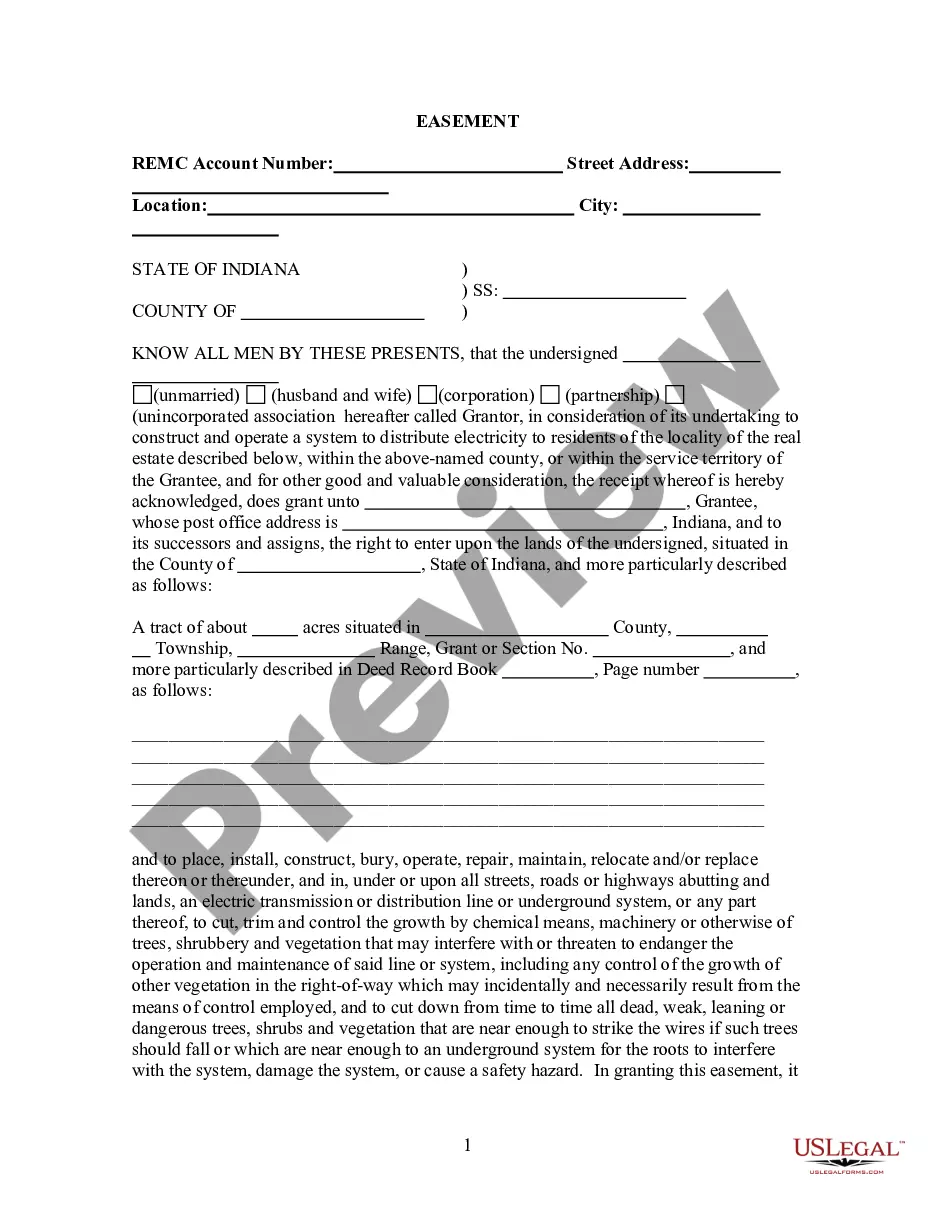
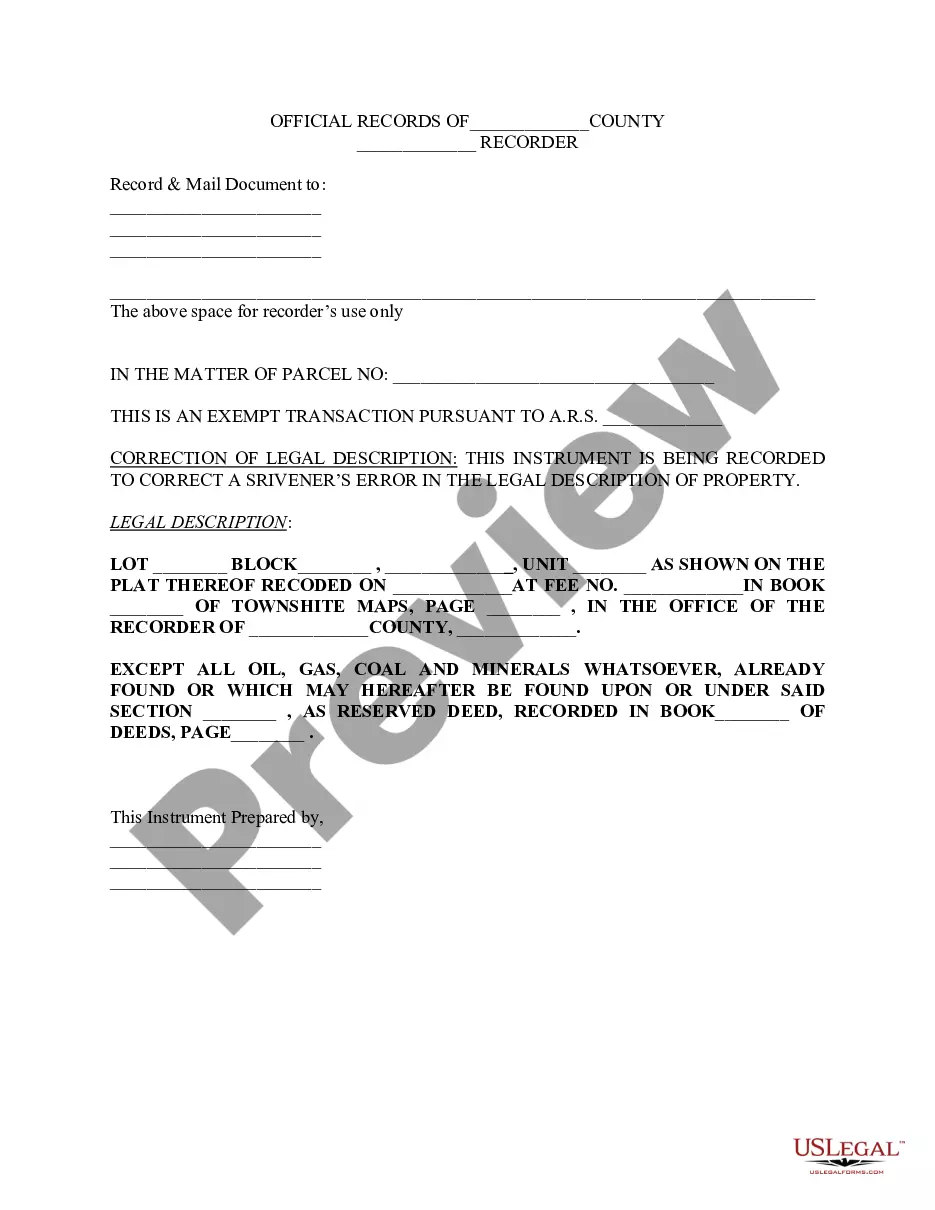
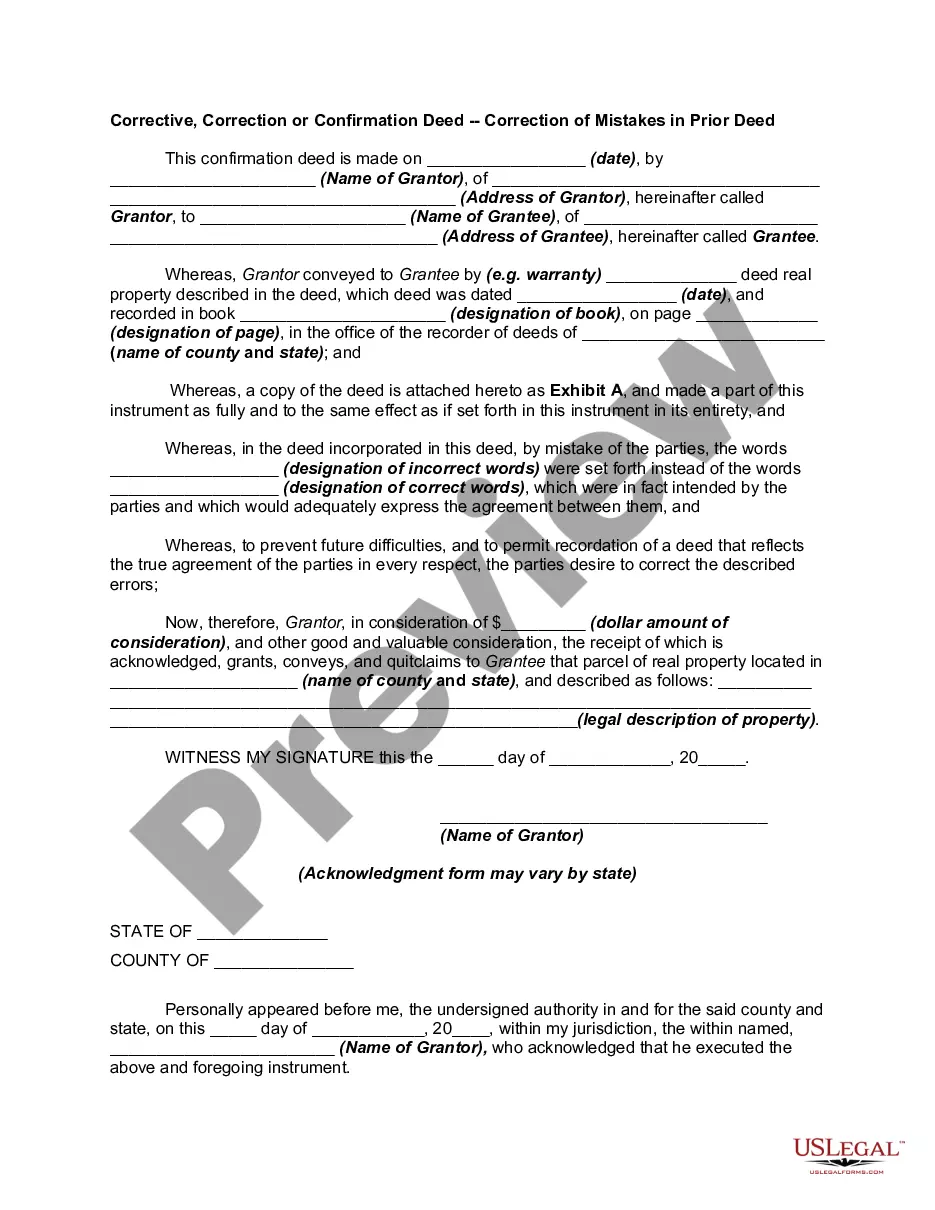
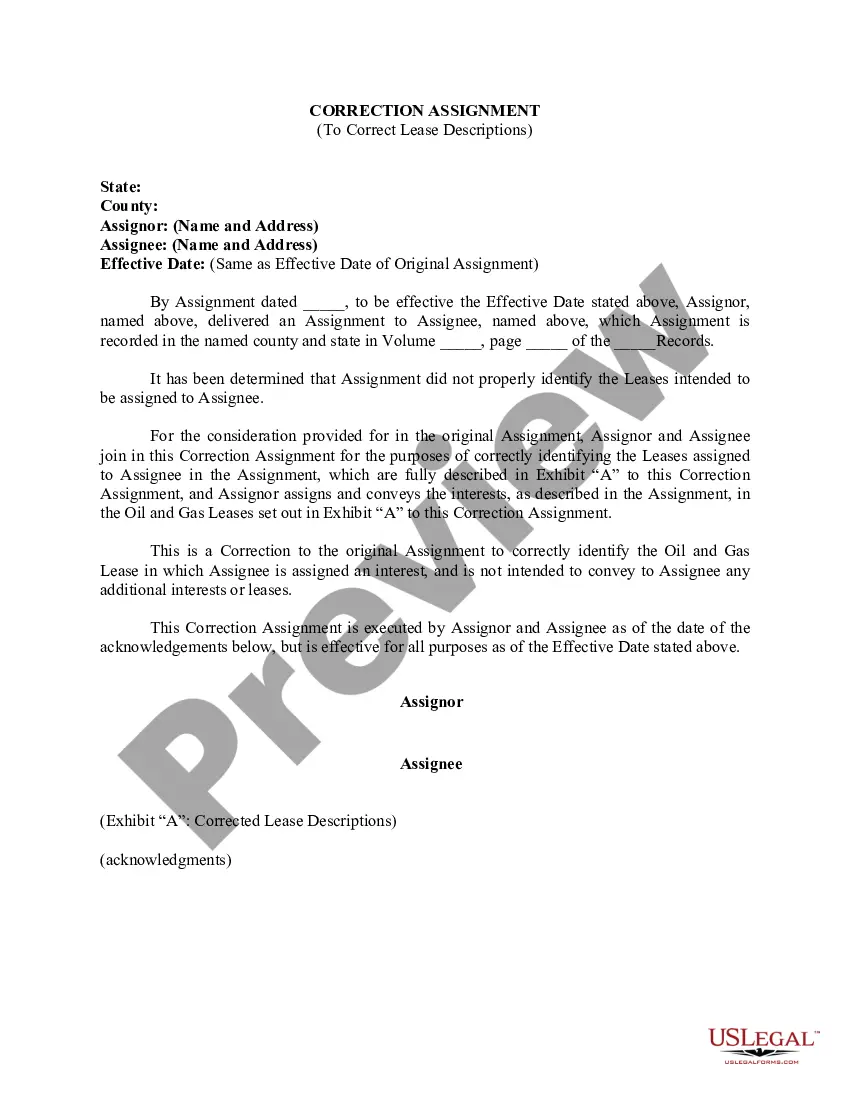
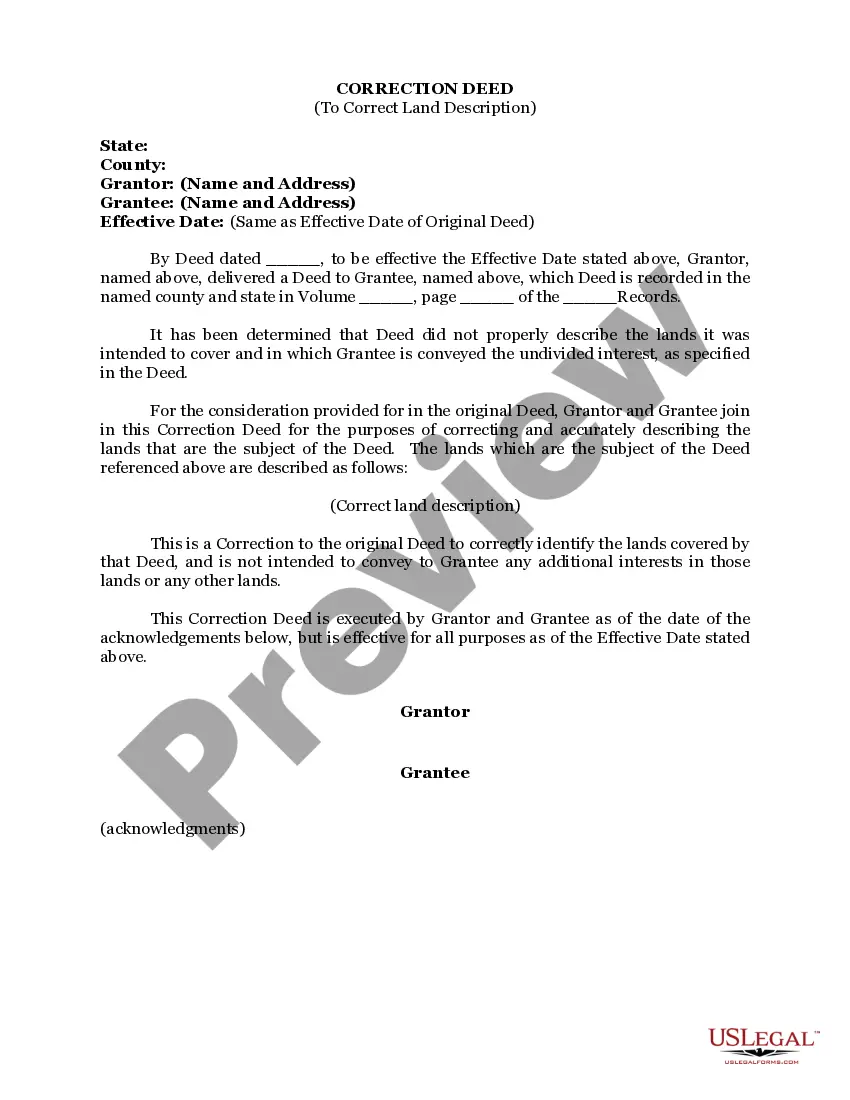
The Correction of Legal Description form, often referred to simply as the Correction Deed, is utilized to amend errors in the legal description of property as recorded in an original deed. This form is essential for ensuring that the property's legal description accurately reflects its boundaries and details, which is crucial for ownership rights and property transactions.
Key components of this form
- Recording details with space for the county recorder's use.
- Information about the parcel number and exempt transaction reference.
- Correction section specifying the scrivenerâs error in the original legal description.
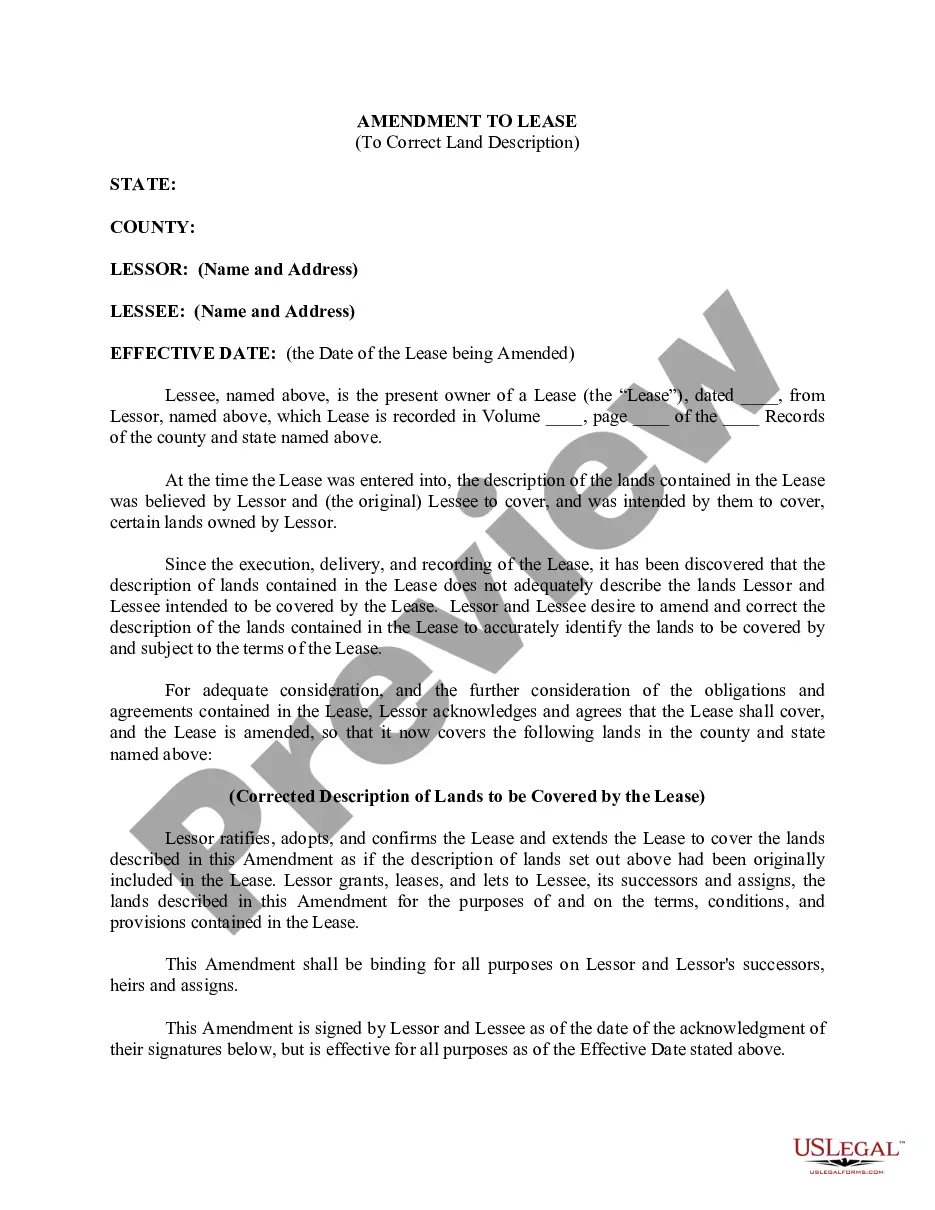
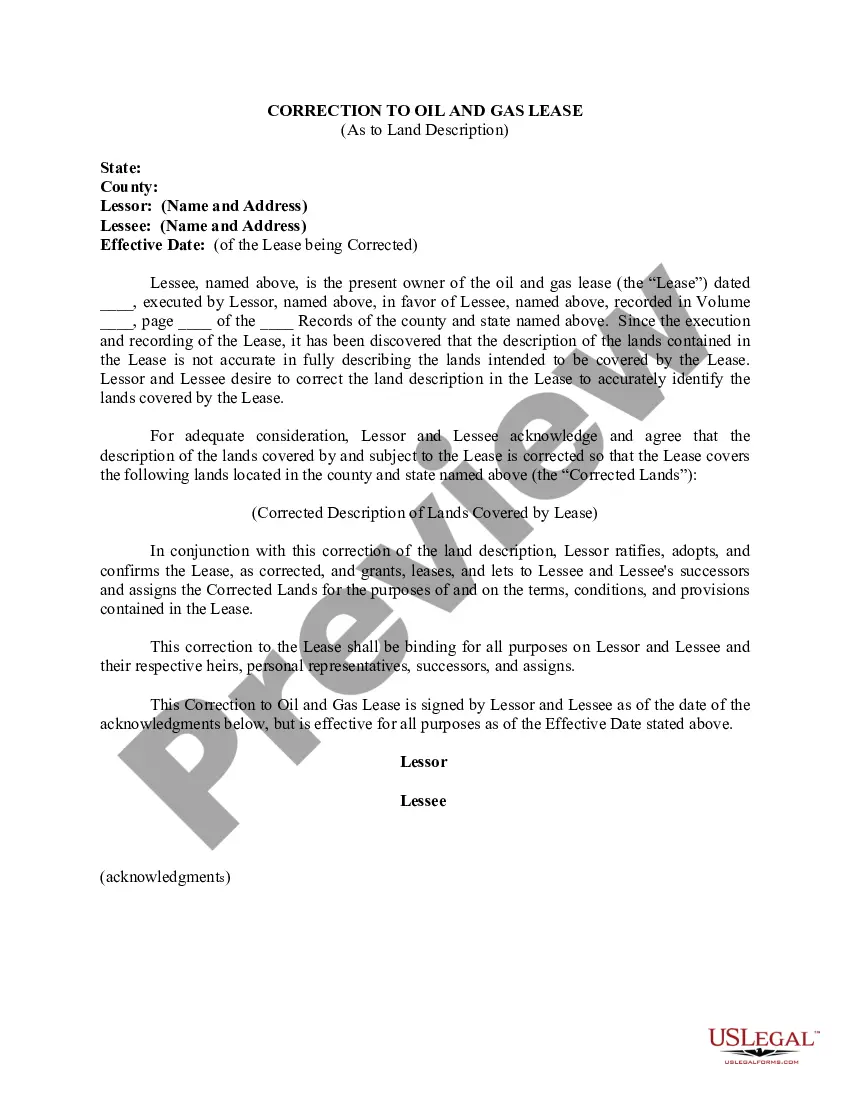
- Detailed legal description of the property being corrected, including lot and block numbers.
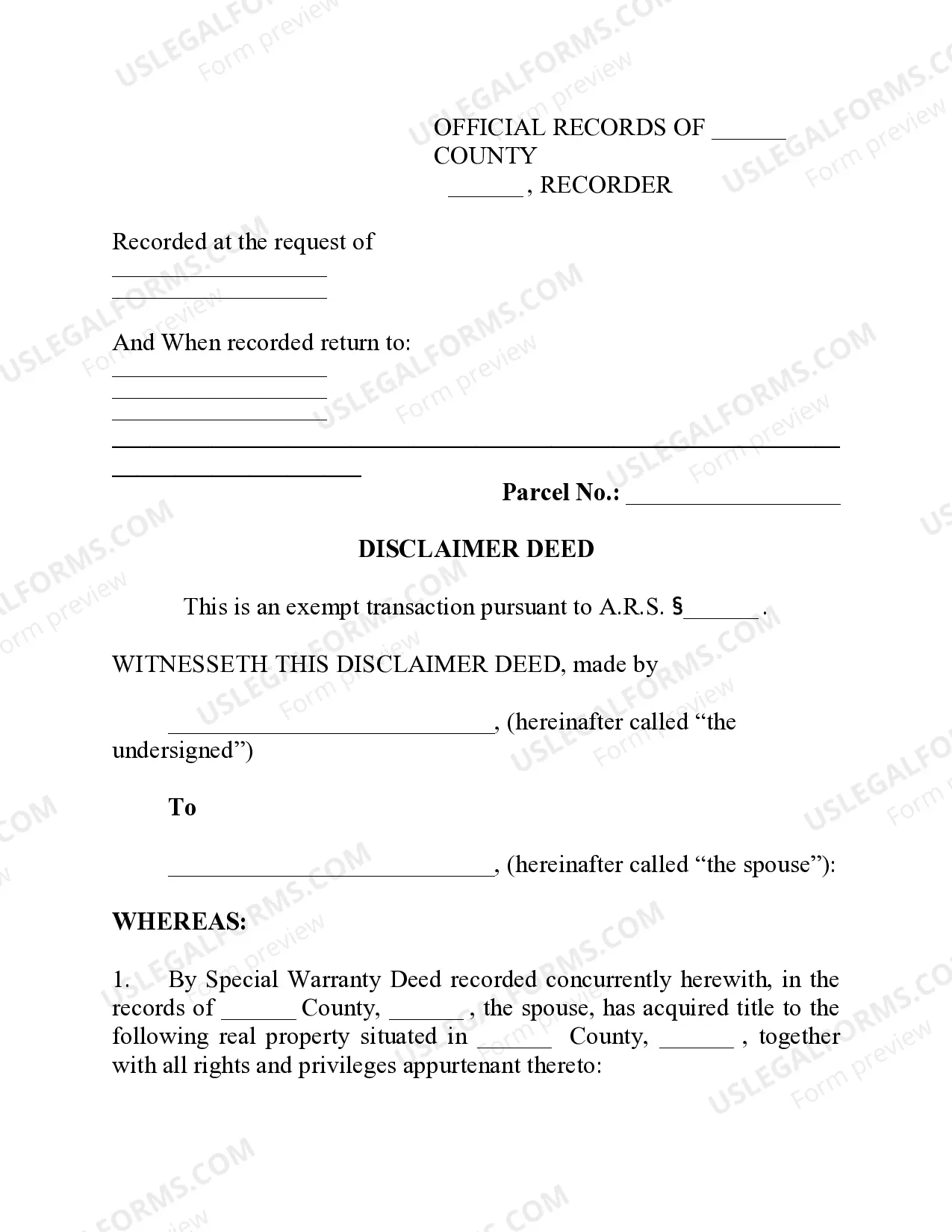
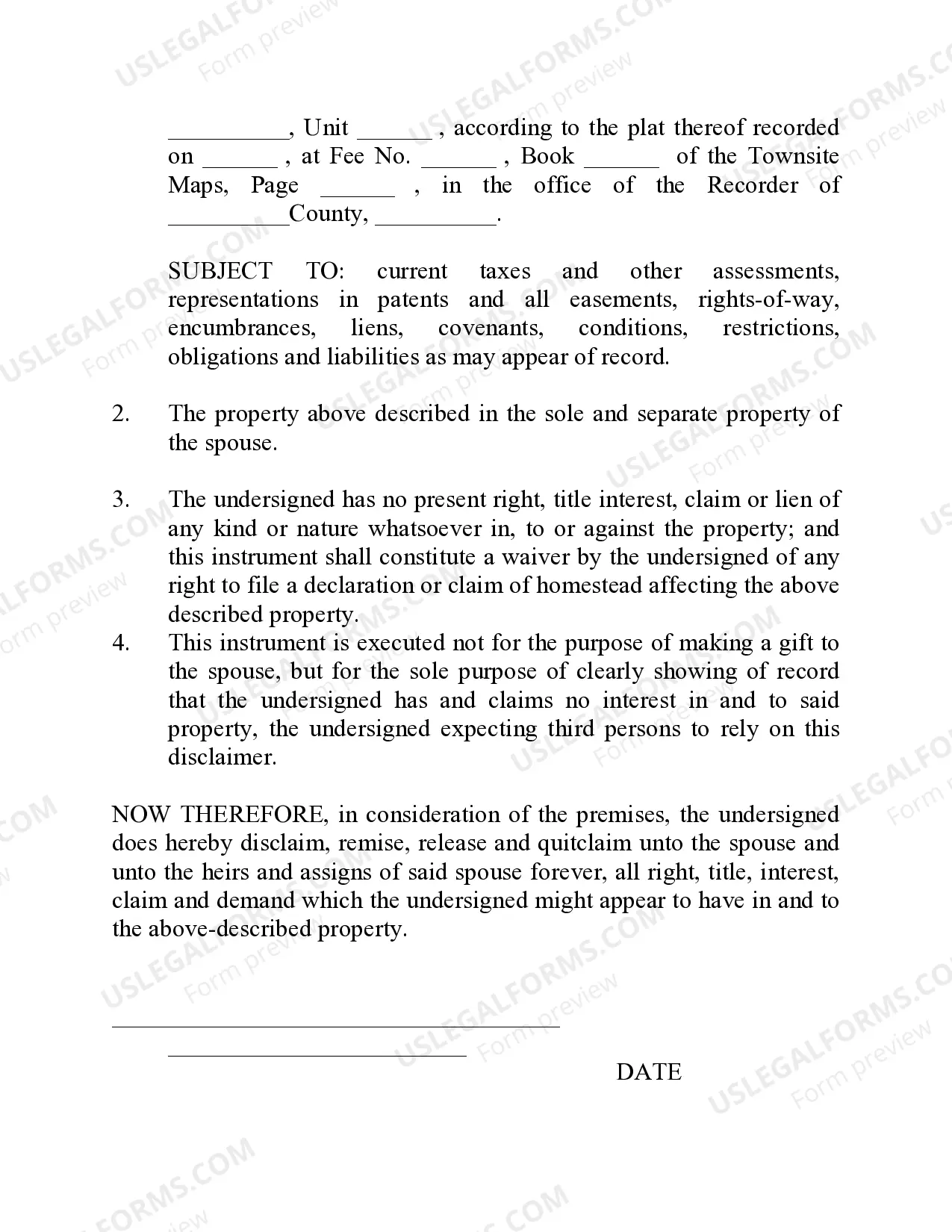
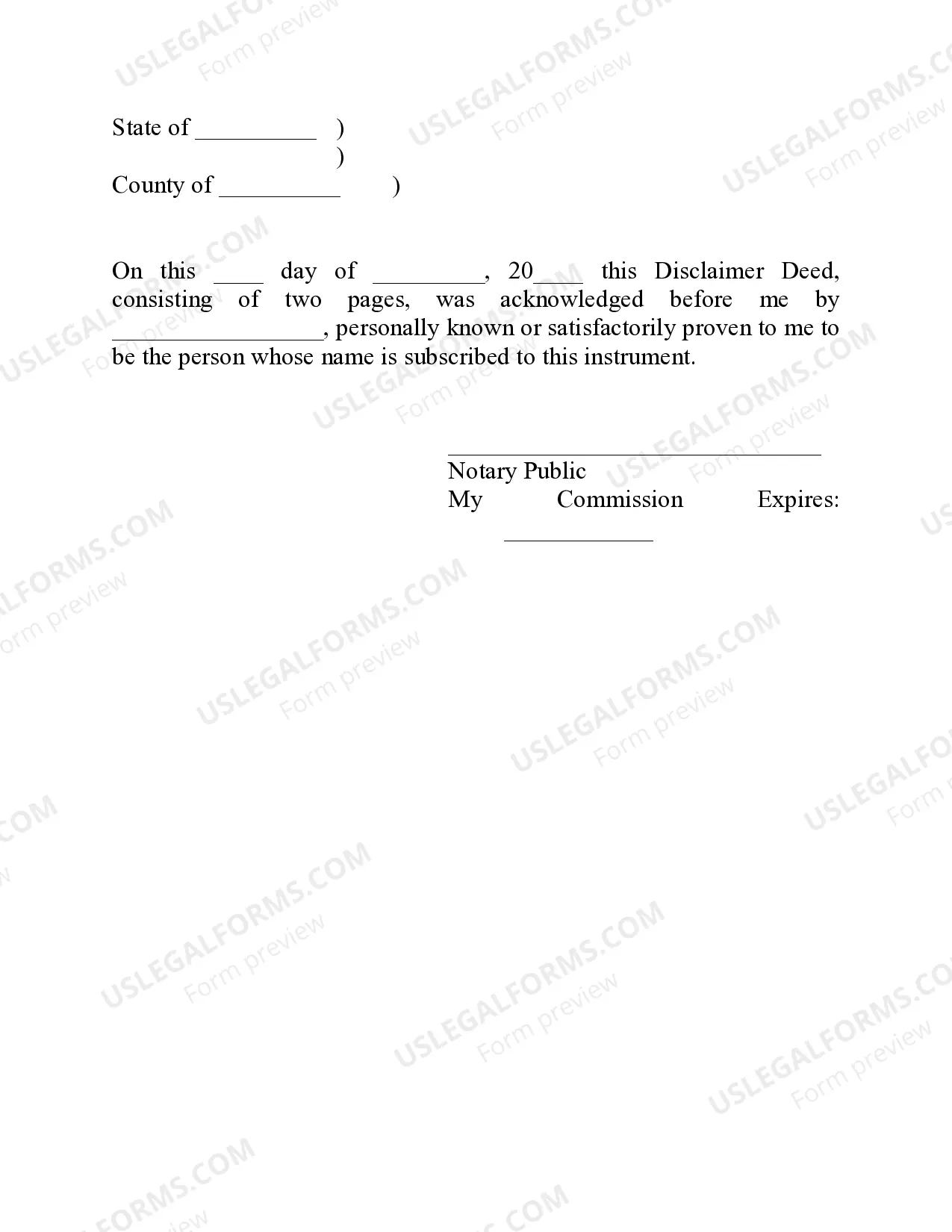
- Disclaimer clause indicating no present claim or interest in the property by the undersigned.
- Notary acknowledgment section to validate the correction.

When to use this form
This form should be used when there is a need to correct an inaccurate legal description in a recorded deed that could affect property ownership, transactions, or legal rights. Common scenarios include correcting typographical errors, misdescribed property boundaries, or other mistakes that occurred during the original deed's preparation.
Who should use this form
- Property owners wishing to amend inaccuracies in the legal description of their property.
- Real estate professionals managing property transactions that involve prior mistakes in descriptions.
- Developers or contractors needing to clarify legal descriptions before property sales or improvements.
- Spouses or partners who need to formally disclaim any interest in the property for legal clarity.
Completing this form step by step
- Enter the details of the county and recorder in the designated spaces.
- Specify the parcel number relevant to the property being corrected.
- Clearly articulate the original error in the legal description and provide the correct details.
- Have all necessary parties, including the undersigned, sign the form.
- Arrange for the document to be notarized to ensure its legal validity.
- Submit the completed form to the recorder's office for official recording.
Is notarization required?
Yes, this form must be notarized to be legally valid. You can take advantage of US Legal Formsâ integrated online notarization, which is available 24/7 through secure video calls, ensuring a convenient process without the need to travel.
Get your form ready online
Our built-in tools help you complete, sign, share, and store your documents in one place.
Make edits, fill in missing information, and update formatting in US Legal Forms—just like you would in MS Word.
Download a copy, print it, send it by email, or mail it via USPS—whatever works best for your next step.
Sign and collect signatures with our SignNow integration. Send to multiple recipients, set reminders, and more. Go Premium to unlock E-Sign.
If this form requires notarization, complete it online through a secure video call—no need to meet a notary in person or wait for an appointment.
We protect your documents and personal data by following strict security and privacy standards.

Make edits, fill in missing information, and update formatting in US Legal Forms—just like you would in MS Word.

Download a copy, print it, send it by email, or mail it via USPS—whatever works best for your next step.

Sign and collect signatures with our SignNow integration. Send to multiple recipients, set reminders, and more. Go Premium to unlock E-Sign.

If this form requires notarization, complete it online through a secure video call—no need to meet a notary in person or wait for an appointment.

We protect your documents and personal data by following strict security and privacy standards.
Common mistakes
- Failing to accurately specify the original legal error.
- Inaccurate or missing signatures can invalidate the form.
- Not verifying the correct legal description before submitting the correction.
- Neglecting to notarize the form when required.
Benefits of completing this form online
- Convenient access to the form allows users to complete it at their own pace.
- Editability ensures that information can be corrected easily before finalizing.
- Reliable templates drafted by licensed attorneys enhance legal accuracy.
Looking for another form?
Form popularity
FAQ
To correct a title mistake in Georgia, you typically must file a quiet title action or use a corrective deed, depending on the nature of the mistake. This action clarifies ownership, addressing any issues stemming from previous deeds. Engaging with platforms like US Legal can simplify the Arizona Correction of Legal Description process, making corrections easier and more efficient.
For a deed to be valid in Georgia, it must be in writing, signed by the grantor, and delivered to the grantee. It should accurately describe the property, including its legal description. Additionally, legality requires the deed to be recorded with the appropriate government office. Learning about the Arizona Correction of Legal Description could enhance your understanding of valid deeds in the state.
Correcting an error in a deed requires that you create a corrective deed that specifies the mistake and outlines the correct information. This deed should include the original deed's reference and a clear statement of correction. After signing, you will need to record this corrective deed with the local Clerk of Superior Court to ensure that the Arizona Correction of Legal Description is officially recognized.
To change a deed in Georgia, you need to prepare a new deed that reflects the desired changes. This document must include the current property description, the names of the parties involved, and the date of the transaction. Once completed, you can file the new deed with your county's Clerk of Superior Court. Utilizing resources like the US Legal platform ensures accurate handling of the Arizona Correction of Legal Description process.
To transfer property to a family member in Arizona, you need to prepare a new deed that clearly states the transfer of ownership. You will fill in the necessary details, including a legal description, to ensure the transfer is valid. For any assistance with the Arizona Correction of Legal Description, you may consider using USLegalForms, which provides the tools to help facilitate a smooth transfer process.
Yes, you can transfer a deed without an attorney in Arizona, as long as you follow the proper legal procedures. However, it's beneficial to understand the requirements thoroughly to avoid mistakes, especially concerning the Arizona Correction of Legal Description. USLegalForms offers resources that can guide you through the process, making it straightforward and accessible.
To find the legal description of a property in Arizona, you can start by checking online property records through the county assessor's or recorder's website. If you are unsure, you may also visit the county office in person, where staff can assist you. Remember, having the correct legal description is important for any necessary corrections, including the Arizona Correction of Legal Description.
Typically, the current property owner or grantor can initiate the process to change the name on a deed. This often includes filling out a new deed form that corrects the name as part of the Arizona Correction of Legal Description procedure. In some cases, a family member or an authorized representative can also assist in this process, ensuring the updated information is correctly recorded.
In Arizona, legal requirements for recording a deed include completing the deed form accurately and ensuring it is signed by the grantor. The deed must contain a legal description of the property, which is critical for the Arizona Correction of Legal Description process. Once the deed is properly executed, it must be submitted to the county recorder's office for it to be officially recorded and thus become part of public records.
To fix an error in the title history in Arizona, you usually need to use a specific form known as the Arizona Correction of Legal Description. This document allows you to correct inaccuracies while ensuring the title remains clear and marketable. Once you have filled out the correction form, ensure it is signed and notarized. Finally, file it with the county recorder to address the error properly.