Illinois Installments Fixed Rate Promissory Note Secured by Residential Real Estate
About this form
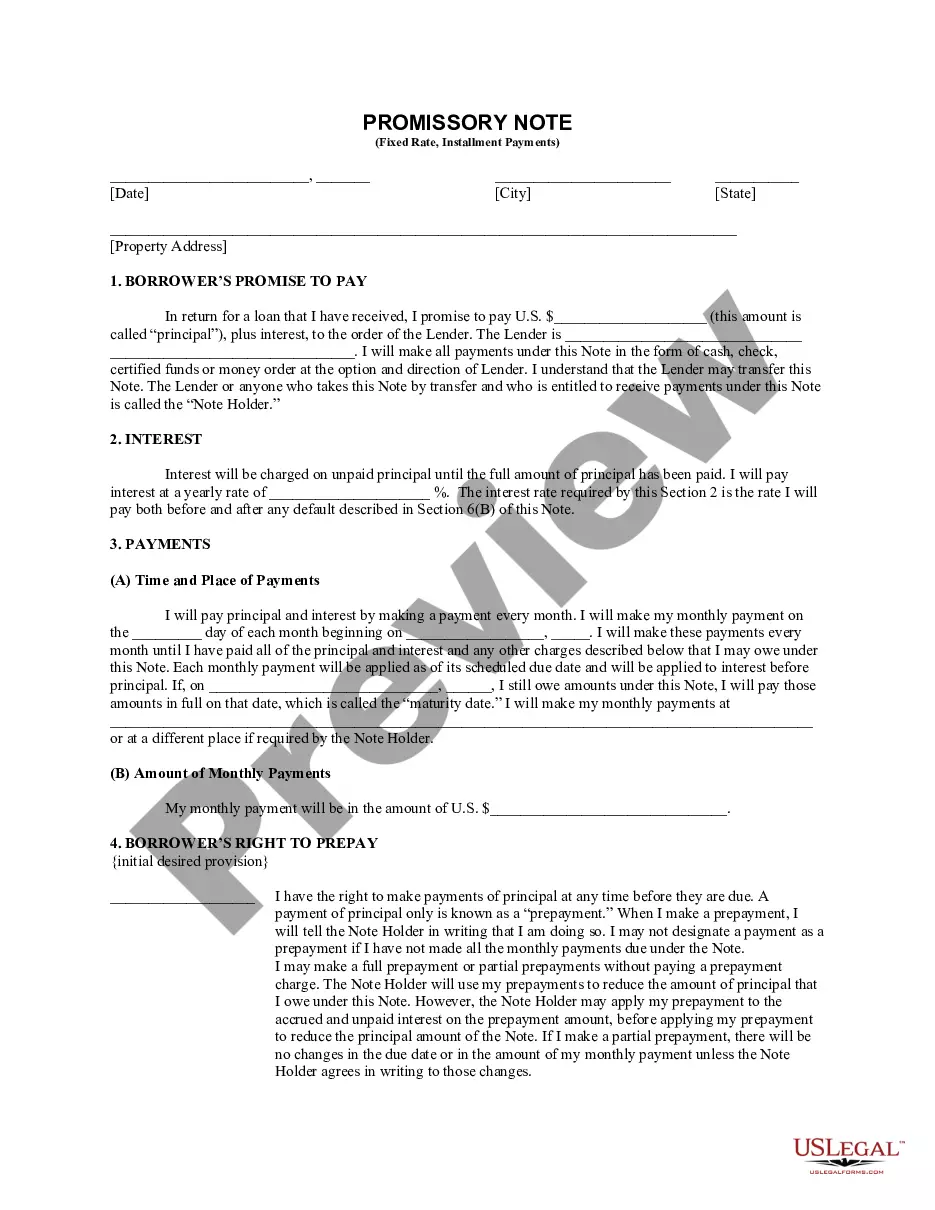
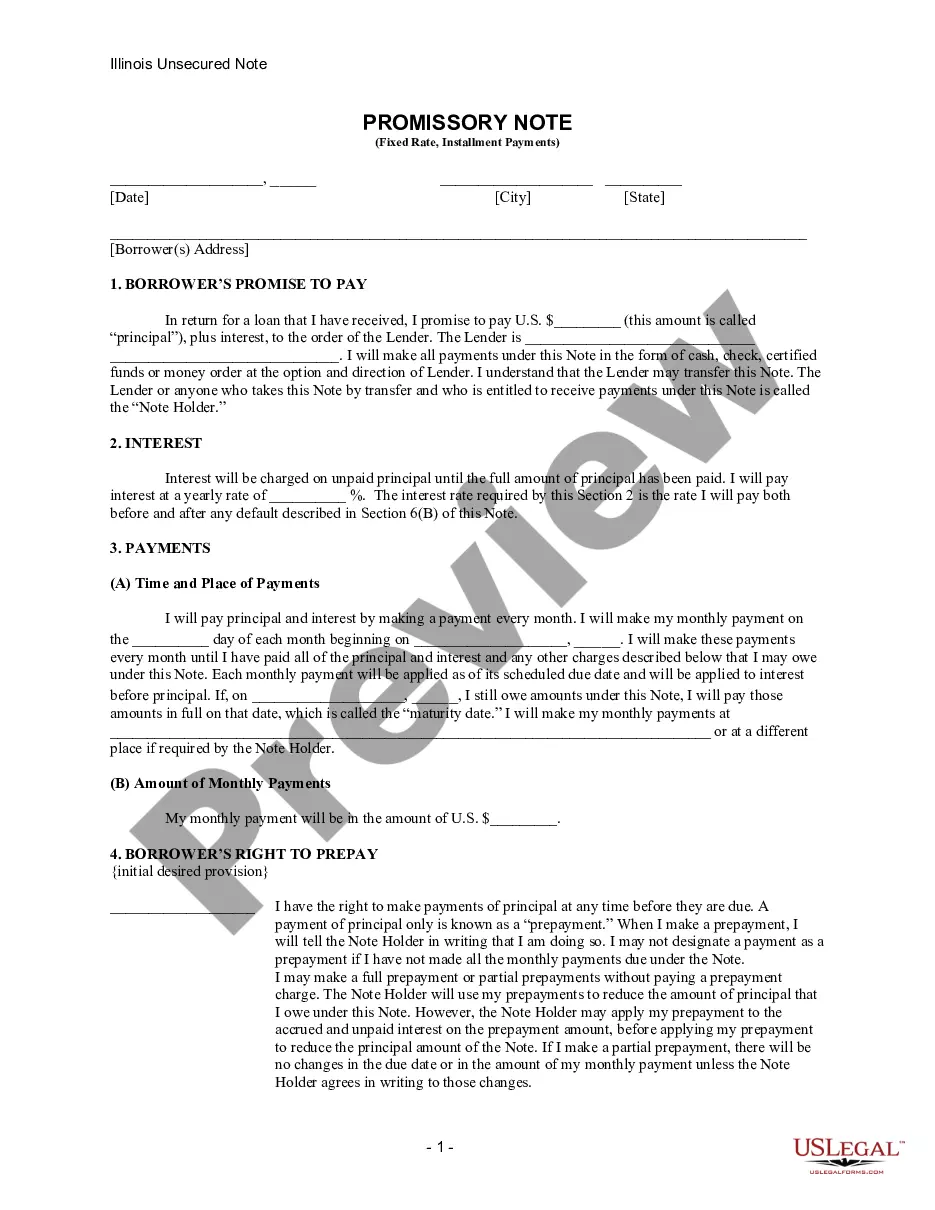
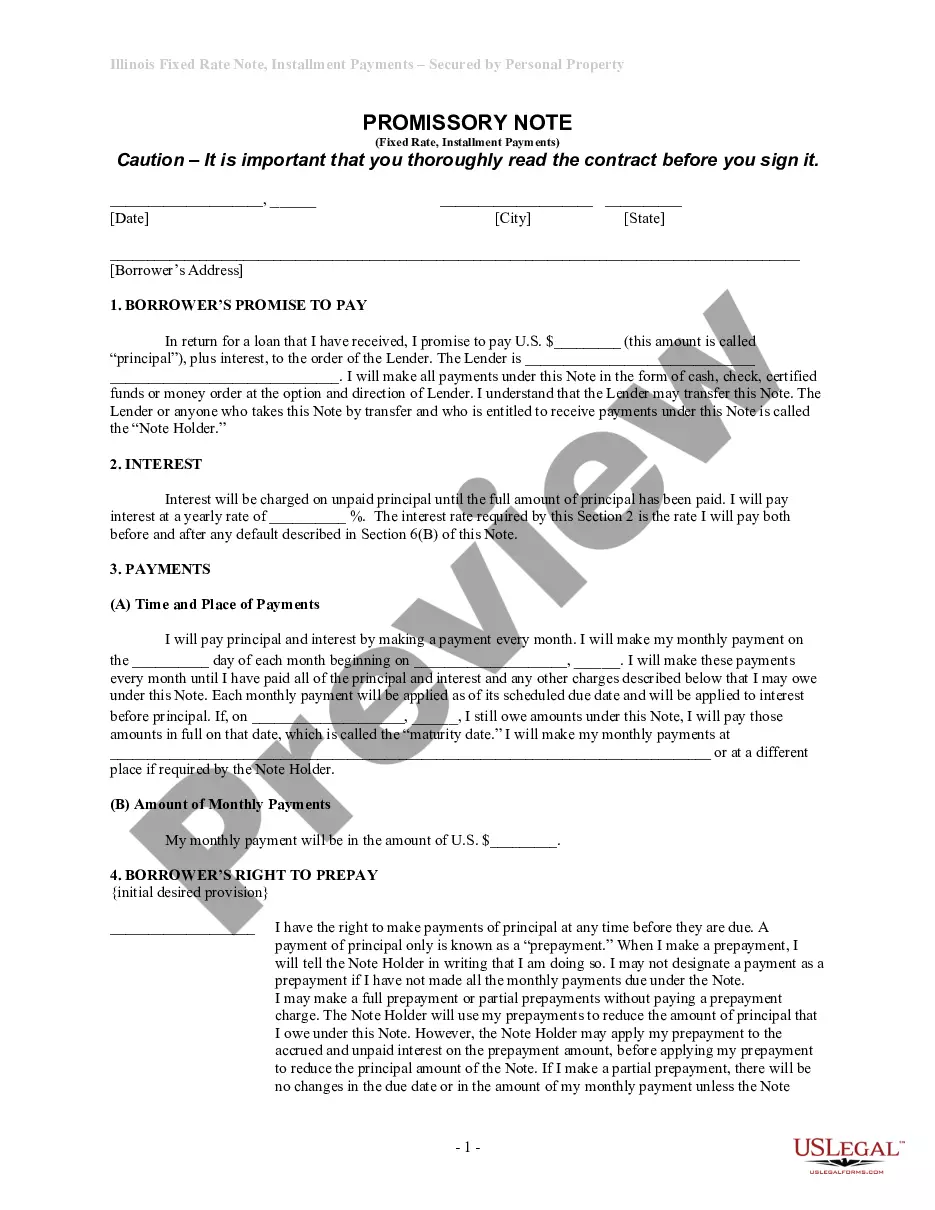
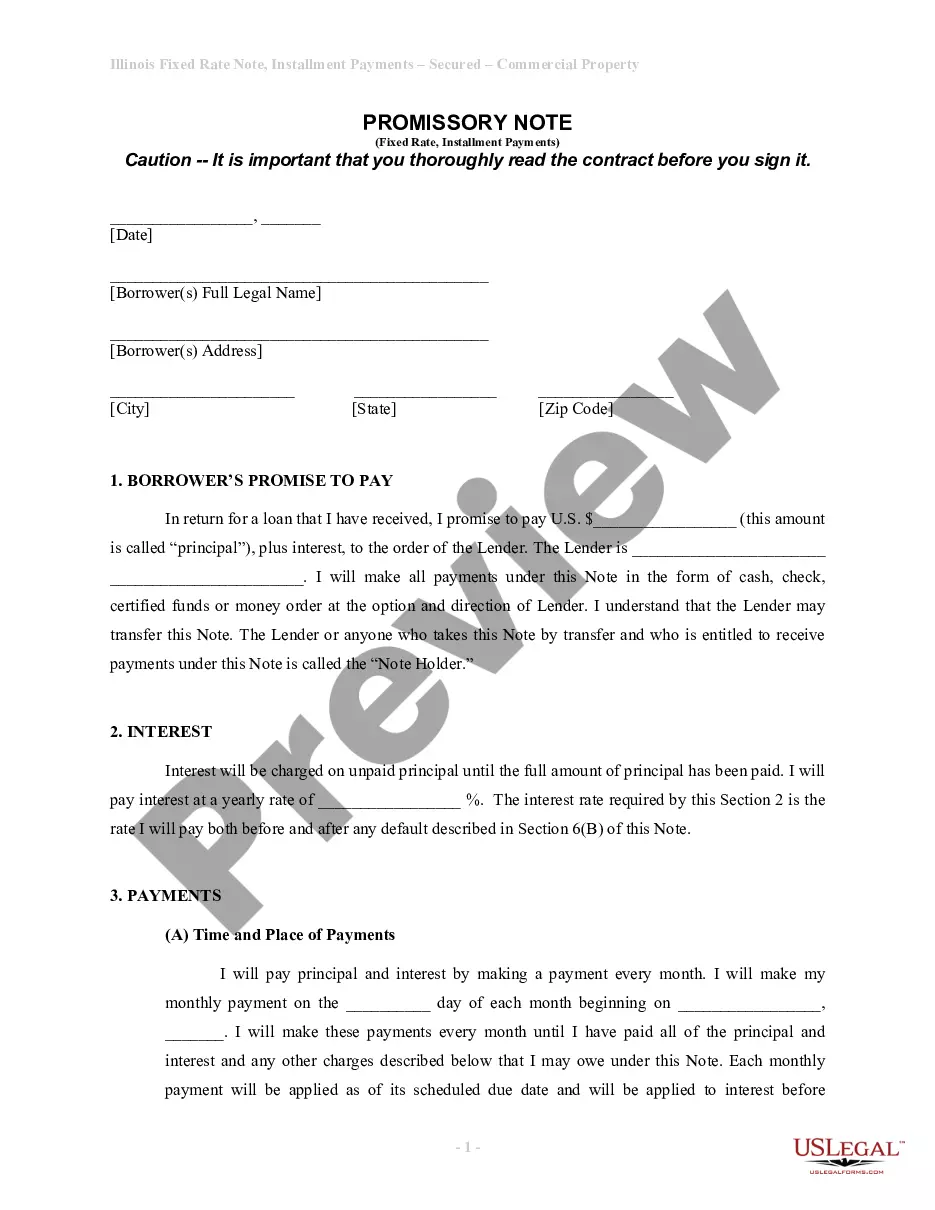
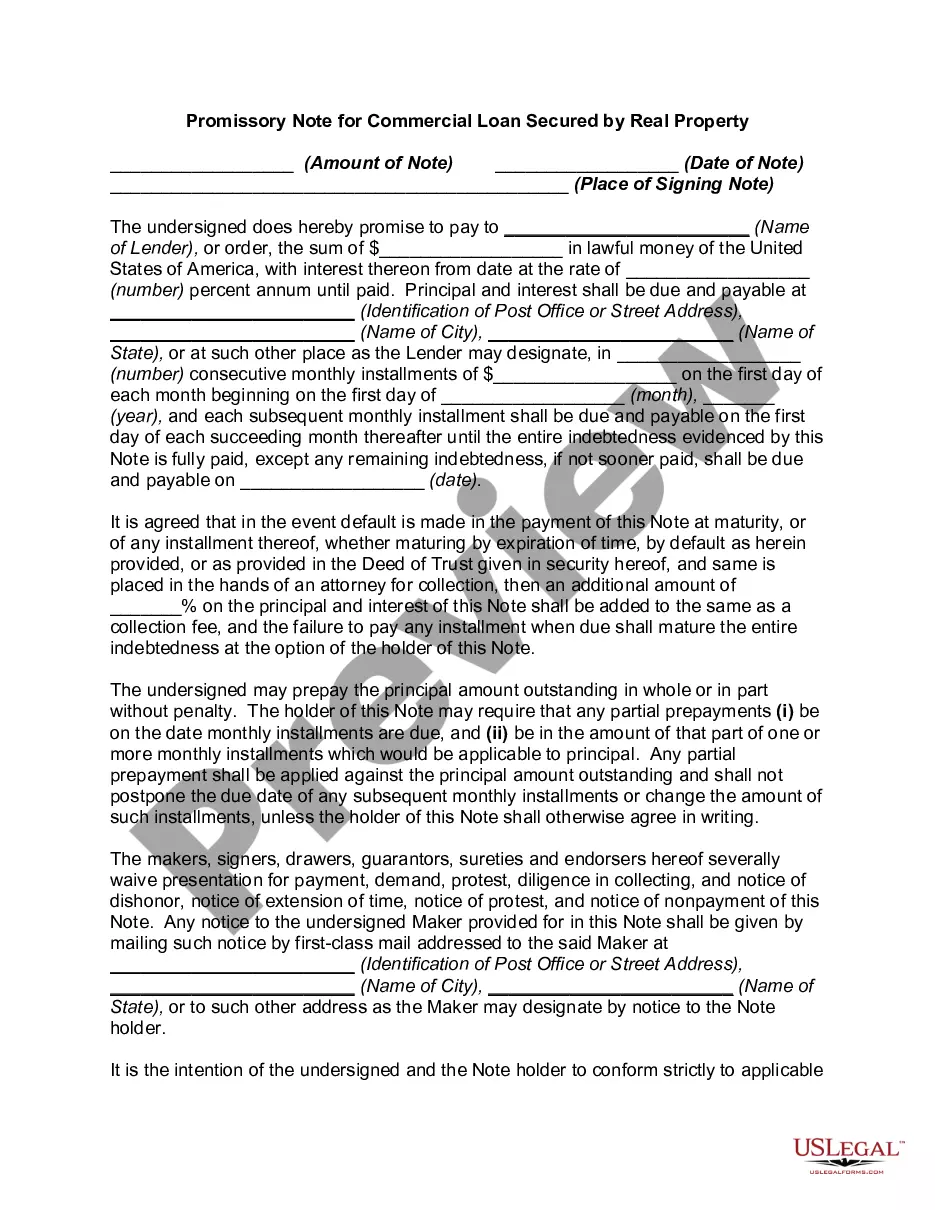
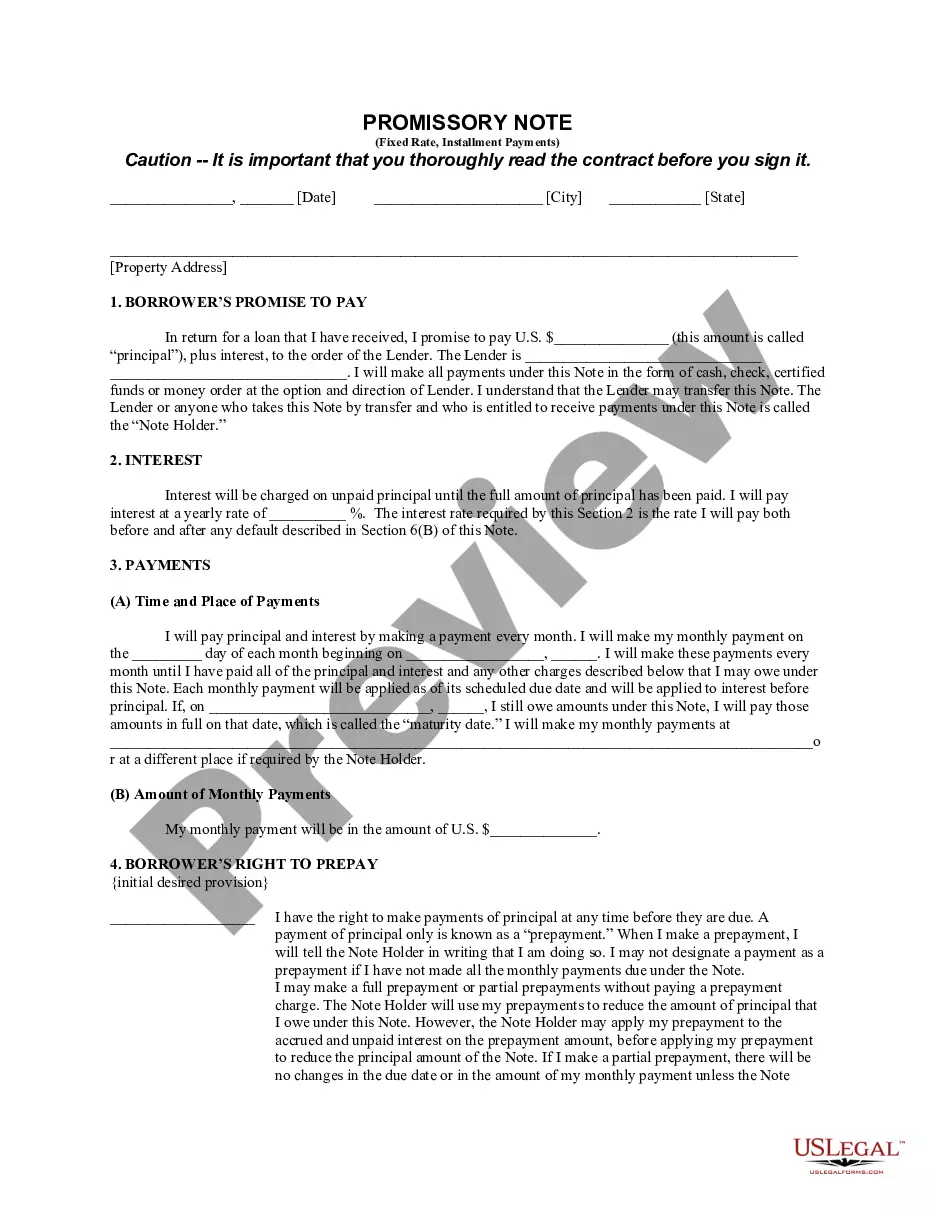
The Illinois Installments Fixed Rate Promissory Note Secured by Residential Real Estate is a legal document in which a borrower promises to repay a loan with interest over a specified period. This form is specifically designed to secure the loan with residential property as collateral. Unlike other promissory notes, it includes terms for fixed-rate installment payments and the obligations of both the borrower and lender, providing clarity and legal protection for both parties involved.
Main sections of this form
- Borrower's promise to pay the principal amount plus interest.
- Interest rate details and conditions for its application.
- Payment schedule outlining due dates and amounts.
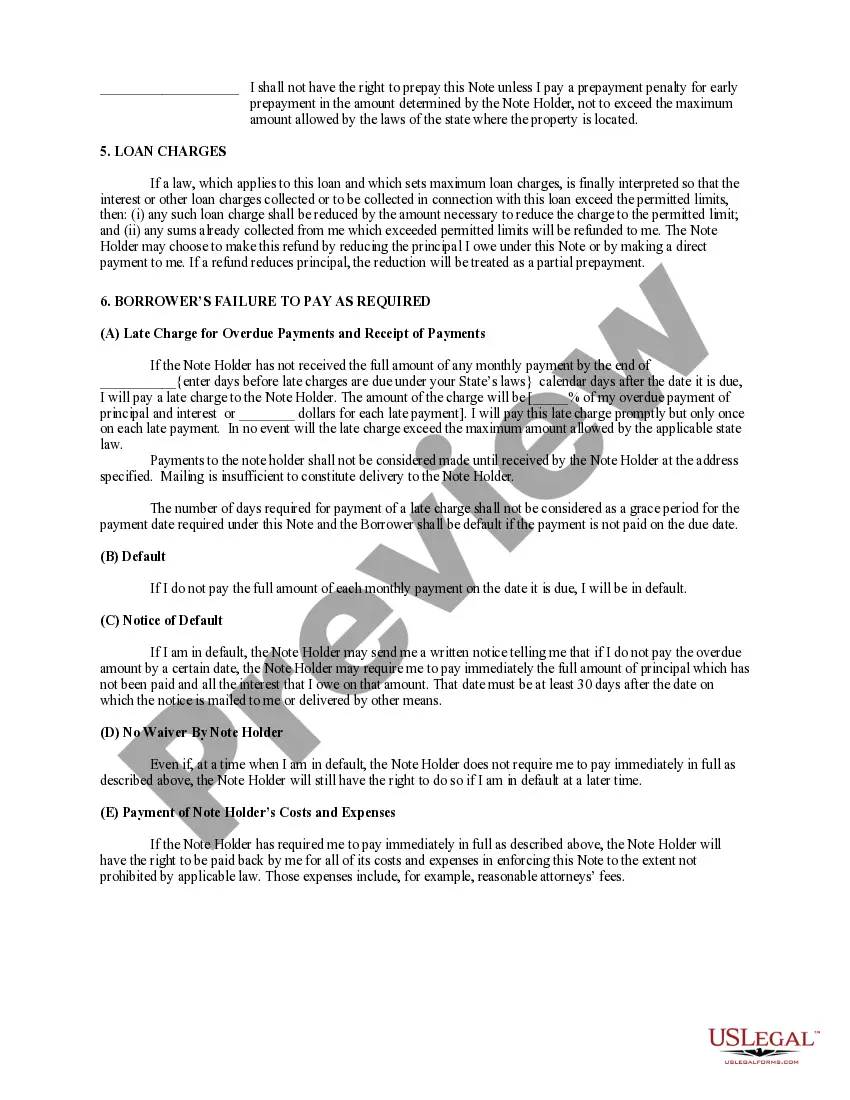
- Borrower's right to make prepayments and associated conditions.
- Consequences of late payments, including late charges and default terms.
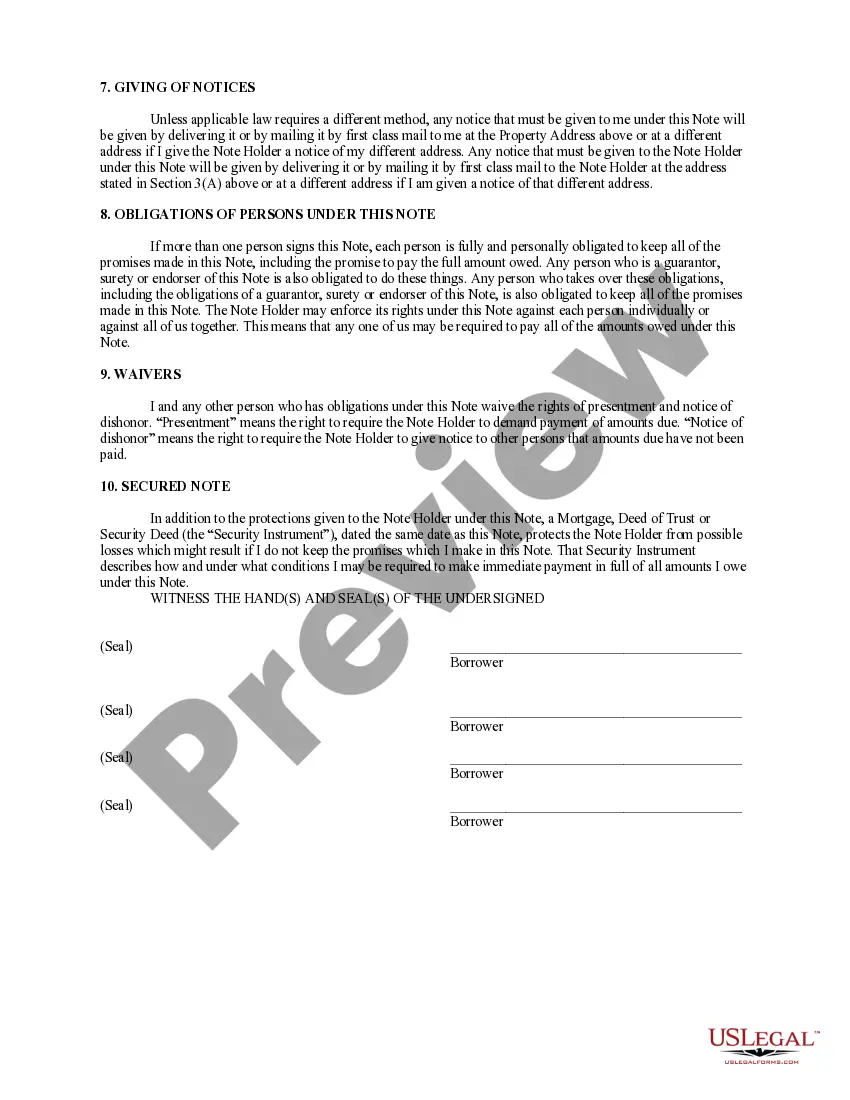
- Secured nature of the note, specifying the mortgage or deed of trust requirements.
When this form is needed
This form should be used when you, as a borrower, are obtaining a fixed-rate loan that is secured by a residential property. It is ideal for situations where the lender wants clear terms regarding repayment and the collateral involved. Additionally, use this form when both parties need to understand their rights and obligations in the lending agreement.
Intended users of this form
This form is suitable for:
- Individuals borrowing money secured by their residential property.
- Lenders providing loans for the purchase or refinancing of residential real estate.
- Parties looking for a clear structure in installment payment agreements.
How to complete this form
- Identify the parties involved, including the borrower and lender.
- Specify the loan amount and interest rate on the principal.
- Fill out the payment schedule, noting the monthly payment amounts and due dates.
- Include any prepayment options and conditions related to late payment penalties.
- Sign and date the document, ensuring all parties acknowledge their agreement.
Is notarization required?
This form does not typically require notarization unless specified by local law. It is advisable to consult local regulations to ensure legal validity in your specific circumstances.
Get your form ready online
Our built-in tools help you complete, sign, share, and store your documents in one place.
Make edits, fill in missing information, and update formatting in US Legal Forms—just like you would in MS Word.
Download a copy, print it, send it by email, or mail it via USPS—whatever works best for your next step.
Sign and collect signatures with our SignNow integration. Send to multiple recipients, set reminders, and more. Go Premium to unlock E-Sign.
If this form requires notarization, complete it online through a secure video call—no need to meet a notary in person or wait for an appointment.
We protect your documents and personal data by following strict security and privacy standards.

Make edits, fill in missing information, and update formatting in US Legal Forms—just like you would in MS Word.

Download a copy, print it, send it by email, or mail it via USPS—whatever works best for your next step.

Sign and collect signatures with our SignNow integration. Send to multiple recipients, set reminders, and more. Go Premium to unlock E-Sign.

If this form requires notarization, complete it online through a secure video call—no need to meet a notary in person or wait for an appointment.

We protect your documents and personal data by following strict security and privacy standards.
Common mistakes to avoid
- Failing to complete all required fields, including payment amounts and interest rates.
- Not understanding the implications of the prepayment clause.
- Ignoring state-specific terms which could affect loan validity.
Why complete this form online
- Convenience of downloading and filling out from anywhere.
- Editability that allows for customization to your specific needs.
- Reliability, with forms drafted by licensed attorneys to ensure compliance with legal standards.
Looking for another form?
Form popularity
FAQ
Promissory notes are typically recorded as public documents and accessible shortly after the closing. The trustee maintains the original deed until the loan is satisfied. When the loan is paid off, the trustee automatically records a deed of reconveyance at the county recorder's office for safekeeping.
Writing the Promissory Note Terms You don't have to write a promissory note from scratch. You can use a template or create a promissory note online.
Write the date of the writing of the promissory note at the top of the page. Write the amount of the note. Describe the note terms. Write the interest rate. State if the note is secured or unsecured. Include the names of both the lender and the borrower on the note, indicating which person is which.
No. California promissory notes do not need to be notarized or witnessed for validity.
Promissory notes are legally binding whether the note is secured by collateral or based only on the promise of repayment. If you lend money to someone who defaults on a promissory note and does not repay, you can legally possess any property that individual promised as collateral.
Although a promissory note is usually written on a computer and printed out or a pre-made form is filled out, a handwritten promissory note signed by both parties is legal and will stand up in court.
Promissory notes are a valuable legal tool that any individual can use to legally bind another individual to an agreement for purchasing goods or borrowing money. A well-executed promissory note has the full effect of law behind it and is legally binding on both parties.
A promissory note is a contract, a binding agreement that someone will pay your business a sum of money. However under some circumstances if the note has been altered, it wasn't correctly written, or if you don't have the right to claim the debt then, the contract becomes null and void.