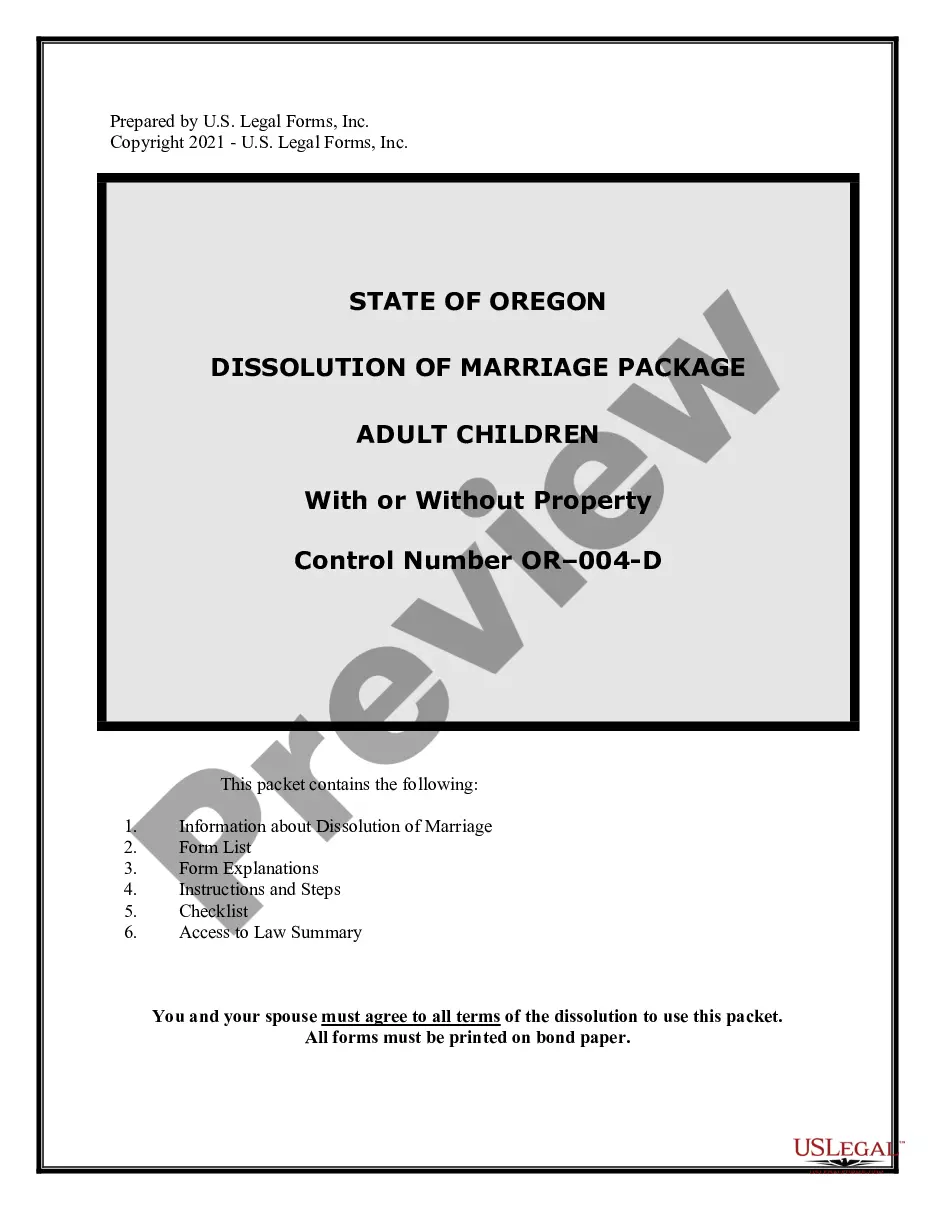
Oregon No-Fault Agreed Uncontested Divorce Package for Dissolution of Marriage for people with Minor Children
What this form package covers
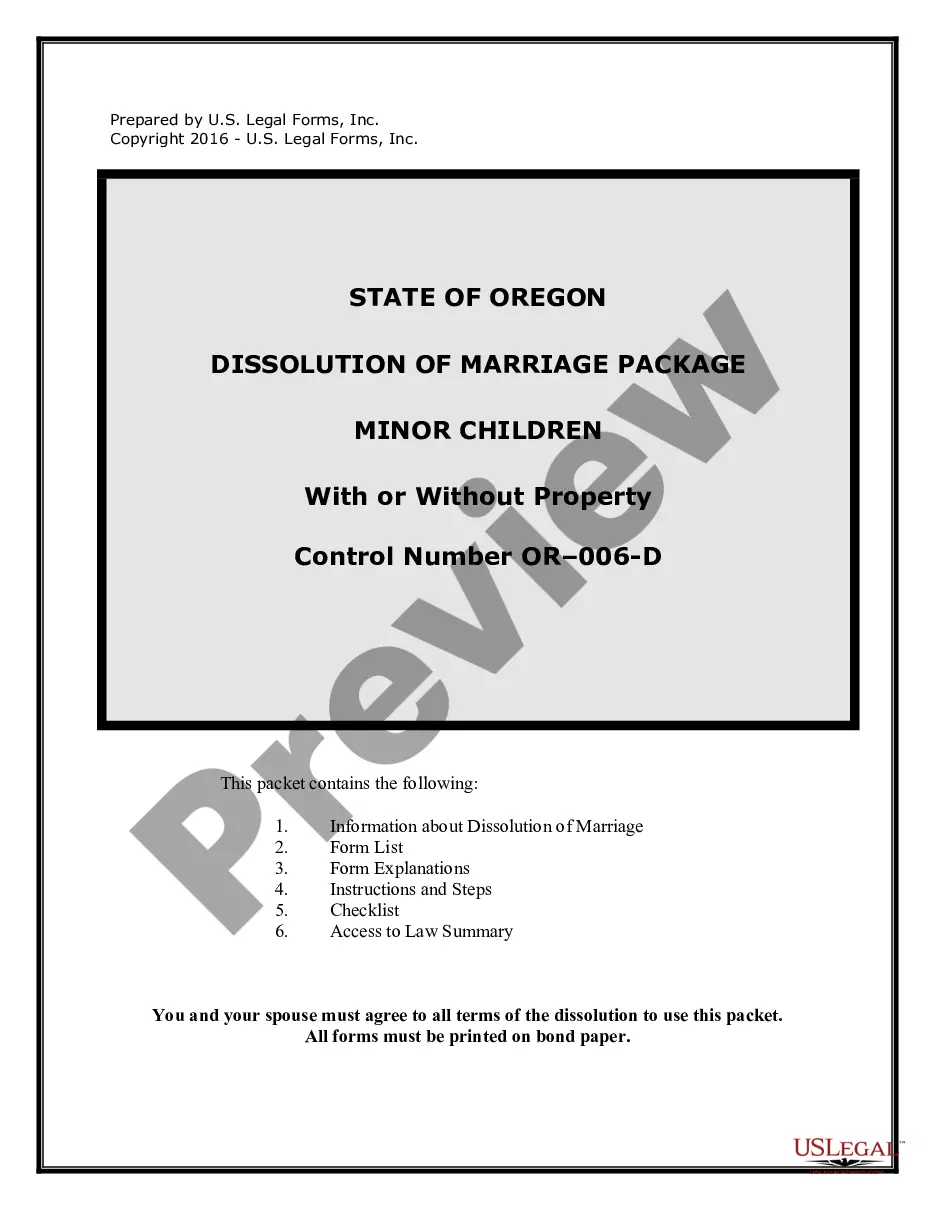
The Oregon No-Fault Agreed Uncontested Divorce Package for Dissolution of Marriage for People with Minor Children is a comprehensive set of legal documents designed for couples seeking a divorce amicably. This package streamlines the divorce process by providing all necessary forms and instructions required to file for a no-fault divorce in Oregon. It is specifically tailored for couples with minor children who agree on all terms of the dissolution, ensuring a smoother legal journey compared to contested divorce packages.
What’s included in this form package
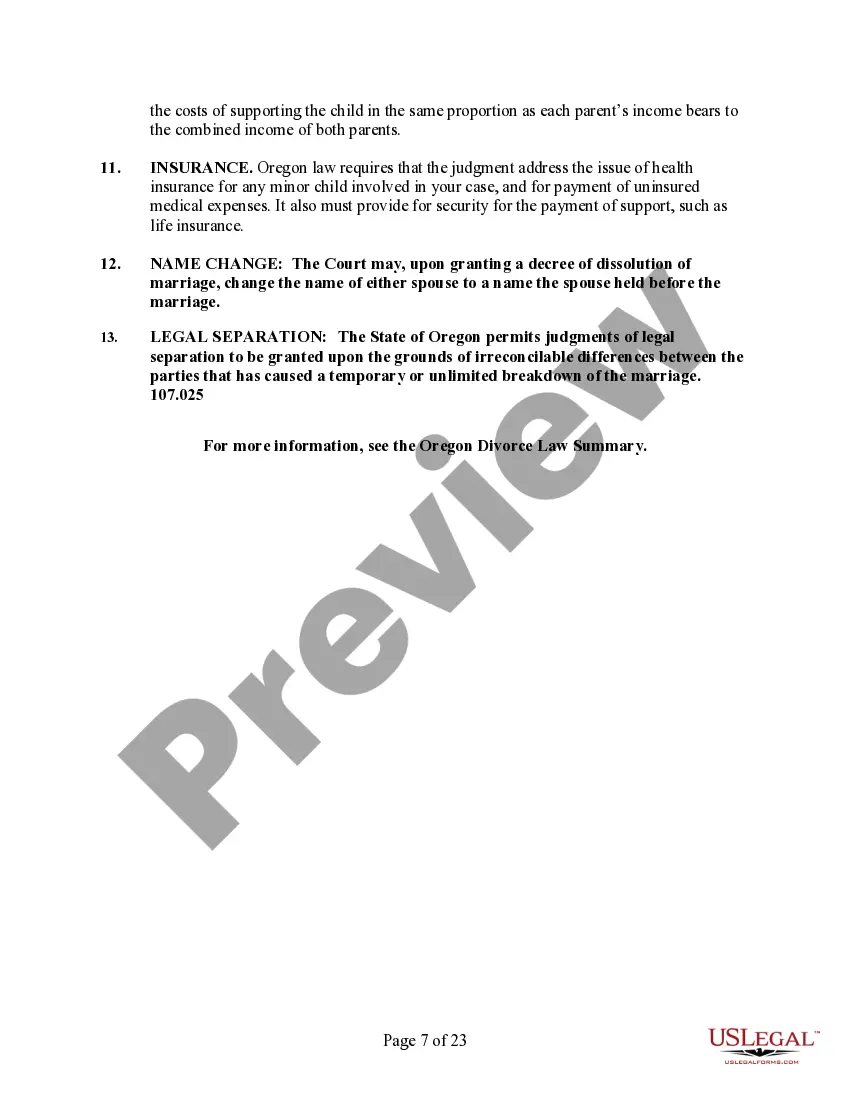
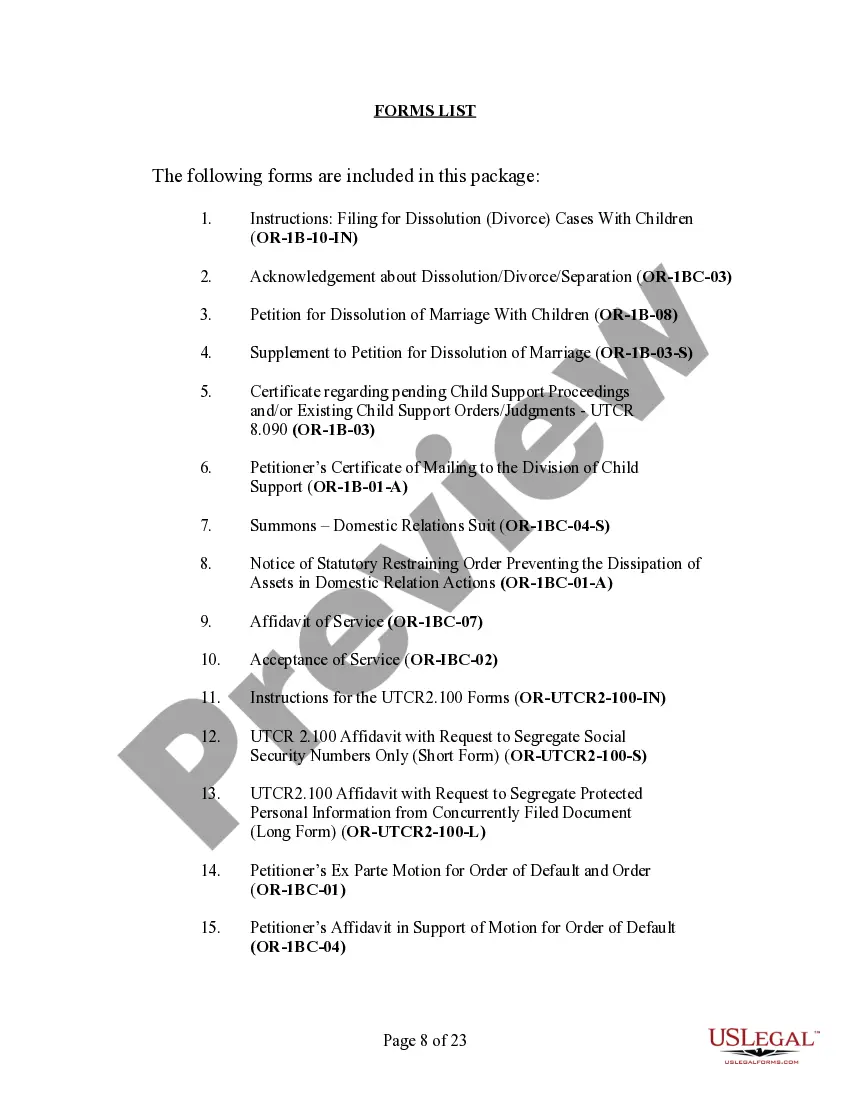
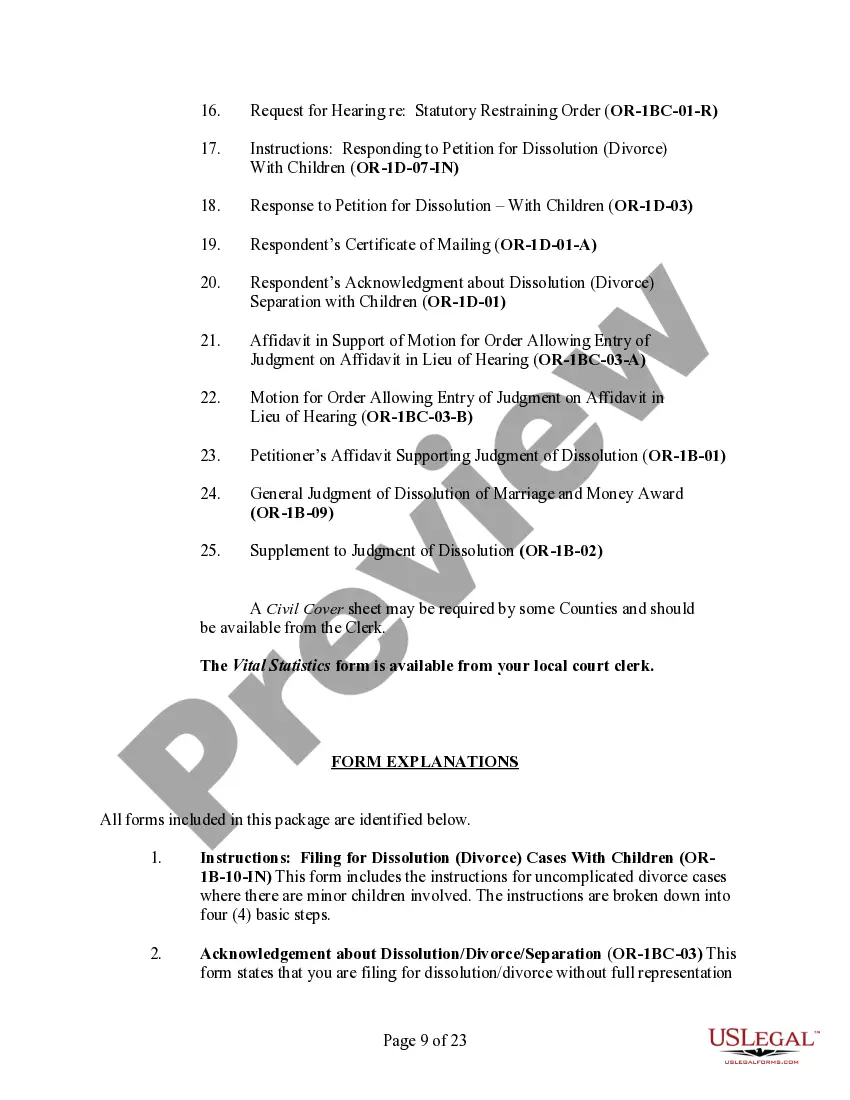
- Instructions - Filing for Dissolution (Divorce) With Children
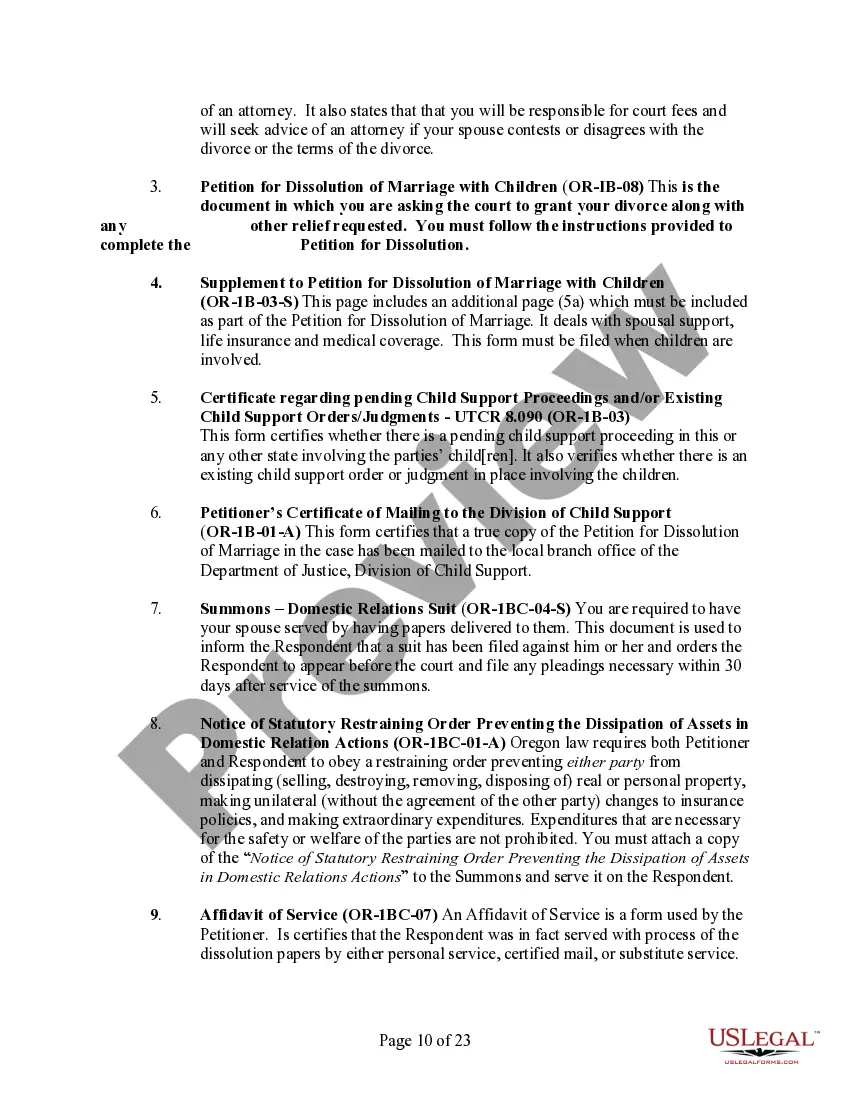
- Petition for Dissolution of Marriage
- Petitioner's Certificate of Mailing to the Division of Child Support
- Summons - Domestic Relations Suit
- Certificate of Service
- Acceptance of Service
- Petitioner's Ex Parte Motion for Order of Default and Declaration in Support
- Order on Motion for Default
- Instructions - Responding to Petition for Dissolution (Divorce) - With Children
- Response to Petition for Dissolution - With Children
- General Judgment of Dissolution of Marriage
- Record of Dissolution of Marriage, Annulment, or Registered Domestic Partnership
- Confidential Information Form (CIF)
- Notice of Filing of Confidential Information Form
- Notice Of Proposed Judgment Or Order
- Declaration Supporting General Judgment of Dissolution of Marriage


Situations where these forms applies
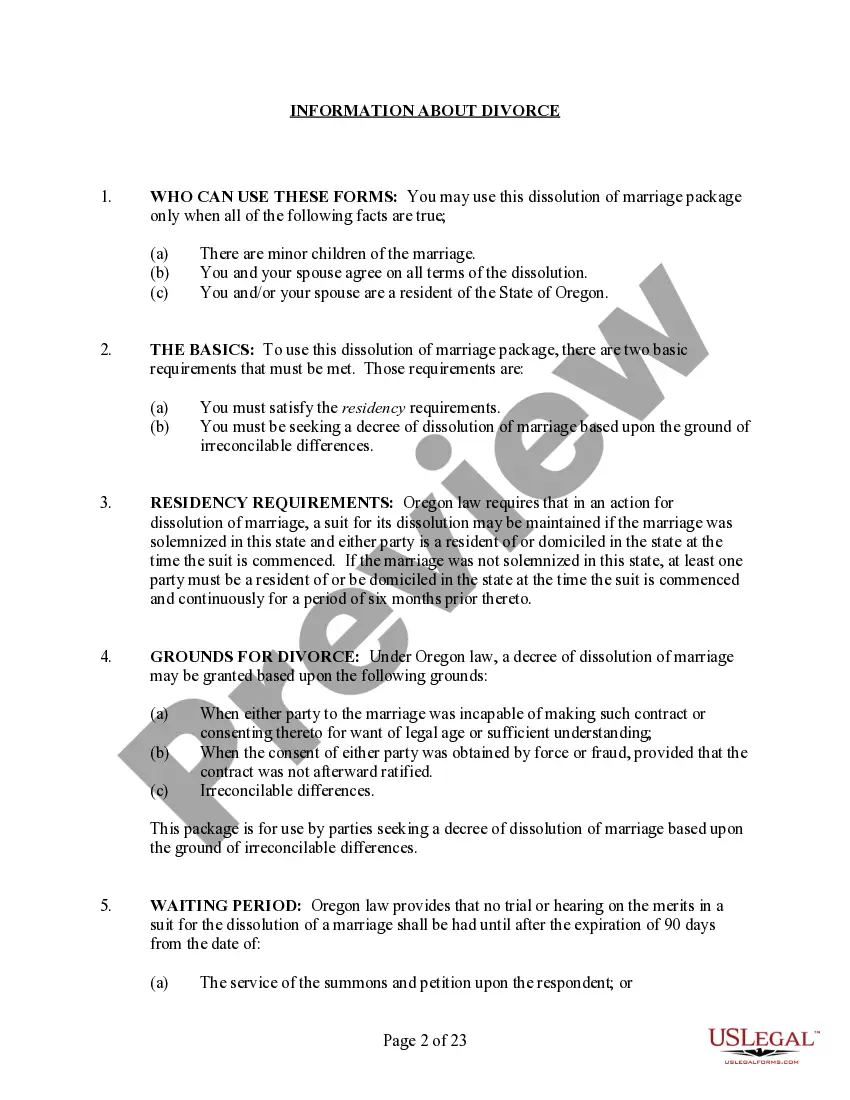
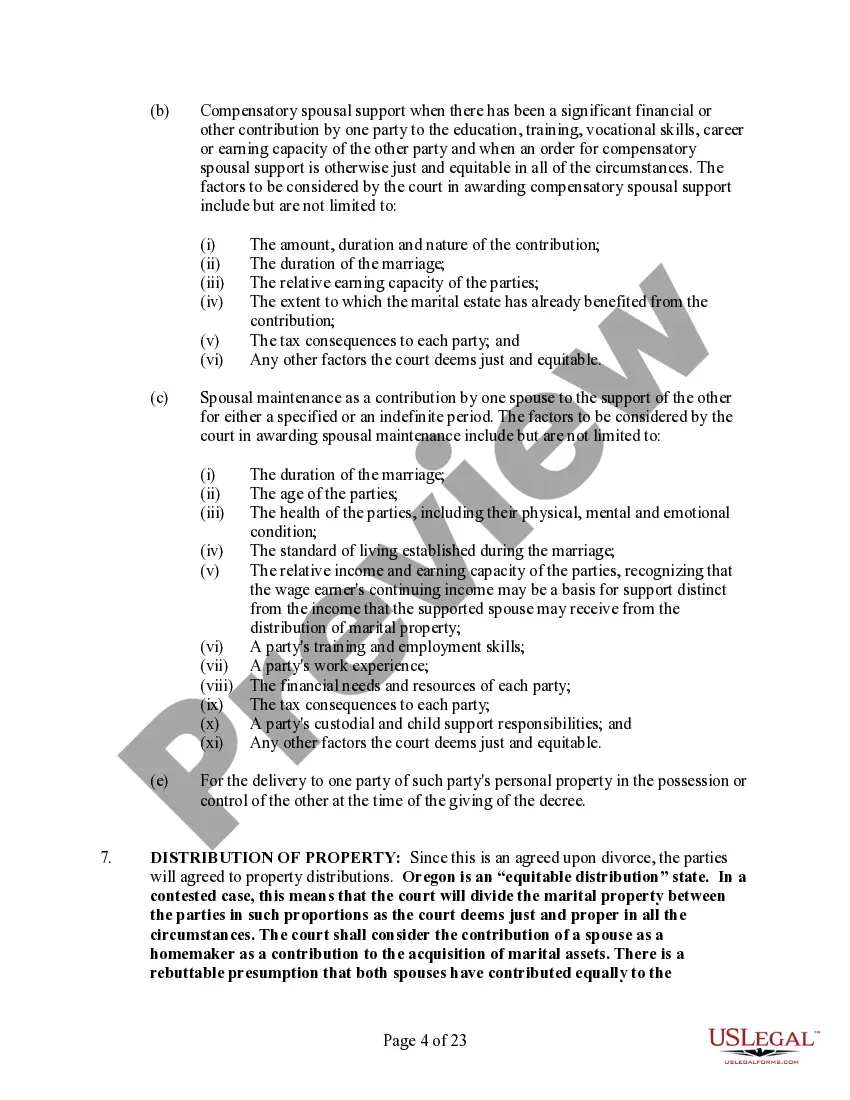
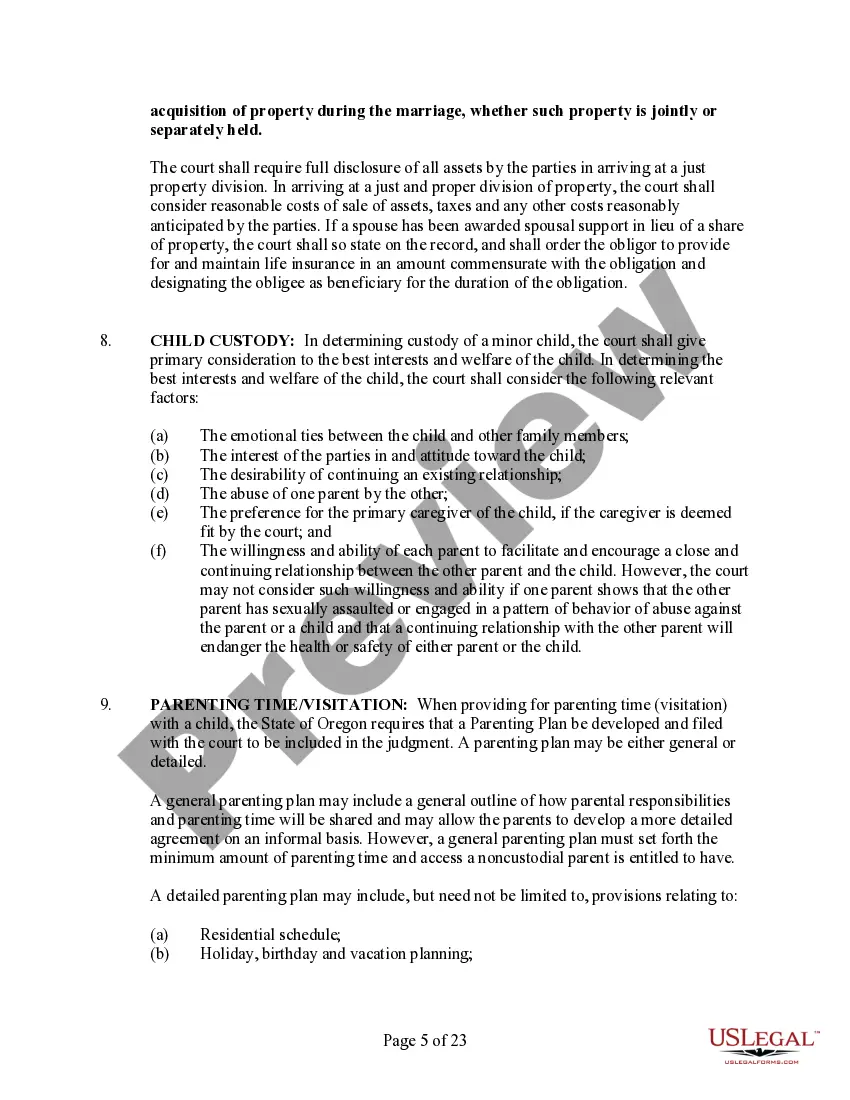
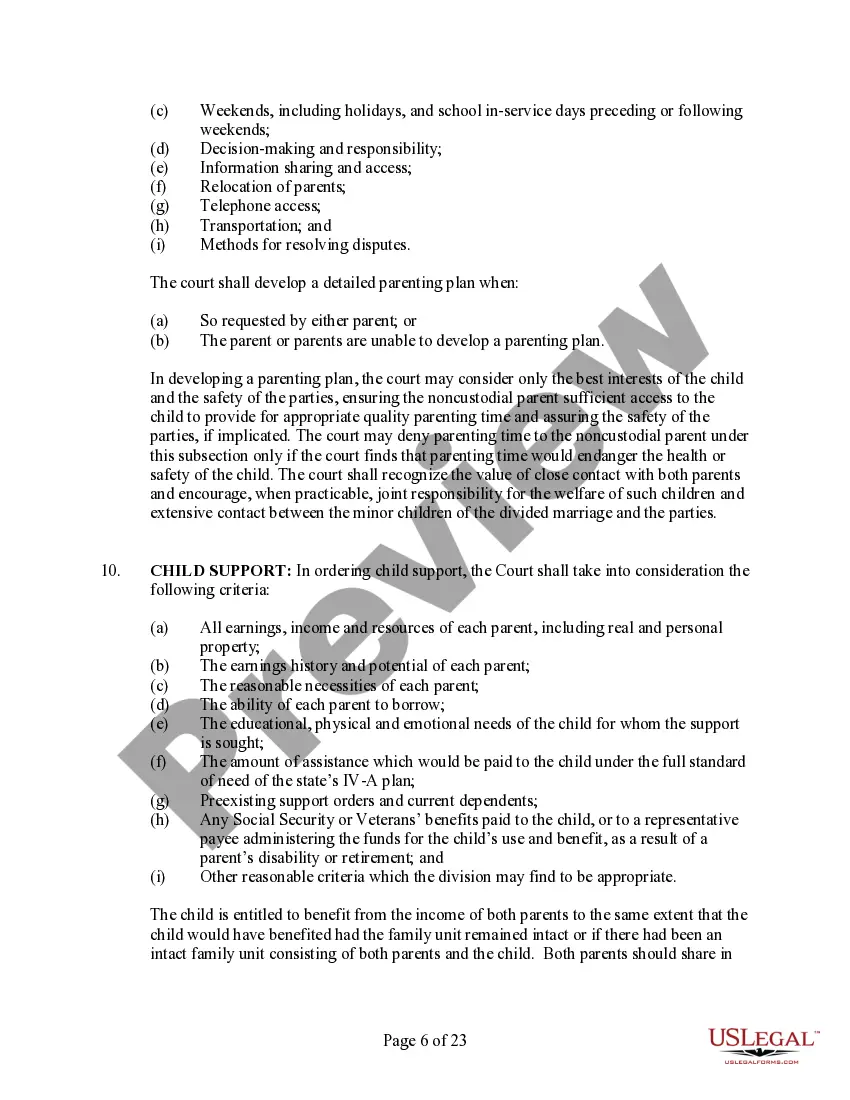
You may use this form package if you and your spouse have reached an agreement on the terms of your divorce. This includes arrangements regarding child custody, child support, and the division of property. The package is also applicable if you are residents of Oregon and have minor children that need to be considered during the divorce process.
Who can use this document
- Couples who have minor children and wish to divorce amicably.
- Residents of Oregon seeking to file for a no-fault divorce based on irreconcilable differences.
- Individuals who do not wish to engage in a contested divorce process.
- Spouses who fully agree on the terms of the divorce, including child custody and support arrangements.
How to prepare this document
- Review all included forms and ensure you understand each one.
- Fill out the necessary forms completely, using your full names and accurate information.
- Sign all applicable forms in front of a notary public if required.
- Make copies of all completed forms for your records and for your spouse.
- File the original forms with the court clerk and pay any required filing fees.
- Serve your spouse with copies of the filed documents according to state guidelines.
Do forms in this package need to be notarized?
Some included forms must be notarized to ensure validity. US Legal Forms provides secure online notarization powered by Notarize, allowing you to complete the process through a verified video call anytime.
Get your form ready online
Our built-in tools help you complete, sign, share, and store your documents in one place.
Make edits, fill in missing information, and update formatting in US Legal Forms—just like you would in MS Word.
Download a copy, print it, send it by email, or mail it via USPS—whatever works best for your next step.
Sign and collect signatures with our SignNow integration. Send to multiple recipients, set reminders, and more. Go Premium to unlock E-Sign.
If this form requires notarization, complete it online through a secure video call—no need to meet a notary in person or wait for an appointment.
We protect your documents and personal data by following strict security and privacy standards.

Make edits, fill in missing information, and update formatting in US Legal Forms—just like you would in MS Word.

Download a copy, print it, send it by email, or mail it via USPS—whatever works best for your next step.

Sign and collect signatures with our SignNow integration. Send to multiple recipients, set reminders, and more. Go Premium to unlock E-Sign.

If this form requires notarization, complete it online through a secure video call—no need to meet a notary in person or wait for an appointment.

We protect your documents and personal data by following strict security and privacy standards.
Common mistakes
- Failing to sign forms or obtaining necessary notarizations.
- Not providing accurate information, such as residency details or custody arrangements.
- Omitting required documents that ensure proper processing of the divorce.
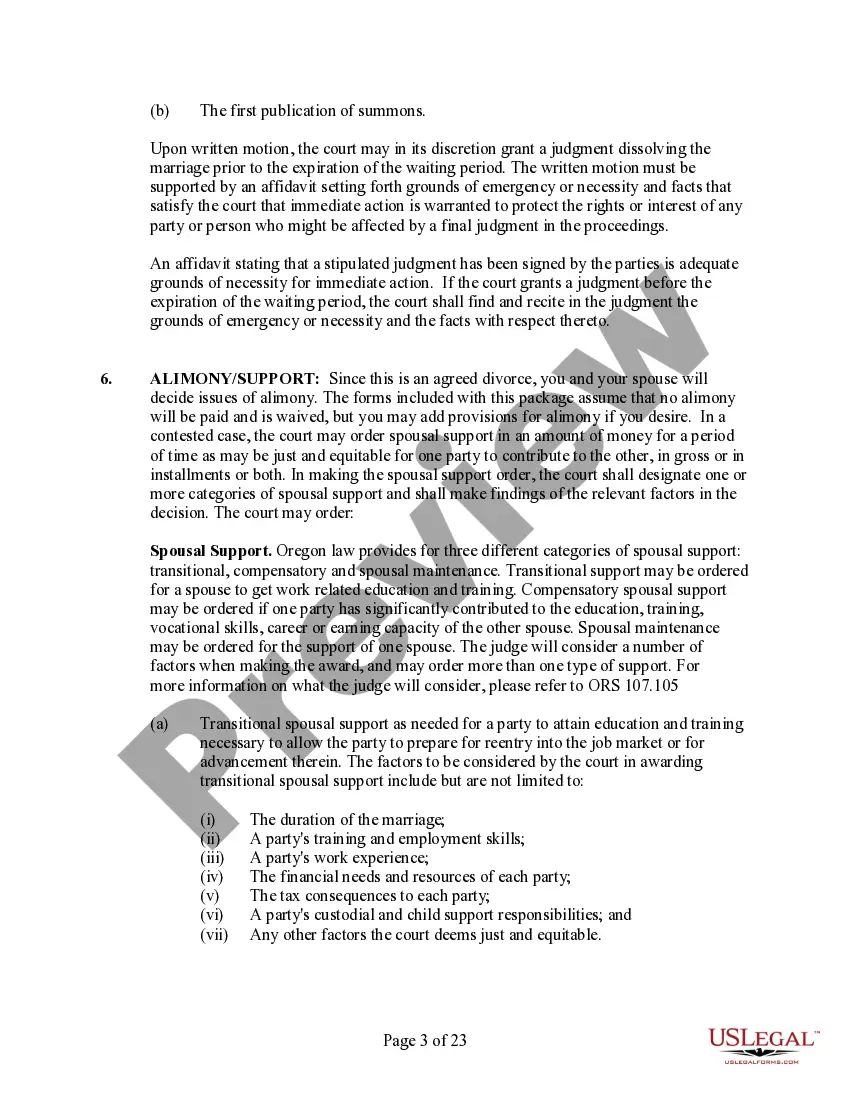
- Not adhering to the 90-day waiting period for finalizing the divorce in Oregon.
Advantages of online completion
- Convenience of accessing forms and instructions from anywhere at any time.
- Editable forms allow customization to suit your specific needs.
- Reliability of using documents prepared by licensed attorneys familiar with Oregon law.
What to keep in mind
- This package is tailored for amicable divorces involving minor children in Oregon.
- Filling out the forms accurately and completely is essential for a smooth process.
- Notarization may be necessary for valid submissions of certain documents.
- Understanding and following state-specific requirements is crucial for legal compliance.
Looking for another form?


Form popularity
FAQ
Once the papers have been filed with the court, the question, "How long does an uncontested divorce take?" is completely out of the parties' hands. The amount of time it will take to finalize the divorce by having a judge approve and sign the judgment can take anywhere from six weeks to 12 months.
A contested divorce can cause the divorce to enter into litigation because spouses will need to have decisions made for them by a judge. Since they are not able to decide on marital issues for their family, a judge will have to do so in court.
In a no-fault uncontested divorce, you will be avoiding a trial. Your divorce can also be a no-fault contested divorce, which is where you and your spouse cannot agree to the divorce terms.
Divorce in Oregon usually takes less than 2 weeks from the filing of the Co-Petition or 5-6 weeks from the time the spouse is served in a Single Petition Divorce. At the end of the 2-6 week period, a Judge will sign the Divorce Decree and you will be sent a copy. We provide the waiver for any applicable waiting period.
Because there is no longer a mandatory waiting period in Oregon, it is possible to end your marriage within days of filing. In a traditional divorce, if your spouse doesn't submit an acceptance of service, you'll have to wait up to 30 days for your spouse to answer your petition.
The filing fee for each party in a divorce is $287, as of September 2019. The cost to serve your spouse usually starts at $40 and increases depending on the company you use and how difficult it is for them to find your spouse. There may be other filing fees depending on your specific circumstances.
Can uncontested divorces be reversed? Divorces cannot generally be reversed after that the judge has already signed off and finalized everything.If it was an uncontested divorce, it will be easier for the parties to come together and agree on what needs to be changed.
Does it make a difference who files for divorce first in Oregon?The person who files for divorce first is called the Petitioner. This is because the original filing is called a petition. The party who responds to the petition is called the Respondent. There is absolutely no legal significance in who files first.