Nevada Divorce Worksheet and Law Summary for Contested or Uncontested Case of over 25 pages - Ideal Client Interview Form
Understanding this form
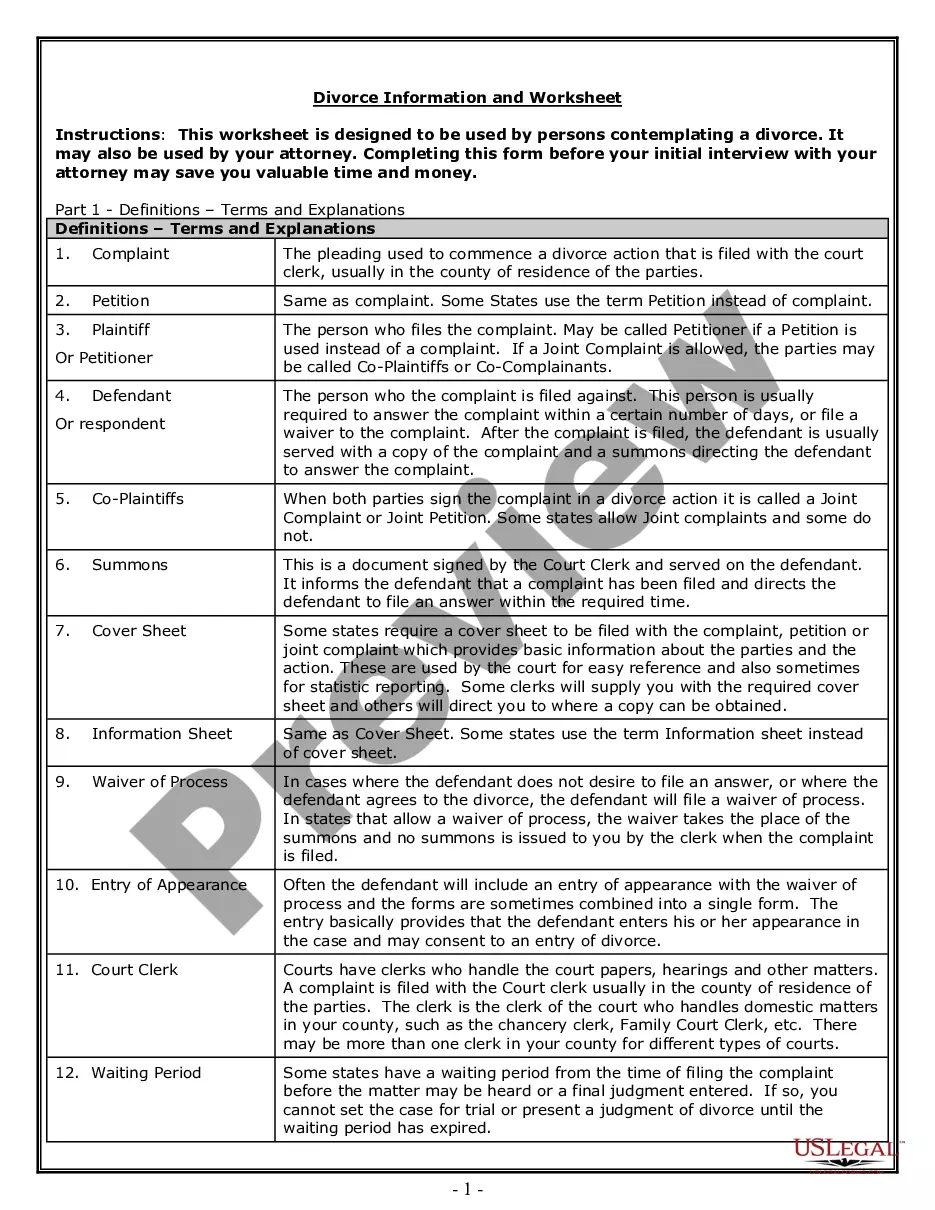
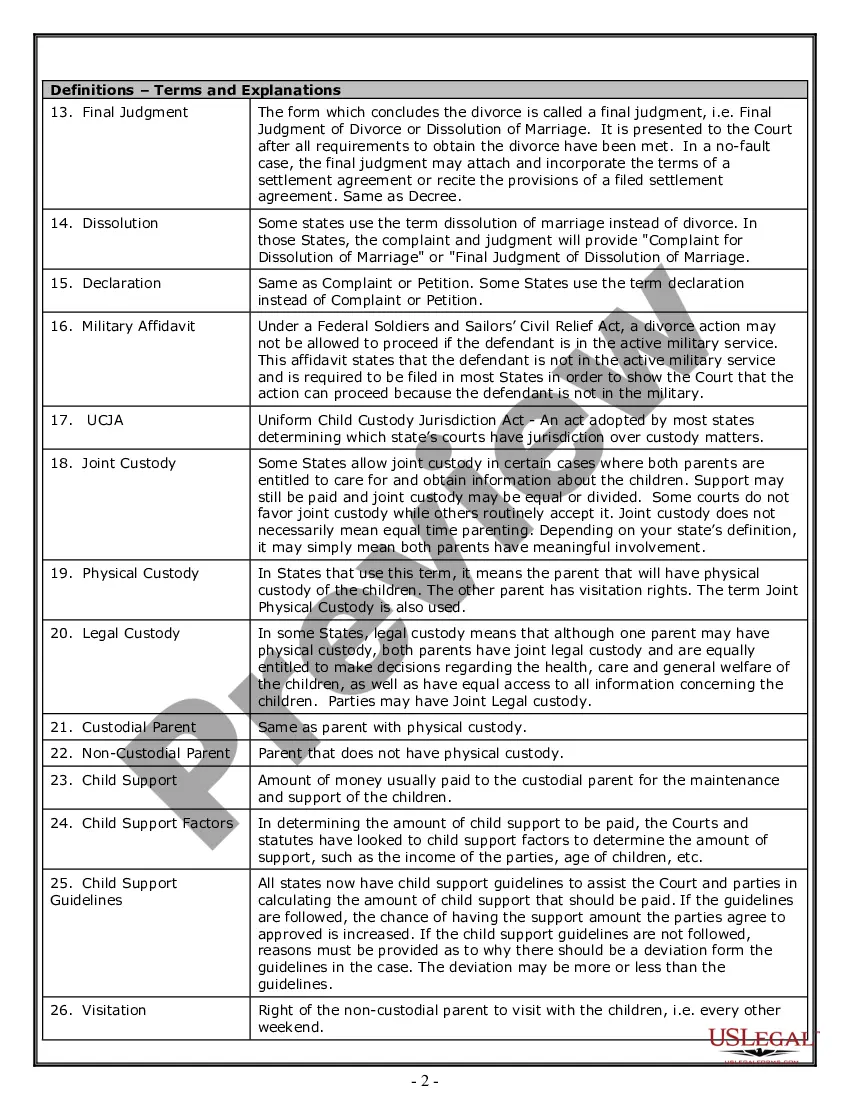
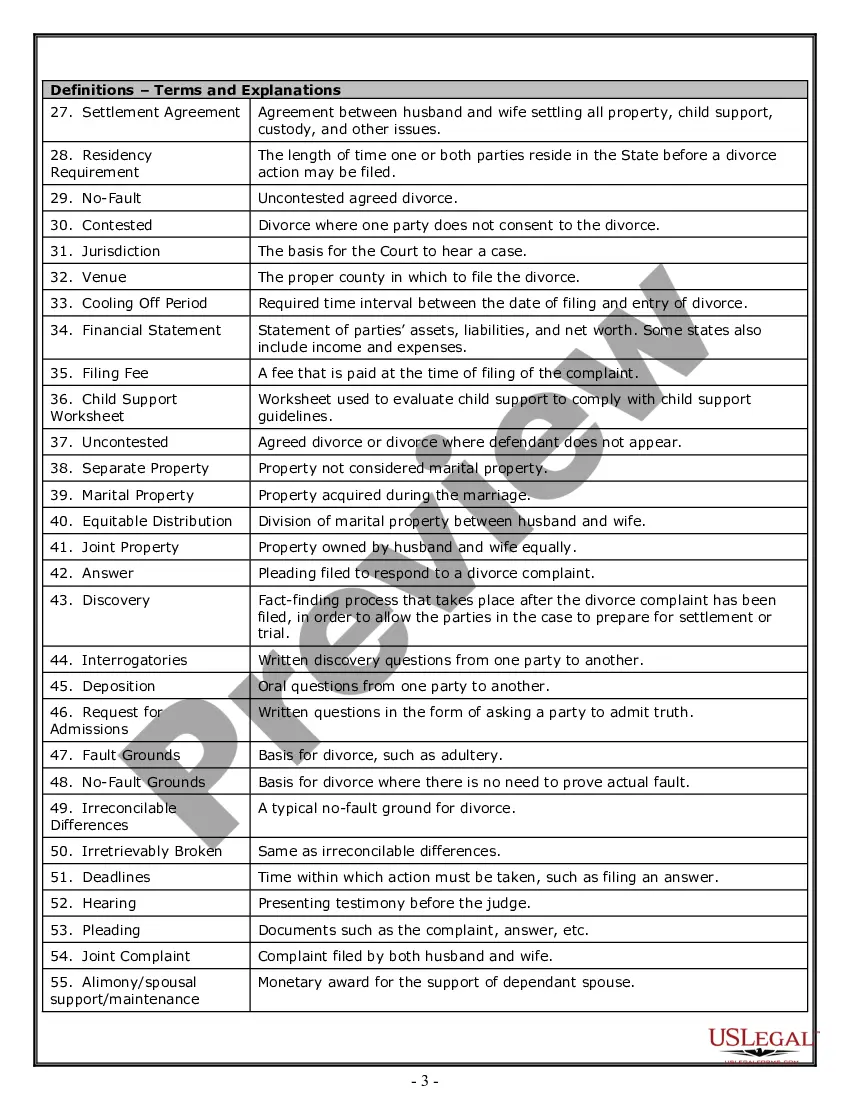
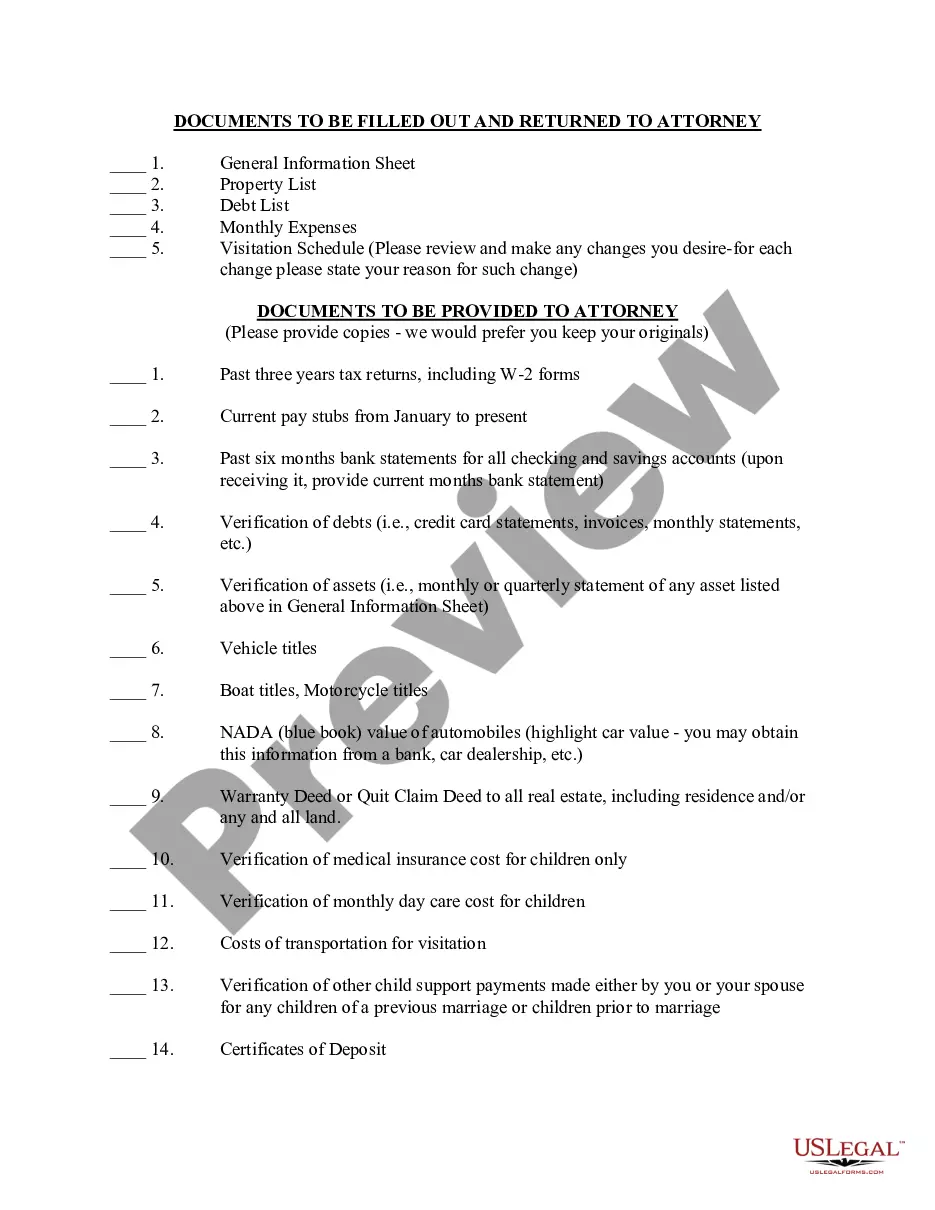
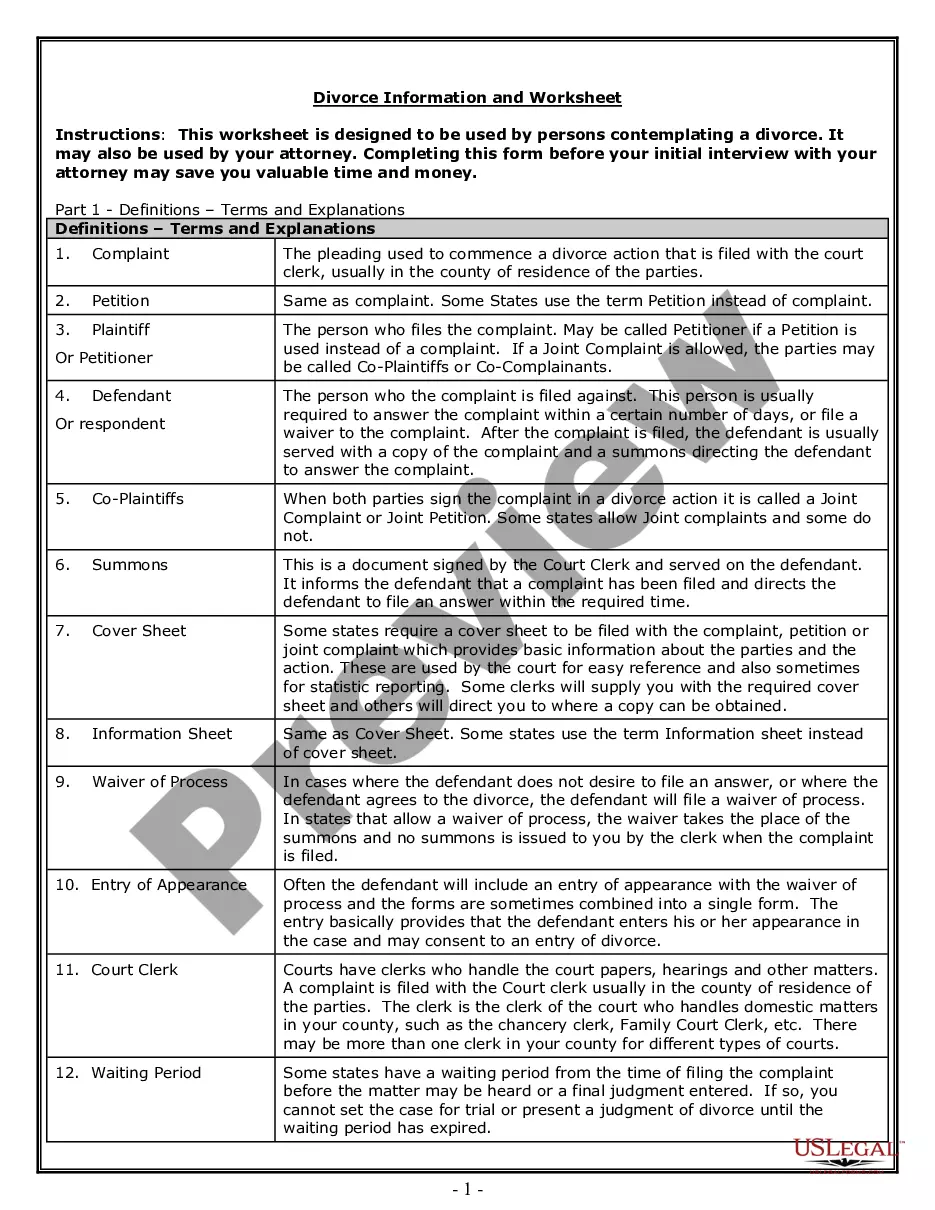
The Divorce Worksheet and Law Summary for Contested or Uncontested Cases is a comprehensive package designed to assist individuals contemplating divorce. This form serves as a detailed guide and informational resource that covers essential aspects of divorce, including legal definitions, visitation rights, child custody, and financial matters. It is ideal for both personal use prior to meeting with an attorney and for attorneys to gather necessary client information efficiently.
Main sections of this form
- Comprehensive definitions of key legal terms related to divorce.
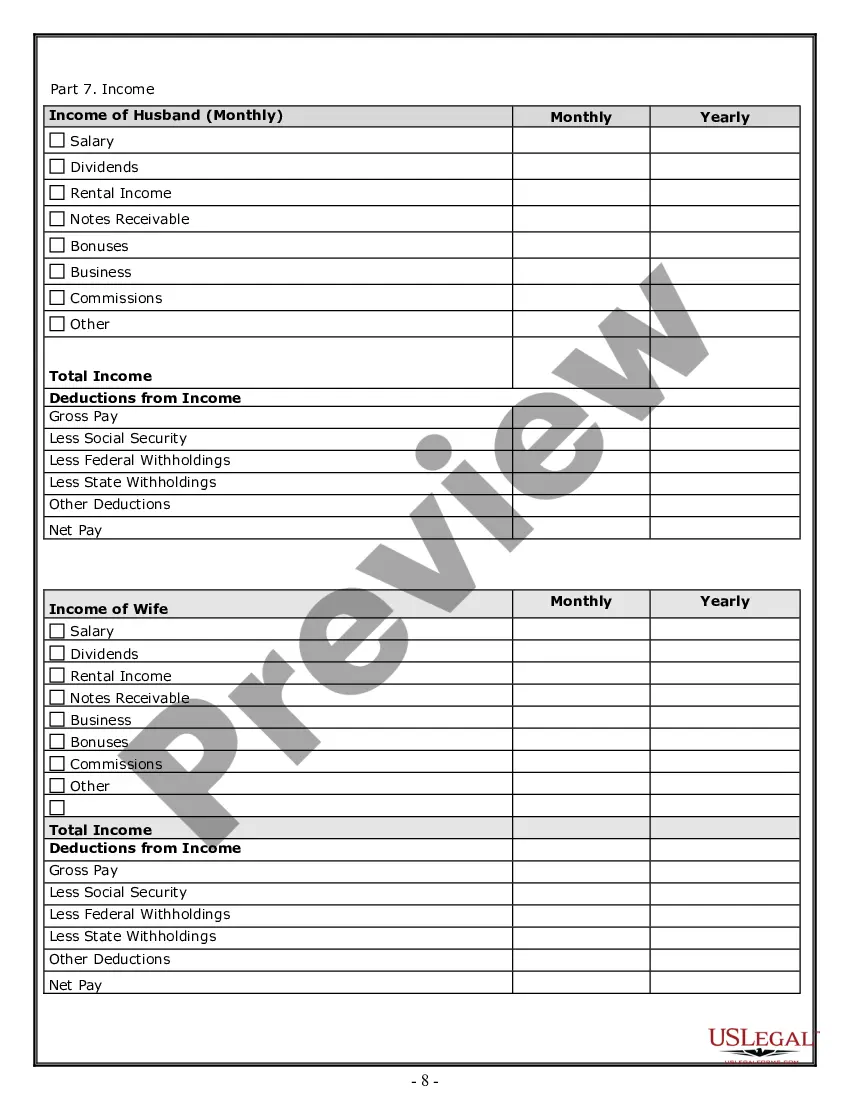
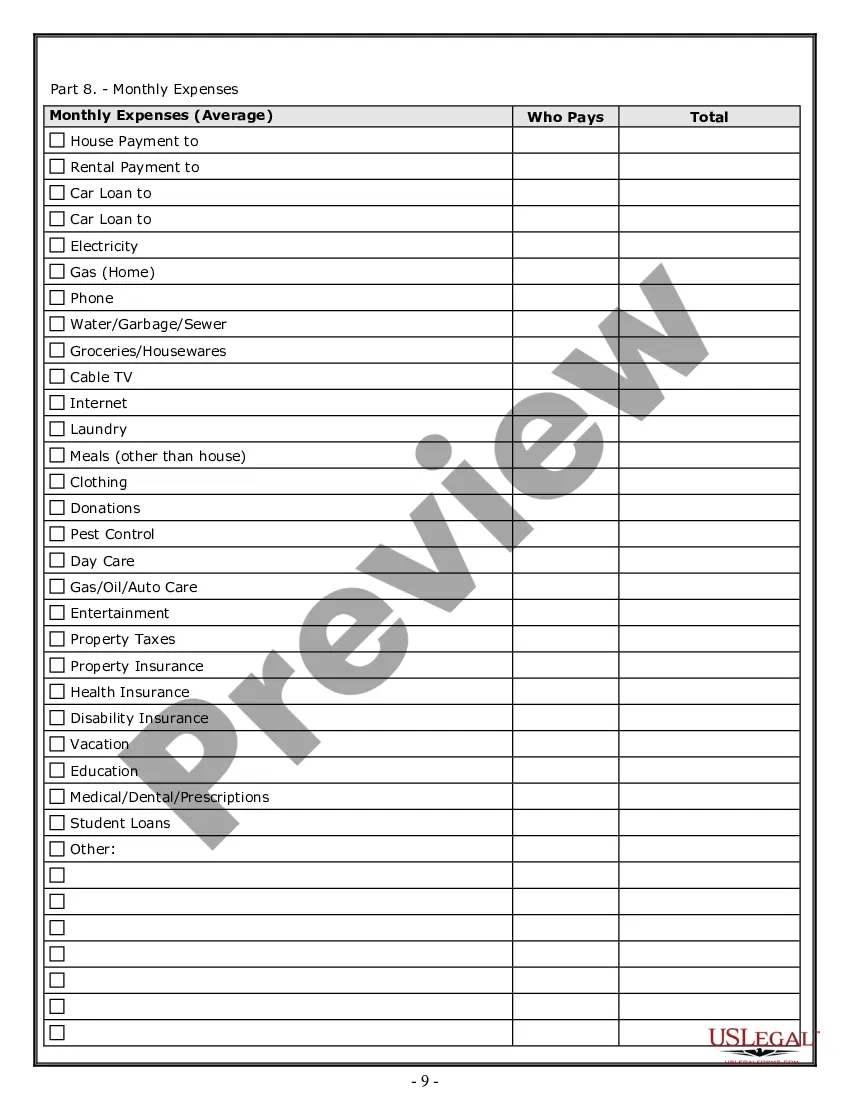
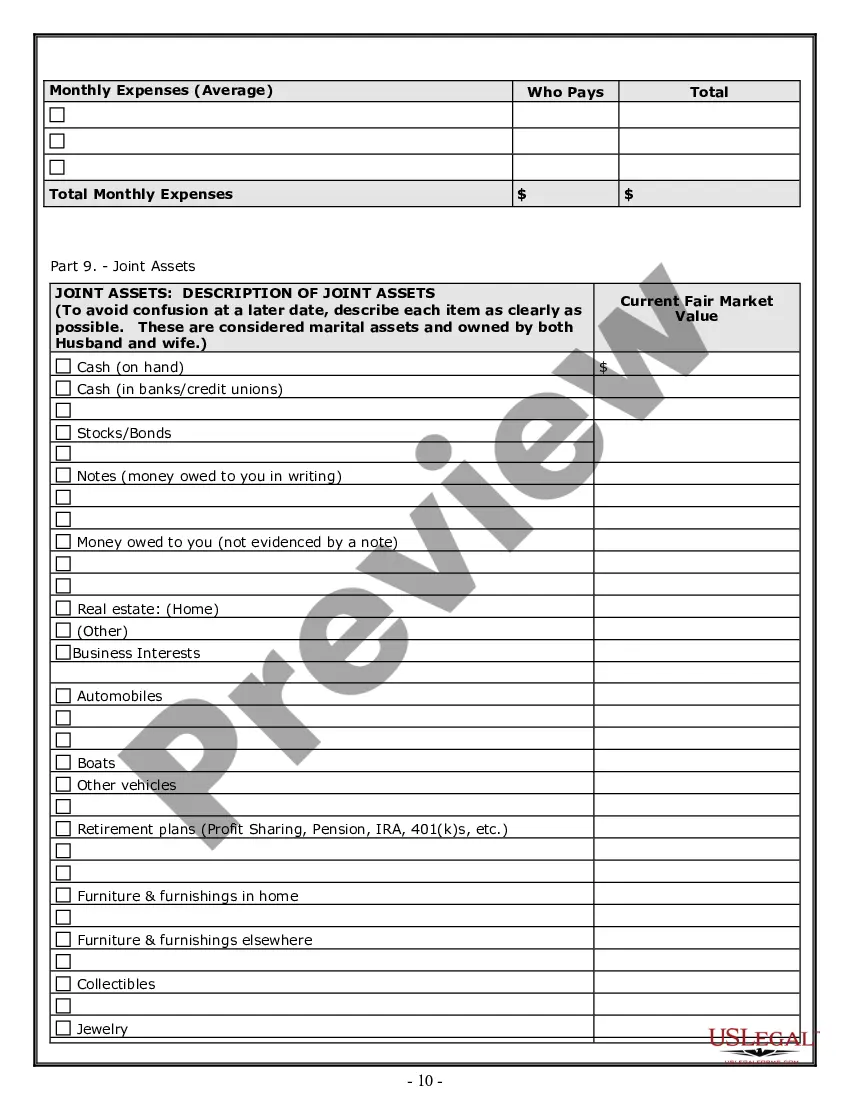
- Financial worksheets to outline personal and joint assets and liabilities.
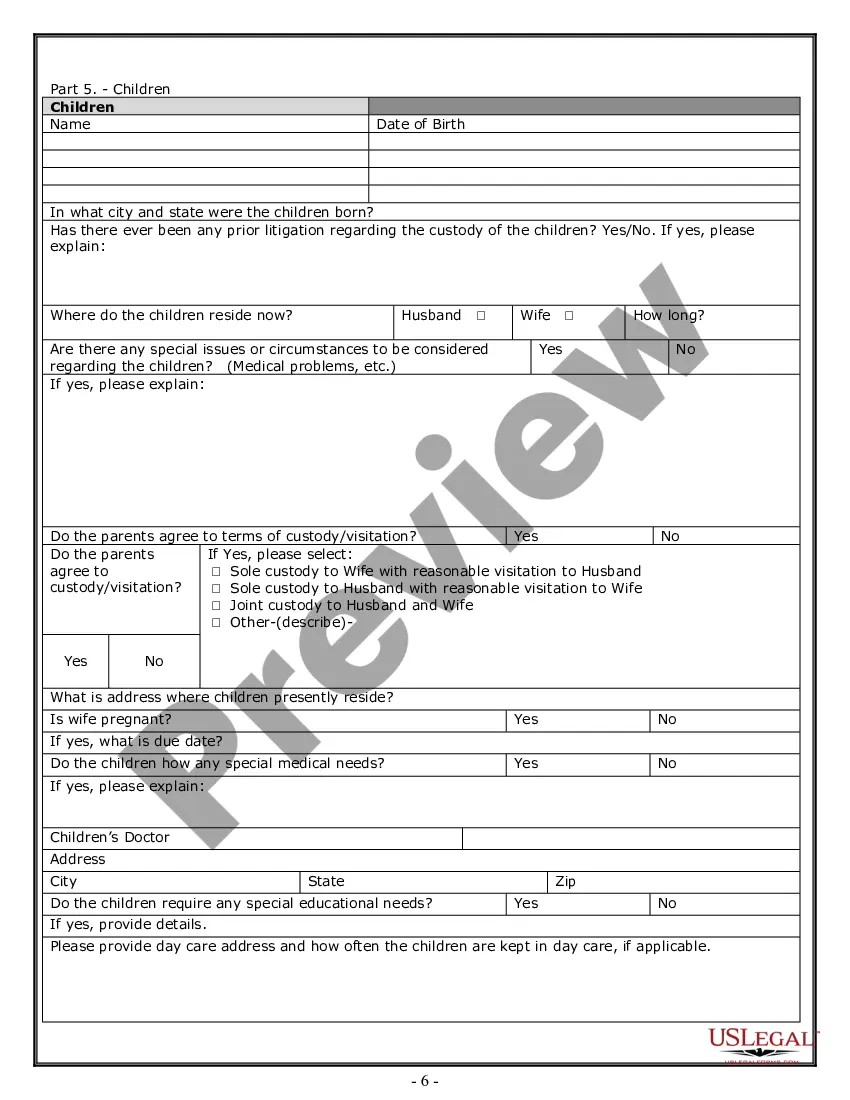
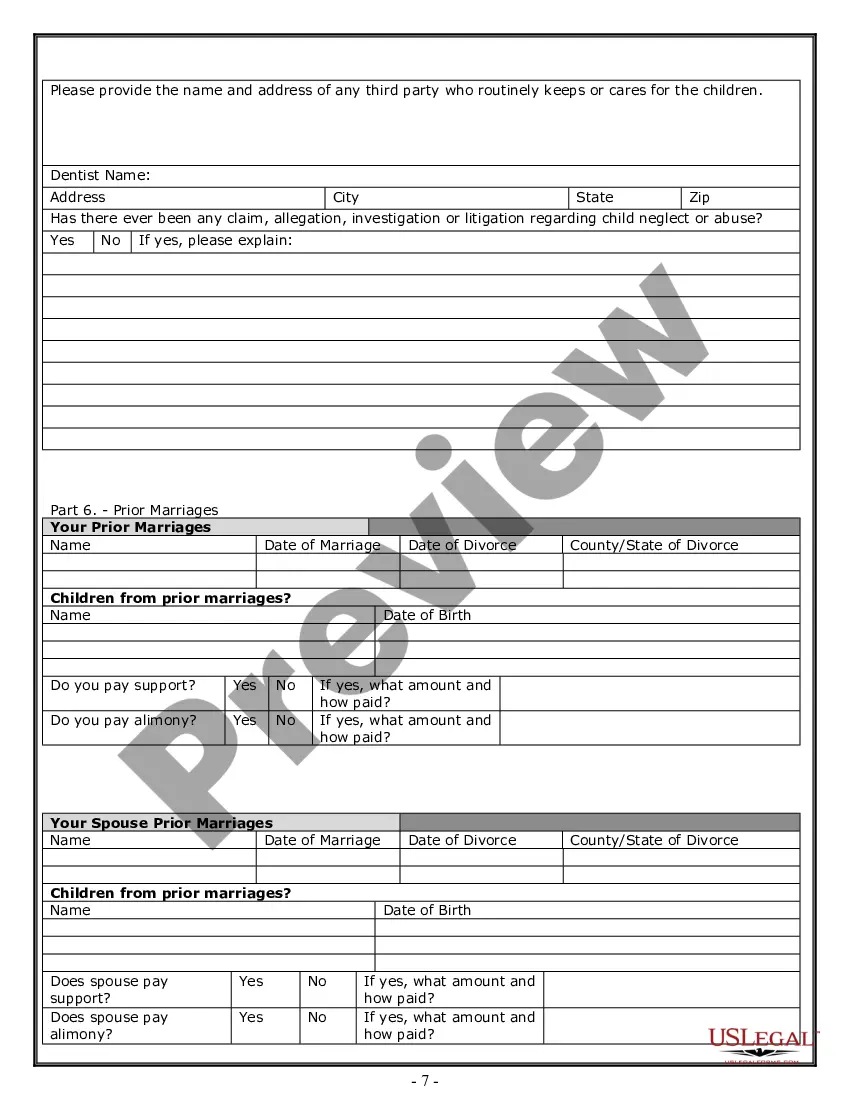
- Sections dedicated to child custody, visitation agreements, and support calculations.
- Detailed instructions for proceeding with a divorce based on state-specific laws.
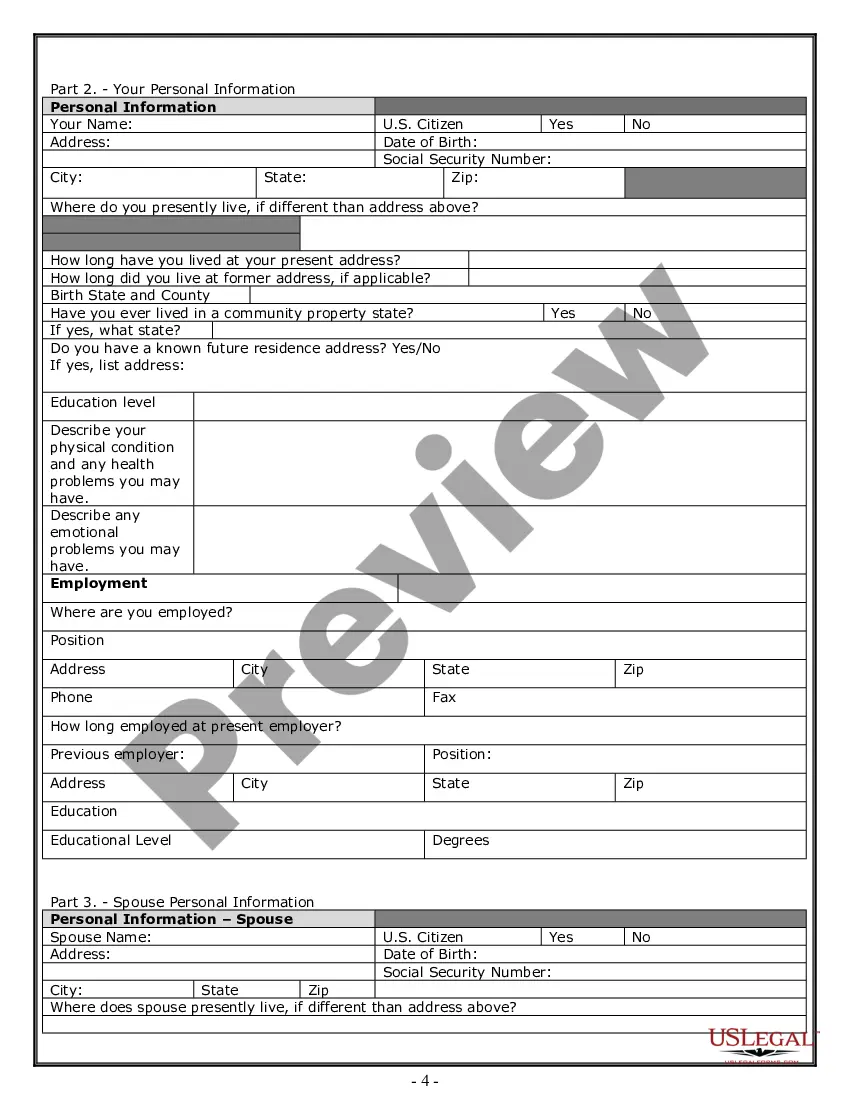
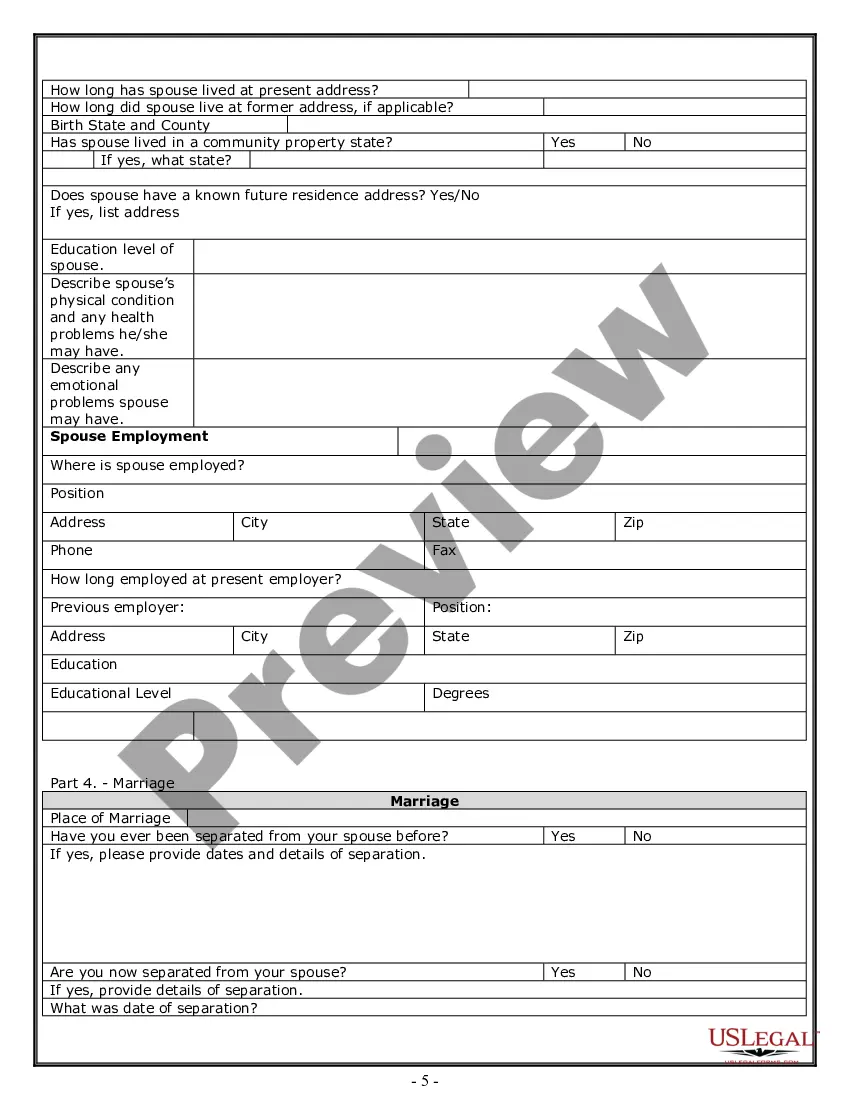
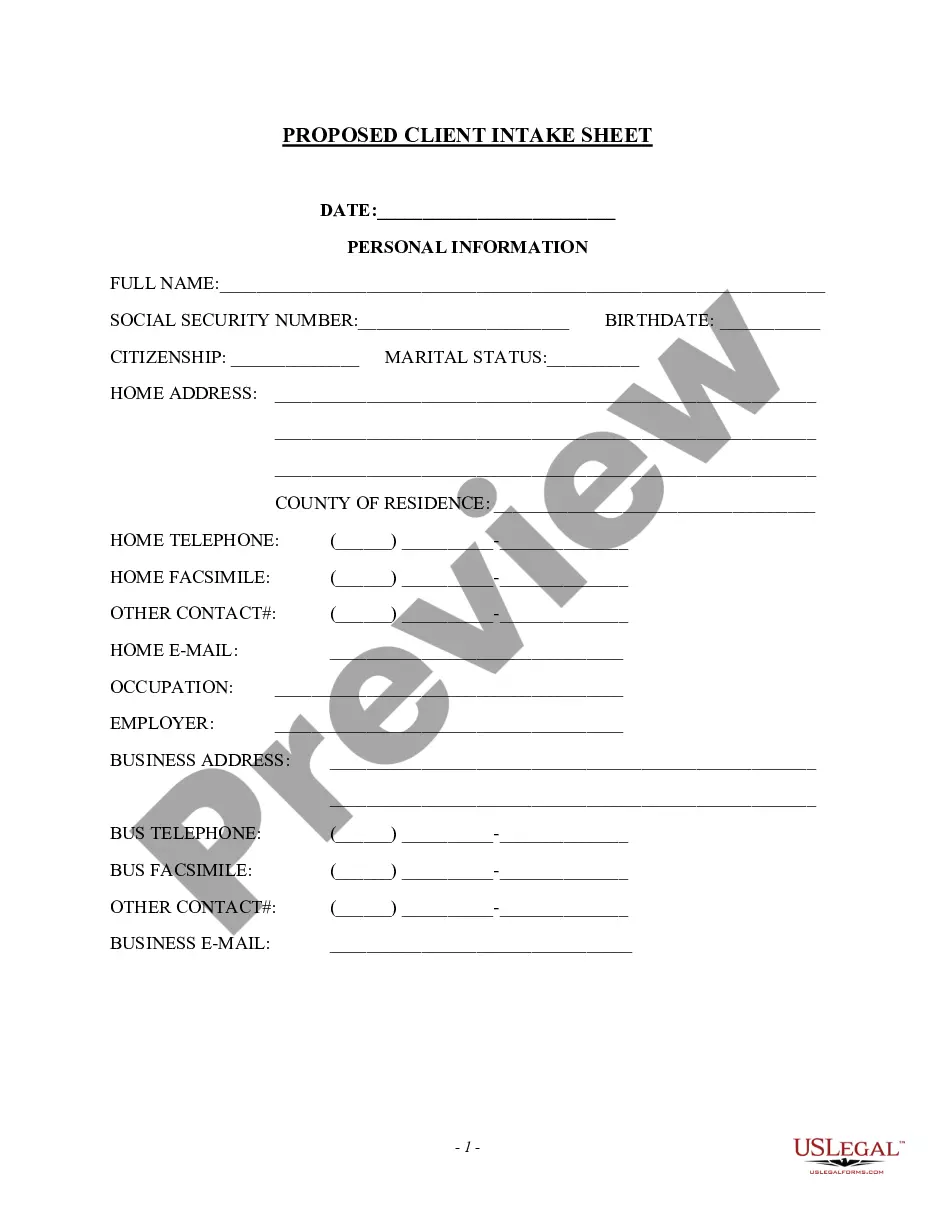
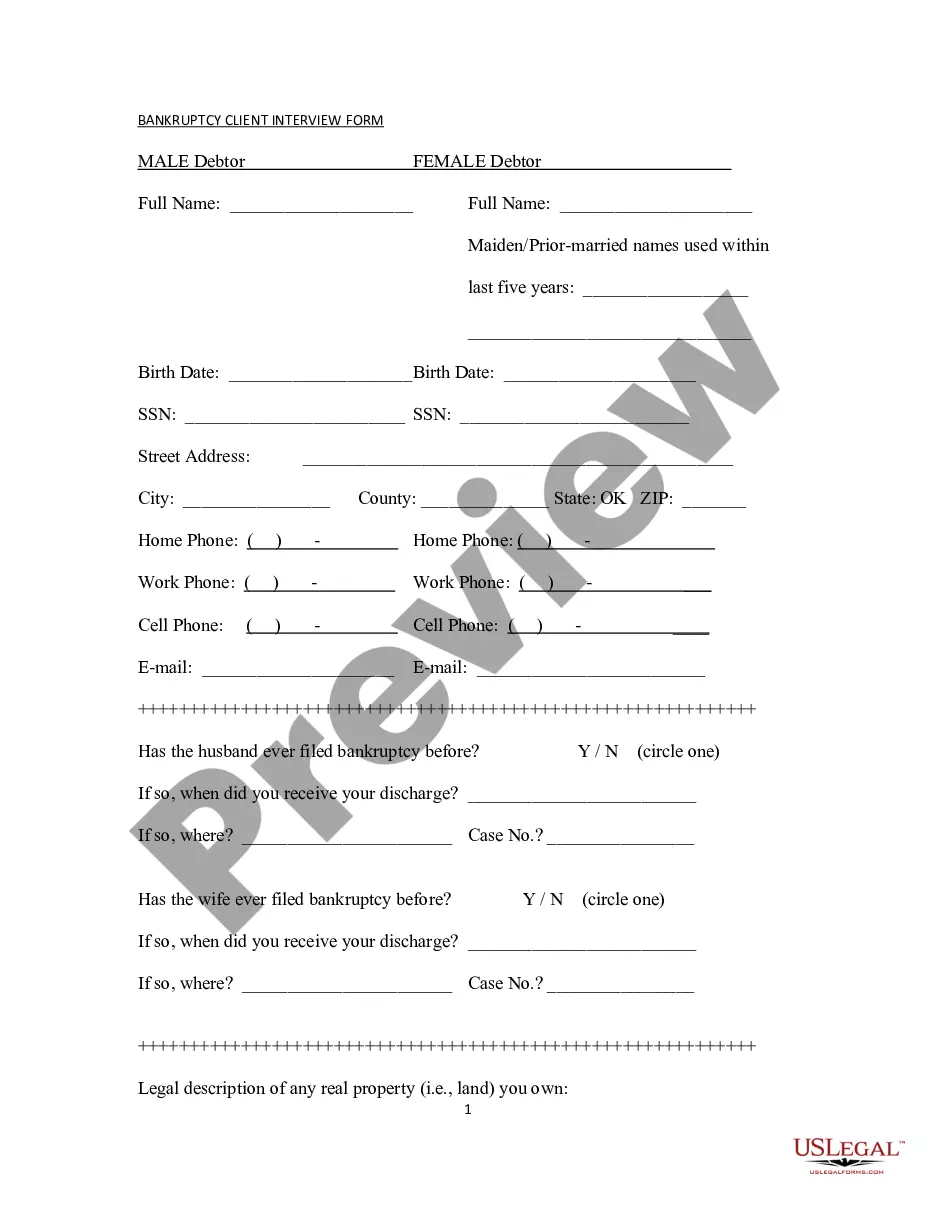
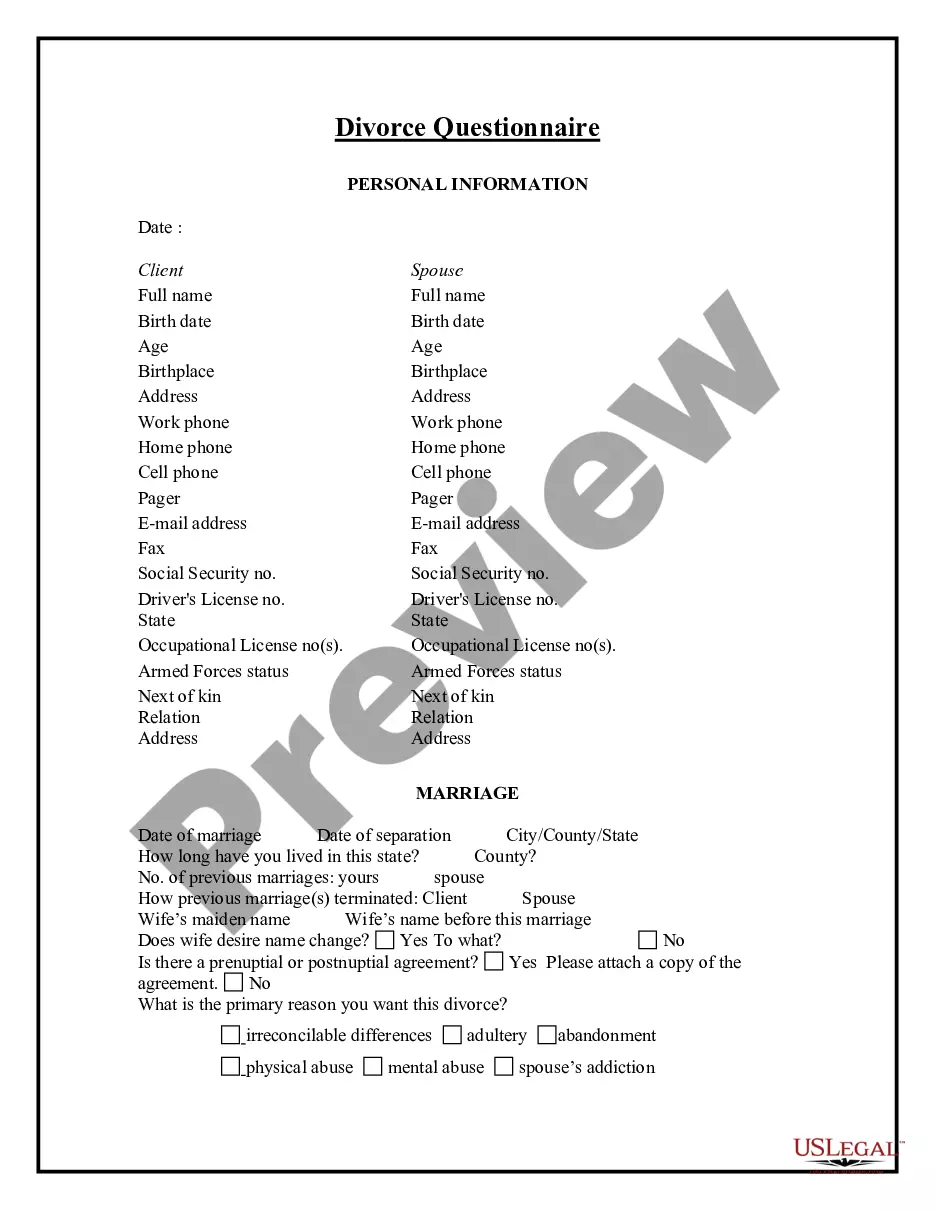
- Worksheets to document personal and spouse information vital for the divorce process.


Common use cases
This form is beneficial when you are considering divorce, whether it is contested or uncontested. It is designed to collect thorough information that will facilitate your conversations with legal counsel, helping streamline your case by having necessary details and clarity on expectations, particularly regarding asset division and child custody arrangements.
Who should use this form
- Individuals contemplating divorce.
- Those seeking to initiate a divorce procedure without legal representation.
- Attorneys preparing for initial client consultations.
- Parties involved in contested or uncontested divorce proceedings.
Completing this form step by step
- Begin by entering your personal information, including name, address, and date of birth.
- Provide details about your spouse and any children, ensuring to document custody agreements if applicable.
- List all assets and liabilities in the provided worksheets to determine financial standing.
- Fill out the necessary sections related to child support and visitation preferences.
- Review your entries thoroughly before finalizing and considering any necessary signatures or submissions.
Does this form need to be notarized?
This form does not typically require notarization to be legally valid. However, some jurisdictions or document types may still require it. US Legal Forms provides secure online notarization powered by Notarize, available 24/7 for added convenience.
Get your form ready online
Our built-in tools help you complete, sign, share, and store your documents in one place.
Make edits, fill in missing information, and update formatting in US Legal Forms—just like you would in MS Word.
Download a copy, print it, send it by email, or mail it via USPS—whatever works best for your next step.
Sign and collect signatures with our SignNow integration. Send to multiple recipients, set reminders, and more. Go Premium to unlock E-Sign.
If this form requires notarization, complete it online through a secure video call—no need to meet a notary in person or wait for an appointment.
We protect your documents and personal data by following strict security and privacy standards.

Make edits, fill in missing information, and update formatting in US Legal Forms—just like you would in MS Word.

Download a copy, print it, send it by email, or mail it via USPS—whatever works best for your next step.

Sign and collect signatures with our SignNow integration. Send to multiple recipients, set reminders, and more. Go Premium to unlock E-Sign.

If this form requires notarization, complete it online through a secure video call—no need to meet a notary in person or wait for an appointment.

We protect your documents and personal data by following strict security and privacy standards.
Avoid these common issues
- Failing to fully complete financial disclosures, which can lead to complications later.
- Omitting important information about children, such as medical or educational needs.
- Not checking state-specific laws that may affect visitation or support calculations.
- Waiting too long to file documents or replies, which may impact your case.
Advantages of online completion
- Convenience of access: Download forms anytime and from anywhere.
- Editability: Modify the form as needed according to your personal circumstances.
- Comprehensive guidance: Get step-by-step instructions that enhance your understanding of the divorce process.
- Time-saving: Prepare thoroughly before meeting with an attorney, saving time and consultation costs.
Legal use & context
- This form serves as both a preparatory tool and a legal document for divorce proceedings.
- Completing this worksheet helps individuals understand their rights and obligations in divorce.
- It may be referenced during legal consultations and court proceedings.
Main things to remember
- The Divorce Worksheet and Law Summary is essential for preparing for a divorce.
- Completing this form can facilitate better communication with your attorney.
- Accurate and complete information is crucial for effective legal representation.
Glossary of terms used in this form
- Complaint: The document filed to initiate a divorce action.
- Petition: A term used in some states instead of a complaint.
- Custody: The legal right to make decisions about a child's upbringing.
- Alimony: Financial support paid to a spouse after divorce.
Looking for another form?

Form popularity
FAQ
You and your divorce attorney will simply have to file a Petition for Dissolution of Marriage with the courts. This can be done without a spouse's signature.Assuming your spouse has still refused to show, the court will generally grant the reasonable requests of whichever spouse has appeared at the default hearing.
The average cost of a contested divorce is $5,000 per spouse, and takes about 6 months. Some contested divorces can cost $15,000 or more per spouse and take 12 months or longer. Here is the basic process of a contested divorce. One spouse hires a divorce lawyer to file divorce documents with the court to open the case.
State and local rules may vary, but generally, if your spouse failed to respond to your divorce petition within 30 days, you may file a request to enter a default along with a proposed judgment. It may also be allowed when a spouse can't be located for service. The court will set a hearing date and ask that you appear.
Usually, the person who applies for a divorce (also known as the 'petitioner') has to pay the fee.
For unreasonable behaviour, the couple will split the costs 50/50. For separation or desertion, the petitioner will pay 100% of the costs.
A contested divorce is accomplished by filing the divorce papers and then serving your spouse with them. Uncontested divorces are easier because both spouses agree on all the issues such as child custody, child support, division of marital assets, and alimony.
In general, an uncontested divorce (called a joint petition in Nevada) can be over within one-to-three weeks. But a contested divorce is rarely over in less than three months. And if the assets are particularly complex, it can take significantly longer. In any case, Nevada has a six (6) week residency requirement.
As a general rule, a wife cannot force her husband to pay for their divorce. Each party in the divorce action pays for his or her attorney fees and costs. However, there are circumstances in which a judge may order a husband to pay the wife's attorney fees and costs.
When a spouse refuses to sign divorce papers, the spouse seeking a divorce will need to obtain what is called a contested divorce. To file a contested divorce, the party who wishes to obtain the divorce must file a petition in the family court in their jurisdiction.