Mississippi Interrogatories
Overview of this form
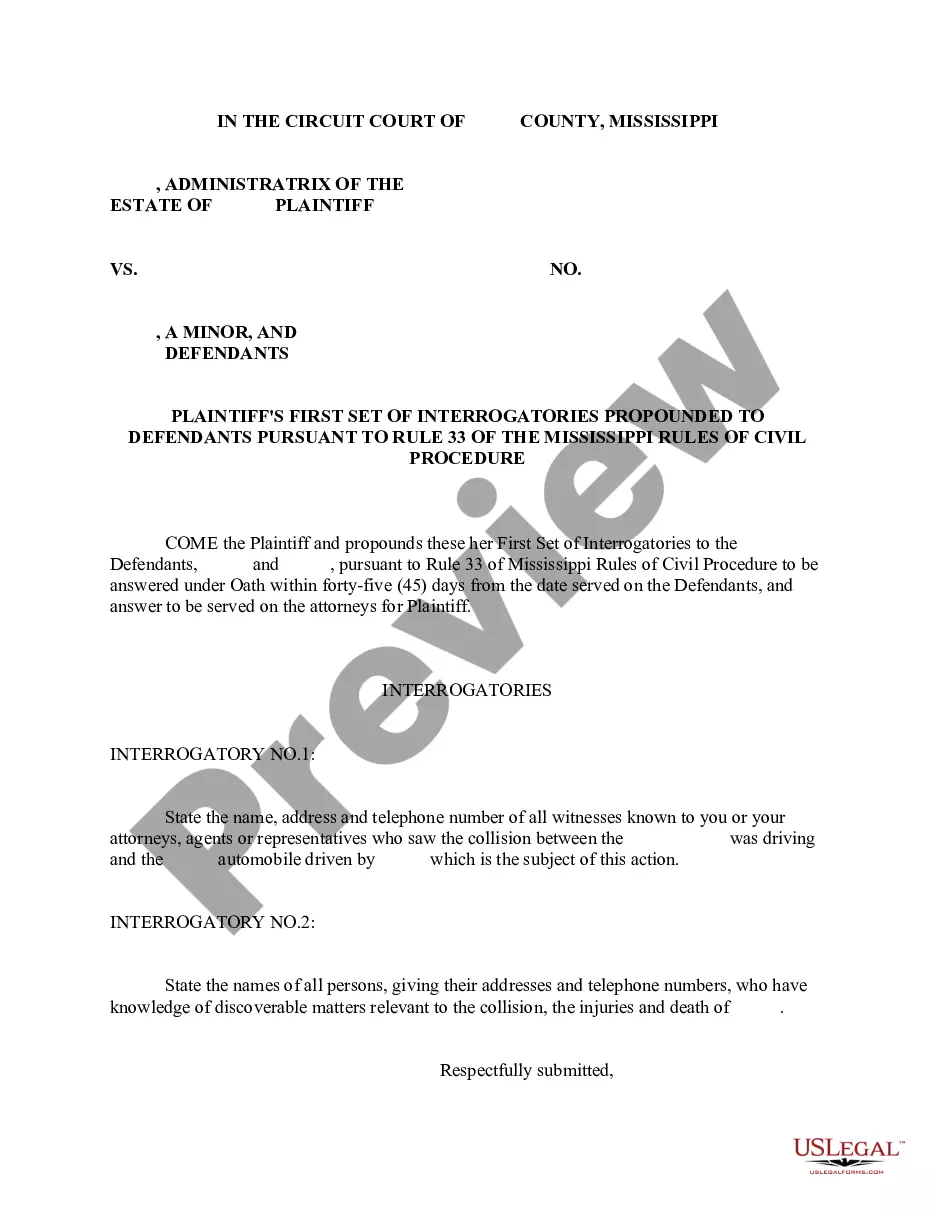
Interrogatories are written questions directed to a party involved in a lawsuit, forming a crucial part of the discovery process. This legal form is designed to help parties gather essential information from one another before trial. Distinguishing it from other forms of discovery, such as depositions, interrogatories are typically answered in writing and under oath, allowing for precise and detailed responses relevant to the case.
Main sections of this form
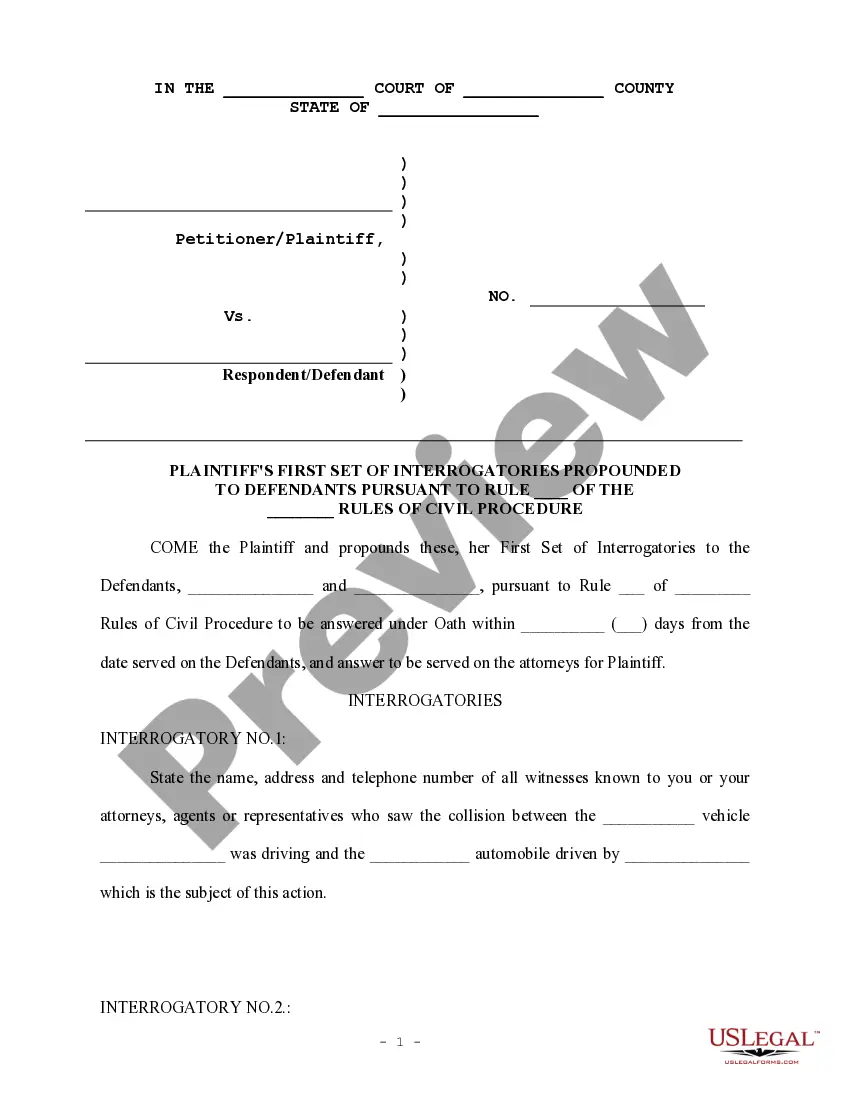
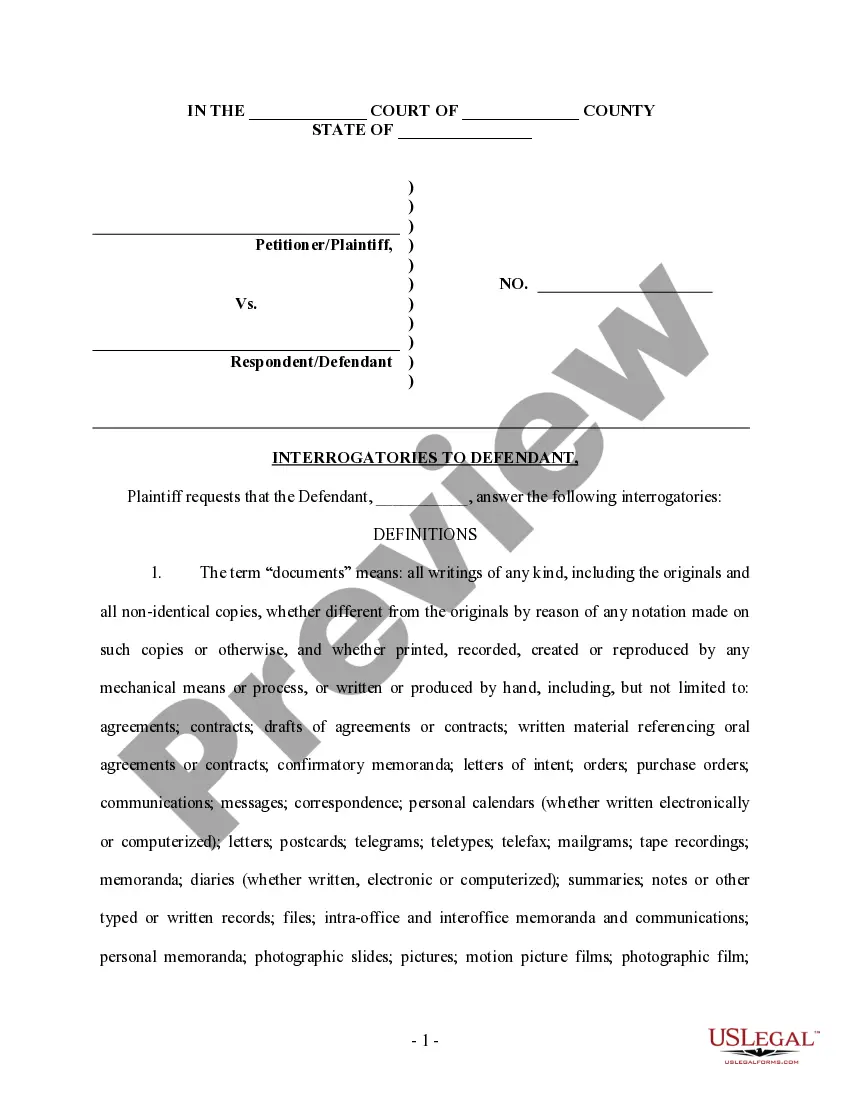
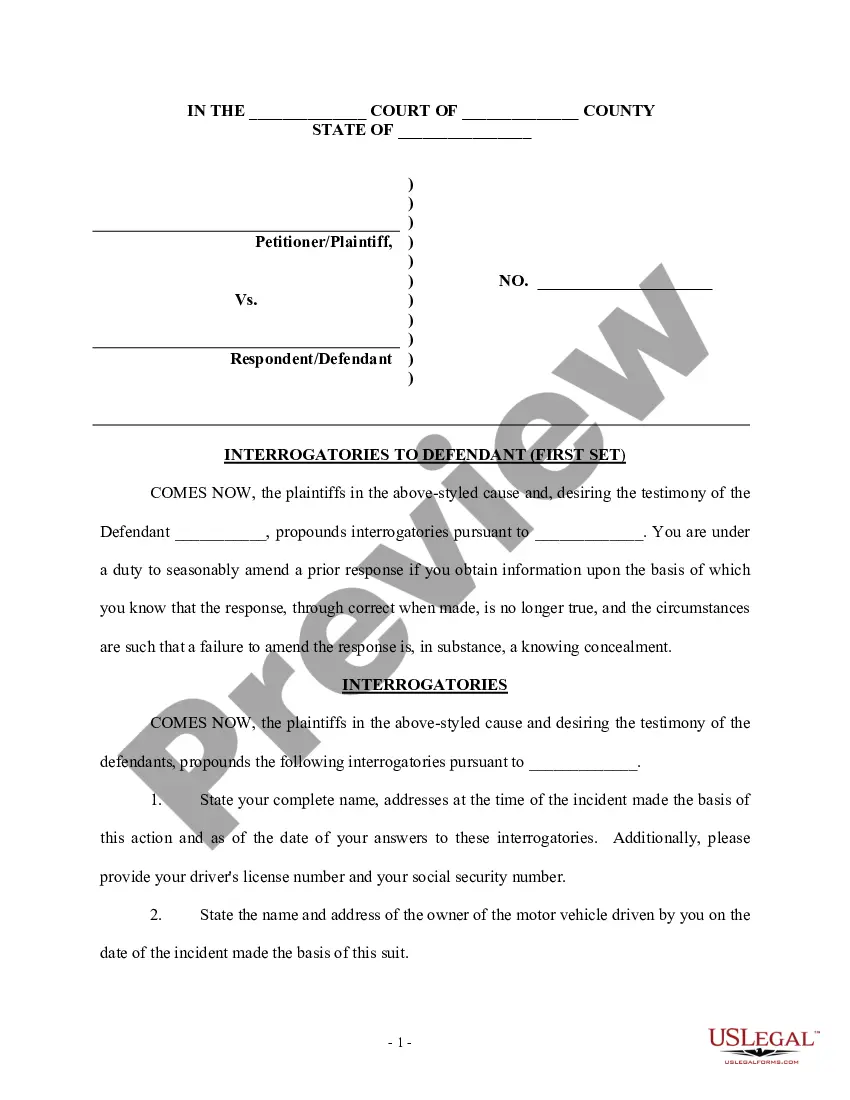
- Identification of the parties involved in the lawsuit.
- Numbered questions requiring detailed written responses.
- Instructions for answering the questions accurately and truthfully.
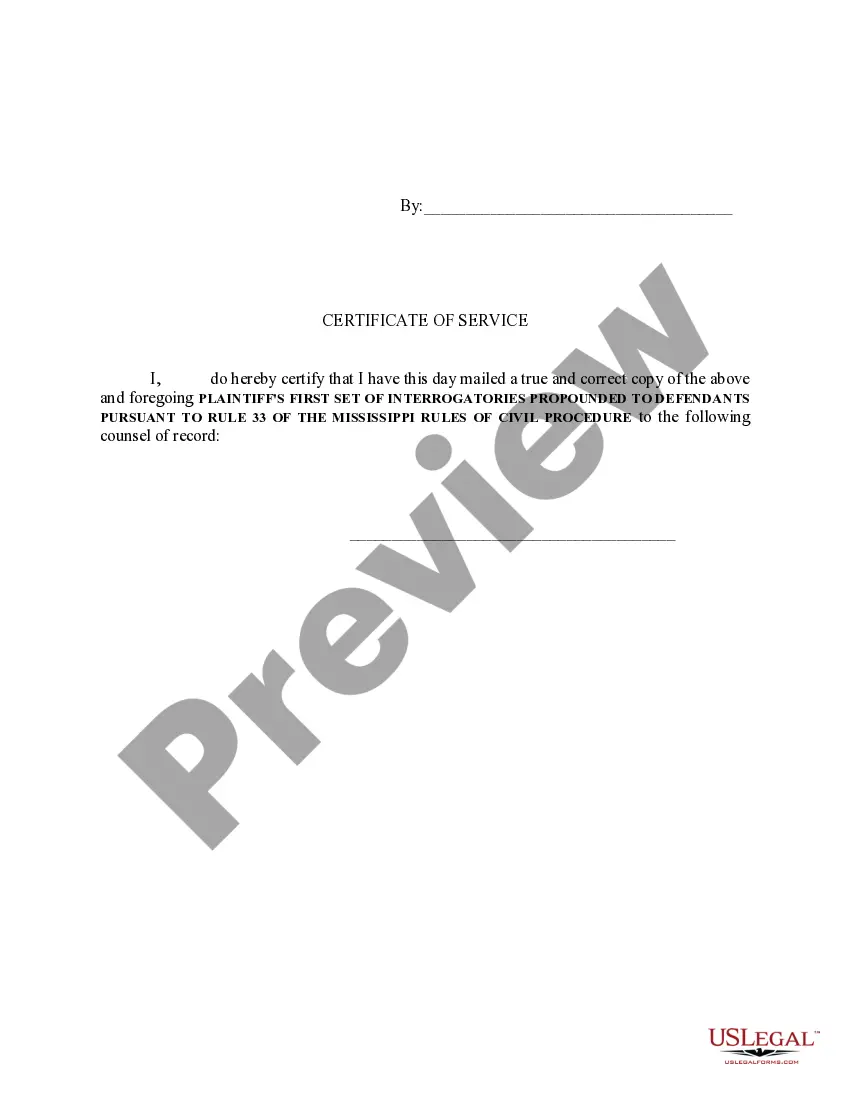
- Space for the responding party to sign and date their responses.
- Options for objections to specific questions, if applicable.
Common use cases
You should use interrogatories when you need to obtain specific information from the opposing party in a lawsuit. They are especially useful during the pre-trial discovery phase, allowing you to clarify facts, gather evidence, and prepare your arguments. If you suspect that the other party holds knowledge that could impact your case, interrogatories provide a formal method for acquiring that information.
Who needs this form
- Parties involved in a civil lawsuit seeking additional information.
- Attorneys preparing case strategies for their clients.
- Individuals representing themselves in a lawsuit who need to gather evidence.
How to prepare this document
- Clearly identify the names of all parties involved in the lawsuit.
- Draft specific, concise questions that you want the other party to answer.
- Number the questions for easy reference and organization.
- Include any necessary instructions for answering the questions.
- Have the responding party sign and date the completed interrogatories.
Is notarization required?
This form does not typically require notarization unless specified by local law. It is advisable to check your jurisdictionâs specific requirements to ensure compliance.
Get your form ready online
Our built-in tools help you complete, sign, share, and store your documents in one place.
Make edits, fill in missing information, and update formatting in US Legal Forms—just like you would in MS Word.
Download a copy, print it, send it by email, or mail it via USPS—whatever works best for your next step.
Sign and collect signatures with our SignNow integration. Send to multiple recipients, set reminders, and more. Go Premium to unlock E-Sign.
If this form requires notarization, complete it online through a secure video call—no need to meet a notary in person or wait for an appointment.
We protect your documents and personal data by following strict security and privacy standards.

Make edits, fill in missing information, and update formatting in US Legal Forms—just like you would in MS Word.

Download a copy, print it, send it by email, or mail it via USPS—whatever works best for your next step.

Sign and collect signatures with our SignNow integration. Send to multiple recipients, set reminders, and more. Go Premium to unlock E-Sign.

If this form requires notarization, complete it online through a secure video call—no need to meet a notary in person or wait for an appointment.

We protect your documents and personal data by following strict security and privacy standards.
Common mistakes
- Failing to ask clear and specific questions.
- Not numbering questions, making them hard to follow.
- Ignoring court-specific rules regarding limits on the number of interrogatories.
Advantages of online completion
- Easy access to downloadable templates that save time on drafting.
- Editability allows you to customize questions to suit your case needs.
- Reliable format that adheres to legal standards, ensuring your submissions are valid.
What to keep in mind
- Interrogatories are vital tools for obtaining information in legal proceedings.
- Ensure your questions are clear and concise to avoid confusion.
- Be aware of the specific rules and limitations in your jurisdiction.
- Using this form online offers convenience and accessibility.
Looking for another form?
Form popularity
FAQ
Interrogatory subparts are counted as one interrogatory if they are logically or factually subsumed within and necessarily related to the primary question. Safeco of America v. Rawstron, 181 F.R.D. 441, 445 (C.D. Cal.
Motions to Compel If a party doesn't respond to interrogatories or requests for production, then the party seeking those answers must file a motion to compel with the court. If the court grants the motion to compel, then the party who objected or failed to answer must then do so.
Personal/Corporate information of opposing party. Identifying information of witnesses. Contact information & background of expert witnesses. Insurance information.
In law, interrogatories (also known as requests for further information) are a formal set of written questions propounded by one litigant and required to be answered by an adversary in order to clarify matters of fact and help to determine in advance what facts will be presented at any trial in the case.
You must answer each interrogatory separately and fully in writing under oath, unless you object to it. You must explain why you object. You must sign your answers and objections.
So, can you refuse to answer interrogatories? The answer is, no, you may not. You must answer a Rule 33 interrogatory within 30 days of being served with it. That answer must either permit inspection of the requested information or object to the production of the information for a specific reason.
Your answers to the interrogatories should usually be short, clear, and direct and should answer only the question that is being asked. This is not the time to set out your entire case or defense to the other side. Take the time to make sure your answers are correct and truthful.
Motions to Compel If a party doesn't respond to interrogatories or requests for production, then the party seeking those answers must file a motion to compel with the court. If the court grants the motion to compel, then the party who objected or failed to answer must then do so.