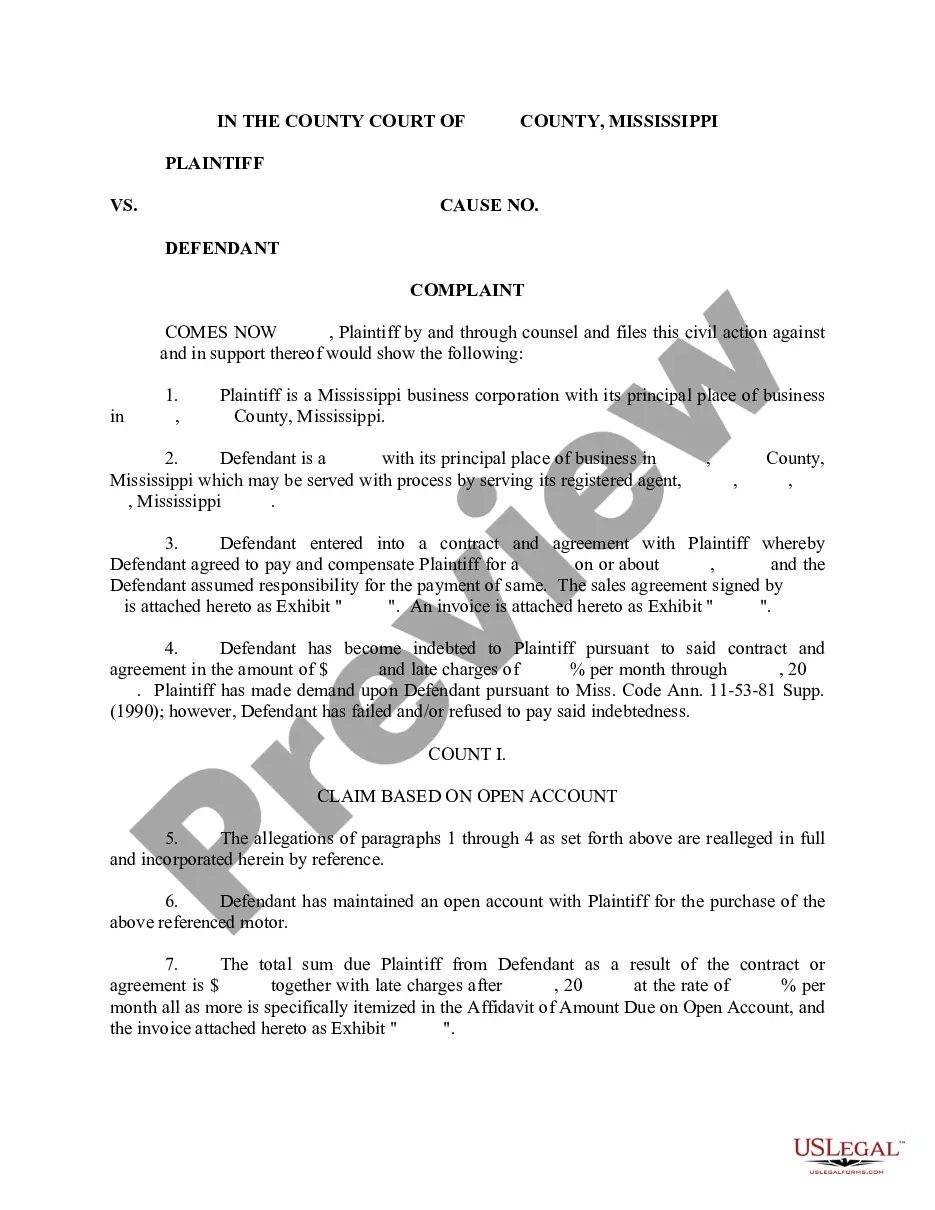
North Dakota Divorce Worksheet and Law Summary for Contested or Uncontested Case of over 25 pages - Ideal Client Interview Form
Overview of this form
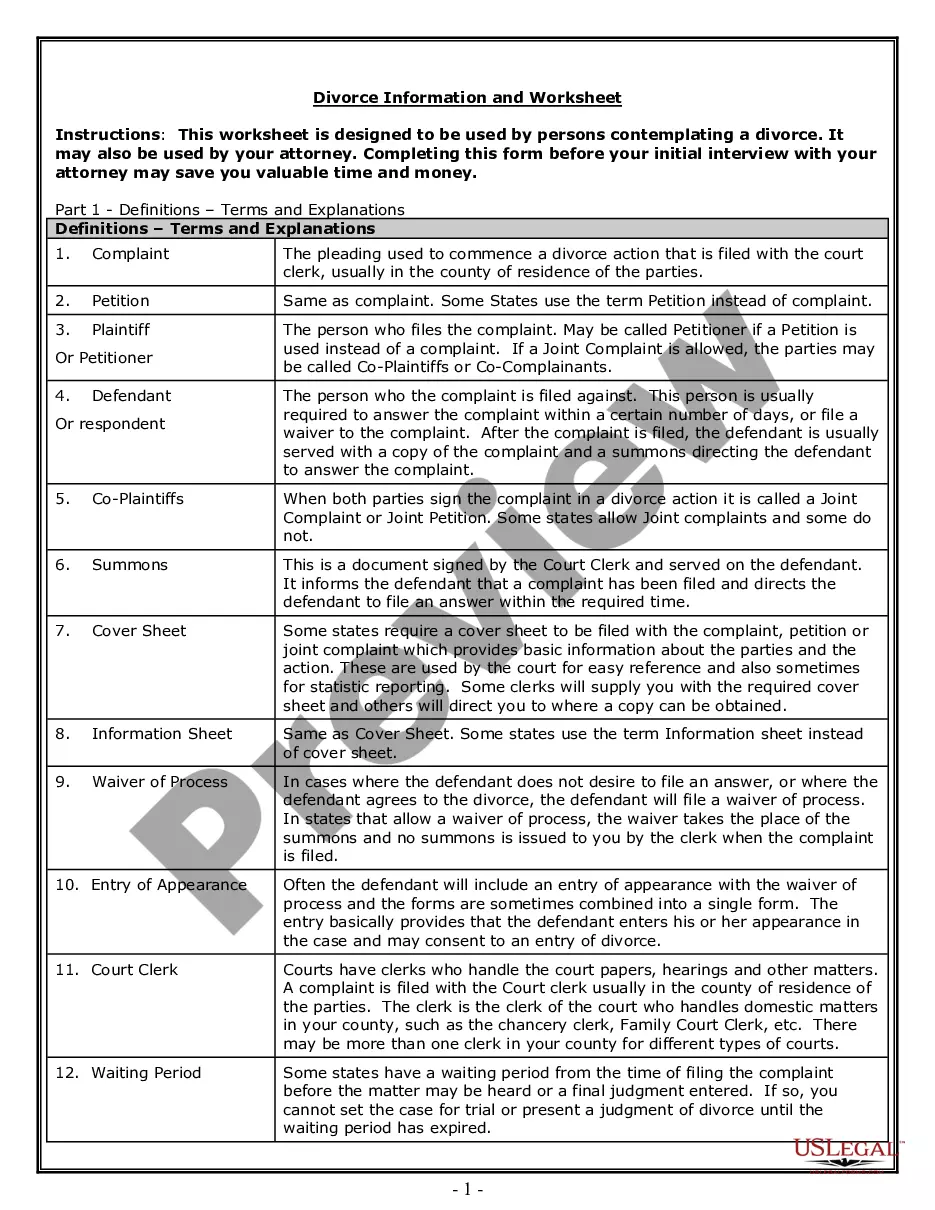
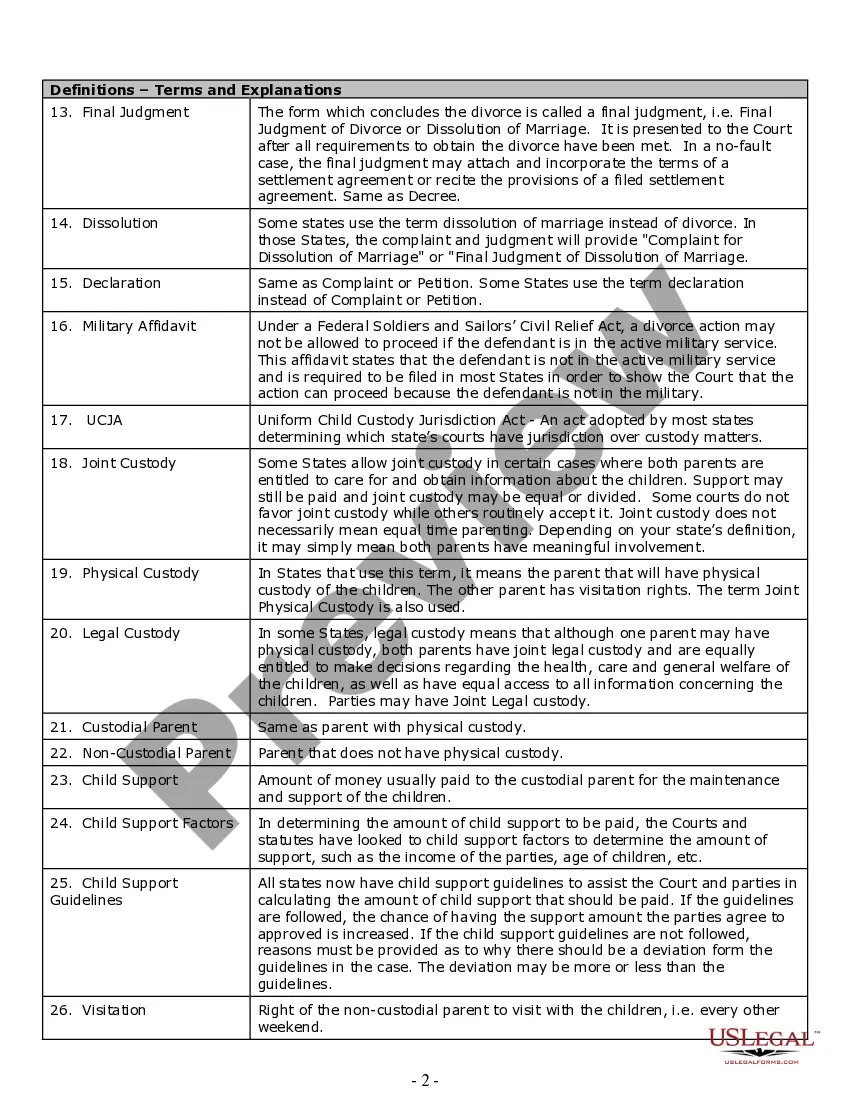
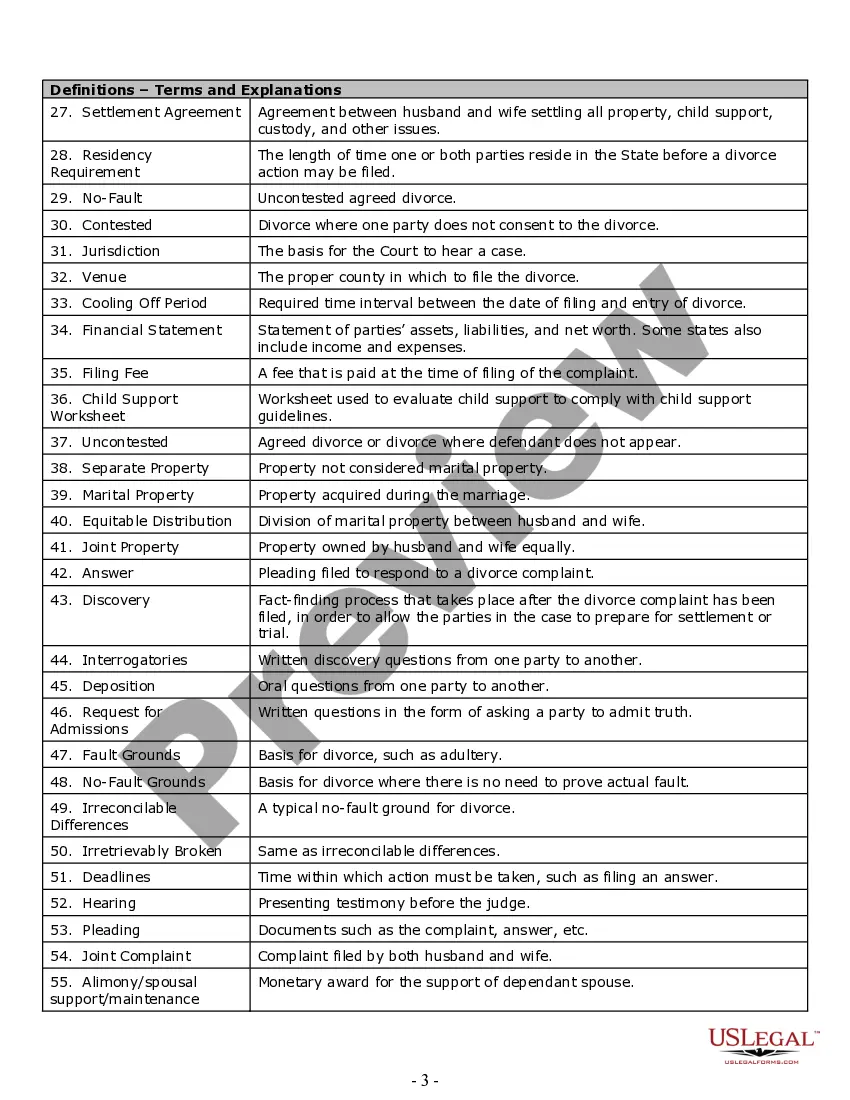
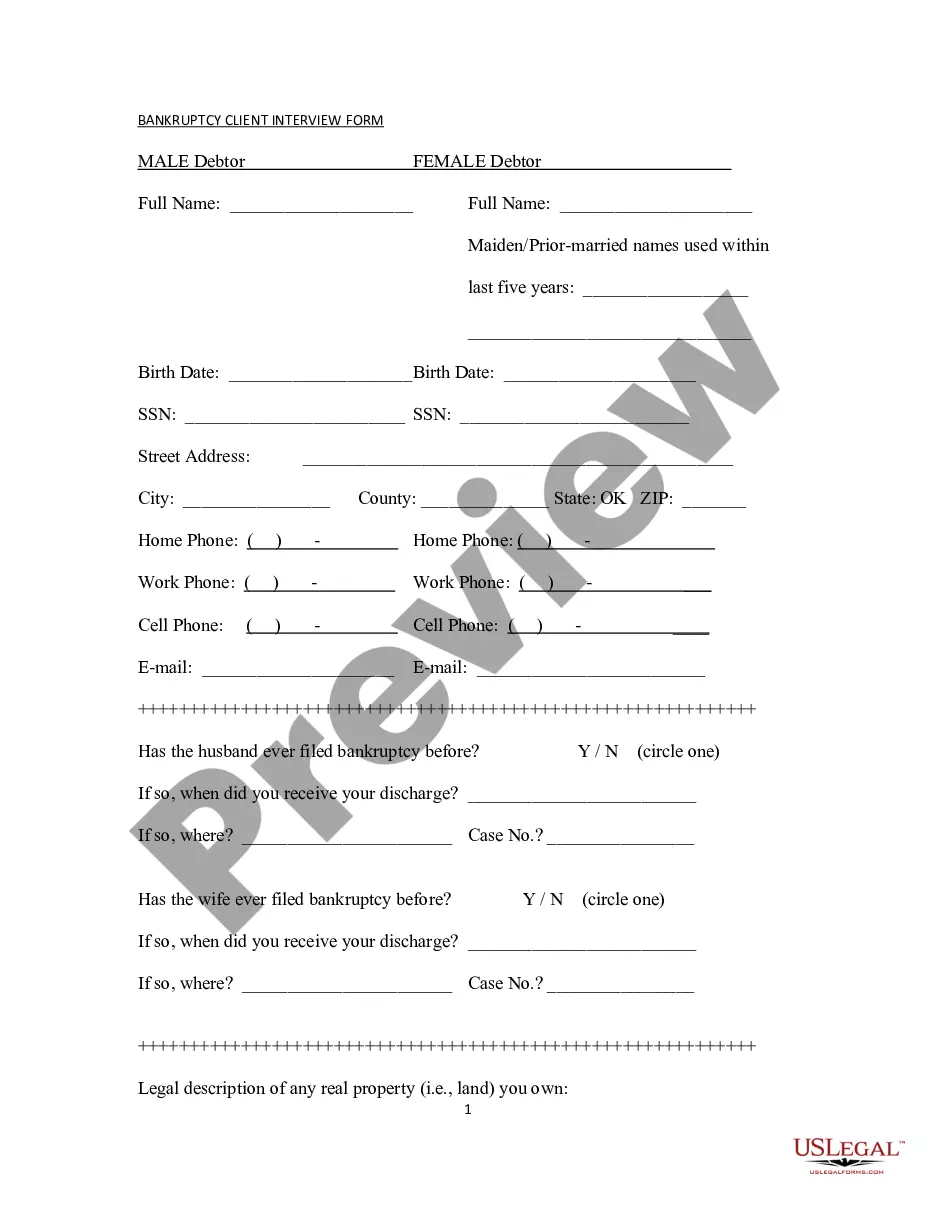
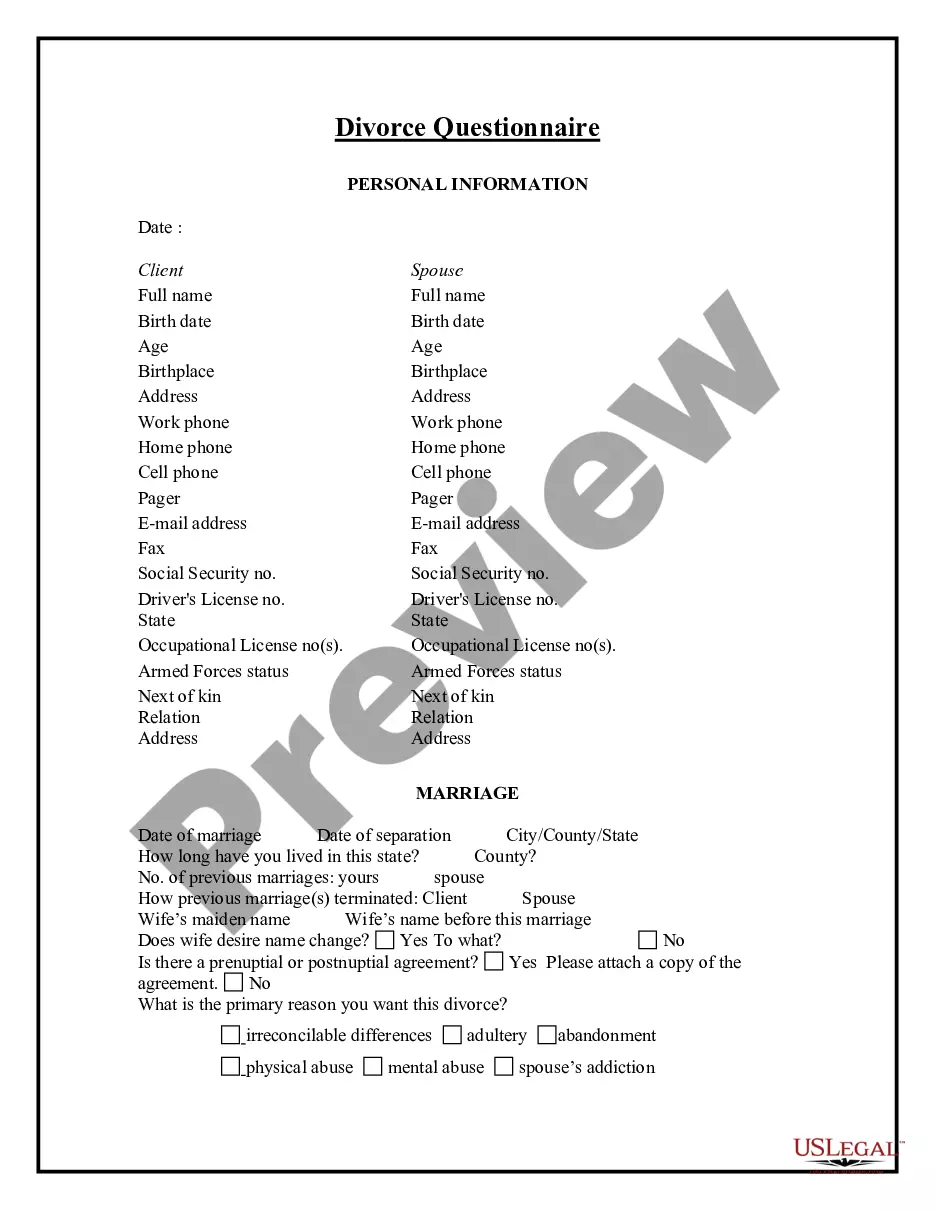
The Divorce Worksheet and Law Summary for Contested or Uncontested Cases is a comprehensive guide designed for individuals contemplating a divorce. This form helps organize essential information about the divorce process, including legal terminology, child custody arrangements, and financial obligations. Unlike other generic divorce forms, this package is tailored to assist both clients and their attorneys, providing detailed worksheets and law summaries essential for navigating a divorce, whether contested or uncontested.
Key components of this form
- Definitions of key legal terms relevant to divorce proceedings.
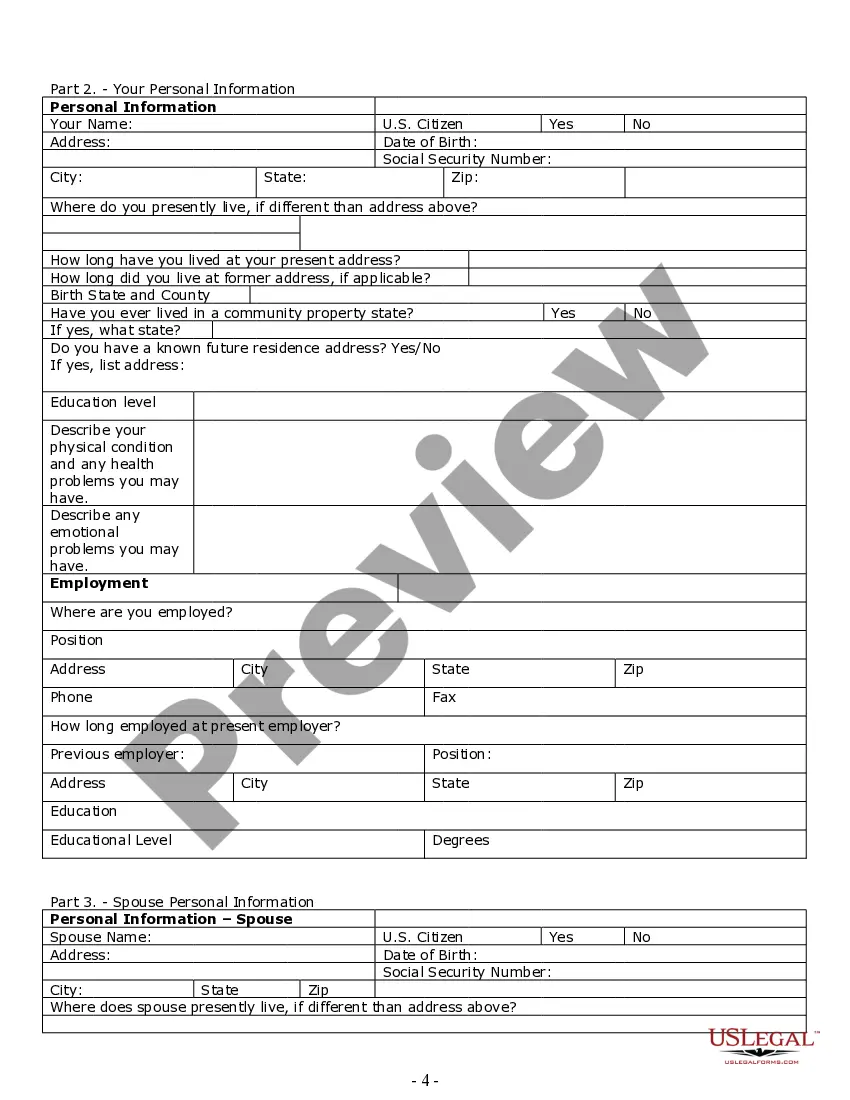
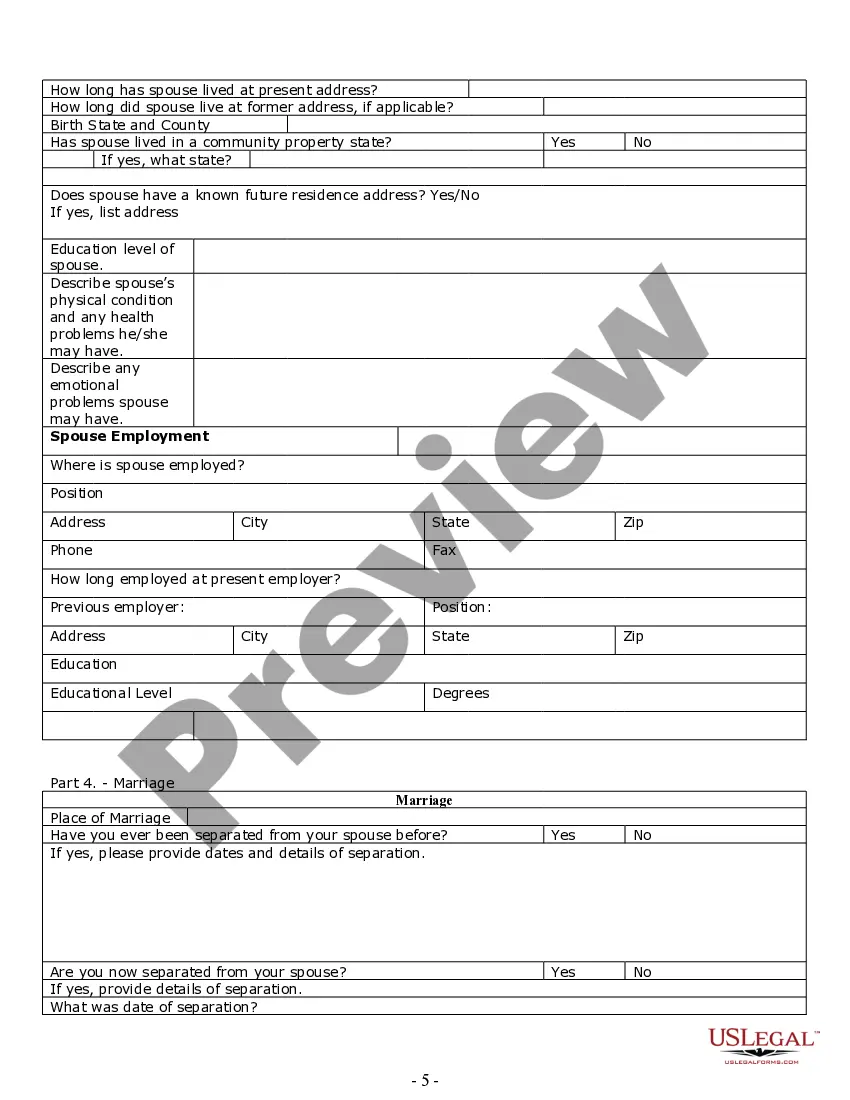
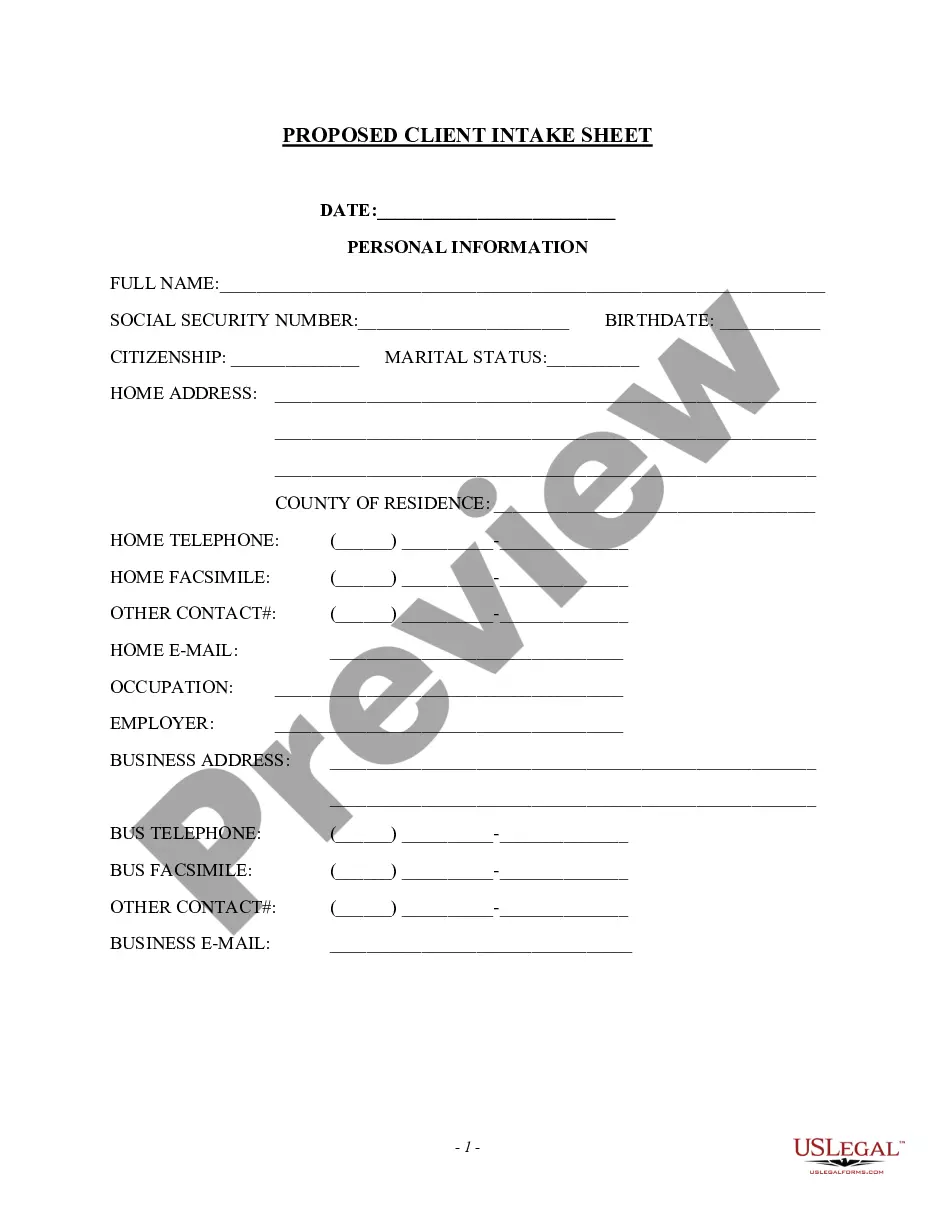
- Personal information sections for both parties, including employment and health details.
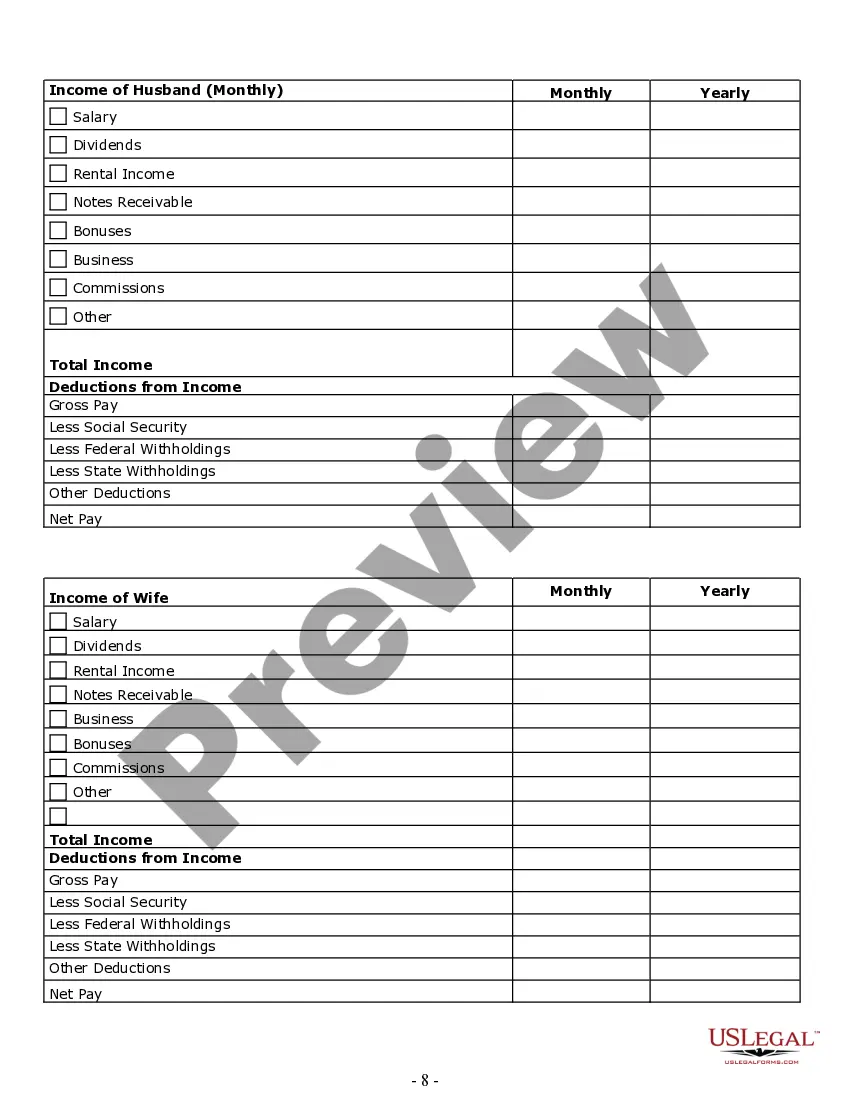
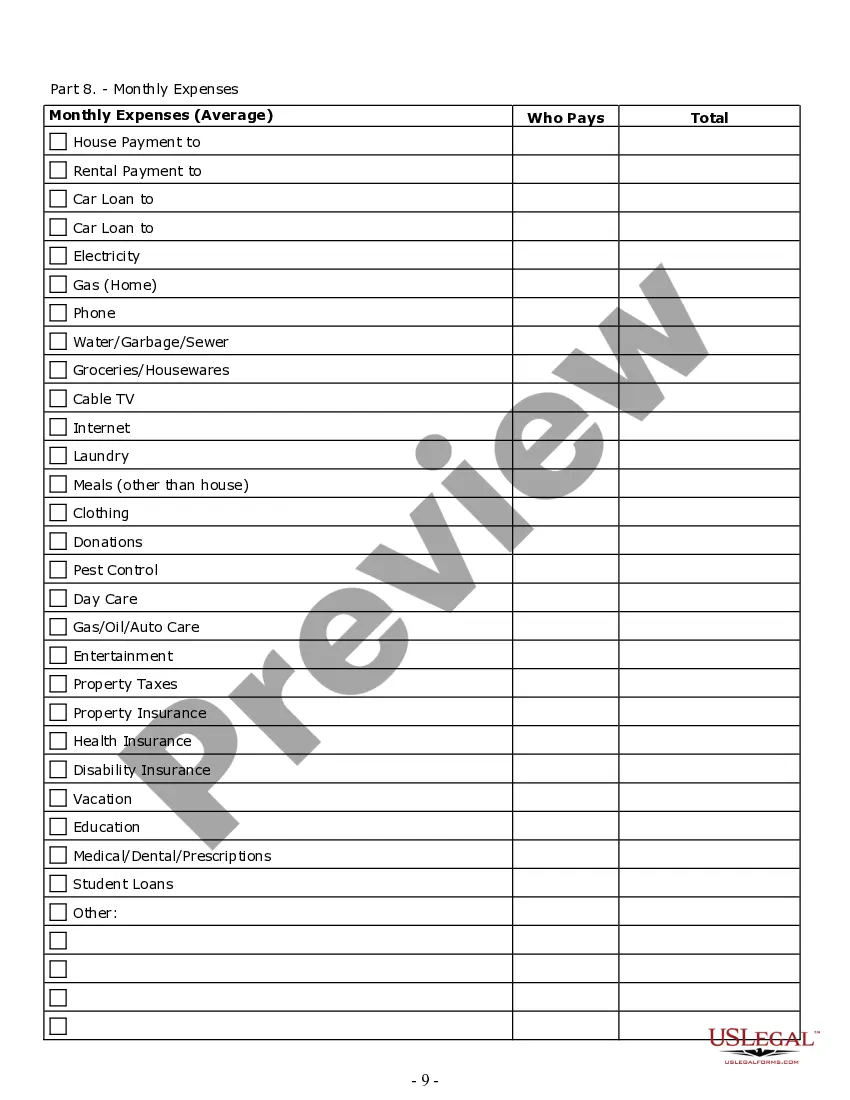
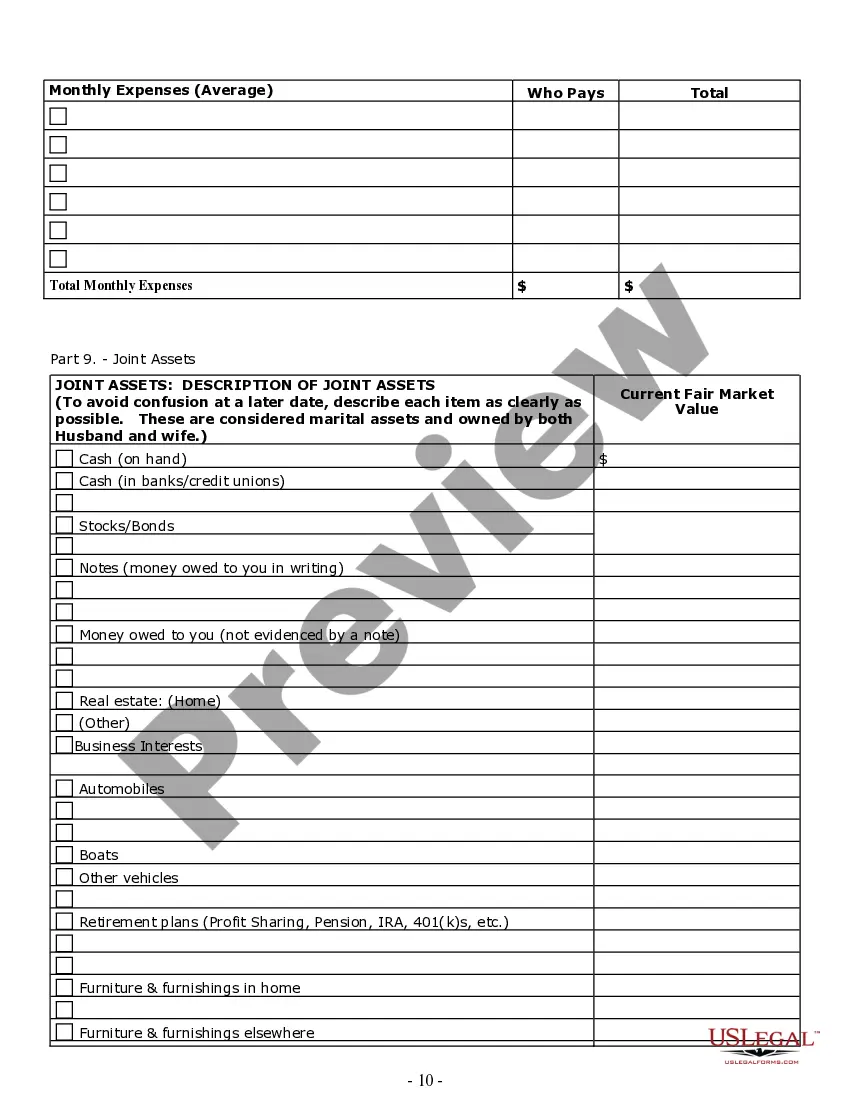
- Financial worksheets detailing income, expenses, joint assets, and liabilities.
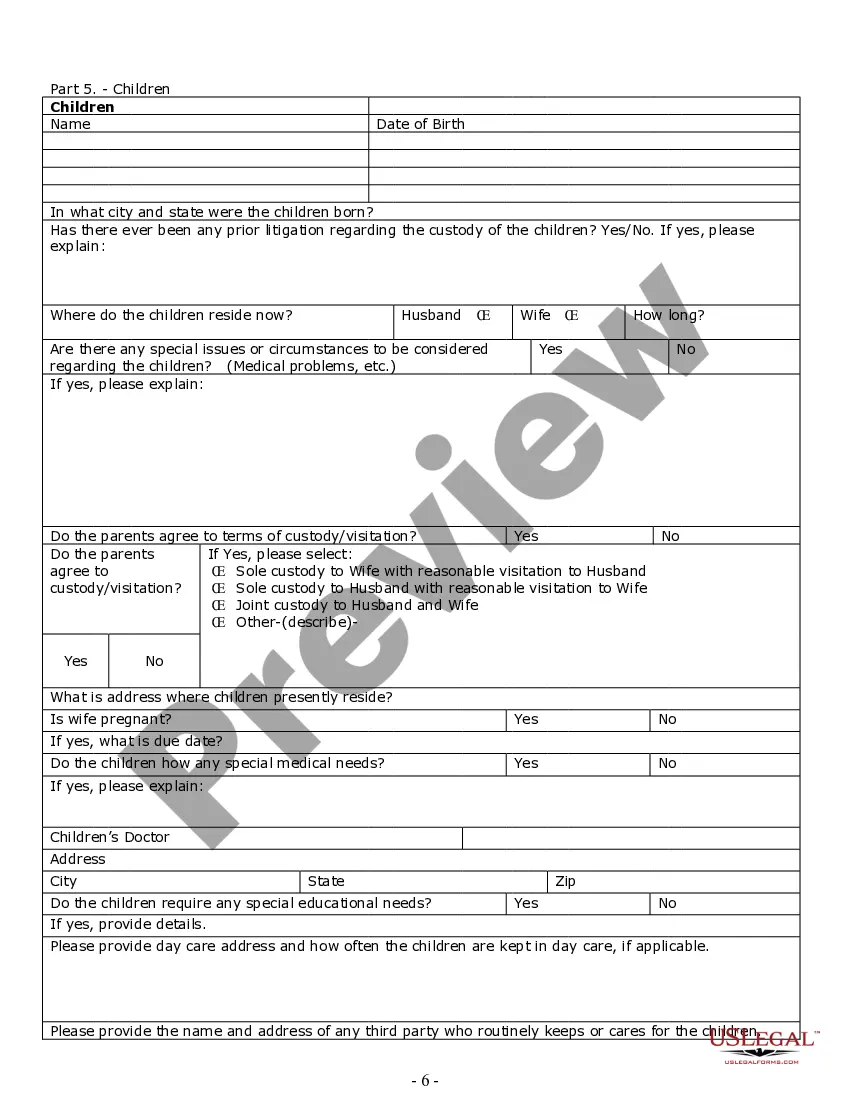
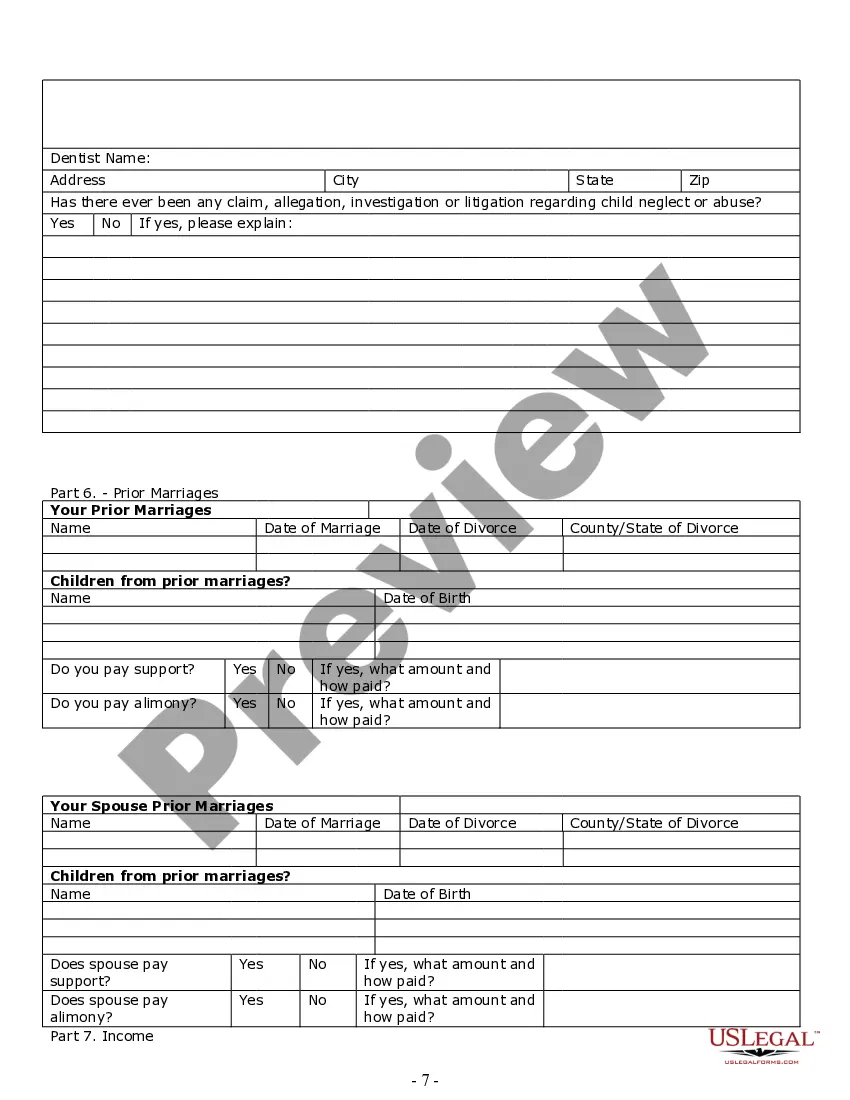
- Sections on children, including custody, visitation agreements, and support obligations.
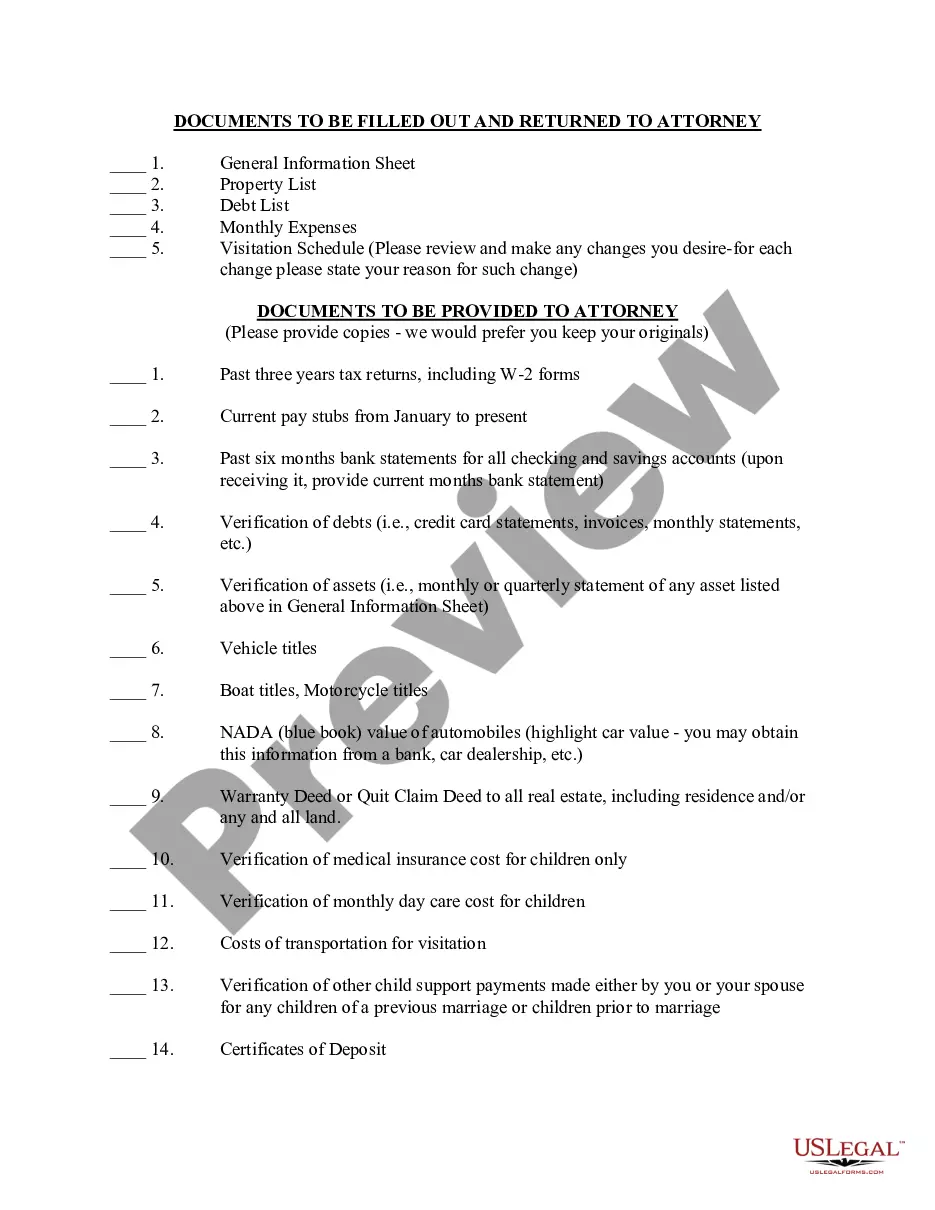
- Documentation requirements and sample questions for court hearings.
- Settlement worksheets to help outline the division of assets and responsibilities.


Common use cases
This form should be used when you are considering a divorce, whether you and your spouse are in agreement or if there are contentious issues to be resolved. It is particularly beneficial to complete this worksheet before consulting with an attorney, as it streamlines the information gathering process and minimizes time spent on initial discussions.
Intended users of this form
- Individuals contemplating divorce, whether contested or uncontested.
- Couples seeking to have a clear understanding of the division of assets and liabilities.
- Clients preparing for an initial consultation with a divorce attorney.
- Parents requiring guidance on child custody and support matters.
Steps to complete this form
- Begin by providing your personal information and that of your spouse, including addresses and employment details.
- Complete the sections detailing your marriage history and any prior children, including custody arrangements.
- Fill out the financial sections by listing all income, expenses, assets, and liabilities for both parties.
- Review and complete any additional worksheets regarding child support, visitation, and settlement agreements.
- Compile necessary documents and records as specified in the section on documentation needed for divorce proceedings.
Notarization guidance
This form does not typically require notarization unless specified by local law. However, when presenting divorce documents in court, certain jurisdictions may require notarized signatures on some forms. Always check local requirements to ensure compliance.
Get your form ready online
Our built-in tools help you complete, sign, share, and store your documents in one place.
Make edits, fill in missing information, and update formatting in US Legal Forms—just like you would in MS Word.
Download a copy, print it, send it by email, or mail it via USPS—whatever works best for your next step.
Sign and collect signatures with our SignNow integration. Send to multiple recipients, set reminders, and more. Go Premium to unlock E-Sign.
If this form requires notarization, complete it online through a secure video call—no need to meet a notary in person or wait for an appointment.
We protect your documents and personal data by following strict security and privacy standards.

Make edits, fill in missing information, and update formatting in US Legal Forms—just like you would in MS Word.

Download a copy, print it, send it by email, or mail it via USPS—whatever works best for your next step.

Sign and collect signatures with our SignNow integration. Send to multiple recipients, set reminders, and more. Go Premium to unlock E-Sign.

If this form requires notarization, complete it online through a secure video call—no need to meet a notary in person or wait for an appointment.

We protect your documents and personal data by following strict security and privacy standards.
Mistakes to watch out for
- Failing to complete all sections, leading to missing information needed for legal proceedings.
- Overlooking important financial details or assets when filling out the financial worksheets.
- Ignoring local state-specific requirements that may affect the divorce process.
- Neglecting to discuss child custody arrangements thoroughly, which can lead to disputes later.
Why complete this form online
- Convenience of completing the form at your own pace and from the comfort of your home.
- Editability to ensure that all information is accurate before submission.
- Access to an organized and structured approach to handling complex divorce-related information.
- Reliable resources and guidance included to support you throughout the divorce process.
Legal use & context
- This form provides a structured approach for gathering relevant information, supporting effective legal representation.
- The completed worksheet can be presented in court as evidence of thorough preparation.
- Understanding the definitions and terms included can help clarify your rights during the divorce process.
What to keep in mind
- This form serves as a comprehensive guide for individuals preparing for divorce.
- It provides essential definitions and practical worksheets for financial and child custody matters.
- Using this form can streamline your preparation process and optimize your time with legal professionals.
- Complaint: The legal document initiating a divorce action.
- Custody: The legal right to take care of and make decisions for children.
- Alimony: Financial support paid to a spouse after divorce.
Looking for another form?
Form popularity
FAQ
As a general rule, a wife cannot force her husband to pay for their divorce. Each party in the divorce action pays for his or her attorney fees and costs. However, there are circumstances in which a judge may order a husband to pay the wife's attorney fees and costs.
Usually, the person who applies for a divorce (also known as the 'petitioner') has to pay the fee.
If a couple is able to come to an agreement about all the major issues before trial, that is called an uncontested divorce. Conversely, if there are one or more significant matters that the couple cannot agree on themselves, it is a contested divorce.
If your spouse refuses to sign the divorce papers, you can file for a contested divorce.If your spouse doesn't respond or show up in court, the court can grant a default divorce, meaning that by default, you are given the divorce you want and the terms you asked for in your filing.
Once the divorce becomes contested, a hearing must take place in order to establish the reasons for contesting the divorce and for the court to resolve those reasons. If both spouses show for the hearing, the court will determine the legal terms of the divorce through testimony and evidence.
A contested divorce is accomplished by filing the divorce papers and then serving your spouse with them. Uncontested divorces are easier because both spouses agree on all the issues such as child custody, child support, division of marital assets, and alimony.