California Commercial Sublease
Overview of this form
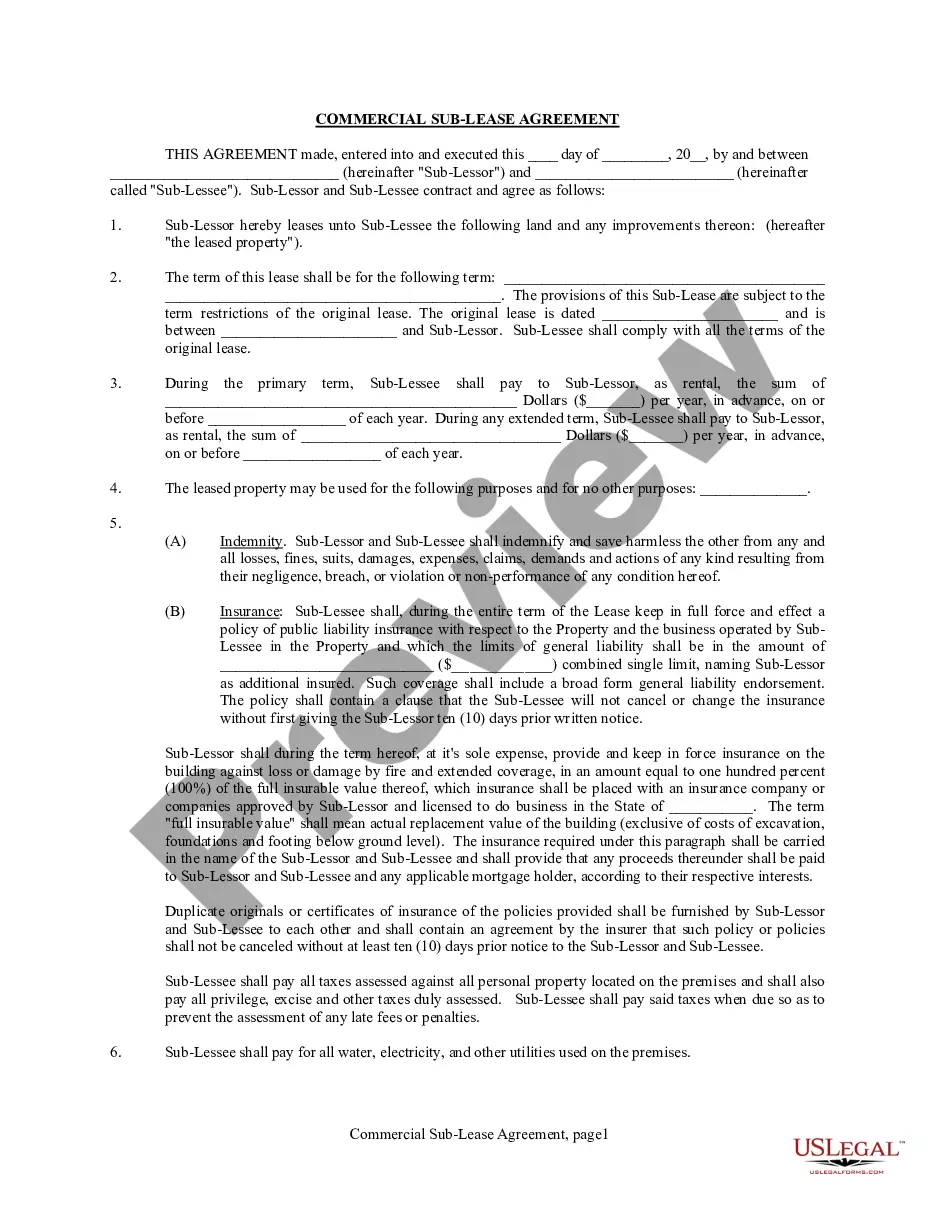
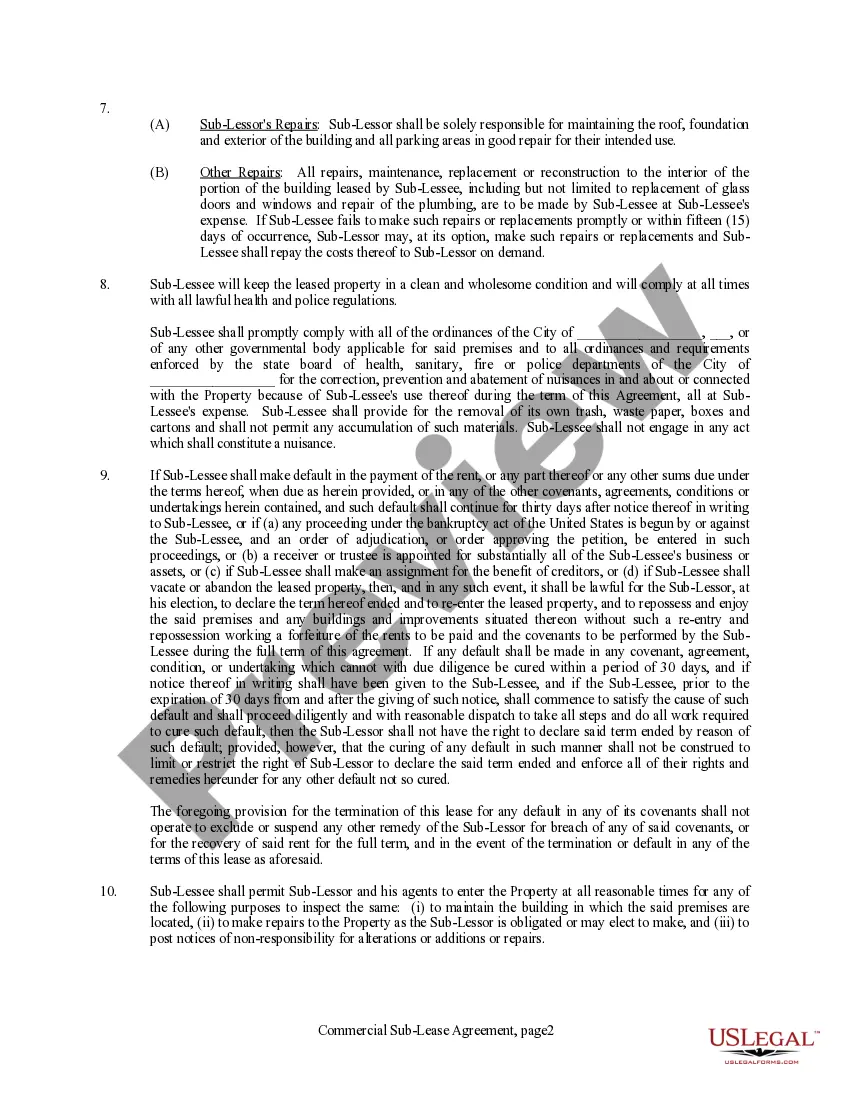
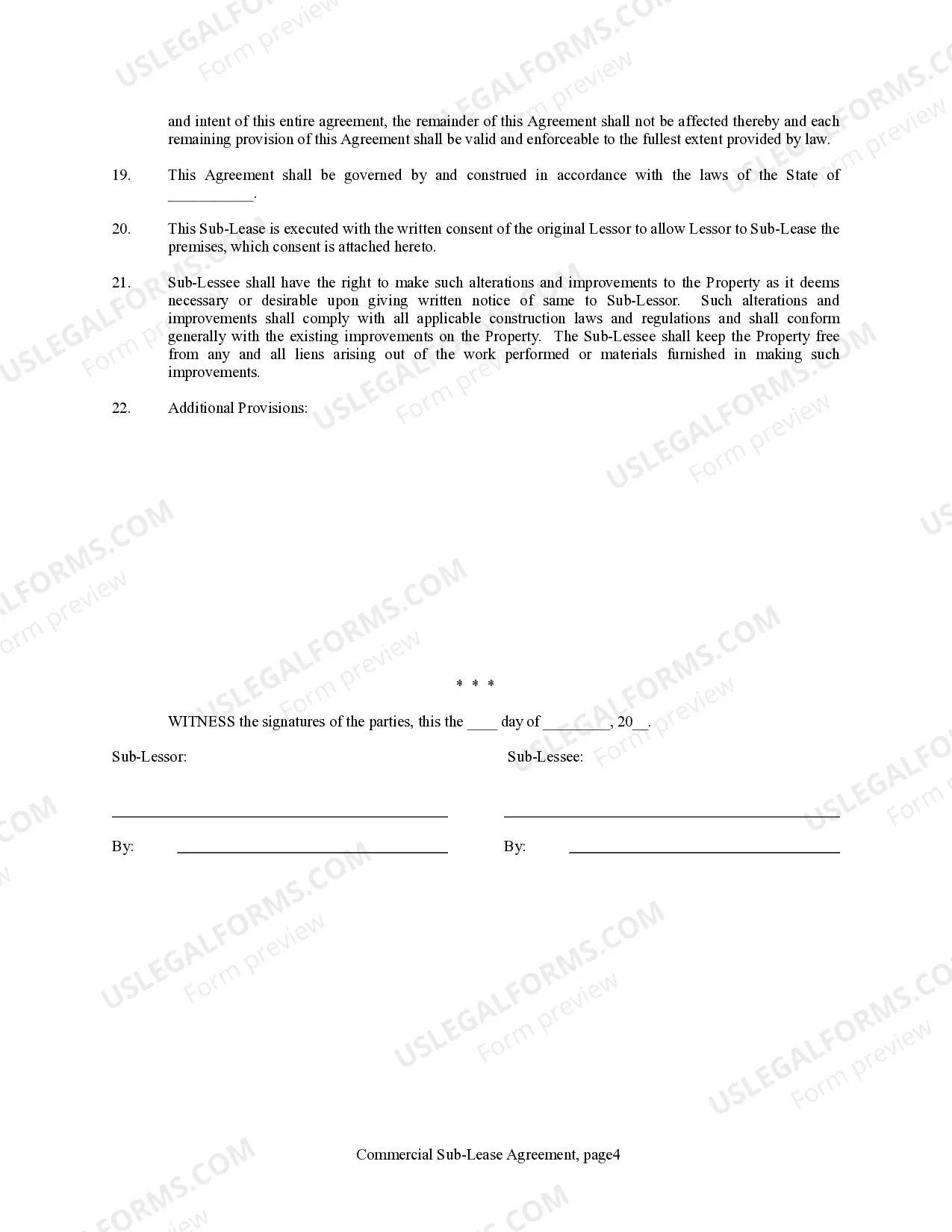
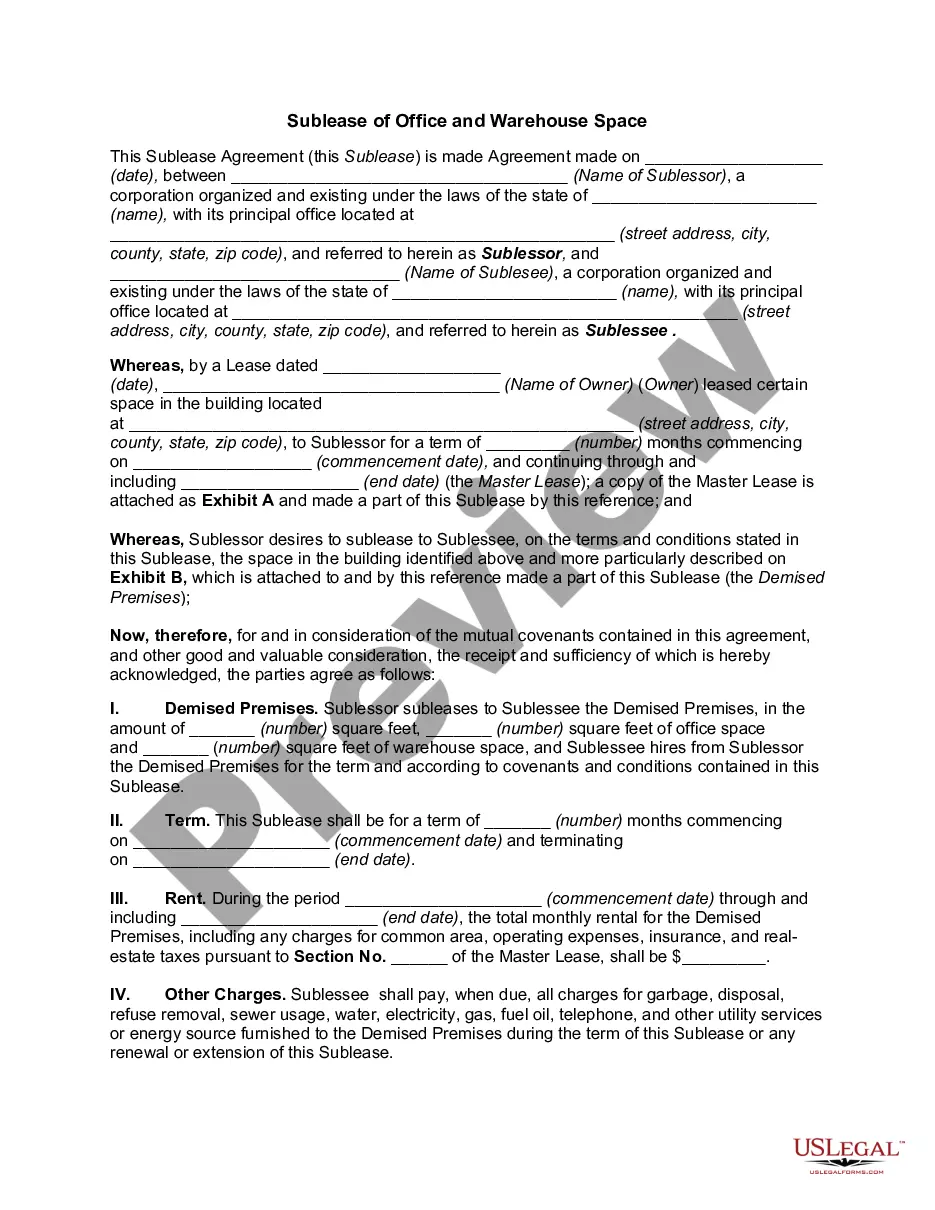
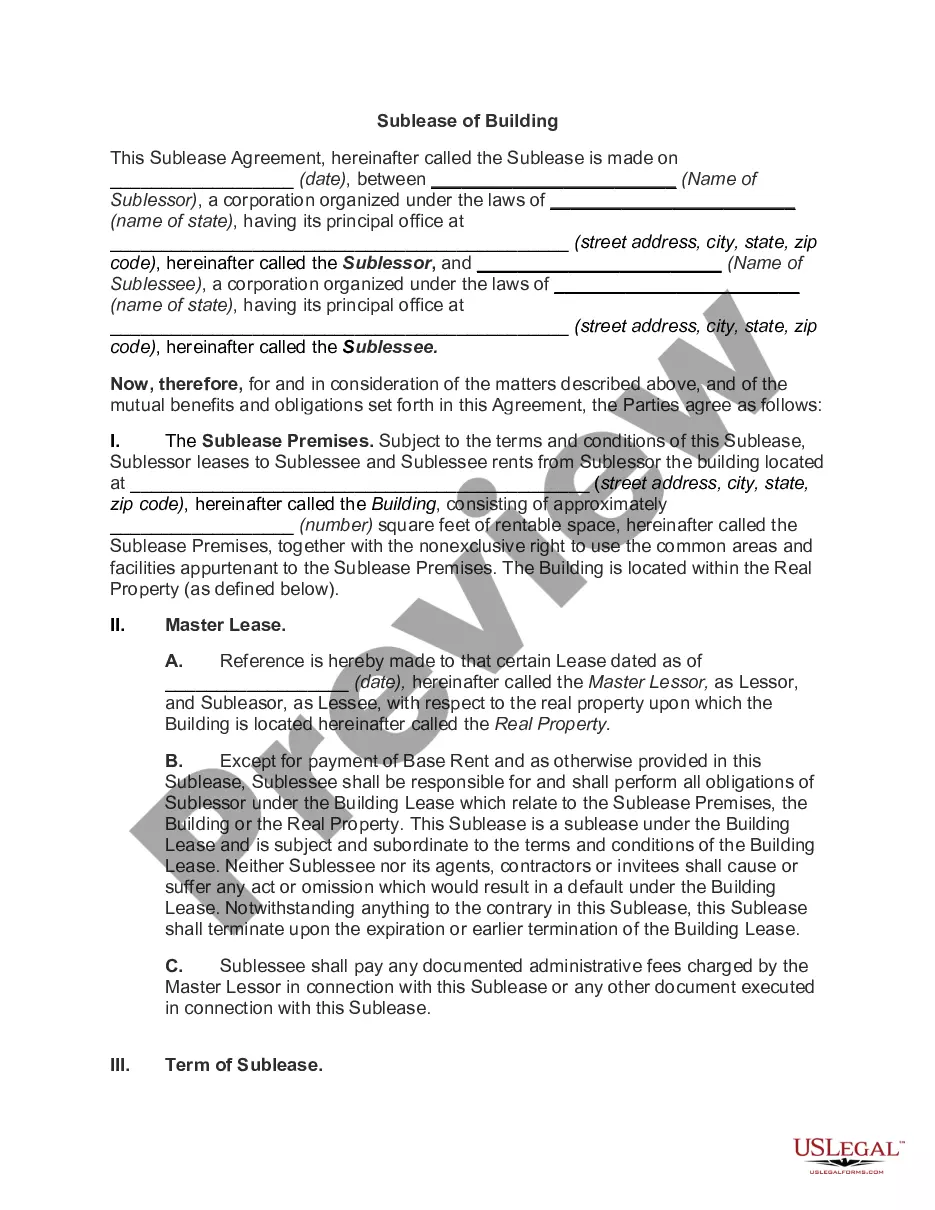
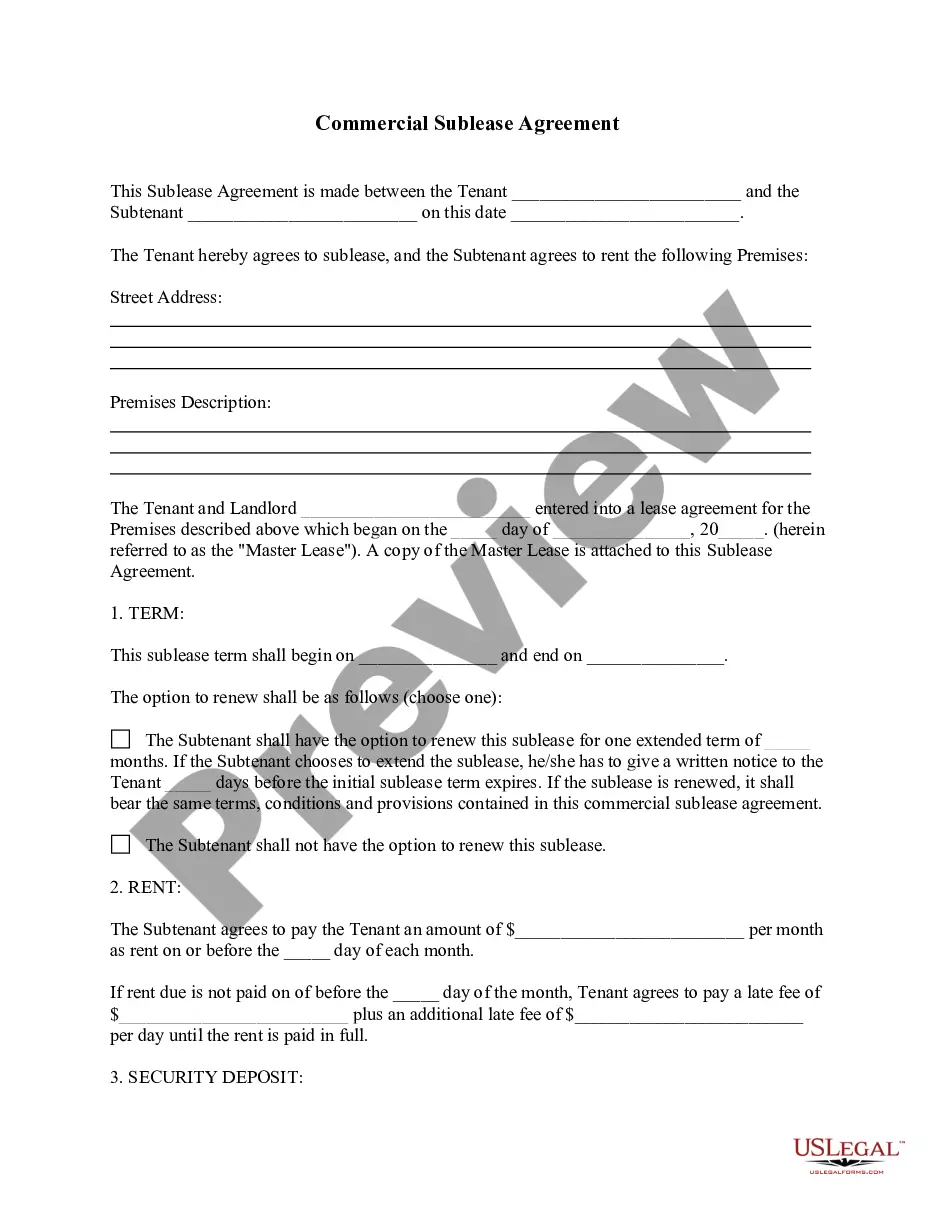
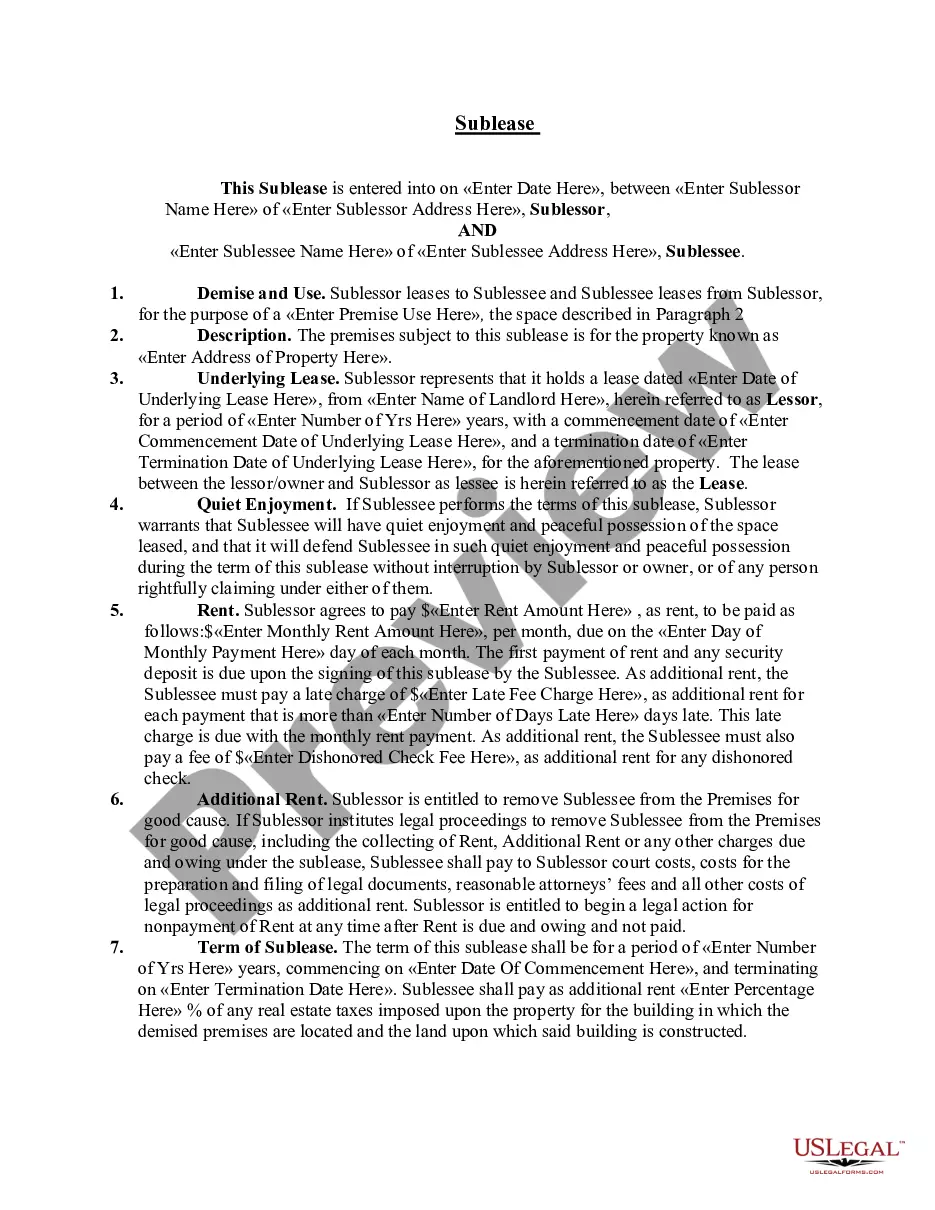
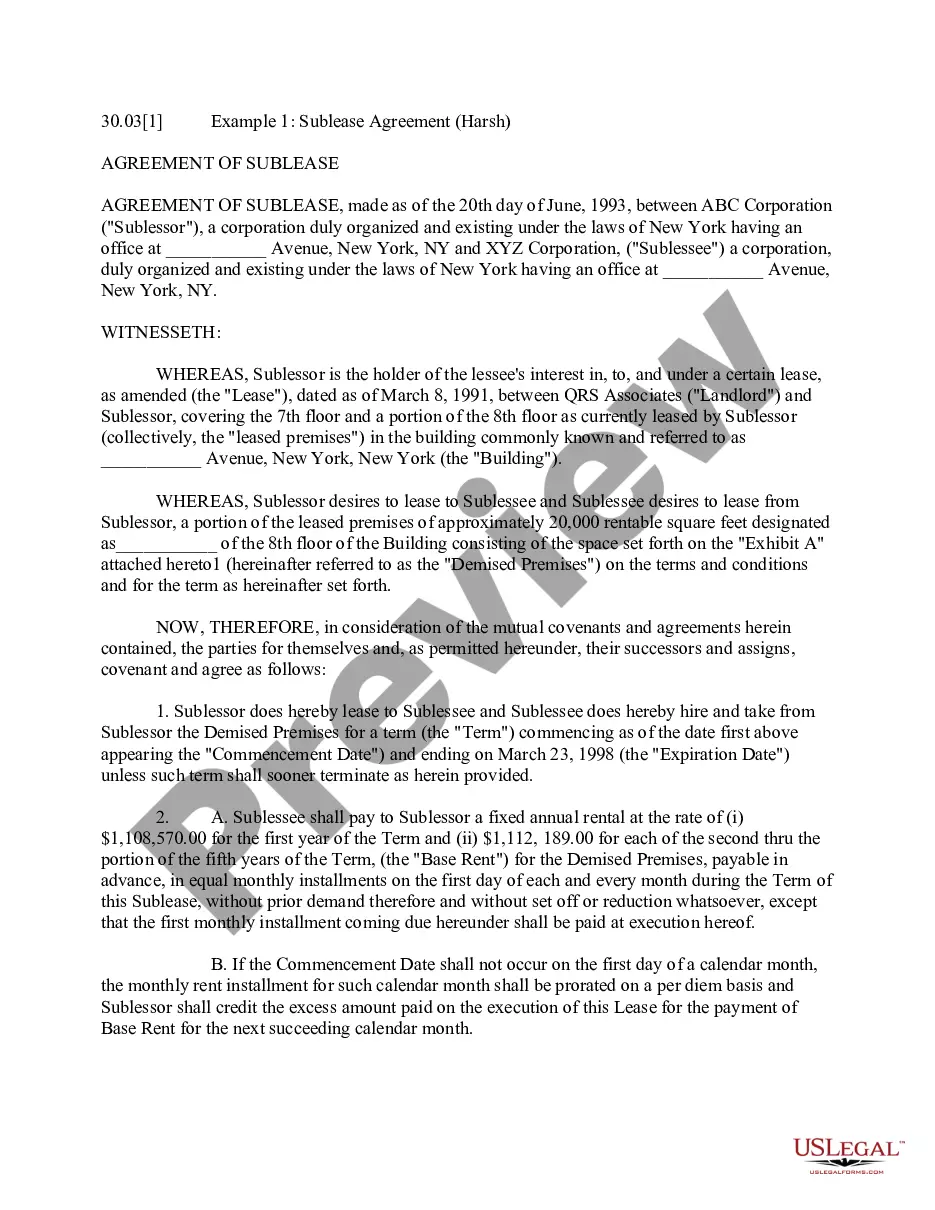
The Commercial Sublease form is a legal document that allows a tenant (the Sub-Lessor) to lease their rented commercial property to another tenant (the Sub-Lessee). This sub-lease arrangement includes specific terms and conditions that must comply with the original lease agreements with the landlord. Unlike a traditional lease, a sub-lease involves multiple parties and is specifically tailored for commercial properties, ensuring that the rights and responsibilities of both the Sub-Lessor and Sub-Lessee are clearly outlined.
What’s included in this form
- Identification of the parties involved: Sub-Lessor and Sub-Lessee.
- Details of the leased property and its permitted uses.
- Rental payment terms, including amounts and due dates.
- Indemnity and insurance requirements for both parties.
- Maintenance and repair responsibilities of the Sub-Lessor and Sub-Lessee.
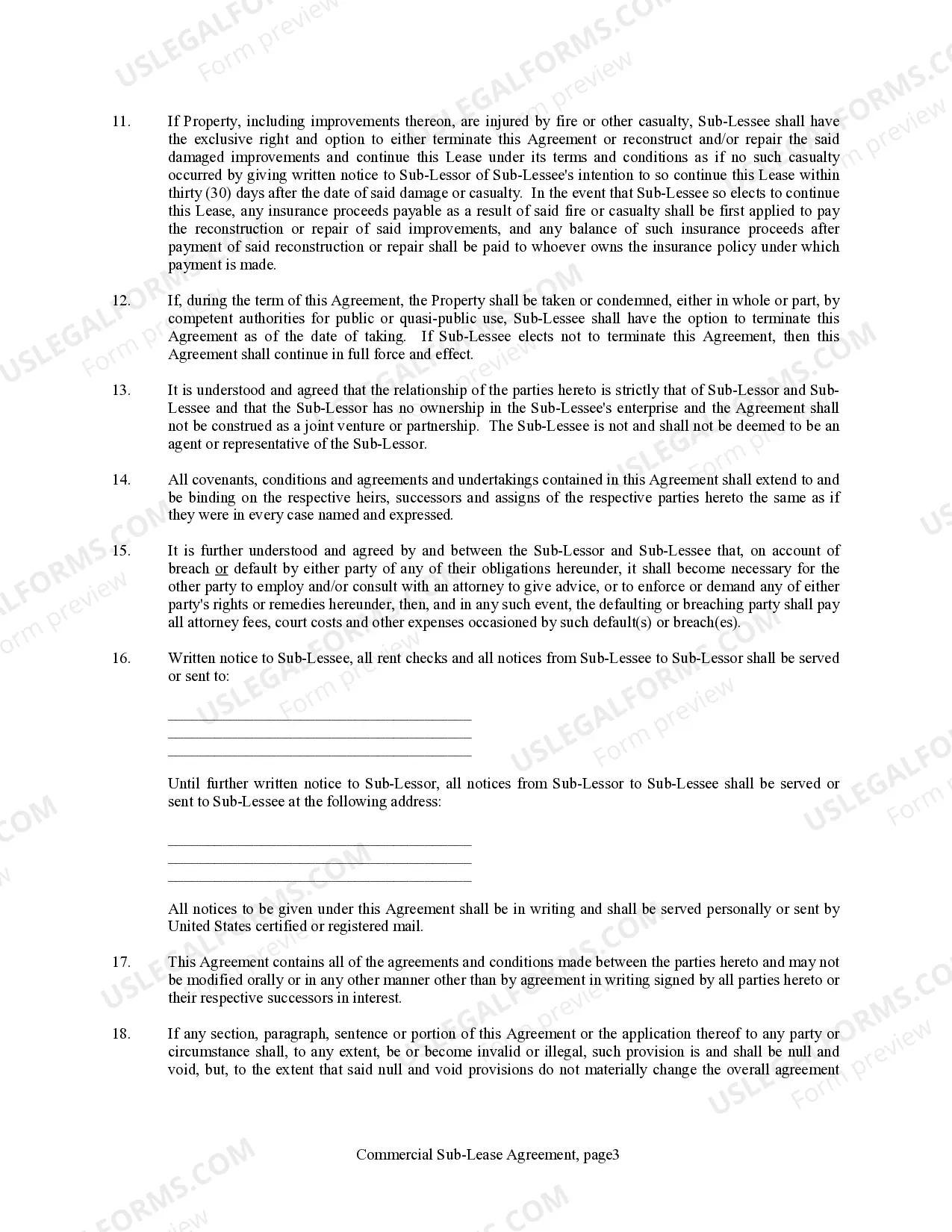
- Procedure for termination of the lease under specific conditions.
Common use cases
This form is necessary when a tenant wishes to sublease a commercial property either due to a temporary need, to share financial responsibilities, or when they are unable to fulfill their lease obligations directly. It is useful in scenarios where a business is looking to expand its operations temporarily or when a tenant seeks to monetize unused space in a commercial property.
Who can use this document
- Commercial property landlords who want to allow their tenants to sublease.
- Businesses that have excess space they wish to rent out.
- Tenants looking to transfer their lease obligations temporarily.
- Anyone involved in business who needs to comply with existing lease agreements while subletting their space.
Completing this form step by step
- Identify and enter the names of the Sub-Lessor and Sub-Lessee at the top of the document.
- Specify the property being leased, including any improvements detailed in the initial lease.
- Clearly outline the rental payment terms, including amounts and the payment schedule.
- Review and complete the indemnity and insurance clauses to ensure coverage and liability protection.
- Finalize the agreement by ensuring all parties sign and date the document.
Is notarization required?
Notarization is not commonly needed for this form. However, certain documents or local rules may make it necessary. Our notarization service, powered by Notarize, allows you to finalize it securely online anytime, day or night.
Get your form ready online
Our built-in tools help you complete, sign, share, and store your documents in one place.
Make edits, fill in missing information, and update formatting in US Legal Forms—just like you would in MS Word.
Download a copy, print it, send it by email, or mail it via USPS—whatever works best for your next step.
Sign and collect signatures with our SignNow integration. Send to multiple recipients, set reminders, and more. Go Premium to unlock E-Sign.
If this form requires notarization, complete it online through a secure video call—no need to meet a notary in person or wait for an appointment.
We protect your documents and personal data by following strict security and privacy standards.

Make edits, fill in missing information, and update formatting in US Legal Forms—just like you would in MS Word.

Download a copy, print it, send it by email, or mail it via USPS—whatever works best for your next step.

Sign and collect signatures with our SignNow integration. Send to multiple recipients, set reminders, and more. Go Premium to unlock E-Sign.

If this form requires notarization, complete it online through a secure video call—no need to meet a notary in person or wait for an appointment.

We protect your documents and personal data by following strict security and privacy standards.
Avoid these common issues
- Failing to obtain the landlord's consent for the sublease.
- Not clearly defining the terms of use for the property, which can lead to disputes.
- Omitting critical details in the rental payment clauses, such as due dates or payment methods.
- Neglecting to verify that the insurance policy complies with the requirements listed in the form.
- Forgetting to sign the document, making the agreement unenforceable.
Benefits of completing this form online
- Convenience of downloading and completing the form at your own pace.
- Access to legally reviewed templates that ensure compliance with current laws.
- Editable fields that enable customization to fit specific needs and circumstances.
- Instant availability to avoid delays that can occur with traditional legal service providers.
Legal use & context
- Legally binding agreements between parties that detail property use and rental terms.
- Enforceability relies on adherence to both the original lease and state laws.
- Failure to comply with terms may lead to legal disputes or eviction.
Summary of main points
- The Commercial Sublease form provides a structured way for tenants to lease their rented space legally.
- Both Sub-Lessor and Sub-Lessee must comply with the terms of the original lease.
- It is important to outline all rental and use terms clearly to avoid disputes.
- Consulting with a legal professional may be beneficial to address specific state requirements or regulations.
Looking for another form?

Form popularity
FAQ
Writing a commercial sublease involves defining the agreement between the original tenant and the subtenant clearly. Include details like rent, duration, and any permissions or restrictions for use of the property. For guidance aligning with California law, USLegalForms offers helpful resources that can facilitate writing an effective California commercial sublease.
To fill out a commercial lease agreement, gather essential details like the tenant's business name, the property address, and all payment terms. Ensure you also include any specific clauses relevant to the property type or business needs. For those navigating a California commercial sublease, using a trusted platform such as USLegalForms can help you fill it out correctly and efficiently.
Writing a simple lease agreement involves outlining the key aspects of the lease clearly. Start with the names of the involved parties, property address, rent amount, and lease duration. When it comes to a California commercial sublease, clarity in terms and conditions is vital to prevent future disputes, and platforms like USLegalForms can provide you with straightforward templates to ease the process.
Filling out a commercial lease agreement requires careful attention to detail. Begin by including the names of all parties, describing the leased space, and specifying the lease term and payment structure. For those considering a California commercial sublease, it is advisable to consult templates available on USLegalForms to guide you in completing the document accurately.
Yes, you can write your own lease agreement; however, it is crucial to understand the legal requirements involved. When drafting a California commercial sublease, ensure that it includes essential elements such as rent details, duration, and maintenance responsibilities. Utilizing resources from platforms like USLegalForms can simplify the process and ensure compliance with California law.
Generally, California does not impose rent control on commercial properties as it does on residential properties. This gives property owners more freedom to set rents based on market conditions. However, always consult a legal expert when pursuing a California Commercial Sublease to understand any applicable regulations specific to the property you are considering.
Certain properties are exempt from California rent control, including single-family homes and condos rented by owners. Additionally, new constructions or housing built within the last 15 years may not fall under rent control regulations. If you’re considering a California Commercial Sublease, it’s crucial to verify whether a property is regulated or exempt to avoid surprises.
Yes, California landlord-tenant law does apply to commercial leases, but it's important to note that these laws differ from those for residential tenants. Commercial tenants usually have more negotiating power and may have different rights under the California Commercial Sublease laws. Understanding these differences can help you manage your obligations effectively.
Yes, to rent a commercial property in California, you typically need a business license. This license allows you to operate legally within your chosen jurisdiction. Additionally, some cities and counties may have specific regulations you must meet when engaging in a California Commercial Sublease. Always check local requirements before proceeding.
Subleasing a commercial property involves the original tenant renting out part or all of their leased space to another party. The new tenant, often called the subtenant, essentially takes over some of the rights and responsibilities of the lease. However, the original tenant remains liable to the landlord, meaning they must ensure the subtenant follows the lease terms. For a seamless process, consider understanding California Commercial Sublease agreements through platforms like uslegalforms.