Texas General Warranty Deed Transferring Life Estate from Five Individuals to an Individual
What is this form?
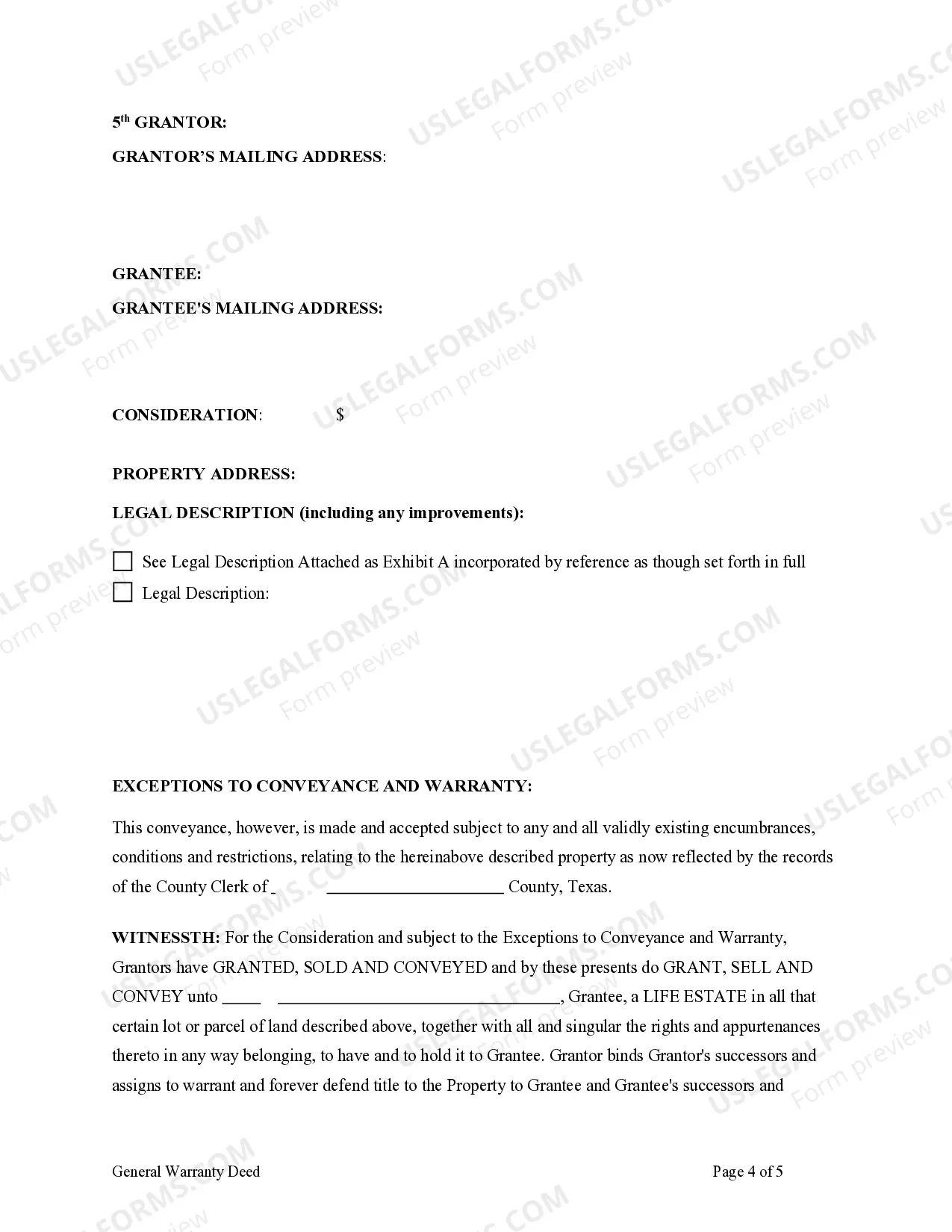
This General Warranty Deed is a legal document used to transfer a life estate from five individuals, known as the Grantors, to a single individual, the Grantee. It assures the Grantee that the Grantors have the legal right to make this transfer and provides a warranty of the title. This deed is particularly significant as it establishes rights related to the use and enjoyment of the property during the life of the Grantee, differing from other property transfer forms that may not include the same assurances.
Form components explained
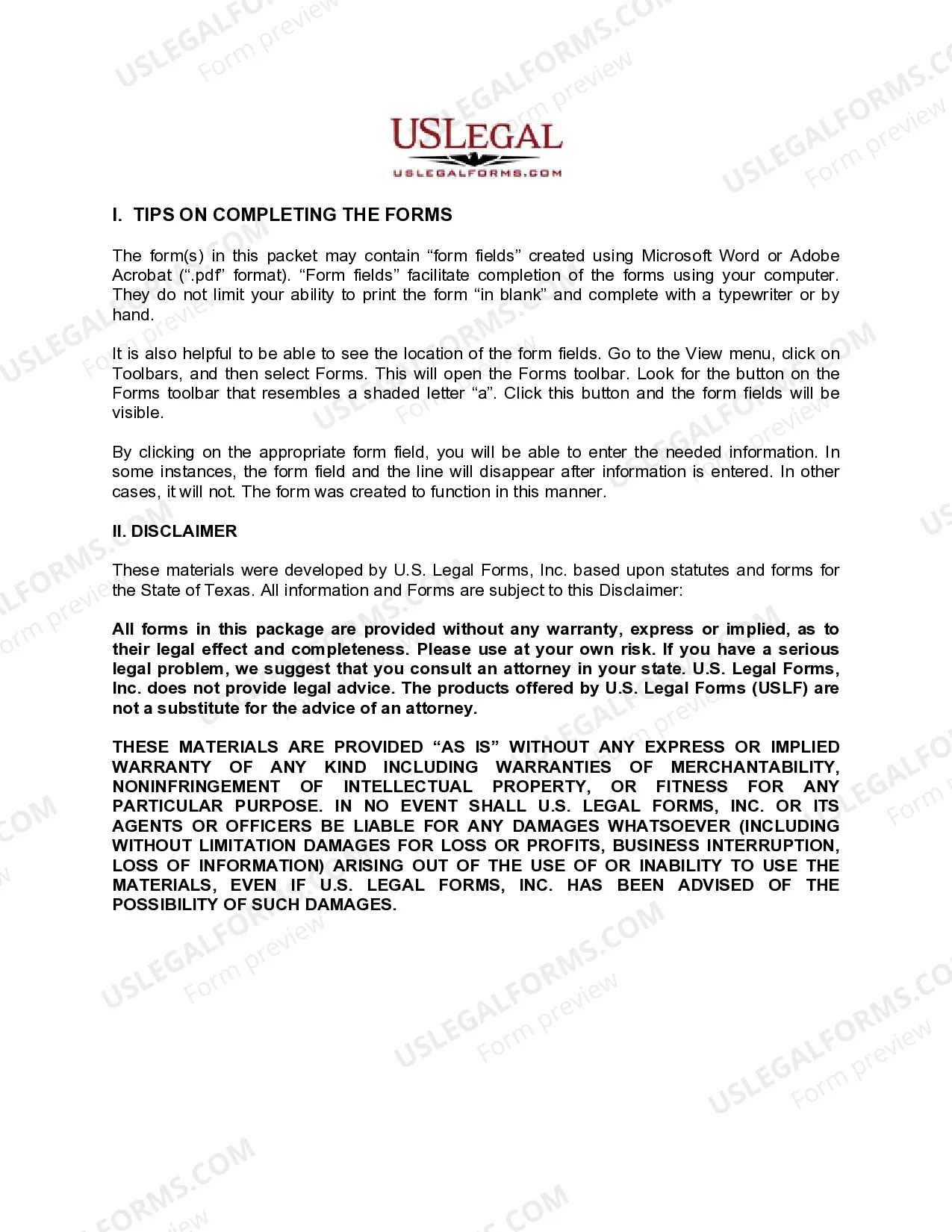
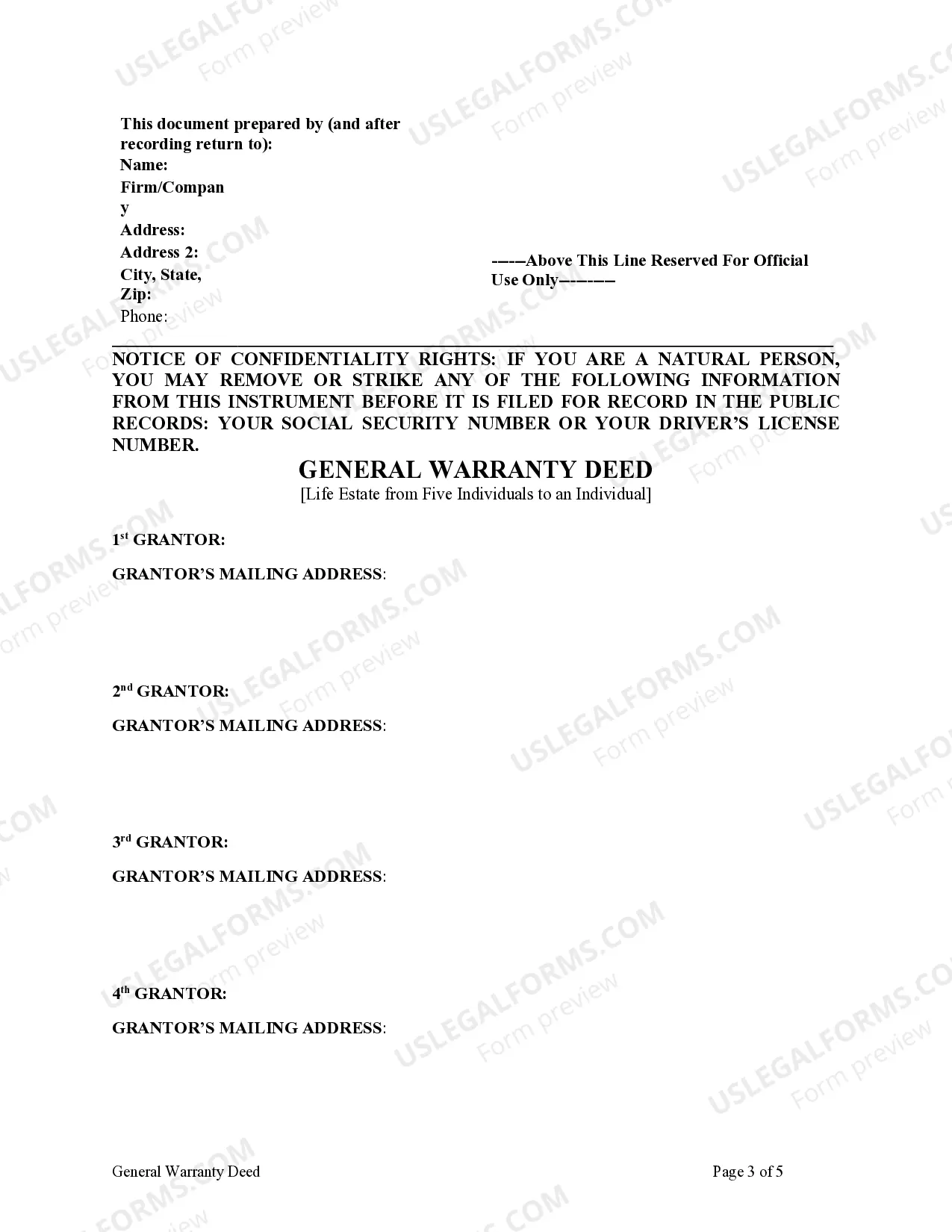
- Grantors: The five individuals executing the deed.
- Grantee: The individual receiving the life estate.
- Property description: A detailed description of the property being transferred.
- Warranties: Clauses that guarantee the Grantors' legal ownership and the right to transfer the property.
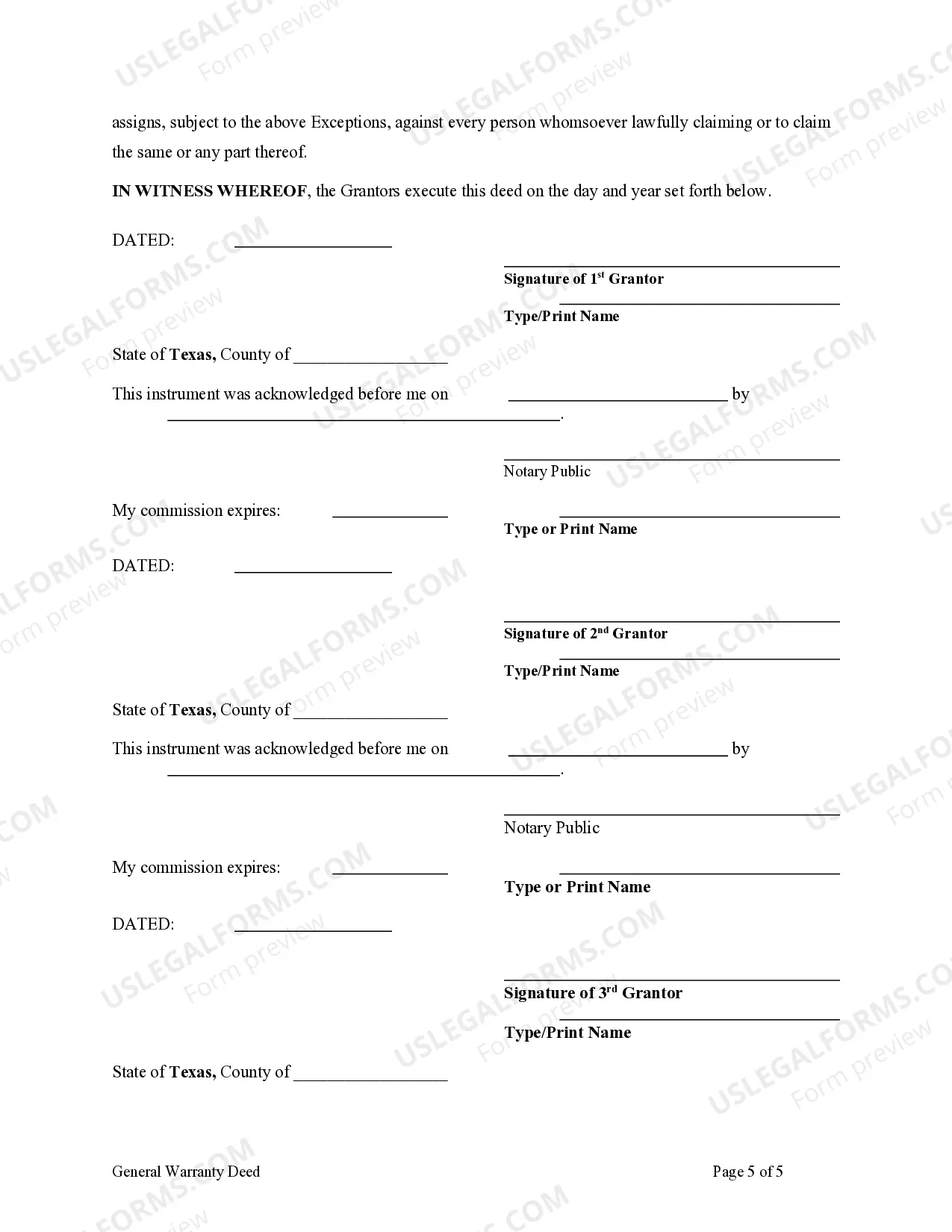
- Execution date: The date when the deed is signed and becomes valid.



Situations where this form applies
This General Warranty Deed is typically used when multiple individuals wish to convey a life estate to one person. It may be appropriate in scenarios such as family transactions, estate planning, or when consolidating property interests among co-owners. Utilizing this deed ensures the Grantee has guaranteed rights to the property during their lifetime.
Who this form is for
- Individuals transferring property ownership in a life estate arrangement.
- Families or parties involved in estate planning.
- Legal representatives managing property interests for clients.
How to prepare this document
- Identify the parties: Clearly state the names of all Grantors and the Grantee.
- Specify the property: Provide a complete description of the property being transferred.
- Enter the execution date: Fill in the date on which the deed will be signed.
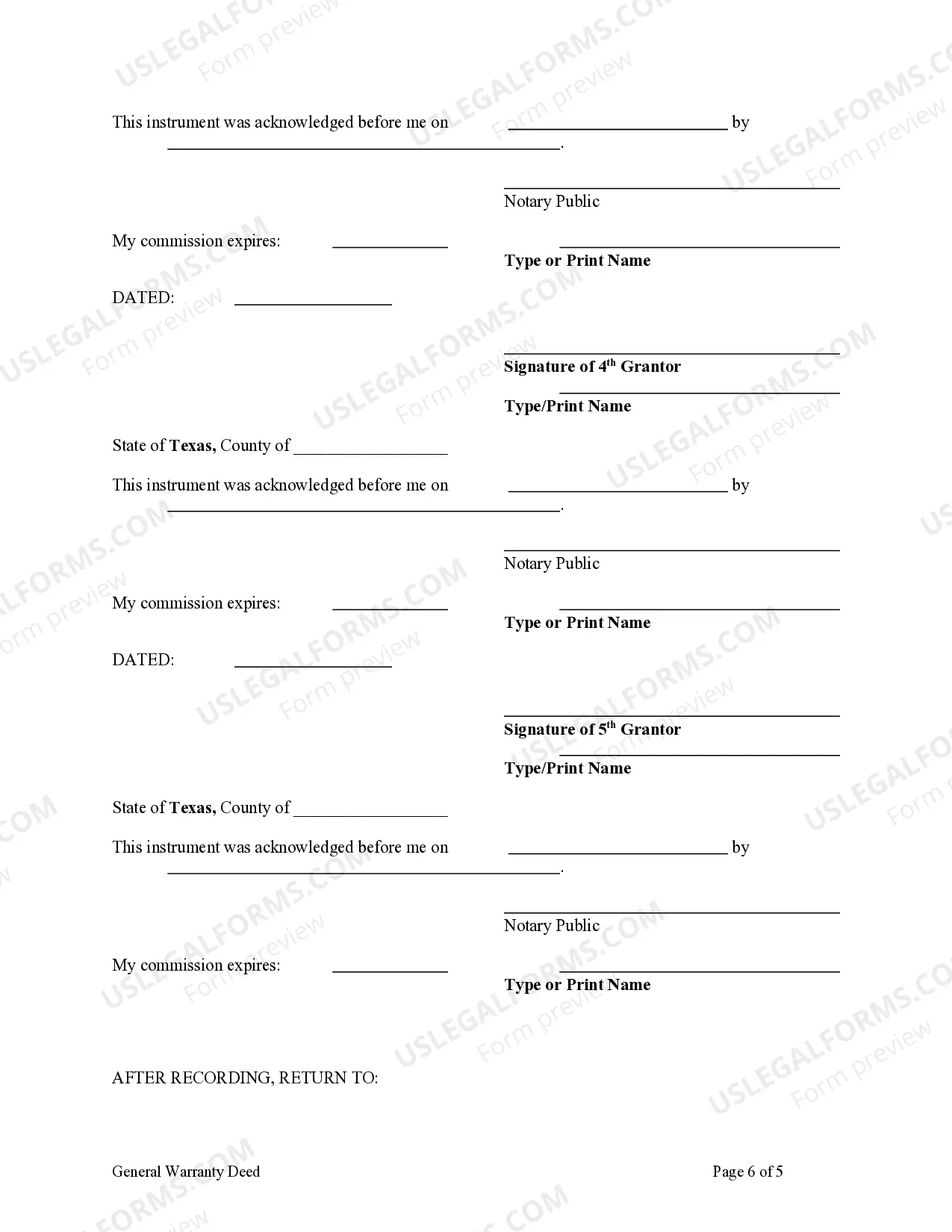
- Sign the deed: Ensure all Grantors sign the document in accordance with state laws.
- Record the deed: File the completed deed with the appropriate local county office for public record.
Notarization guidance
This form needs to be notarized to ensure legal validity. US Legal Forms provides secure online notarization powered by Notarize, allowing you to complete the process through a verified video call, available anytime.
Get your form ready online
Our built-in tools help you complete, sign, share, and store your documents in one place.
Make edits, fill in missing information, and update formatting in US Legal Forms—just like you would in MS Word.
Download a copy, print it, send it by email, or mail it via USPS—whatever works best for your next step.
Sign and collect signatures with our SignNow integration. Send to multiple recipients, set reminders, and more. Go Premium to unlock E-Sign.
If this form requires notarization, complete it online through a secure video call—no need to meet a notary in person or wait for an appointment.
We protect your documents and personal data by following strict security and privacy standards.

Make edits, fill in missing information, and update formatting in US Legal Forms—just like you would in MS Word.

Download a copy, print it, send it by email, or mail it via USPS—whatever works best for your next step.

Sign and collect signatures with our SignNow integration. Send to multiple recipients, set reminders, and more. Go Premium to unlock E-Sign.

If this form requires notarization, complete it online through a secure video call—no need to meet a notary in person or wait for an appointment.

We protect your documents and personal data by following strict security and privacy standards.
Typical mistakes to avoid
- Failing to include all Grantors' names, which can invalidate the deed.
- Omitting the legal description of the property, leading to ambiguity.
- Not signing or dating the document as required by law.
Why complete this form online
- Convenience: Easily download and complete the form at your own pace.
- Editability: Modify form fields as required, reducing errors.
- Accessibility: Available 24/7, allowing you to obtain necessary legal documents anytime.
Looking for another form?

Form popularity
FAQ
Find the most recent deed to the property. It is best to begin with a copy of the most recent deed to the property (the deed that transferred the property to the current grantor). Create a new deed. Sign and notarize the deed. File the documents in the county land records.
You can arrange to legally transfer the deed to your house to your children before you die. To do so, you sign a deed transfer and record it with the county recorder's office.
Gift the house When you give anyone other than your spouse property valued at more than $14,000 ($28,000 per couple) in any one year, you have to file a gift tax return. But you can gift a total of $5.49 million (in 2017) over your lifetime without incurring a gift tax.
Locate the deed that's in trust. Use the proper deed. Check with your title insurance company and lender. Prepare a new deed. Sign in the presence of a notary. Record the deed in the county clerk's office.
As with the defeasible fees, a life estate can be sold or transferred to a third party. However, since a holder cannot transfer more than he or she owns, the buyer or recipient will have to surrender the land upon the death of the person who was the measuring life for the original life estate.
The date the deed was made; The name of the party granting the life estate and their address; The name of the grantee and their address; The address and a legal description of the property that is subject to the life estate;
Think about IHT implications potentially exempt transfer Be aware of the rules on gifts with reservation of benefit You will no longer be the legal owner of the property. Risk from outside parties. Don't forget capital gains tax.
To be valid, gift deeds in Texas further require the document set forth (1) the intent of the grantor, (2) the delivery of the property to the grantee, and (3) the gift to be accepted by the grantee. The one claiming the gift bears the burden to establish each of the elements.
A person owns property in a life estate only throughout their lifetime. Beneficiaries cannot sell property in a life estate before the beneficiary's death. One benefit of a life estate is that property can pass when the life tenant dies without being part of the tenant's estate.