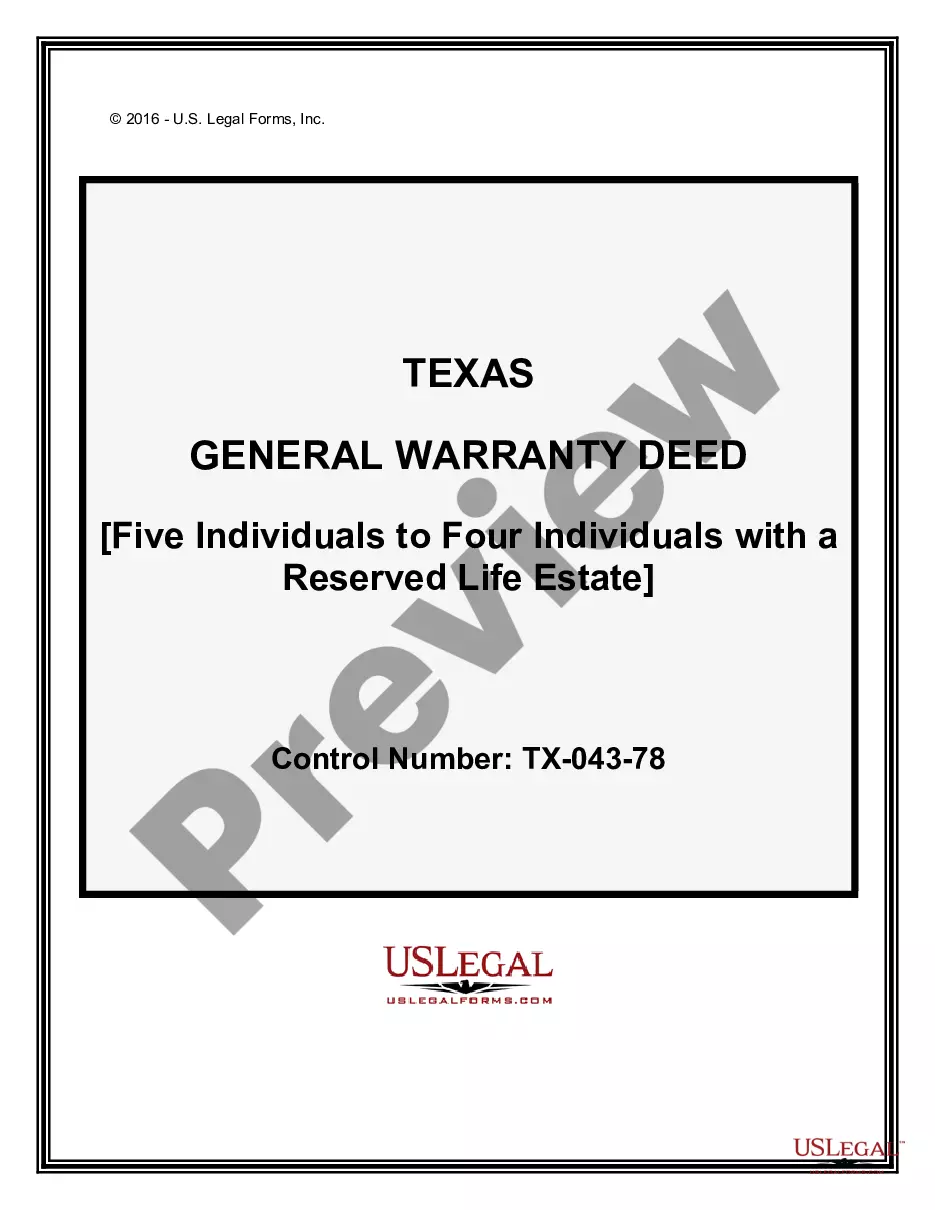
Texas General Warranty Deed - Five Individual Grantors to Four Individual Grantees Subject to Life Estate
What is this form?
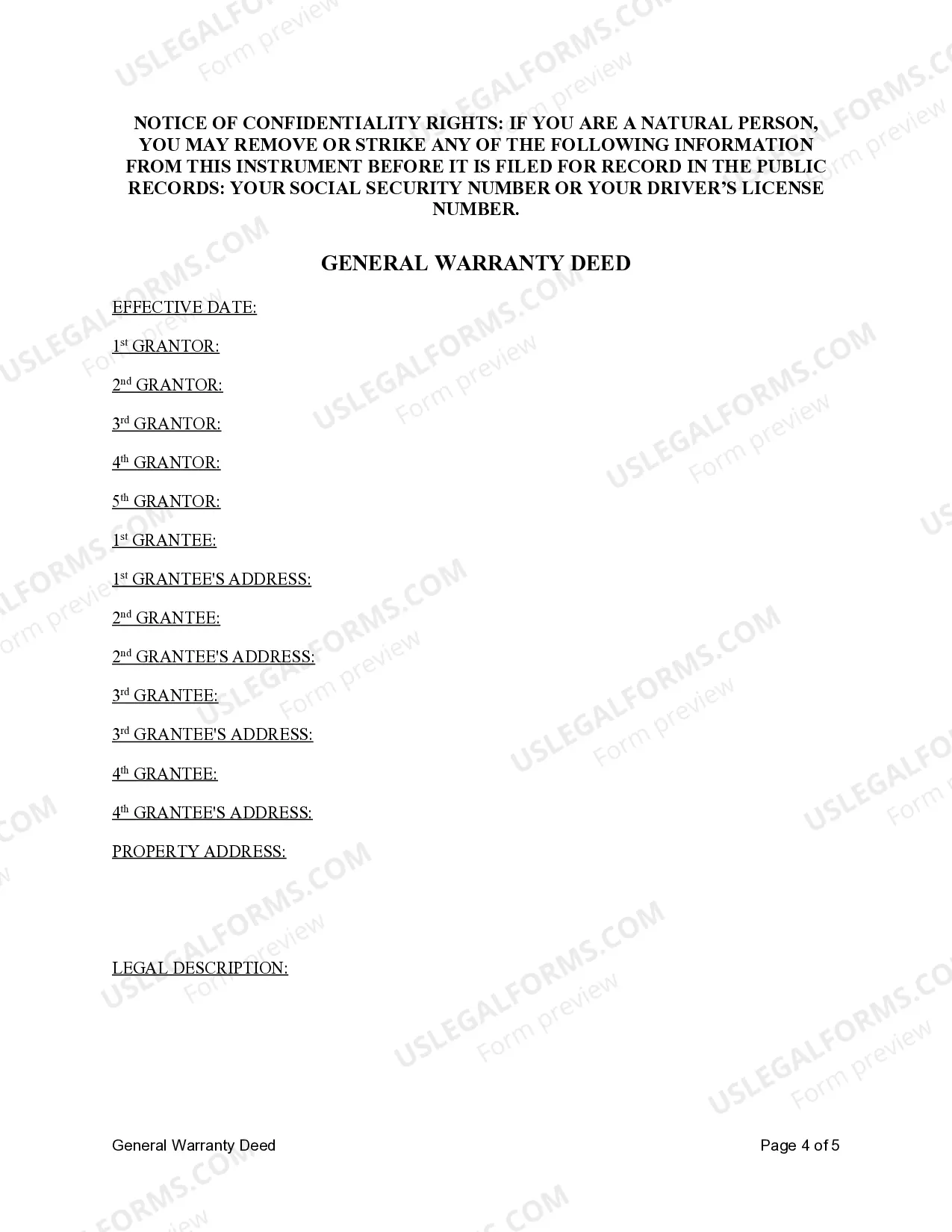
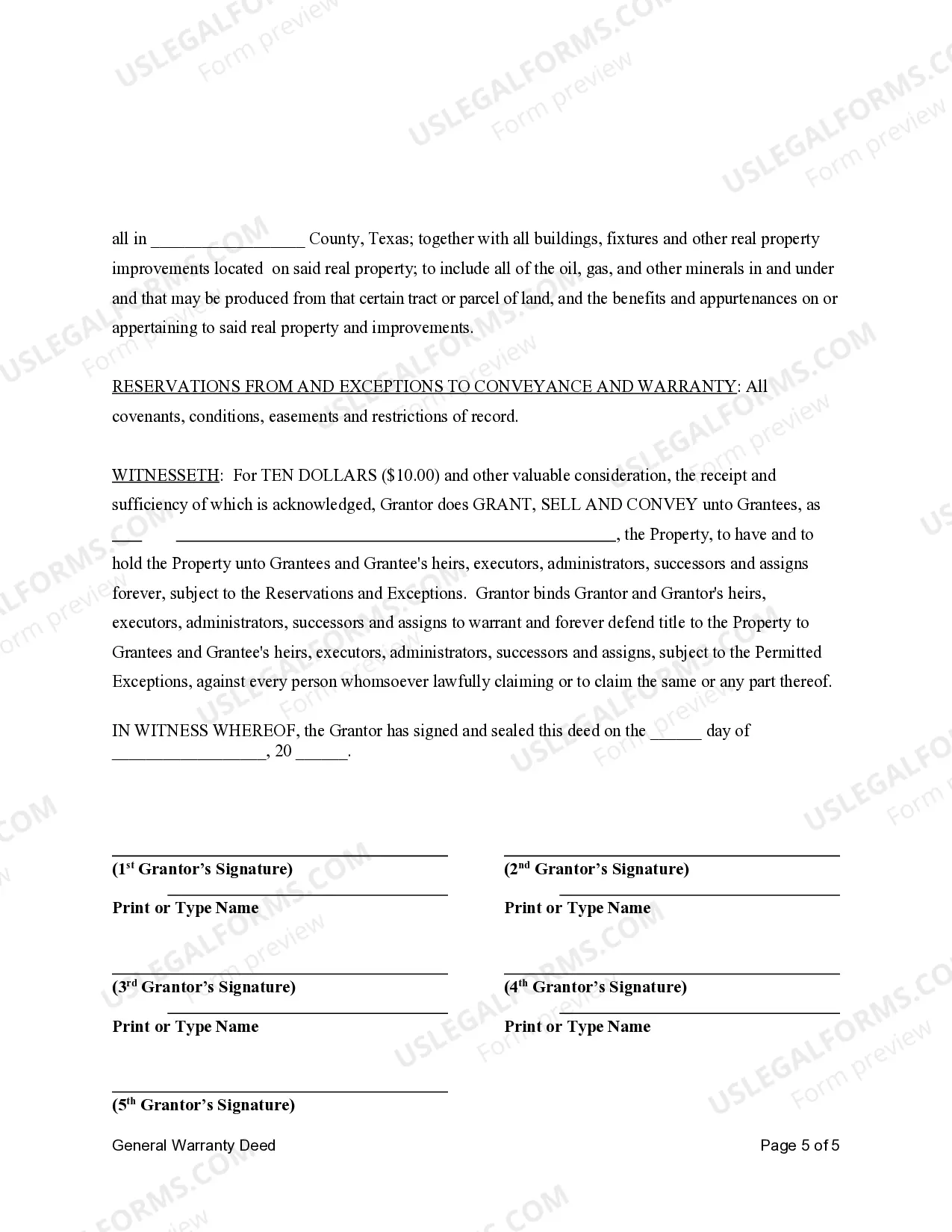
The General Warranty Deed - Five Individual Grantors to Four Individual Grantees Subject to Life Estate is a legal document used for transferring property ownership from five grantors to four grantees. This deed not only conveys full ownership of the property but also ensures that the grantors warrant their title against any claims. The grantees can hold the property as tenants in common or joint tenants with the right of survivorship, while the property is subject to a life estate for a specified individual. This form is particularly useful for estate planning and property transfer arrangements involving multiple parties.
Main sections of this form
- Identification of the grantors and grantees.
- Description of the property being transferred.
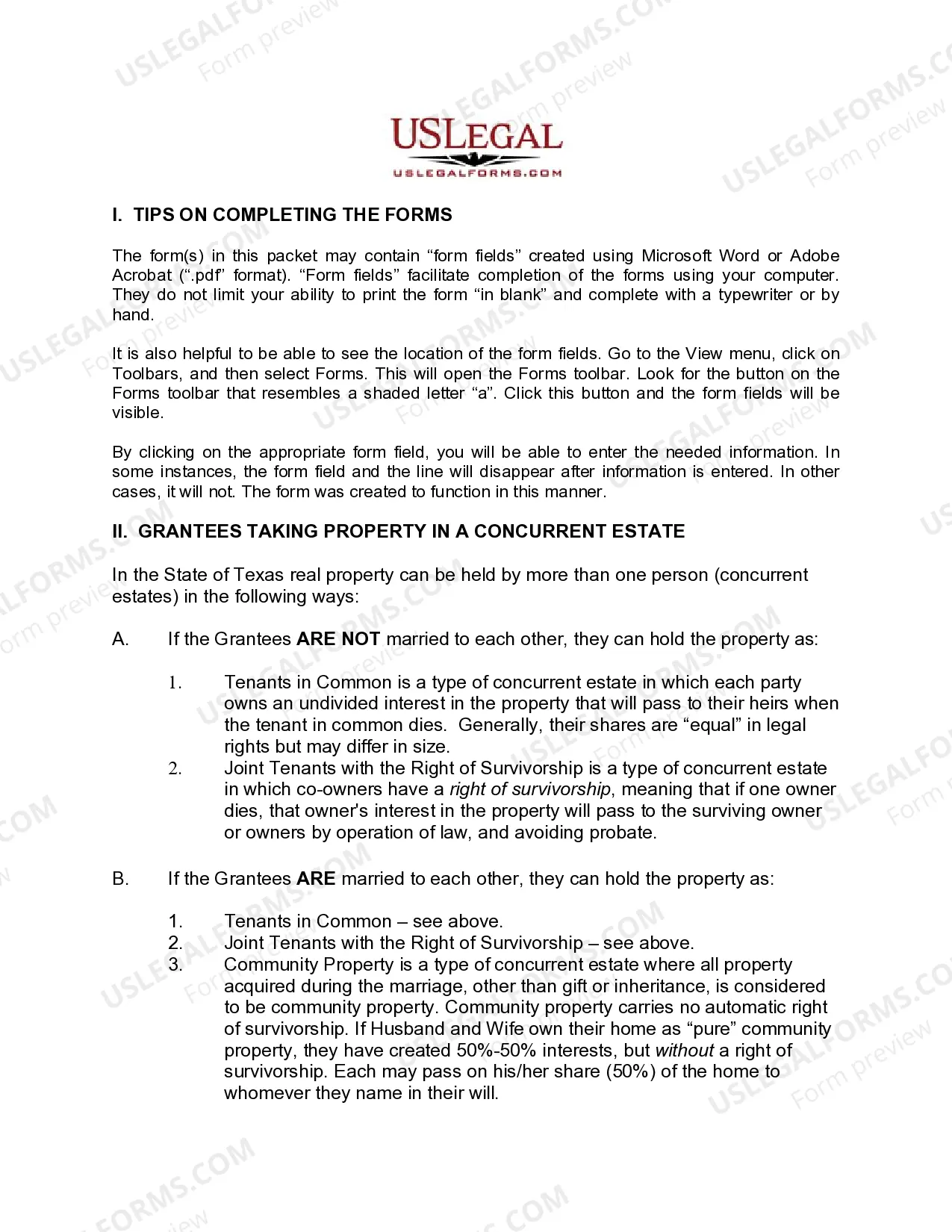
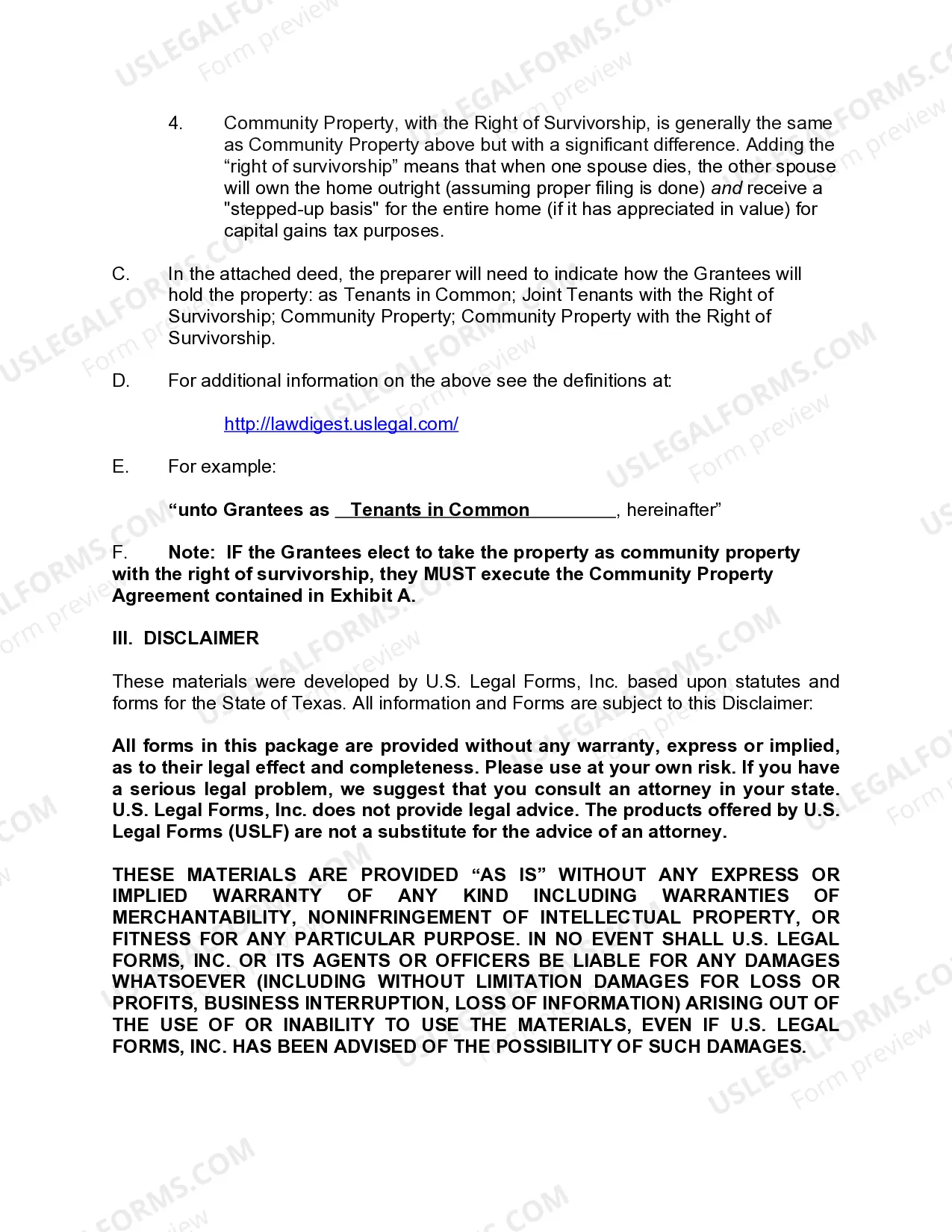
- Language specifying the type of concurrent estate: tenants in common or joint tenants.
- Details regarding the life estate and the named individual.
- Signature lines for grantors and witnesses.


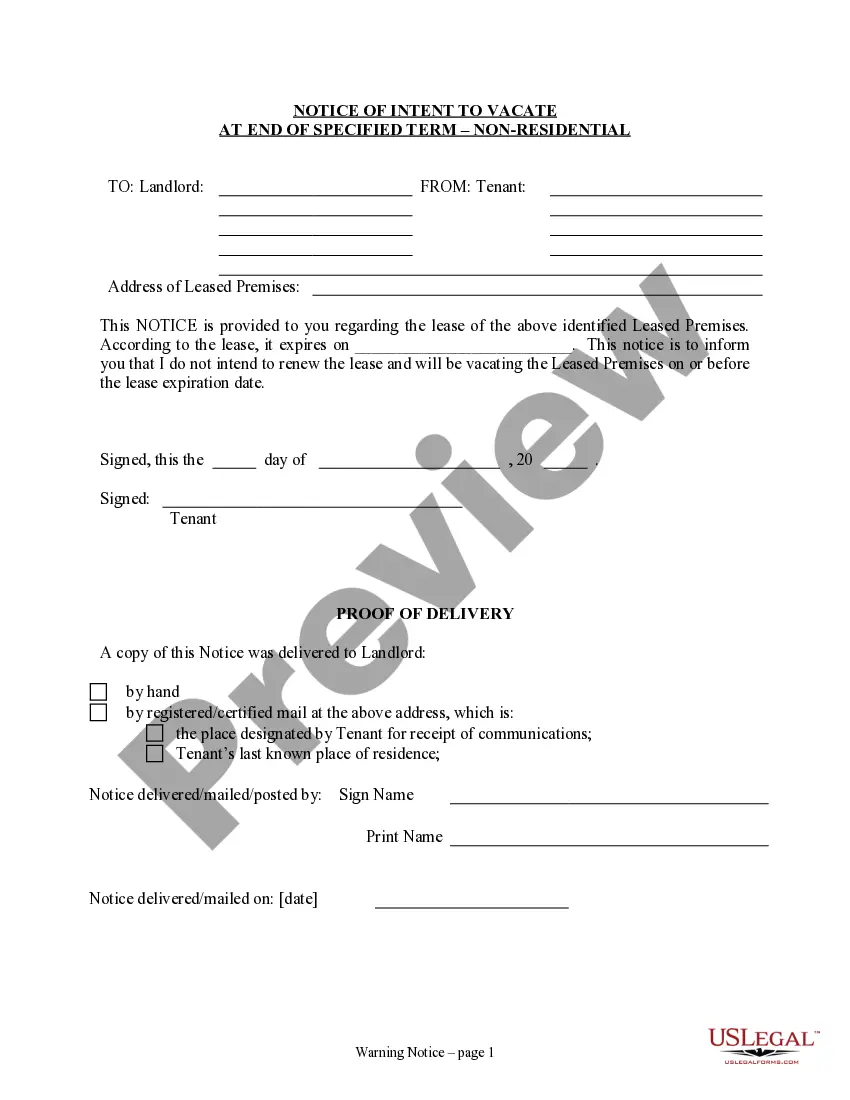
When to use this document
This form is used when five individuals wish to transfer property to four individuals while preserving a life estate for someone named in the deed. Situations may include family property transfers, estate planning, or when multiple parties want to ensure joint ownership with rights of survivorship, all while accommodating a life estate for additional flexibility in property management.
Who can use this document
- Individuals transferring ownership of a property to multiple parties.
- Family members involved in estate planning and property management.
- Real estate investors involved in joint property ownership arrangements.
- Legal representatives handling property transfers for clients.
Steps to complete this form
- Identify all grantors and grantees and provide their full legal names.
- Clearly describe the property being transferred, including any relevant legal descriptions.
- Specify how the grantees will take ownership (tenants in common or joint tenants with survivorship).
- Indicate the individual who will have the life estate in the property.
- Ensure appropriate signatures are collected from all grantors and witnesses.
Notarization requirements for this form
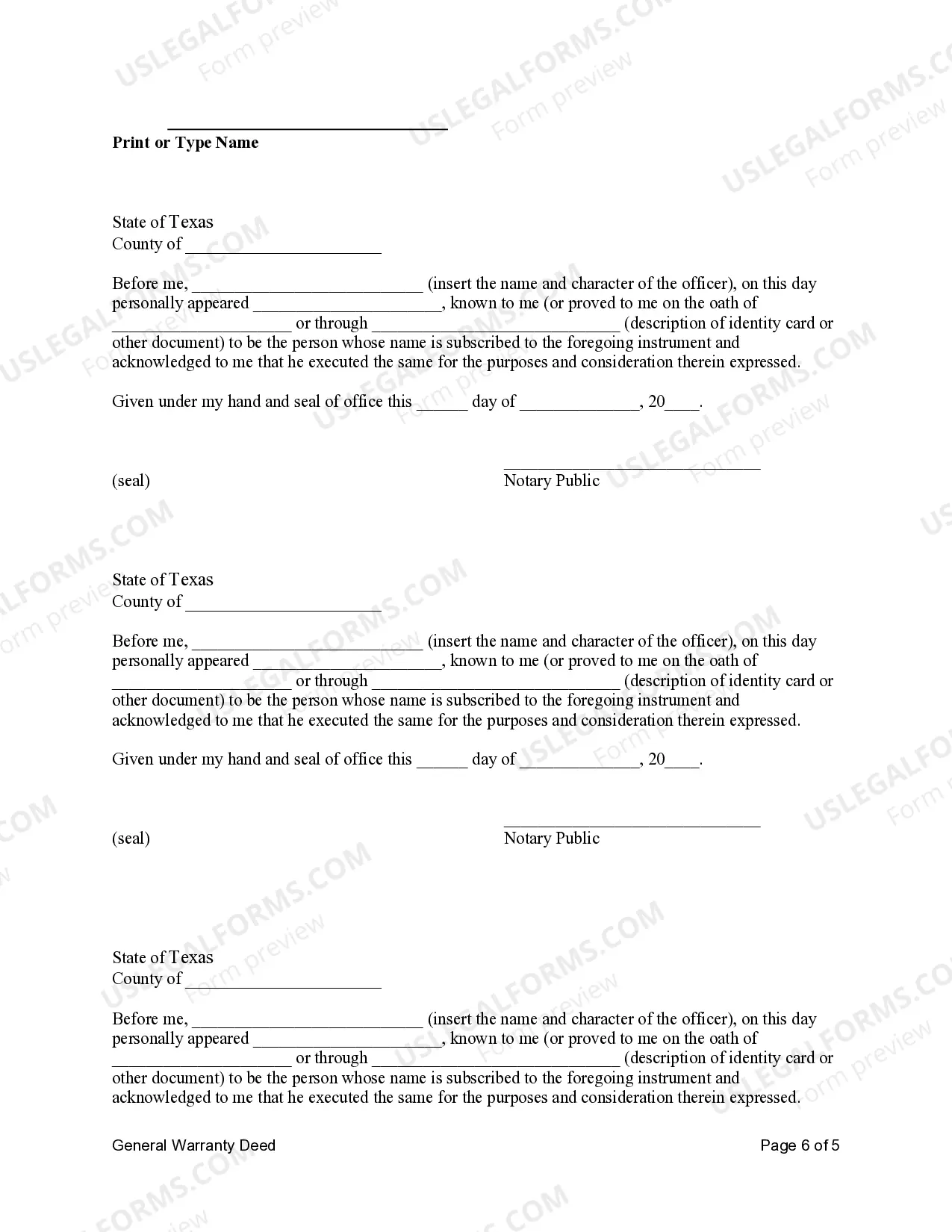
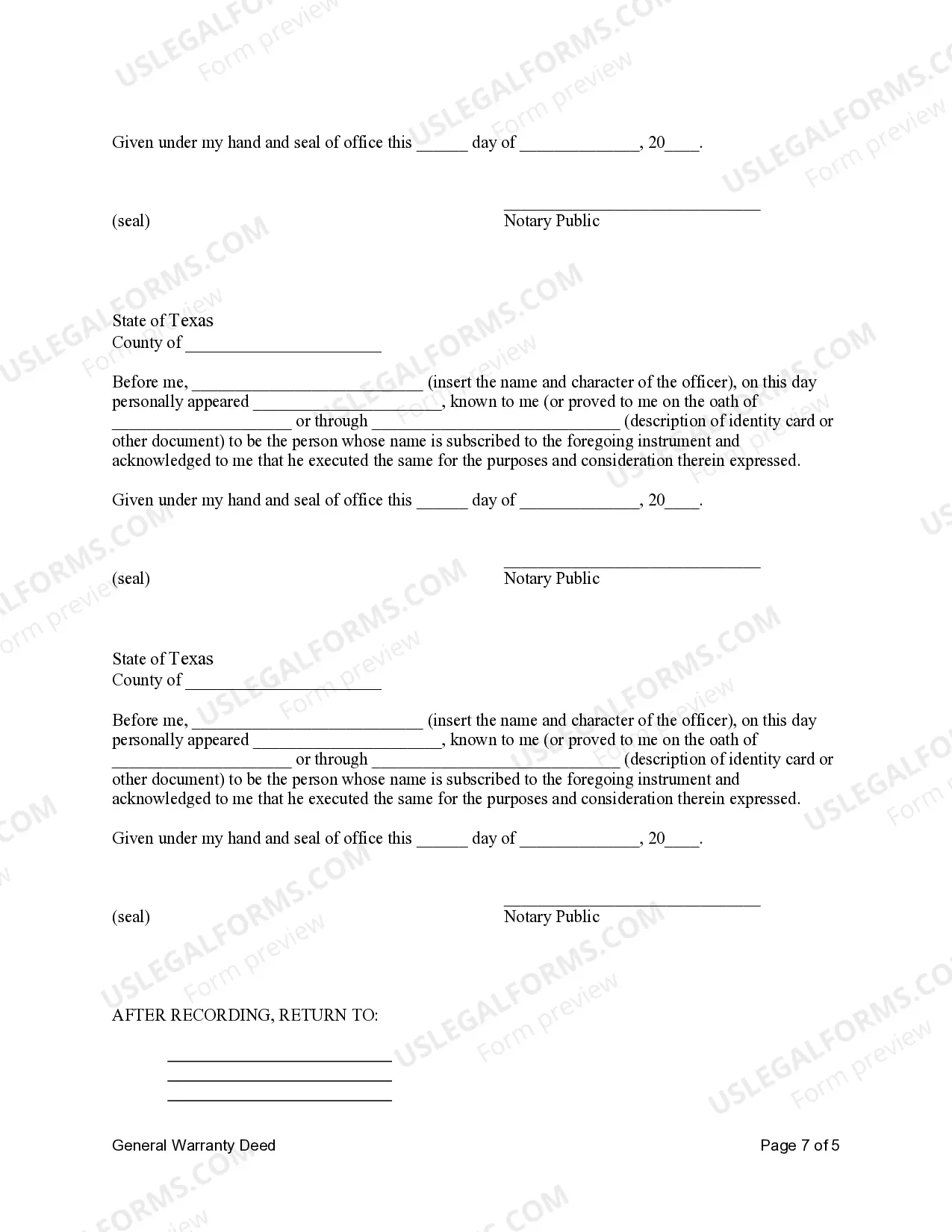
To make this form legally binding, it must be notarized. Our online notarization service, powered by Notarize, lets you verify and sign documents remotely through an encrypted video session.
Get your form ready online
Our built-in tools help you complete, sign, share, and store your documents in one place.
Make edits, fill in missing information, and update formatting in US Legal Forms—just like you would in MS Word.
Download a copy, print it, send it by email, or mail it via USPS—whatever works best for your next step.
Sign and collect signatures with our SignNow integration. Send to multiple recipients, set reminders, and more. Go Premium to unlock E-Sign.
If this form requires notarization, complete it online through a secure video call—no need to meet a notary in person or wait for an appointment.
We protect your documents and personal data by following strict security and privacy standards.

Make edits, fill in missing information, and update formatting in US Legal Forms—just like you would in MS Word.

Download a copy, print it, send it by email, or mail it via USPS—whatever works best for your next step.

Sign and collect signatures with our SignNow integration. Send to multiple recipients, set reminders, and more. Go Premium to unlock E-Sign.

If this form requires notarization, complete it online through a secure video call—no need to meet a notary in person or wait for an appointment.

We protect your documents and personal data by following strict security and privacy standards.
Common mistakes
- Failing to correctly identify all parties involved in the transaction.
- Omitting crucial property details, resulting in ambiguous descriptions.
- Not specifying the type of concurrent estate or life estate clearly.
- Forgetting to obtain necessary signatures or providing the wrong names on the signature lines.
Benefits of completing this form online
- Convenience of immediate access to the form from anywhere at any time.
- Editability allows for customization to fit specific transaction needs.
- Template created by licensed attorneys ensures compliance with legal standards.
- Easy printing options available once completed.
Looking for another form?


Form popularity
FAQ
The subject to phrase means the full story may not be visible within the four corners of a deed. Look for the phrase subject to in a deed. The deed might say: Subject to all rights of way, easements and other encumbrances of record2026 The deed is a grant of the land, but not every contingency appears on its face.
Find the most recent deed to the property. It is best to begin with a copy of the most recent deed to the property (the deed that transferred the property to the current grantor). Create a new deed. Sign and notarize the deed. File the documents in the county land records.
The Texas warranty deed is a form of deed that provides an unlimited warranty of title.In Texas, warranty deeds are often used: When a buyer is purchasing residential property from a seller for full value; When the buyer does not intend to purchase title insurance; or.
Fill out the "grantor" section of the warranty deed. The grantors are the givers, or current owners, of the property. Use the legal name of each grantor and insert current addresses after each grantor's name.
It's important to note that a warranty deed does not actually prove the grantor has ownership (a title search is the best way to prove that), but it is a promise by the grantor that they are transferring ownership and if it turns out they don't actually own the property, the grantor will be responsible for compensating
To be valid, gift deeds in Texas further require the document set forth (1) the intent of the grantor, (2) the delivery of the property to the grantee, and (3) the gift to be accepted by the grantee. The one claiming the gift bears the burden to establish each of the elements.
Write the county where the property is located on line provided next to the words "County of" beneath the words "The State of Texas." Write the name and address of the grantor on the lines provided after the words "Know all men by these presents, That I."
Locate the deed that's in trust. Use the proper deed. Check with your title insurance company and lender. Prepare a new deed. Sign in the presence of a notary. Record the deed in the county clerk's office.
The answer is yes. Parties to a transaction are always free to prepare their own deeds. If you do so, be sure your deed measures up to your state's legal regulations, to help avert any legal challenge to the deed later.