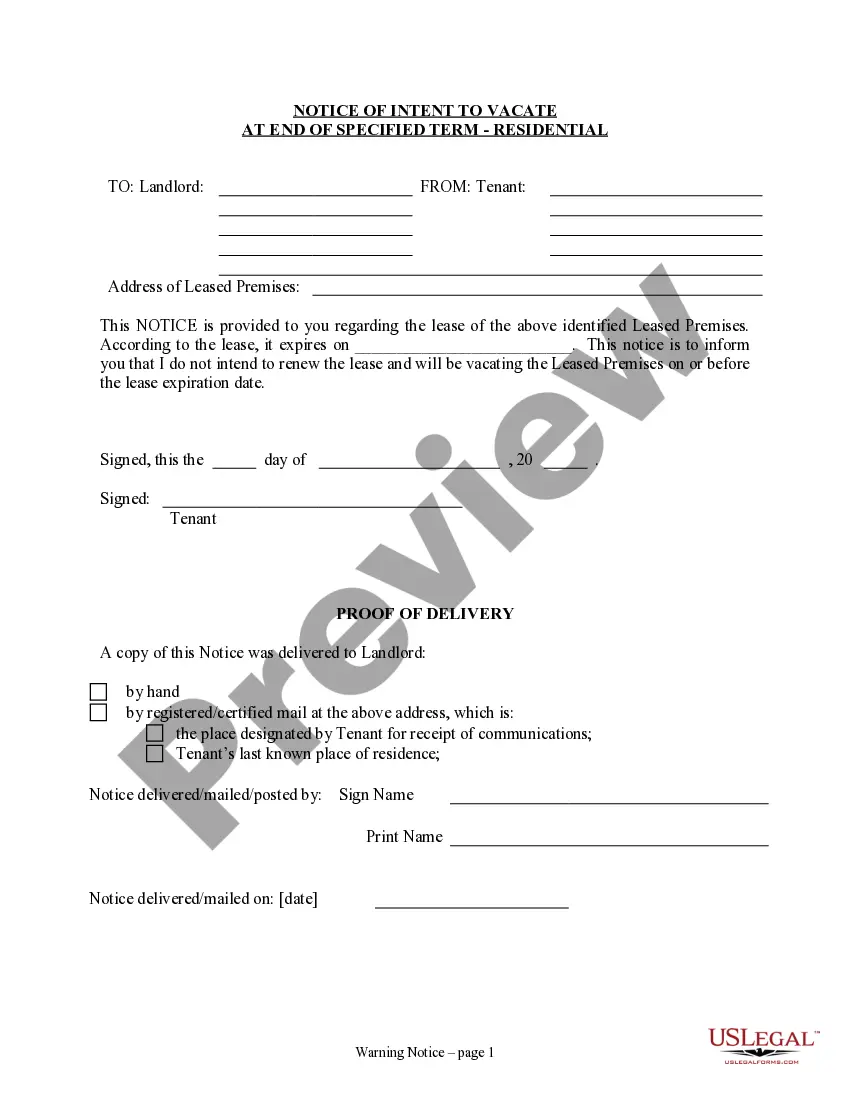
Texas Notice of Intent to Vacate at End of Specified Lease Term from Tenant to Landlord for Residential Property
Overview of this form
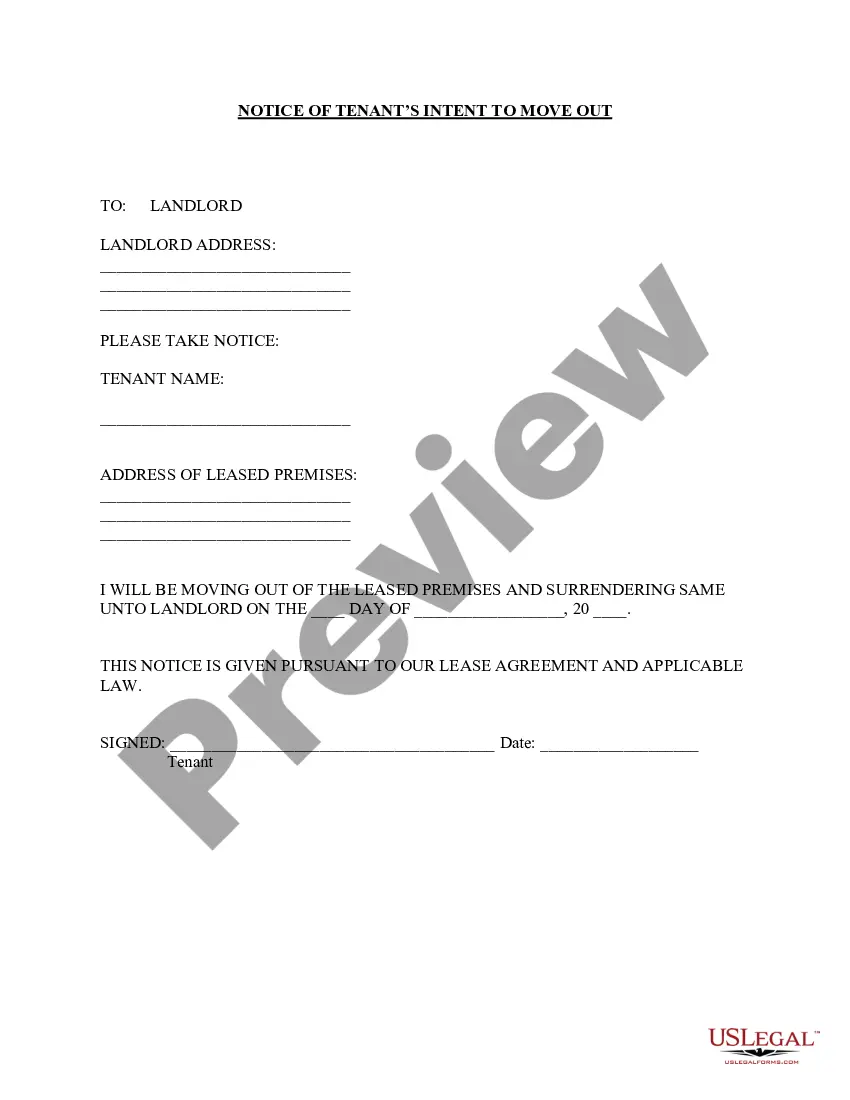
The Notice of Intent to Vacate at End of Specified Lease Term is a legal document that tenants use to inform their landlords of their intention to move out once the lease expires. Unlike other lease termination forms, this notice emphasizes that no further notification is needed since the lease has a predetermined end date. This form helps facilitate a clear communication between the tenant and landlord, ensuring both parties are aware of the tenant's plans to vacate.
Key components of this form
- Parties involved: Identifies the tenant and landlord.
- Leased premises: Specifies the address of the rental property.
- Lease expiration date: Indicates when the lease will officially end.
- Intent to vacate: Clarifies that the tenant will not renew the lease and will vacate the property.
- Proof of delivery: Details how the notice was delivered to the landlord.
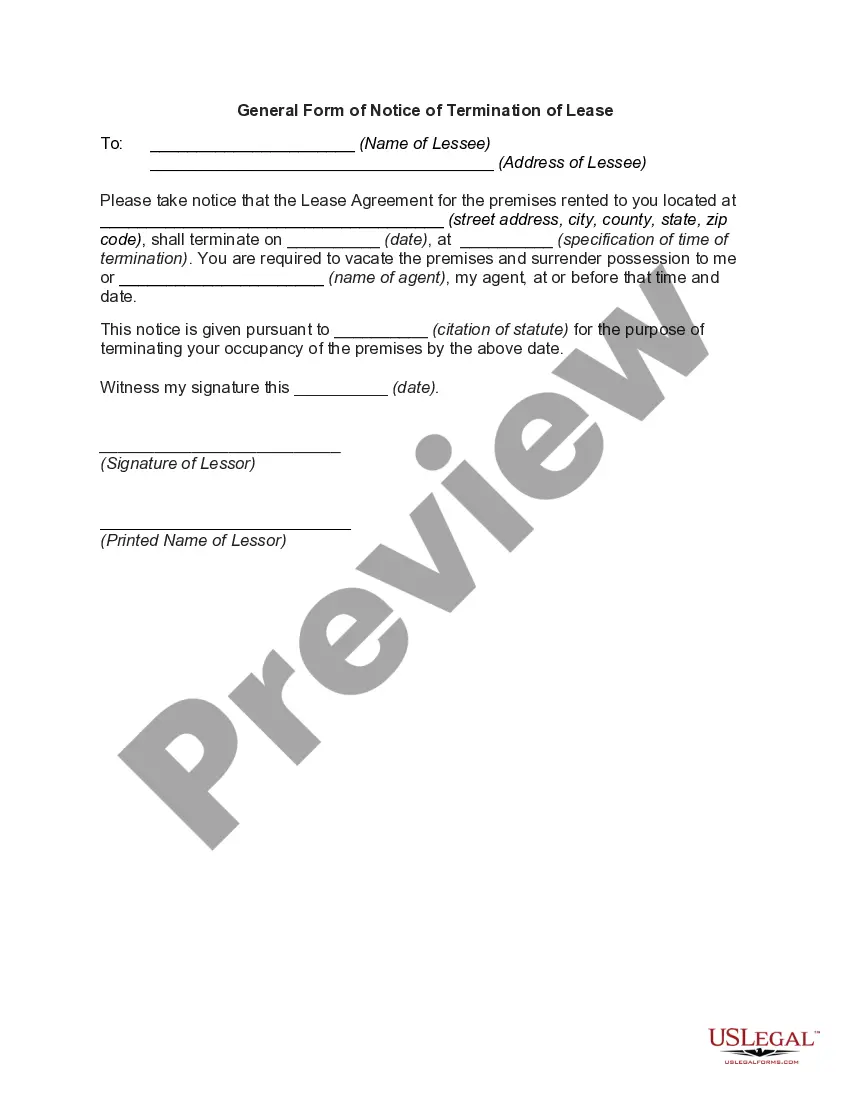
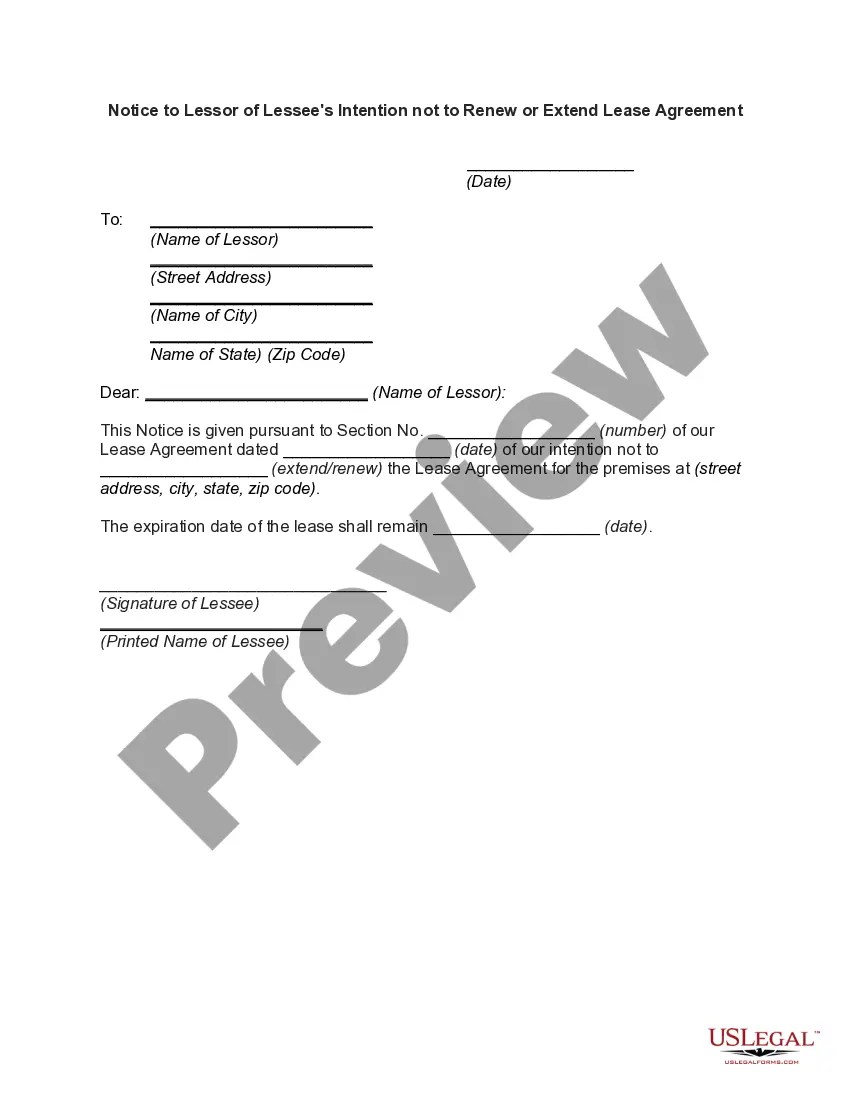
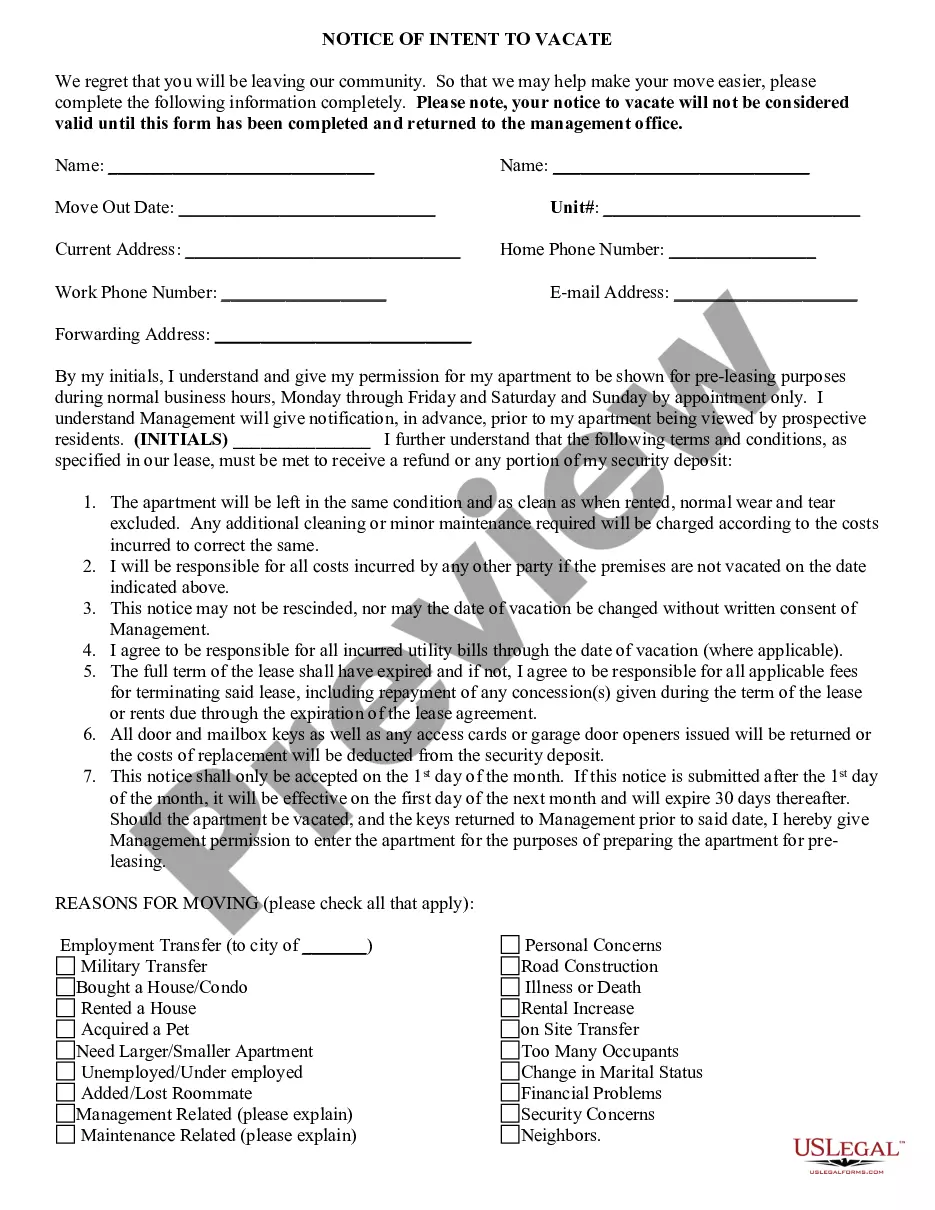
When this form is needed
This form should be used when a tenant has a lease that clearly states an expiration date and does not plan to renew it. It is especially useful in situations where clarity is needed to avoid misunderstandings or disputes about the lease termination. Common scenarios include ending a temporary lease, moving to a different location, or transitioning to a new housing arrangement.
Who can use this document
This form is intended for:
- Tenants who are nearing the end of their lease term.
- Individuals seeking to formally communicate their decision to their landlord.
- Those who want to ensure compliance with lease terms regarding notice requirements.
How to complete this form
- Identify the parties: Fill in the names of the tenant and landlord.
- Specify the property: Enter the complete address of the leased premises.
- Enter the lease expiration date: State the date on which the lease will end.
- Clarify intent: Indicate that you do not plan to renew the lease and will vacate by the expiration date.
- Sign the document: Provide your signature and date it to validate your notice.
Notarization requirements for this form
This form does not typically require notarization unless specified by local law. It is essential to check your state's regulations to confirm whether notarization is necessary for the validity of the notice.
Get your form ready online
Our built-in tools help you complete, sign, share, and store your documents in one place.
Make edits, fill in missing information, and update formatting in US Legal Forms—just like you would in MS Word.
Download a copy, print it, send it by email, or mail it via USPS—whatever works best for your next step.
Sign and collect signatures with our SignNow integration. Send to multiple recipients, set reminders, and more. Go Premium to unlock E-Sign.
If this form requires notarization, complete it online through a secure video call—no need to meet a notary in person or wait for an appointment.
We protect your documents and personal data by following strict security and privacy standards.
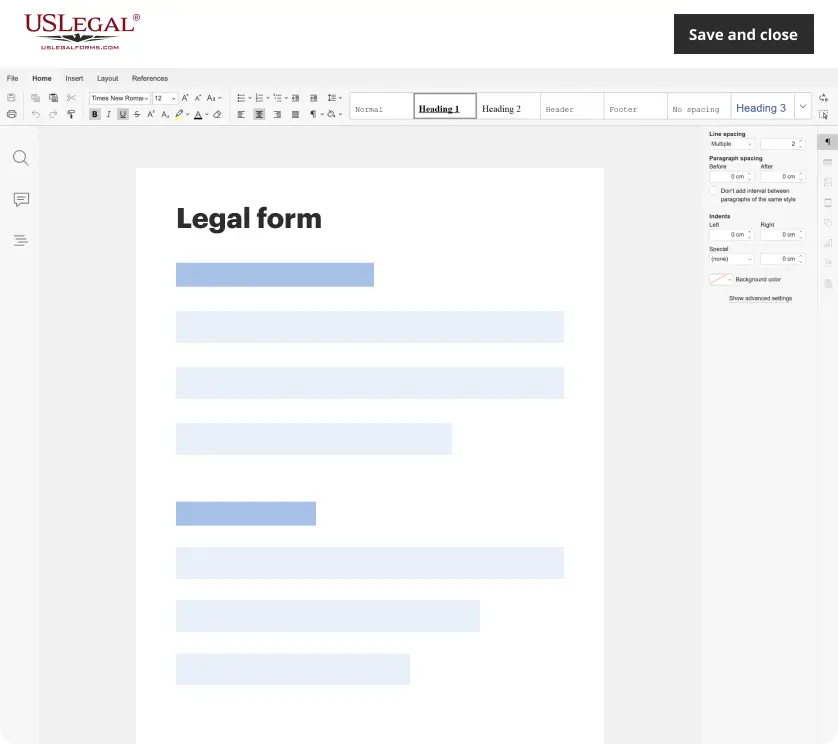
Make edits, fill in missing information, and update formatting in US Legal Forms—just like you would in MS Word.
Download a copy, print it, send it by email, or mail it via USPS—whatever works best for your next step.
Sign and collect signatures with our SignNow integration. Send to multiple recipients, set reminders, and more. Go Premium to unlock E-Sign.

If this form requires notarization, complete it online through a secure video call—no need to meet a notary in person or wait for an appointment.
We protect your documents and personal data by following strict security and privacy standards.
Typical mistakes to avoid
- Failing to provide the lease expiration date.
- Not delivering the notice to the correct address.
- Missing the signature or date on the notice.
- Assuming verbal communication is sufficient without a formal notice.
Benefits of using this form online
- Convenience: Easily download and complete the form at your own pace.
- Editability: Adjust the template to fit your specific situation quickly.
- Reliability: Templates drafted by licensed attorneys help ensure legal validity.
What to keep in mind
- The Notice of Intent to Vacate is essential for tenants planning to leave a rental property at the end of their lease.
- Clear communication with the landlord can prevent misunderstandings.
- Always check state laws to ensure compliance with local notice requirements.
Looking for another form?
Form popularity
FAQ
No, a landlord cannot just kick you out. They need to follow the formal eviction process provided in your state. If a landlord uses illegal self-help measures, such as changing the locks or throwing out your belongings, you should be able to hold the landlord accountable and remain on the property.
The rights of a tenant The right to live in a property that's safe and in a good state of repair. The right to have your deposit returned at the end of the tenancy (provided that you meet the terms of your tenancy agreement).
If the property is found to not be in reasonable repair through no negligence or intentional action by the tenant, then it's the landlord's responsibility to fix the problem. The nature of the repairs will determine whether or not they must be fixed urgently, which is generally defined as within three days.
Fundamental responsibilities of landlords include: providing and maintaining the property in a clean and reasonable standard; giving proper receipts and maintaining records of all transactions pertaining to the tenancy; paying council rates and taxes; maintaining locks to ensure the property's security; and lodging the