Texas Special Warranty Deed - Individual to Individual
Overview of this form
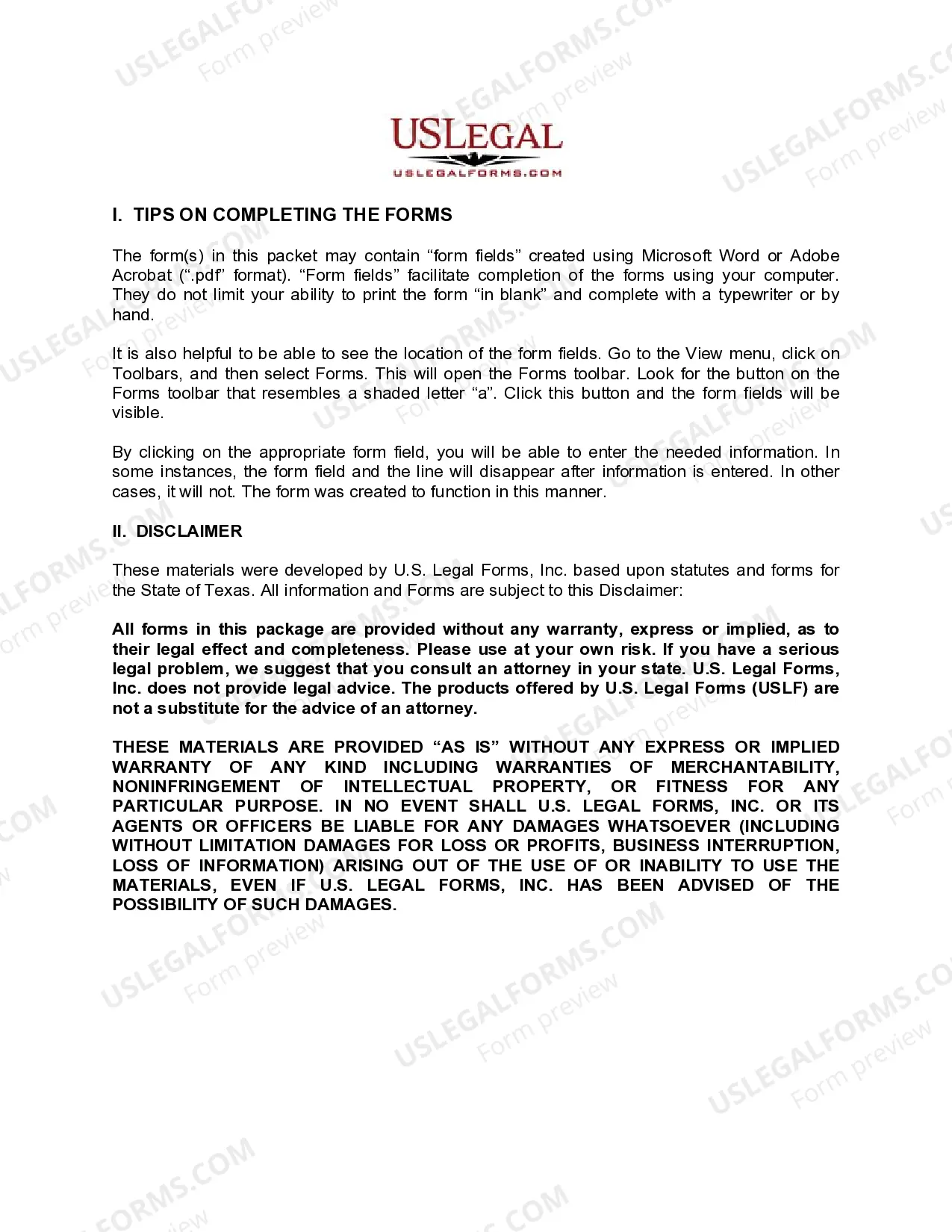
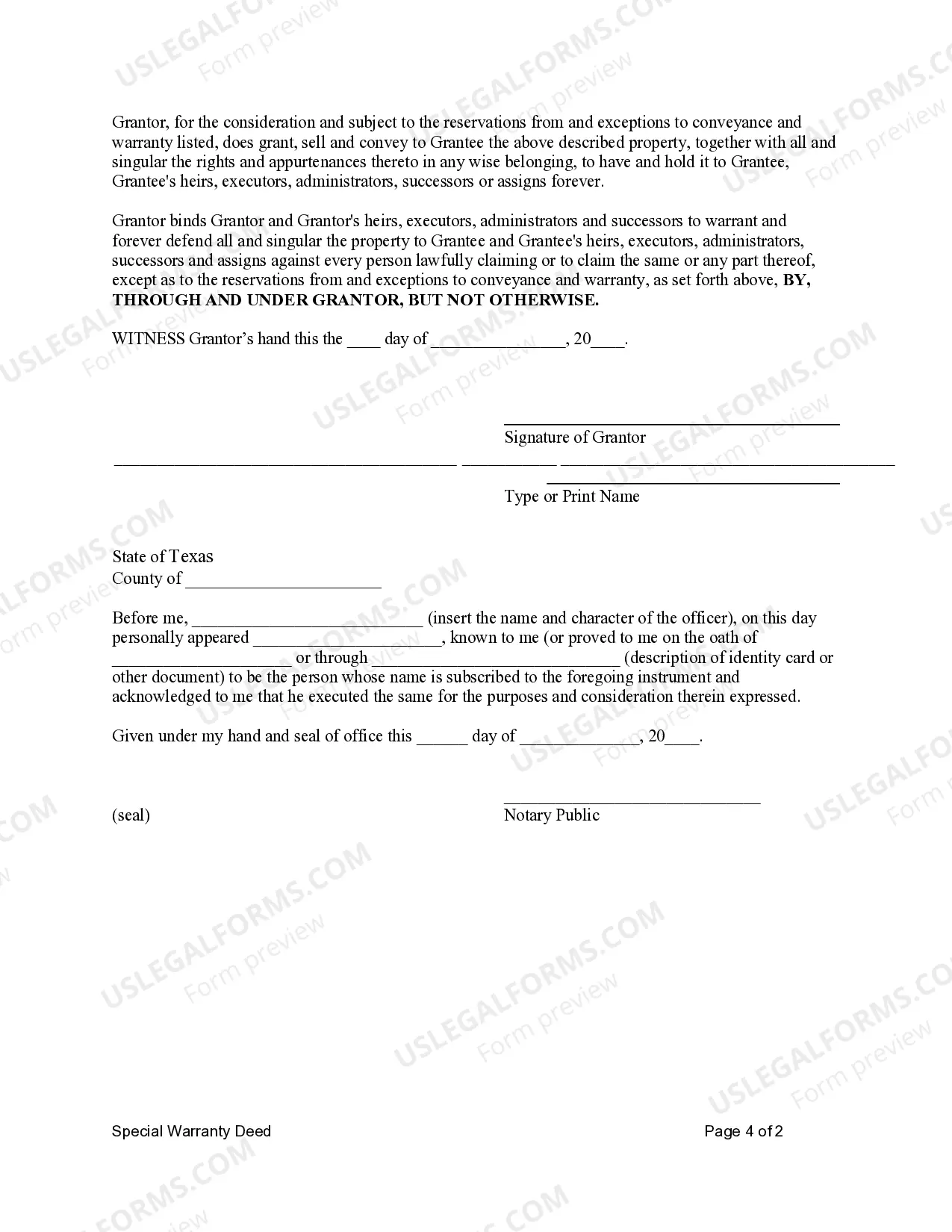
A Special Warranty Deed is a legal document used to transfer property ownership between individuals. Unlike a general warranty deed, this form provides limited warranties, meaning the grantor only commits to defend the property against claims made by individuals who acquired rights through the grantor. This deed ensures compliance with state statutory laws, providing both parties with essential protections in property transactions.
Key parts of this document
- Grantor: The individual transferring property ownership.
- Grantee: The individual receiving property ownership.
- Property description: Detailed information about the property being transferred.
- Legal description: A formal description of the property that gives its precise location.
- Acknowledgment: Section for the grantor's signature in the presence of a notary.




Common use cases
This form is typically used when an individual is selling or transferring property to another individual. It is ideal for situations where the grantor wants to limit their liability concerning past ownership issues or claims on the property. Scenarios often include private sales between family members or friends, where a straightforward property transfer is necessary.
Who needs this form
This form is intended for:
- Property owners wishing to transfer ownership to another individual.
- Individuals involved in private sales or transfers of real estate.
- Anyone requiring a clear record of property ownership transfer with limited warranty obligations.
Steps to complete this form
- Identify the parties: Fill in the names of the grantor and grantee.
- Specify the property: Clearly describe the property being transferred, including any improvements.
- Enter dates: Complete any relevant dates for the transfer of ownership.
- Sign and date the document: The grantor should sign in the presence of a notary.
- Attach any additional documents: Include Exhibit A for further property details if applicable.
Is notarization required?
Yes, this form must be notarized to be legally valid. Notarization confirms the identities of the individuals signing the deed. U.S. Legal Forms offers integrated online notarization services, allowing you to complete the process securely via video call without the need to travel.
Get your form ready online
Our built-in tools help you complete, sign, share, and store your documents in one place.
Make edits, fill in missing information, and update formatting in US Legal Forms—just like you would in MS Word.
Download a copy, print it, send it by email, or mail it via USPS—whatever works best for your next step.
Sign and collect signatures with our SignNow integration. Send to multiple recipients, set reminders, and more. Go Premium to unlock E-Sign.
If this form requires notarization, complete it online through a secure video call—no need to meet a notary in person or wait for an appointment.
We protect your documents and personal data by following strict security and privacy standards.

Make edits, fill in missing information, and update formatting in US Legal Forms—just like you would in MS Word.

Download a copy, print it, send it by email, or mail it via USPS—whatever works best for your next step.

Sign and collect signatures with our SignNow integration. Send to multiple recipients, set reminders, and more. Go Premium to unlock E-Sign.

If this form requires notarization, complete it online through a secure video call—no need to meet a notary in person or wait for an appointment.

We protect your documents and personal data by following strict security and privacy standards.
Common mistakes
- Not including a complete legal description of the property.
- Failing to have the form notarized when required by local law.
- Omitting signatures or dates from the document.
- Using outdated forms that do not comply with current state laws.
Benefits of using this form online
- Convenience: Easily complete the form at your own pace without visiting a lawyer.
- Editability: Modify the template to fit specific needs before printing.
- Reliability: Forms are drafted by licensed attorneys, ensuring legal soundness.
Looking for another form?
Form popularity
FAQ
It will not protect against title issues that arose prior to the time the seller took occupancy. Consequently, it offers less protection to buyers, and more protection to sellers, than a general warranty deed, which is the most common option for selling or buying a property.
A special warranty deed to real estate offers protection to the buyer through the seller's guarantee that the title has been free and clear of encumbrances during their ownership of the property. It does not guarantee clear title beyond their ownership.
Special warranties allow the transfer of property title between seller and buyer. The purchase of title insurance can mitigate the risk of prior claims to the special warranty deed.
The answer is yes. Parties to a transaction are always free to prepare their own deeds. If you do so, be sure your deed measures up to your state's legal regulations, to help avert any legal challenge to the deed later.
Fill out the "grantor" section of the warranty deed. The grantors are the givers, or current owners, of the property. Use the legal name of each grantor and insert current addresses after each grantor's name.
Find the most recent deed to the property. It is best to begin with a copy of the most recent deed to the property (the deed that transferred the property to the current grantor). Create a new deed. Sign and notarize the deed. File the documents in the county land records.
Fill out the "grantor" section of the warranty deed. The grantors are the givers, or current owners, of the property. Use the legal name of each grantor and insert current addresses after each grantor's name.
Write the county where the property is located on line provided next to the words "County of" beneath the words "The State of Texas." Write the name and address of the grantor on the lines provided after the words "Know all men by these presents, That I."