Texas General Warranty Deed from Four Individual Grantors to One Grantee
What this document covers
A General Warranty Deed from Four Individual Grantors to One Grantee is a legal document that allows four individuals (the grantors) to transfer ownership of a property to one individual (the grantee). This form assures the grantee that the property is free from any claims or liens. Unlike other deeds, this warranty deed provides greater protection for the grantee, guaranteeing that the grantors will defend against any future claims to the property. This form is compliant with all applicable state laws, making it a reliable choice for real estate transactions.
What’s included in this form
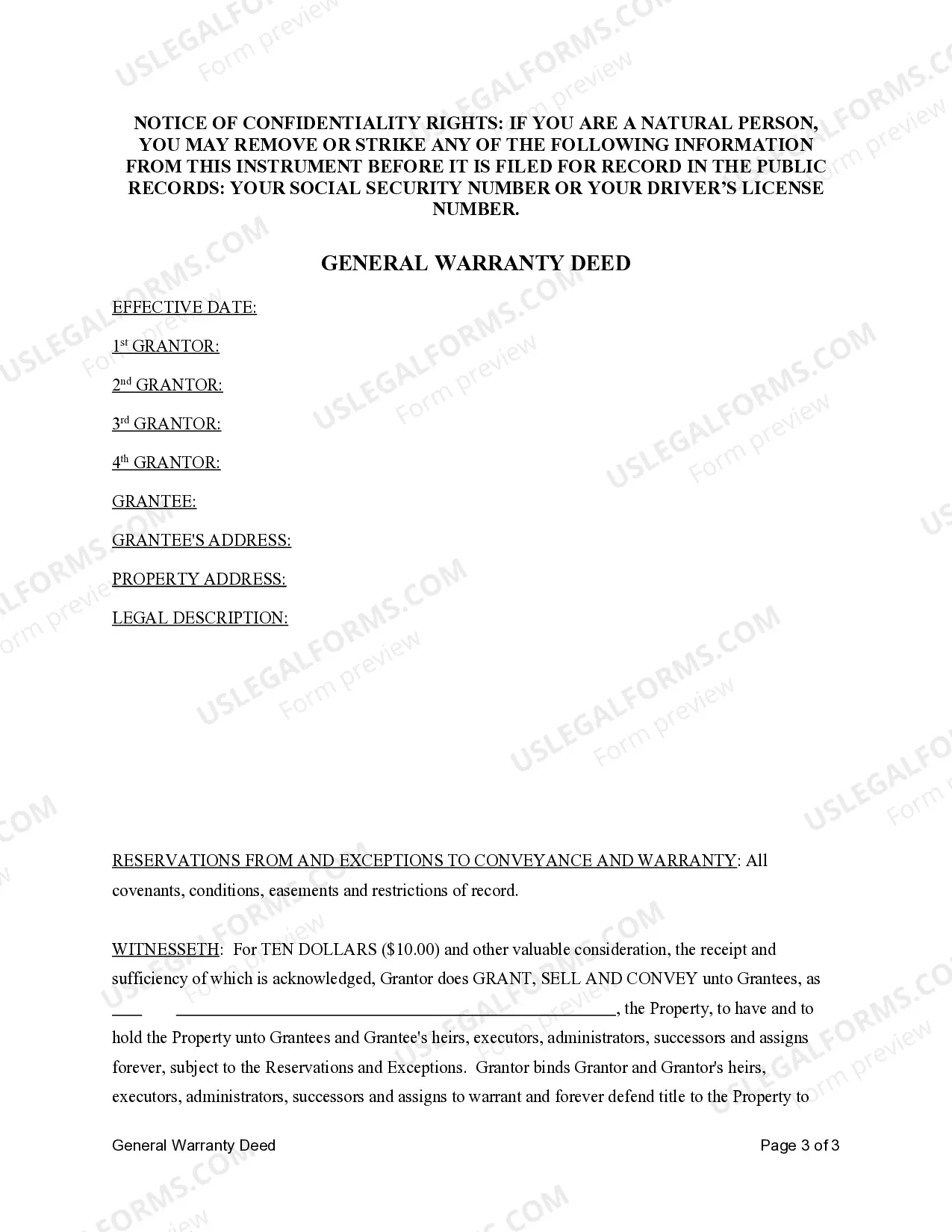
- Identification of the grantors and grantee.
- Description of the property being transferred.
- Legal provisions ensuring the grantors warrant the property title.
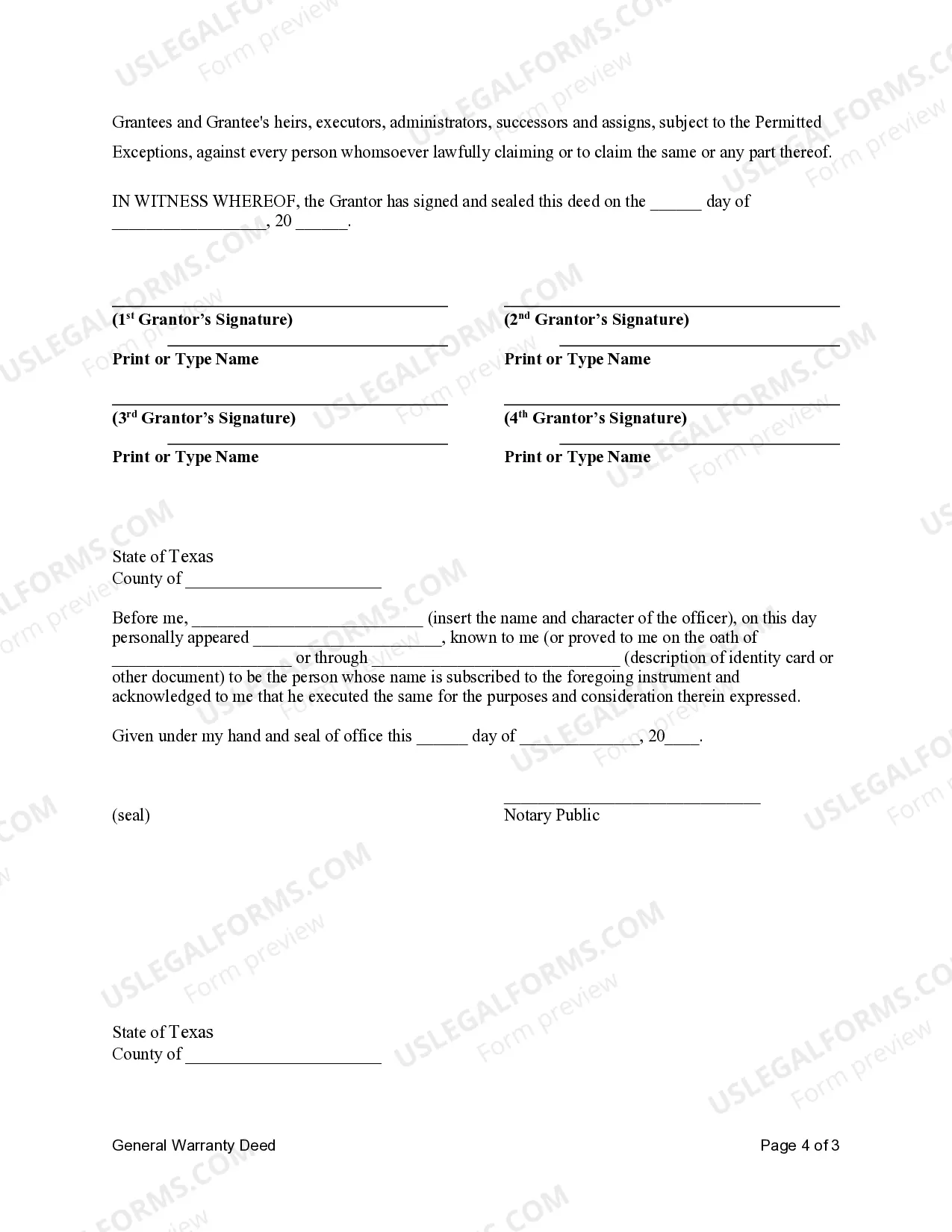
- Signatures of all grantors to validate the deed.
- Statement regarding any applicable rights and obligations.

When to use this form
This form is used when four individuals jointly own a property and wish to transfer it to a single individual. It is commonly utilized in situations such as family transactions, partnership dissolutions, or whenever multiple owners are selling property to a single buyer.
Intended users of this form
This form is intended for:
- Four individual property owners looking to sell or transfer their property.
- Individuals purchasing property from multiple sellers.
- Anyone involved in a joint property ownership situation requiring a comprehensive transfer of title.
How to complete this form
- Identify and enter the full names of all grantors and the grantee.
- Provide a detailed legal description of the property being conveyed.
- Include any necessary statements regarding the warranty of the title.
- Have all grantors sign the form in the presence of a notary if required.
- File the completed deed with the appropriate local government office to make it official.
Notarization guidance
Yes, this form must be notarized to be legally valid. This ensures the authenticity of the signatures and protects all parties involved. U.S. Legal Forms offers integrated online notarization services, available 24/7 via secure video calls, providing a convenient option without the need to travel.
Get your form ready online
Our built-in tools help you complete, sign, share, and store your documents in one place.
Make edits, fill in missing information, and update formatting in US Legal Forms—just like you would in MS Word.
Download a copy, print it, send it by email, or mail it via USPS—whatever works best for your next step.
Sign and collect signatures with our SignNow integration. Send to multiple recipients, set reminders, and more. Go Premium to unlock E-Sign.
If this form requires notarization, complete it online through a secure video call—no need to meet a notary in person or wait for an appointment.
We protect your documents and personal data by following strict security and privacy standards.

Make edits, fill in missing information, and update formatting in US Legal Forms—just like you would in MS Word.

Download a copy, print it, send it by email, or mail it via USPS—whatever works best for your next step.

Sign and collect signatures with our SignNow integration. Send to multiple recipients, set reminders, and more. Go Premium to unlock E-Sign.

If this form requires notarization, complete it online through a secure video call—no need to meet a notary in person or wait for an appointment.

We protect your documents and personal data by following strict security and privacy standards.
Mistakes to watch out for
- Failing to include the legal description of the property accurately.
- Not obtaining all necessary signatures from grantors.
- Neglecting to have the deed notarized if required by state law.
- Using outdated forms that do not comply with current laws.
Why complete this form online
- Convenient completion from your home or office without the need for physical forms.
- Editability allows for easy corrections before finalizing the form.
- Reliable template designed by licensed attorneys ensures legal compliance.
What to keep in mind
- The General Warranty Deed serves as a powerful tool for transferring property ownership with strong legal protections.
- Accurate completion and notarization of the form are essential for validity.
- This form is ideal for scenarios involving multiple grantors conveying property to a single grantee.
Looking for another form?


Form popularity
FAQ
Typically, the lender will provide you with a copy of the deed of trust after the closing. The original warranty deeds are often mailed to the grantee after they are recorded. These are your original copies and should be kept in a safe place, such as a fireproof lockbox or a safe deposit box at a financial institution.
No, California does not require that the Grantee sign a warranty deed. However, some states and counties require that the deed be signed by the Grantee in addition to the Grantor.
Find the most recent deed to the property. It is best to begin with a copy of the most recent deed to the property (the deed that transferred the property to the current grantor). Create a new deed. Sign and notarize the deed. File the documents in the county land records.
Fill out the "grantor" section of the warranty deed. The grantors are the givers, or current owners, of the property. Use the legal name of each grantor and insert current addresses after each grantor's name.
Write the county where the property is located on line provided next to the words "County of" beneath the words "The State of Texas." Write the name and address of the grantor on the lines provided after the words "Know all men by these presents, That I."
The name and address of the seller (called the grantor) The name and address of the buyer (called the grantee) A legal description of the property (found on the previous deed) A statement that the grantor is transferring the property to the grantee.
To make the form legally binding, you must sign it in front of a notary public. You must then file your signed and notarized deed with the county office that's in charge of recording property documents. Once the grantee signs the warranty deed, he/she legally has ownership and claim to the property.
The Texas General Warranty Deed is a form that transfers real estate ownership in the clearest possible manner promising the new owner that there are no title defects such as liens or encumbrances.
In Texas, you can't add your spouse's name to an existing deed, but you can create a new deed by transferring the property from yourself to you and your spouse jointly. You can do this by using either a deed without warranty or a quit claim deed.