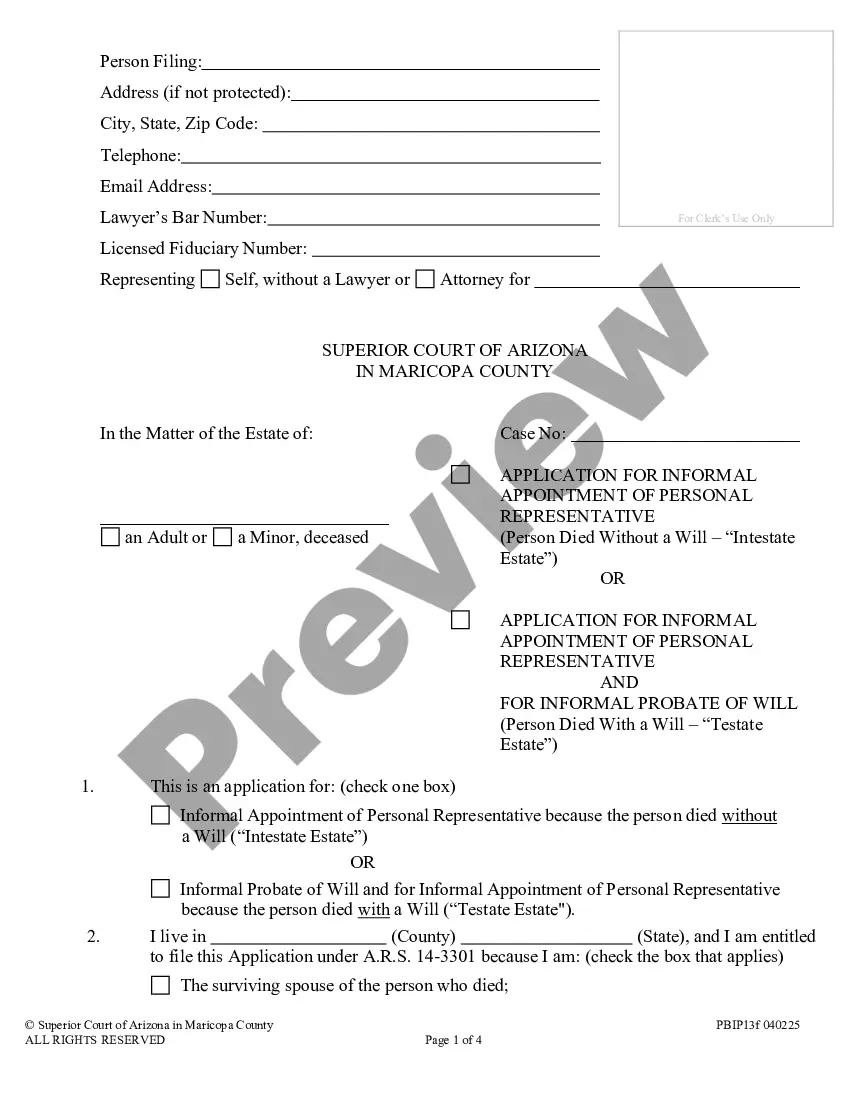
Mississippi Ingress and Engress and Underground Utility Easement
What is this form?
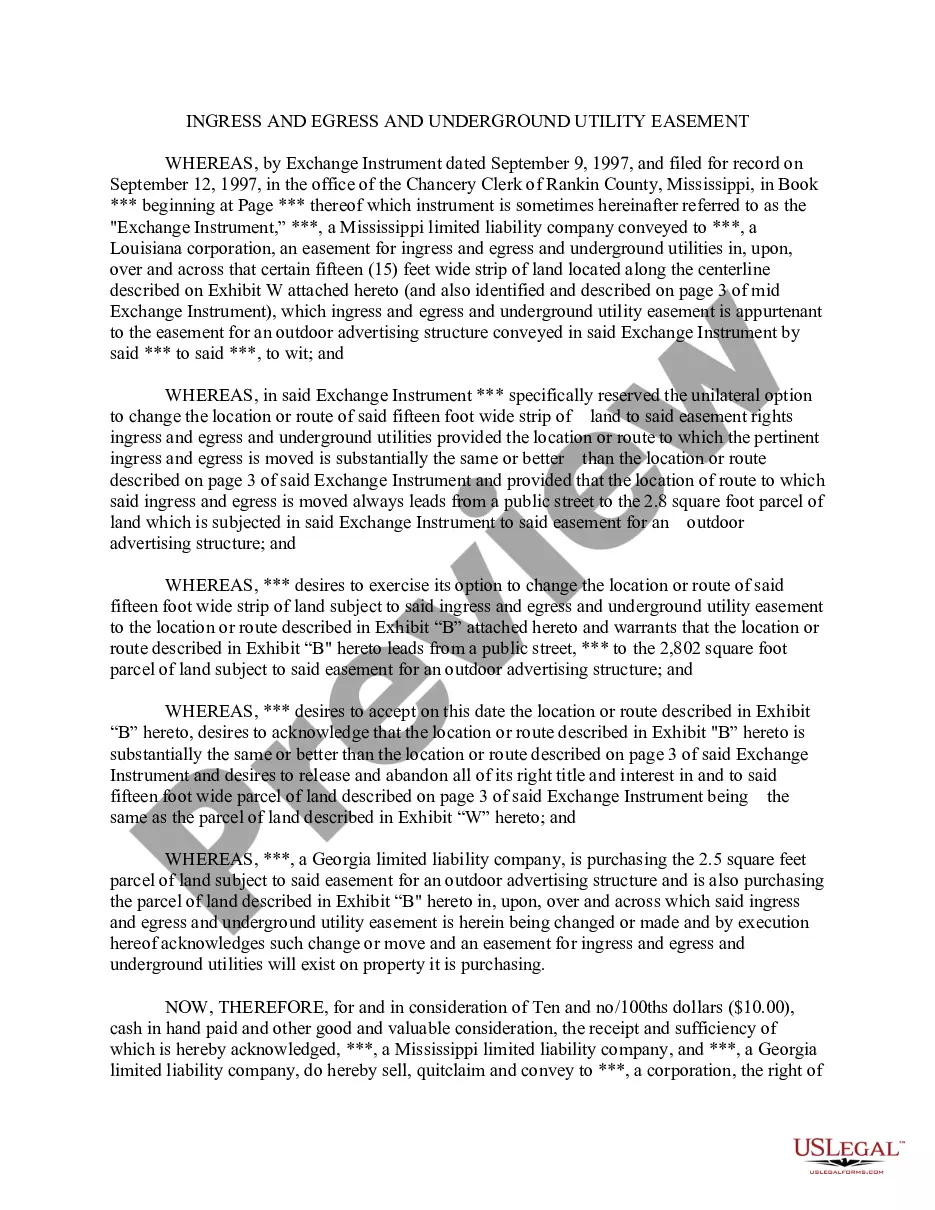
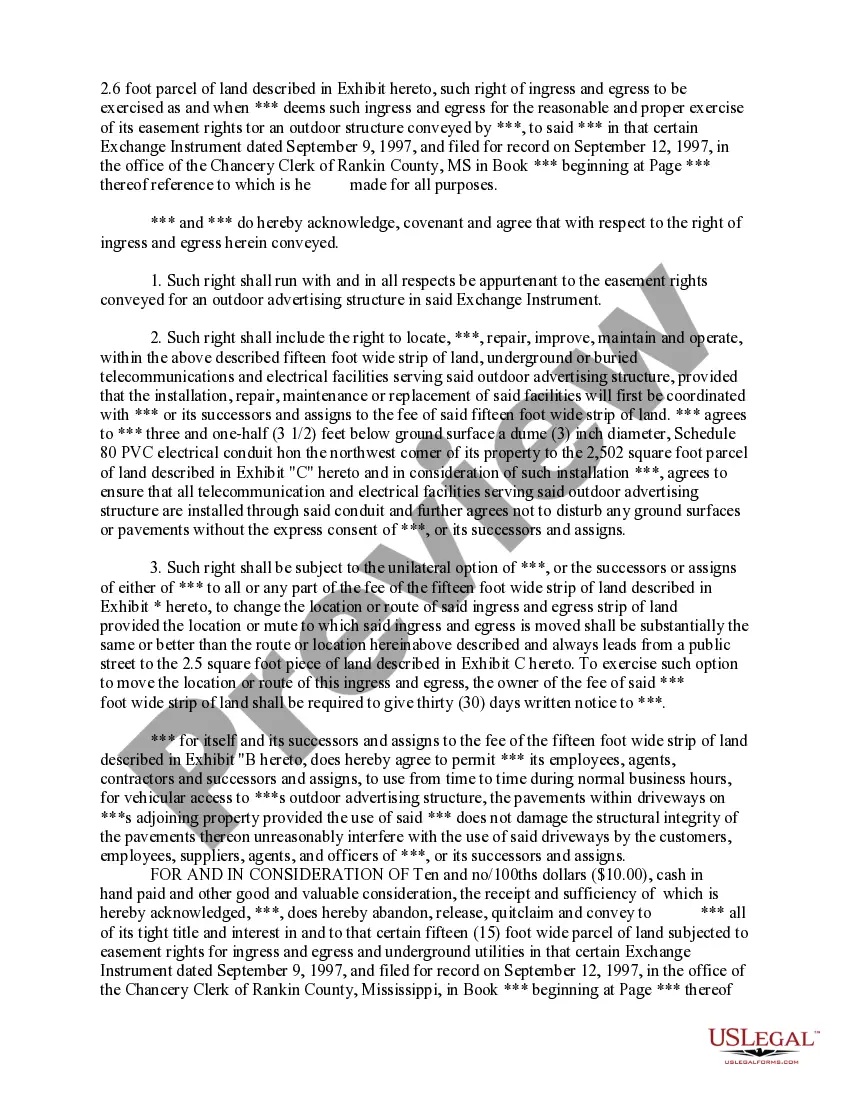
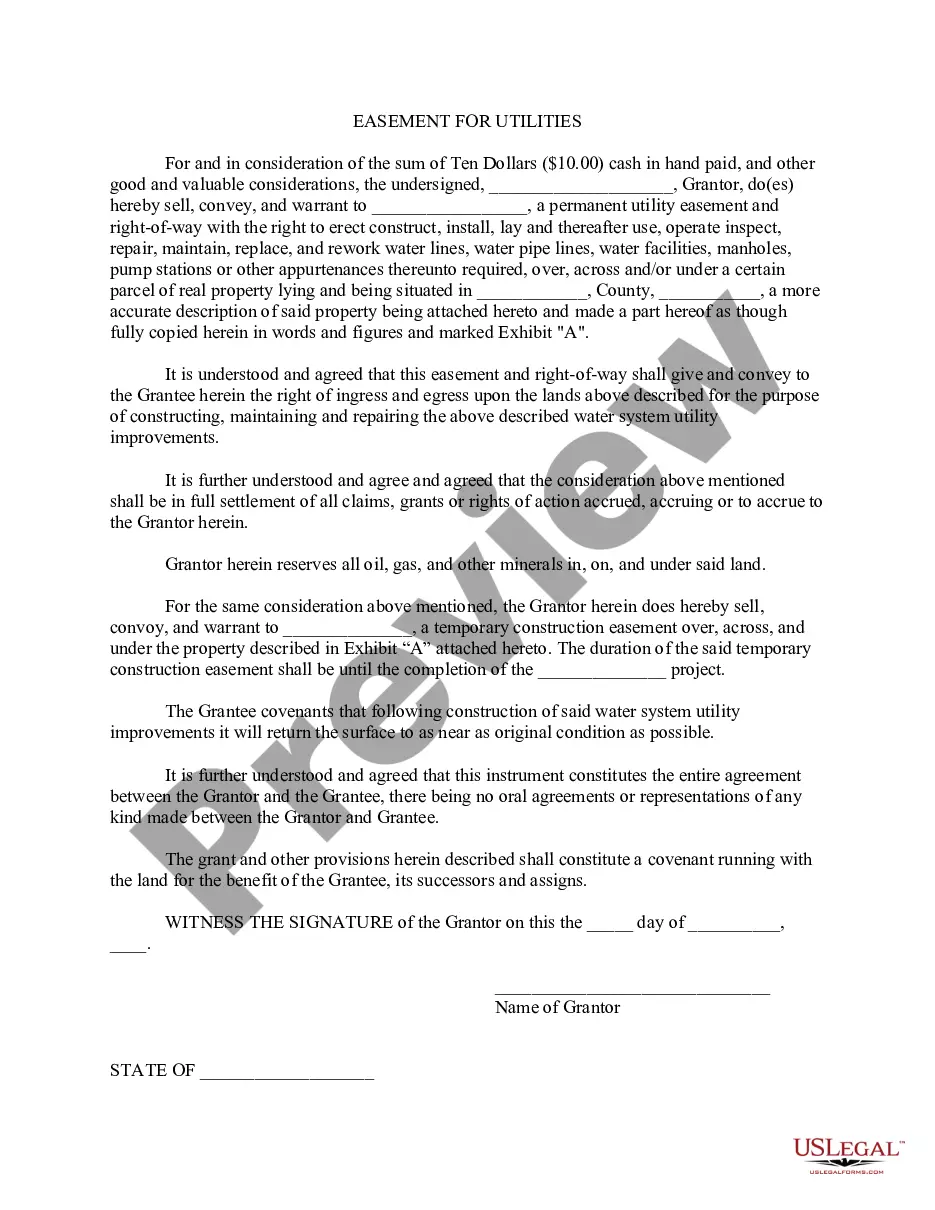
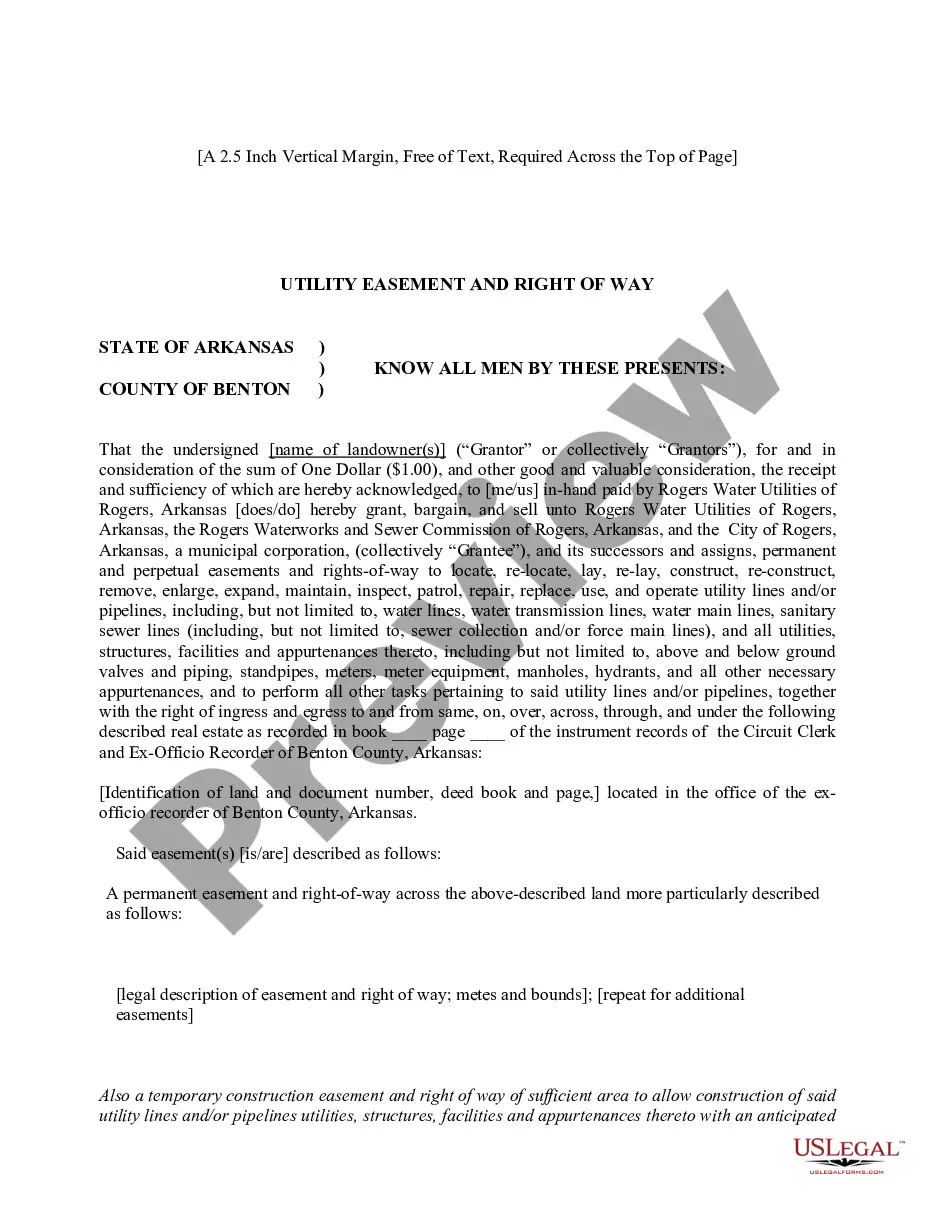
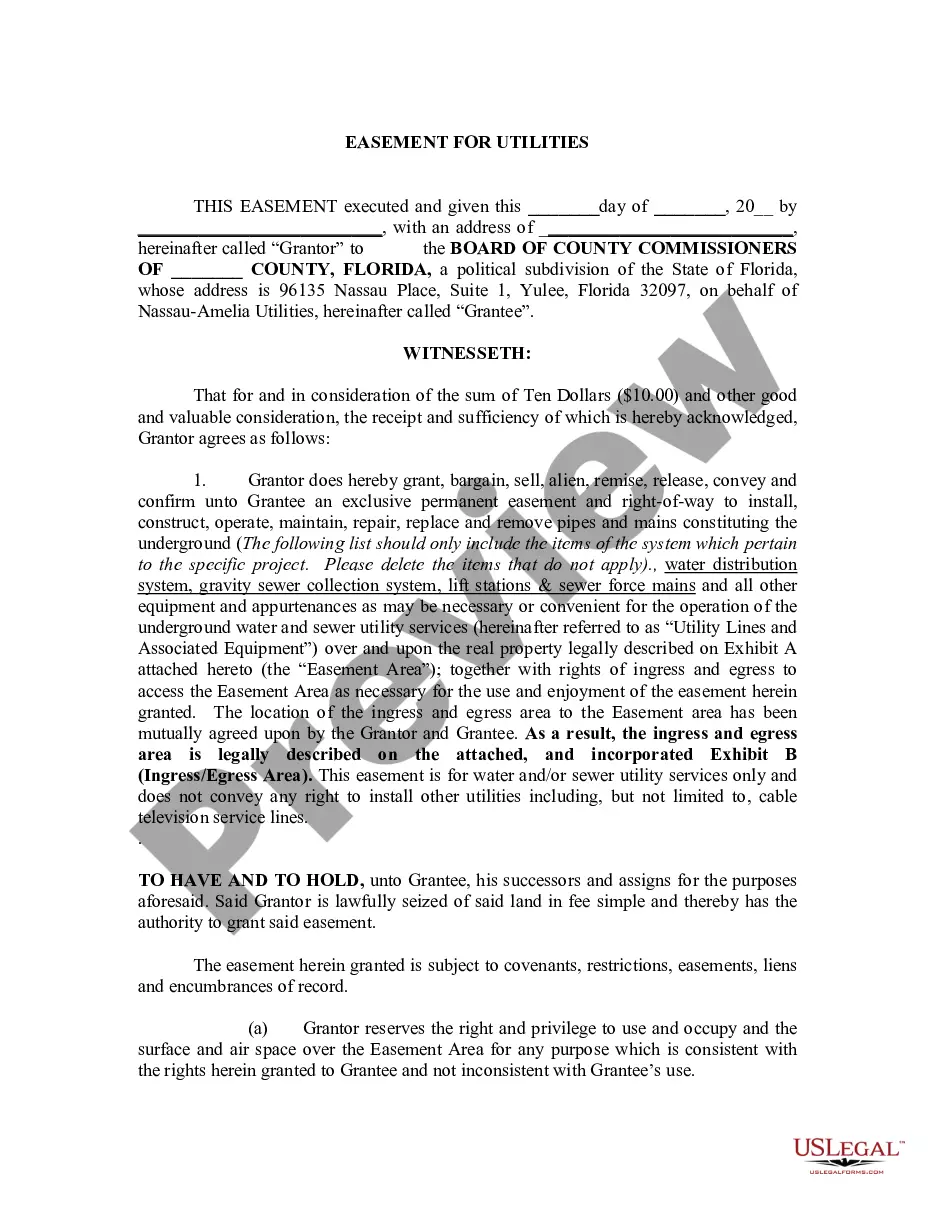
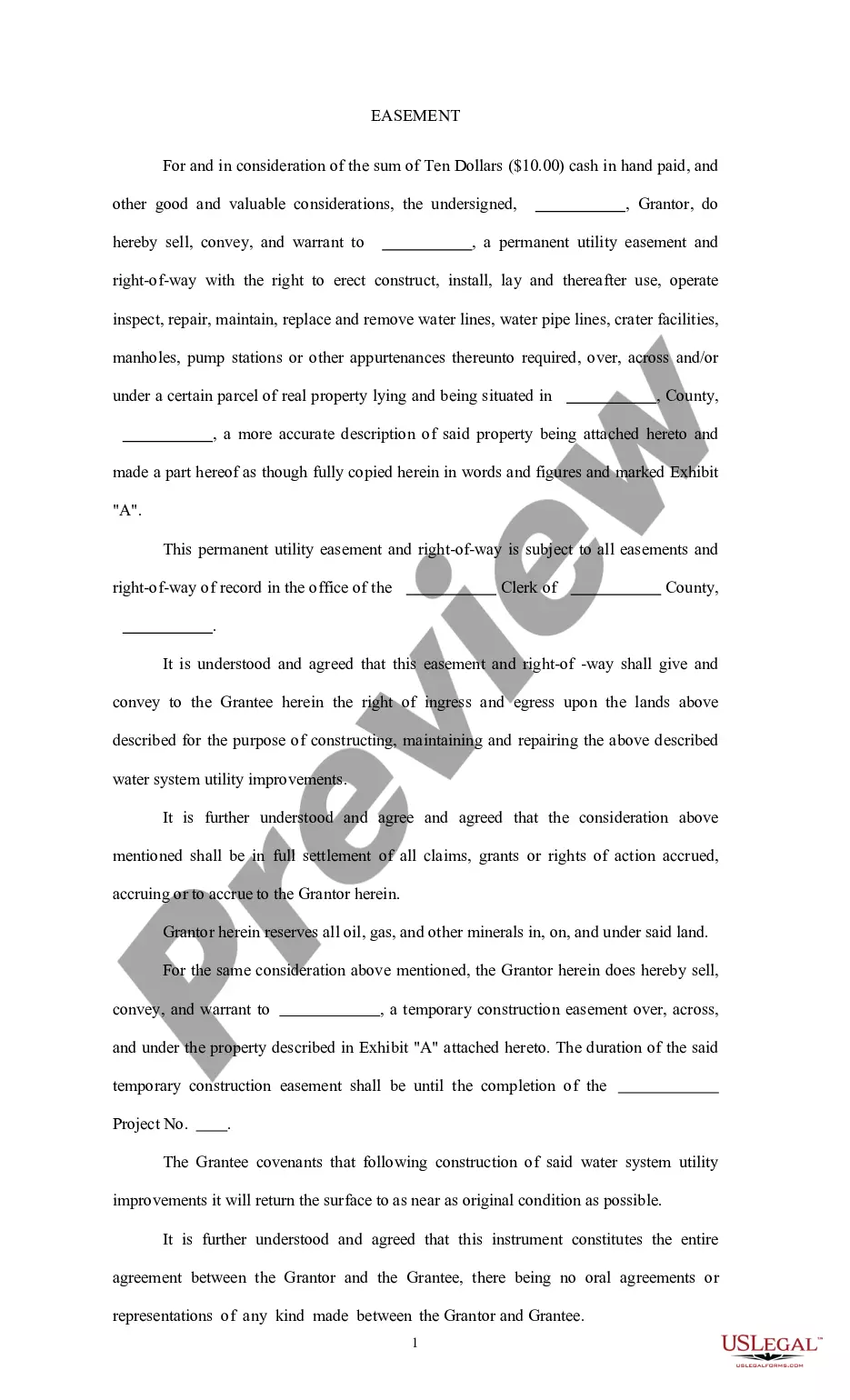
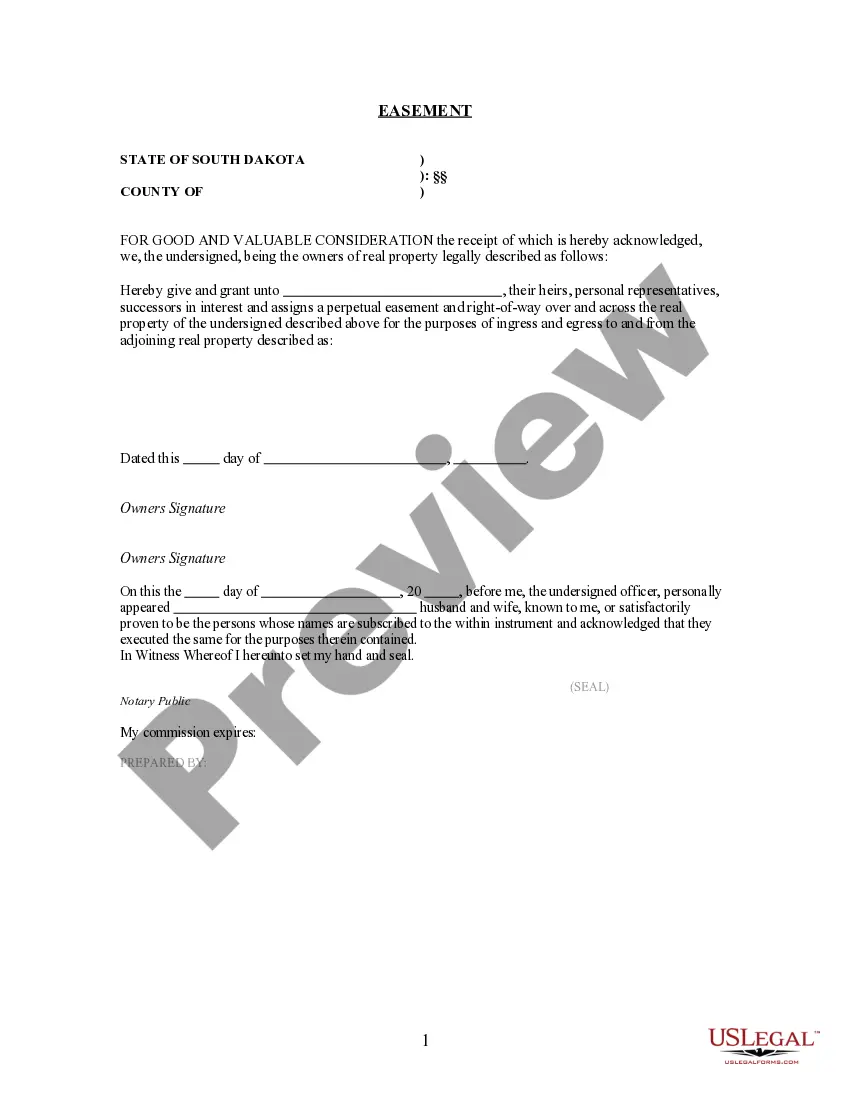
The Ingress and Egress and Underground Utility Easement is a legal document that grants one party the right to access another party's property for specific purposes, particularly involving the installation and maintenance of underground utilities like power lines. This form is distinct because it clearly outlines the rights of both the Grantor and Grantee, specifying the type of access permitted and the conditions under which this access can be exercised.
Form components explained
- Description of the easement, including its location and purpose.
- Rights of passage for the Grantee to access the property.
- Conditions for changing the easement route, if necessary.
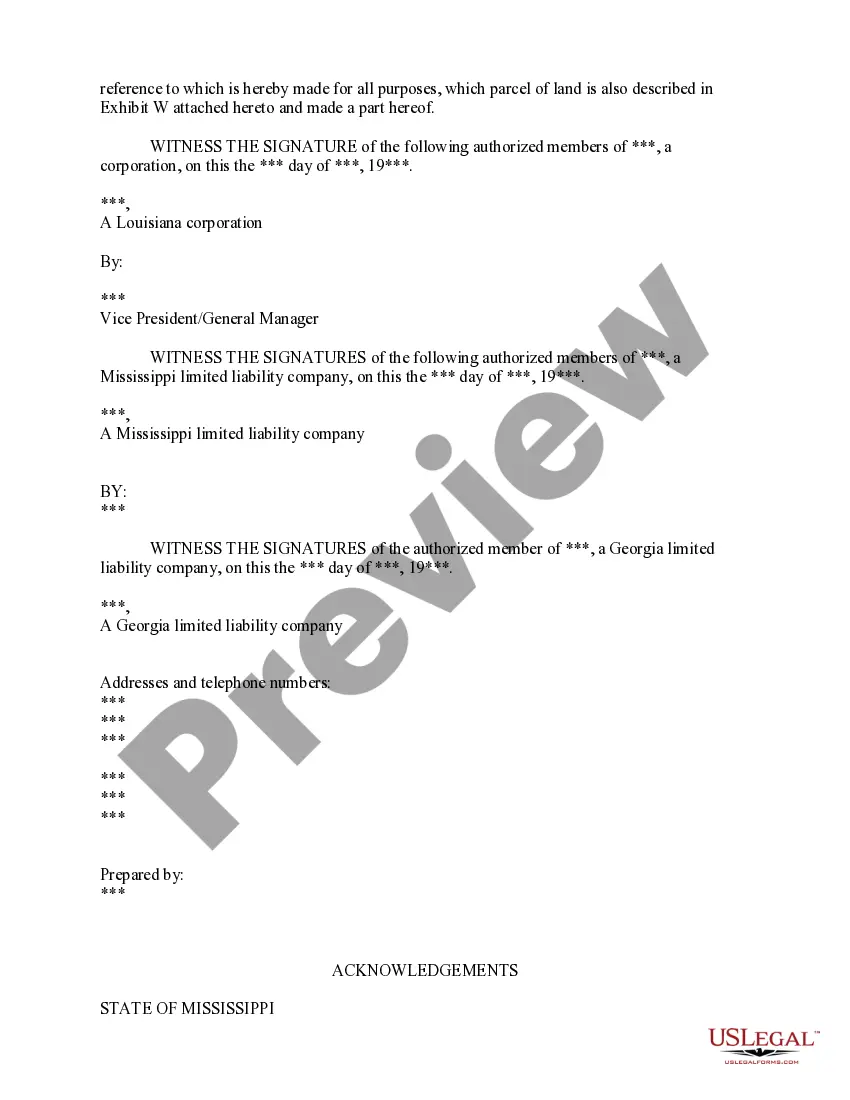
- Responsibilities for maintaining and operating underground utilities.
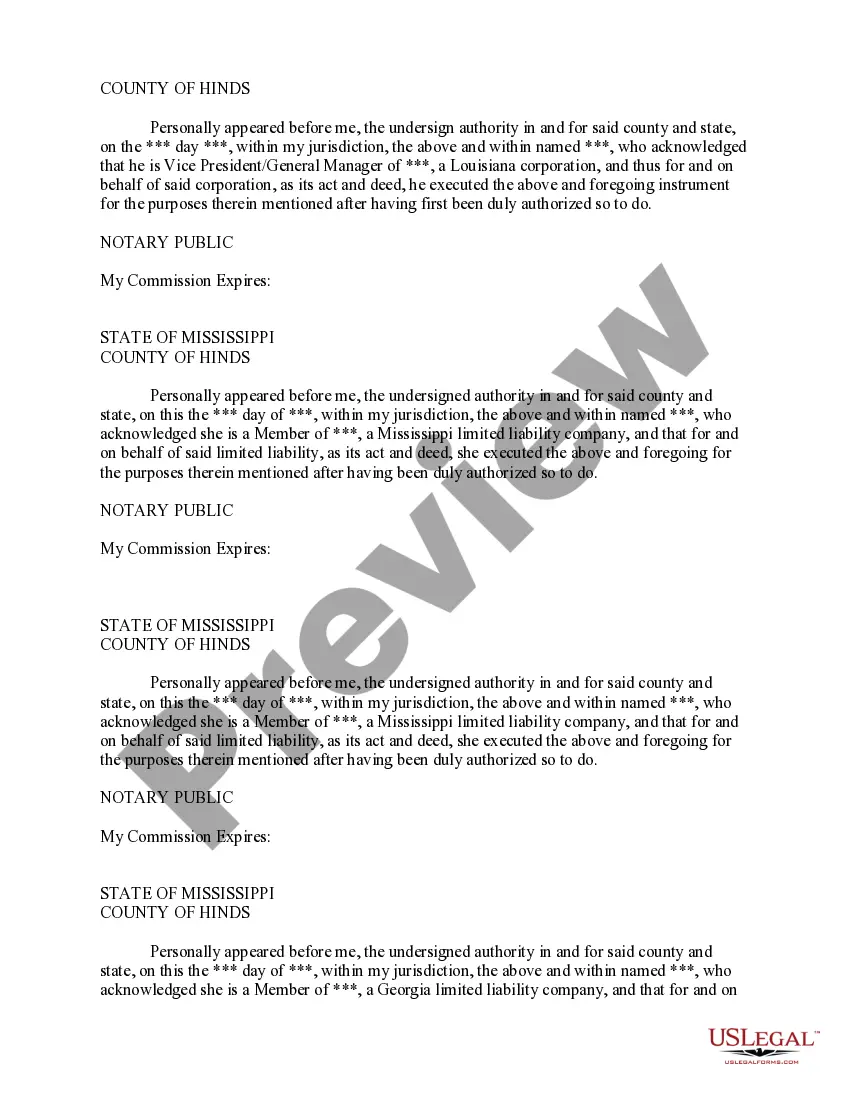
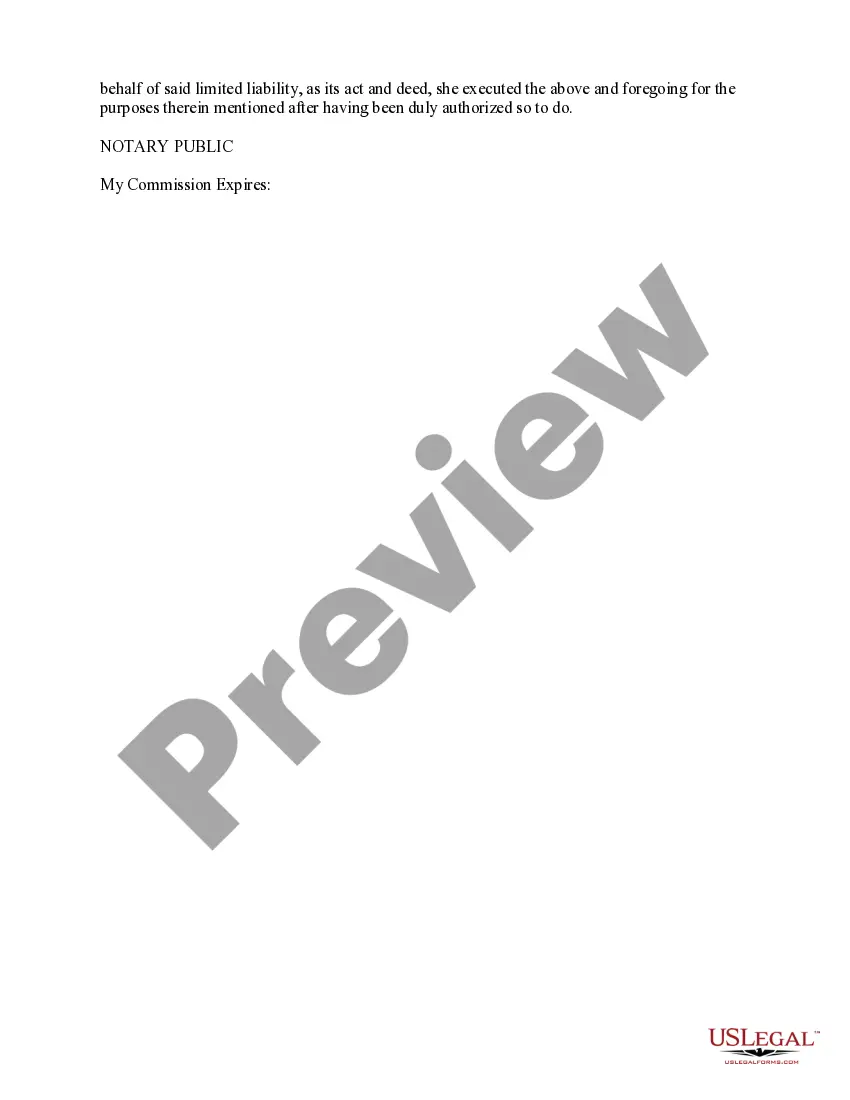
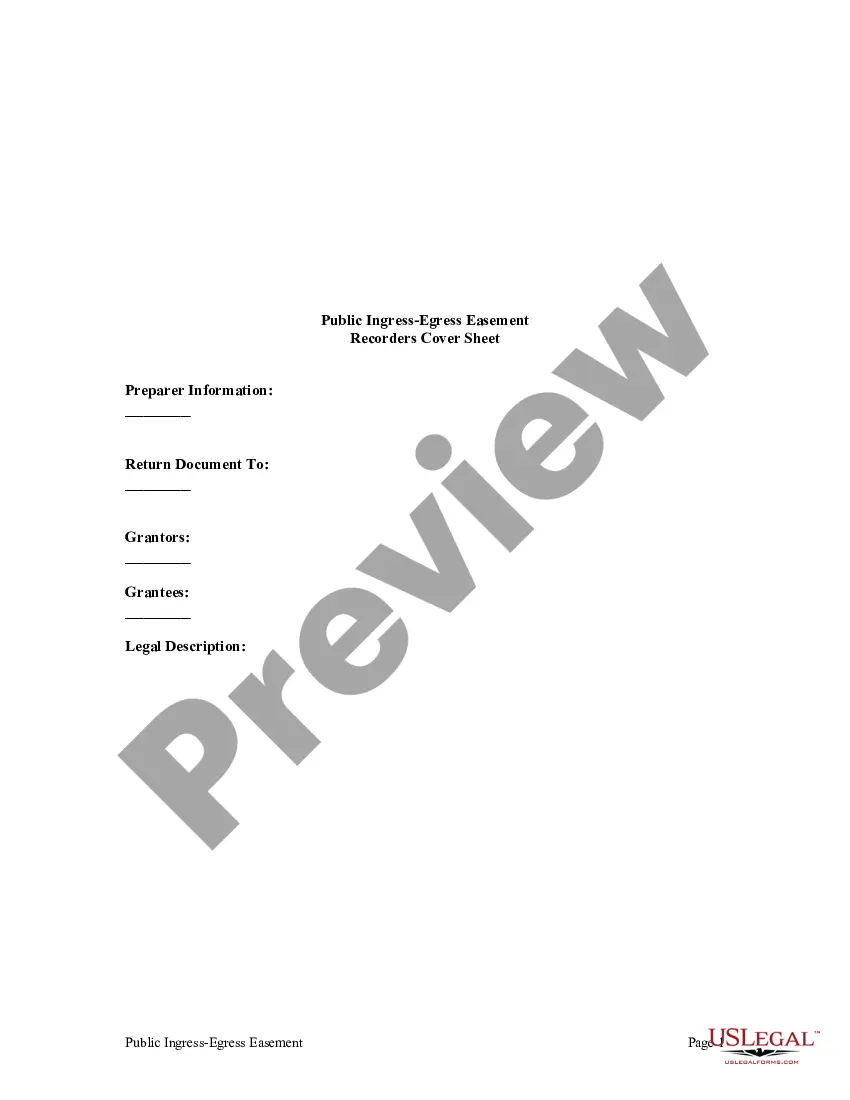
- Signature and notarization requirements for validity.
When to use this form
This form is typically utilized when a property owner (the Grantor) needs to allow another party (the Grantee) to install, maintain, or repair underground utilities on their property. It is particularly necessary when dealing with power lines, telecommunications, or any scenario requiring access to private land for utility services.
Who can use this document
- Property owners who wish to grant utility companies access to their land.
- Utility companies that need formal permission to operate on a property.
- Businesses or contractors involved in the installation or maintenance of power lines or cables.
- Individuals representing limited liability companies (LLCs) in Mississippi and Louisiana regarding utility easements.
How to complete this form
- Identify the parties involved (Grantor and Grantee) and their legal status.
- Clearly describe the property location and the scope of the easement granted.
- Specify any conditions or limitations regarding the use of the easement.
- Ensure all the necessary signatures are obtained from authorized individuals.
- Have the document notarized to confirm its authenticity.
Notarization guidance
Yes, this form must be notarized to be legally valid. Notarization serves to verify the identities of the parties involved and ensures that the document is executed properly. US Legal Forms offers integrated online notarization, making it easy to complete this step securely from anywhere, 24/7.
Get your form ready online
Our built-in tools help you complete, sign, share, and store your documents in one place.
Make edits, fill in missing information, and update formatting in US Legal Forms—just like you would in MS Word.
Download a copy, print it, send it by email, or mail it via USPS—whatever works best for your next step.
Sign and collect signatures with our SignNow integration. Send to multiple recipients, set reminders, and more. Go Premium to unlock E-Sign.
If this form requires notarization, complete it online through a secure video call—no need to meet a notary in person or wait for an appointment.
We protect your documents and personal data by following strict security and privacy standards.

Make edits, fill in missing information, and update formatting in US Legal Forms—just like you would in MS Word.

Download a copy, print it, send it by email, or mail it via USPS—whatever works best for your next step.

Sign and collect signatures with our SignNow integration. Send to multiple recipients, set reminders, and more. Go Premium to unlock E-Sign.

If this form requires notarization, complete it online through a secure video call—no need to meet a notary in person or wait for an appointment.

We protect your documents and personal data by following strict security and privacy standards.
Common mistakes
- Failing to accurately describe the location of the easement.
- Not obtaining the required signatures from authorized representatives.
- Neglecting to include specific conditions for the use of the easement.
- Forgetting to notarize the document, making it potentially invalid.
Why complete this form online
- Convenient access to the form, allowing for easy download and editing.
- Assurance that the form is drafted by licensed attorneys to meet legal standards.
- The ability to quickly process and submit the form without the need for in-person meetings.
- Secure storage and easy retrieval of completed forms.
Looking for another form?

Form popularity
FAQ
Easement for ingress and egress is a fancy way of saying that an easement allows someone to travel to and from the land. For example, let's say Alice can't get to her property from a public road without crossing over her neighbor Bill's property.
On appeal, the Court held that an easement for ingress and egress confers only the right to pass over the land, not the right to park on the land. The plain meaning of the terms ingress and egress do not include parking.
When termed as a utility easement, it means a utility company's right to access and control the portion of another person's land that is located near utility facilities and structures (i.e. utility poles, transformers, overhead or underground electrical lines).
Ingress refers to the right to enter a property, while egress refers to the right to exit a property.
An easement in gross is personal to the party that receives the benefit of easement. An example of an easement in gross is an easement to a utility company to run a power line across a burdened piece of property. The utility company is the benefited party and there isn't necessarily a benefited parcel of land.
A property easement is a legal situation in which the title to a specific piece land remains with the landowner, but another person or organization is given the right to use that land for a distinct purpose.
The right of egress is the legal right to exit or leave a property. The right of egress is usually used in conjunction with the right of ingress, which means the legal right to enter a property. Ingress and egress rights are important to homeowners since they allow access to their property.
When termed as a utility easement, it means a utility company's right to access and control the portion of another person's land that is located near utility facilities and structures (i.e. utility poles, transformers, overhead or underground electrical lines).
So, having an easement on a property may have a permanent outcome on the property with rights of the home owner. But not all easements are bad.If you live in a rural area, you run into bad easement issues more often, typically where the easement was created by a parcel owner next to your land.