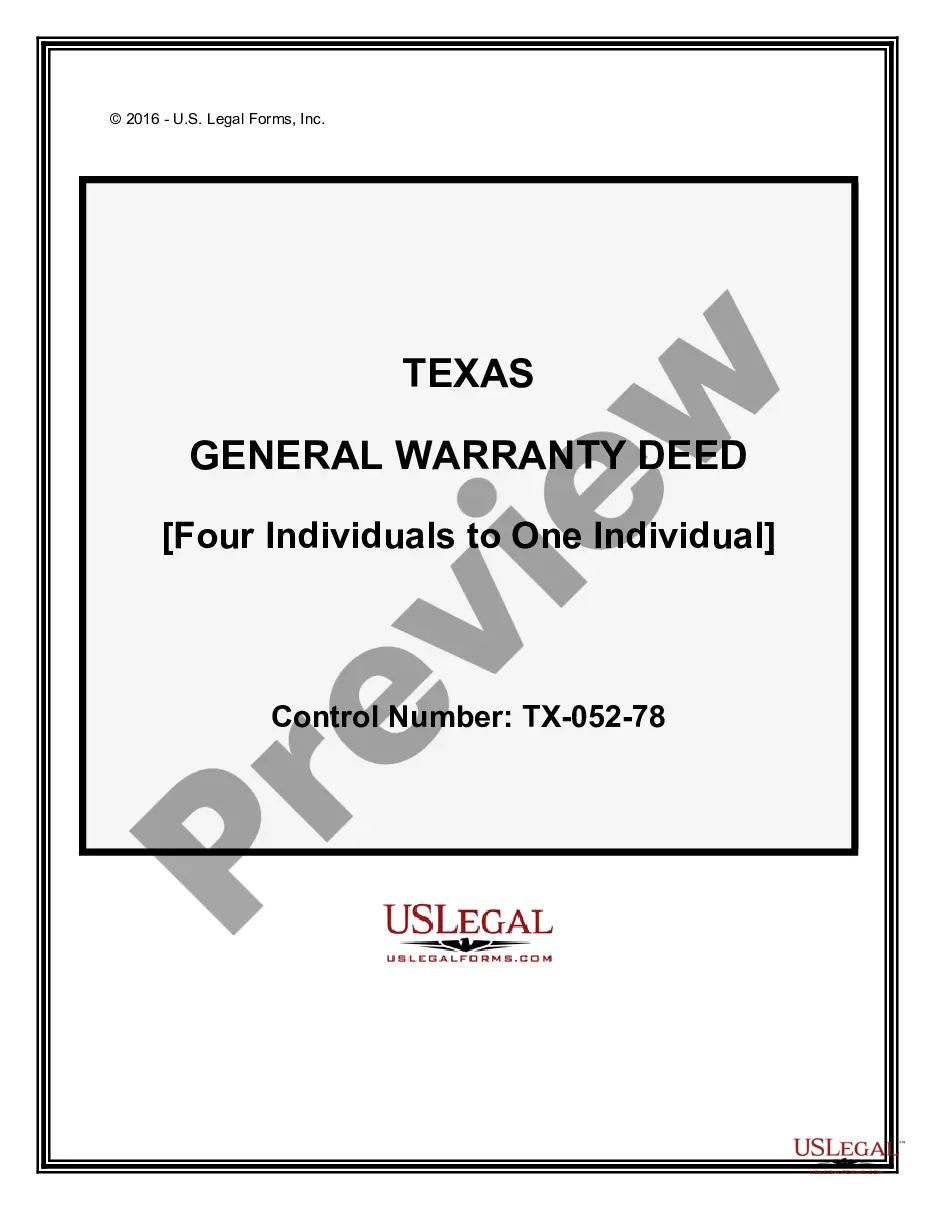
Texas General Warranty Deed from Four Grantors to One Grantee
Overview of this form
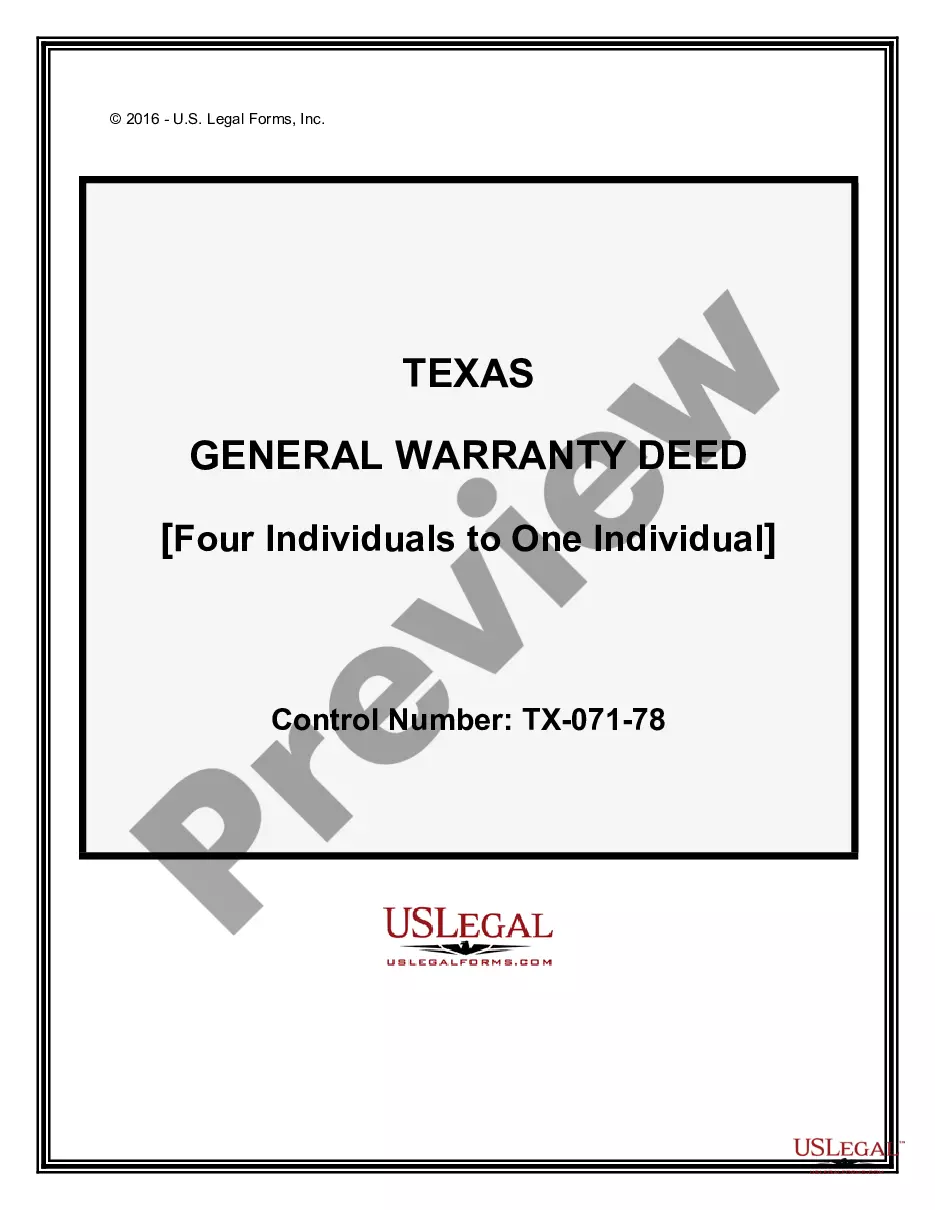
This General Warranty Deed is a legal document that facilitates the transfer of property ownership from four grantors to one grantee. It provides assurances regarding the title's validity, ensuring that the grantors guarantee the grantee a clear title free from any encumbrances. This document is essential for situations where multiple parties are conveying property and differs from quitclaim deeds as it offers additional warranties regarding the title's quality.
Key components of this form
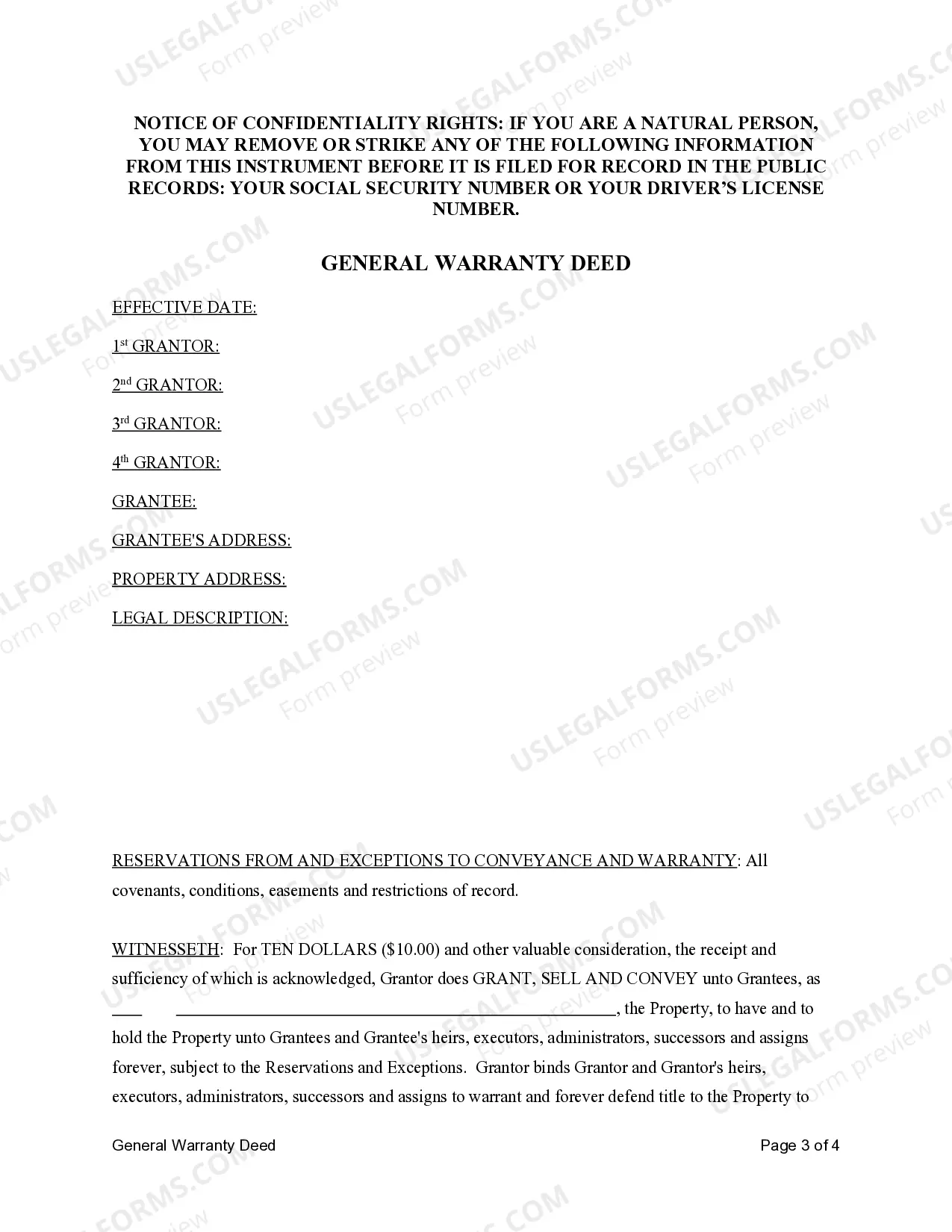
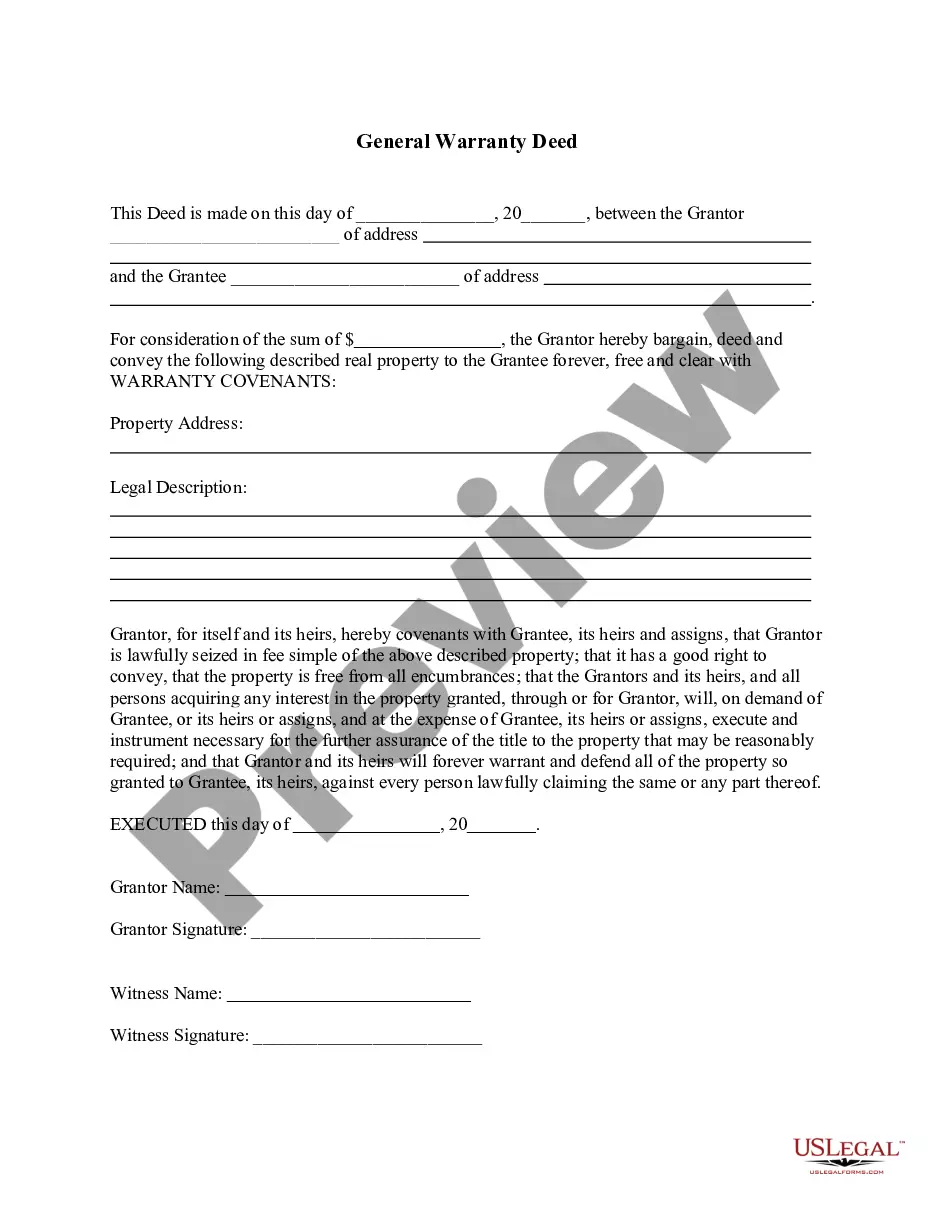
- Identification of Grantors: Details about the four individuals transferring the property.
- Identification of Grantee: Information regarding the individual receiving the property.
- Description of the Property: A detailed description of the real estate being conveyed.
- Covenants of Title: Assurances provided by the grantors regarding the property's title.
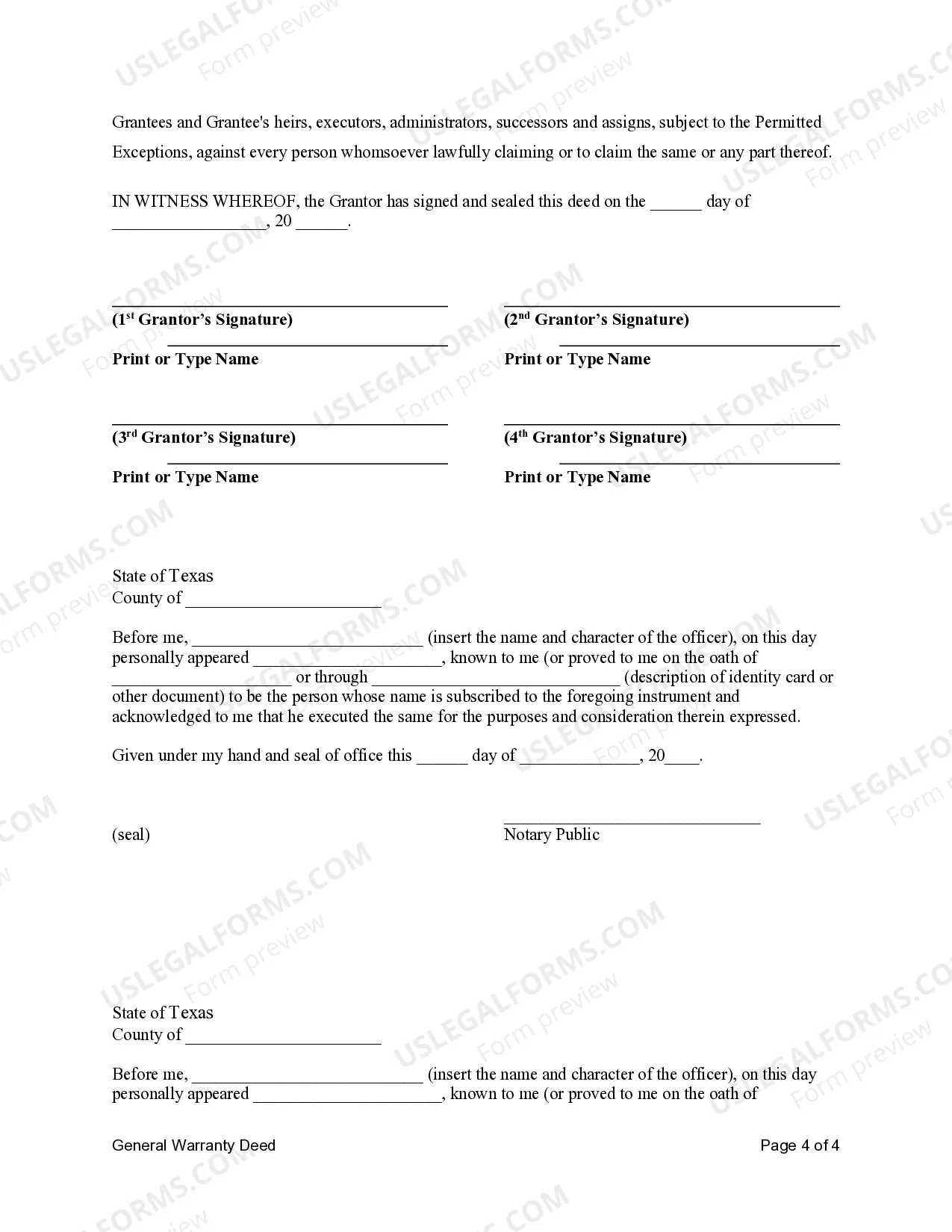
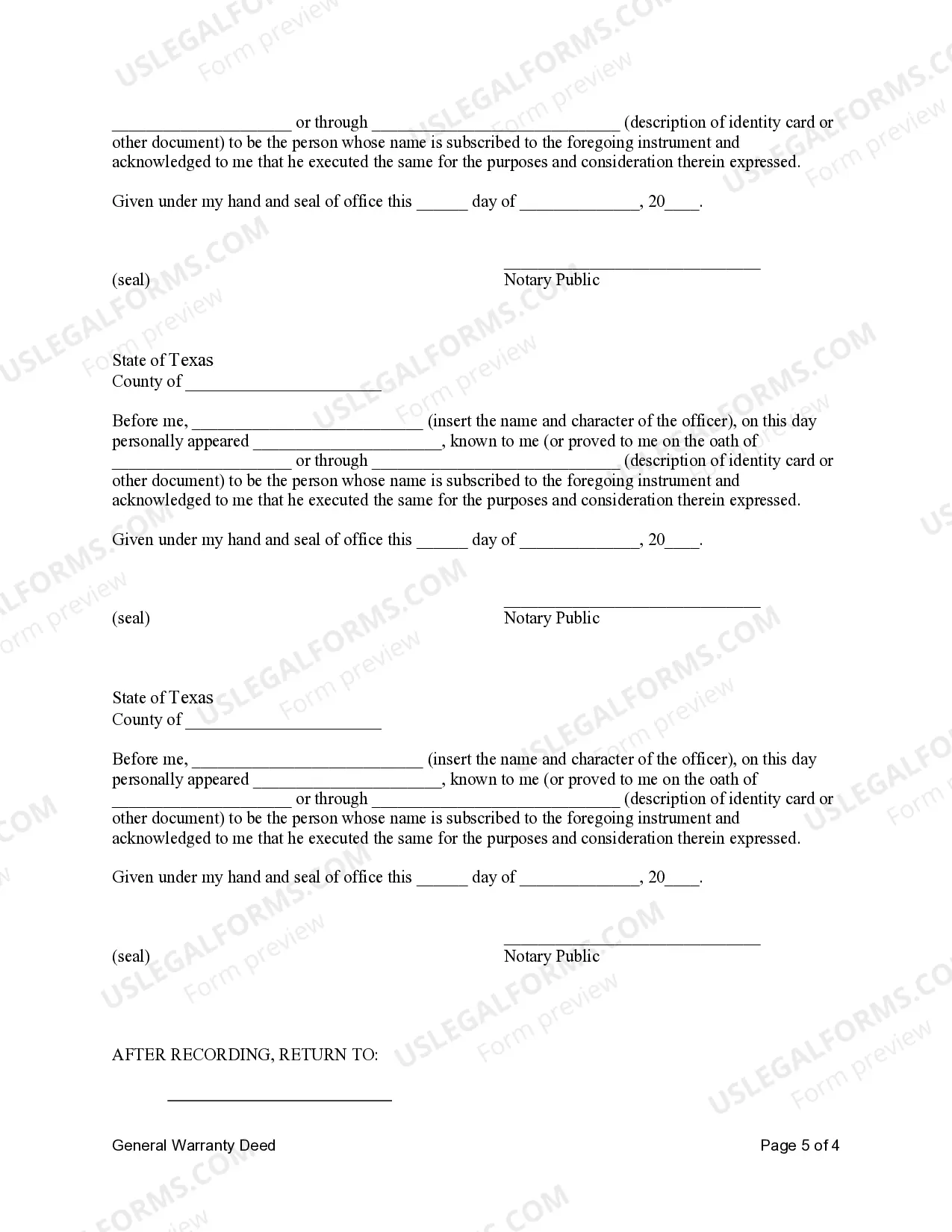
- Signatures and Acknowledgment: Spaces for grantors' signatures and a notary section.


Situations where this form applies
This form is used when four individuals wish to transfer ownership of real property to a single individual. It is commonly utilized in transactions involving family members or groups of investors who need to consolidate their ownership into one party. The General Warranty Deed ensures that the property is transferred with full warranties regarding the title, making it an ideal choice for securing a buyer's interest.
Who should use this form
This General Warranty Deed should be used by the following individuals:
- Four grantors looking to convey property to one grantee.
- Individuals involved in a property development or investment group.
- Parties wanting to ensure robust legal protection regarding the title during a property transfer.
- Homeowners selling their property to a single buyer.
How to complete this form
- Identify the grantors by entering their names and addresses in the appropriate fields.
- Specify the grantee's name and address where the property is being transferred.
- Clearly describe the property in detail, including legal descriptions where necessary.
- Ensure all grantors sign the deed in the designated areas.
- Have the deed notarized to comply with state law requirements for recording.
Notarization requirements for this form
Yes, this form must be notarized to be legally valid. It is crucial to ensure that all parties are verified during the signing process, which protects both the grantors and the grantee. US Legal Forms offers integrated online notarization services, allowing for secure video calls and official documentation without the need for travel.
Get your form ready online
Our built-in tools help you complete, sign, share, and store your documents in one place.
Make edits, fill in missing information, and update formatting in US Legal Forms—just like you would in MS Word.
Download a copy, print it, send it by email, or mail it via USPS—whatever works best for your next step.
Sign and collect signatures with our SignNow integration. Send to multiple recipients, set reminders, and more. Go Premium to unlock E-Sign.
If this form requires notarization, complete it online through a secure video call—no need to meet a notary in person or wait for an appointment.
We protect your documents and personal data by following strict security and privacy standards.

Make edits, fill in missing information, and update formatting in US Legal Forms—just like you would in MS Word.

Download a copy, print it, send it by email, or mail it via USPS—whatever works best for your next step.

Sign and collect signatures with our SignNow integration. Send to multiple recipients, set reminders, and more. Go Premium to unlock E-Sign.

If this form requires notarization, complete it online through a secure video call—no need to meet a notary in person or wait for an appointment.

We protect your documents and personal data by following strict security and privacy standards.
Common mistakes to avoid
- Failing to include the legal description of the property.
- Not having all grantors sign the document.
- Overlooking notarization, which may lead to recording issues.
- Leaving out important details about any existing liens or encumbrances on the property.
Benefits of completing this form online
- Convenient access: Download and complete the form from anywhere, at any time.
- Editability: Easily fill in editable fields on your computer for accurate completion.
- Legal reliability: Forms are created based on up-to-date laws and regulations.
- Time-saving: Immediate access reduces delays compared to traditional paper methods.
Looking for another form?


Form popularity
FAQ
Find the most recent deed to the property. It is best to begin with a copy of the most recent deed to the property (the deed that transferred the property to the current grantor). Create a new deed. Sign and notarize the deed. File the documents in the county land records.
The Texas General Warranty Deed is a form that transfers real estate ownership in the clearest possible manner promising the new owner that there are no title defects such as liens or encumbrances.
The name and address of the seller (called the grantor) The name and address of the buyer (called the grantee) A legal description of the property (found on the previous deed) A statement that the grantor is transferring the property to the grantee.
No, California does not require that the Grantee sign a warranty deed. However, some states and counties require that the deed be signed by the Grantee in addition to the Grantor.
Locate the deed that's in trust. Use the proper deed. Check with your title insurance company and lender. Prepare a new deed. Sign in the presence of a notary. Record the deed in the county clerk's office.
Write the county where the property is located on line provided next to the words "County of" beneath the words "The State of Texas." Write the name and address of the grantor on the lines provided after the words "Know all men by these presents, That I."
To make the form legally binding, you must sign it in front of a notary public. You must then file your signed and notarized deed with the county office that's in charge of recording property documents. Once the grantee signs the warranty deed, he/she legally has ownership and claim to the property.
1The name and address of the seller (called the grantor)2The name and address of the buyer (called the grantee)3A legal description of the property (found on the previous deed)4A statement that the grantor is transferring the property to the grantee.How to Use a General Warranty Deed .com\nwww..com > articles > how-to-use-a-general-warranty-deed