Texas General Warranty Deed - Eight Individual Grantors to Two Individual Grantees
What is this form?
The General Warranty Deed for Eight Individual Grantors to Two Individual Grantees is a legal document that facilitates the transfer of real property ownership. This form specifically accommodates eight grantors conveying property to two grantees, ensuring legal protection for the grantees with comprehensive warranties against defects in the title. Unlike other deeds that may provide limited warranties, a general warranty deed guarantees that the grantors hold clear title to the property and will defend against any claims. It is essential for individuals involved in property transfers, particularly when multiple grantors are involved.
Form components explained
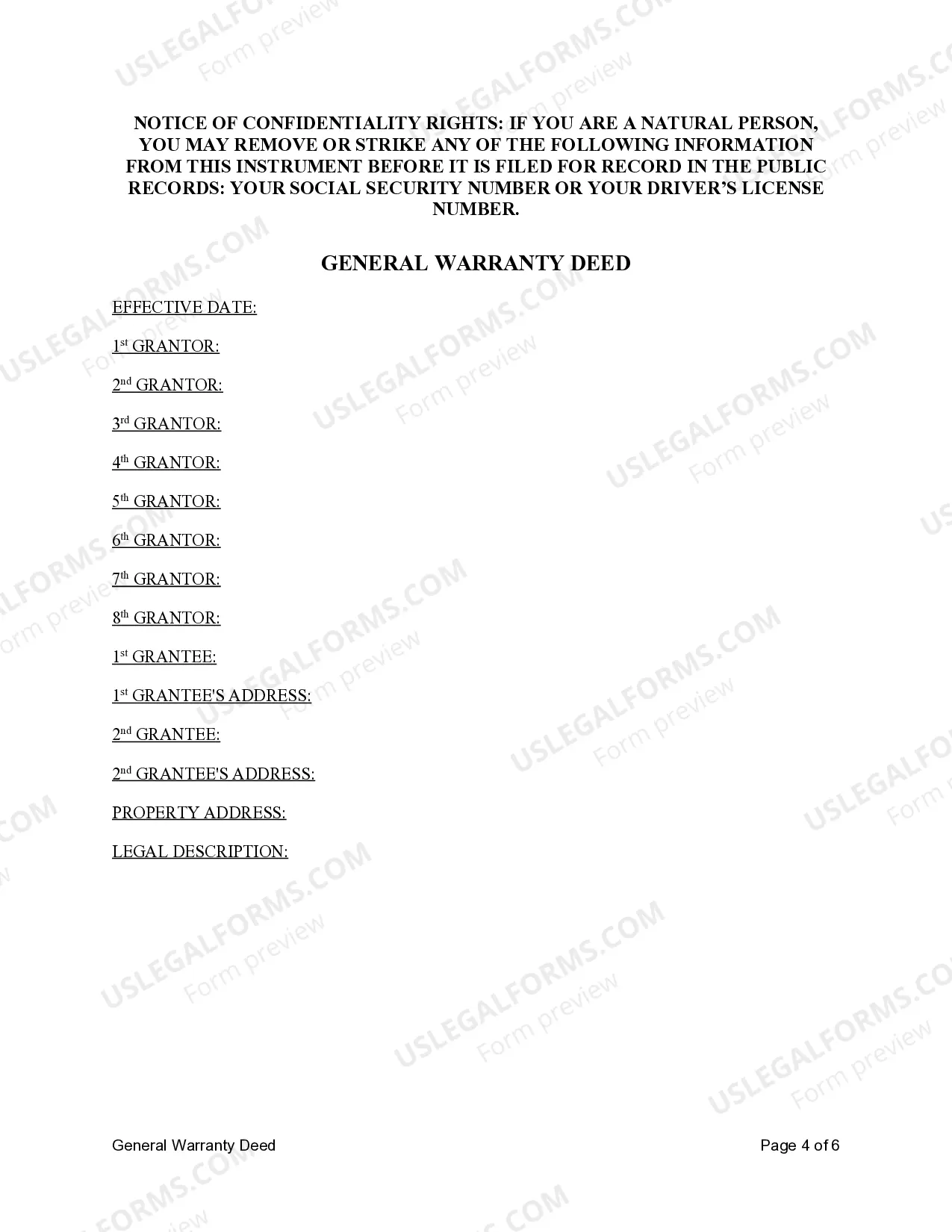
- Parties Involved: Names and details of the eight grantors and two grantees.
- Property Description: Legal description of the property being transferred.
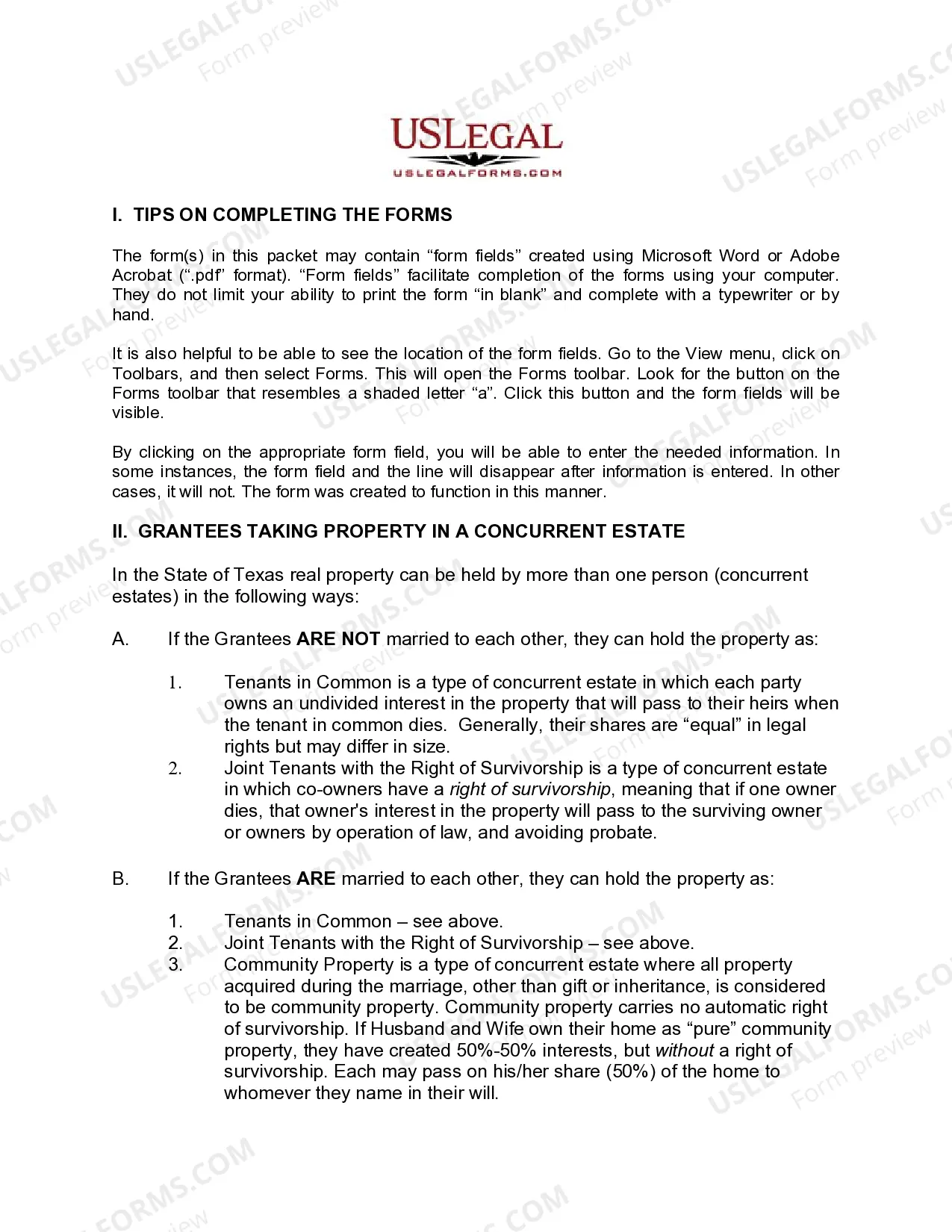
- Type of Ownership: Selection of whether the grantees will take the property as tenants in common, joint tenants, or community property.
- Warranties: Grantors' assurance against title defects and claims.
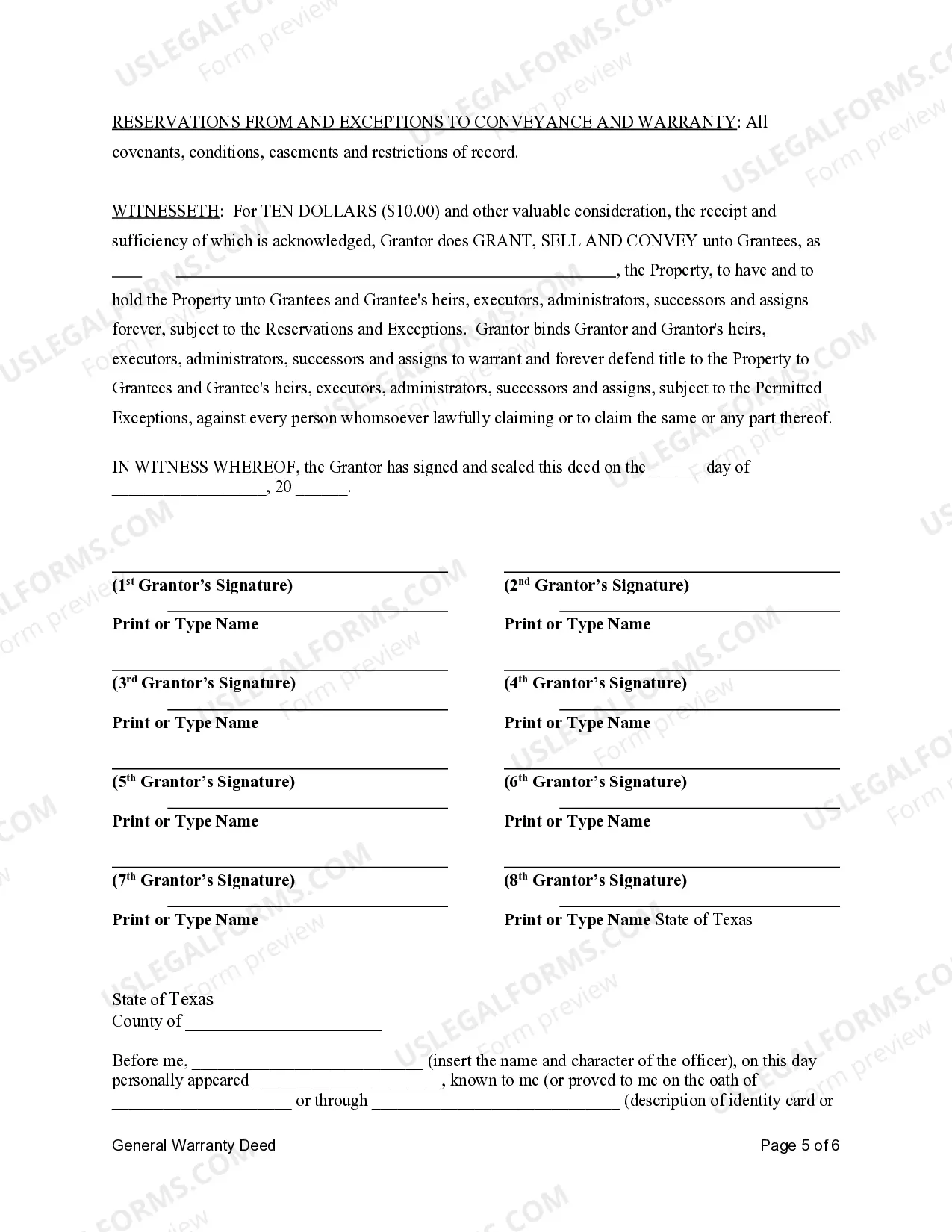
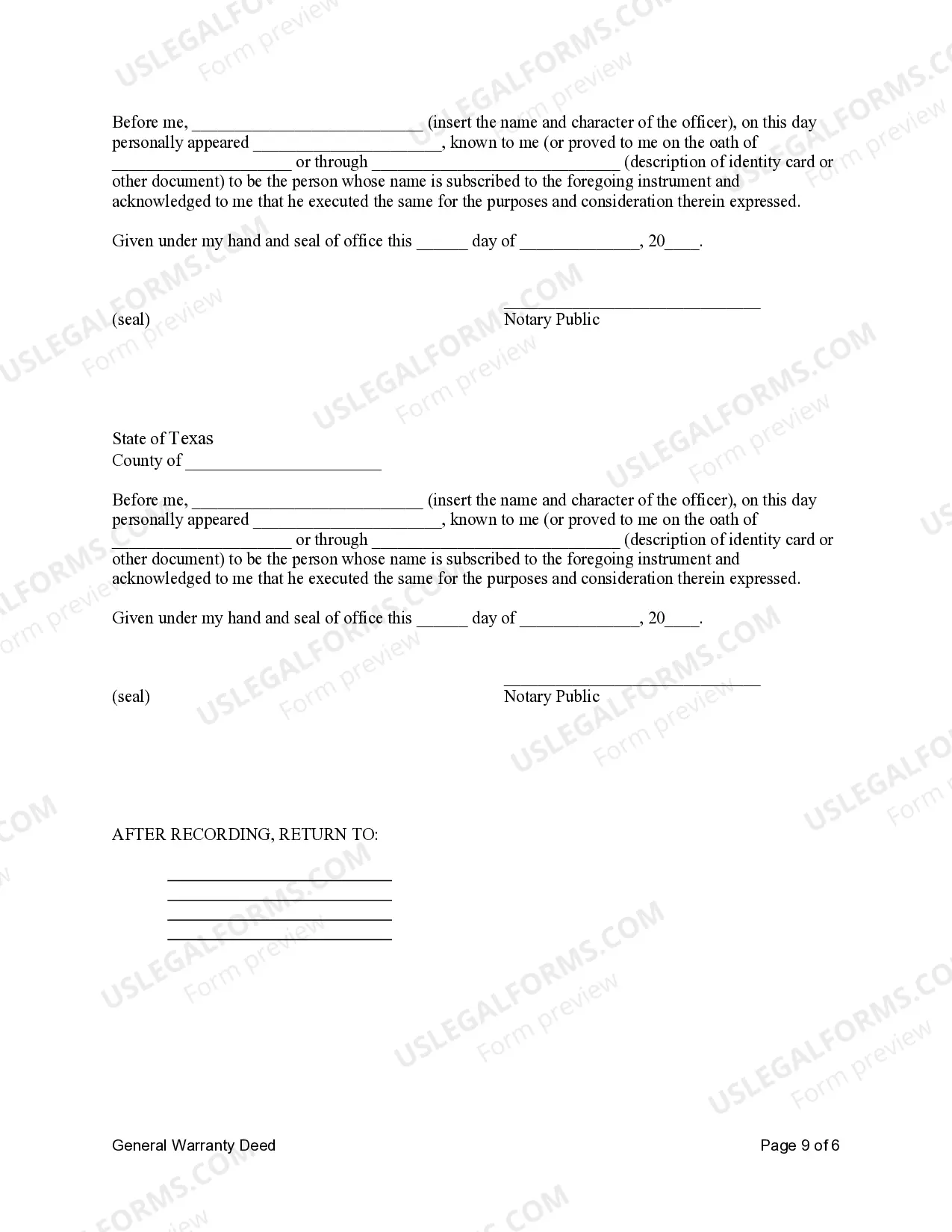
- Signatures: Required signatures of the grantors and acknowledgment details.



When to use this form
This form is ideal when eight individuals need to transfer property to two individuals, such as in a family estate situation, a business partnership dissolution, or a complex property sale. It's particularly useful when the grantees are not married or in cases where specific types of concurrent ownership are desired, ensuring that the specifics of the property transfer are legally documented and clear.
Who can use this document
- Property owners who are transferring ownership with multiple grantors.
- Individuals entering into a joint ownership agreement involving property.
- Married couples who want to establish legal property ownership terms.
- Real estate agents or attorneys assisting clients with property transactions.
Steps to complete this form
- Identify the parties involved: Clearly enter the names of the eight grantors and the two grantees.
- Specify the property: Include a detailed legal description of the property being conveyed.
- Select ownership type: Indicate how the grantees will hold the property (tenants in common, joint tenants, etc.).
- Provide signatures: Ensure all grantors sign the form in the designated areas and secure the necessary acknowledgments.
- File the deed as required: Submit the completed form to the appropriate county office to finalize the transfer.
Notarization requirements for this form
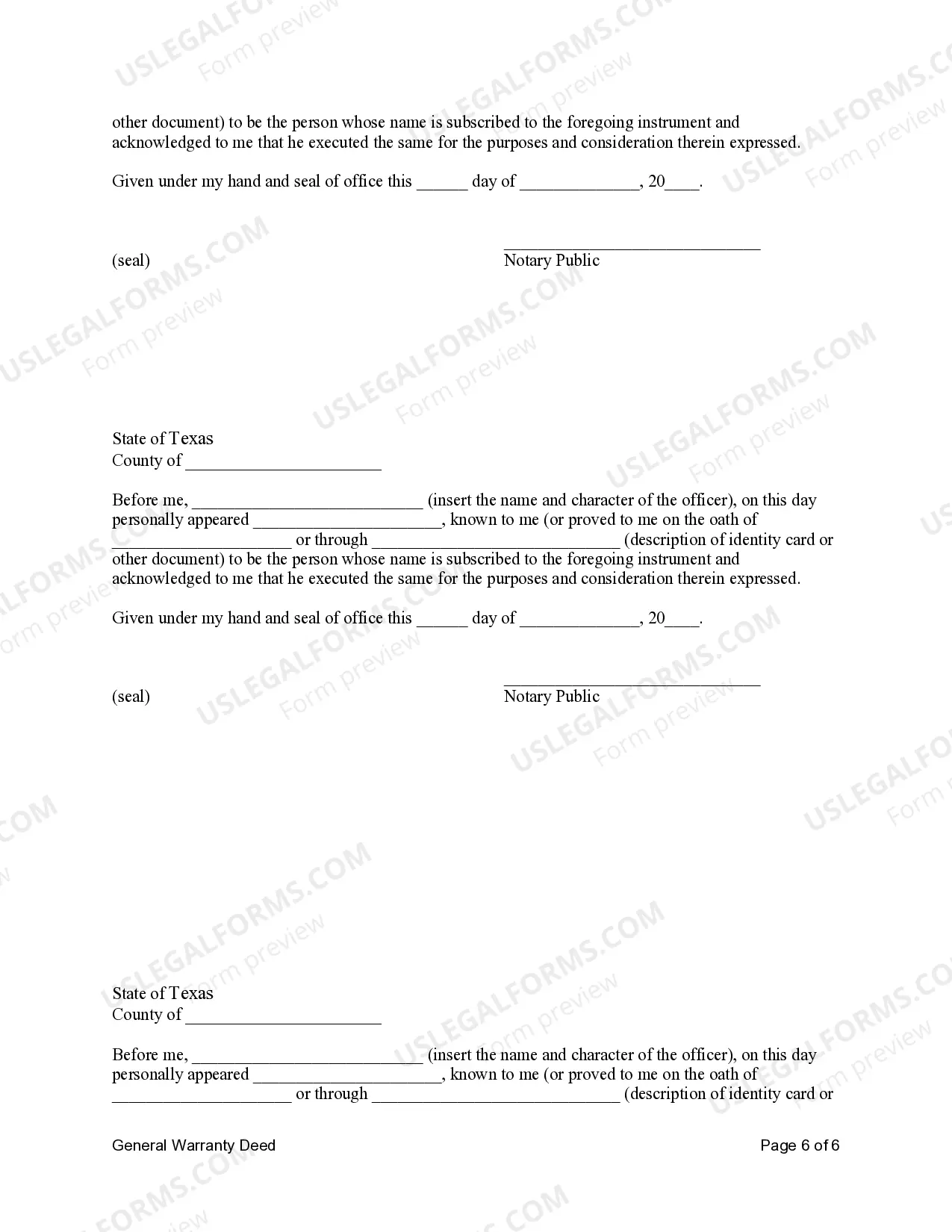
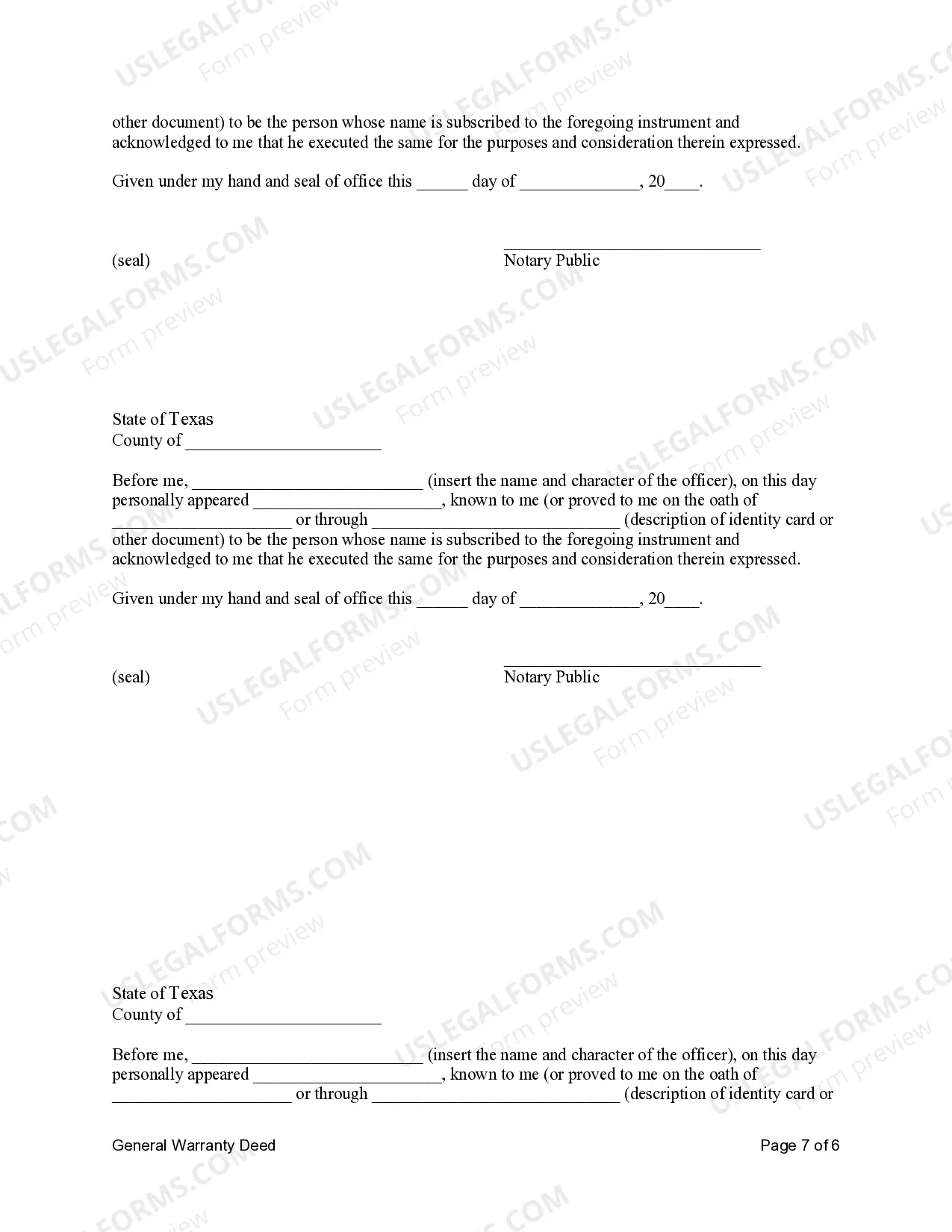
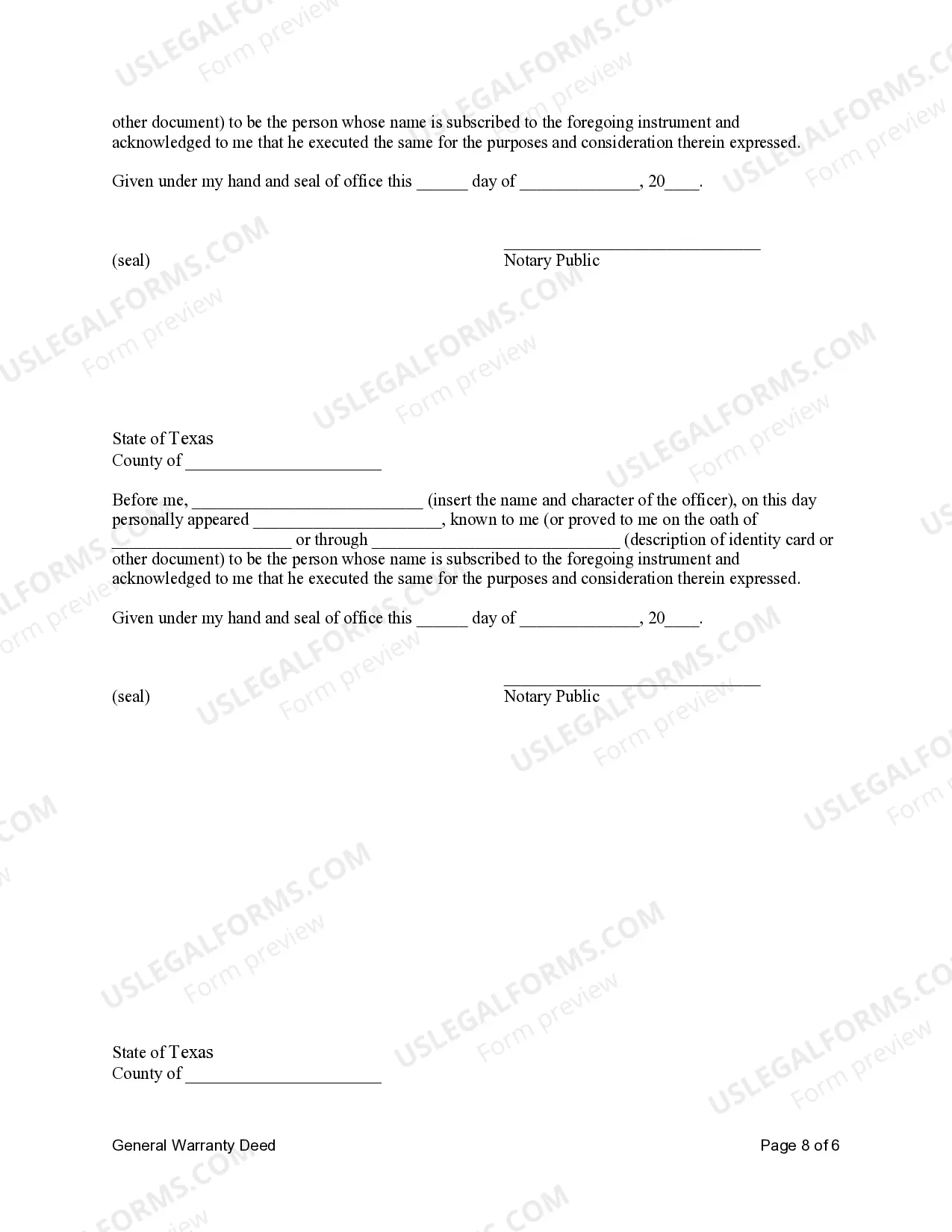
Yes, this form must be notarized to be legally valid. Notarization ensures that the signatures are properly witnessed and can help prevent fraud. U.S. Legal Forms provides integrated online notarization services, allowing you to securely notarize your document via video call at any time, ensuring your deed is valid for submission.
Get your form ready online
Our built-in tools help you complete, sign, share, and store your documents in one place.
Make edits, fill in missing information, and update formatting in US Legal Forms—just like you would in MS Word.
Download a copy, print it, send it by email, or mail it via USPS—whatever works best for your next step.
Sign and collect signatures with our SignNow integration. Send to multiple recipients, set reminders, and more. Go Premium to unlock E-Sign.
If this form requires notarization, complete it online through a secure video call—no need to meet a notary in person or wait for an appointment.
We protect your documents and personal data by following strict security and privacy standards.

Make edits, fill in missing information, and update formatting in US Legal Forms—just like you would in MS Word.

Download a copy, print it, send it by email, or mail it via USPS—whatever works best for your next step.

Sign and collect signatures with our SignNow integration. Send to multiple recipients, set reminders, and more. Go Premium to unlock E-Sign.

If this form requires notarization, complete it online through a secure video call—no need to meet a notary in person or wait for an appointment.

We protect your documents and personal data by following strict security and privacy standards.
Common mistakes
- Failing to include all grantors' names and signatures.
- Omitting the legal description of the property.
- Selecting an incorrect form of ownership for the grantees.
- Not filling out the acknowledgment section properly, which could make the deed invalid.
Why use this form online
- Convenience of completing the form from your home or office.
- Editability of the document to ensure accuracy before downloading.
- Access to legal form templates drafted by licensed attorneys.
- No need to print or type manually; use digital fields for easy completion.
Legal use & context
- The General Warranty Deed is enforceable in Texas, ensuring that the grantors have clear title to the property and can legally convey it.
- It provides a warranty that protects the grantees against any future claims to the property.
- Proper completion and notarization of this form are critical for the legality of the transfer.
Quick recap
- This General Warranty Deed form is intended for use between eight grantors and two grantees.
- Understanding the types of concurrent ownership is essential before completing the form.
- Notarization is required for the deed to be legally binding.
- Utilizing online resources for form completion offers significant benefits in terms of convenience and compliance.
Looking for another form?
Form popularity
FAQ
Write the county where the property is located on line provided next to the words "County of" beneath the words "The State of Texas." Write the name and address of the grantor on the lines provided after the words "Know all men by these presents, That I."
Fill out the "grantor" section of the warranty deed. The grantors are the givers, or current owners, of the property. Use the legal name of each grantor and insert current addresses after each grantor's name.
In Texas, you can't add your spouse's name to an existing deed, but you can create a new deed by transferring the property from yourself to you and your spouse jointly. You can do this by using either a deed without warranty or a quit claim deed.
To make the form legally binding, you must sign it in front of a notary public. You must then file your signed and notarized deed with the county office that's in charge of recording property documents. Once the grantee signs the warranty deed, he/she legally has ownership and claim to the property.
A warranty deed can include six traditional forms of Covenants for Title, sometimes known as the English covenants of title. Those six traditional forms of covenants can be broken down into two categories: present covenants and future covenants.
The name and address of the seller (called the grantor) The name and address of the buyer (called the grantee) A legal description of the property (found on the previous deed) A statement that the grantor is transferring the property to the grantee.
The Texas General Warranty Deed is a form that transfers real estate ownership in the clearest possible manner promising the new owner that there are no title defects such as liens or encumbrances.
How do I add my spouse to the deed? In Texas, you can't add your spouse's name to an existing deed, but you can create a new deed by transferring the property from yourself to you and your spouse jointly. You can do this by using either a deed without warranty or a quit claim deed.
General Warranty Deed the covenant of seisin, meaning that the grantor warrants they own the property and has the legal right to convey it. the covenant against encumbrances, denoting that the grantor warrants that the property is free of liens or encumbrances, except as specifically stated in the deed.