Maine What is Evidence: Inferences
Understanding this form
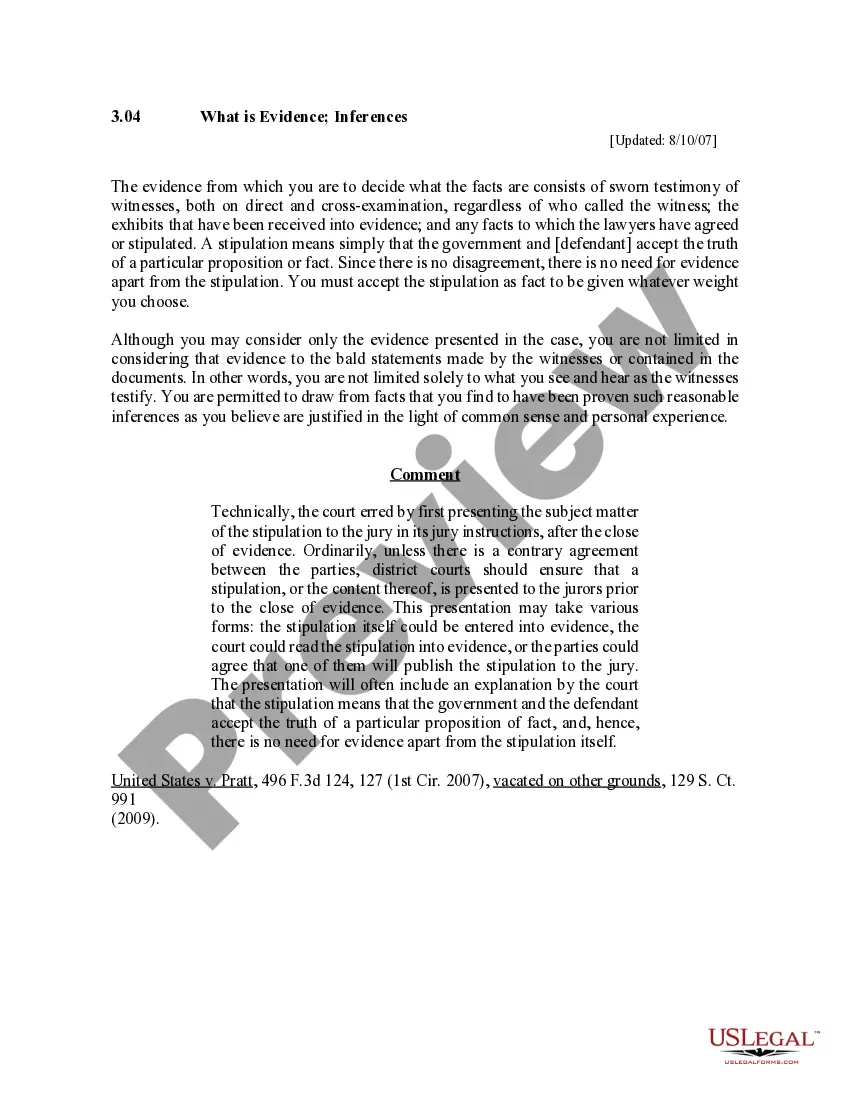
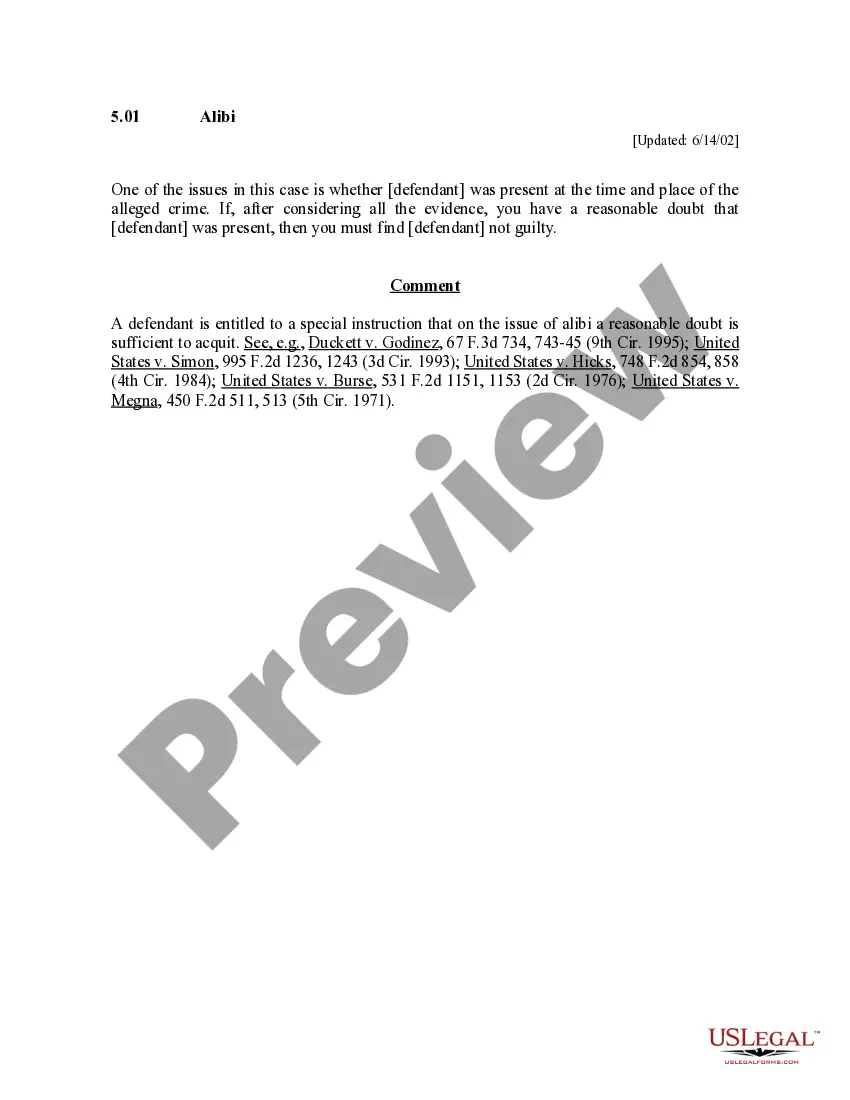
The "What is Evidence: Inferences" form provides official jury instructions for criminal cases in the Federal District Court of Maine. This form, specifically tailored for federal cases, outlines the types of evidence that jurors should consider when making their decisions. Unlike other legal forms that focus on the procedural aspects of trials, this form highlights how jurors can draw inferences from the evidence presented during the trial, making it essential for ensuring a fair jury deliberation process.
Key components of this form
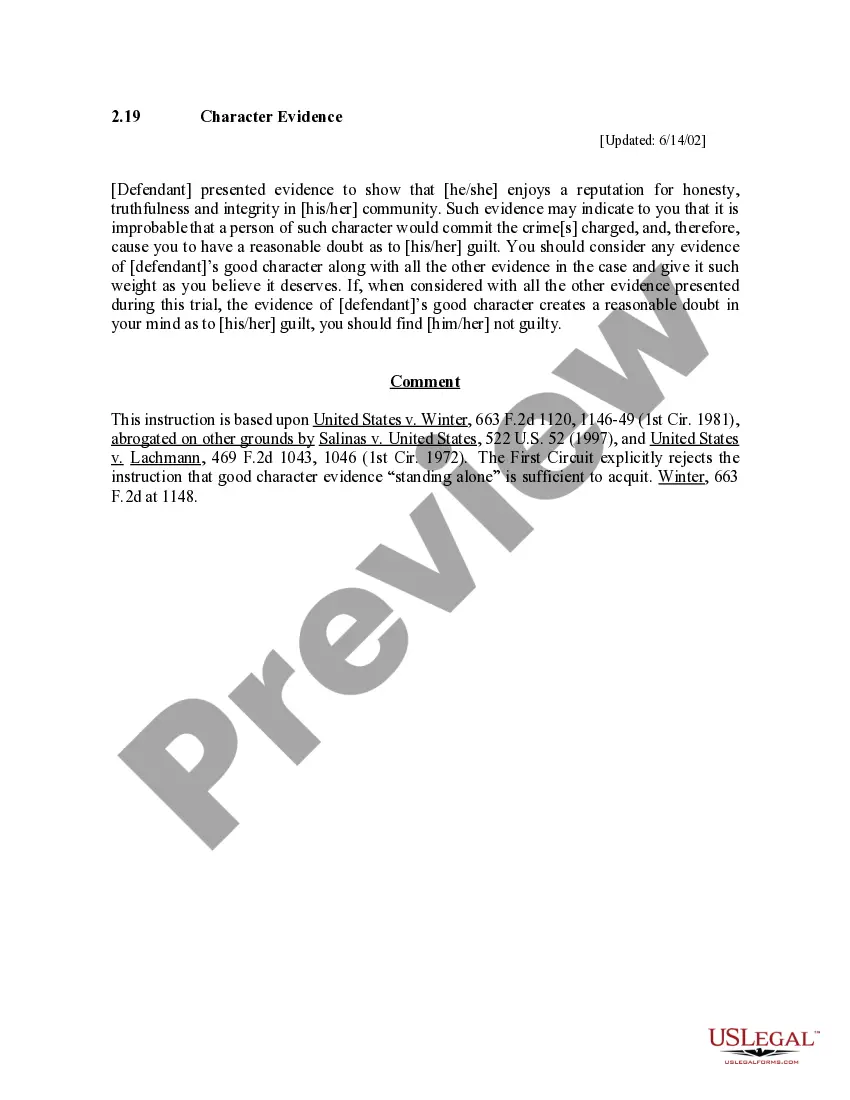
- Definition of what constitutes evidence, including witness testimonies and agreed-upon facts.
- Guidance on the reasoning process jurors should follow to draw reasonable inferences.
- Clarification on the role of stipulations and their acceptance as facts.
- Instructions regarding the presentation of stipulations to jurors before the closing of evidence.
When to use this form
This form is used in federal criminal trials where the jury needs clear guidelines on how to evaluate evidence. It is particularly necessary when jurors must interpret witness statements and legal stipulations during their deliberations. Use this form when you're involved in a case that requires jurors to make informed decisions based on both direct evidence and logical inferences derived from that evidence.
Who needs this form
- Judges presiding over federal criminal cases needing to instruct jurors.
- Attorneys representing defendants or the government in federal trials.
- Jurors who require a comprehensive understanding of how to interpret evidence during their deliberations.
Completing this form step by step
- Read through the definition of evidence to understand what types will be presented in the case.
- Consider each piece of witness testimony, regardless of which party called the witness.
- Review any stipulations presented between the parties and accept them as fact.
- Draw reasonable inferences based on the evidence, guided by common sense and personal experience.
- Ensure instructions regarding stipulations are provided before the evidence is closed during the trial.
Notarization requirements for this form
In most cases, this form does not require notarization. However, some jurisdictions or signing circumstances might. US Legal Forms offers online notarization powered by Notarize, accessible 24/7 for a quick, remote process.
Get your form ready online
Our built-in tools help you complete, sign, share, and store your documents in one place.
Make edits, fill in missing information, and update formatting in US Legal Forms—just like you would in MS Word.
Download a copy, print it, send it by email, or mail it via USPS—whatever works best for your next step.
Sign and collect signatures with our SignNow integration. Send to multiple recipients, set reminders, and more. Go Premium to unlock E-Sign.
If this form requires notarization, complete it online through a secure video call—no need to meet a notary in person or wait for an appointment.
We protect your documents and personal data by following strict security and privacy standards.

Make edits, fill in missing information, and update formatting in US Legal Forms—just like you would in MS Word.

Download a copy, print it, send it by email, or mail it via USPS—whatever works best for your next step.

Sign and collect signatures with our SignNow integration. Send to multiple recipients, set reminders, and more. Go Premium to unlock E-Sign.

If this form requires notarization, complete it online through a secure video call—no need to meet a notary in person or wait for an appointment.

We protect your documents and personal data by following strict security and privacy standards.
Common mistakes
- Failing to consider stipulations as accepted facts, leading to a misunderstanding of the evidence.
- Relying solely on witness statements without drawing appropriate inferences from the overall body of evidence.
- Not seeking clarification from the judge regarding instructions before jury deliberation.
Legal use & context
This form serves as a critical tool in ensuring that jurors understand their roles in evaluating evidence impartially. The instructions enforce a standard that promotes fair trial processes in federal criminal law, thereby upholding the integrity of the judicial system.
Summary of main points
- This form provides essential guidance on interpreting evidence in federal criminal cases.
- Jurors must consider both direct statements and reasonable inferences based on the evidence presented.
- Stipulations must be clearly communicated to jurors before they begin deliberations to avoid confusion.
Looking for another form?

Form popularity
FAQ
Evidence that establishes a fact in dispute directly is classified as direct evidence. This might involve a person testifying about an event they directly witnessed or tangible items like contracts and recordings that provide clear proof. Understanding this type of evidence enhances your grasp of legal principles, particularly concerning Maine What is Evidence: Inferences. Relying on direct evidence can strengthen your legal arguments.
In Maine, the attorney-client privilege protects confidential communications between a client and their attorney. This means that any discussions held in private, with the aim of seeking legal advice, are confidential and cannot be disclosed in court. This privilege encourages open communication, ensuring clients feel secure when discussing sensitive matters. Familiarizing yourself with Maine what is evidence: inferences can help you navigate this privilege effectively.
The following evidence is not admissible in a civil or criminal proceeding involving alleged sexual misconduct: (1) Evidence offered to prove that an alleged victim engaged in other sexual behavior; or (2) Evidence offered to prove an alleged victim's sexual predisposition.
Evidence is relevant if: (a) It has any tendency to make a fact more or less probable than it would be without the evidence; and (b) The fact is of consequence in determining the action.
"Relevant evidence" means evidence having any tendency to make the existence of any fact that is of consequence to the determination of the action more probable or less probable than it would be without the evidence.
The following evidence is not admissible in a civil or criminal proceeding involving alleged sexual misconduct: (1) Evidence offered to prove that an alleged victim engaged in other sexual behavior; or (2) Evidence offered to prove an alleged victim's sexual predisposition.
RULE 402. Irrelevant evidence is not admissible.
Maine Rule 609 requires all convictions to pass a "reverse Rule 403 " test, i.e. they can be admitted only if their probative value as to credibility outweighs any danger of unfair prejudice to a criminal defendant or any civil party.