Maine Character Evidence
What is this form?
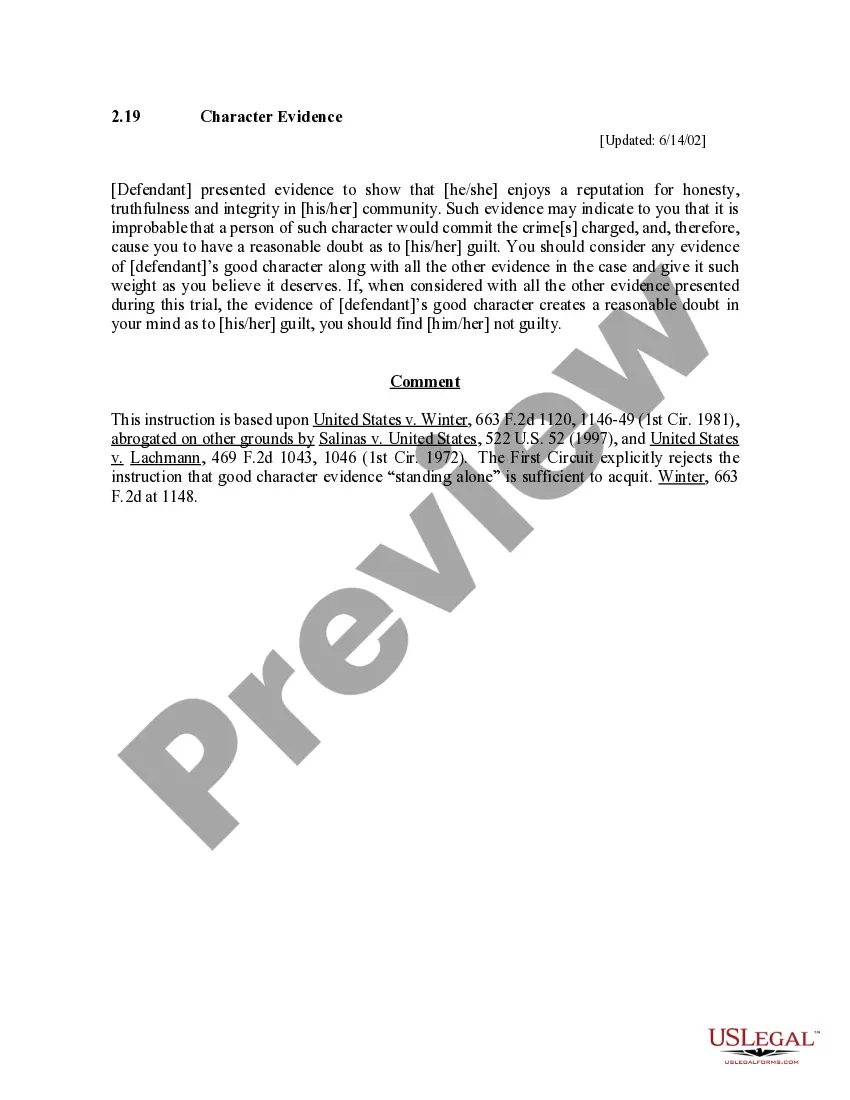
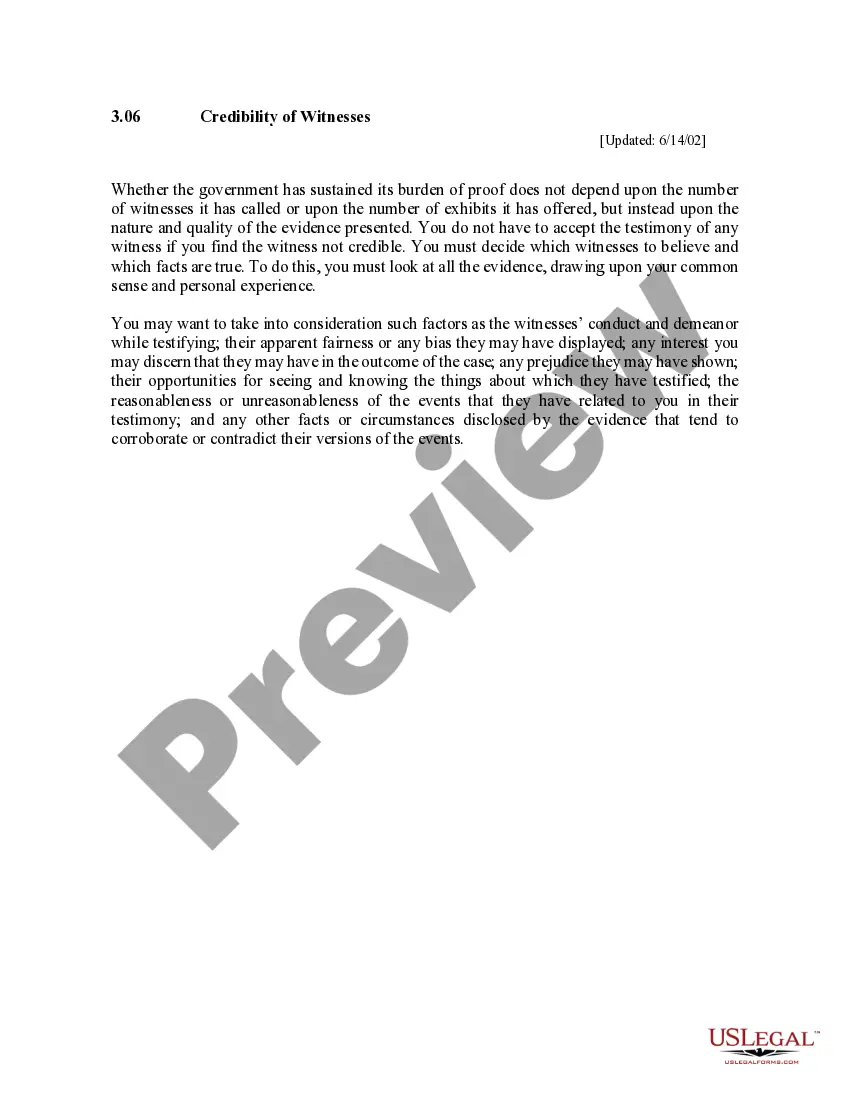
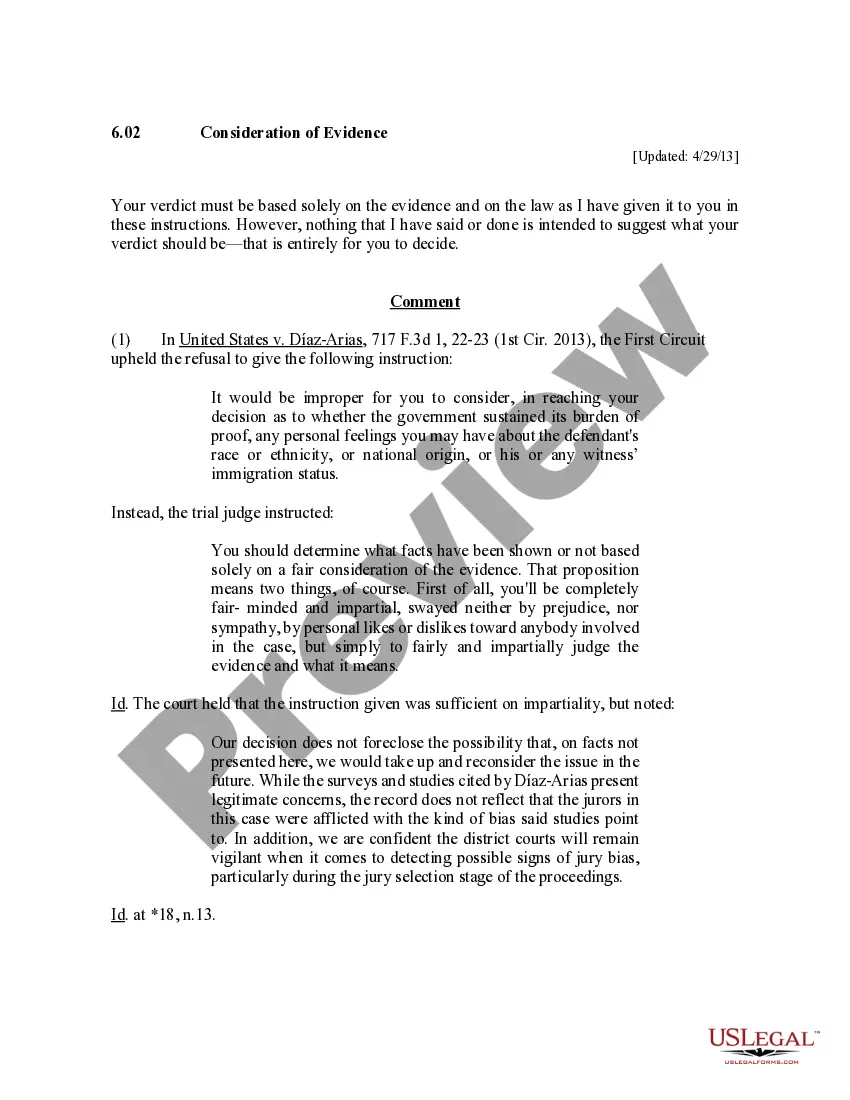
The Character Evidence form contains official jury instructions used in criminal cases in the Federal District Court of Maine. This form is crucial for jurors to understand how to appropriately weigh evidence related to a defendant's character, particularly when it suggests that they possess a reputation for honesty and integrity. Unlike other legal forms, this document specifically focuses on the implications of character evidence in determining guilt or innocence in a criminal trial.
Key parts of this document
- Definition of character evidence and its relevance in criminal cases.
- Instructions on how jurors should weigh the evidence of good character alongside other trial evidence.
- Consideration of whether character evidence creates reasonable doubt regarding the defendant's guilt.
- Clarification that character evidence alone cannot solely lead to an acquittal.
Situations where this form applies
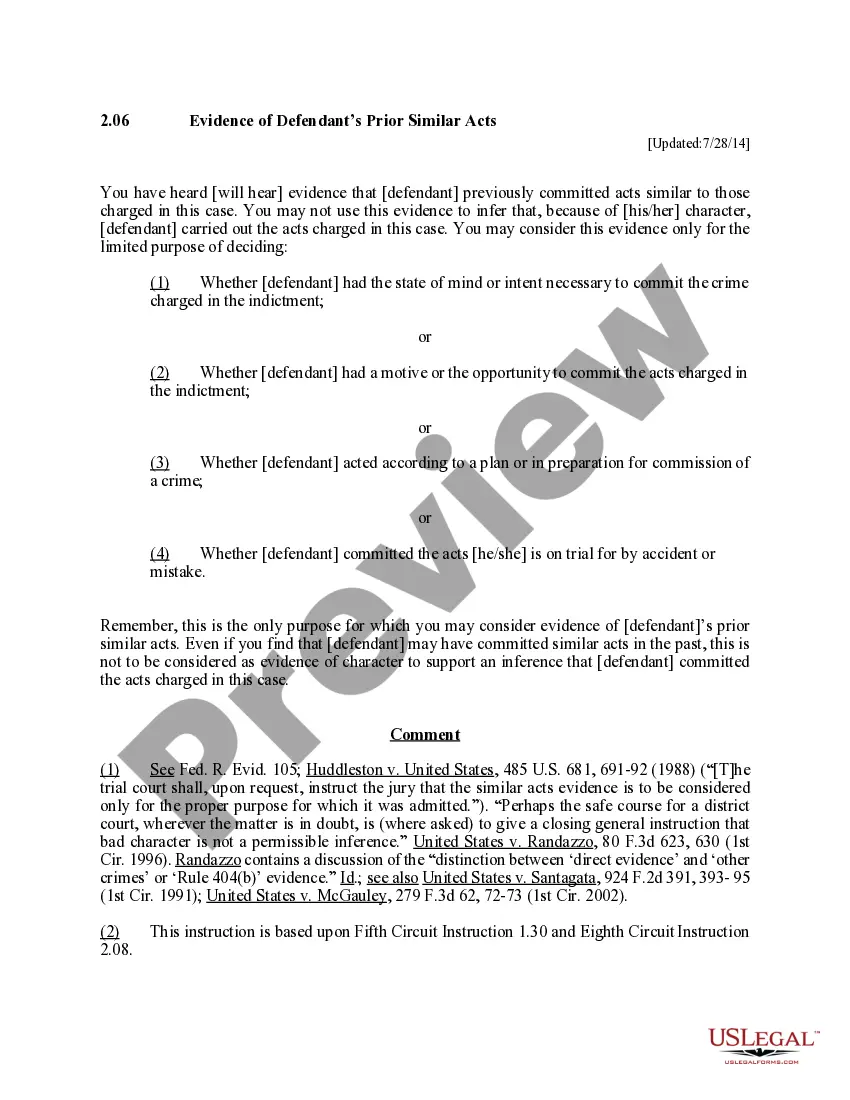
This form is used in criminal trials when a defendant presents character evidence to support their case. It is relevant in scenarios where the defendant aims to demonstrate their reputation for honesty and integrity in an attempt to create reasonable doubt about their guilt for the charges brought against them. Jurors should reference this instruction to guide their decision-making process when evaluating such evidence.
Intended users of this form
- Jurors involved in criminal cases in Federal District Court of Maine.
- Attorneys defending clients who may wish to introduce character evidence.
- Legal professionals needing to understand jury instructions related to character evidence.
Completing this form step by step
- Review the section detailing the definition of character evidence.
- Understand the instructions on weighing character evidence against other evidence in the case.
- Attend to any clarifications on how character evidence must be considered as part of the overall context of the trial.
- Be aware of the limitation that character evidence alone cannot be relied upon for an acquittal.
Is notarization required?
This form usually doesn’t need to be notarized. However, local laws or specific transactions may require it. Our online notarization service, powered by Notarize, lets you complete it remotely through a secure video session, available 24/7.
Get your form ready online
Our built-in tools help you complete, sign, share, and store your documents in one place.
Make edits, fill in missing information, and update formatting in US Legal Forms—just like you would in MS Word.
Download a copy, print it, send it by email, or mail it via USPS—whatever works best for your next step.
Sign and collect signatures with our SignNow integration. Send to multiple recipients, set reminders, and more. Go Premium to unlock E-Sign.
If this form requires notarization, complete it online through a secure video call—no need to meet a notary in person or wait for an appointment.
We protect your documents and personal data by following strict security and privacy standards.

Make edits, fill in missing information, and update formatting in US Legal Forms—just like you would in MS Word.

Download a copy, print it, send it by email, or mail it via USPS—whatever works best for your next step.

Sign and collect signatures with our SignNow integration. Send to multiple recipients, set reminders, and more. Go Premium to unlock E-Sign.

If this form requires notarization, complete it online through a secure video call—no need to meet a notary in person or wait for an appointment.

We protect your documents and personal data by following strict security and privacy standards.
Common mistakes
- Overvaluing character evidence without considering all other case evidence.
- Assuming that good character evidence alone is sufficient for a not guilty verdict.
- Misunderstanding the specific instructions provided by the court regarding character evidence.
Benefits of using this form online
- Easy access to official jury instructions formatted for clarity.
- The ability to download and reference the form at any time during a trial.
- Convenience of being able to print or share the instructions as needed.
Legal use & context
- This form provides legal guidance on how character evidence should be interpreted in federal criminal cases.
- Understanding these instructions is essential for jurors to make informed decisions about the weight of character evidence.
- Failure to adhere to these instructions may lead to misinterpretations of evidence and potential miscarriages of justice.
Looking for another form?
Form popularity
FAQ
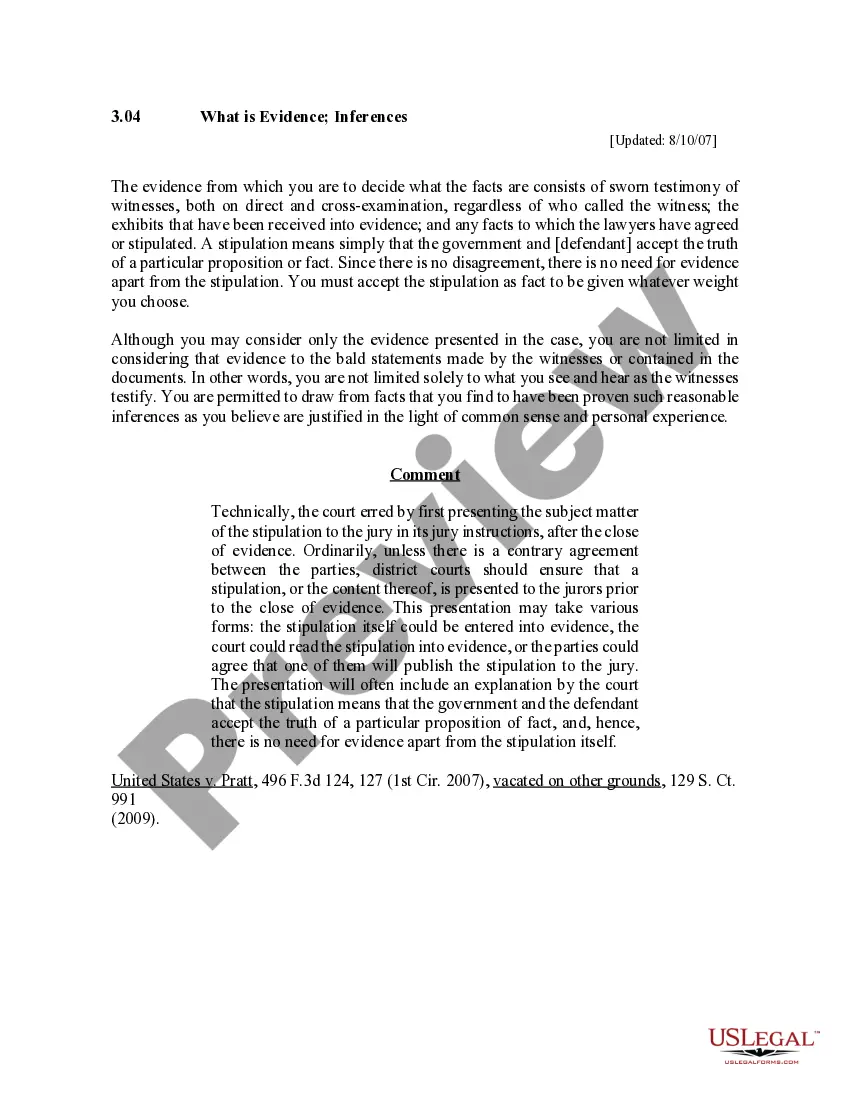
4. When character evidence is admissible, Rule 405 says that ?it may be proved by testimony about the person's reputation or by testimony in the form of an opinion.? It may not proved through evidence of specific events that illustrate the character trait in action.
Three factors typically determine the admissibility of character evidence: the purpose the character evidence is being used for. the form in which the character evidence is offered. the type of proceeding (civil or criminal) in which the character evidence is offered.
Maine Rule 609 requires all convictions to pass a "reverse Rule 403 " test, i.e. they can be admitted only if their probative value as to credibility outweighs any danger of unfair prejudice to a criminal defendant or any civil party.
When evidence of a person's character or character trait is admissible, it may be proved by testimony about the person's reputation or by testimony in the form of an opinion. On cross-examination of the character witness, the court may allow an inquiry into relevant specific instances of the person's conduct.
There are essentially three types of evidence that show a person's character: specific acts by the person, lay opinion about the person, and the person's reputation in the community. The admissibility of these different types of character evidence depends on the theory for which the evidence is offered.
(a) Character evidence generally. ? Evidence of a person's character or a trait of his character is not admissible for the purpose of proving that he acted in conformity therewith on a particular occasion, except: (1) Character of accused.
(there is a three-part test for admissibility of evidence of other crimes, wrongs, or acts: (1) the evidence must reasonably support a finding that the accused committed the crime, wrong, or act; (2) the evidence must make a fact of consequence more or less probable; and (3) its probative value must not be
Basically, if evidence is to be admitted at court, it must be relevant, material, and competent. To be considered relevant, it must have some reasonable tendency to help prove or disprove some fact. It need not make the fact certain, but at least it must tend to increase or decrease the likelihood of some fact.