Authorization for Medical Information
What is this form?
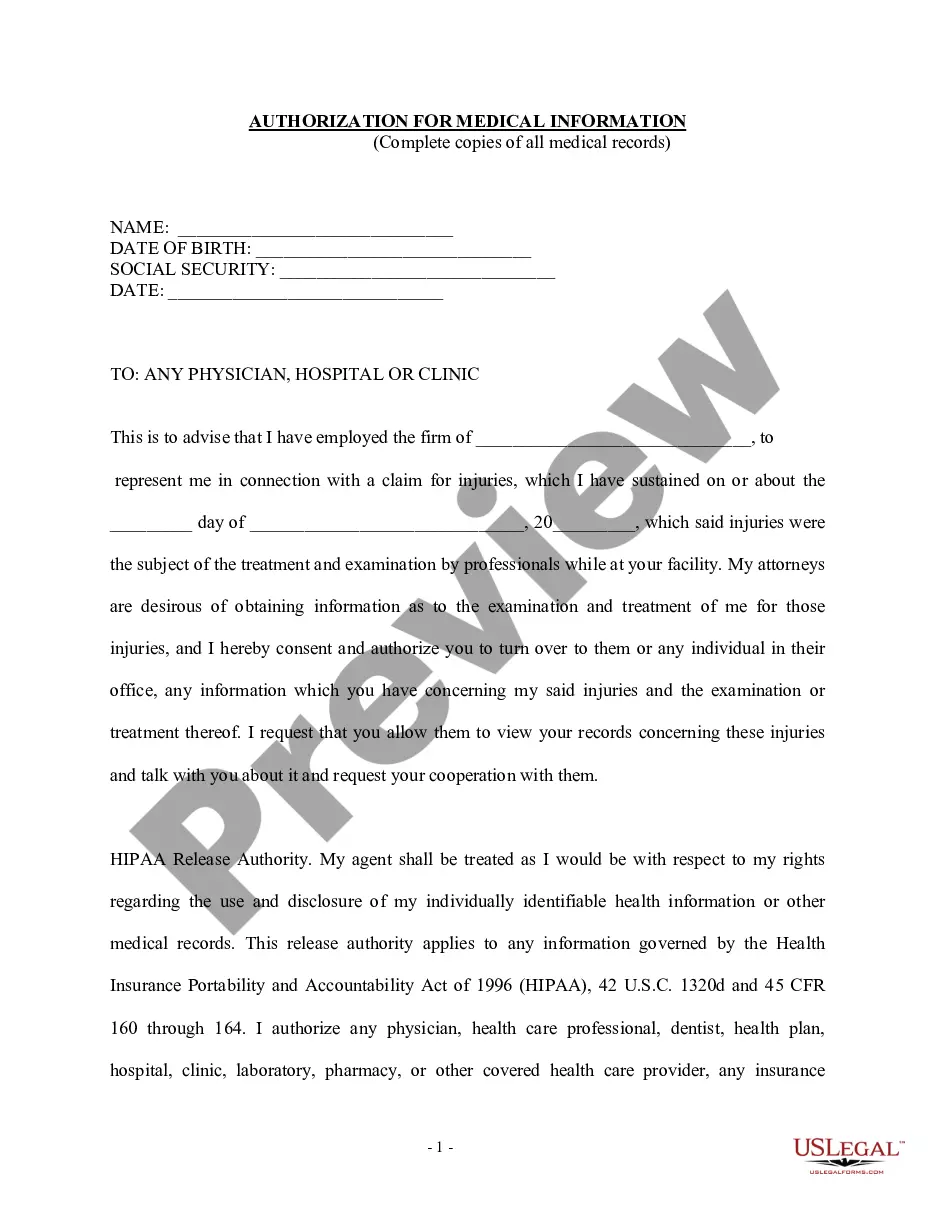
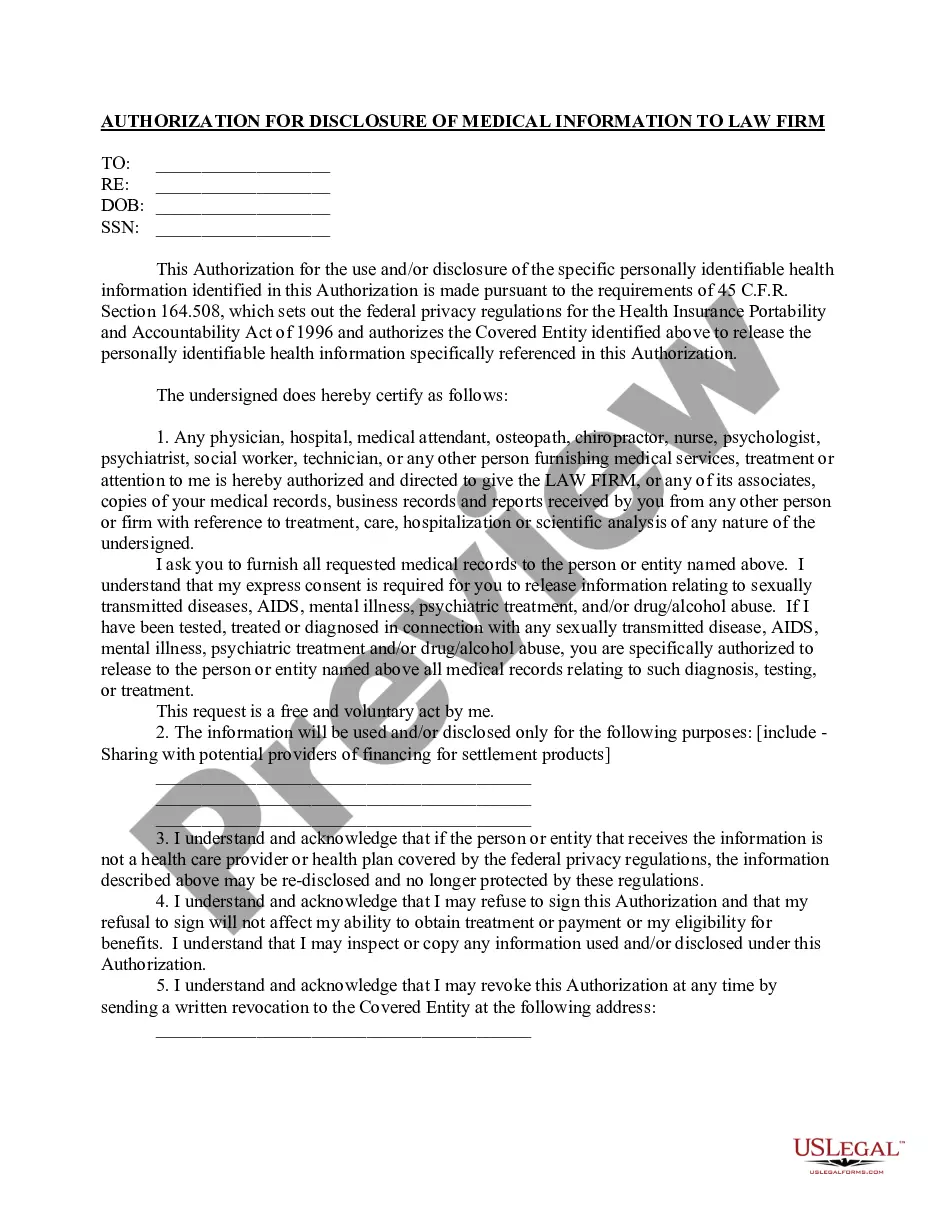
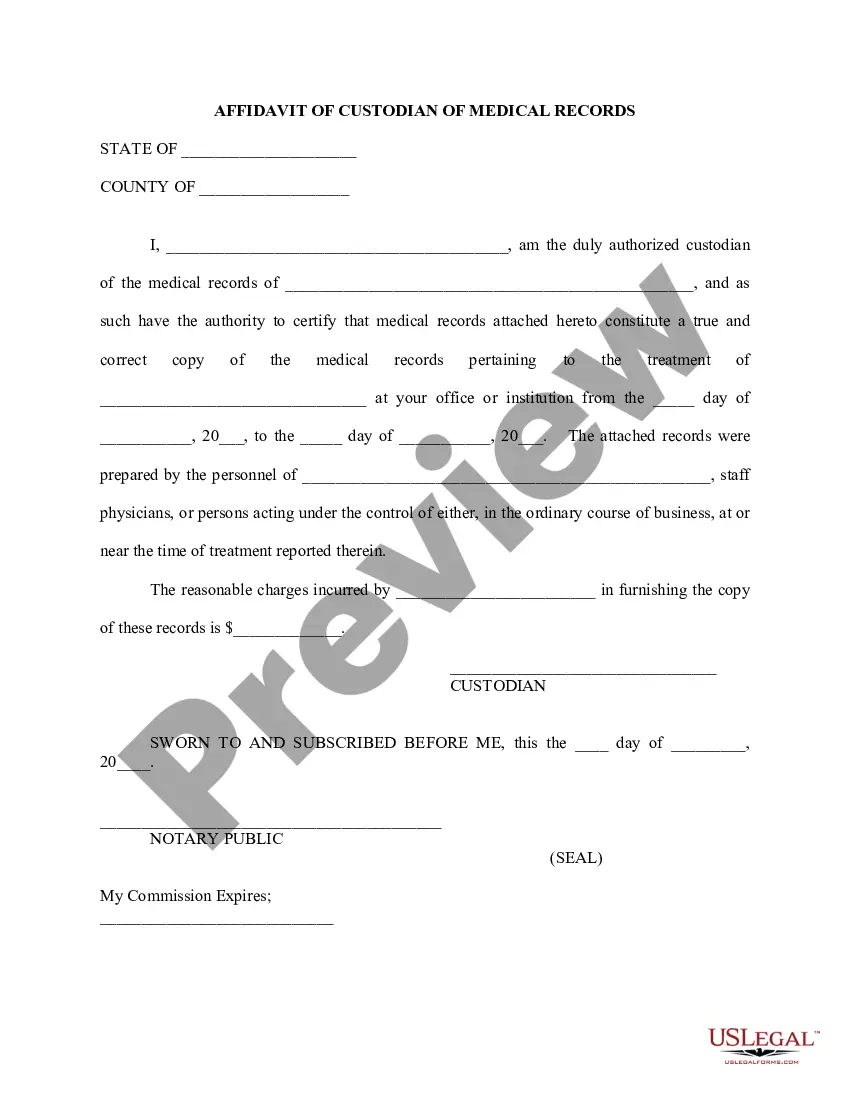
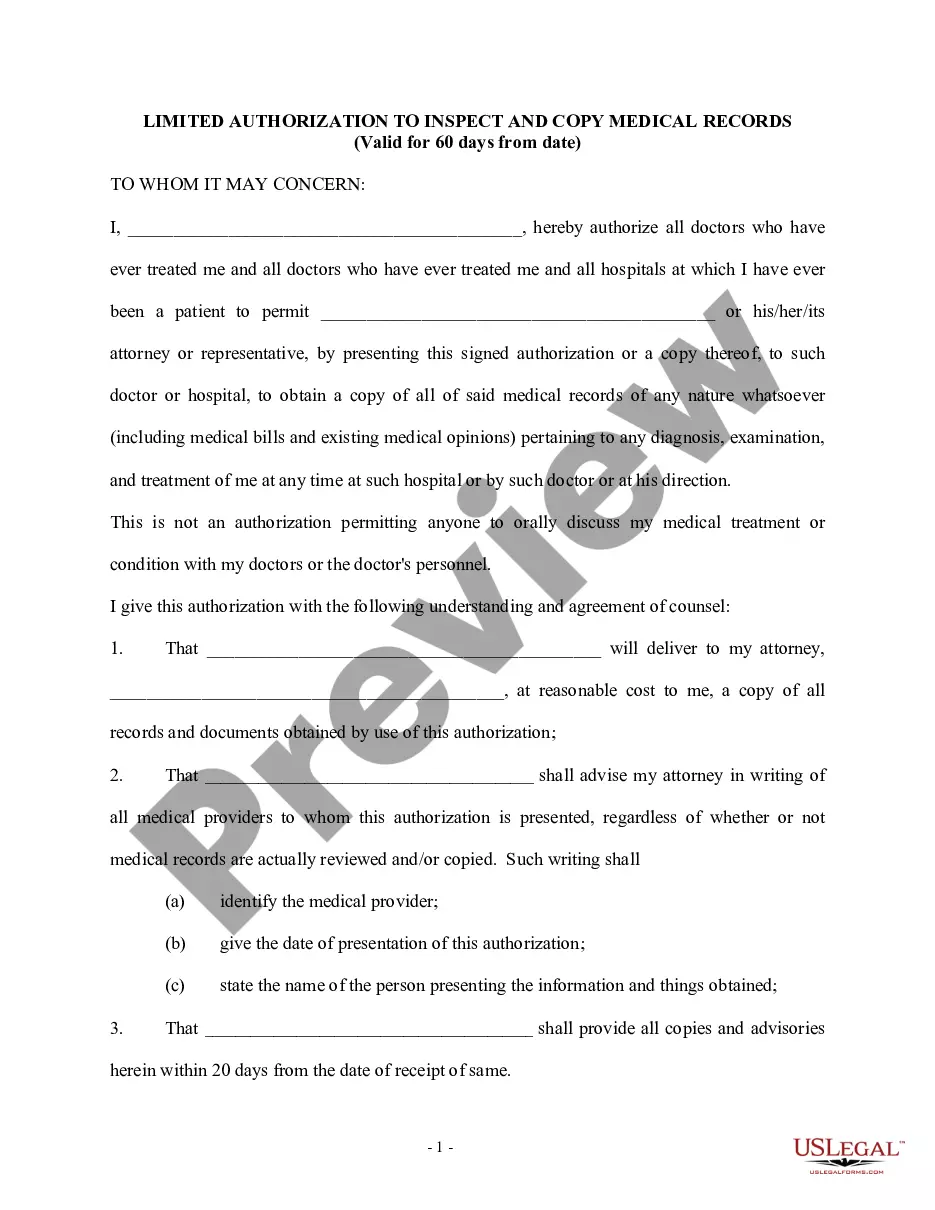
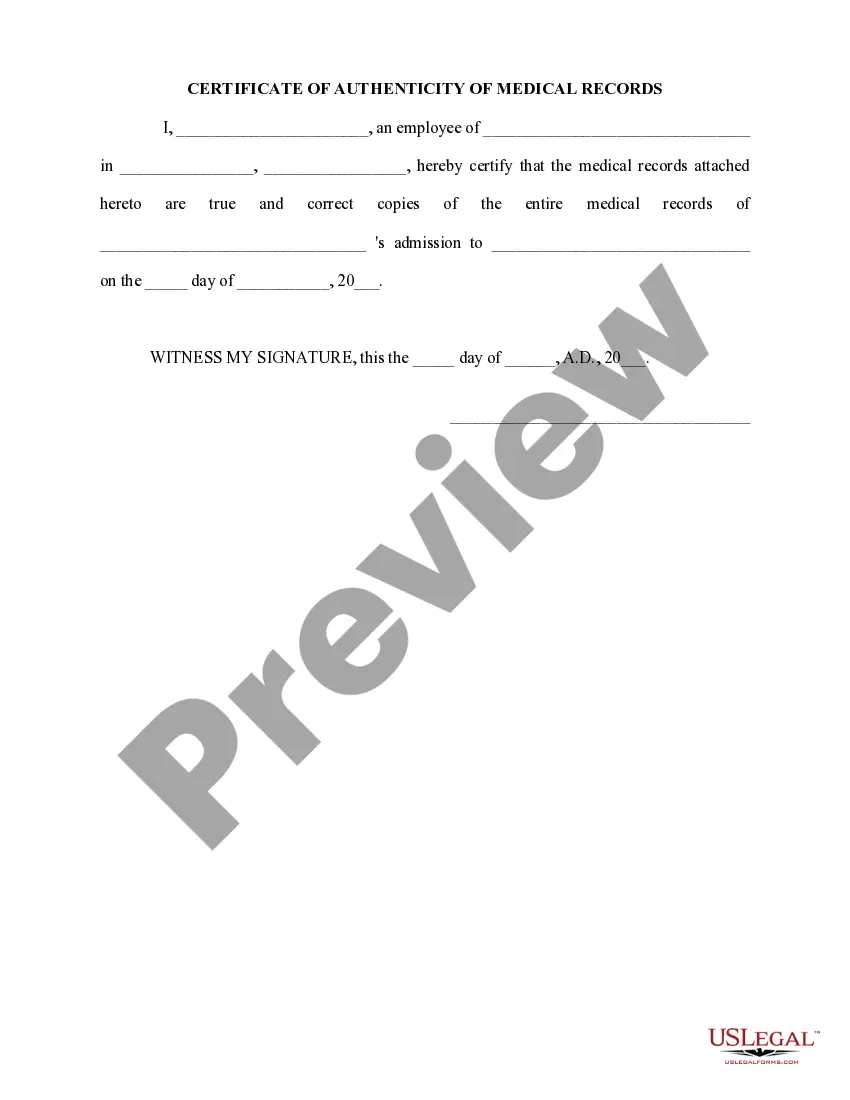
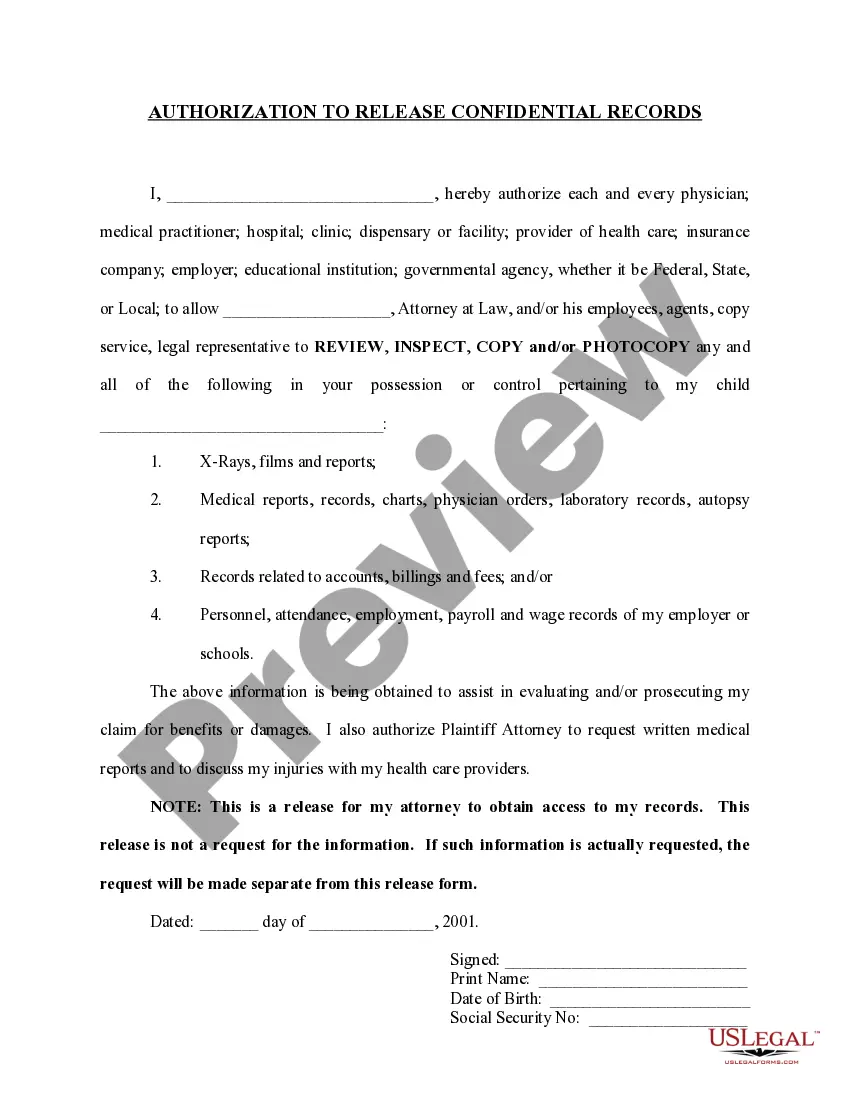
The Authorization for Medical Information is a legal document that grants an attorney permission to access and review a plaintiff's medical records. This form is specifically used when an attorney is representing an individual in connection with a claim for personal injuries. By completing this form, the plaintiff authorizes healthcare providers to release all relevant medical information to their attorney, thereby facilitating the legal process.
Main sections of this form
- Patient's name and contact details
- Date of birth and social security number
- Identification of the attorney and law firm retained
- Details regarding the injury and treatment dates
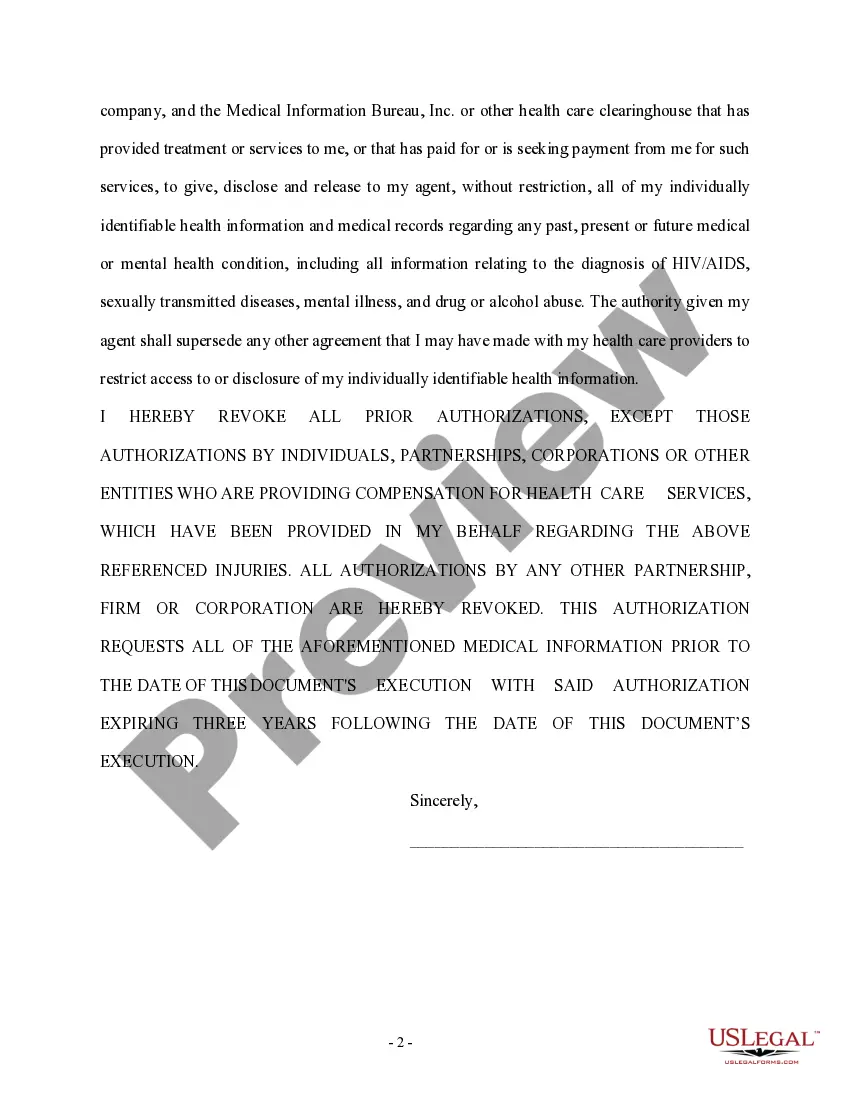
- HIPAA release authority clause for medical information
- Revocation of previous authorizations for medical information
- Signature of the patient
When this form is needed
This form is necessary when an individual has retained an attorney to represent them in a case involving personal injury claims. It is particularly relevant when the attorney needs to gather comprehensive medical records to support the case, such as instances involving accidents, medical malpractice, or negligence claims.
Who this form is for
This form is intended for:
- Individuals pursuing personal injury claims
- Plaintiffs who have hired legal representation
- Attorneys needing access to clients' medical records for legal cases
Steps to complete this form
- Fill in your name, date of birth, and social security number at the top of the form.
- Specifically identify the attorney and law firm that you have retained for your case.
- Clearly state the date of your injury and include details of the treatment received.
- Sign the authorization to confirm your consent for the release of your medical information.
- Keep a copy of the signed form for your records and provide it to your attorney.
Is notarization required?
This form does not typically require notarization unless specified by local law. However, it is advisable to check your specific state regulations to ensure compliance.
Get your form ready online
Our built-in tools help you complete, sign, share, and store your documents in one place.
Make edits, fill in missing information, and update formatting in US Legal Forms—just like you would in MS Word.
Download a copy, print it, send it by email, or mail it via USPS—whatever works best for your next step.
Sign and collect signatures with our SignNow integration. Send to multiple recipients, set reminders, and more. Go Premium to unlock E-Sign.
If this form requires notarization, complete it online through a secure video call—no need to meet a notary in person or wait for an appointment.
We protect your documents and personal data by following strict security and privacy standards.

Make edits, fill in missing information, and update formatting in US Legal Forms—just like you would in MS Word.

Download a copy, print it, send it by email, or mail it via USPS—whatever works best for your next step.

Sign and collect signatures with our SignNow integration. Send to multiple recipients, set reminders, and more. Go Premium to unlock E-Sign.

If this form requires notarization, complete it online through a secure video call—no need to meet a notary in person or wait for an appointment.

We protect your documents and personal data by following strict security and privacy standards.
Typical mistakes to avoid
- Failing to provide complete and accurate personal information.
- Not specifying the date of the incident or treatment.
- Neglecting to sign the authorization, rendering it invalid.
- Overlooking the revocation of prior authorizations, if applicable.
Advantages of online completion
- Easy accessibility and convenience for quick downloading.
- Editable fields to ensure customized and accurate information.
- Reliable templates drafted by licensed attorneys to meet legal standards.
- Immediate fulfillment of legal documentation needs without delays.
Summary of main points
- The Authorization for Medical Information is essential for facilitating communication between healthcare providers and your attorney.
- Ensure all sections of the form are completed accurately to prevent delays.
- Utilize the convenience of online access to complete your authorization form.
Looking for another form?





Form popularity
FAQ
Your authorization allows the Health Plan (your health insurance carrier or HMO) to release your protected health information to a person or organization that you choose.Revoking this authorization will not affect any action taken prior to receipt of your written request.
An authorization is a detailed document that gives covered entities permission to use protected health information for specified purposes, which are generally other than treatment, payment, or health care operations, or to disclose protected health information to a third party specified by the individual.
You may be able to request your record through your provider's patient portal. You may have to fill out a form called a health or medical record release form send an email, or mail or fax a letter.
What Is a Medical Authorization? A general medical authorization form gives authorization from you, the patient, to a third party for access to your medical records. These forms can be limited in scope or can be as broad as granting access to pretty much anything in your records.
A medical release form is a document that gives healthcare professionals permission to share patient medical information with other parties.
Patient requests must be written without requiring a "formal" release form. Include signature, printed name, date, and records desired. Release a copy only, not the original. The physician may prepare a summary of the medical record, if acceptable to the patient.
A signed HIPAA release form must be obtained from a patient before their protected health information can be shared with other individuals or organizations, except in the case of routine disclosures for treatment, payment or healthcare operations permitted by the HIPAA Privacy Rule.