Michigan Statement of Labor and Material Furnished - Corporation or LLC
What is this form?
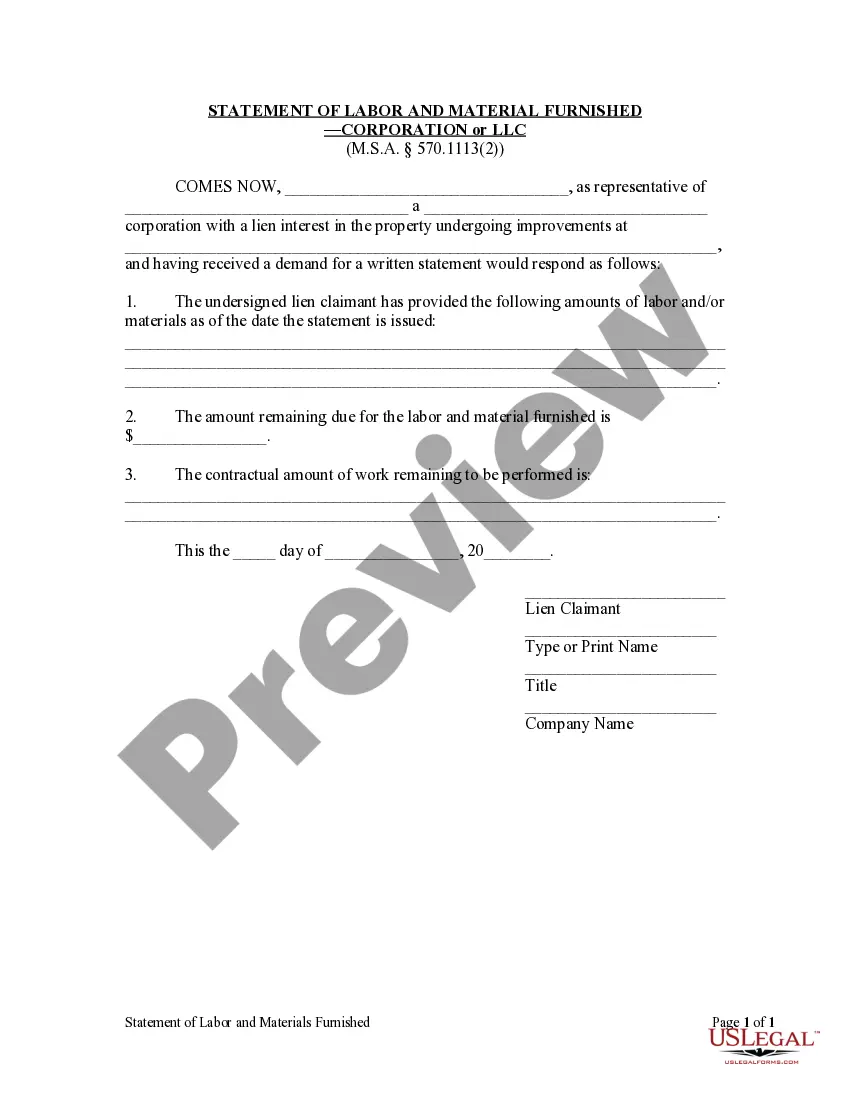
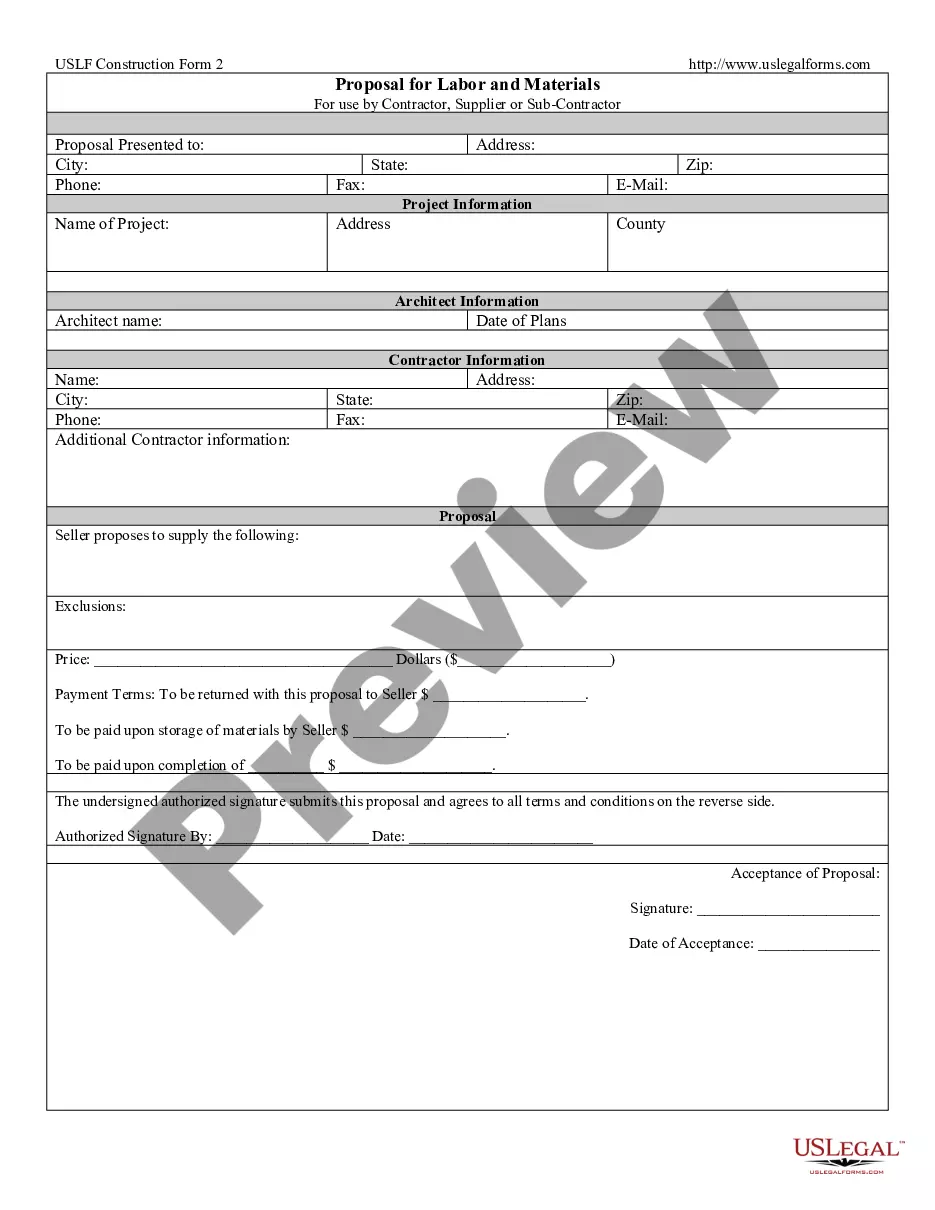
The Statement of Labor and Material Furnished - Corporation or LLC is a legal document used by corporations or Limited Liability Companies (LLCs) in Michigan to respond to requests for information from parties interested in property improvements. This form is crucial for lien claimants as it provides a detailed account of the labor and materials supplied, any outstanding payments, and the remaining work under the contract. It serves to clarify the status of payments and work, distinguishing it from other lien-related forms.
Key parts of this document
- Identification of the lien claimant and their representative.
- Details of the labor and materials provided as of the date of the statement.
- The total amount remaining due for the services rendered.
- A description of the remaining work to be completed under the contract.
- Date of the statement issuance and signatures of the lien claimant.
When to use this document
This form is typically used when a corporation or LLC, having provided labor or materials for property improvements, receives a demand for information from a party with an interest in that property. It is essential for maintaining transparency about payments and confirming the amount of work completed or pending.
Who this form is for
- Corporations and LLCs that have provided labor or materials for property improvements.
- Lien claimants who have received a request for information regarding their services.
- Property owners who require a detailed breakdown of expenses related to a project.
How to complete this form
- Identify and fill in the name of the lien claimant and their representative.
- Specify the property address where the improvements have been made.
- Detail the labor and materials provided, including quantities and types.
- Indicate the total amount remaining due for the services rendered.
- Describe any work that still needs to be completed under the contract.
- Sign and date the form to finalize the response.
Is notarization required?
This form does not typically require notarization to be legally valid. However, some jurisdictions or document types may still require it. US Legal Forms provides secure online notarization powered by Notarize, available 24/7 for added convenience.
Get your form ready online
Our built-in tools help you complete, sign, share, and store your documents in one place.
Make edits, fill in missing information, and update formatting in US Legal Forms—just like you would in MS Word.
Download a copy, print it, send it by email, or mail it via USPS—whatever works best for your next step.
Sign and collect signatures with our SignNow integration. Send to multiple recipients, set reminders, and more. Go Premium to unlock E-Sign.
If this form requires notarization, complete it online through a secure video call—no need to meet a notary in person or wait for an appointment.
We protect your documents and personal data by following strict security and privacy standards.
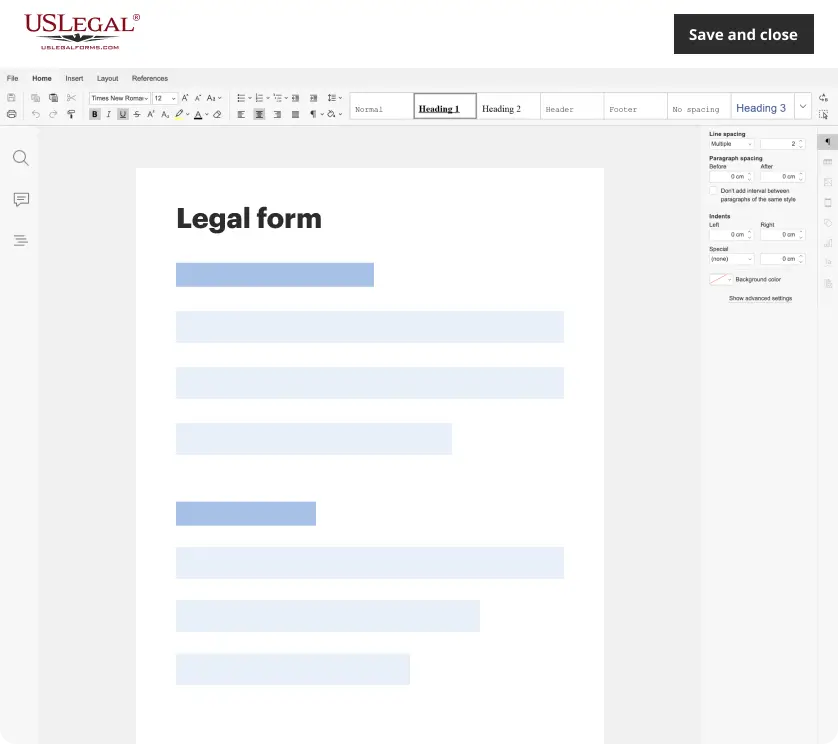
Make edits, fill in missing information, and update formatting in US Legal Forms—just like you would in MS Word.
Download a copy, print it, send it by email, or mail it via USPS—whatever works best for your next step.
Sign and collect signatures with our SignNow integration. Send to multiple recipients, set reminders, and more. Go Premium to unlock E-Sign.

If this form requires notarization, complete it online through a secure video call—no need to meet a notary in person or wait for an appointment.
We protect your documents and personal data by following strict security and privacy standards.
Mistakes to watch out for
- Failing to provide accurate descriptions of labor and materials.
- Omitting the total amount due or details of work remaining.
- Not responding within the ten-day timeframe required by law.
- Forgetting to sign and date the form, making it invalid.
Why use this form online
- Immediate access to professionally drafted legal templates.
- Ease of editing allows for customization to specific situations.
- Downloadable for convenience, enabling quicker responses to demands.
- Confidence in legal compliance with Michigan regulations.
Looking for another form?

Form popularity
FAQ
Can Two LLCs or Companies Have the Same Name? Yes, with some exceptions. When you're forming a corporation or an LLC in a state, the name must be unique to your business within that state. Others can form LLCs and businesses in other states that have the same name as yours.
Choose a Corporate Name. File Articles of Incorporation. Appoint a Registered Agent. Prepare Corporate Bylaws. Appoint Directors and Hold First Board Meeting. File Annual Report. Obtain an EIN.
Choose a Name for Your LLC. Appoint a Registered Agent. File Articles of Organization. Prepare an Operating Agreement. Comply With Other Tax and Regulatory Requirements. File Annual Statements.
Generally, most entrepreneurs choose to form a Corporation or a Limited Liability Company (LLC). The main difference between an LLC and a corporation is that an llc is owned by one or more individuals, and a corporation is owned by its shareholders.
In an LLC, individuals with an ownership share are called members. In a corporation, they are called shareholders. One of the advantages an LLC has over a corporation is that in many states, a creditor cannot collect a member's dividends, whereas in a corporation dividends can be collected from shareholders.
A limited liability company, or LLC, is a type of business entity formed under state law. Incorporation refers to the process of establishing a corporationa different type of entity recognized in all 50 states. In short, an LLC is not incorporated.
LLC owners must pay self-employment taxes for all income. S-corp owners may pay less on this tax, provided they pay themselves a "reasonable salary." LLCs can have an unlimited number of members, while S-corps are limited to 100 shareholders.
A Limited Liability Company (LLC) is an entity created by state statute. Depending on elections made by the LLC and the number of members, the IRS will treat an LLC either as a corporation, partnership, or as part of the owner's tax return (a disregarded entity).
LLC stands for limited liability company. It is similar to a corporation, but offers more flexibility in management and taxation and generally has fewer recordkeeping requirements.LLCs and corporations are both business entities that are created by filing formation documents with the state.